PRESENTED BY :-
B. VAMSI KRISHNA
130101ECR027
BASIC ELECTRICAL ENGINEERING
Nuclear energy is energy in the nucleus of an atom. There is enormous
energy in the bonds that hold atoms together. Nuclear energy can be
used to make electricity. But first the energy must be released. It can be
released from atoms in two ways: nuclear fusion and nuclear fission.
In nuclear fusion energy is released when atoms are combined or fused
together to form a larger atom. This is how the sun produces energy.
In nuclear fission atoms are split apart to form smaller atoms, releasing
energy. Nuclear power plants use nuclear fission to produce electricity.
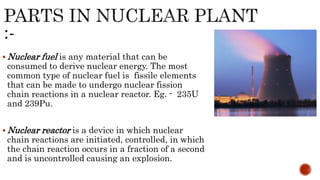
 Nuclear fuel is any material that can be
consumed to derive nuclear energy. The most
common type of nuclear fuel is fissile elements
that can be made to undergo nuclear fission
chain reactions in a nuclear reactor. Eg. - 235U
and 239Pu.
 Nuclear reactor is a device in which nuclear
chain reactions are initiated, controlled, in which
the chain reaction occurs in a fraction of a second
and is uncontrolled causing an explosion.
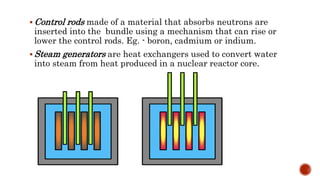
 Control rods made of a material that absorbs neutrons are
inserted into the bundle using a mechanism that can rise or
lower the control rods. Eg. - boron, cadmium or indium.
 Steam generators are heat exchangers used to convert water
into steam from heat produced in a nuclear reactor core.
 Steam turbine is a mechanical device
that extracts thermal energy from
pressurized steam, and converts it into
useful mechanical.
Moderator is a material in the core,
which slows down the neutrons
released from fission so that they
cause more fission. It is usually
water, but may also be graphite.
Nuclear power generation does emit relatively low amounts of
carbon dioxide (CO2). The emissions of green house gases and is
relatively little.
It is possible to generate a high amount of electrical energy in one
single plant
The problem of radioactive waste is still an unsolved one.
High risks: It is technically impossible to build a plant with 100%
security.
The energy source for nuclear energy is Uranium. Uranium is a
scarce resource, its supply is estimated to last only for the next 30 to
60 years depending on the actual demand.
Nuclear energy

Nuclear energy

  • 1.
    PRESENTED BY :- B.VAMSI KRISHNA 130101ECR027 BASIC ELECTRICAL ENGINEERING
  • 2.
    Nuclear energy isenergy in the nucleus of an atom. There is enormous energy in the bonds that hold atoms together. Nuclear energy can be used to make electricity. But first the energy must be released. It can be released from atoms in two ways: nuclear fusion and nuclear fission. In nuclear fusion energy is released when atoms are combined or fused together to form a larger atom. This is how the sun produces energy. In nuclear fission atoms are split apart to form smaller atoms, releasing energy. Nuclear power plants use nuclear fission to produce electricity.
  • 4.
     Nuclear fuelis any material that can be consumed to derive nuclear energy. The most common type of nuclear fuel is fissile elements that can be made to undergo nuclear fission chain reactions in a nuclear reactor. Eg. - 235U and 239Pu.  Nuclear reactor is a device in which nuclear chain reactions are initiated, controlled, in which the chain reaction occurs in a fraction of a second and is uncontrolled causing an explosion.
  • 5.
     Control rodsmade of a material that absorbs neutrons are inserted into the bundle using a mechanism that can rise or lower the control rods. Eg. - boron, cadmium or indium.  Steam generators are heat exchangers used to convert water into steam from heat produced in a nuclear reactor core.
  • 6.
     Steam turbineis a mechanical device that extracts thermal energy from pressurized steam, and converts it into useful mechanical. Moderator is a material in the core, which slows down the neutrons released from fission so that they cause more fission. It is usually water, but may also be graphite.
  • 7.
    Nuclear power generationdoes emit relatively low amounts of carbon dioxide (CO2). The emissions of green house gases and is relatively little. It is possible to generate a high amount of electrical energy in one single plant
  • 8.
    The problem ofradioactive waste is still an unsolved one. High risks: It is technically impossible to build a plant with 100% security. The energy source for nuclear energy is Uranium. Uranium is a scarce resource, its supply is estimated to last only for the next 30 to 60 years depending on the actual demand.