Renewable Energy Resources
www.wesrch.com
Introduction
Renewable energy is generally defined as energy that comes from resources
which are naturally replenished on a human timescale such as sunlight, wind,
rain, tides, waves, and geothermal heat.
Renewable energy resources exist over wide geographical areas, in contrast
to other energy sources, which are concentrated in a limited number of
countries. Rapid deployment of renewable energy and energy efficiency is
resulting in significant energy security, climate change mitigation, and
economic benefits
Renewable energy resources and significant opportunities for energy
efficiency exist over wide geographical areas, in contrast to other energy
sources, which are concentrated in a limited number of countries.
Renewable Energy
Wind Energy.
Hydro Energy.
Solar Energy.
Biomass Energy.
Geothermal Energy.
Main Form of Renewable Energy
Wind Energy
Wind Energy
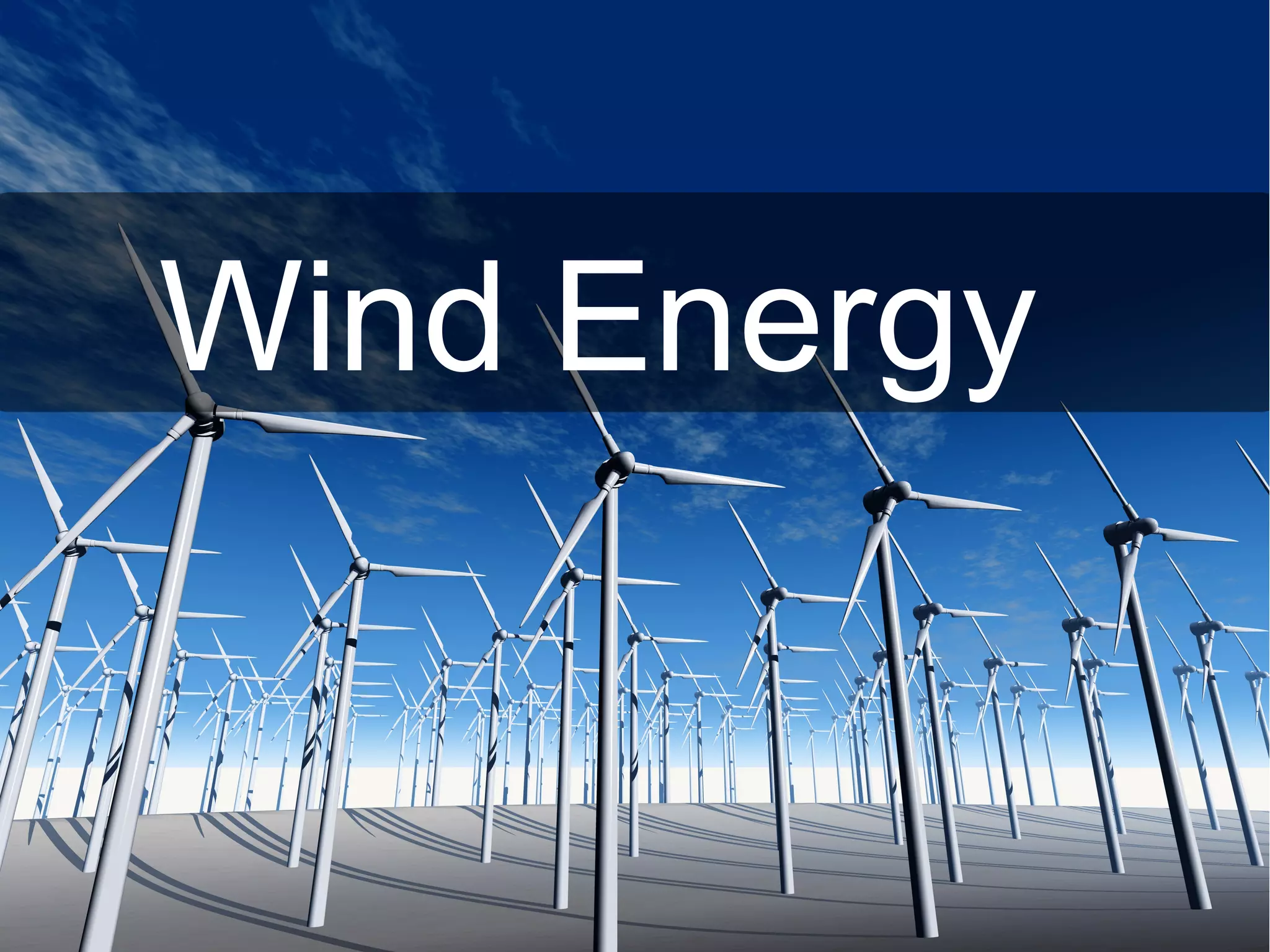
Wind is caused by huge convection currents in the Earth's atmosphere,
driven by heat energy from the Sun. This means as long as the sun shines,
there will be wind.
wind energy is believed to be five times total current global energy
production, or 40 times current electricity demand.
This could require large amounts of land to be used for wind turbines,
particularly in areas of higher wind resources. Offshore resources
experience wind speeds of ~90% greater than that of land.
Hydro Energy
Hydro Energy
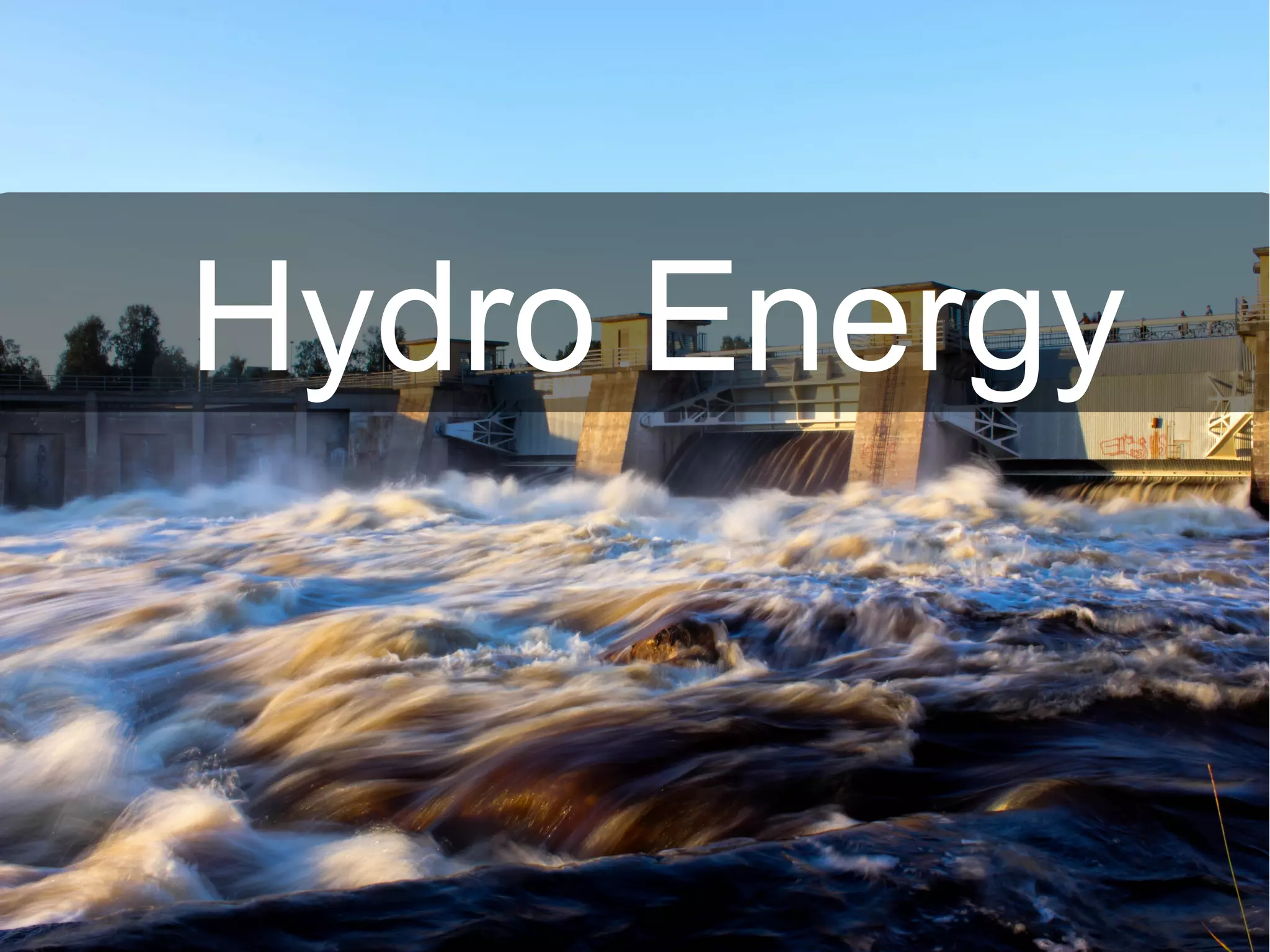
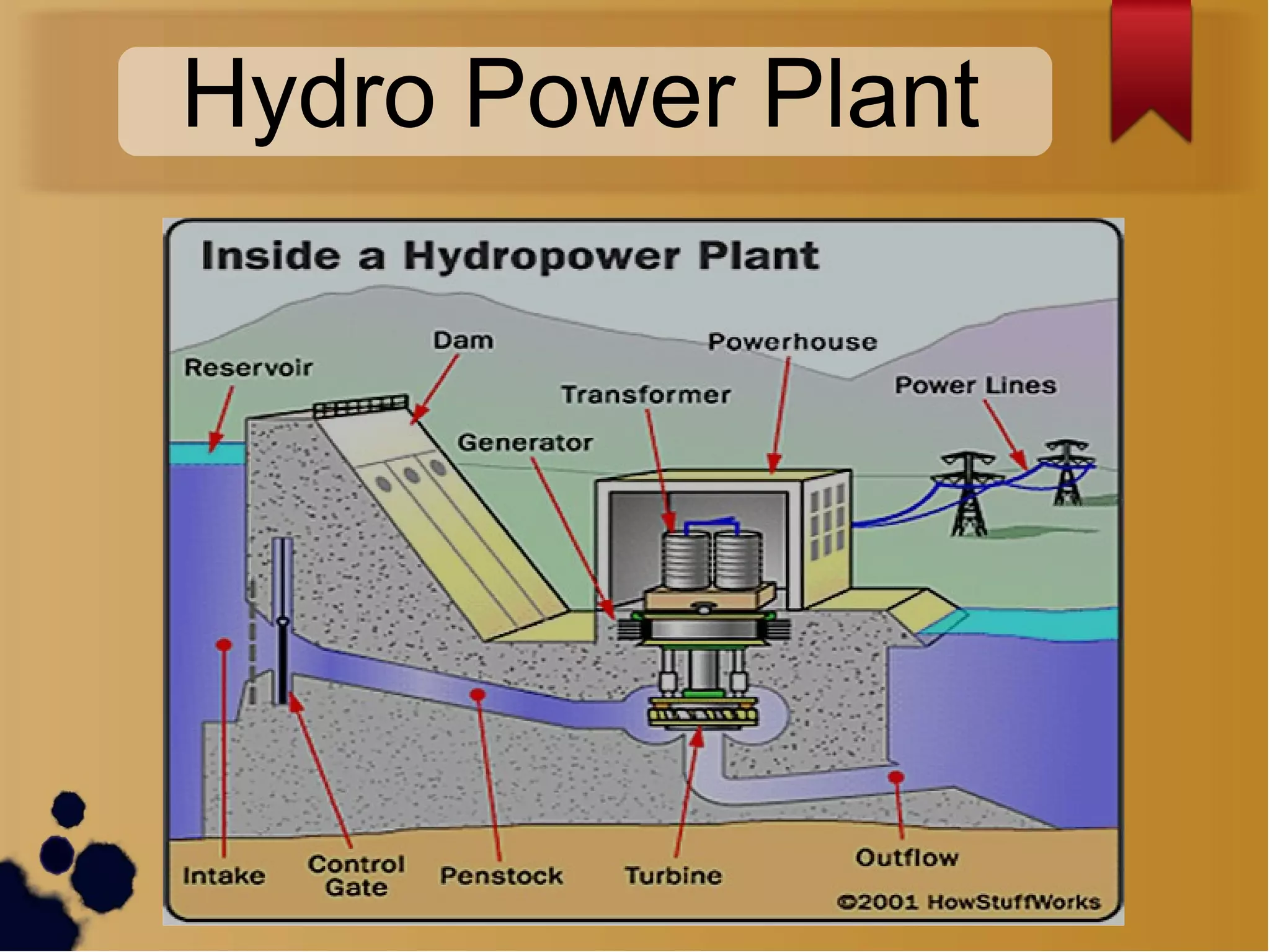
The most common type of hydroelectric power plant uses a dam on a river to
store water in a reservoir.
Water released from the reservoir flows through a turbine, spinning it, which in
turn activates a generator to produce electricity. But hydroelectric power
doesn't necessarily require a large dam.
Hydroelectric energy is a term usually reserved for large-scale hydroelectric
dams.
This includes marine current power, tidal power and ocean thermal energy
conversion.
What is Dam
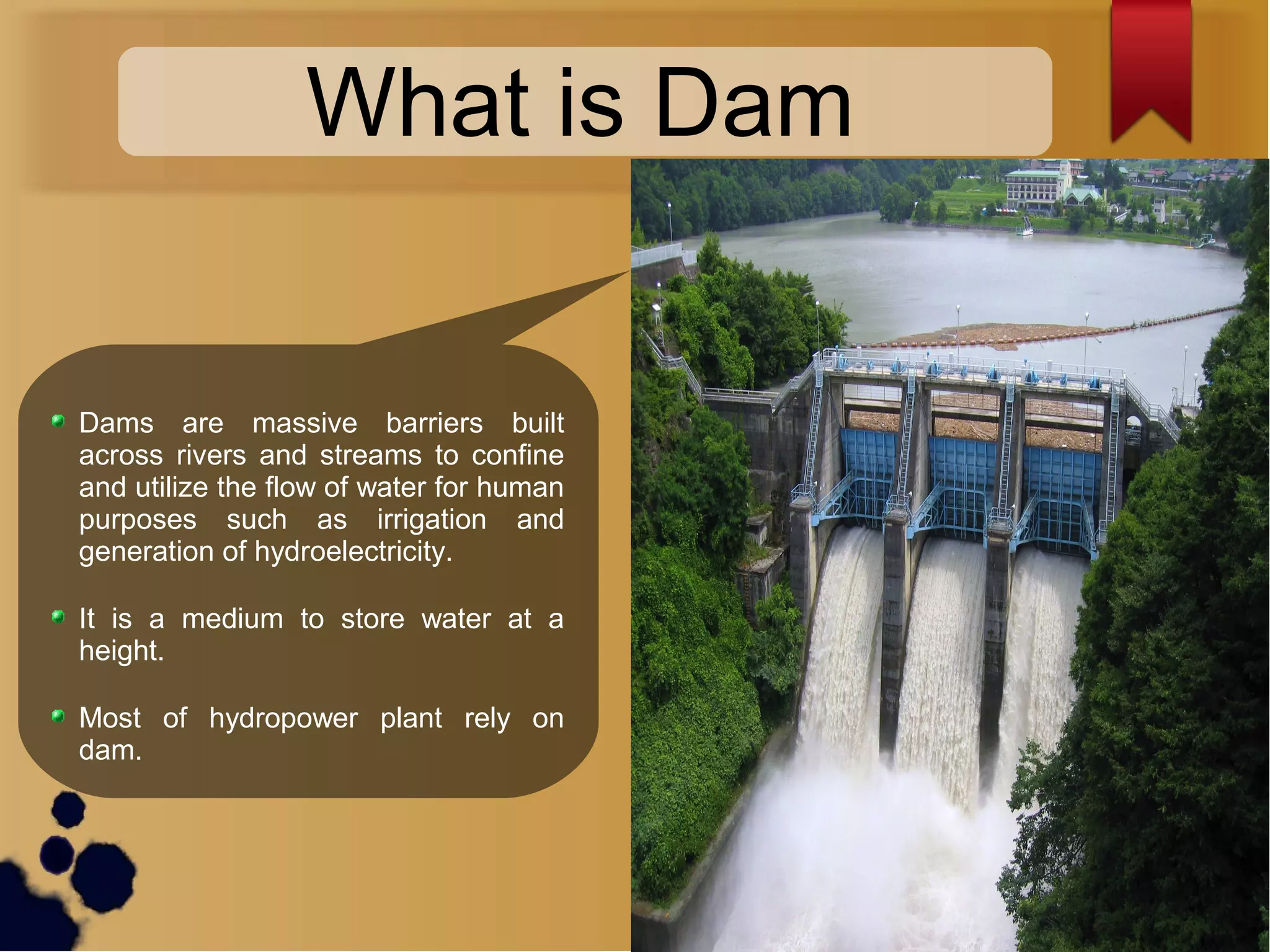
Dams are massive barriers built
across rivers and streams to confine
and utilize the flow of water for human
purposes such as irrigation and
generation of hydroelectricity.
It is a medium to store water at a
height.
Most of hydropower plant rely on
dam.
Hydro Power Plant
Solar Energy
Solar Energy
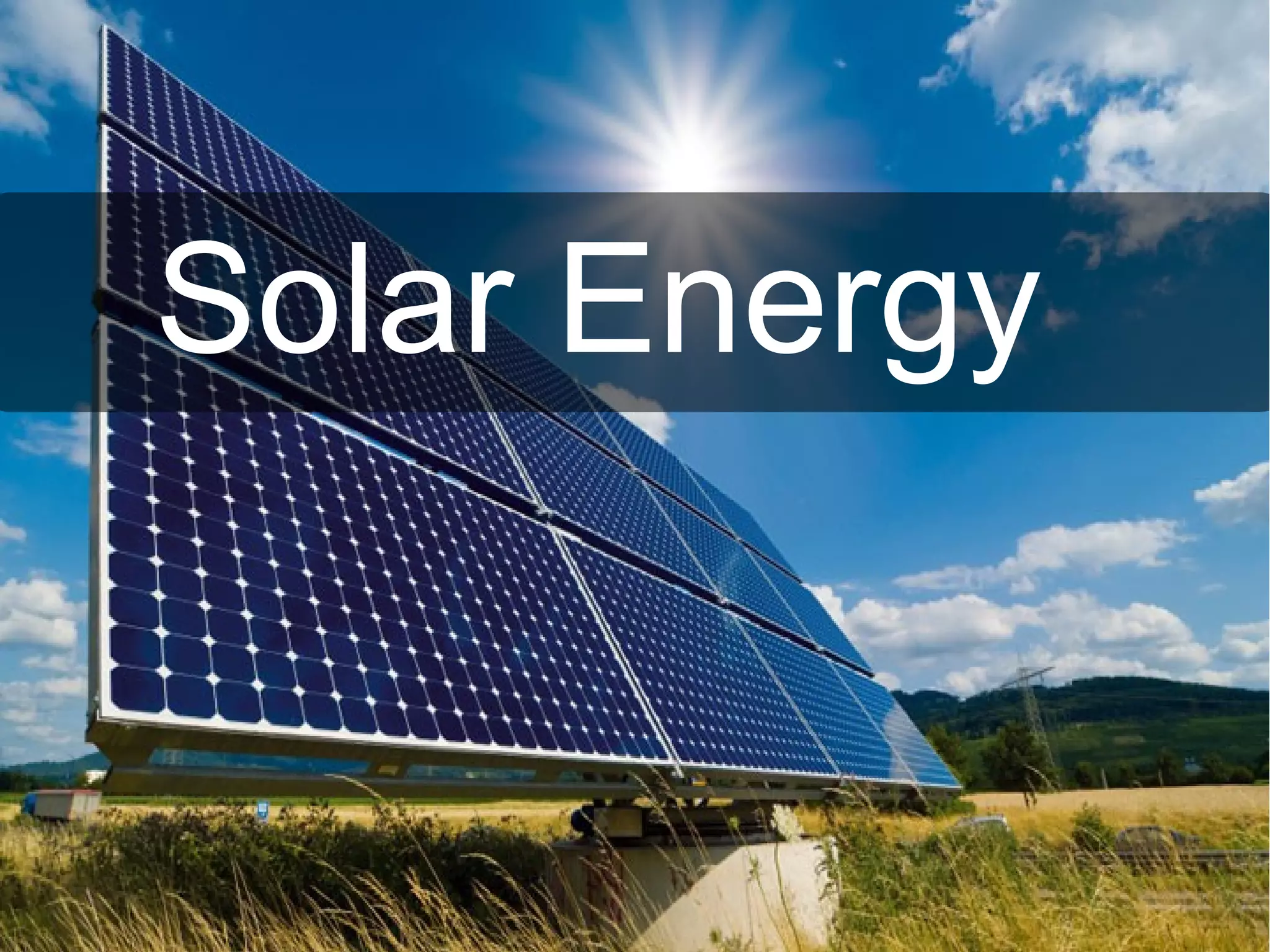
Solar energy is radiant light and heat from the sun harnessed using a range of
ever-evolving technologies such as solar heating, photovoltaics, solar thermal
energy, solar architecture and artificial photosynthesis.
The large magnitude of solar energy available makes it a highly appealing
source of electricity.
Solar radiation along with secondary solar resources such as wind and wave
power, hydroelectricity and biomass account for most of the available
renewable energy on Earth.
Passive solar techniques include orienting a building to the Sun, selecting
materials with favorable thermal mass or light dispersing properties, and
designing spaces that naturally circulate air.
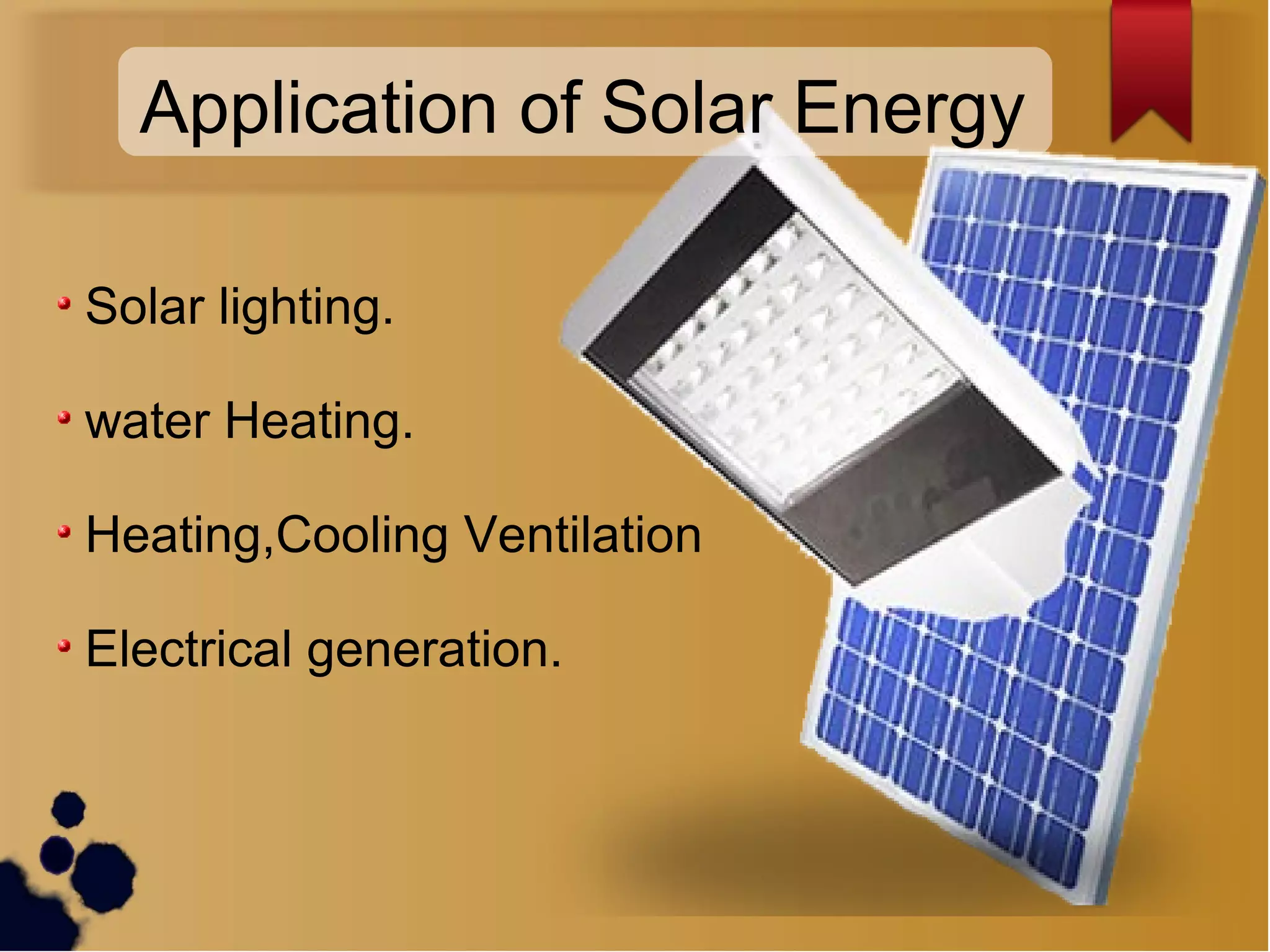
Solar lighting.
water Heating.
Heating,Cooling Ventilation
Electrical generation.
Application of Solar Energy
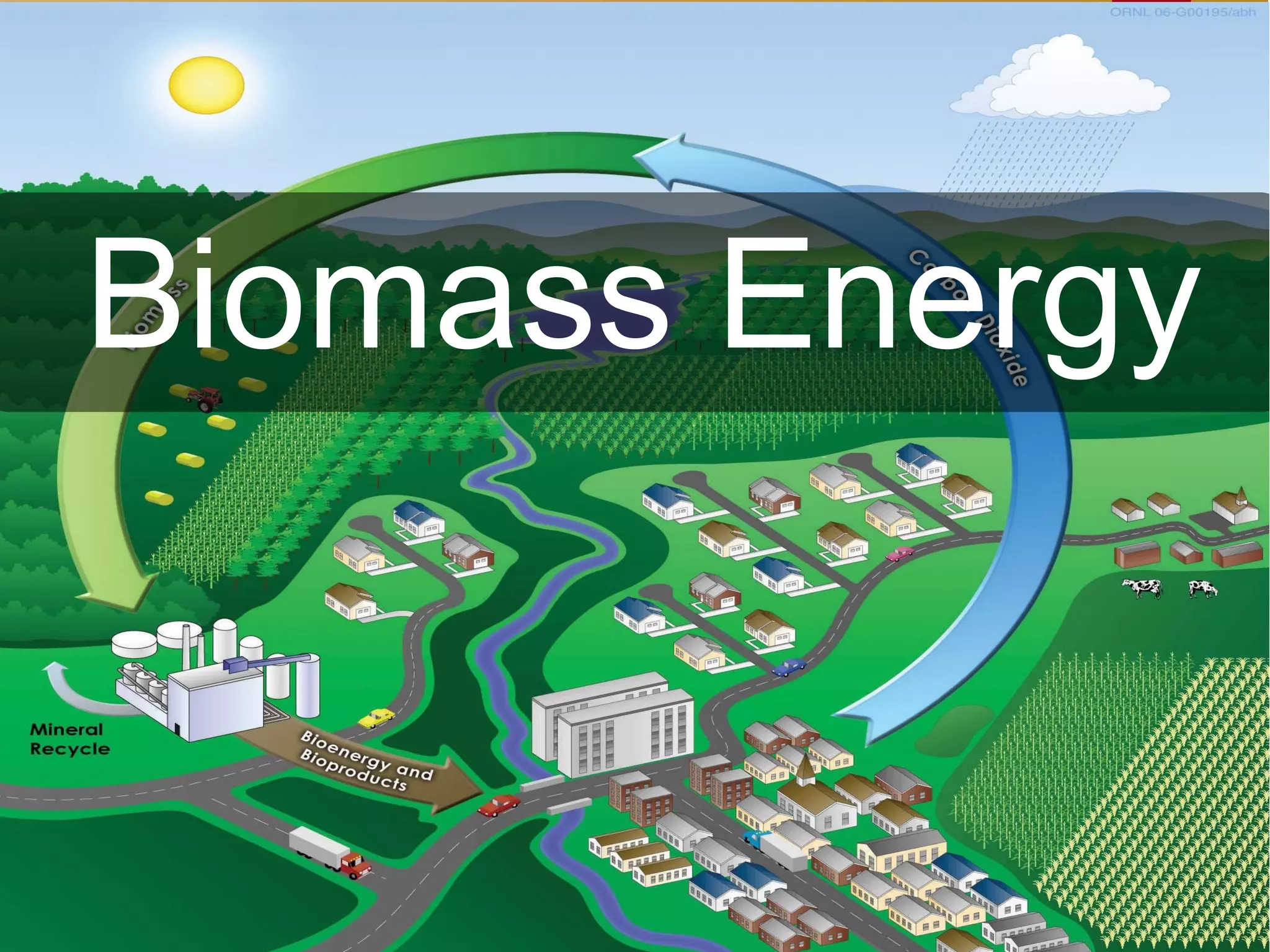
Biomass Energy
Biomass is a renewable energy resource derived from the carbonaceous
waste of various human and natural activities. It is derived from numerous
sources, including the by-products from the timber industry, agricultural
crops, raw material from the forest, major parts of household waste and
wood.
Biomass is biological material derived from living, or recently living
organisms.
In the context of biomass for energy this is often used to mean plant based
material, but biomass can equally apply to both animal and vegetable derived
material.
To many people, the most familiar forms of renewable energy are the wind
and the sun. But biomass (plant material and animal waste) is the oldest
source of renewable energy, used since our ancestors learned the secret of
fire..
Biomass Energy
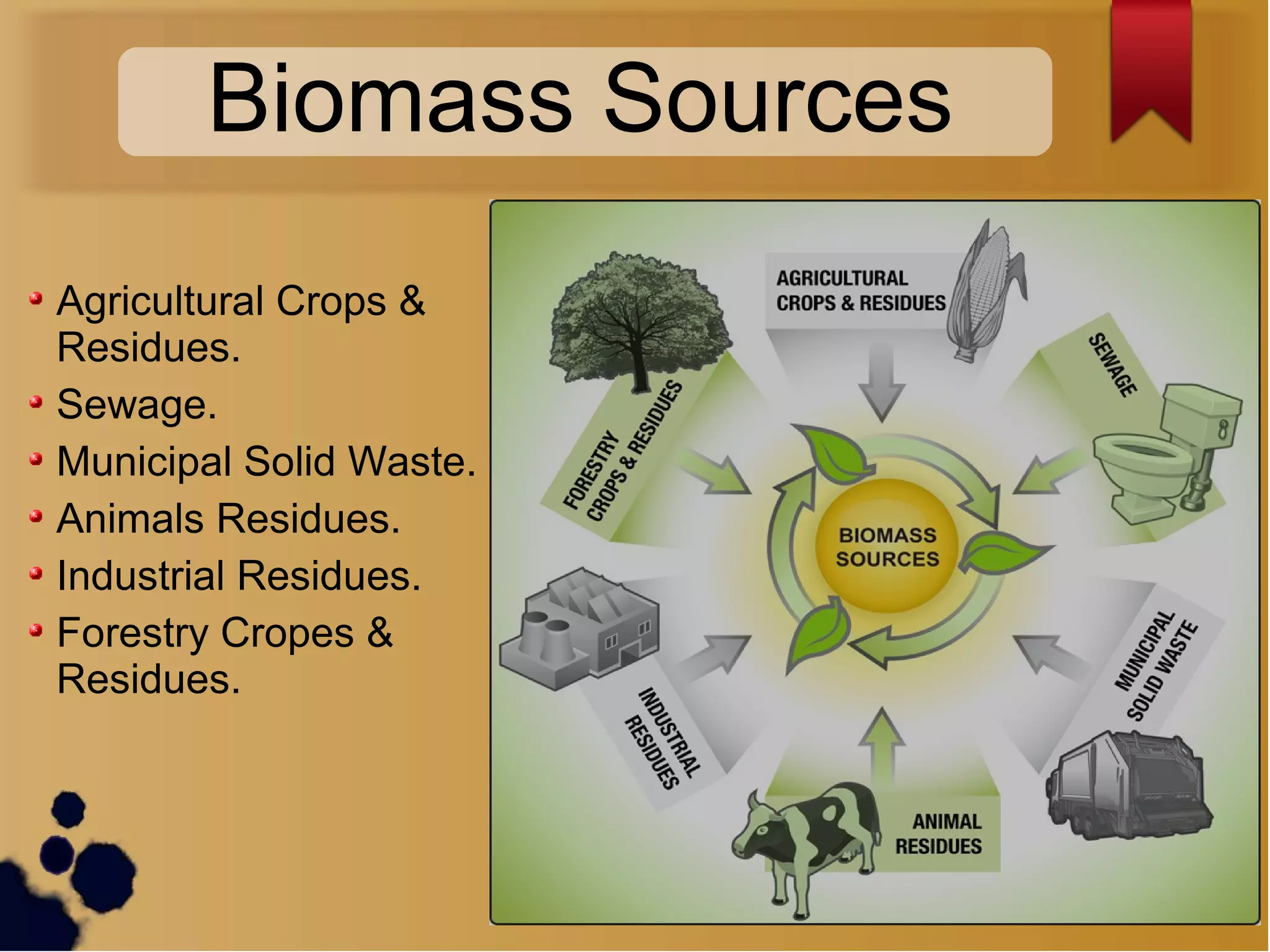
Biomass Sources
Agricultural Crops &
Residues.
Sewage.
Municipal Solid Waste.
Animals Residues.
Industrial Residues.
Forestry Cropes &
Residues.
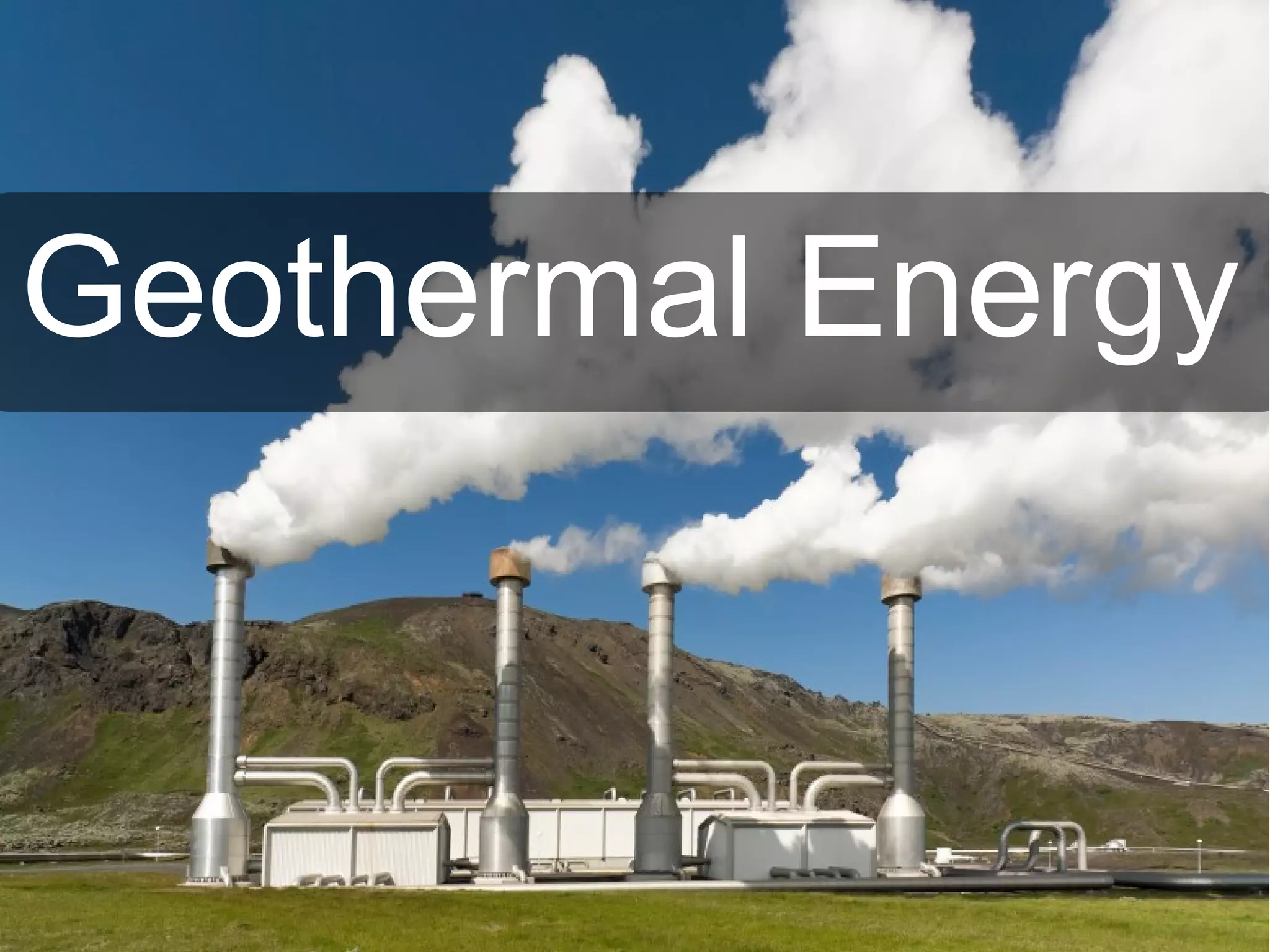
Geothermal Energy
Geothermal Energy
Geothermal energy is the heat from the Earth. It's clean and
sustainable.
Resources of geothermal energy range from the shallow ground to hot
water and hot rock found a few miles beneath the Earth's surface, and
down even deeper to the extremely high temperatures of molten rock
called magma.
There is also the potential to generate geothermal energy from hot dry
rocks.
It is the thermal energy contained in the rock and fluid (that fills the
fractures and pores within the rock) in the earth's crust.
energy.wesrch.com
www.wesrch.com

Main Form of Renewable Energy Resources

  • 1.
  • 2.
    Introduction Renewable energy isgenerally defined as energy that comes from resources which are naturally replenished on a human timescale such as sunlight, wind, rain, tides, waves, and geothermal heat. Renewable energy resources exist over wide geographical areas, in contrast to other energy sources, which are concentrated in a limited number of countries. Rapid deployment of renewable energy and energy efficiency is resulting in significant energy security, climate change mitigation, and economic benefits Renewable energy resources and significant opportunities for energy efficiency exist over wide geographical areas, in contrast to other energy sources, which are concentrated in a limited number of countries.
  • 3.
    Renewable Energy Wind Energy. HydroEnergy. Solar Energy. Biomass Energy. Geothermal Energy. Main Form of Renewable Energy
  • 4.
  • 5.
    Wind Energy Wind iscaused by huge convection currents in the Earth's atmosphere, driven by heat energy from the Sun. This means as long as the sun shines, there will be wind. wind energy is believed to be five times total current global energy production, or 40 times current electricity demand. This could require large amounts of land to be used for wind turbines, particularly in areas of higher wind resources. Offshore resources experience wind speeds of ~90% greater than that of land.
  • 6.
  • 7.
    Hydro Energy The mostcommon type of hydroelectric power plant uses a dam on a river to store water in a reservoir. Water released from the reservoir flows through a turbine, spinning it, which in turn activates a generator to produce electricity. But hydroelectric power doesn't necessarily require a large dam. Hydroelectric energy is a term usually reserved for large-scale hydroelectric dams. This includes marine current power, tidal power and ocean thermal energy conversion.
  • 8.
    What is Dam Damsare massive barriers built across rivers and streams to confine and utilize the flow of water for human purposes such as irrigation and generation of hydroelectricity. It is a medium to store water at a height. Most of hydropower plant rely on dam.
  • 9.
  • 10.
  • 11.
    Solar Energy Solar energyis radiant light and heat from the sun harnessed using a range of ever-evolving technologies such as solar heating, photovoltaics, solar thermal energy, solar architecture and artificial photosynthesis. The large magnitude of solar energy available makes it a highly appealing source of electricity. Solar radiation along with secondary solar resources such as wind and wave power, hydroelectricity and biomass account for most of the available renewable energy on Earth. Passive solar techniques include orienting a building to the Sun, selecting materials with favorable thermal mass or light dispersing properties, and designing spaces that naturally circulate air.
  • 12.
    Solar lighting. water Heating. Heating,CoolingVentilation Electrical generation. Application of Solar Energy
  • 13.
  • 14.
    Biomass is arenewable energy resource derived from the carbonaceous waste of various human and natural activities. It is derived from numerous sources, including the by-products from the timber industry, agricultural crops, raw material from the forest, major parts of household waste and wood. Biomass is biological material derived from living, or recently living organisms. In the context of biomass for energy this is often used to mean plant based material, but biomass can equally apply to both animal and vegetable derived material. To many people, the most familiar forms of renewable energy are the wind and the sun. But biomass (plant material and animal waste) is the oldest source of renewable energy, used since our ancestors learned the secret of fire.. Biomass Energy
  • 15.
    Biomass Sources Agricultural Crops& Residues. Sewage. Municipal Solid Waste. Animals Residues. Industrial Residues. Forestry Cropes & Residues.
  • 16.
  • 17.
    Geothermal Energy Geothermal energyis the heat from the Earth. It's clean and sustainable. Resources of geothermal energy range from the shallow ground to hot water and hot rock found a few miles beneath the Earth's surface, and down even deeper to the extremely high temperatures of molten rock called magma. There is also the potential to generate geothermal energy from hot dry rocks. It is the thermal energy contained in the rock and fluid (that fills the fractures and pores within the rock) in the earth's crust.
  • 18.