What is Energy?
   Energy (E) is the capability to
          perform work


Units of Energy: Joules (J) (in SI
            systems)
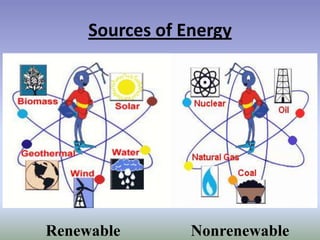
Sources of Energy


Renewable        Nonrenewable
What is Nuclear Energy?
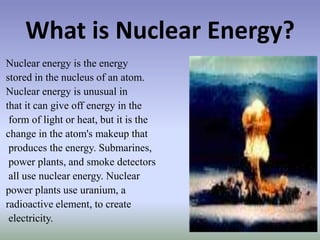
Nuclear energy is the energy
stored in the nucleus of an atom.
Nuclear energy is unusual in
that it can give off energy in the
 form of light or heat, but it is the
change in the atom's makeup that
 produces the energy. Submarines,
 power plants, and smoke detectors
 all use nuclear energy. Nuclear
power plants use uranium, a
radioactive element, to create
 electricity.
NUCLEAR FUEL
• Nuclear fuel is any material that can be
  consumed to derive nuclear energy. The most
  common type of nuclear fuel is fissile
  elements that can be made to undergo
  nuclear fission chain reactions in a nuclear
  reactor
• The most common nuclear fuels are 235U and
  239Pu. Not all nuclear fuels are used in fission
  chain reactions
NUCLEAR FISSION
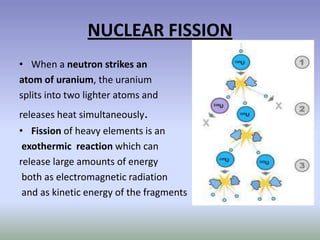
• When a neutron strikes an
atom of uranium, the uranium
splits into two lighter atoms and
releases heat simultaneously.
• Fission of heavy elements is an
 exothermic reaction which can
release large amounts of energy
 both as electromagnetic radiation
 and as kinetic energy of the fragments
NUCLEAR CHAIN REACTIONS
• A chain reaction refers to a process in which
  neutrons released in fission produce an
  additional fission in at least one further
  nucleus. This nucleus in turn produces
  neutrons, and the process repeats. If the
  process is controlled it is used for nuclear
  power or if uncontrolled it is used for nuclear
  weapons
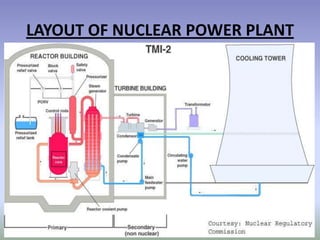
LAYOUT OF NUCLEAR POWER PLANT
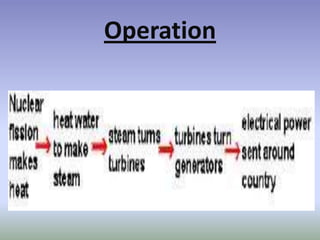
Operation
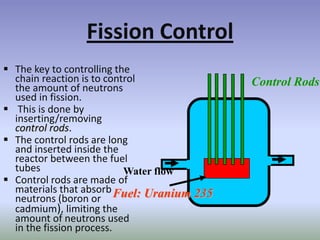
Fission Control
 The key to controlling the
  chain reaction is to control              Control Rods
  the amount of neutrons
  used in fission.
 This is done by
  inserting/removing
  control rods.
 The control rods are long
  and inserted inside the
  reactor between the fuel
  tubes                    Water flow
 Control rods are made of
  materials that absorb Fuel: Uranium 235
  neutrons (boron or
  cadmium), limiting the
  amount of neutrons used
  in the fission process.
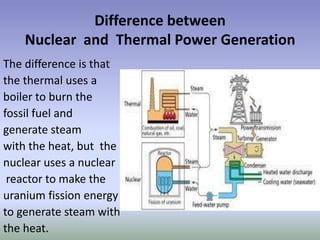
Difference between
    Nuclear and Thermal Power Generation
The difference is that
the thermal uses a
boiler to burn the
fossil fuel and
generate steam
with the heat, but the
nuclear uses a nuclear
 reactor to make the
uranium fission energy
to generate steam with
the heat.
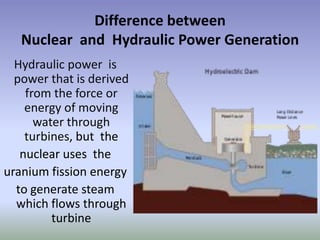
Difference between
   Nuclear and Hydraulic Power Generation
  Hydraulic power is
  power that is derived
    from the force or
    energy of moving
      water through
    turbines, but the
   nuclear uses the
uranium fission energy
  to generate steam
  which flows through
         turbine
Advantages of Nuclear Power Plants
1. High energy density compared to other
   conventional power plants.
2. Low amount of fuel for producing bulk power .
3. Can be located close load centers.
4. Availability of nuclear fuel all over the world.
   ( can ensure continued supply for thousands of
   years)
5. High reliability.
6. Nuclear power plants produce no air pollutants
   or greenhouse gases
Disadvantages of Nuclear Power
               Plants
1. Expensive fuel.
2. High capital cost compared to other
   plants
3. Can represent a dangerous radioactive
   pollution.
4. Are not well suited for varying loads.
5. Waste Disposal
By:

• Mayank Baheti
• Tanay Agrawal
• Sudeepta Borah

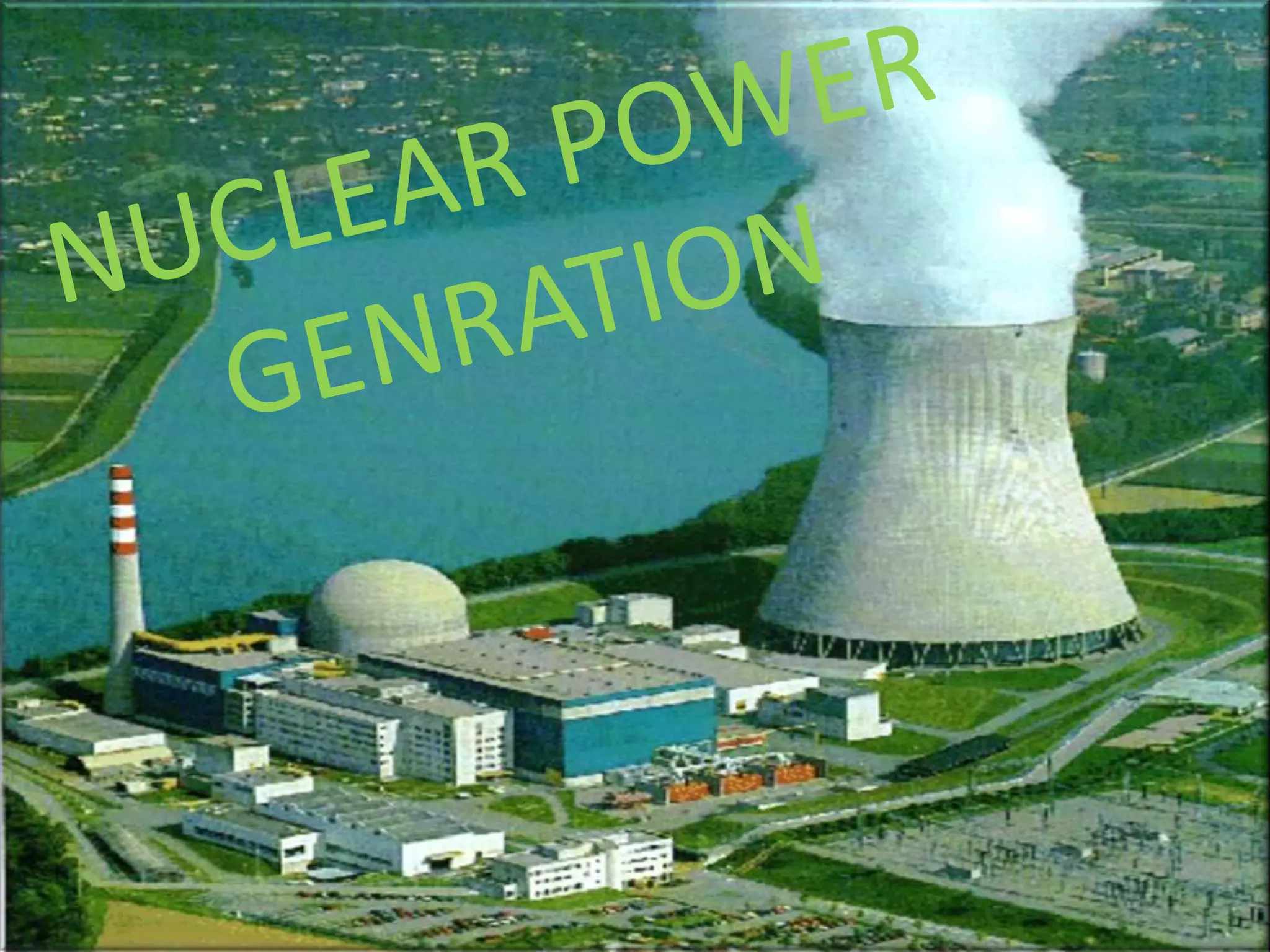
Nuclear power genration

  • 2.
    What is Energy? Energy (E) is the capability to perform work Units of Energy: Joules (J) (in SI systems)
  • 3.
  • 4.
    What is NuclearEnergy? Nuclear energy is the energy stored in the nucleus of an atom. Nuclear energy is unusual in that it can give off energy in the form of light or heat, but it is the change in the atom's makeup that produces the energy. Submarines, power plants, and smoke detectors all use nuclear energy. Nuclear power plants use uranium, a radioactive element, to create electricity.
  • 5.
    NUCLEAR FUEL • Nuclearfuel is any material that can be consumed to derive nuclear energy. The most common type of nuclear fuel is fissile elements that can be made to undergo nuclear fission chain reactions in a nuclear reactor • The most common nuclear fuels are 235U and 239Pu. Not all nuclear fuels are used in fission chain reactions
  • 6.
    NUCLEAR FISSION • Whena neutron strikes an atom of uranium, the uranium splits into two lighter atoms and releases heat simultaneously. • Fission of heavy elements is an exothermic reaction which can release large amounts of energy both as electromagnetic radiation and as kinetic energy of the fragments
  • 7.
    NUCLEAR CHAIN REACTIONS •A chain reaction refers to a process in which neutrons released in fission produce an additional fission in at least one further nucleus. This nucleus in turn produces neutrons, and the process repeats. If the process is controlled it is used for nuclear power or if uncontrolled it is used for nuclear weapons
  • 8.
    LAYOUT OF NUCLEARPOWER PLANT
  • 9.
  • 10.
    Fission Control  Thekey to controlling the chain reaction is to control Control Rods the amount of neutrons used in fission.  This is done by inserting/removing control rods.  The control rods are long and inserted inside the reactor between the fuel tubes Water flow  Control rods are made of materials that absorb Fuel: Uranium 235 neutrons (boron or cadmium), limiting the amount of neutrons used in the fission process.
  • 11.
    Difference between Nuclear and Thermal Power Generation The difference is that the thermal uses a boiler to burn the fossil fuel and generate steam with the heat, but the nuclear uses a nuclear reactor to make the uranium fission energy to generate steam with the heat.
  • 12.
    Difference between Nuclear and Hydraulic Power Generation Hydraulic power is power that is derived from the force or energy of moving water through turbines, but the nuclear uses the uranium fission energy to generate steam which flows through turbine
  • 13.
    Advantages of NuclearPower Plants 1. High energy density compared to other conventional power plants. 2. Low amount of fuel for producing bulk power . 3. Can be located close load centers. 4. Availability of nuclear fuel all over the world. ( can ensure continued supply for thousands of years) 5. High reliability. 6. Nuclear power plants produce no air pollutants or greenhouse gases
  • 14.
    Disadvantages of NuclearPower Plants 1. Expensive fuel. 2. High capital cost compared to other plants 3. Can represent a dangerous radioactive pollution. 4. Are not well suited for varying loads. 5. Waste Disposal
  • 16.
    By: • Mayank Baheti •Tanay Agrawal • Sudeepta Borah