CONTENT
• Introduction toNuclear Energy
• How Nuclear Energy Works
• Nuclear Power Plants
• Uses of Nuclear Energy
• Advantages of Nuclear Energy
• Disadvantages of Nuclear Energy
• Future of Nuclear Energy
• Conclusion
3.
Introduction to Nuclear
Energy
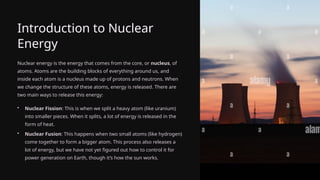
Nuclearenergy is the energy that comes from the core, or nucleus, of
atoms. Atoms are the building blocks of everything around us, and
inside each atom is a nucleus made up of protons and neutrons. When
we change the structure of these atoms, energy is released. There are
two main ways to release this energy:
• Nuclear Fission: This is when we split a heavy atom (like uranium)
into smaller pieces. When it splits, a lot of energy is released in the
form of heat.
• Nuclear Fusion: This happens when two small atoms (like hydrogen)
come together to form a bigger atom. This process also releases a
lot of energy, but we have not yet figured out how to control it for
power generation on Earth, though it’s how the sun works.
4.
How Nuclear EnergyWorks
Nuclear energy works by turning the heat from nuclear reactions into electricity.
Here’s how it happens step by step:
1 Fission (Splitting Atoms)
• In a nuclear power plant, uranium or plutonium atoms are split in
a process called nuclear fission. This splitting releases a lot of
energy as heat.
2 Making Electricity
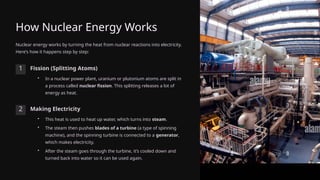
• This heat is used to heat up water, which turns into steam.
• The steam then pushes blades of a turbine (a type of spinning
machine), and the spinning turbine is connected to a generator,
which makes electricity.
• After the steam goes through the turbine, it’s cooled down and
turned back into water so it can be used again.
5.
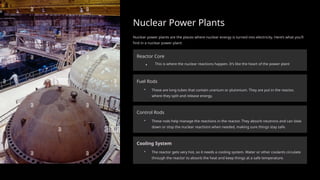
Nuclear Power Plants
Nuclearpower plants are the places where nuclear energy is turned into electricity. Here’s what you’ll
find in a nuclear power plant:
Reactor Core
. This is where the nuclear reactions happen. It’s like the heart of the power plant
Fuel Rods
• These are long tubes that contain uranium or plutonium. They are put in the reactor,
where they split and release energy.
Control Rods
• These rods help manage the reactions in the reactor. They absorb neutrons and can slow
down or stop the nuclear reactions when needed, making sure things stay safe.
Cooling System
• The reactor gets very hot, so it needs a cooling system. Water or other coolants circulate
through the reactor to absorb the heat and keep things at a safe temperature.
7.
Uses of NuclearEnergy
Electricity Generation
• Nuclear energy is used in power plants to produce large amounts of electricity. It’s reliable and can
work around the clock, unlike some renewable sources like solar or wind, which depend on the
weather.
Medical Applications
Radiation Therapy
Medical Imaging
Sterilizing Equipment
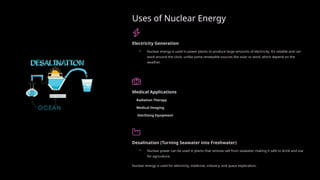
Desalination (Turning Seawater into Freshwater)
• Nuclear power can be used in plants that remove salt from seawater, making it safe to drink and use
for agriculture.
Nuclear energy is used for electricity, medicine, industry, and space exploration.
8.
Advantages of NuclearEnergy
Low Carbon Emissions
Reduces carbon footprint.
High Energy Density
Small fuel, huge energy.
Reduces Dependence on Fossil Fuels
Using nuclear energy helps to reduce reliance on fossil fuels.
9.
Disadvantages of NuclearEnergy
Radioactive Waste
Dangerous for thousands
of years.
High Costs
Expensive to build plants.
Accident Risk
Devastating if accidents
occur.
Limited Fuel Supply
The fuel for nuclear
reactors, like uranium, is
limited
10.
Future of NuclearEnergy
Nuclear Fusion
• Fusion is the process that powers the Sun, where light atoms like hydrogen combine to make heavier
atoms, releasing energy. If we can control fusion here on Earth, it could provide nearly unlimited, clean
energy. However, scientists are still working on making fusion a reality.
Small Modular Reactors (SMRs)
• SMRs are small, portable nuclear reactors that are cheaper and easier to build
than traditional large reactors. They can be used in remote areas or as backups
for renewable energy sources.
Combining with Renewable Energy
• In the future, nuclear energy could work together with
renewable sources like solar and wind to provide stable
energy when the sun isn’t shining or the wind isn’t
blowing.
11.
Conclusion
In conclusion, nuclearenergy is a powerful and efficient way to generate electricity. It has many benefits, like being low in
carbon emissions and providing reliable power. But it also has challenges, such as managing radioactive waste and the high
cost of building plants. The future looks hopeful with advancements in nuclear fusion and new reactor designs like SMRs. If
we continue improving technology and managing risks, nuclear energy could play a key role in the world’s energy mix.