
Nuclear Energy
What is Nuclear
Energy?

The energy stored in the nucleus of
 an atom and released through fission,
        fusion, or radioactivity.
     Also called atomic energy.
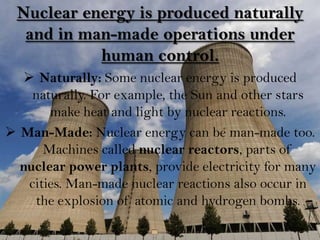
Nuclear energy is produced naturally
  and in man-made operations under
           human control.
   Naturally: Some nuclear energy is produced
    naturally. For example, the Sun and other stars
       make heat and light by nuclear reactions.
 Man-Made: Nuclear energy can be man-made too.
      Machines called nuclear reactors, parts of
  nuclear power plants, provide electricity for many
   cities. Man-made nuclear reactions also occur in
    the explosion of atomic and hydrogen bombs.
Nuclear energy is produced
in two different ways:

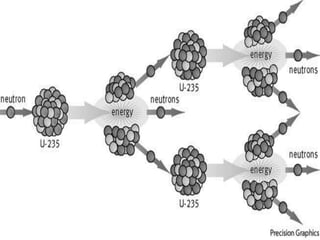
 Nuclear Fission (In one method, large nuclei
          are split to release energy.)
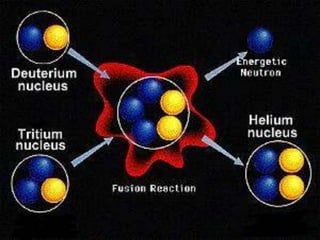
 Nuclear Fusion (In the other method, small
    nuclei are combined to release energy.)
Nuclear Fission

   It is a nuclear reaction in which an
   atomic nucleus splits into fragments,
  usually two fragments of comparable
   mass, emitting 100 million to several
     hundred million volts of energy.
Nuclear Fusion
   A process in which several small nuclei
 combine to make a larger one whose mass is
   slightly smaller than the sum of the small
  ones. The difference in mass is converted to
                 energy E = mc2
  In stars, hydrogen fuses into helium. The
  energy emitted by fusion prevents the star
   from collapsing in on itself and causes the
                  star to glow.
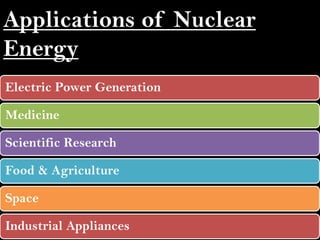
Applications of Nuclear
Energy
Electric Power Generation

Medicine

Scientific Research

Food & Agriculture

Space

Industrial Appliances
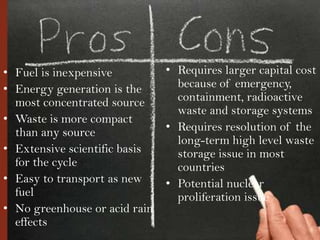
• Fuel is inexpensive          • Requires larger capital cost
• Energy generation is the       because of emergency,
  most concentrated source       containment, radioactive
                                 waste and storage systems
• Waste is more compact
  than any source              • Requires resolution of the
                                 long-term high level waste
• Extensive scientific basis     storage issue in most
  for the cycle                  countries
• Easy to transport as new     • Potential nuclear
  fuel                           proliferation issue
• No greenhouse or acid rain
  effects
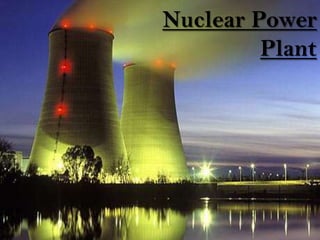
Nuclear Power
         Plant
Nuclear Disasters
and Accidents
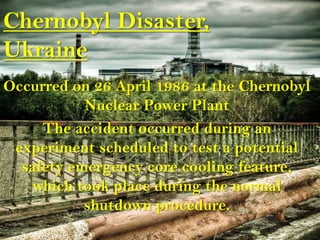
Chernobyl Disaster,
Ukraine
Occurred on 26 April 1986 at the Chernobyl
           Nuclear Power Plant
     The accident occurred during an
 experiment scheduled to test a potential
  safety emergency core cooling feature,
   which took place during the normal
           shutdown procedure.
Effects
   Four square kilometers of pine forest directly
   downwind of the reactor turned reddish-brown
                       and died.
 Horses left on an island in the Pripyat River 6 km
        (4 mi) from the power plant died when
   their thyroid glands were destroyed by radiation
                        doses.
 237 people suffered from acute radiation sickness
                       and died.
            10,00,000 people exposed.
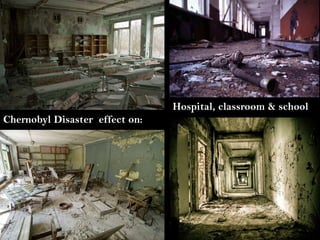
Hospital, classroom & school
Chernobyl Disaster effect on:
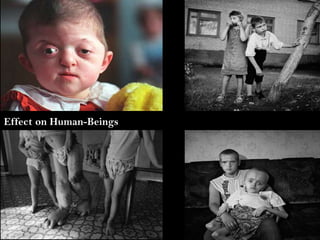
Effect
F        on Human-Beings
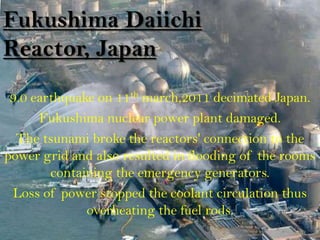
Fukushima Daiichi
Reactor, Japan
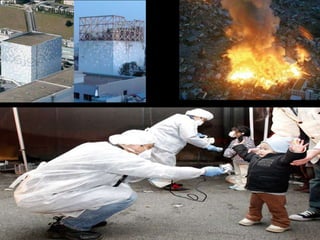
 9.0 earthquake on 11th march,2011 decimated Japan.
      Fukushima nuclear power plant damaged.
  The tsunami broke the reactors' connection to the
power grid and also resulted in flooding of the rooms
        containing the emergency generators.
 Loss of power stopped the coolant circulation thus
              overheating the fuel rods.
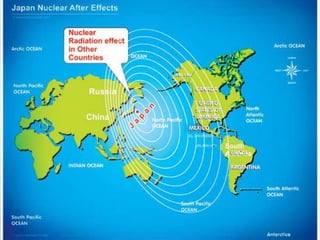
Effects

 Area around the plant uninhabitable for at least
                      20years.
 The burning fuel rods will need another 150-180
    years to be safely removed from the plant.
   1/10th of radiation released as compared to
                     Chernobyl.
Nuclear energy
Nuclear energy
Nuclear energy

Nuclear energy

  • 1.
  • 2.
    What is Nuclear Energy? Theenergy stored in the nucleus of an atom and released through fission, fusion, or radioactivity. Also called atomic energy.
  • 3.
    Nuclear energy isproduced naturally and in man-made operations under human control.  Naturally: Some nuclear energy is produced naturally. For example, the Sun and other stars make heat and light by nuclear reactions.  Man-Made: Nuclear energy can be man-made too. Machines called nuclear reactors, parts of nuclear power plants, provide electricity for many cities. Man-made nuclear reactions also occur in the explosion of atomic and hydrogen bombs.
  • 4.
    Nuclear energy isproduced in two different ways:  Nuclear Fission (In one method, large nuclei are split to release energy.)  Nuclear Fusion (In the other method, small nuclei are combined to release energy.)
  • 5.
    Nuclear Fission  It is a nuclear reaction in which an atomic nucleus splits into fragments, usually two fragments of comparable mass, emitting 100 million to several hundred million volts of energy.
  • 7.
    Nuclear Fusion  A process in which several small nuclei combine to make a larger one whose mass is slightly smaller than the sum of the small ones. The difference in mass is converted to energy E = mc2  In stars, hydrogen fuses into helium. The energy emitted by fusion prevents the star from collapsing in on itself and causes the star to glow.
  • 9.
    Applications of Nuclear Energy ElectricPower Generation Medicine Scientific Research Food & Agriculture Space Industrial Appliances
  • 10.
    • Fuel isinexpensive • Requires larger capital cost • Energy generation is the because of emergency, most concentrated source containment, radioactive waste and storage systems • Waste is more compact than any source • Requires resolution of the long-term high level waste • Extensive scientific basis storage issue in most for the cycle countries • Easy to transport as new • Potential nuclear fuel proliferation issue • No greenhouse or acid rain effects
  • 12.
  • 14.
  • 16.
    Chernobyl Disaster, Ukraine Occurred on26 April 1986 at the Chernobyl Nuclear Power Plant The accident occurred during an experiment scheduled to test a potential safety emergency core cooling feature, which took place during the normal shutdown procedure.
  • 17.
    Effects Four square kilometers of pine forest directly downwind of the reactor turned reddish-brown and died.  Horses left on an island in the Pripyat River 6 km (4 mi) from the power plant died when their thyroid glands were destroyed by radiation doses.  237 people suffered from acute radiation sickness and died.  10,00,000 people exposed.
  • 18.
    Hospital, classroom &school Chernobyl Disaster effect on:
  • 19.
    Effect F on Human-Beings
  • 20.
    Fukushima Daiichi Reactor, Japan 9.0 earthquake on 11th march,2011 decimated Japan. Fukushima nuclear power plant damaged. The tsunami broke the reactors' connection to the power grid and also resulted in flooding of the rooms containing the emergency generators. Loss of power stopped the coolant circulation thus overheating the fuel rods.
  • 21.
    Effects  Area aroundthe plant uninhabitable for at least 20years.  The burning fuel rods will need another 150-180 years to be safely removed from the plant.  1/10th of radiation released as compared to Chernobyl.