Non-
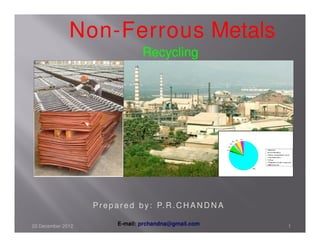
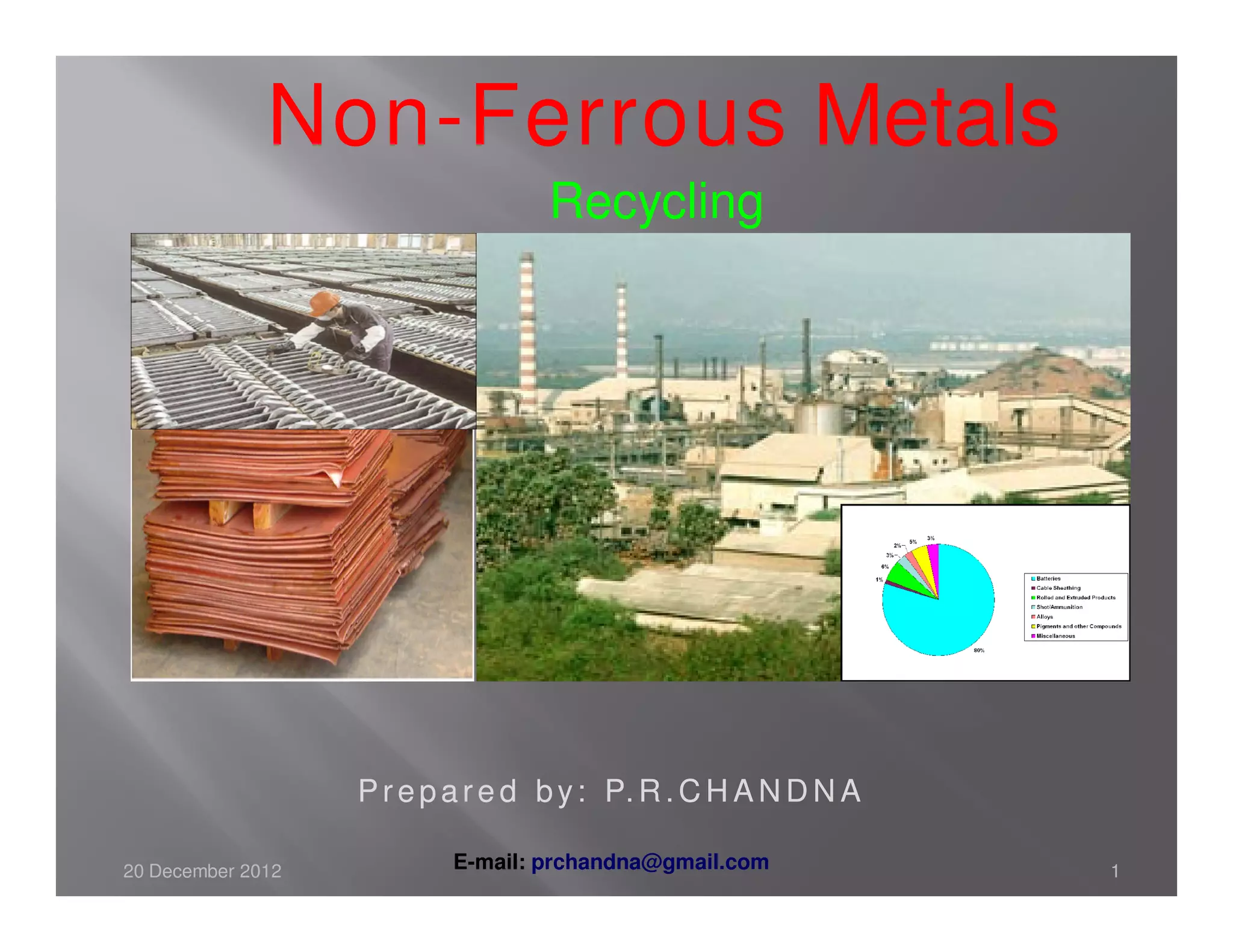
              Non - Ferrous Metals
                                  Recycling


                   P r e p a r e d b y : P. R . C H A N D N A

20 December 2012          E-mail: prchandna@gmail.com           1
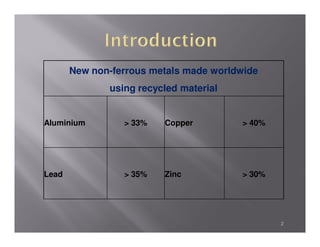
New non-ferrous metals made worldwide
              using recycled material


Aluminium        > 33%   Copper         > 40%


Lead             > 35%   Zinc           > 30%


                                                2
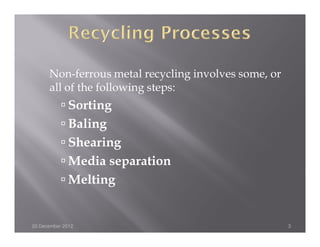
Non-ferrous metal recycling involves some, or
      all of the following steps:
              Sorting
              Baling
              Shearing
              Media separation
              Melting


20 December 2012                                      3
Aluminium has (great recycling potential) and
      is often re-used for the same application for
      which it was originally manufactured. Its
      strength, flexibility and light weight, make it
      ideal for:
         • Building & Construction.
         • Transportation.
         • Packaging.
         • Electricity.
         • Cooking and Tableware.

20 December 2012                                        4
After silver, copper has the best electrical conductivity. It is
      also very good thermal conductor and is readily alloyed
      with other metals such as lead, tin and zinc for foundry
      applications to produce, among other goods, products for
      the transmission of water such as valves. Other common
      applications for recovered copper include:
      Electrical applications: Wires, circuits, switches and
      electromagnets.
      Piping: Plumbing fittings and also in refrigeration, air
      conditioning and water supply systems.
      Roofing and insulation.
      Household items: cookware, doorknobs, and cutlery.


20 December 2012                                                         5
Most of recycled lead is used in batteries, but there are
      many other applications for this metal:

      Car batteries: Lead is still used extensively in the plates
      that work as electrodes.
      Colouring: Although less common today, it is used in
      ceramic and glass glazing.
      Radiation protection: Lead offers protection against X-
      rays.


20 December 2012                                                    6
Zinc is present in everyday life in the form of coins. However, it
      also has other important uses:

      Galvanisation: Zinc is commonly applied as a coating to protect
      iron and steel from corrosion in a process known as galvanisation.
      Batteries: As an anode component material in batteries.
      Brass: Created by alloying zinc and copper.


20 December 2012                                                           7
Of an estimated total of 700 million tonnes of aluminium
      produced since commercial manufacturing began in the 1880s,
      about 75% of this is still being used as secondary raw material
      today.
      One tonne of recycled aluminium saves up to 8 tonnes of bauxite,
      14,000 kWh of energy, 40 barrels (6,300 litres) of oil, 238 million
      Btu's of energy and 7.6 cubic metres of landfill.
      The energy saved by recycling one tonne of aluminium is more
      than enough to power a US household for a whole year (The
      average US household uses about 10,000 kWh year).
      Recycling aluminium uses 95% less energy than producing
      aluminium using raw materials.


20 December 2012                                                            8
Recycling one aluminium can saves enough energy to
      power a 100-watt bulb for almost four hours.
      A used aluminium can is recycled and back on the
      grocery shelf in as little as 60 days.
      For every single can manufactured using virgin ore, the
      same amount of energy used will produce 20 recycled
      cans.
      The aluminium drink can is the world's most recycled
      container - more than 63% of all cans are recycled
      worldwide.

20 December 2012                                                9
Copper’s recycling value is so high that premium-
      grade scrap holds at least 95% of the value of the
      primary metal from newly mined ore.
      Recycling copper saves up to 85% of the energy used in
      primary production.
      In order to extract copper from copper ore, the energy
      required is approximately 95 million Btu/tonne.
      Recycling copper uses much less energy, about 10
      million Btu/tonne.
      By using copper scrap, we reduce CO2 emissions by
      65%.


20 December 2012                                           10
50% of the lead produced and used each year
      throughout the world has been used before in other
      products.
      Today, about 80% of lead is used in acid batteries, all of
      which is recoverable and recyclable. Some countries
      boast a 100% recycling rate and most are capable of the
      same result.
      Using secondary lead instead of ore reduces CO2
      emissions by 99%.


20 December 2012                                               11
The average car contains up to 10 kg of zinc in its galvanized
      body panels. When they are discarded, these panels can be
      readily made into new parts of identical quality.
      Total recovery of zinc amounts to 2.9 million tonnes, of
      which 1.5 million are new scrap or process residues and 1.4
      million are old scrap.
      Secondary zinc production uses 76% less energy than
      primary.
      Nearly 70% of zinc from end-of-life products is recycled.
      Old zinc scrap consists primarily of die cast parts, brass
      objects, end-of-life vehicles, household appliances, old air
      conditioning ducts, obsolete highway barriers, and street
      lighting.

20 December 2012                                                   12

Non-ferrous Metal Recycling

  • 1.
    Non- Non - Ferrous Metals Recycling P r e p a r e d b y : P. R . C H A N D N A 20 December 2012 E-mail: prchandna@gmail.com 1
  • 2.
    New non-ferrous metalsmade worldwide using recycled material Aluminium > 33% Copper > 40% Lead > 35% Zinc > 30% 2
  • 3.
    Non-ferrous metal recyclinginvolves some, or all of the following steps: Sorting Baling Shearing Media separation Melting 20 December 2012 3
  • 4.
    Aluminium has (greatrecycling potential) and is often re-used for the same application for which it was originally manufactured. Its strength, flexibility and light weight, make it ideal for: • Building & Construction. • Transportation. • Packaging. • Electricity. • Cooking and Tableware. 20 December 2012 4
  • 5.
    After silver, copperhas the best electrical conductivity. It is also very good thermal conductor and is readily alloyed with other metals such as lead, tin and zinc for foundry applications to produce, among other goods, products for the transmission of water such as valves. Other common applications for recovered copper include: Electrical applications: Wires, circuits, switches and electromagnets. Piping: Plumbing fittings and also in refrigeration, air conditioning and water supply systems. Roofing and insulation. Household items: cookware, doorknobs, and cutlery. 20 December 2012 5
  • 6.
    Most of recycledlead is used in batteries, but there are many other applications for this metal: Car batteries: Lead is still used extensively in the plates that work as electrodes. Colouring: Although less common today, it is used in ceramic and glass glazing. Radiation protection: Lead offers protection against X- rays. 20 December 2012 6
  • 7.
    Zinc is presentin everyday life in the form of coins. However, it also has other important uses: Galvanisation: Zinc is commonly applied as a coating to protect iron and steel from corrosion in a process known as galvanisation. Batteries: As an anode component material in batteries. Brass: Created by alloying zinc and copper. 20 December 2012 7
  • 8.
    Of an estimatedtotal of 700 million tonnes of aluminium produced since commercial manufacturing began in the 1880s, about 75% of this is still being used as secondary raw material today. One tonne of recycled aluminium saves up to 8 tonnes of bauxite, 14,000 kWh of energy, 40 barrels (6,300 litres) of oil, 238 million Btu's of energy and 7.6 cubic metres of landfill. The energy saved by recycling one tonne of aluminium is more than enough to power a US household for a whole year (The average US household uses about 10,000 kWh year). Recycling aluminium uses 95% less energy than producing aluminium using raw materials. 20 December 2012 8
  • 9.
    Recycling one aluminiumcan saves enough energy to power a 100-watt bulb for almost four hours. A used aluminium can is recycled and back on the grocery shelf in as little as 60 days. For every single can manufactured using virgin ore, the same amount of energy used will produce 20 recycled cans. The aluminium drink can is the world's most recycled container - more than 63% of all cans are recycled worldwide. 20 December 2012 9
  • 10.
    Copper’s recycling valueis so high that premium- grade scrap holds at least 95% of the value of the primary metal from newly mined ore. Recycling copper saves up to 85% of the energy used in primary production. In order to extract copper from copper ore, the energy required is approximately 95 million Btu/tonne. Recycling copper uses much less energy, about 10 million Btu/tonne. By using copper scrap, we reduce CO2 emissions by 65%. 20 December 2012 10
  • 11.
    50% of thelead produced and used each year throughout the world has been used before in other products. Today, about 80% of lead is used in acid batteries, all of which is recoverable and recyclable. Some countries boast a 100% recycling rate and most are capable of the same result. Using secondary lead instead of ore reduces CO2 emissions by 99%. 20 December 2012 11
  • 12.
    The average carcontains up to 10 kg of zinc in its galvanized body panels. When they are discarded, these panels can be readily made into new parts of identical quality. Total recovery of zinc amounts to 2.9 million tonnes, of which 1.5 million are new scrap or process residues and 1.4 million are old scrap. Secondary zinc production uses 76% less energy than primary. Nearly 70% of zinc from end-of-life products is recycled. Old zinc scrap consists primarily of die cast parts, brass objects, end-of-life vehicles, household appliances, old air conditioning ducts, obsolete highway barriers, and street lighting. 20 December 2012 12