A Presentation by: P.R. Chandna
                              1
Process Description
Scrap Automotive Lead Acid Battery
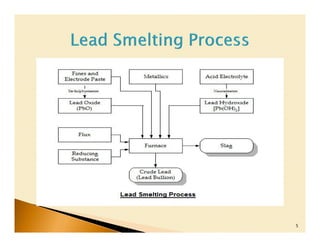
Lead Smelting Process
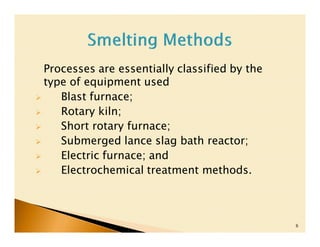
Smelting Methods
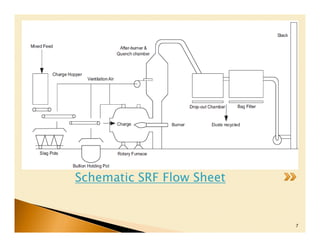
Schematic SRF Flow Sheet
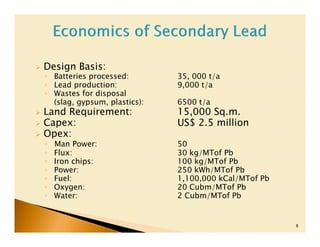
Economics of Secondary Lead


                                     2
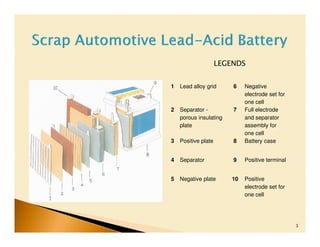
LEGENDS


1   Lead alloy grid      6   Negative
                             electrode set for
                             one cell
2   Separator -          7   Full electrode
    porous insulating        and separator
    plate                    assembly for
                             one cell
3   Positive plate       8   Battery case


4   Separator            9   Positive terminal


5   Negative plate      10   Positive
                             electrode set for
                             one cell


                                                 3
Brief Lead Acid Battery Recycling Process: The batteries are cut and broken
                                  Process:
apart. Polypropylene pieces are collected, washed, blown dry, and sold to a
plastic recycler.

Lead Smelting:
Lead grids, lead oxide, and other lead parts are cleaned and smelted
furnaces. The molten melted lead is then poured into ingot molds. The
ingots are cooled, stacked and sold to battery manufacturers, where they’re
re-melted and used in the production of new batteries.

Sulfuric Acid
Old battery acid can be handled in two ways: 1) The acid is neutralized with
baking soda. Neutralization converts the acid into water. The water is then
treated, cleaned, tested in a waste water treatment plant to be sure it meets
clean water standards. 2) The acid is processed and converted to sodium
sulfate, an odorless white powder that’s used in laundry detergent, glass,
and textile manufacturing.


                                                                                4
5
Processes are essentially classified by the
type of equipment used
   Blast furnace;
   Rotary kiln;
   Short rotary furnace;
   Submerged lance slag bath reactor;
   Electric furnace; and
   Electrochemical treatment methods.


                                              6
Schematic SRF Flow Sheet


                           7
Design Basis:
◦ Batteries processed:        35, 000 t/a
◦ Lead production:            9,000 t/a
◦ Wastes for disposal
  (slag, gypsum, plastics):   6500 t/a
Land Requirement:             15,000 Sq.m.
Capex:                        US$ 2.5 million
Opex:
◦ Man Power:                  50
◦   Flux:                     30 kg/MTof Pb
◦   Iron chips:               100 kg/MTof Pb
◦   Power:                    250 kWh/MTof Pb
◦   Fuel:                     1,100,000 kCal/MTof Pb
◦   Oxygen:                   20 Cubm/MTof Pb
◦   Water:                    2 Cubm/MTof Pb


                                                       8
P. R. Chandna
710, MECON Apartments,
C-58/10, Sector-62,
NOIDA, UP, INDIA
prchandna@gmail.com, prchandna@hotmail.com
Mobile: +91 9999724888


                                             9

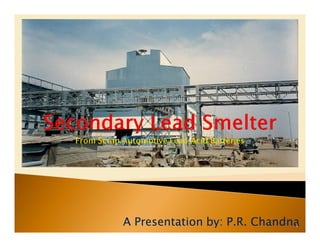
Secondary lead recycling

  • 1.
    A Presentation by:P.R. Chandna 1
  • 2.
    Process Description Scrap AutomotiveLead Acid Battery Lead Smelting Process Smelting Methods Schematic SRF Flow Sheet Economics of Secondary Lead 2
  • 3.
    LEGENDS 1 Lead alloy grid 6 Negative electrode set for one cell 2 Separator - 7 Full electrode porous insulating and separator plate assembly for one cell 3 Positive plate 8 Battery case 4 Separator 9 Positive terminal 5 Negative plate 10 Positive electrode set for one cell 3
  • 4.
    Brief Lead AcidBattery Recycling Process: The batteries are cut and broken Process: apart. Polypropylene pieces are collected, washed, blown dry, and sold to a plastic recycler. Lead Smelting: Lead grids, lead oxide, and other lead parts are cleaned and smelted furnaces. The molten melted lead is then poured into ingot molds. The ingots are cooled, stacked and sold to battery manufacturers, where they’re re-melted and used in the production of new batteries. Sulfuric Acid Old battery acid can be handled in two ways: 1) The acid is neutralized with baking soda. Neutralization converts the acid into water. The water is then treated, cleaned, tested in a waste water treatment plant to be sure it meets clean water standards. 2) The acid is processed and converted to sodium sulfate, an odorless white powder that’s used in laundry detergent, glass, and textile manufacturing. 4
  • 5.
  • 6.
    Processes are essentiallyclassified by the type of equipment used Blast furnace; Rotary kiln; Short rotary furnace; Submerged lance slag bath reactor; Electric furnace; and Electrochemical treatment methods. 6
  • 7.
  • 8.
    Design Basis: ◦ Batteriesprocessed: 35, 000 t/a ◦ Lead production: 9,000 t/a ◦ Wastes for disposal (slag, gypsum, plastics): 6500 t/a Land Requirement: 15,000 Sq.m. Capex: US$ 2.5 million Opex: ◦ Man Power: 50 ◦ Flux: 30 kg/MTof Pb ◦ Iron chips: 100 kg/MTof Pb ◦ Power: 250 kWh/MTof Pb ◦ Fuel: 1,100,000 kCal/MTof Pb ◦ Oxygen: 20 Cubm/MTof Pb ◦ Water: 2 Cubm/MTof Pb 8
  • 9.
    P. R. Chandna 710,MECON Apartments, C-58/10, Sector-62, NOIDA, UP, INDIA prchandna@gmail.com, prchandna@hotmail.com Mobile: +91 9999724888 9