
PRESENTATIONON
NON-FERROUS METALS
ZINC . COPPER . LEAD
KUNAL BAGUL
PIYUSHA DESHPANDE
SIDDHI PANDEY
SIDDHIKA CHICHANI
GAURI MHAROLKAR
MAYUR WAGHULDE
SAUMITRA JADHAV
GUIDED BY
AR. ARUN BORE AR. ROHIT RAKA AR. MEGHNA
PARKAR
Department of Architecture
MGM’s Jawaharlal Nehru Engineering College, Aurangabad
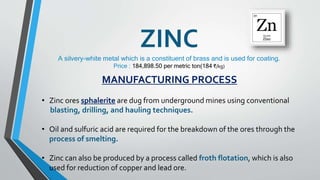
ZINC
A silvery-white metal which is a constituent of brass and is used for coating.
Price : 184,898.50 per metric ton(184 ₹/kg)
MANUFACTURING PROCESS
• Zinc ores sphalerite are dug from underground mines using conventional
blasting, drilling, and hauling techniques.
• Oil and sulfuric acid are required for the breakdown of the ores through the
process of smelting.
• Zinc can also be produced by a process called froth flotation, which is also
used for reduction of copper and lead ore.
.
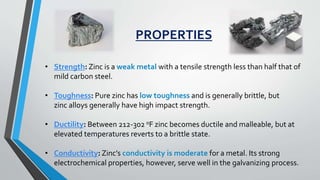
PROPERTIES
• Strength: Zinc is a weak metal with a tensile strength less than half that of
mild carbon steel.
• Toughness: Pure zinc has low toughness and is generally brittle, but
zinc alloys generally have high impact strength.
• Ductility: Between 212-302 oF zinc becomes ductile and malleable, but at
elevated temperatures reverts to a brittle state.
• Conductivity: Zinc’s conductivity is moderate for a metal. Its strong
electrochemical properties, however, serve well in the galvanizing process.
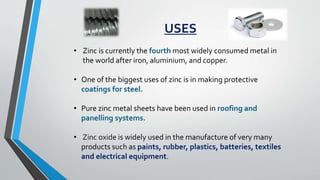
USES
• Zinc is currently the fourth most widely consumed metal in
the world after iron, aluminium, and copper.
• One of the biggest uses of zinc is in making protective
coatings for steel.
• Pure zinc metal sheets have been used in roofing and
panelling systems.
• Zinc oxide is widely used in the manufacture of very many
products such as paints, rubber, plastics, batteries, textiles
and electrical equipment.
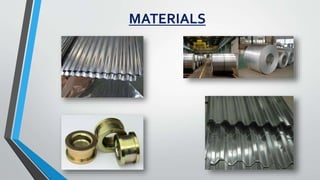
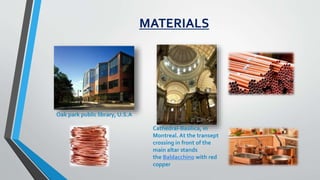
MATERIALS
COPPER
It is a reddish-orange soft, malleable and ductile metal with
very high thermal and electrical conductivity.
Price : 384.85 ₹/Kg
MANUFACTURING PROCESS
• Copper is mined in open pits and below ground.The ore usually
contains less than 1% copper and is often associated with sulphide
minerals.
• Pyrometallurgy or smelting, is used on ore with copper sulphide
and iron sulphide minerals.
PROPERTIES
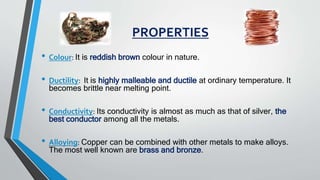
• Colour: It is reddish brown colour in nature.
• Ductility: It is highly malleable and ductile at ordinary temperature. It
becomes brittle near melting point.
• Conductivity: Its conductivity is almost as much as that of silver, the
best conductor among all the metals.
• Alloying: Copper can be combined with other metals to make alloys.
The most well known are brass and bronze.
USES
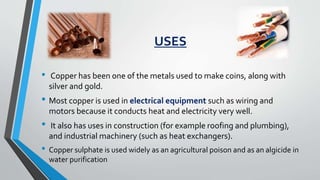
• Copper has been one of the metals used to make coins, along with
silver and gold.
• Most copper is used in electrical equipment such as wiring and
motors because it conducts heat and electricity very well.
• It also has uses in construction (for example roofing and plumbing),
and industrial machinery (such as heat exchangers).
• Copper sulphate is used widely as an agricultural poison and as an algicide in
water purification
MATERIALS
Oak park public library, U.S.A
Cathedral-Basilica, in
Montreal. At the transept
crossing in front of the
main altar stands
the Baldacchino with red
copper
LEAD
MANUFACTURING PROCESS
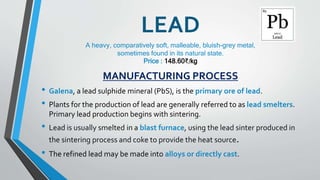
• Galena, a lead sulphide mineral (PbS), is the primary ore of lead.
• Plants for the production of lead are generally referred to as lead smelters.
Primary lead production begins with sintering.
• Lead is usually smelted in a blast furnace, using the lead sinter produced in
the sintering process and coke to provide the heat source.
• The refined lead may be made into alloys or directly cast.
A heavy, comparatively soft, malleable, bluish-grey metal,
sometimes found in its natural state.
Price : 148.60₹/kg
PROPERTIES
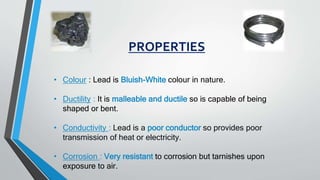
• Colour : Lead is Bluish-White colour in nature.
• Ductility : It is malleable and ductile so is capable of being
shaped or bent.
• Conductivity : Lead is a poor conductor so provides poor
transmission of heat or electricity.
• Corrosion : Very resistant to corrosion but tarnishes upon
exposure to air.
USES
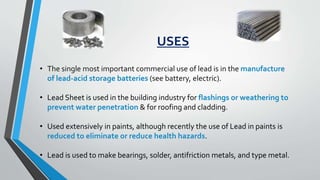
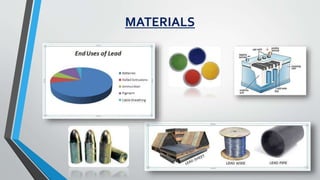
• The single most important commercial use of lead is in the manufacture
of lead-acid storage batteries (see battery, electric).
• Lead Sheet is used in the building industry for flashings or weathering to
prevent water penetration & for roofing and cladding.
• Used extensively in paints, although recently the use of Lead in paints is
reduced to eliminate or reduce health hazards.
• Lead is used to make bearings, solder, antifriction metals, and type metal.
MATERIALS
THANK YOU

Non Ferrous Metals

  • 1.
    PRESENTATIONON NON-FERROUS METALS ZINC .COPPER . LEAD KUNAL BAGUL PIYUSHA DESHPANDE SIDDHI PANDEY SIDDHIKA CHICHANI GAURI MHAROLKAR MAYUR WAGHULDE SAUMITRA JADHAV GUIDED BY AR. ARUN BORE AR. ROHIT RAKA AR. MEGHNA PARKAR Department of Architecture MGM’s Jawaharlal Nehru Engineering College, Aurangabad
  • 2.
    ZINC A silvery-white metalwhich is a constituent of brass and is used for coating. Price : 184,898.50 per metric ton(184 ₹/kg) MANUFACTURING PROCESS • Zinc ores sphalerite are dug from underground mines using conventional blasting, drilling, and hauling techniques. • Oil and sulfuric acid are required for the breakdown of the ores through the process of smelting. • Zinc can also be produced by a process called froth flotation, which is also used for reduction of copper and lead ore.
  • 3.
    . PROPERTIES • Strength: Zincis a weak metal with a tensile strength less than half that of mild carbon steel. • Toughness: Pure zinc has low toughness and is generally brittle, but zinc alloys generally have high impact strength. • Ductility: Between 212-302 oF zinc becomes ductile and malleable, but at elevated temperatures reverts to a brittle state. • Conductivity: Zinc’s conductivity is moderate for a metal. Its strong electrochemical properties, however, serve well in the galvanizing process.
  • 4.
    USES • Zinc iscurrently the fourth most widely consumed metal in the world after iron, aluminium, and copper. • One of the biggest uses of zinc is in making protective coatings for steel. • Pure zinc metal sheets have been used in roofing and panelling systems. • Zinc oxide is widely used in the manufacture of very many products such as paints, rubber, plastics, batteries, textiles and electrical equipment.
  • 5.
  • 6.
    COPPER It is areddish-orange soft, malleable and ductile metal with very high thermal and electrical conductivity. Price : 384.85 ₹/Kg MANUFACTURING PROCESS • Copper is mined in open pits and below ground.The ore usually contains less than 1% copper and is often associated with sulphide minerals. • Pyrometallurgy or smelting, is used on ore with copper sulphide and iron sulphide minerals.
  • 7.
    PROPERTIES • Colour: Itis reddish brown colour in nature. • Ductility: It is highly malleable and ductile at ordinary temperature. It becomes brittle near melting point. • Conductivity: Its conductivity is almost as much as that of silver, the best conductor among all the metals. • Alloying: Copper can be combined with other metals to make alloys. The most well known are brass and bronze.
  • 8.
    USES • Copper hasbeen one of the metals used to make coins, along with silver and gold. • Most copper is used in electrical equipment such as wiring and motors because it conducts heat and electricity very well. • It also has uses in construction (for example roofing and plumbing), and industrial machinery (such as heat exchangers). • Copper sulphate is used widely as an agricultural poison and as an algicide in water purification
  • 9.
    MATERIALS Oak park publiclibrary, U.S.A Cathedral-Basilica, in Montreal. At the transept crossing in front of the main altar stands the Baldacchino with red copper
  • 10.
    LEAD MANUFACTURING PROCESS • Galena,a lead sulphide mineral (PbS), is the primary ore of lead. • Plants for the production of lead are generally referred to as lead smelters. Primary lead production begins with sintering. • Lead is usually smelted in a blast furnace, using the lead sinter produced in the sintering process and coke to provide the heat source. • The refined lead may be made into alloys or directly cast. A heavy, comparatively soft, malleable, bluish-grey metal, sometimes found in its natural state. Price : 148.60₹/kg
  • 11.
    PROPERTIES • Colour :Lead is Bluish-White colour in nature. • Ductility : It is malleable and ductile so is capable of being shaped or bent. • Conductivity : Lead is a poor conductor so provides poor transmission of heat or electricity. • Corrosion : Very resistant to corrosion but tarnishes upon exposure to air.
  • 12.
    USES • The singlemost important commercial use of lead is in the manufacture of lead-acid storage batteries (see battery, electric). • Lead Sheet is used in the building industry for flashings or weathering to prevent water penetration & for roofing and cladding. • Used extensively in paints, although recently the use of Lead in paints is reduced to eliminate or reduce health hazards. • Lead is used to make bearings, solder, antifriction metals, and type metal.
  • 13.
  • 14.