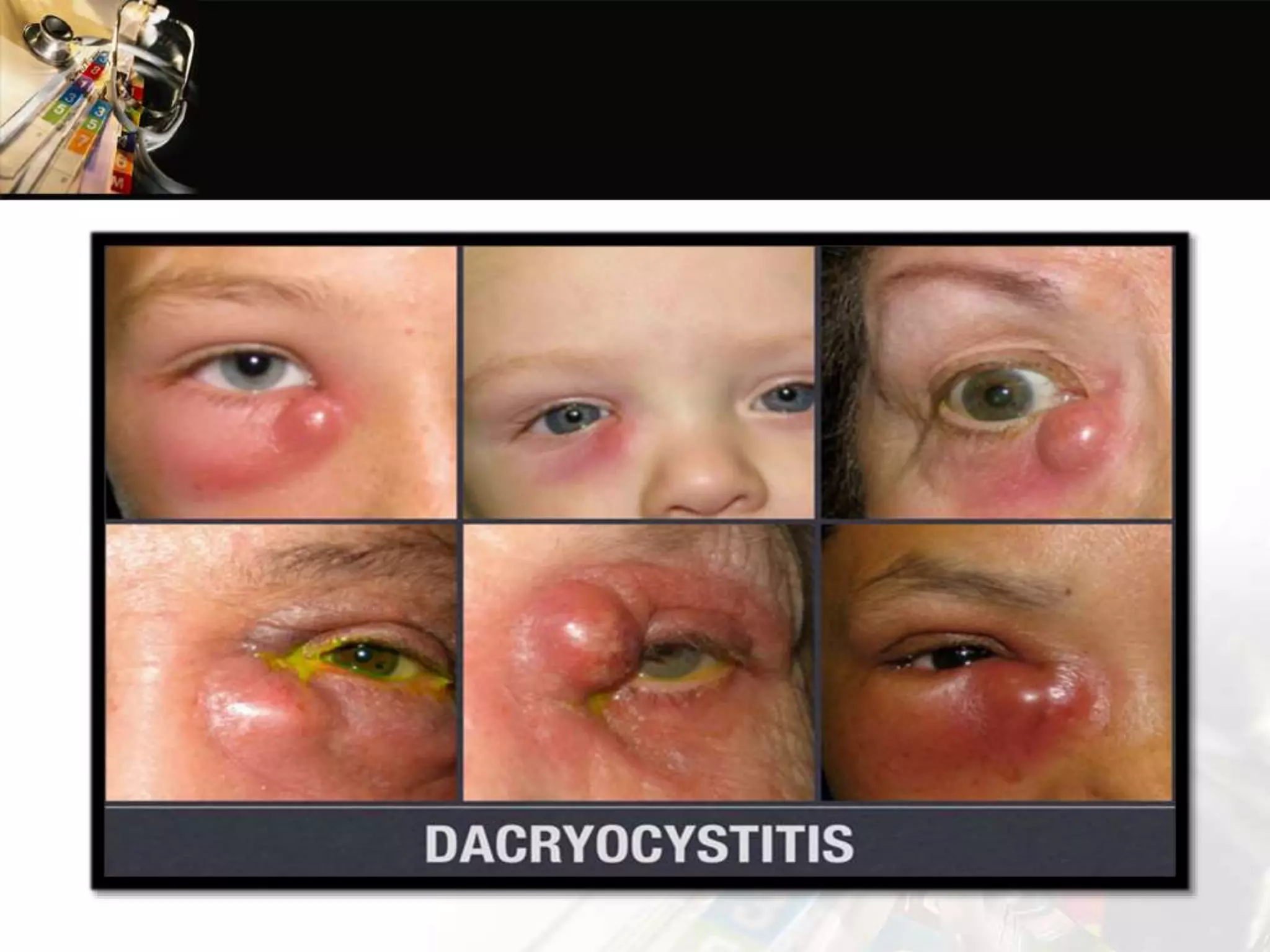
DACRYOCYSTITIS
• Inflammation of lacrimal sac
• Often caused by obstruction of
naso-lacrimal duct
• Followed by bacterial infection.
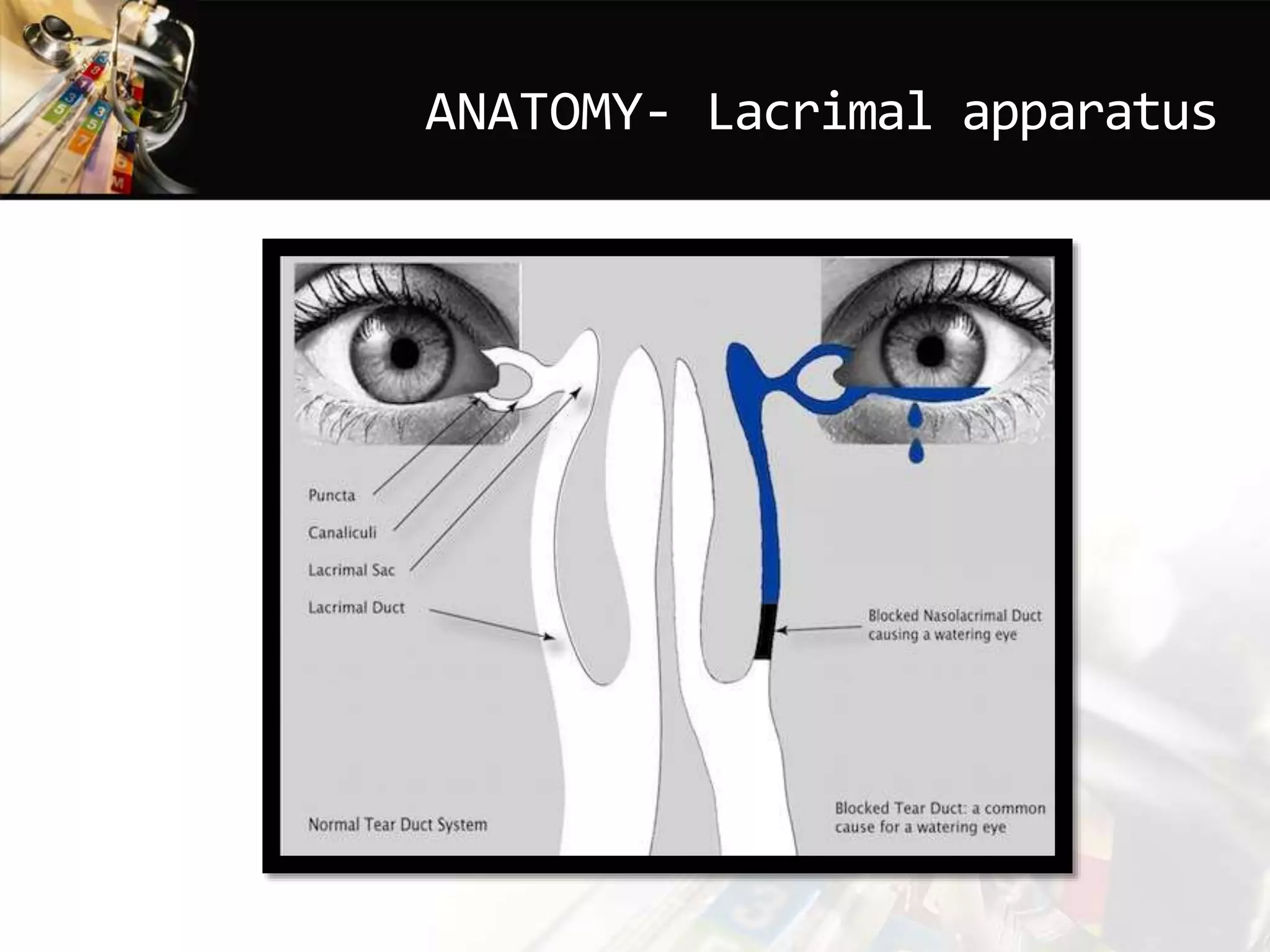
ANATOMY- Lacrimal apparatus
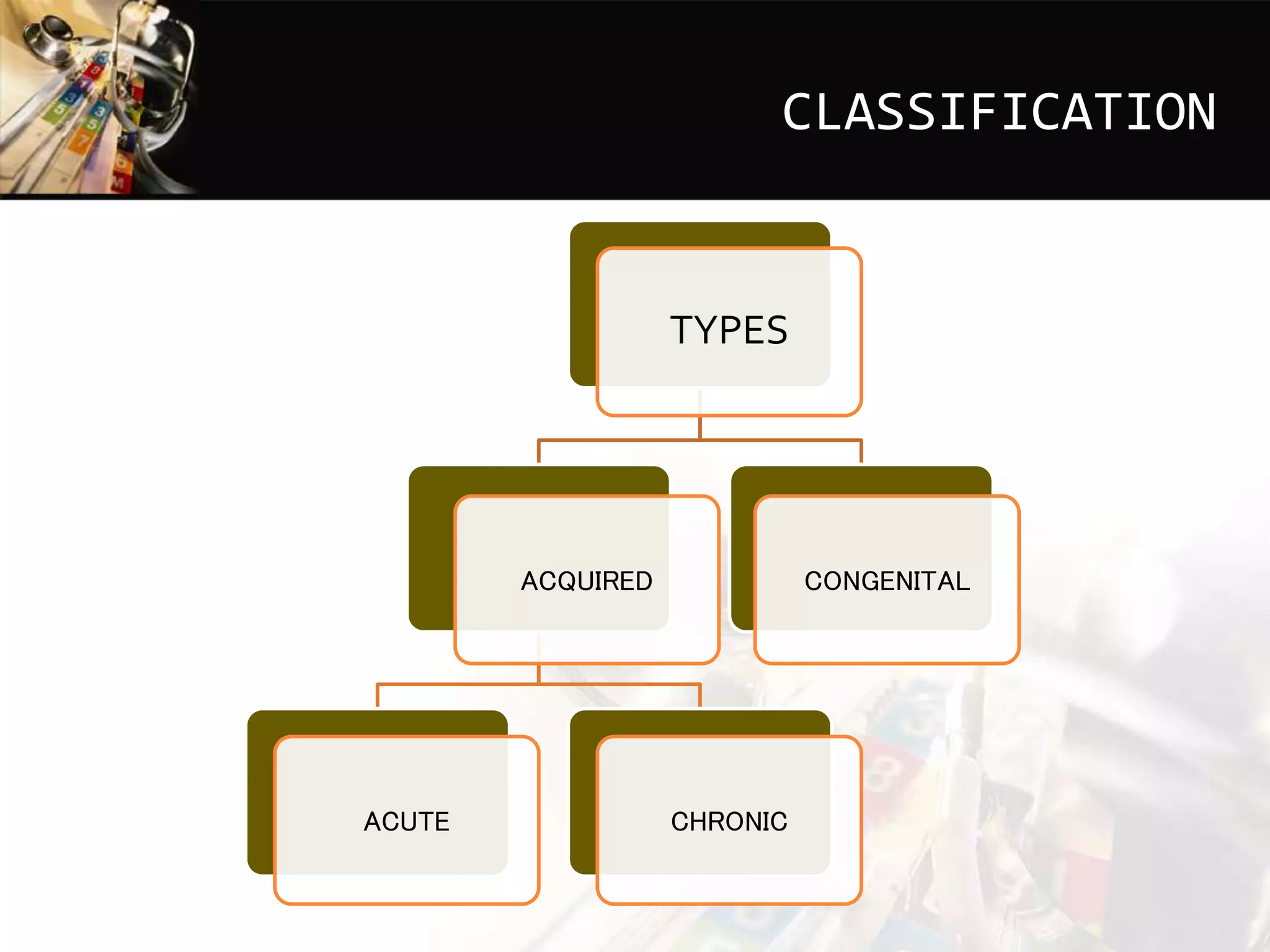
TYPES
ACUTE CHRONIC
ACQUIRED CONGENITAL
CLASSIFICATION
CAUSES
• NLD block due to narrowness or chronic
inflammation of sac .
• Nasal polyps .
• Following primary conjunctivitis .
• Infection spreading from nasophraynx .
• Organisms responsible : Pneumococcus ,
streptococcus , staphylococcus , mycobacterium ,
etc ,...
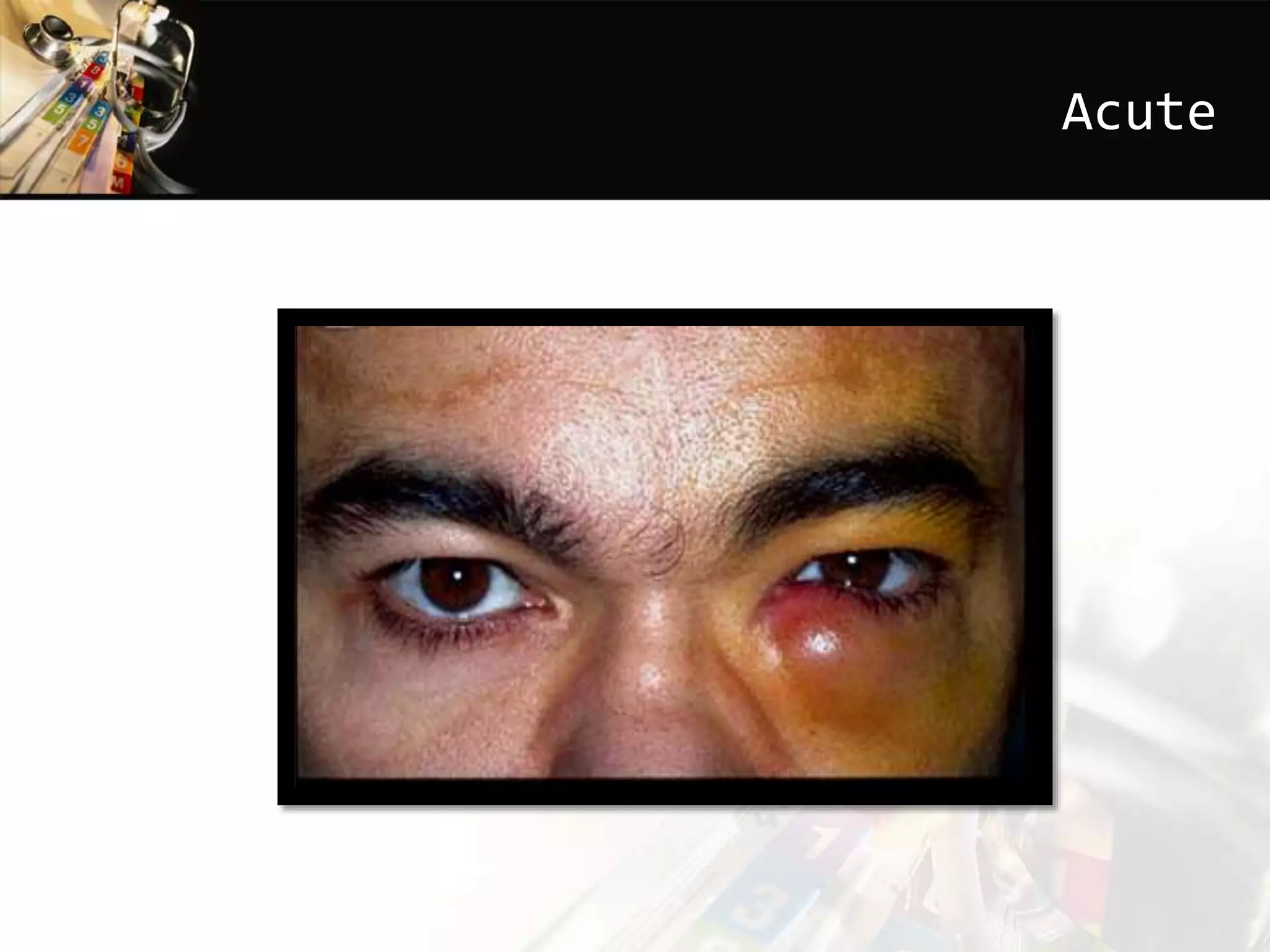
ACUTE DACRYOCYSTITIS
 RISK :
 Older patients bcoz lacrimal drainage system loses its
elasticity
 Poor hygiene
 SYMPTOMS :
 Pain
 Redness
 Swelling over inner aspect of lower eyelid
( can lead to orbital cellulitis )
Acute
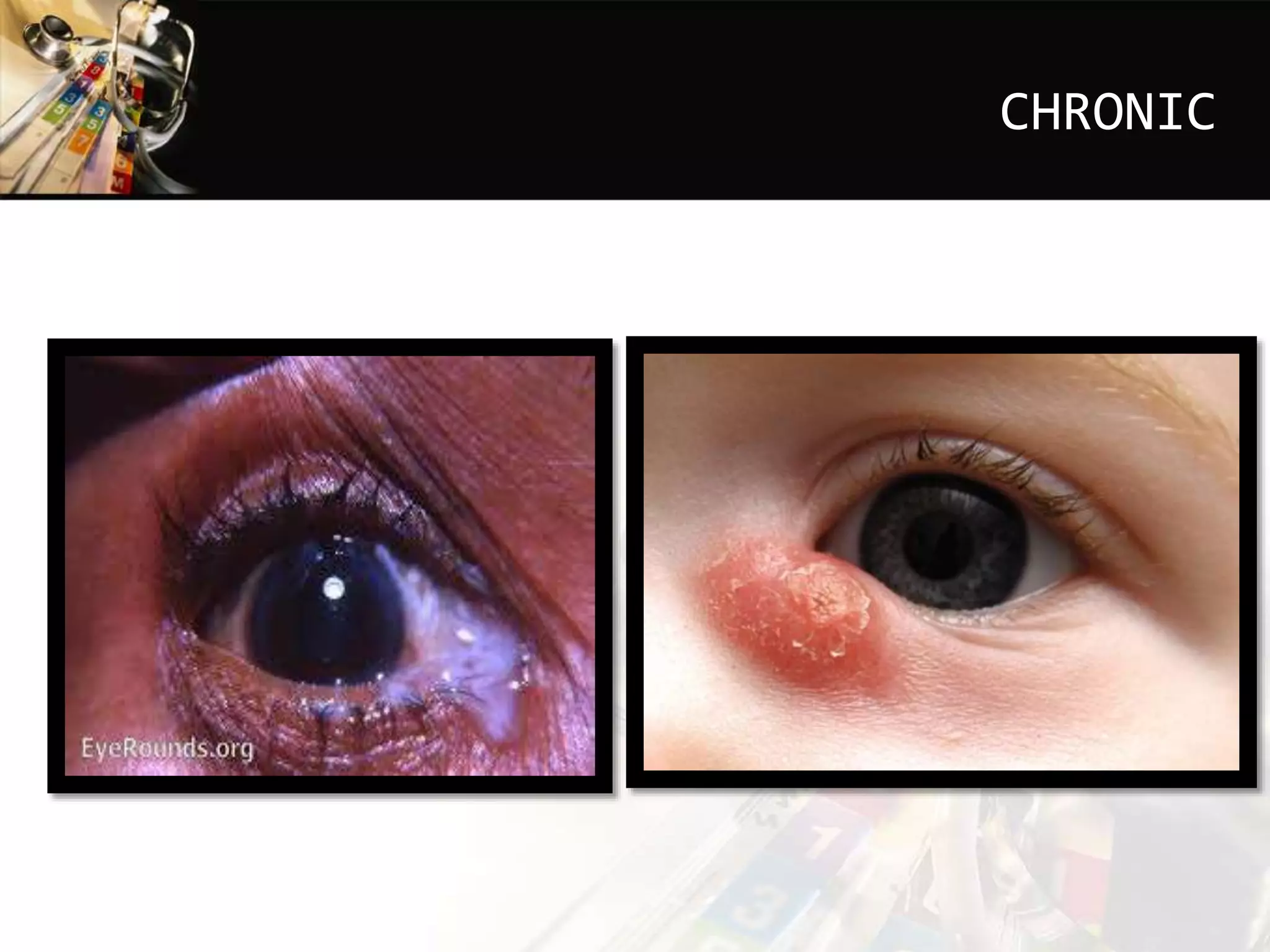
CHRONIC DACRYOCYSTITIS
 RISK :
 Postmenopausal women – spontaneous or follow
lacrimal sac infection .
 Infants – bcoz of failure of NLD to open into inferior
meatus .
 SYMPTOMS :
 Watering
 Mucopurulent discharge
 Regurgitation of pus / mucopus through puncta on
pressure over the sac area .
CHRONIC
COMPLICATIONS
• Fistula formation
• Lacrimal sac abscess
• Orbital cellulitis
• Meningitis
• Cavernous sinus thrombosis
TREATMENT
 ACUTE :
• Systemic antibiotics
• Warm compresses and gentle massage
• Local incision drainage if abscess formed .
 CHRONIC :
• Repated syringing
• Dacryocystorhinostomy
• Dacryocystectomy
THANK YOU

Dacryocystitis

  • 2.
    DACRYOCYSTITIS • Inflammation oflacrimal sac • Often caused by obstruction of naso-lacrimal duct • Followed by bacterial infection.
  • 3.
  • 5.
  • 6.
    CAUSES • NLD blockdue to narrowness or chronic inflammation of sac . • Nasal polyps . • Following primary conjunctivitis . • Infection spreading from nasophraynx . • Organisms responsible : Pneumococcus , streptococcus , staphylococcus , mycobacterium , etc ,...
  • 7.
    ACUTE DACRYOCYSTITIS  RISK:  Older patients bcoz lacrimal drainage system loses its elasticity  Poor hygiene  SYMPTOMS :  Pain  Redness  Swelling over inner aspect of lower eyelid ( can lead to orbital cellulitis )
  • 8.
  • 9.
    CHRONIC DACRYOCYSTITIS  RISK:  Postmenopausal women – spontaneous or follow lacrimal sac infection .  Infants – bcoz of failure of NLD to open into inferior meatus .  SYMPTOMS :  Watering  Mucopurulent discharge  Regurgitation of pus / mucopus through puncta on pressure over the sac area .
  • 10.
  • 11.
    COMPLICATIONS • Fistula formation •Lacrimal sac abscess • Orbital cellulitis • Meningitis • Cavernous sinus thrombosis
  • 12.
    TREATMENT  ACUTE : •Systemic antibiotics • Warm compresses and gentle massage • Local incision drainage if abscess formed .  CHRONIC : • Repated syringing • Dacryocystorhinostomy • Dacryocystectomy
  • 13.