Integrating Simulation into Clinical Education in Nursing: Effectiveness of Workshops to Prepare Clinical Faculty for their New RoleOshawa – November 2009Presented by: B. Nicole Harder, RN, PhD(c)
Session AgendaBrief background regarding use of simulation in nursing educationRole of faculty development in simulation educationSurvey conducted at the University of Manitoba on the simulation seminars for new instructorsResultsImpact for future faculty development needs
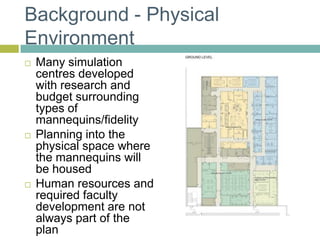
Background - Physical EnvironmentMany simulation centres developed with research and budget surrounding types of mannequins/fidelityPlanning into the physical space where the mannequins will be housedHuman resources and required faculty development are not always part of the plan
Background - Use of simulationIntegration of simulation into the curriculumPlanning/committees looking at placement of simulationMany include simulation in clinical practice courses
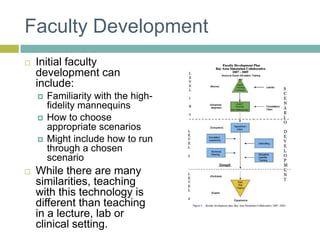
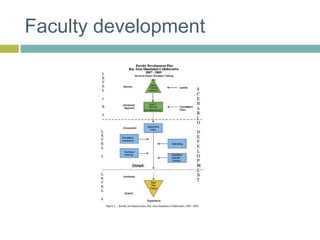
Faculty DevelopmentInitial faculty development can include:Familiarity with the high-fidelity mannequinsHow to choose appropriate scenariosMight include how to run through a chosen scenarioWhile there are many similarities, teaching with this technology is different than teaching in a lecture, lab or clinical setting.
Desire for moreWorkshops and conferences began to come up (e.g.) We Bought the Mannequin – Now What?Simulation ConferencesInternational Nurses Association for Clinical and Simulated LearningDownsideNot everyone can attend, may be expensive….. But many people are teaching with simulation mannequins…..
Our experienceAfter 2 years of investigation, purchased high-fidelity simulators (HFS) in 2005HFS sat in box for 6 months while we figured out both “how-to” and “what-to” do with theseReceived product specific workshop (4 days total) with approximately 8 staffDecided to use simulation as part of a clinical course
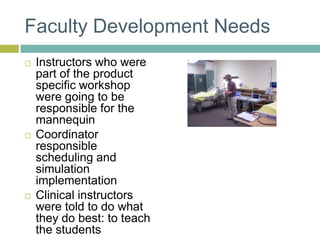
Faculty Development NeedsInstructors who were part of the product specific workshop were going to be responsible for the mannequinCoordinator responsible scheduling and simulation implementationClinical instructors were told to do what they do best: to teach the students
Faculty Development NeedsHOWEVERQuickly became apparent that not everyone knew how to teach Created a workshop for the clinical instructors that:How to facilitate during simulation experiencesWhere do I stand?  When do I jump in?  What is the student role?  What is my role?Making the use of cueing during the simulationDebriefing tips
Survey QuestionsCreated a survey to evaluate whether the workshop addressed their needs or notQuestions included:Initial reactions to simulationUsefulness of simulation demonstrationsFeelings of preparedness to facilitate a simulation independentlyAdditional items they believed they would have helped them
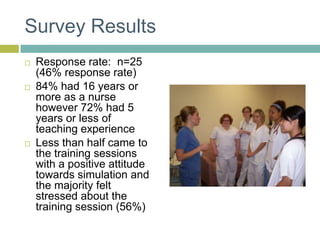
Survey ResultsResponse rate:  n=25 (46% response rate)84% had 16 years or more as a nurse however 72% had 5 years or less of teaching experienceLess than half came to the training sessions with a positive attitude towards simulation and the majority felt stressed about the training session (56%)
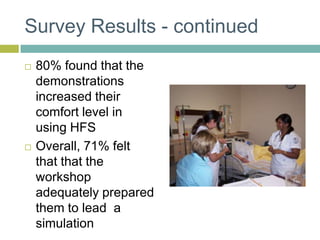
Survey Results - continued80% found that the demonstrations increased their comfort level in using HFSOverall, 71% felt that that the workshop adequately prepared them to lead  a simulation
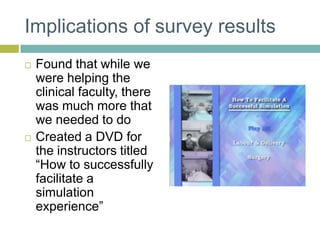
Implications of survey resultsFound that while we were helping the clinical faculty, there was much more that we needed to doCreated a DVD for the instructors titled “How to successfully facilitate a simulation experience”
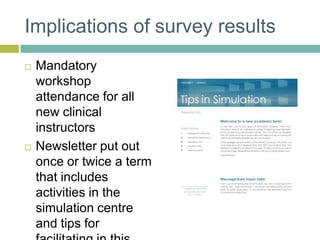
Implications of survey resultsMandatory workshop attendance for all new clinical instructorsNewsletter put out once or twice a term that includes activities in the simulation centre and tips for facilitating in this environment.
Ongoing faculty development needsWe need to go beyond the basics that we have been providingOther research being conducted has shown that there is a disconnect between what the students believes help with their learning and what faculty believe.
Faculty development
Questions???Thank you for your time

Faculty Development - Simulation Education for Nurses

  • 1.
    Integrating Simulation intoClinical Education in Nursing: Effectiveness of Workshops to Prepare Clinical Faculty for their New RoleOshawa – November 2009Presented by: B. Nicole Harder, RN, PhD(c)
  • 2.
    Session AgendaBrief backgroundregarding use of simulation in nursing educationRole of faculty development in simulation educationSurvey conducted at the University of Manitoba on the simulation seminars for new instructorsResultsImpact for future faculty development needs
  • 3.
    Background - PhysicalEnvironmentMany simulation centres developed with research and budget surrounding types of mannequins/fidelityPlanning into the physical space where the mannequins will be housedHuman resources and required faculty development are not always part of the plan
  • 4.
    Background - Useof simulationIntegration of simulation into the curriculumPlanning/committees looking at placement of simulationMany include simulation in clinical practice courses
  • 5.
    Faculty DevelopmentInitial facultydevelopment can include:Familiarity with the high-fidelity mannequinsHow to choose appropriate scenariosMight include how to run through a chosen scenarioWhile there are many similarities, teaching with this technology is different than teaching in a lecture, lab or clinical setting.
  • 6.
    Desire for moreWorkshopsand conferences began to come up (e.g.) We Bought the Mannequin – Now What?Simulation ConferencesInternational Nurses Association for Clinical and Simulated LearningDownsideNot everyone can attend, may be expensive….. But many people are teaching with simulation mannequins…..
  • 7.
    Our experienceAfter 2years of investigation, purchased high-fidelity simulators (HFS) in 2005HFS sat in box for 6 months while we figured out both “how-to” and “what-to” do with theseReceived product specific workshop (4 days total) with approximately 8 staffDecided to use simulation as part of a clinical course
  • 8.
    Faculty Development NeedsInstructorswho were part of the product specific workshop were going to be responsible for the mannequinCoordinator responsible scheduling and simulation implementationClinical instructors were told to do what they do best: to teach the students
  • 9.
    Faculty Development NeedsHOWEVERQuicklybecame apparent that not everyone knew how to teach Created a workshop for the clinical instructors that:How to facilitate during simulation experiencesWhere do I stand? When do I jump in? What is the student role? What is my role?Making the use of cueing during the simulationDebriefing tips
  • 10.
    Survey QuestionsCreated asurvey to evaluate whether the workshop addressed their needs or notQuestions included:Initial reactions to simulationUsefulness of simulation demonstrationsFeelings of preparedness to facilitate a simulation independentlyAdditional items they believed they would have helped them
  • 11.
    Survey ResultsResponse rate: n=25 (46% response rate)84% had 16 years or more as a nurse however 72% had 5 years or less of teaching experienceLess than half came to the training sessions with a positive attitude towards simulation and the majority felt stressed about the training session (56%)
  • 12.
    Survey Results -continued80% found that the demonstrations increased their comfort level in using HFSOverall, 71% felt that that the workshop adequately prepared them to lead a simulation
  • 13.
    Implications of surveyresultsFound that while we were helping the clinical faculty, there was much more that we needed to doCreated a DVD for the instructors titled “How to successfully facilitate a simulation experience”
  • 14.
    Implications of surveyresultsMandatory workshop attendance for all new clinical instructorsNewsletter put out once or twice a term that includes activities in the simulation centre and tips for facilitating in this environment.
  • 15.
    Ongoing faculty developmentneedsWe need to go beyond the basics that we have been providingOther research being conducted has shown that there is a disconnect between what the students believes help with their learning and what faculty believe.
  • 16.
  • 17.