


Rena Boss-Victoria, DrPH, MPH, MS, RN, CNSAssociate Professor and Director Simulation CenterCoppinState University: Helene FuldSchool of NursingBaltimore, MarylandSetting the Simulation Integration Strategy Building Evidence-For Success
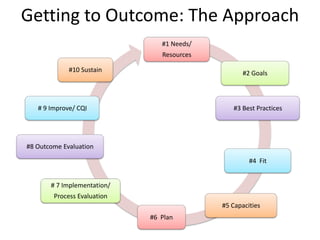
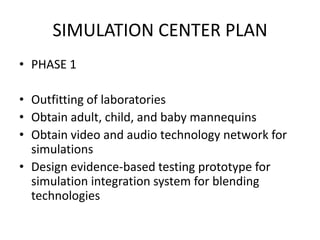
Objectives forWorkshopDiscuss the steps for framing a simulation center infrastructure using an approach  for  formative process  evidence-based outcomes.2.  Explore and appraise blended methodologies in the context of  best practice teaching model for adult learner competency of performance using simulation education applications.
INTRODUCTIONThe mandate to change from opinion-based practice to evidence-based practice influencesbuilding of clinical environments
applications of simulation as a strategy for clinical education integration.Simulation EducationA new way of clinical teaching
Promotes clinical practice competencies
Lessens fears and anxieties in students.Ham and O’Rourke, 2004 and Shepherd et al, 2007.
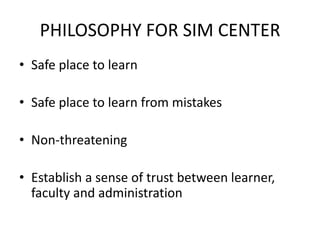
WHERE TO BEGIN?Vision, Mission, Goals, ObjectivesCritical Appraisal of Strategic Planning BarriersPeopleManagementResources
Why Are We Here?
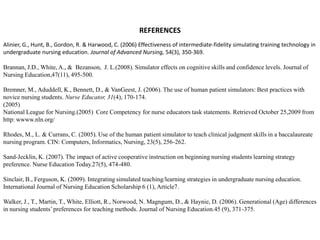
RESEARCH RESULTSThe  results of a mixed-methods study integrating the use of simulations in a nursing theory course in order to assess students' perceptions of self-efficacy for nursing practice are presentedNursing students were exposed to a combination of lecture and simulationThis study provides data to suggest:Students' self-confidence for nursing practice may be increased through the use of simulation as a method of teaching and learning.
 Students also reported higher levels of satisfaction, effectiveness and consistency with their learning style when exposed to the combination of lecture, simulation and audio-visual technologies.Brannan, J.D., White, A., &  Bezanson,  J. L. 2008;
RESULT FROM STUDIESThe purpose of this study was to compare the effectiveness of two instructional methods to teach  specific nursing education content.
Results of this study suggest that use of a teaching strategy involving the HPS method made a positive difference in the nursing students' ability to answer questions on a test of cognitive skills.
Use of a human patient simulator (HPS) as a tool for learning provides a mechanism by which students can participate in:
 Clinical decision making
 Practice skills
Observe outcomes from clinical decisionsSinclair, B., Ferguson, K. 2009.
CHALLENGES AS EDUCATORSLiterature highlights the challenges nurse educators face in embracing simulation technologyHughes,  D., 2004 ;Jefferies, 2005.
CHALLENGESof Simulation Education MethodologyFaculty competencyTime managementLearning new technologyTeaching new technologyStaffing the labsAffordabilityPolicies/ProceduresCompliance
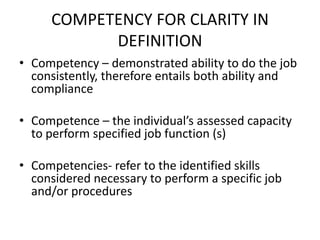
COMPETENCY FOR CLARITY IN  DEFINITION Competency – demonstrated ability to do the job consistently, therefore entails both ability and complianceCompetence – the individual’s assessed capacity to perform specified job function (s)Competencies- refer to the identified skills considered necessary to perform a specific job and/or procedures
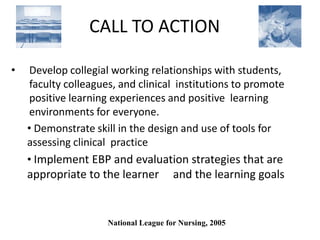
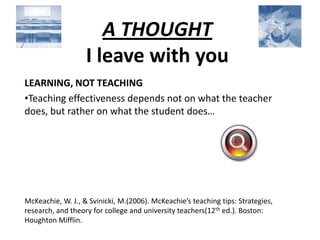
CALL TO ACTIONDevelop collegial working relationships with students, faculty colleagues, and clinical  institutions to promote positive learning experiences and positive  learning environments for everyone.
 Demonstrate skill in the design and use of tools for assessing clinical  practice
Implement EBP and evaluation strategies that are appropriate to the learner     and the learning goalsNational League for Nursing, 2005

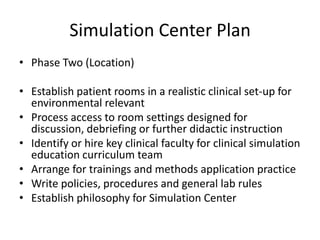
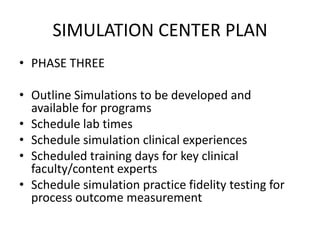
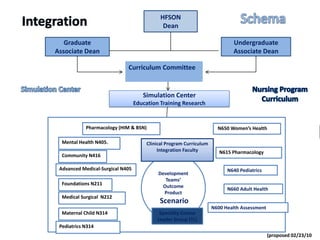
Model for approach_complete rev3

  • 1.
    Rena Boss-Victoria, DrPH,MPH, MS, RN, CNSAssociate Professor and Director Simulation CenterCoppinState University: Helene FuldSchool of NursingBaltimore, MarylandSetting the Simulation Integration Strategy Building Evidence-For Success
  • 2.
    Objectives forWorkshopDiscuss thesteps for framing a simulation center infrastructure using an approach for formative process evidence-based outcomes.2. Explore and appraise blended methodologies in the context of best practice teaching model for adult learner competency of performance using simulation education applications.
  • 3.
    INTRODUCTIONThe mandate tochange from opinion-based practice to evidence-based practice influencesbuilding of clinical environments
  • 4.
    applications of simulationas a strategy for clinical education integration.Simulation EducationA new way of clinical teaching
  • 5.
  • 6.
    Lessens fears andanxieties in students.Ham and O’Rourke, 2004 and Shepherd et al, 2007.
  • 7.
    WHERE TO BEGIN?Vision,Mission, Goals, ObjectivesCritical Appraisal of Strategic Planning BarriersPeopleManagementResources
  • 8.
  • 9.
    RESEARCH RESULTSThe results of a mixed-methods study integrating the use of simulations in a nursing theory course in order to assess students' perceptions of self-efficacy for nursing practice are presentedNursing students were exposed to a combination of lecture and simulationThis study provides data to suggest:Students' self-confidence for nursing practice may be increased through the use of simulation as a method of teaching and learning.
  • 10.
    Students alsoreported higher levels of satisfaction, effectiveness and consistency with their learning style when exposed to the combination of lecture, simulation and audio-visual technologies.Brannan, J.D., White, A., & Bezanson, J. L. 2008;
  • 11.
    RESULT FROM STUDIESThepurpose of this study was to compare the effectiveness of two instructional methods to teach specific nursing education content.
  • 12.
    Results of thisstudy suggest that use of a teaching strategy involving the HPS method made a positive difference in the nursing students' ability to answer questions on a test of cognitive skills.
  • 13.
    Use of ahuman patient simulator (HPS) as a tool for learning provides a mechanism by which students can participate in:
  • 14.
  • 15.
  • 16.
    Observe outcomes fromclinical decisionsSinclair, B., Ferguson, K. 2009.
  • 17.
    CHALLENGES AS EDUCATORSLiteraturehighlights the challenges nurse educators face in embracing simulation technologyHughes, D., 2004 ;Jefferies, 2005.
  • 18.
    CHALLENGESof Simulation EducationMethodologyFaculty competencyTime managementLearning new technologyTeaching new technologyStaffing the labsAffordabilityPolicies/ProceduresCompliance
  • 19.
    COMPETENCY FOR CLARITYIN DEFINITION Competency – demonstrated ability to do the job consistently, therefore entails both ability and complianceCompetence – the individual’s assessed capacity to perform specified job function (s)Competencies- refer to the identified skills considered necessary to perform a specific job and/or procedures
  • 20.
    CALL TO ACTIONDevelopcollegial working relationships with students, faculty colleagues, and clinical institutions to promote positive learning experiences and positive learning environments for everyone.
  • 21.
    Demonstrate skillin the design and use of tools for assessing clinical practice
  • 22.
    Implement EBP andevaluation strategies that are appropriate to the learner and the learning goalsNational League for Nursing, 2005