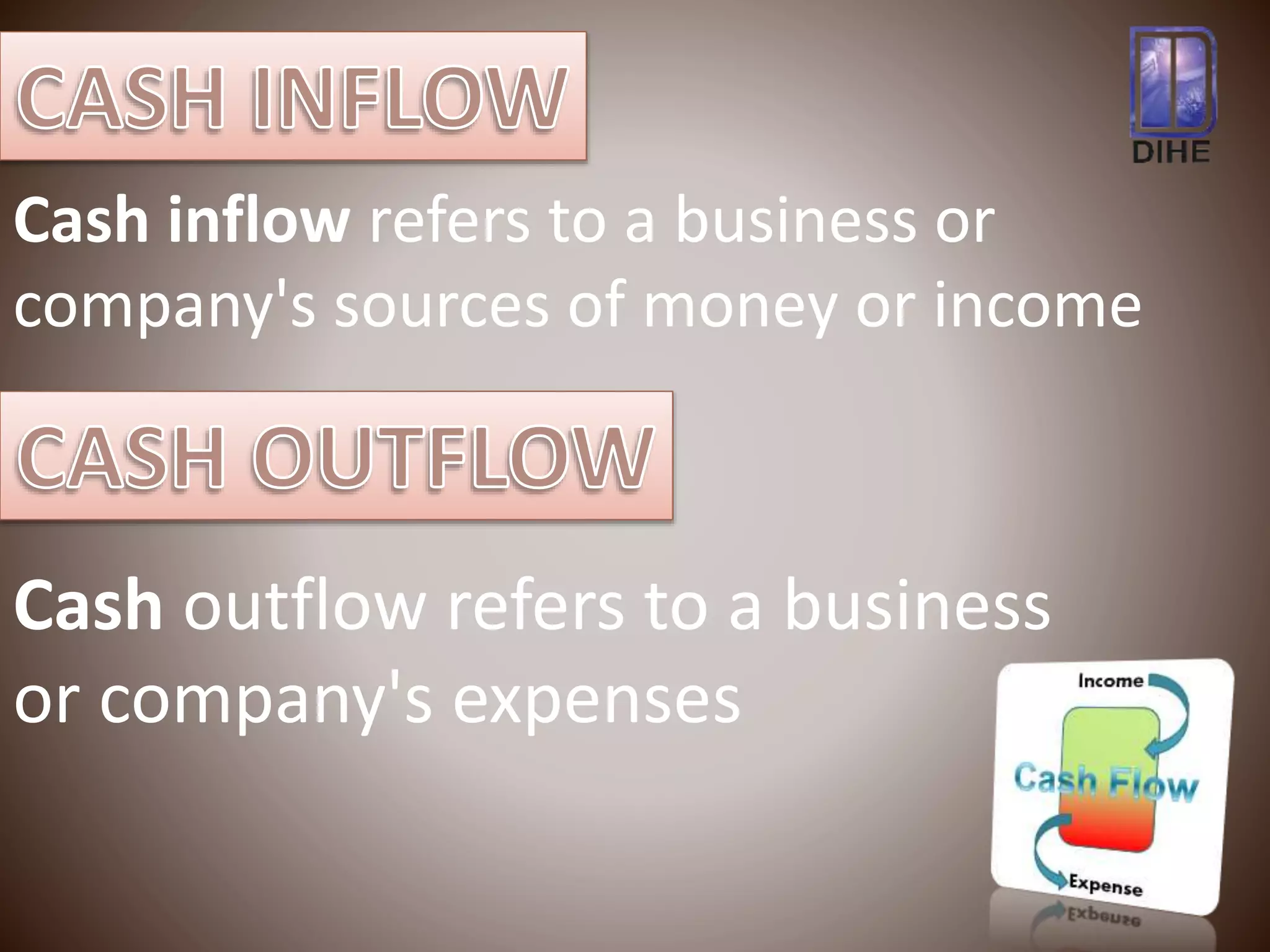




Cash inflow refers to a business or
company's sources of money or income
Cash outflow refers to a business
or company's expenses
Net present value method (also
known as discounted cash flow
method) is a popular capital
budgeting technique that takes into
account the time value of money.
Net present value is the difference
between the present value of cash
inflows and the present value of cash
outflows that occur as a result of
undertaking an investment project.
It may be positive, zero or negative.
If present value of cash inflows is greater than the
present value of the cash outflows, the net present
value is said to be positive and the investment
proposal is considered to be acceptable.
If present value of cash inflow is less than present
value of cash outflow, the net present value is said
to be negative and the investment proposal is
rejected.
If present value of cash inflow is equal to present
value of cash outflow, the net present value is said
to be zero and the investment proposal is
considered to be acceptable.
A rate of return is the gain or loss on an
investment over a specified time period,
expressed as a percentage of the
investment's cost.
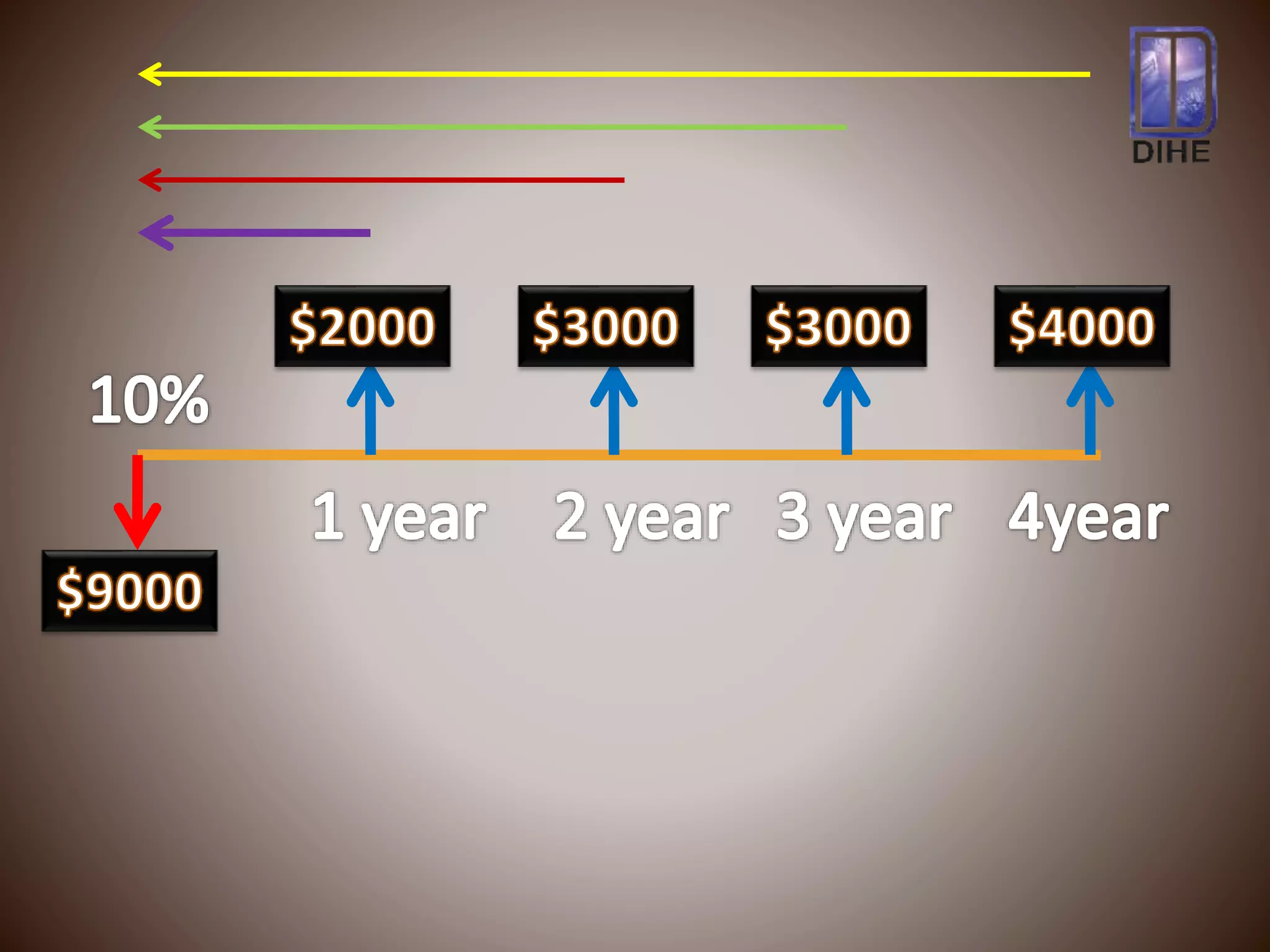
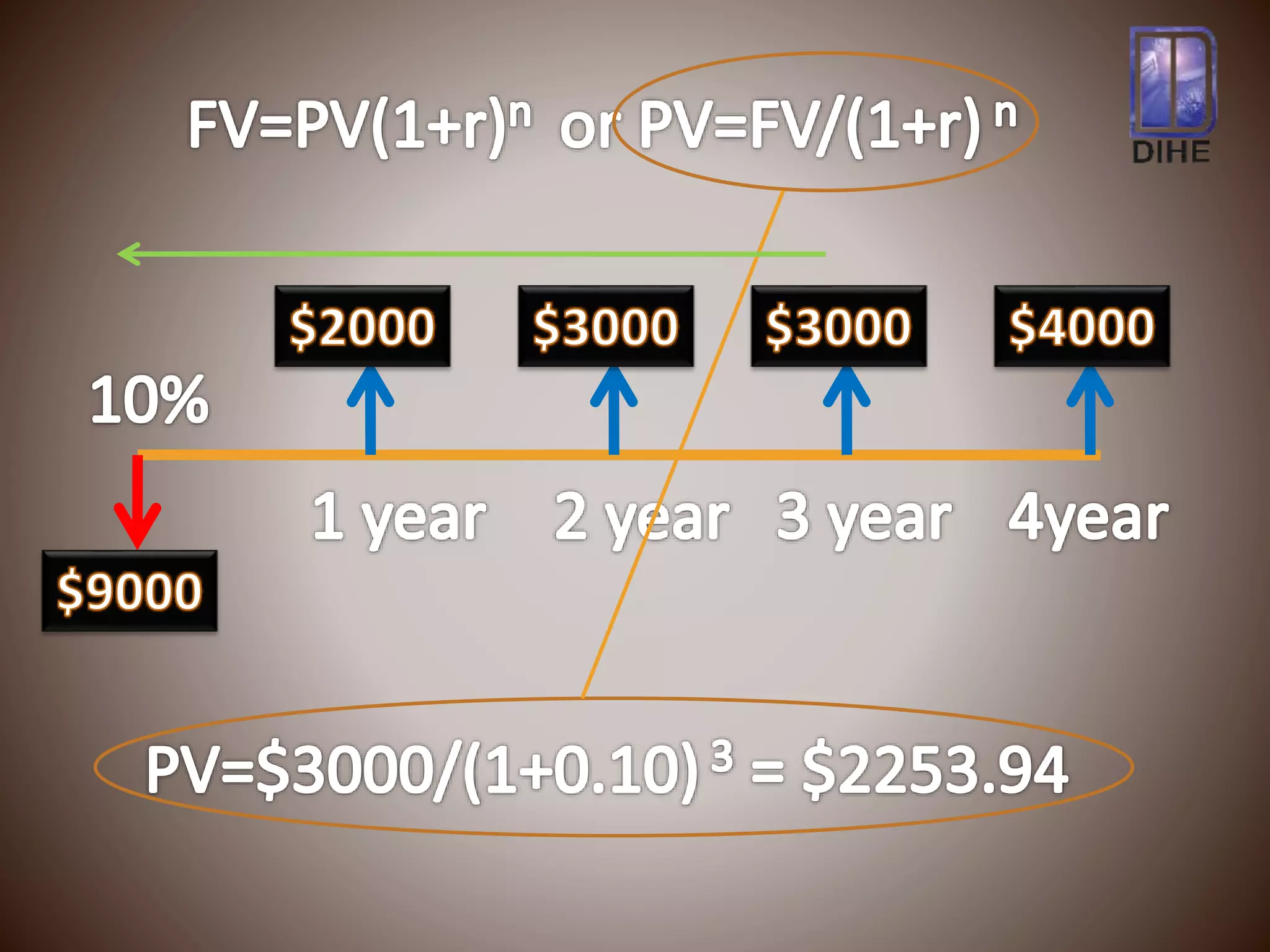
Assume a company is planning to invest $9000 in a
project today.
The project is expected to have a life of four years.
The expected cash flows at the end of each of the
next four years are $2000, $3000, $3000 & $4000.
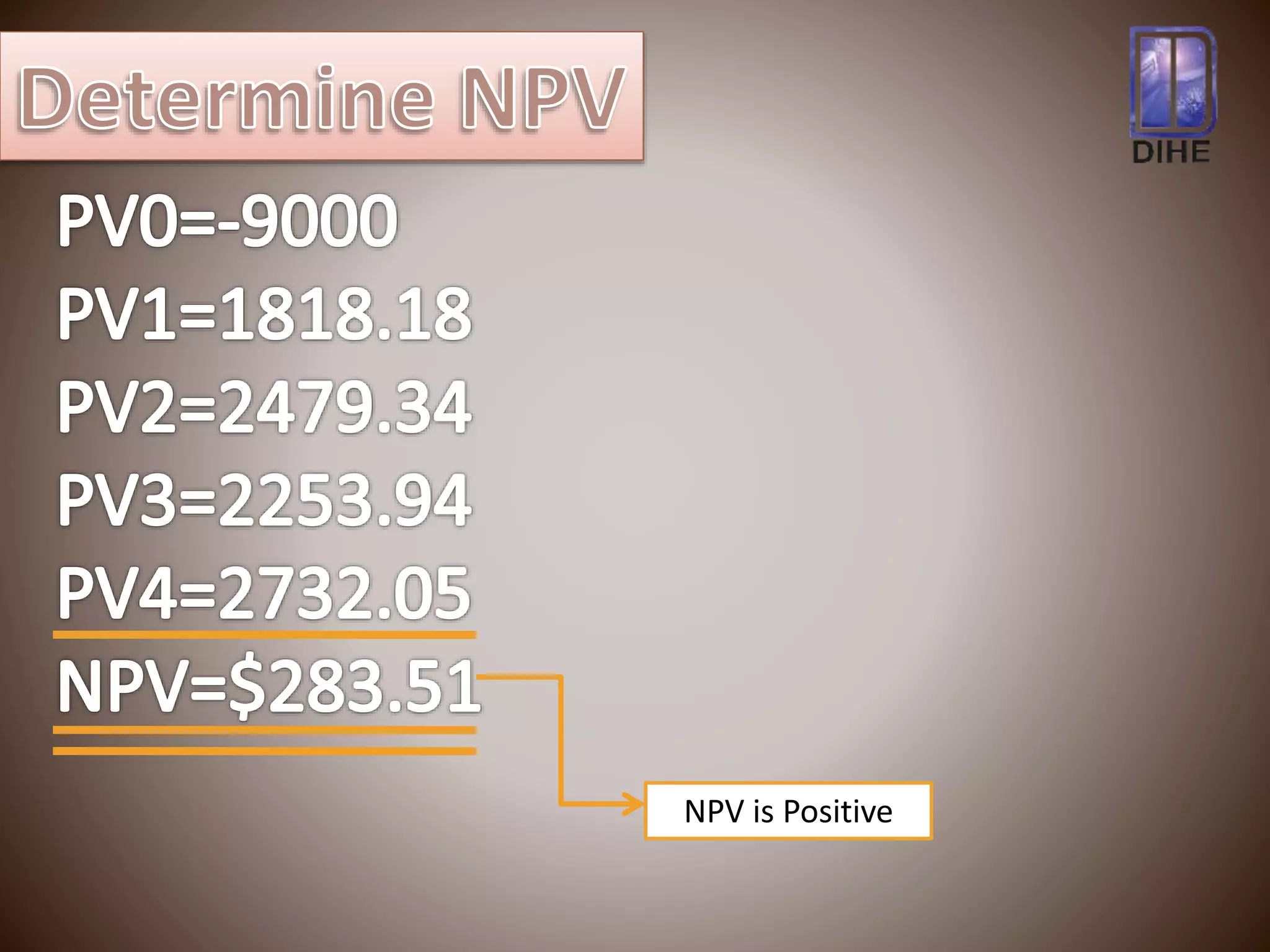
NPV is Positive
A Positive NPV means the combined PV of all
cash inflows exceeds the PV of cash outflows.
In our Example the NPV of $283.51 suggests
that the combined PV of all cash inflows
exceeds the PV of cash outflows by $283.51
This project is an acceptable one since it adds
$283.51 to the value of the company.
NET PRESENT VALUE

NET PRESENT VALUE

  • 2.
    Cash inflow refersto a business or company's sources of money or income Cash outflow refers to a business or company's expenses
  • 3.
    Net present valuemethod (also known as discounted cash flow method) is a popular capital budgeting technique that takes into account the time value of money.
  • 4.
    Net present valueis the difference between the present value of cash inflows and the present value of cash outflows that occur as a result of undertaking an investment project. It may be positive, zero or negative.
  • 5.
    If present valueof cash inflows is greater than the present value of the cash outflows, the net present value is said to be positive and the investment proposal is considered to be acceptable. If present value of cash inflow is less than present value of cash outflow, the net present value is said to be negative and the investment proposal is rejected.
  • 6.
    If present valueof cash inflow is equal to present value of cash outflow, the net present value is said to be zero and the investment proposal is considered to be acceptable.
  • 8.
    A rate ofreturn is the gain or loss on an investment over a specified time period, expressed as a percentage of the investment's cost.
  • 9.
    Assume a companyis planning to invest $9000 in a project today. The project is expected to have a life of four years. The expected cash flows at the end of each of the next four years are $2000, $3000, $3000 & $4000.
  • 16.
  • 17.
    A Positive NPVmeans the combined PV of all cash inflows exceeds the PV of cash outflows. In our Example the NPV of $283.51 suggests that the combined PV of all cash inflows exceeds the PV of cash outflows by $283.51 This project is an acceptable one since it adds $283.51 to the value of the company.