Necrotizing Fasciitis
Dr. Shirish Silwal
House Officer
Dept. of General Surgery & Urology
B & B Hospital Pvt. Ltd.
Case 1
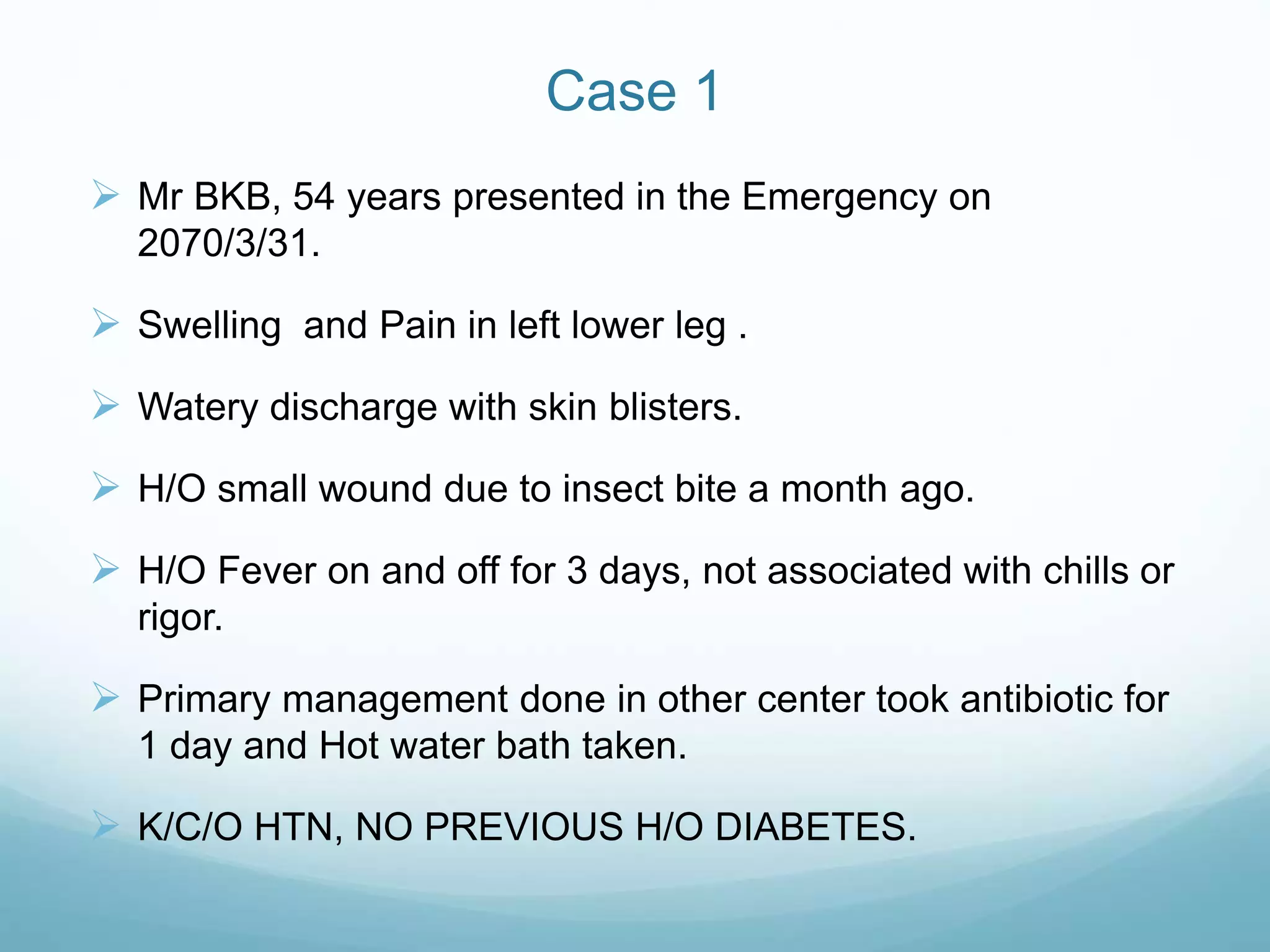
 Mr BKB, 54 years presented in the Emergency on
2070/3/31.
 Swelling and Pain in left lower leg .
 Watery discharge with skin blisters.
 H/O small wound due to insect bite a month ago.
 H/O Fever on and off for 3 days, not associated with chills or
rigor.
 Primary management done in other center took antibiotic for
1 day and Hot water bath taken.
 K/C/O HTN, NO PREVIOUS H/O DIABETES.
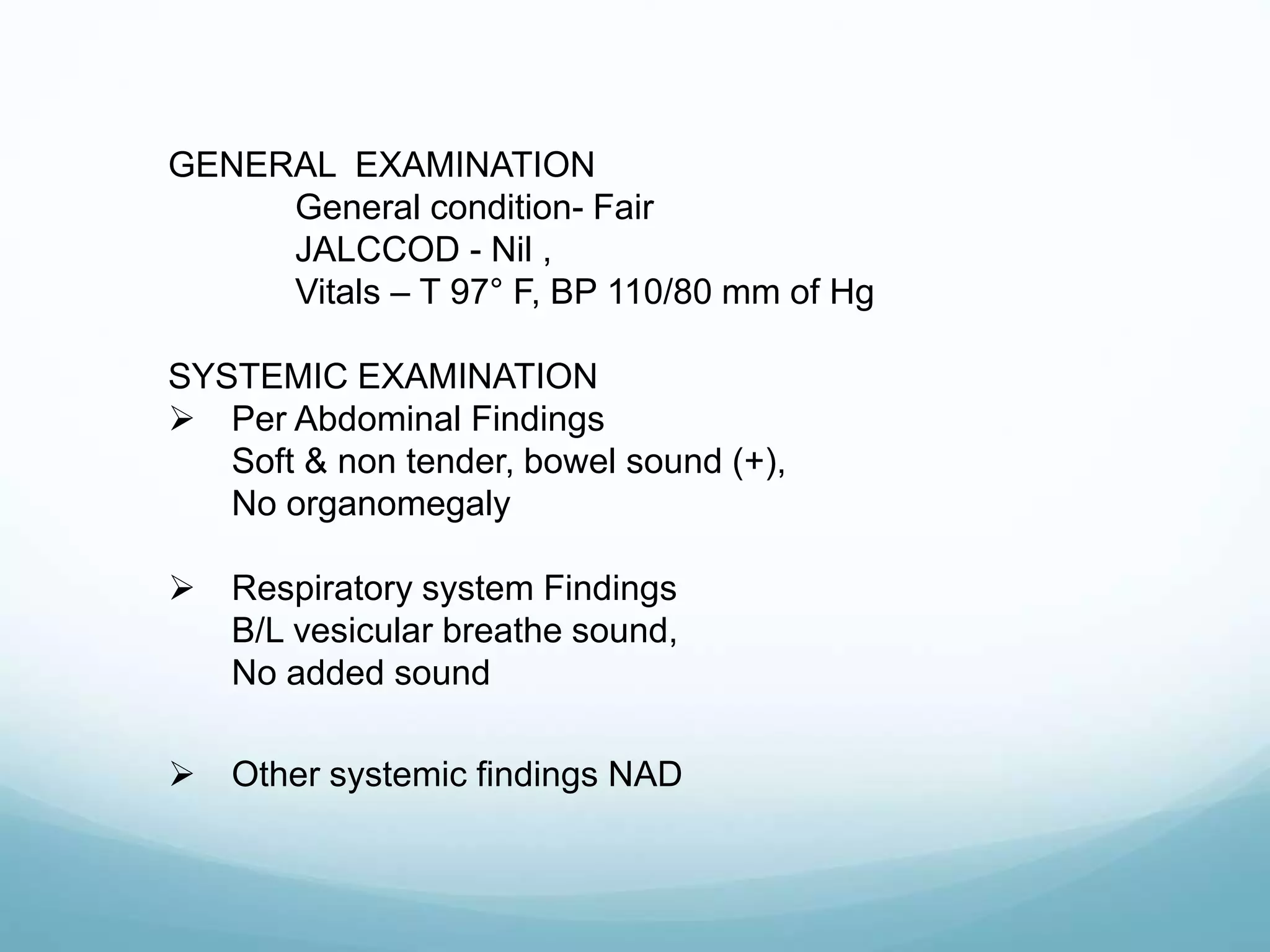
GENERAL EXAMINATION
General condition- Fair
JALCCOD - Nil ,
Vitals – T 97° F, BP 110/80 mm of Hg
SYSTEMIC EXAMINATION
 Per Abdominal Findings
Soft & non tender, bowel sound (+),
No organomegaly
 Respiratory system Findings
B/L vesicular breathe sound,
No added sound
 Other systemic findings NAD
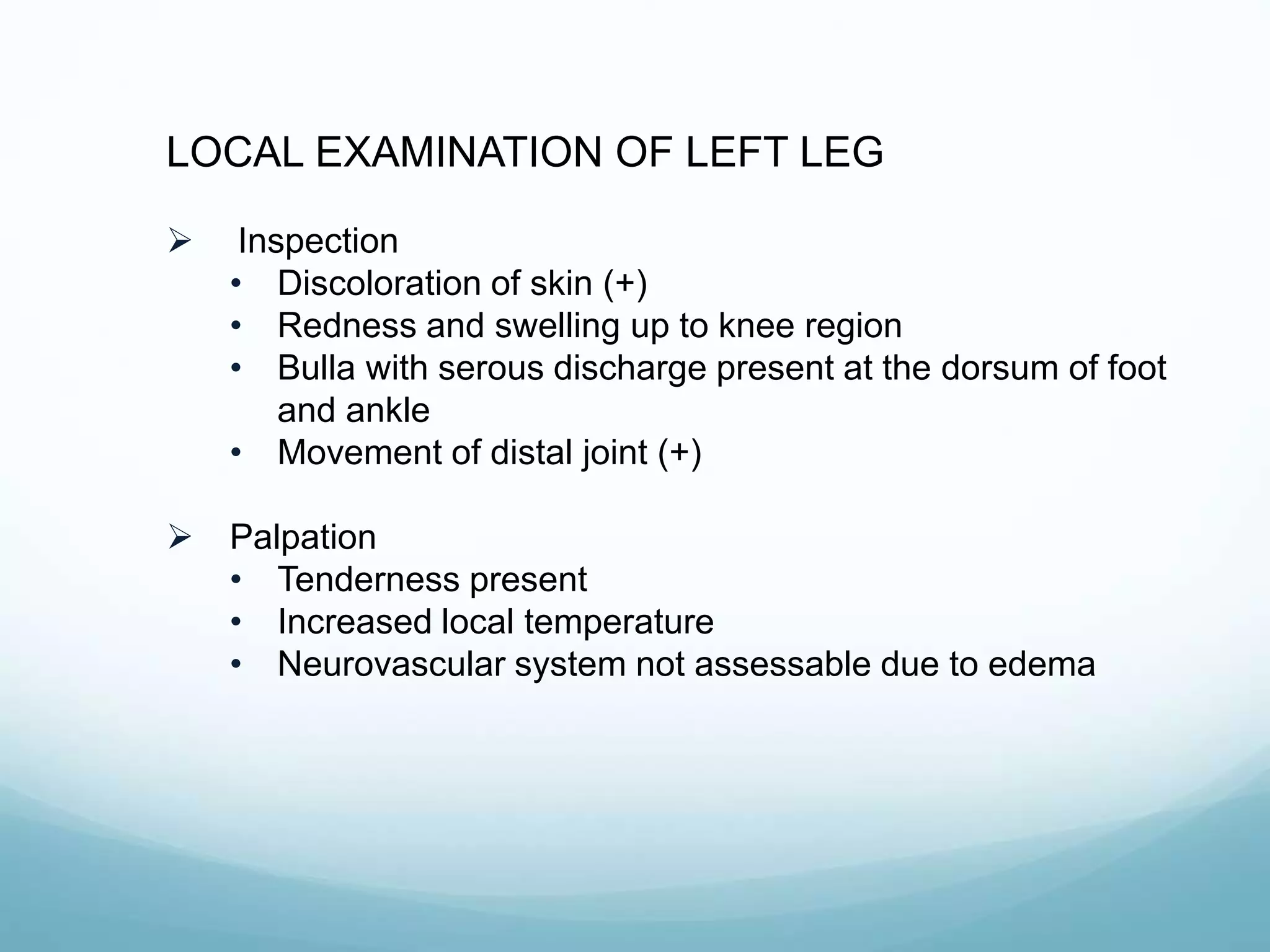
LOCAL EXAMINATION OF LEFT LEG
 Inspection
• Discoloration of skin (+)
• Redness and swelling up to knee region
• Bulla with serous discharge present at the dorsum of foot
and ankle
• Movement of distal joint (+)
 Palpation
• Tenderness present
• Increased local temperature
• Neurovascular system not assessable due to edema
INVESTIGATION
 CBC
• WBC- 8400/Cumm
• Neutrophils - 85%
• Lymphocyte- 15%
• Platelets - 153000
 RFT
• Urea- 75mg/dl
• Creatinine- 1mg/dl
• Na+ 125mmol/L,
• K+ 2.5mmol/L
 Blood sugar- 230 mg/dl
 LIVER FUNCTION TEST
• Billirubin Total-1.0 mg/dl
• Billirubin Direct- 1.0 mg/dl
• SGPT/ALT- 39 IU/L
• SGOT/AST- 50 IU/L
• AlkalinePhosphatase- 128 IU/L
• URINE RME - NAD
• VENOUS DOPPLER - NORMAL
CULTURE
 Wound/pus culture:
 No growth (2070/3/31)
 No growth (2070/4/16)
 Heavy growth of pseudomonas sp.(2070/4/22)
 Pseudomonas aeroginosa(2070/4/24) national
reference lab.
 No growth after 48 hours(2070/4/28)
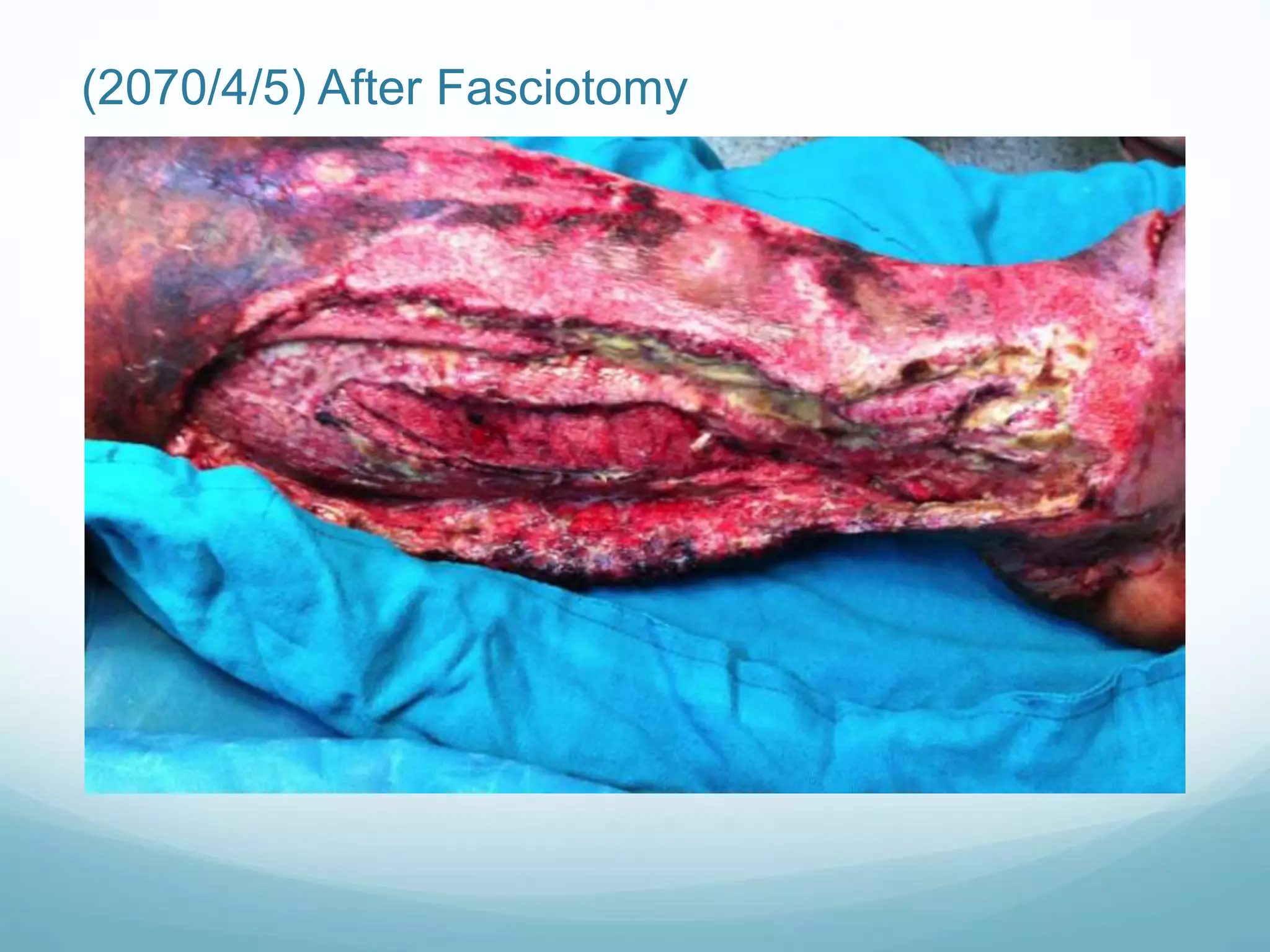
(2070/4/5) After Fasciotomy
(2070/4/11)- Continuous Debridement and hot
water bath
(2070/5/2)- After Skin Grafting
Treatment
 Diagnosed as uncontrolled diabetics with Cellulitis with
Necrotizing fasciitis
 Insulin on sliding scale
 IV antibiotics
 Gentamycin
 Metronidazole
 Penicillin
 Clindamycin
 Blood transfusion VIII bag
Surgery
 Fasciotomy done on (2070/4/2)
 Daily debridement, dressing and foot bath.
 Debridement with povidone iodine, washing powder,
Neosporin powder, placentex.
 Skin grafting on (2070/4/31)
Skin graft
 Requirement of survival
 Bed must be well vascularized.
 The contact between graft and recipient must be fully immobile.
 Low bacterial count at the site.
 Cause of failure
 Systemic Factors
 Malnutrition
 Sepsis
 Medical Conditions (Diabetes)
 Medications
 Steroids
 Antineoplastic agents
 Vasoconstrictors (e.g. nicotine)
Post-operative status
 Patient is stable and afebrile.
 Skin grafting 90% accepted.
 No foul smell from wound.
 Diabetes and Blood Pressure under control.
Necrotizing fasciitis
Past history
 Hippocrates in the 5th century BC noted
 known as malignant ulcer, gangrenous ulcer , putrid
ulcer, and hospital gangrene in the 18th century
 In 1871 after the Civil War was called hospital
gangrene by a war surgeon
 In 1924 called hemolytic streptococcal gangrene
 In 1952 called “necrotizing fasciitis”
Definition
 Characterized by fulminant destruction of tissue,
systemic signs of toxicity, and a high mortality rate.
 Pathologic features include extensive tissue
destruction, thrombosis of blood vessels, abundant
bacterial spread along fascial planes, and unimpressive
infiltration of acute inflammatory cells.
Risk Factors
 Drug use
 Diabetes mellitus
 Obesity
 Immunosuppression
 Renal failure
Types of Necrotizing Infection
 Necrotizing cellulitis
 Clostridial cellulitis
 Nonclostridial anaerobic cellulitis
 Meleney’s synergistic gangrene
 Synergistic necrotizing cellulitis
 Necrotizing fasciitis
 Type I
 Type II
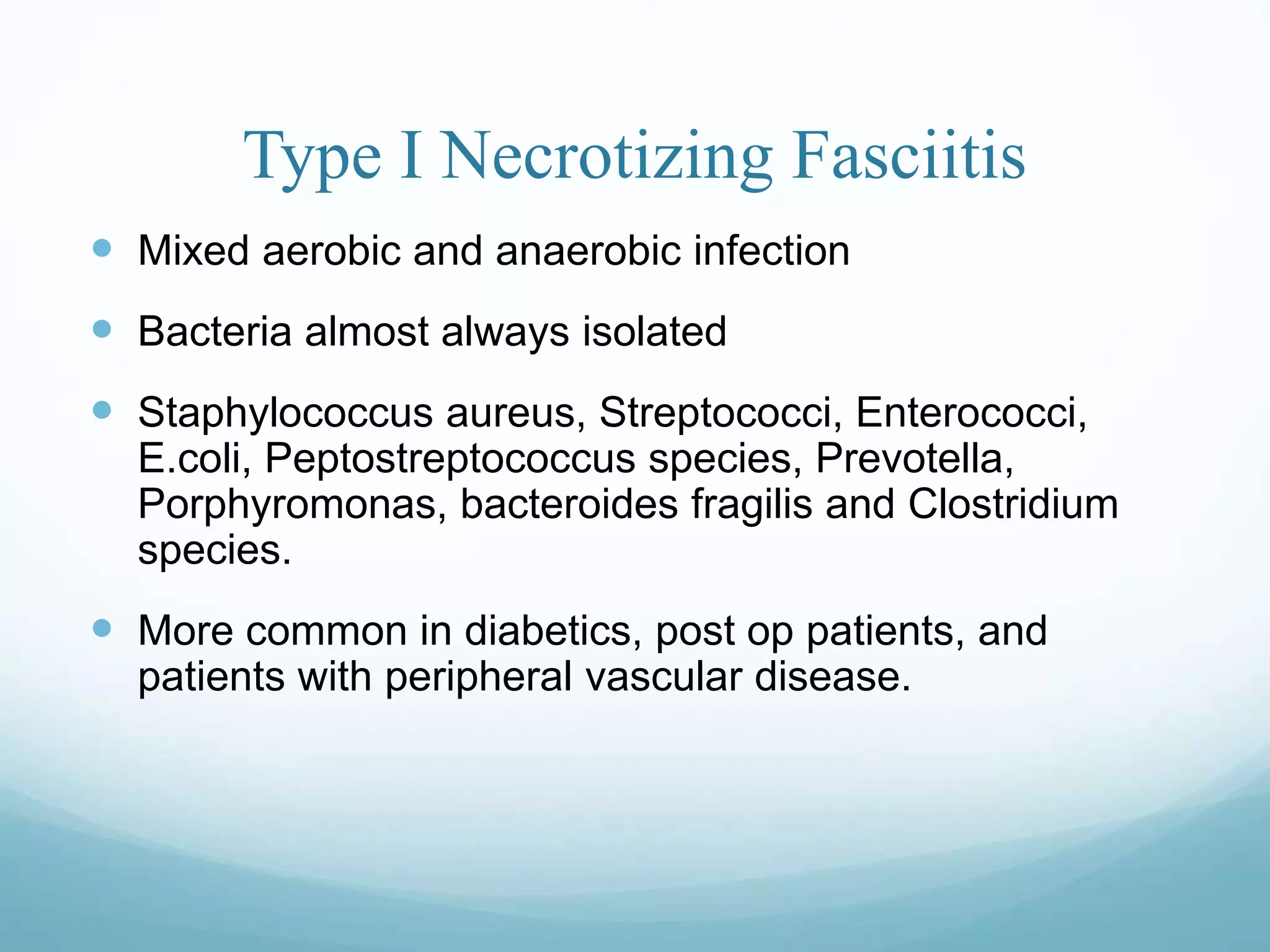
Type I Necrotizing Fasciitis
 Mixed aerobic and anaerobic infection
 Bacteria almost always isolated
 Staphylococcus aureus, Streptococci, Enterococci,
E.coli, Peptostreptococcus species, Prevotella,
Porphyromonas, bacteroides fragilis and Clostridium
species.
 More common in diabetics, post op patients, and
patients with peripheral vascular disease.
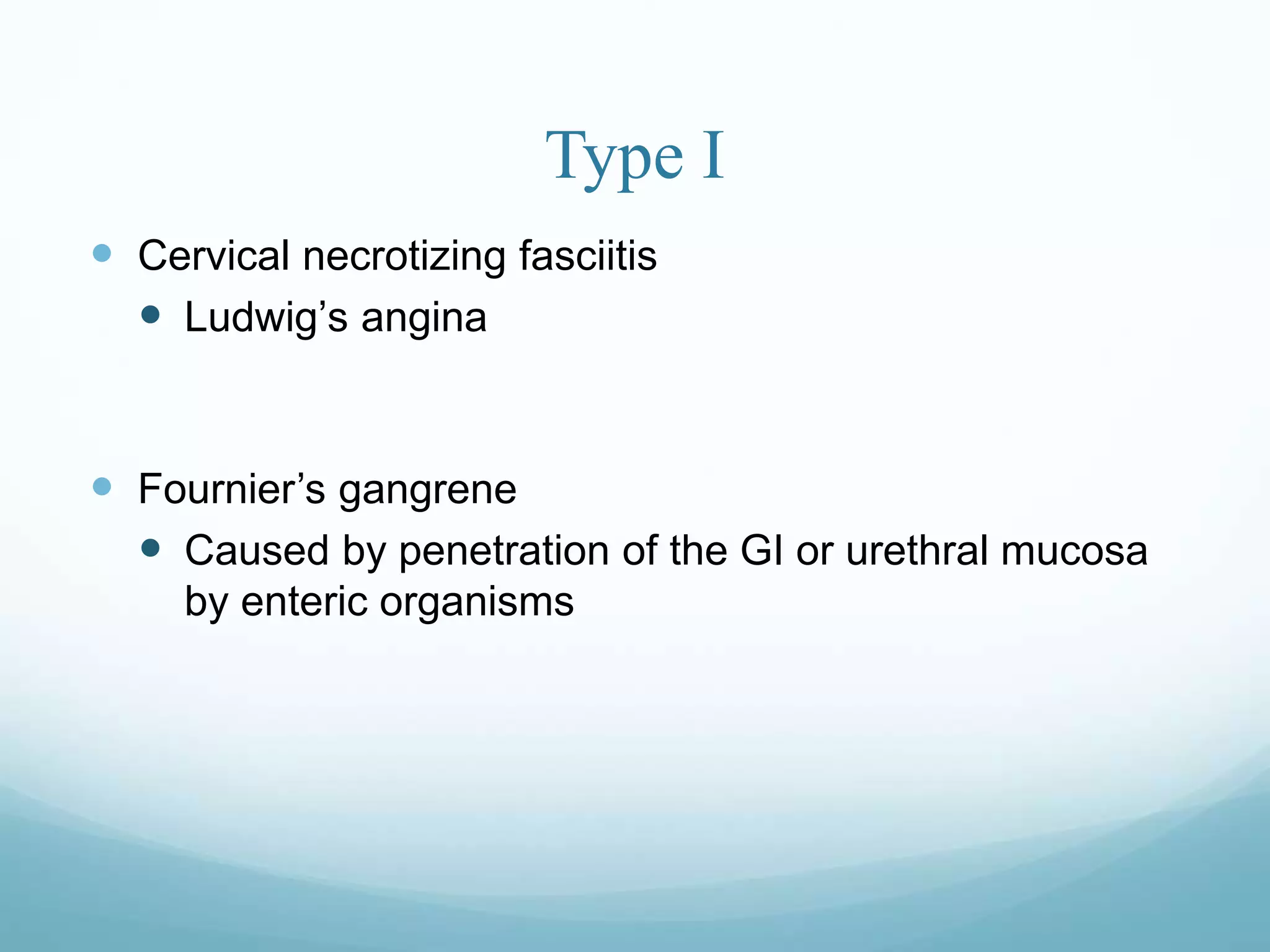
Type I
 Cervical necrotizing fasciitis
 Ludwig’s angina
 Fournier’s gangrene
 Caused by penetration of the GI or urethral mucosa
by enteric organisms
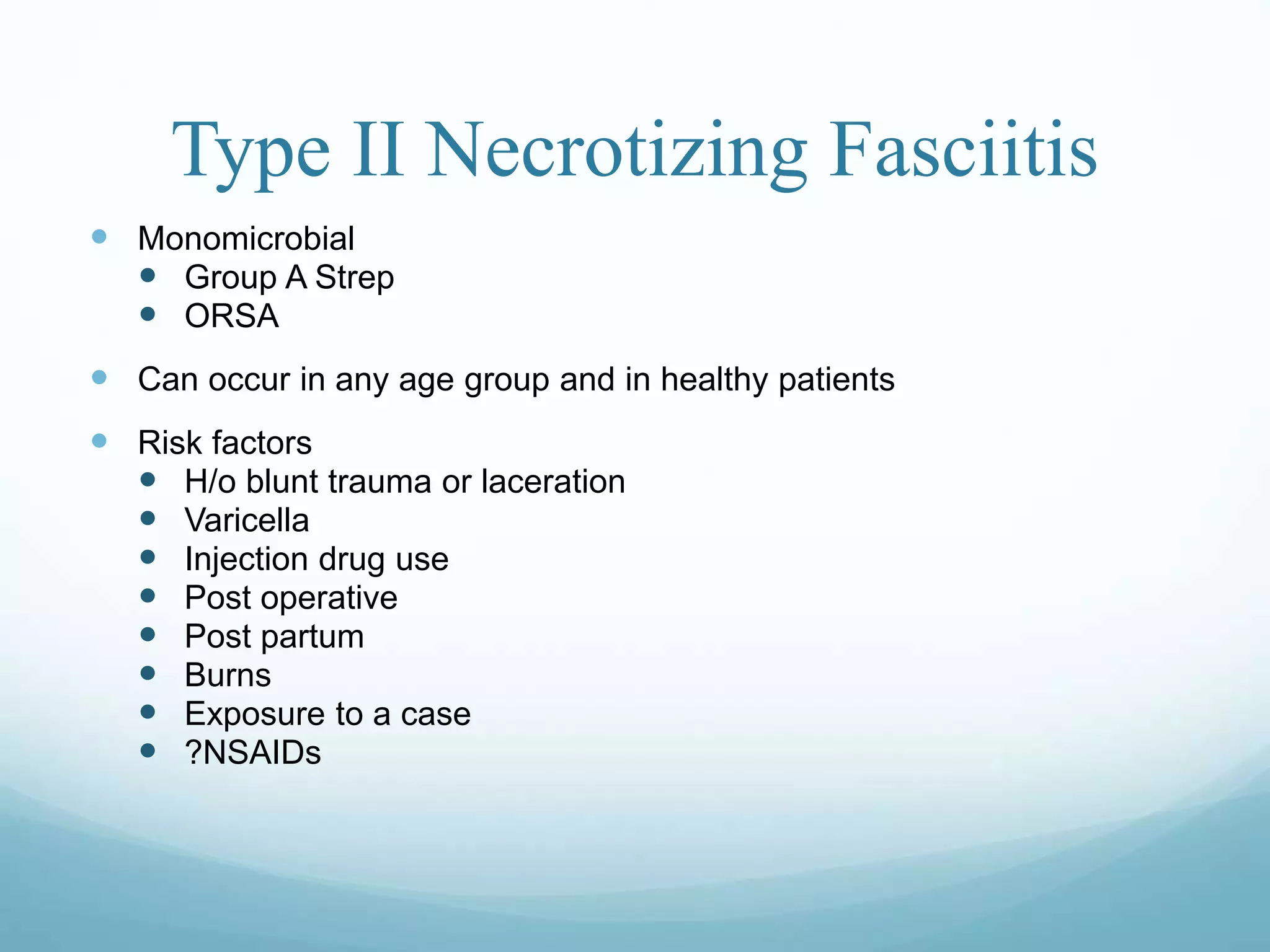
Type II Necrotizing Fasciitis
 Monomicrobial
 Group A Strep
 ORSA
 Can occur in any age group and in healthy patients
 Risk factors
 H/o blunt trauma or laceration
 Varicella
 Injection drug use
 Post operative
 Post partum
 Burns
 Exposure to a case
 ?NSAIDs
Type II
 Can result from hematogenous translocation from GAS
in throat
 NSAIDs thought to inhibit neutrophil function or mask
symptoms and delay diagnosis
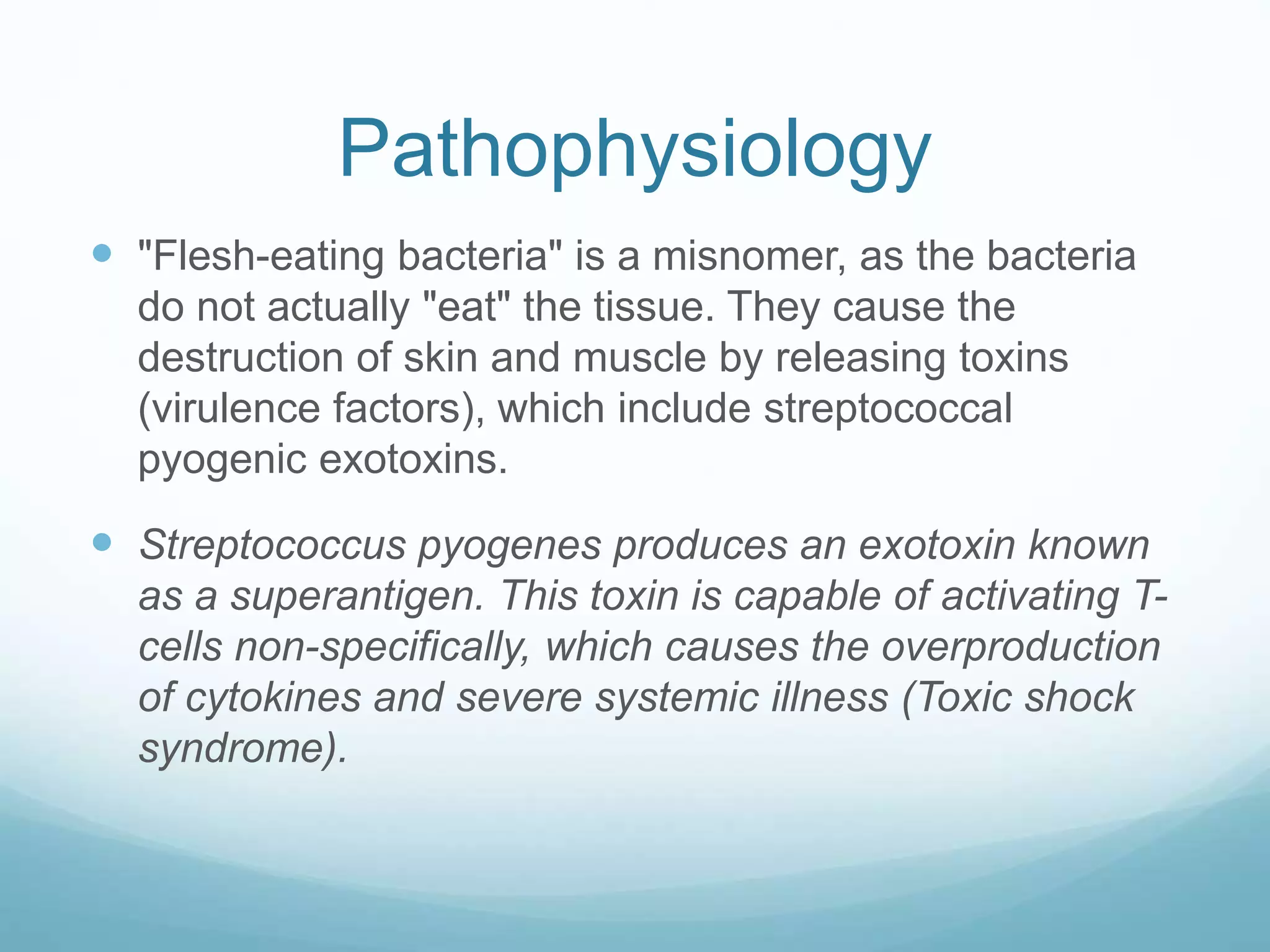
Pathophysiology
 "Flesh-eating bacteria" is a misnomer, as the bacteria
do not actually "eat" the tissue. They cause the
destruction of skin and muscle by releasing toxins
(virulence factors), which include streptococcal
pyogenic exotoxins.
 Streptococcus pyogenes produces an exotoxin known
as a superantigen. This toxin is capable of activating T-
cells non-specifically, which causes the overproduction
of cytokines and severe systemic illness (Toxic shock
syndrome).
Clinical Manifestations
• Unexplained/disproportionate pain
• Blister and bullae formation
• Signs of systemic toxicity fever
tachycardia hypotension
• Tense edema outside the involved
skin
• Crepitus/subcutaneous gas
Why it is so aggressive?
 Toxins-host releases
cytokines, including
interleukin-2, tumor necrosis
factor and gamma-interferon.
resulting in shock
 substances cause vascular
thrombosis and ischemic
gangrene
 tissue is consumed at 1 inch
per hour
 inoculation from
subcutaneous tissue
 hematogenous spread from
distant site
 found in post op
complications of fecal
contaminated wound
 shock & multi system organ
failure, ARDS
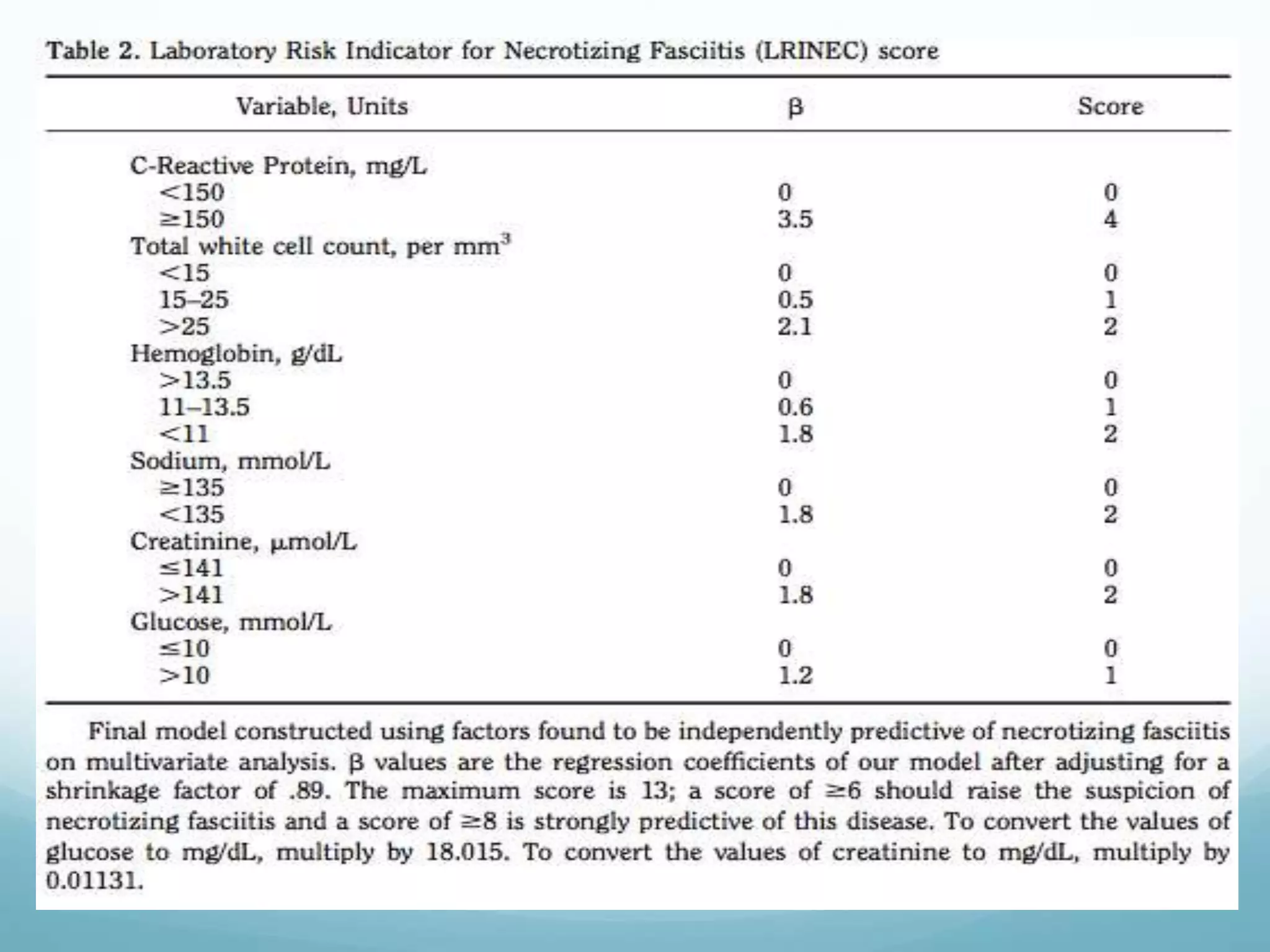
Risk Score
1) Serum CRP >= 150mg/L (4 pt)
2) WBC 15K-25K (1 pt) or > 25K (2 pt)
3) Hb 11-13.5 (1 pt) or <= 11 (2 pt)
4) Na < 135 (2 pt)
5) Cr >1.6 (2 pt)
6) Glucose >180 (1 pt)
 Score >/= 6 should raise suspicion for NF
 >/= 8 highly predictive of NF
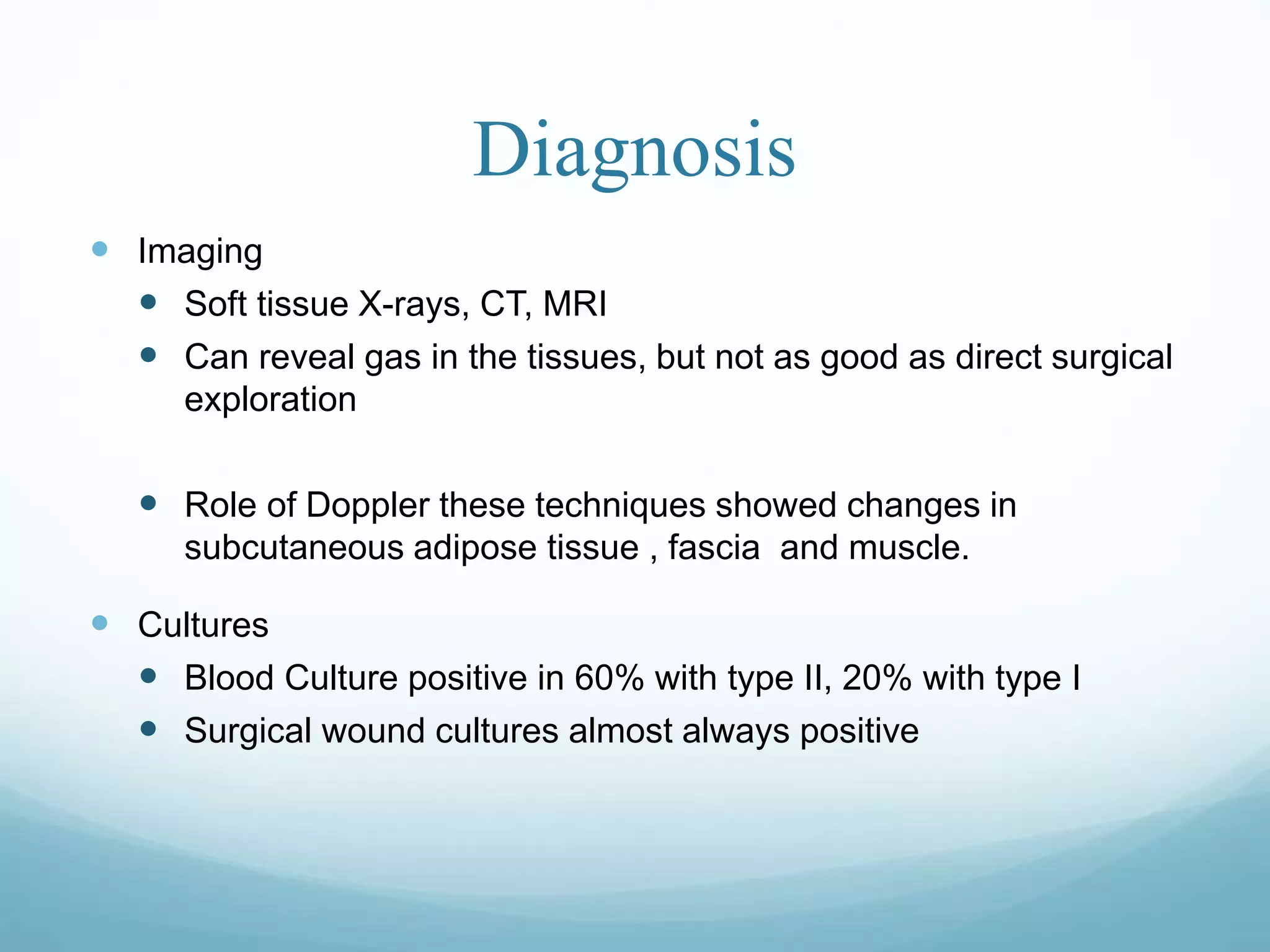
Diagnosis
 Imaging
 Soft tissue X-rays, CT, MRI
 Can reveal gas in the tissues, but not as good as direct surgical
exploration
 Role of Doppler these techniques showed changes in
subcutaneous adipose tissue , fascia and muscle.
 Cultures
 Blood Culture positive in 60% with type II, 20% with type I
 Surgical wound cultures almost always positive
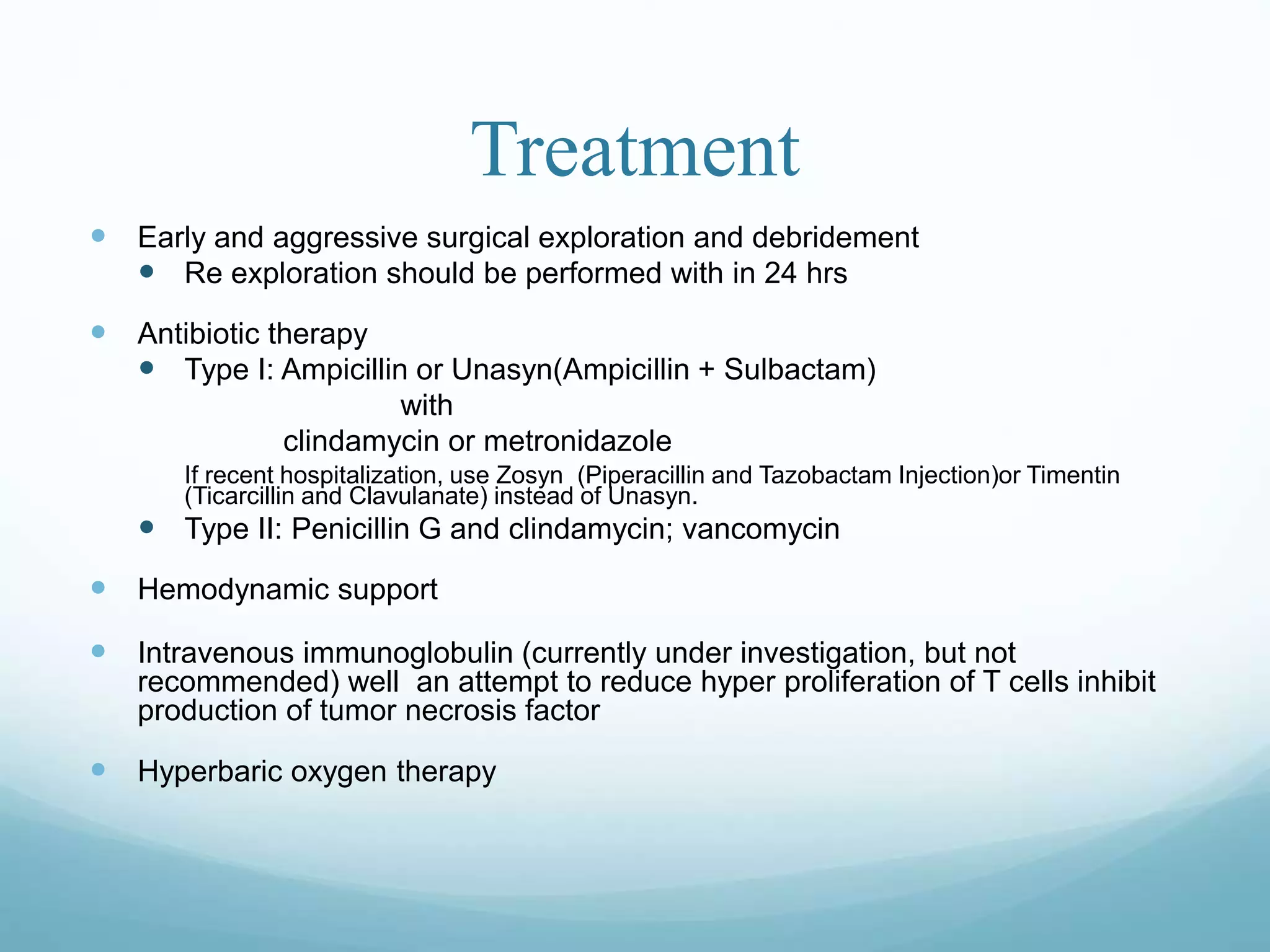
Treatment
 Early and aggressive surgical exploration and debridement
 Re exploration should be performed with in 24 hrs
 Antibiotic therapy
 Type I: Ampicillin or Unasyn(Ampicillin + Sulbactam)
with
clindamycin or metronidazole
If recent hospitalization, use Zosyn (Piperacillin and Tazobactam Injection)or Timentin
(Ticarcillin and Clavulanate) instead of Unasyn.
 Type II: Penicillin G and clindamycin; vancomycin
 Hemodynamic support
 Intravenous immunoglobulin (currently under investigation, but not
recommended) well an attempt to reduce hyper proliferation of T cells inhibit
production of tumor necrosis factor
 Hyperbaric oxygen therapy
Role of Surgery
Necrotizing fasciitis is a surgical
emergency,
the patient should be admitted
immediately to a surgical intensive care
unit in a setting such as a regional burn
center or trauma center, where the
surgical staff is skilled in performing
extensive debridement and reconstructive
surgery.
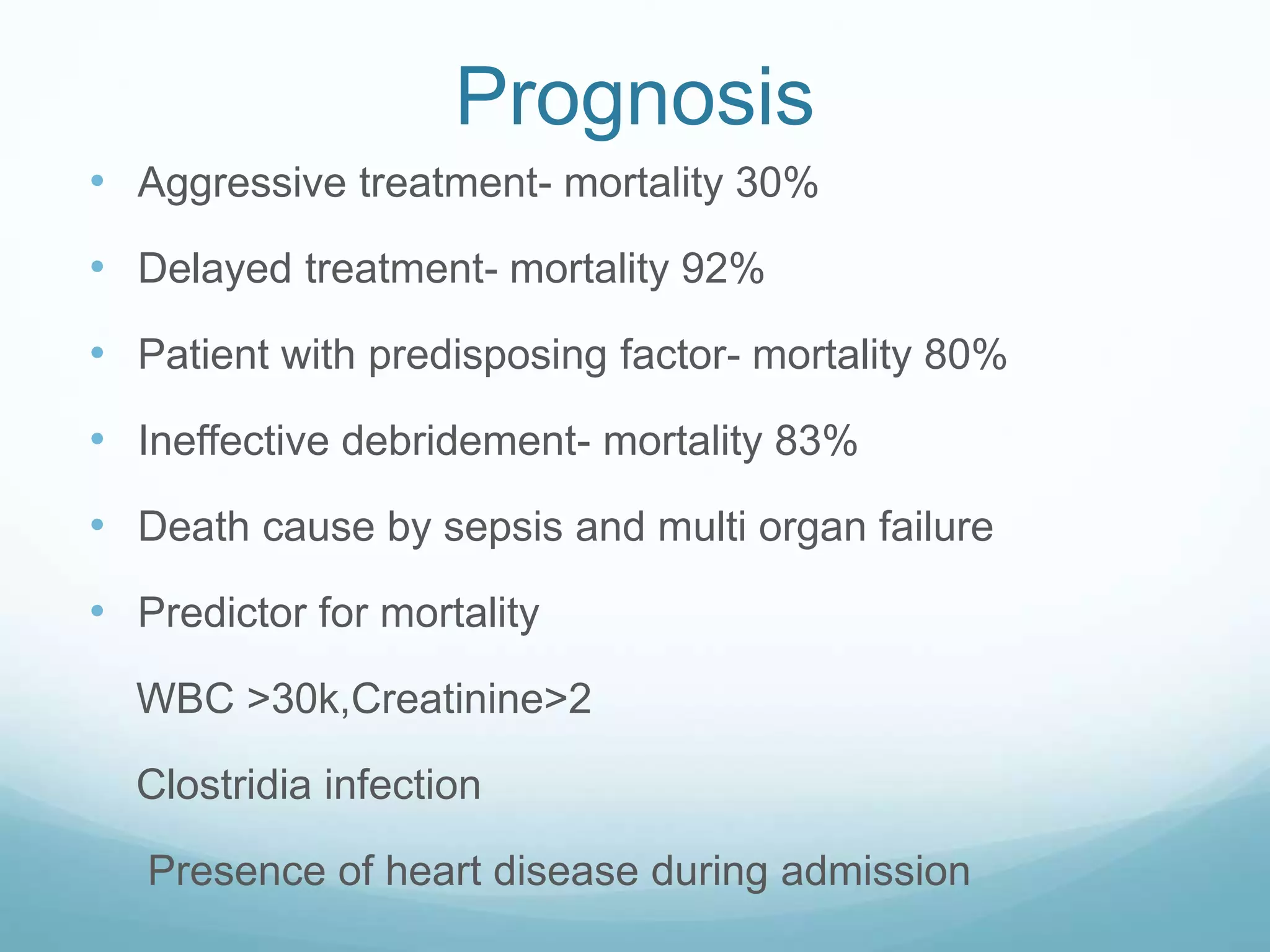
Prognosis
• Aggressive treatment- mortality 30%
• Delayed treatment- mortality 92%
• Patient with predisposing factor- mortality 80%
• Ineffective debridement- mortality 83%
• Death cause by sepsis and multi organ failure
• Predictor for mortality
WBC >30k,Creatinine>2
Clostridia infection
Presence of heart disease during admission
Conclusion
 Necrotizing fasciities is a aggressive disease.
 Rapid identification and rapid treatment is essential for
recovery from this aggressive disease.
 Aggressive disease should be treated aggressively.
Tit For Tat.
Thank You

Necrotizing faciitis

  • 1.
    Necrotizing Fasciitis Dr. ShirishSilwal House Officer Dept. of General Surgery & Urology B & B Hospital Pvt. Ltd.
  • 2.
    Case 1  MrBKB, 54 years presented in the Emergency on 2070/3/31.  Swelling and Pain in left lower leg .  Watery discharge with skin blisters.  H/O small wound due to insect bite a month ago.  H/O Fever on and off for 3 days, not associated with chills or rigor.  Primary management done in other center took antibiotic for 1 day and Hot water bath taken.  K/C/O HTN, NO PREVIOUS H/O DIABETES.
  • 3.
    GENERAL EXAMINATION General condition-Fair JALCCOD - Nil , Vitals – T 97° F, BP 110/80 mm of Hg SYSTEMIC EXAMINATION  Per Abdominal Findings Soft & non tender, bowel sound (+), No organomegaly  Respiratory system Findings B/L vesicular breathe sound, No added sound  Other systemic findings NAD
  • 4.
    LOCAL EXAMINATION OFLEFT LEG  Inspection • Discoloration of skin (+) • Redness and swelling up to knee region • Bulla with serous discharge present at the dorsum of foot and ankle • Movement of distal joint (+)  Palpation • Tenderness present • Increased local temperature • Neurovascular system not assessable due to edema
  • 5.
    INVESTIGATION  CBC • WBC-8400/Cumm • Neutrophils - 85% • Lymphocyte- 15% • Platelets - 153000  RFT • Urea- 75mg/dl • Creatinine- 1mg/dl • Na+ 125mmol/L, • K+ 2.5mmol/L  Blood sugar- 230 mg/dl  LIVER FUNCTION TEST • Billirubin Total-1.0 mg/dl • Billirubin Direct- 1.0 mg/dl • SGPT/ALT- 39 IU/L • SGOT/AST- 50 IU/L • AlkalinePhosphatase- 128 IU/L • URINE RME - NAD • VENOUS DOPPLER - NORMAL
  • 6.
    CULTURE  Wound/pus culture: No growth (2070/3/31)  No growth (2070/4/16)  Heavy growth of pseudomonas sp.(2070/4/22)  Pseudomonas aeroginosa(2070/4/24) national reference lab.  No growth after 48 hours(2070/4/28)
  • 7.
  • 11.
  • 15.
  • 17.
    Treatment  Diagnosed asuncontrolled diabetics with Cellulitis with Necrotizing fasciitis  Insulin on sliding scale  IV antibiotics  Gentamycin  Metronidazole  Penicillin  Clindamycin  Blood transfusion VIII bag
  • 18.
    Surgery  Fasciotomy doneon (2070/4/2)  Daily debridement, dressing and foot bath.  Debridement with povidone iodine, washing powder, Neosporin powder, placentex.  Skin grafting on (2070/4/31)
  • 19.
    Skin graft  Requirementof survival  Bed must be well vascularized.  The contact between graft and recipient must be fully immobile.  Low bacterial count at the site.  Cause of failure  Systemic Factors  Malnutrition  Sepsis  Medical Conditions (Diabetes)  Medications  Steroids  Antineoplastic agents  Vasoconstrictors (e.g. nicotine)
  • 20.
    Post-operative status  Patientis stable and afebrile.  Skin grafting 90% accepted.  No foul smell from wound.  Diabetes and Blood Pressure under control.
  • 22.
  • 23.
    Past history  Hippocratesin the 5th century BC noted  known as malignant ulcer, gangrenous ulcer , putrid ulcer, and hospital gangrene in the 18th century  In 1871 after the Civil War was called hospital gangrene by a war surgeon  In 1924 called hemolytic streptococcal gangrene  In 1952 called “necrotizing fasciitis”
  • 24.
    Definition  Characterized byfulminant destruction of tissue, systemic signs of toxicity, and a high mortality rate.  Pathologic features include extensive tissue destruction, thrombosis of blood vessels, abundant bacterial spread along fascial planes, and unimpressive infiltration of acute inflammatory cells.
  • 25.
    Risk Factors  Druguse  Diabetes mellitus  Obesity  Immunosuppression  Renal failure
  • 26.
    Types of NecrotizingInfection  Necrotizing cellulitis  Clostridial cellulitis  Nonclostridial anaerobic cellulitis  Meleney’s synergistic gangrene  Synergistic necrotizing cellulitis  Necrotizing fasciitis  Type I  Type II
  • 27.
    Type I NecrotizingFasciitis  Mixed aerobic and anaerobic infection  Bacteria almost always isolated  Staphylococcus aureus, Streptococci, Enterococci, E.coli, Peptostreptococcus species, Prevotella, Porphyromonas, bacteroides fragilis and Clostridium species.  More common in diabetics, post op patients, and patients with peripheral vascular disease.
  • 28.
    Type I  Cervicalnecrotizing fasciitis  Ludwig’s angina  Fournier’s gangrene  Caused by penetration of the GI or urethral mucosa by enteric organisms
  • 29.
    Type II NecrotizingFasciitis  Monomicrobial  Group A Strep  ORSA  Can occur in any age group and in healthy patients  Risk factors  H/o blunt trauma or laceration  Varicella  Injection drug use  Post operative  Post partum  Burns  Exposure to a case  ?NSAIDs
  • 30.
    Type II  Canresult from hematogenous translocation from GAS in throat  NSAIDs thought to inhibit neutrophil function or mask symptoms and delay diagnosis
  • 31.
    Pathophysiology  "Flesh-eating bacteria"is a misnomer, as the bacteria do not actually "eat" the tissue. They cause the destruction of skin and muscle by releasing toxins (virulence factors), which include streptococcal pyogenic exotoxins.  Streptococcus pyogenes produces an exotoxin known as a superantigen. This toxin is capable of activating T- cells non-specifically, which causes the overproduction of cytokines and severe systemic illness (Toxic shock syndrome).
  • 32.
    Clinical Manifestations • Unexplained/disproportionatepain • Blister and bullae formation • Signs of systemic toxicity fever tachycardia hypotension • Tense edema outside the involved skin • Crepitus/subcutaneous gas
  • 33.
    Why it isso aggressive?  Toxins-host releases cytokines, including interleukin-2, tumor necrosis factor and gamma-interferon. resulting in shock  substances cause vascular thrombosis and ischemic gangrene  tissue is consumed at 1 inch per hour  inoculation from subcutaneous tissue  hematogenous spread from distant site  found in post op complications of fecal contaminated wound  shock & multi system organ failure, ARDS
  • 34.
    Risk Score 1) SerumCRP >= 150mg/L (4 pt) 2) WBC 15K-25K (1 pt) or > 25K (2 pt) 3) Hb 11-13.5 (1 pt) or <= 11 (2 pt) 4) Na < 135 (2 pt) 5) Cr >1.6 (2 pt) 6) Glucose >180 (1 pt)  Score >/= 6 should raise suspicion for NF  >/= 8 highly predictive of NF
  • 35.
    Diagnosis  Imaging  Softtissue X-rays, CT, MRI  Can reveal gas in the tissues, but not as good as direct surgical exploration  Role of Doppler these techniques showed changes in subcutaneous adipose tissue , fascia and muscle.  Cultures  Blood Culture positive in 60% with type II, 20% with type I  Surgical wound cultures almost always positive
  • 39.
    Treatment  Early andaggressive surgical exploration and debridement  Re exploration should be performed with in 24 hrs  Antibiotic therapy  Type I: Ampicillin or Unasyn(Ampicillin + Sulbactam) with clindamycin or metronidazole If recent hospitalization, use Zosyn (Piperacillin and Tazobactam Injection)or Timentin (Ticarcillin and Clavulanate) instead of Unasyn.  Type II: Penicillin G and clindamycin; vancomycin  Hemodynamic support  Intravenous immunoglobulin (currently under investigation, but not recommended) well an attempt to reduce hyper proliferation of T cells inhibit production of tumor necrosis factor  Hyperbaric oxygen therapy
  • 40.
    Role of Surgery Necrotizingfasciitis is a surgical emergency, the patient should be admitted immediately to a surgical intensive care unit in a setting such as a regional burn center or trauma center, where the surgical staff is skilled in performing extensive debridement and reconstructive surgery.
  • 41.
    Prognosis • Aggressive treatment-mortality 30% • Delayed treatment- mortality 92% • Patient with predisposing factor- mortality 80% • Ineffective debridement- mortality 83% • Death cause by sepsis and multi organ failure • Predictor for mortality WBC >30k,Creatinine>2 Clostridia infection Presence of heart disease during admission
  • 42.
    Conclusion  Necrotizing fasciitiesis a aggressive disease.  Rapid identification and rapid treatment is essential for recovery from this aggressive disease.  Aggressive disease should be treated aggressively. Tit For Tat.
  • 43.

Editor's Notes

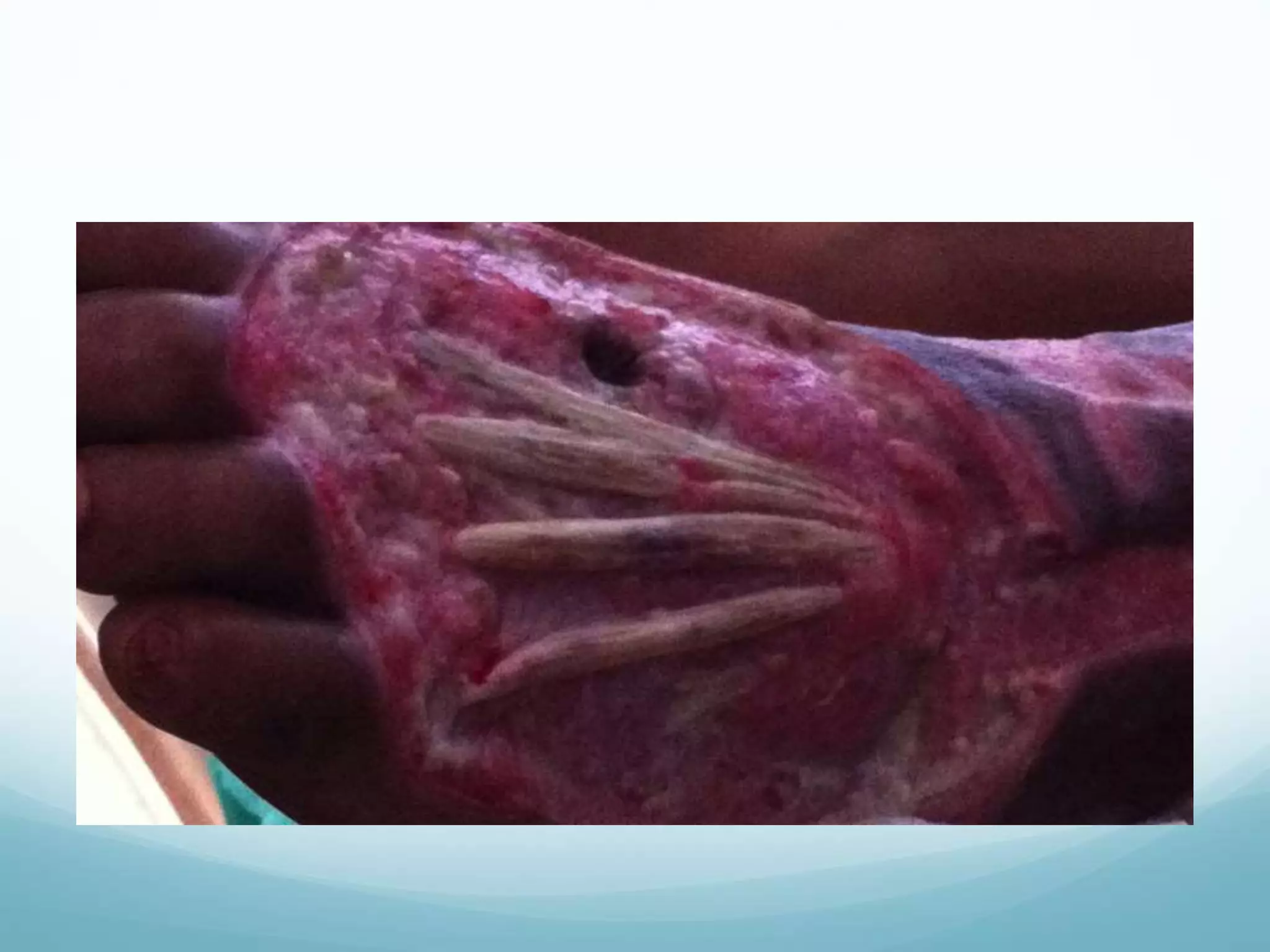
  • #21 Patient’s flexor tendons were excised. So range of movement is restricted.
  • #37 Nf causing air in soft tissue