Congenital Chest Wall
Abnormality
Presented By
Dr Shirish Silwal
Phase B year 2
Paediatric surgery
Content
โ€ข Anatomy of Chest wall
โ€ข Development and Function of Chest wall
โ€ข Chest Wall Abnormality Outline
โ€ข Short Description of the common chest wall
deformity.
โ€ข Recent Advancement regarding this defect.
โ€ข Take Home Message.
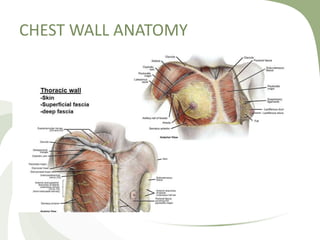
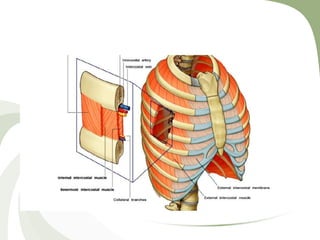
CHEST WALL ANATOMY
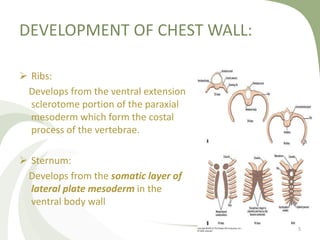
DEVELOPMENT OF CHEST WALL:
๏ƒ˜ Ribs:
Develops from the ventral extension
sclerotome portion of the paraxial
mesoderm which form the costal
process of the vertebrae.
๏ƒ˜ Sternum:
Develops from the somatic layer of
lateral plate mesoderm in the
ventral body wall
5
DEVELOPMENT OF CHEST WALL:
๏ƒ˜ Muscles of chest wall:
Developed from the myotome of paraxial mesoderm.
6
FUNCTIONS OF CHEST WALL
๏ƒ˜ The thoracic cavity contains and protects essential
organs of respiration and circulation.
๏ƒ˜ It alters the diameters of thorax in different phases
of respiration by movements of the ribs and the
diaphragm.
7
Outline
โ€ข Pectus Excavatum
โ€ข Pectus Carinatum
โ€ข Poland's Syndrome
โ€ข Ectopia Cordis , Bifid sternum
โ€ข Thoracic Deformities in Diffuse Skeletal Disorders
PECTUS EXCAVATUM
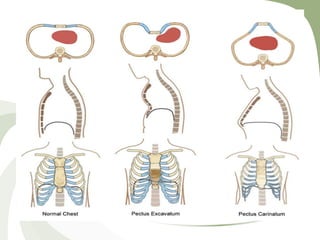
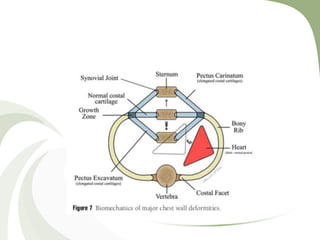
โ€ข Pectus excavatum (PE) is the inward displacement of the
sternum and the adjacent costal cartilages.
โ€ข PE Or โ€œfunnel chestโ€ is the most common chest wall
deformity.
โ€ข Estimated occurrence of 1 in 400 to 1 in 1000 live births with
males affected 3-5 times more often than females.
โ€ข Study has proven a Genetic Predisposition.
โ€ข Further Classified according to
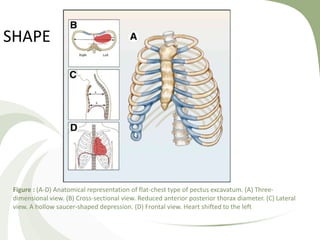
Figure : (A-D) Anatomical representation of flat-chest type of pectus excavatum. (A) Three-
dimensional view. (B) Cross-sectional view. Reduced anterior posterior thorax diameter. (C) Lateral
view. A hollow saucer-shaped depression. (D) Frontal view. Heart shifted to the left
SHAPE
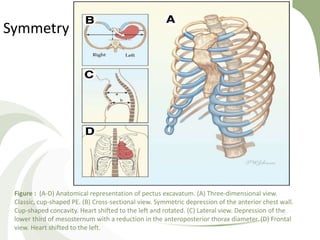
Figure : (A-D) Anatomical representation of pectus excavatum. (A) Three-dimensional view.
Classic, cup-shaped PE. (B) Cross-sectional view. Symmetric depression of the anterior chest wall.
Cup-shaped concavity. Heart shifted to the left and rotated. (C) Lateral view. Depression of the
lower third of mesosternum with a reduction in the anteroposterior thorax diameter. (D) Frontal
view. Heart shifted to the left.
Symmetry
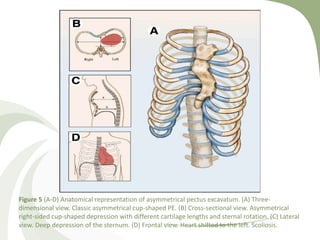
Figure 5 (A-D) Anatomical representation of asymmetrical pectus excavatum. (A) Three-
dimensional view. Classic asymmetrical cup-shaped PE. (B) Cross-sectional view. Asymmetrical
right-sided cup-shaped depression with different cartilage lengths and sternal rotation. (C) Lateral
view. Deep depression of the sternum. (D) Frontal view. Heart shifted to the left. Scoliosis.
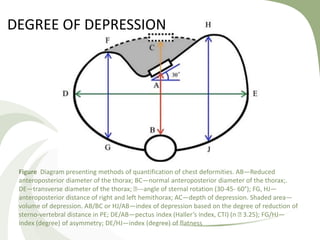
Figure Diagram presenting methods of quantification of chest deformities. ABโ€”Reduced
anteroposterior diameter of the thorax; BCโ€”normal anteroposterior diameter of the thorax;.
DEโ€”transverse diameter of the thorax; ๔ฐ€---angle of sternal rotation (30-45- 60ยฐ); FG, HJโ€”
anteroposterior distance of right and left hemithorax; ACโ€”depth of depression. Shaded areaโ€”
volume of depression. AB/BC or HJ/ABโ€”index of depression based on the degree of reduction of
sterno-vertebral distance in PE; DE/ABโ€”pectus index (Hallerโ€™s index, CTI) (n ๔ฐ€ 3.25); FG/HJโ€”
index (degree) of asymmetry; DE/HJโ€”index (degree) of flatness
DEGREE OF DEPRESSION
โ€ข Many agree that surgical correction is warranted if the patient
has two or more of the following criteria:
(1) Progressive or symptomatic pectus excavatum;
(2) Restrictive disease, decreased work production, or
decreased oxygen uptake, as determined by pulmonary function
studies;
(3) CT scan showing cardiac compression or displacement,
pulmonary atelectasis, and a Haller CT index greater than 3.25;
(4) Cardiac abnormalities, including mitral valve prolapse or
bundle branch block.
(5) Recurrent pectus excavatum after a failed repair.
Ravitch Procedure
โ€ข The biomechanics of the condition indicate that, to return the
sternum to its normal position while preserving the proper
geometry of the chest, one must reduce the length of the
elongated costal cartilages by resection. This is the basis of
the open, Ravitch-type surgical correction
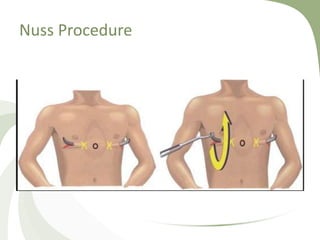
Nuss Procedure
โ€ข Nuss procedure (aka minimally invasive repair of pectus
excavatum [MIRPE]) โ€” closed procedure that corrects the
pectus defect without cartilage resection by applying outward
pressure to the sternum at the point of maximal inward
deflection using a custom- contoured steel bar ("Nuss barโ€)
โ€ข The Nuss bar is placed in the pleural space, passed behind the
sternum, rotated 180 degrees, and then attached laterally to
the outer edge of the rib cage. The bar is left in place for
several months or years.
Nuss Procedure
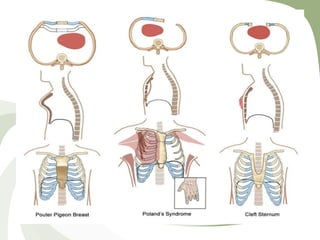
Pectus Carinatum
โ€ข Pectus carinatum (PC), which is defined by the out ward
displacement of the sternum and/or abnormal protrusion of
the ribs.
โ€ข Treatment option by Modified Nussโ€™s Procedure and
Thoracoscopic cartilage resection.
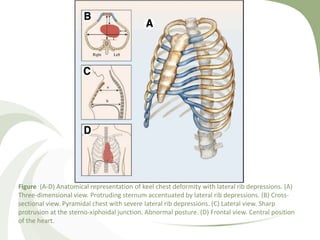
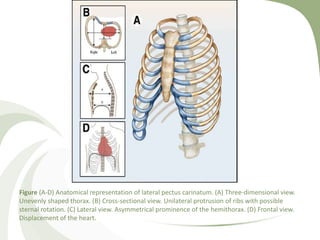
โ€ข Carinatum deformities may be divided into 3 main types: keel
chest, lateral pectus carinatum, and pouter pigeon breast
Figure (A-D) Anatomical representation of keel chest deformity with lateral rib depressions. (A)
Three-dimensional view. Protruding sternum accentuated by lateral rib depressions. (B) Cross-
sectional view. Pyramidal chest with severe lateral rib depressions. (C) Lateral view. Sharp
protrusion at the sterno-xiphoidal junction. Abnormal posture. (D) Frontal view. Central position
of the heart.
Figure (A-D) Anatomical representation of lateral pectus carinatum. (A) Three-dimensional view.
Unevenly shaped thorax. (B) Cross-sectional view. Unilateral protrusion of ribs with possible
sternal rotation. (C) Lateral view. Asymmetrical prominence of the hemithorax. (D) Frontal view.
Displacement of the heart.
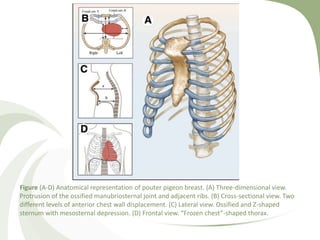
Figure (A-D) Anatomical representation of pouter pigeon breast. (A) Three-dimensional view.
Protrusion of the ossified manubriosternal joint and adjacent ribs. (B) Cross-sectional view. Two
different levels of anterior chest wall displacement. (C) Lateral view. Ossified and Z-shaped
sternum with mesosternal depression. (D) Frontal view. โ€œFrozen chestโ€-shaped thorax.
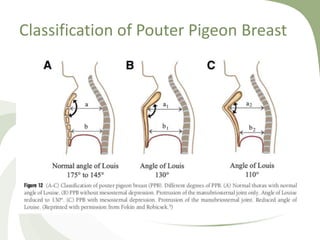
Classification of Pouter Pigeon Breast
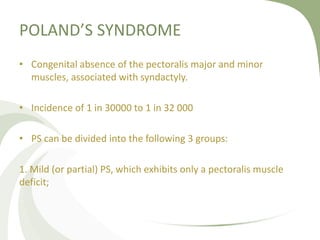
POLANDโ€™S SYNDROME
โ€ข Congenital absence of the pectoralis major and minor
muscles, associated with syndactyly.
โ€ข Incidence of 1 in 30000 to 1 in 32 000
โ€ข PS can be divided into the following 3 groups:
1. Mild (or partial) PS, which exhibits only a pectoralis muscle
deficit;
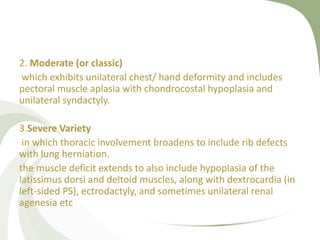
2. Moderate (or classic)
which exhibits unilateral chest/ hand deformity and includes
pectoral muscle aplasia with chondrocostal hypoplasia and
unilateral syndactyly.
3.Severe Variety
in which thoracic involvement broadens to include rib defects
with lung herniation.
the muscle deficit extends to also include hypoplasia of the
latissimus dorsi and deltoid muscles, along with dextrocardia (in
left-sided PS), ectrodactyly, and sometimes unilateral renal
agenesia etc
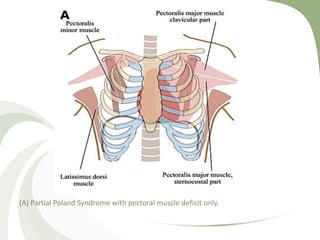
(A) Partial Poland Syndrome with pectoral muscle deficit only.
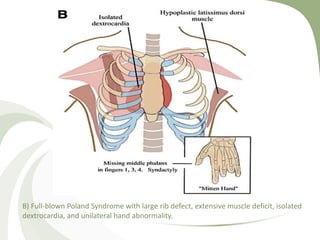
B) Full-blown Poland Syndrome with large rib defect, extensive muscle deficit, isolated
dextrocardia, and unilateral hand abnormality.
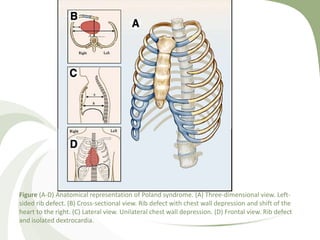
Figure (A-D) Anatomical representation of Poland syndrome. (A) Three-dimensional view. Left-
sided rib defect. (B) Cross-sectional view. Rib defect with chest wall depression and shift of the
heart to the right. (C) Lateral view. Unilateral chest wall depression. (D) Frontal view. Rib defect
and isolated dextrocardia.
Sternal Defects
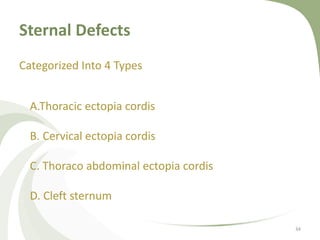
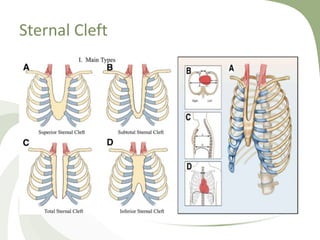
Categorized Into 4 Types
34
A.Thoracic ectopia cordis
B. Cervical ectopia cordis
C. Thoraco abdominal ectopia cordis
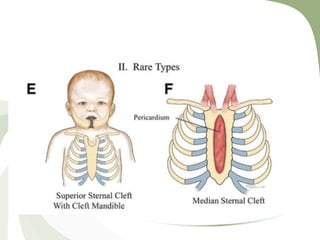
D. Cleft sternum
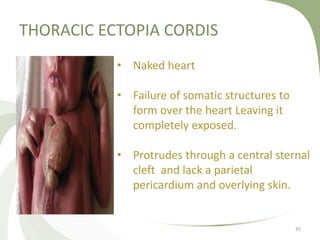
THORACIC ECTOPIA CORDIS
35
โ€ข Naked heart
โ€ข Failure of somatic structures to
form over the heart Leaving it
completely exposed.
โ€ข Protrudes through a central sternal
cleft and lack a parietal
pericardium and overlying skin.
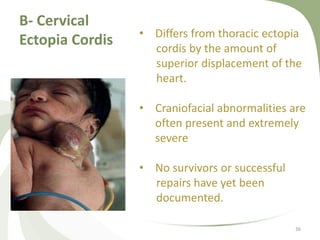
B- Cervical
Ectopia Cordis
36
โ€ข Differs from thoracic ectopia
cordis by the amount of
superior displacement of the
heart.
โ€ข Craniofacial abnormalities are
often present and extremely
severe
โ€ข No survivors or successful
repairs have yet been
documented.
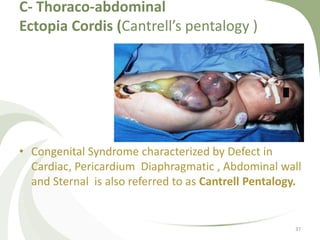
C- Thoraco-abdominal
Ectopia Cordis (Cantrellโ€™s pentalogy )
โ€ข Congenital Syndrome characterized by Defect in
Cardiac, Pericardium Diaphragmatic , Abdominal wall
and Sternal is also referred to as Cantrell Pentalogy.
37
Sternal Cleft
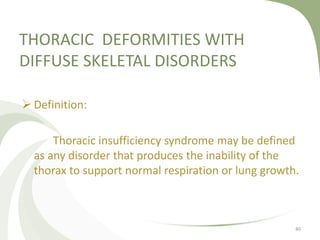
THORACIC DEFORMITIES WITH
DIFFUSE SKELETAL DISORDERS
๏ƒ˜ Definition:
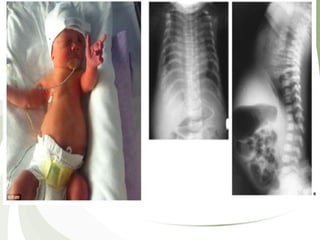
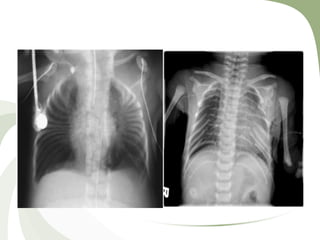
Thoracic insufficiency syndrome may be defined
as any disorder that produces the inability of the
thorax to support normal respiration or lung growth.
40
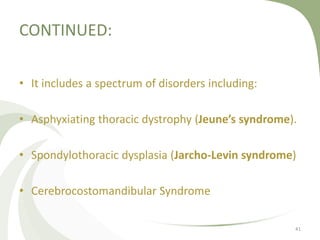
CONTINUED:
โ€ข It includes a spectrum of disorders including:
โ€ข Asphyxiating thoracic dystrophy (Jeuneโ€™s syndrome).
โ€ข Spondylothoracic dysplasia (Jarcho-Levin syndrome)
โ€ข Cerebrocostomandibular Syndrome
41
Recent Advance in Management
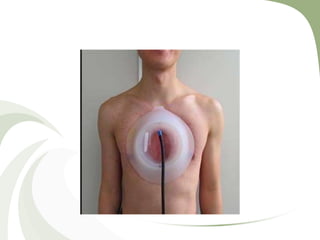
Vacuum Bell
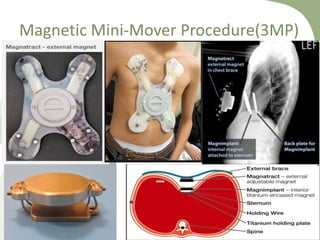
Magnetic Mini-Mover Procedure(3MP)
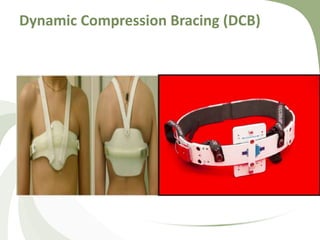
Dynamic Compression Bracing (DCB)
Take Home Message
โ€ข Chest wall Abnormality are concealed within clothes are
either neglected by parents or hide by the patient.
โ€ข Awareness is necessary regarding its consequence which
effect more psychologically rather than physically.
โ€ข With a slogan โ€œBaby born with deformity should never die
with it..โ€
THANK YOU

Congenital Chest Wall Abnormality

  • 1.
    Congenital Chest Wall Abnormality PresentedBy Dr Shirish Silwal Phase B year 2 Paediatric surgery
  • 2.
    Content โ€ข Anatomy ofChest wall โ€ข Development and Function of Chest wall โ€ข Chest Wall Abnormality Outline โ€ข Short Description of the common chest wall deformity. โ€ข Recent Advancement regarding this defect. โ€ข Take Home Message.
  • 3.
  • 5.
    DEVELOPMENT OF CHESTWALL: ๏ƒ˜ Ribs: Develops from the ventral extension sclerotome portion of the paraxial mesoderm which form the costal process of the vertebrae. ๏ƒ˜ Sternum: Develops from the somatic layer of lateral plate mesoderm in the ventral body wall 5
  • 6.
    DEVELOPMENT OF CHESTWALL: ๏ƒ˜ Muscles of chest wall: Developed from the myotome of paraxial mesoderm. 6
  • 7.
    FUNCTIONS OF CHESTWALL ๏ƒ˜ The thoracic cavity contains and protects essential organs of respiration and circulation. ๏ƒ˜ It alters the diameters of thorax in different phases of respiration by movements of the ribs and the diaphragm. 7
  • 8.
    Outline โ€ข Pectus Excavatum โ€ขPectus Carinatum โ€ข Poland's Syndrome โ€ข Ectopia Cordis , Bifid sternum โ€ข Thoracic Deformities in Diffuse Skeletal Disorders
  • 11.
  • 12.
    โ€ข Pectus excavatum(PE) is the inward displacement of the sternum and the adjacent costal cartilages. โ€ข PE Or โ€œfunnel chestโ€ is the most common chest wall deformity. โ€ข Estimated occurrence of 1 in 400 to 1 in 1000 live births with males affected 3-5 times more often than females. โ€ข Study has proven a Genetic Predisposition. โ€ข Further Classified according to
  • 14.
    Figure : (A-D)Anatomical representation of flat-chest type of pectus excavatum. (A) Three- dimensional view. (B) Cross-sectional view. Reduced anterior posterior thorax diameter. (C) Lateral view. A hollow saucer-shaped depression. (D) Frontal view. Heart shifted to the left SHAPE
  • 15.
    Figure : (A-D)Anatomical representation of pectus excavatum. (A) Three-dimensional view. Classic, cup-shaped PE. (B) Cross-sectional view. Symmetric depression of the anterior chest wall. Cup-shaped concavity. Heart shifted to the left and rotated. (C) Lateral view. Depression of the lower third of mesosternum with a reduction in the anteroposterior thorax diameter. (D) Frontal view. Heart shifted to the left. Symmetry
  • 16.
    Figure 5 (A-D)Anatomical representation of asymmetrical pectus excavatum. (A) Three- dimensional view. Classic asymmetrical cup-shaped PE. (B) Cross-sectional view. Asymmetrical right-sided cup-shaped depression with different cartilage lengths and sternal rotation. (C) Lateral view. Deep depression of the sternum. (D) Frontal view. Heart shifted to the left. Scoliosis.
  • 17.
    Figure Diagram presentingmethods of quantification of chest deformities. ABโ€”Reduced anteroposterior diameter of the thorax; BCโ€”normal anteroposterior diameter of the thorax;. DEโ€”transverse diameter of the thorax; ๔ฐ€---angle of sternal rotation (30-45- 60ยฐ); FG, HJโ€” anteroposterior distance of right and left hemithorax; ACโ€”depth of depression. Shaded areaโ€” volume of depression. AB/BC or HJ/ABโ€”index of depression based on the degree of reduction of sterno-vertebral distance in PE; DE/ABโ€”pectus index (Hallerโ€™s index, CTI) (n ๔ฐ€ 3.25); FG/HJโ€” index (degree) of asymmetry; DE/HJโ€”index (degree) of flatness DEGREE OF DEPRESSION
  • 18.
    โ€ข Many agreethat surgical correction is warranted if the patient has two or more of the following criteria: (1) Progressive or symptomatic pectus excavatum; (2) Restrictive disease, decreased work production, or decreased oxygen uptake, as determined by pulmonary function studies;
  • 19.
    (3) CT scanshowing cardiac compression or displacement, pulmonary atelectasis, and a Haller CT index greater than 3.25; (4) Cardiac abnormalities, including mitral valve prolapse or bundle branch block. (5) Recurrent pectus excavatum after a failed repair.
  • 20.
    Ravitch Procedure โ€ข Thebiomechanics of the condition indicate that, to return the sternum to its normal position while preserving the proper geometry of the chest, one must reduce the length of the elongated costal cartilages by resection. This is the basis of the open, Ravitch-type surgical correction
  • 21.
    Nuss Procedure โ€ข Nussprocedure (aka minimally invasive repair of pectus excavatum [MIRPE]) โ€” closed procedure that corrects the pectus defect without cartilage resection by applying outward pressure to the sternum at the point of maximal inward deflection using a custom- contoured steel bar ("Nuss barโ€) โ€ข The Nuss bar is placed in the pleural space, passed behind the sternum, rotated 180 degrees, and then attached laterally to the outer edge of the rib cage. The bar is left in place for several months or years.
  • 22.
  • 23.
    Pectus Carinatum โ€ข Pectuscarinatum (PC), which is defined by the out ward displacement of the sternum and/or abnormal protrusion of the ribs. โ€ข Treatment option by Modified Nussโ€™s Procedure and Thoracoscopic cartilage resection. โ€ข Carinatum deformities may be divided into 3 main types: keel chest, lateral pectus carinatum, and pouter pigeon breast
  • 24.
    Figure (A-D) Anatomicalrepresentation of keel chest deformity with lateral rib depressions. (A) Three-dimensional view. Protruding sternum accentuated by lateral rib depressions. (B) Cross- sectional view. Pyramidal chest with severe lateral rib depressions. (C) Lateral view. Sharp protrusion at the sterno-xiphoidal junction. Abnormal posture. (D) Frontal view. Central position of the heart.
  • 25.
    Figure (A-D) Anatomicalrepresentation of lateral pectus carinatum. (A) Three-dimensional view. Unevenly shaped thorax. (B) Cross-sectional view. Unilateral protrusion of ribs with possible sternal rotation. (C) Lateral view. Asymmetrical prominence of the hemithorax. (D) Frontal view. Displacement of the heart.
  • 26.
    Figure (A-D) Anatomicalrepresentation of pouter pigeon breast. (A) Three-dimensional view. Protrusion of the ossified manubriosternal joint and adjacent ribs. (B) Cross-sectional view. Two different levels of anterior chest wall displacement. (C) Lateral view. Ossified and Z-shaped sternum with mesosternal depression. (D) Frontal view. โ€œFrozen chestโ€-shaped thorax.
  • 27.
  • 28.
    POLANDโ€™S SYNDROME โ€ข Congenitalabsence of the pectoralis major and minor muscles, associated with syndactyly. โ€ข Incidence of 1 in 30000 to 1 in 32 000 โ€ข PS can be divided into the following 3 groups: 1. Mild (or partial) PS, which exhibits only a pectoralis muscle deficit;
  • 29.
    2. Moderate (orclassic) which exhibits unilateral chest/ hand deformity and includes pectoral muscle aplasia with chondrocostal hypoplasia and unilateral syndactyly. 3.Severe Variety in which thoracic involvement broadens to include rib defects with lung herniation. the muscle deficit extends to also include hypoplasia of the latissimus dorsi and deltoid muscles, along with dextrocardia (in left-sided PS), ectrodactyly, and sometimes unilateral renal agenesia etc
  • 30.
    (A) Partial PolandSyndrome with pectoral muscle deficit only.
  • 31.
    B) Full-blown PolandSyndrome with large rib defect, extensive muscle deficit, isolated dextrocardia, and unilateral hand abnormality.
  • 32.
    Figure (A-D) Anatomicalrepresentation of Poland syndrome. (A) Three-dimensional view. Left- sided rib defect. (B) Cross-sectional view. Rib defect with chest wall depression and shift of the heart to the right. (C) Lateral view. Unilateral chest wall depression. (D) Frontal view. Rib defect and isolated dextrocardia.
  • 34.
    Sternal Defects Categorized Into4 Types 34 A.Thoracic ectopia cordis B. Cervical ectopia cordis C. Thoraco abdominal ectopia cordis D. Cleft sternum
  • 35.
    THORACIC ECTOPIA CORDIS 35 โ€ขNaked heart โ€ข Failure of somatic structures to form over the heart Leaving it completely exposed. โ€ข Protrudes through a central sternal cleft and lack a parietal pericardium and overlying skin.
  • 36.
    B- Cervical Ectopia Cordis 36 โ€ขDiffers from thoracic ectopia cordis by the amount of superior displacement of the heart. โ€ข Craniofacial abnormalities are often present and extremely severe โ€ข No survivors or successful repairs have yet been documented.
  • 37.
    C- Thoraco-abdominal Ectopia Cordis(Cantrellโ€™s pentalogy ) โ€ข Congenital Syndrome characterized by Defect in Cardiac, Pericardium Diaphragmatic , Abdominal wall and Sternal is also referred to as Cantrell Pentalogy. 37
  • 38.
  • 40.
    THORACIC DEFORMITIES WITH DIFFUSESKELETAL DISORDERS ๏ƒ˜ Definition: Thoracic insufficiency syndrome may be defined as any disorder that produces the inability of the thorax to support normal respiration or lung growth. 40
  • 41.
    CONTINUED: โ€ข It includesa spectrum of disorders including: โ€ข Asphyxiating thoracic dystrophy (Jeuneโ€™s syndrome). โ€ข Spondylothoracic dysplasia (Jarcho-Levin syndrome) โ€ข Cerebrocostomandibular Syndrome 41
  • 44.
    Recent Advance inManagement Vacuum Bell
  • 46.
  • 47.
  • 48.
    Take Home Message โ€ขChest wall Abnormality are concealed within clothes are either neglected by parents or hide by the patient. โ€ข Awareness is necessary regarding its consequence which effect more psychologically rather than physically. โ€ข With a slogan โ€œBaby born with deformity should never die with it..โ€
  • 49.