SEGi College Sarawak
FACULTY OF NURSING & ALLIED HEALTH
         Foundation in Science


 Necrotizing Fasciitis


    By   Darrell Nadeng Dominic
• Necrotizing Fasciitis is commonly known
  as “Flesh-eating disease” or “Flesh-eating
  bacteria syndrome”, is a RARE infection of
  the deeper layers of the skin and
  subcutaneous tissues. It can destroy
  muscles, skin and underlying tissue.
• “Necrotizing” refers to something that
  causes body tissue to die.
What causes Necrotizing
       Fasciitis?
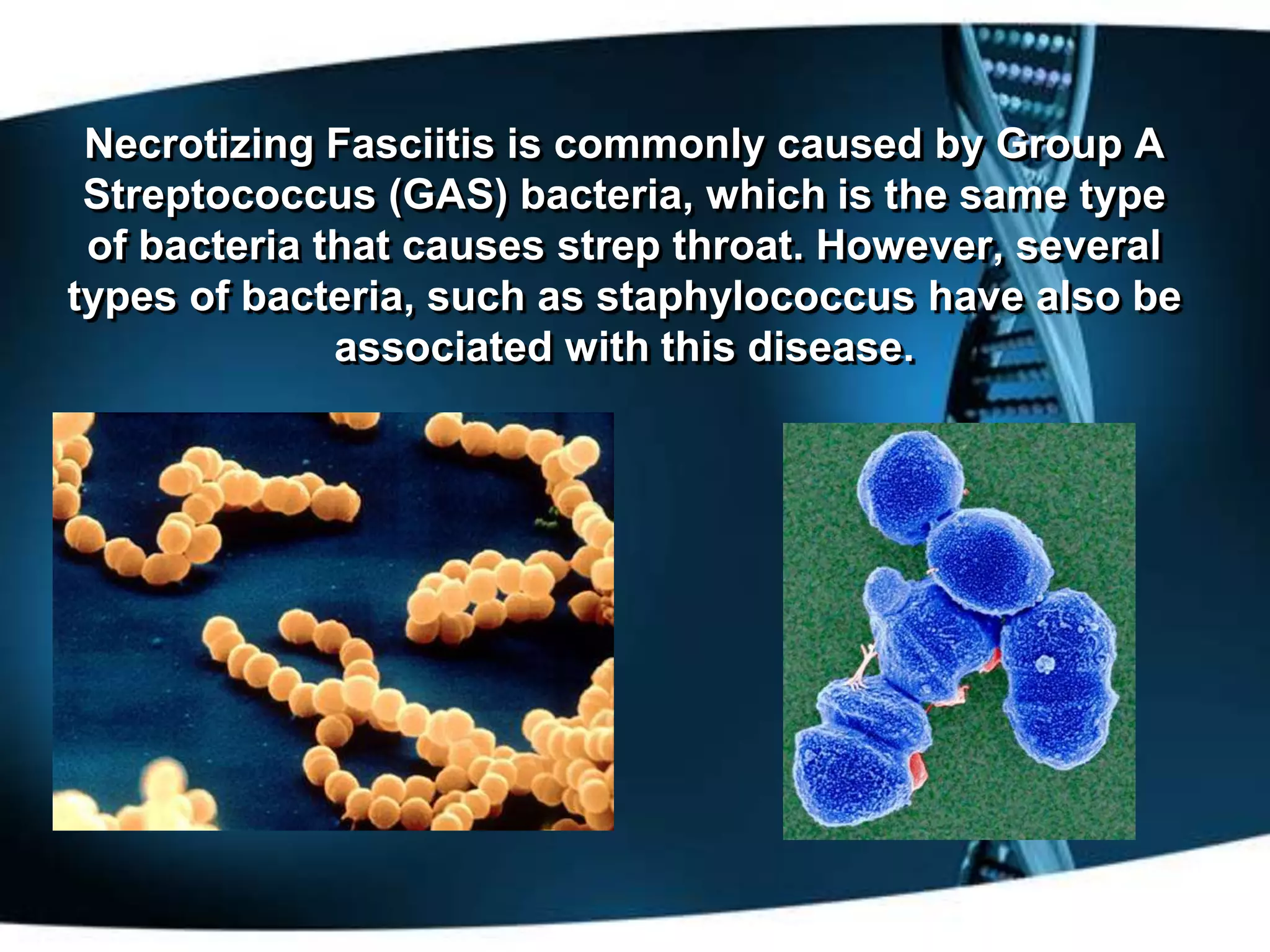
Necrotizing Fasciitis is commonly caused by Group A
 Streptococcus (GAS) bacteria, which is the same type
 of bacteria that causes strep throat. However, several
types of bacteria, such as staphylococcus have also be
              associated with this disease.
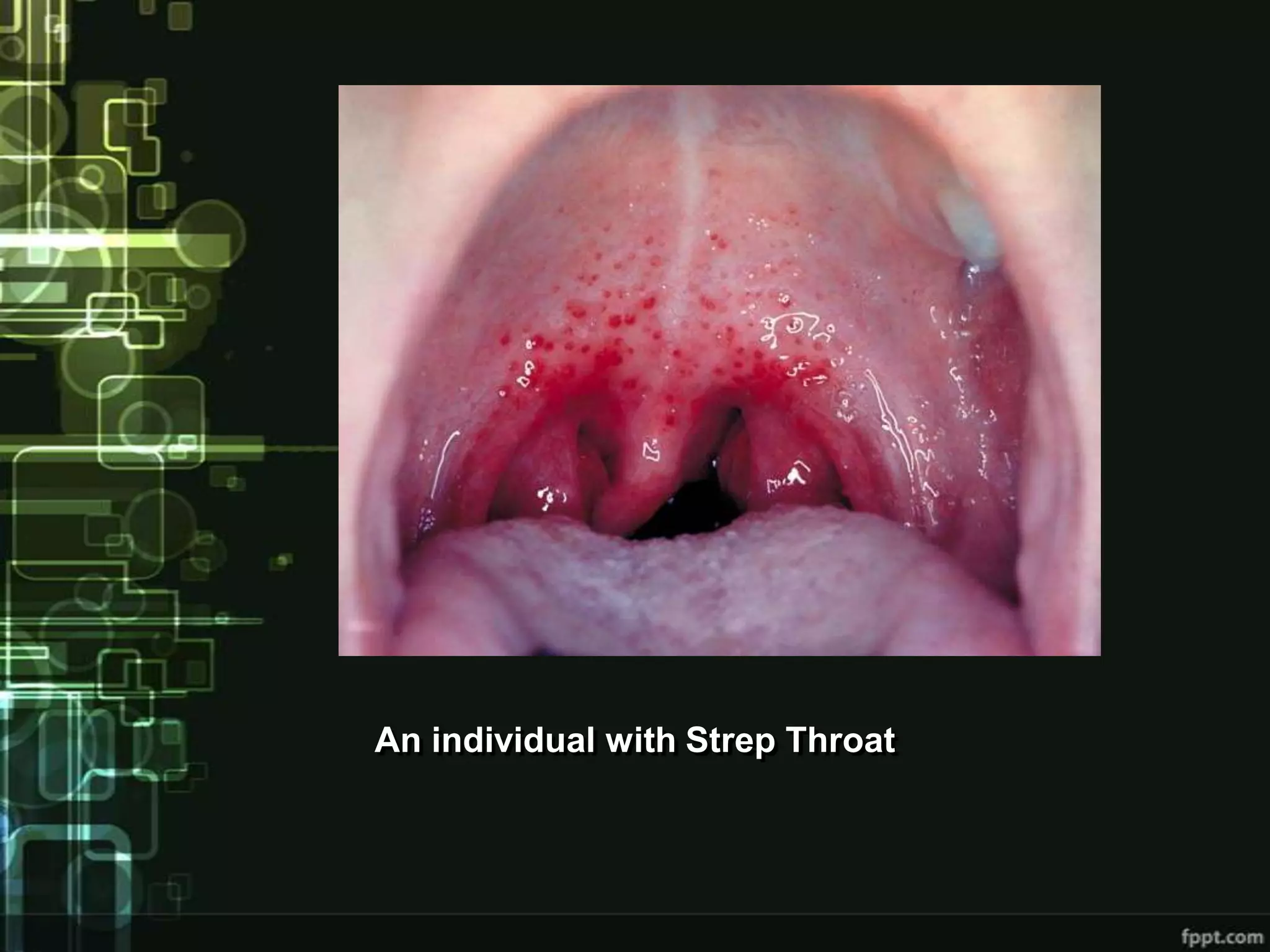
An individual with Strep Throat
How do you obtain
Necrotizing Fasciitis??
• The bacteria that causes Necrotizing Fasciitis
   can enter the body following surgery or injury.
   They can also enter the body through :
 - Minor cuts
 - Insect Bites
 - Abrasions
• In some cases, it is unknown how the
  infection began. Once the infection takes
  place, it rapidly destroys muscles, skin and
  fat tissue.
The Symptoms
• Increasing pain in the general area of a minor
  cut, abrasion, or other skin opening.
• Pain that is worse than would be expected from
  the appearance of the cut or abrasion.
• Redness and warmth around the
  wound, through symptoms can begin at other
  areas of the body.
• Flu-like symptoms such as
  diarrhea, nausea, fever, dizziness, weakness, an
  d general malaise.
• Intense thirst due to dehydration
More advance symptoms occur around the
painful infection site within three or four days
           of infection. They include :

• Swelling, possibly accompanied by a purplish
  rash.
• Large, violet-colored marks that transform into
  blisters filled with dark, foul-smelling liquid.
• Discoloration, peeling, and flakiness as tissue
  death (gangrene) occurs.
Critical symptoms, which often
   occur within four to five days of
          infection, include :

• Severe drop in blood pressure
• Toxic shock
• Unconsciousness
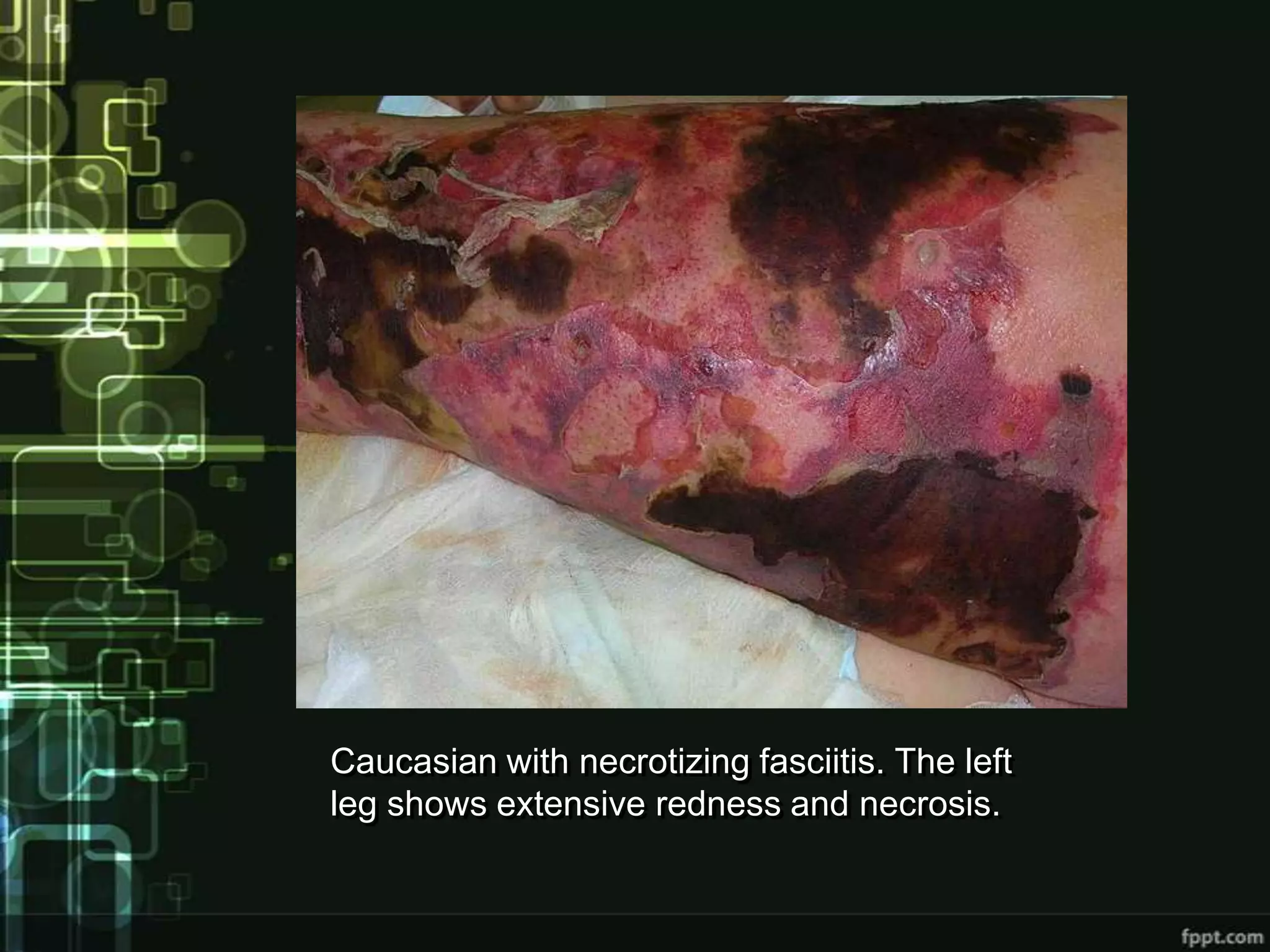
Caucasian with necrotizing fasciitis. The left
leg shows extensive redness and necrosis.
Diagnosis of Necrotizing
       Fasciitis
• Diagnosis is often based on advance symptoms,
  such as the presence of gas bubbles under the
  skin. Laboratory analysis of fluid and tissue
  samples is done to identify the particular
  bacteria that are causing the infection.
  Treatment however, begins before the bacteria
  are identified.
• Household members and others who have had
  close contact with someone with necrotizing
  fasciitis should be evaluated if they develop
  symptoms of an infection.
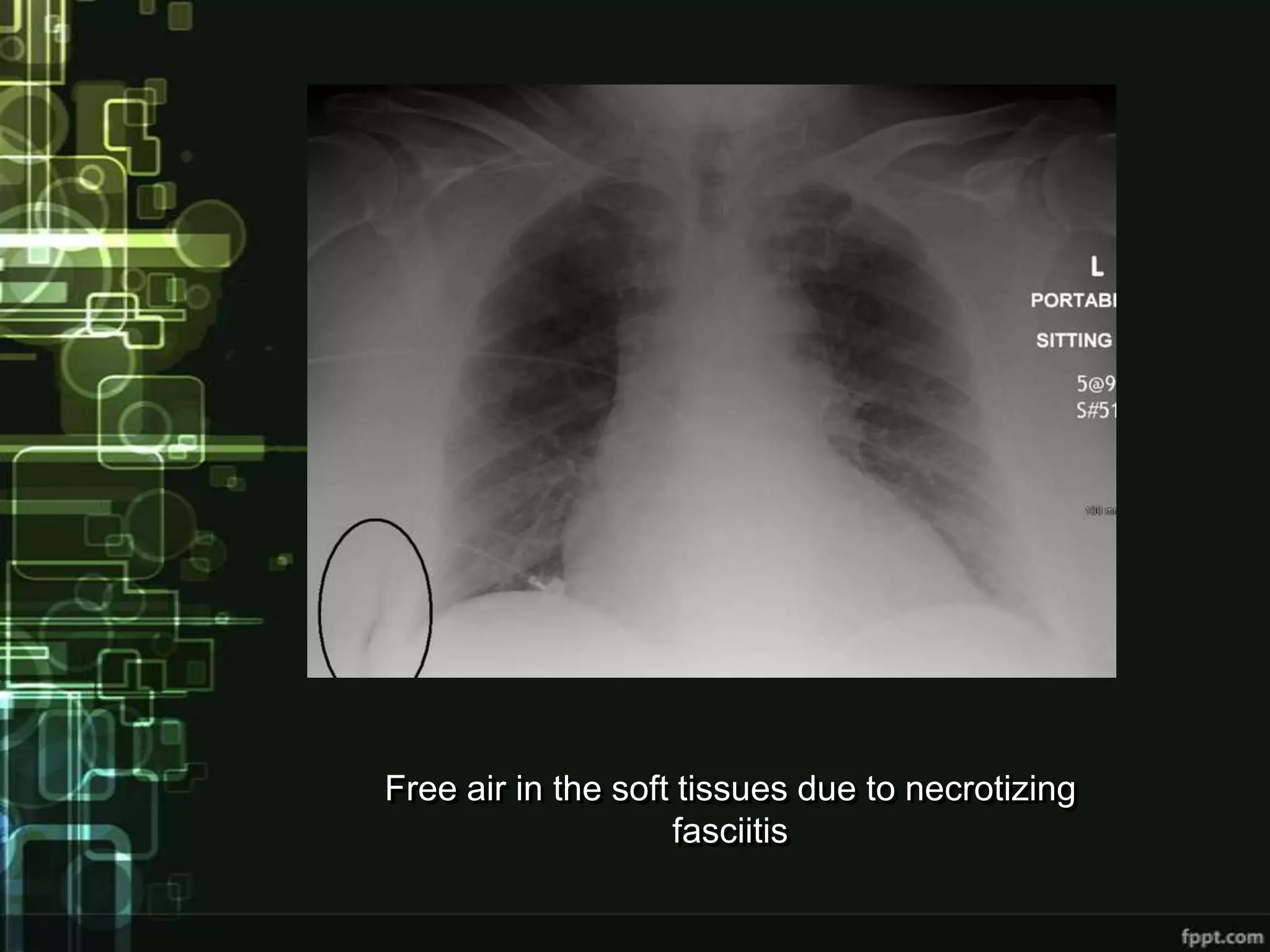
Free air in the soft tissues due to necrotizing
                    fasciitis
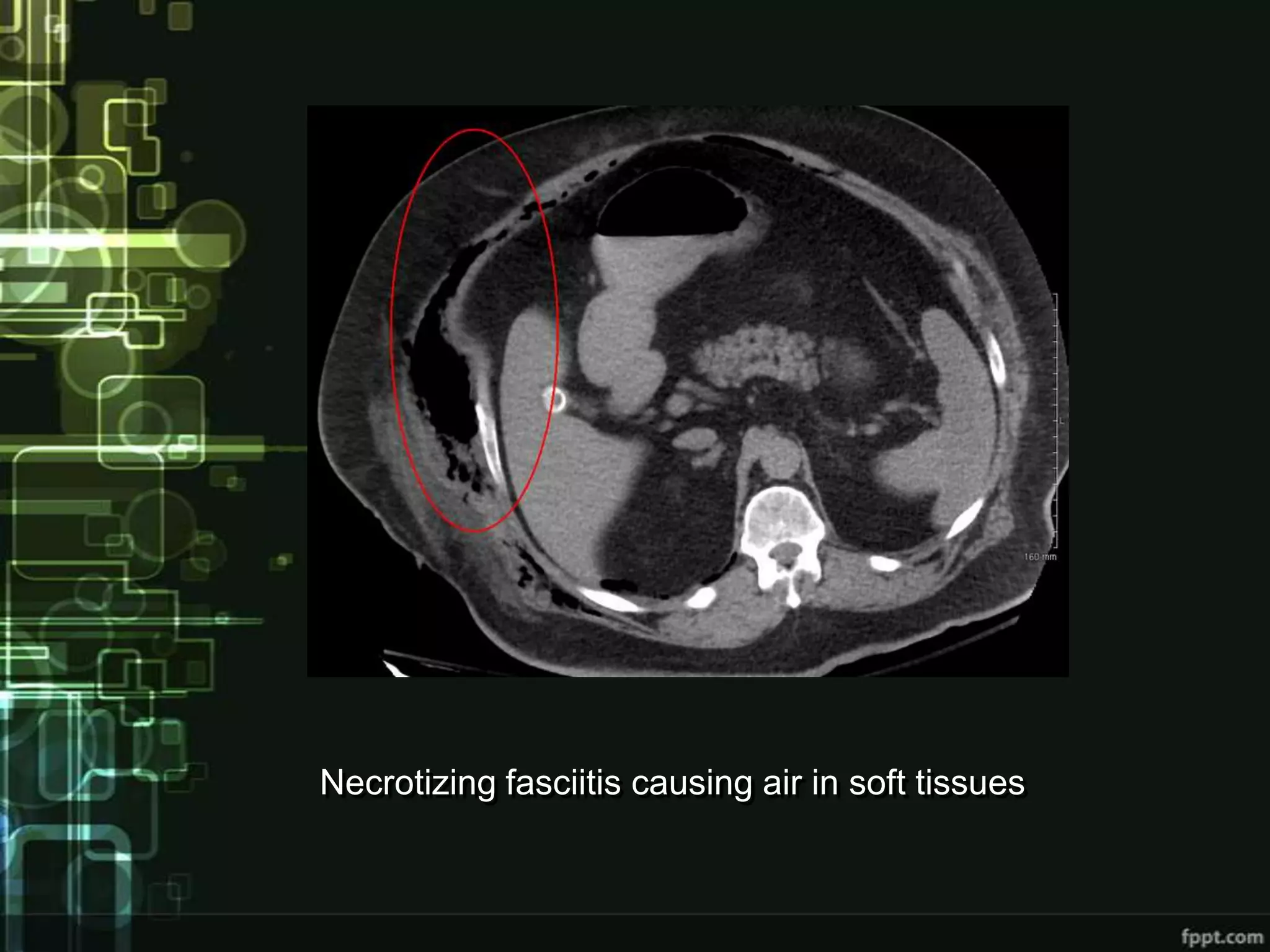
Necrotizing fasciitis causing air in soft tissues
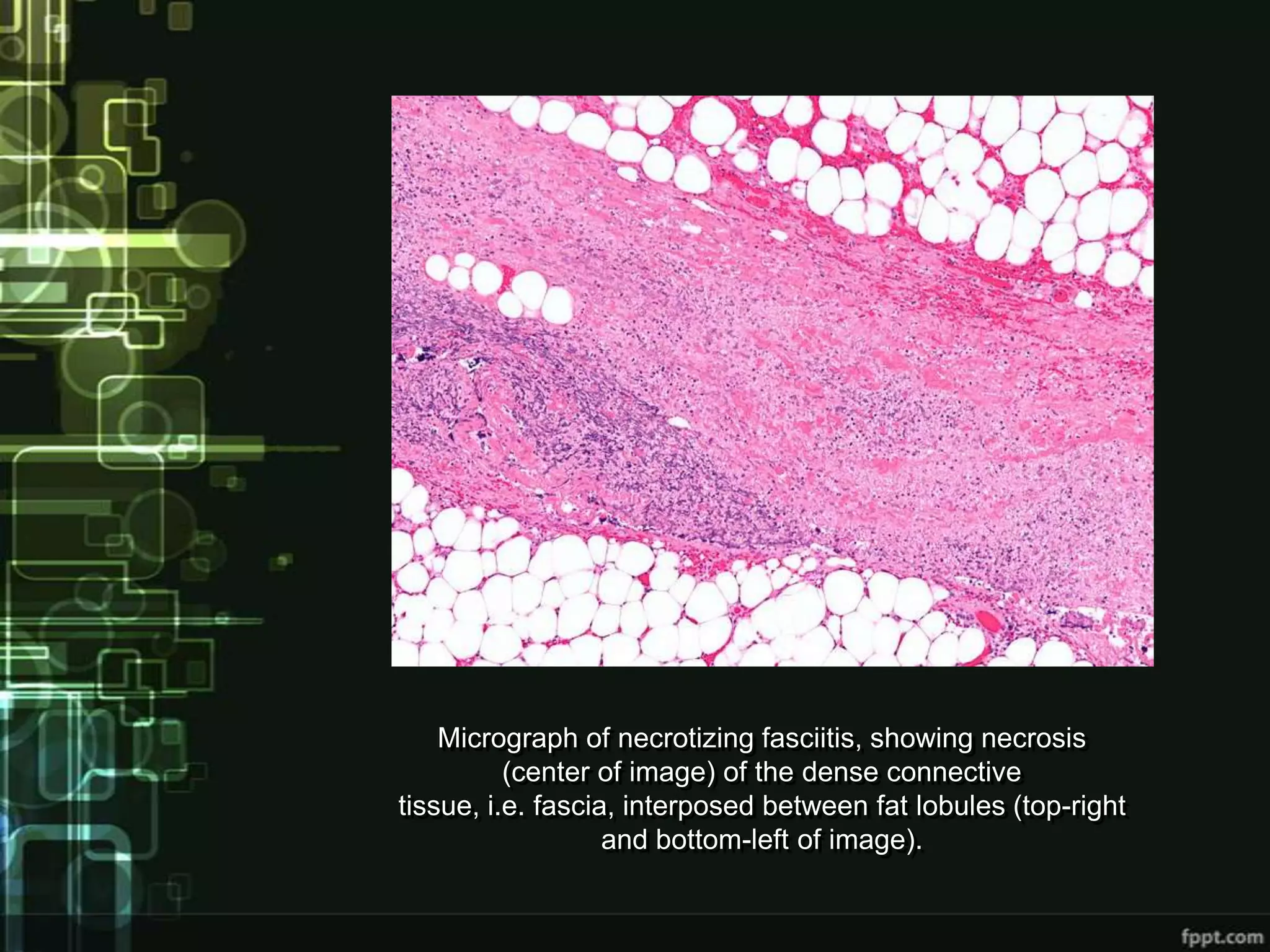
Micrograph of necrotizing fasciitis, showing necrosis
          (center of image) of the dense connective
tissue, i.e. fascia, interposed between fat lobules (top-right
                   and bottom-left of image).
Treatments for Necrotizing
        Fasciitis
Immediate treatment is needed to prevent
                death

• Powerful, broad-spectrum antibiotics given
  immediately through a vein (IV)
• Surgery to drain the sore and remove
  dead tissue
• Special medicines called donor
  immunoglobulin's (antibodies) to help fight
  the infection in some cases
Other treatments may include :

• Skin grafts after the infection goes away to help
  your skin heal and look better
• Amputation if the disease spreads through an
  arm or leg
• 100% oxygen at high pressure (hyperbaric
  oxygen therapy) for certain types of bacterial
  infections
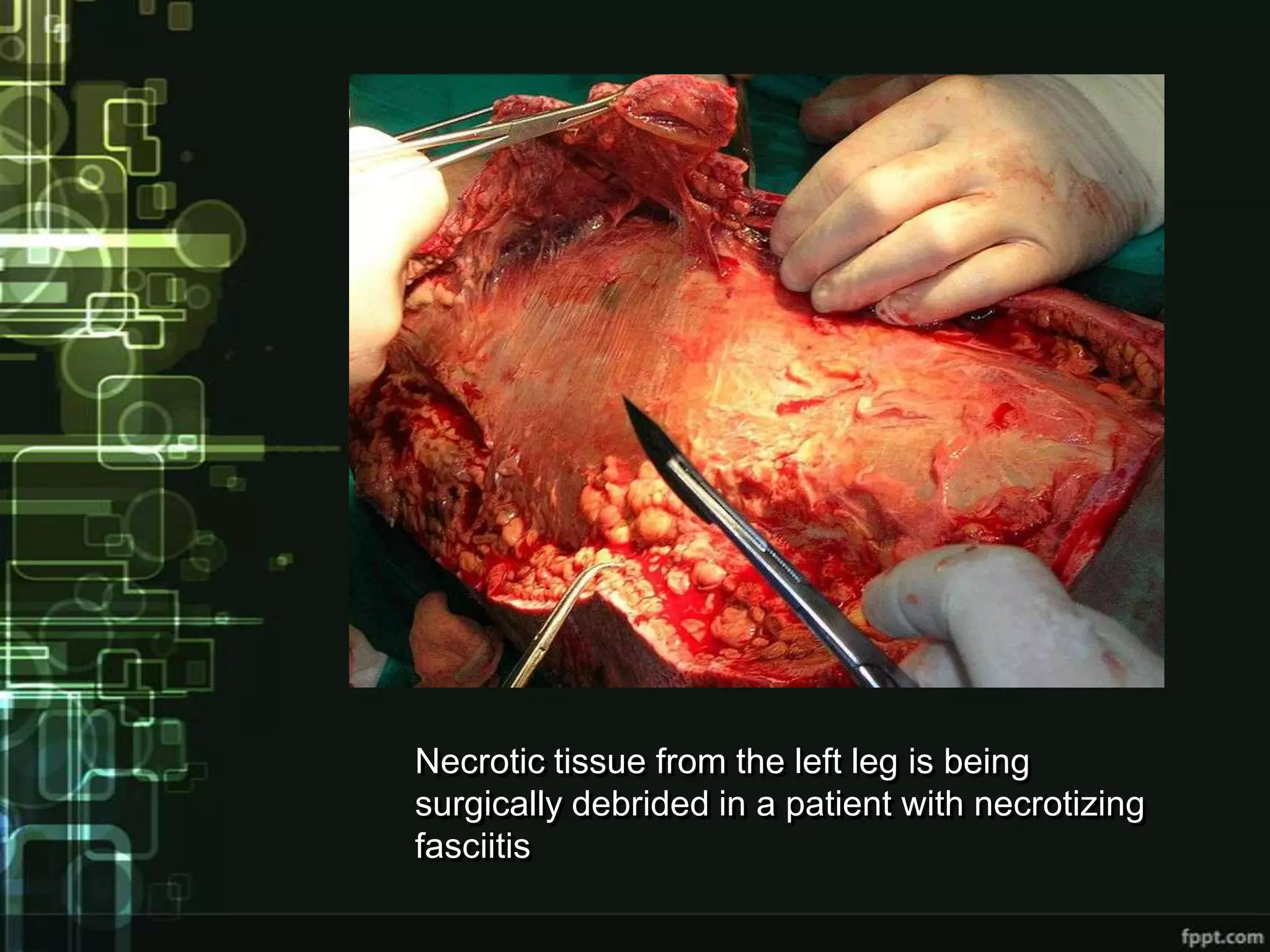
Necrotic tissue from the left leg is being
surgically debrided in a patient with necrotizing
fasciitis
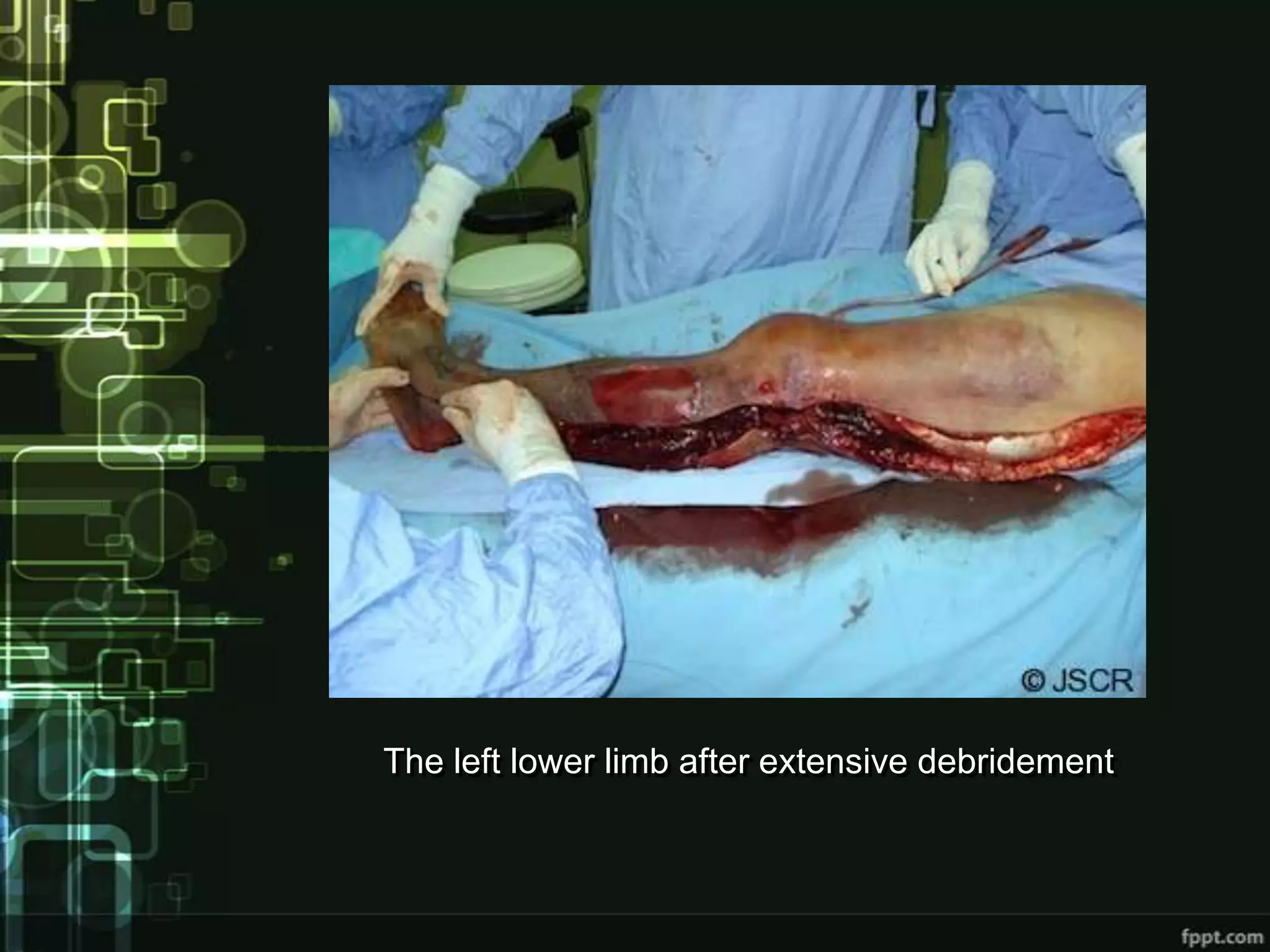
The left lower limb after extensive debridement
Prevention
• Keep all wounds clean and watch closely
  for any signs of infection. Early detection
  and treatment of infection may be the best
  measure to prevent the subsequent
  development of necrotizing fasciitis.
  Promptly seek medical care if any signs or
  symptoms of infection appear.
• Maintaining good personal hygiene and
  frequent hand washing can prevent
  infection and help control the spread of
  infection. Following guidelines of proper
  sterile surgical technique and practicing
  strict barrier (gloves, gowns, masks, etc.)
  and isolation precautions in hospitals can
  also allow health care personal prevent
  the development and spread of infection.
Aimee Copeland - aged 24
  Survivor of Necrotizing Fasciitis
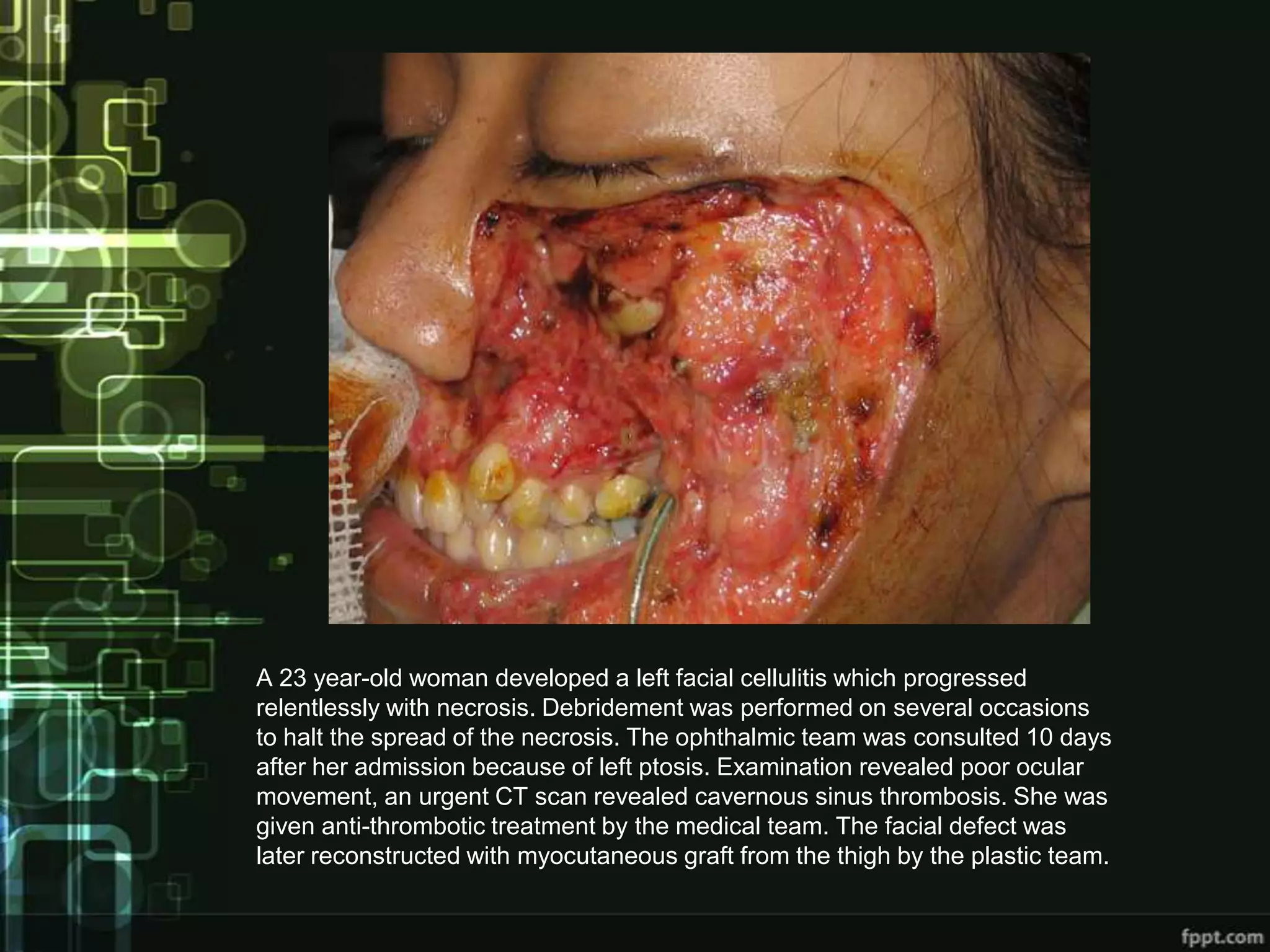
A 23 year-old woman developed a left facial cellulitis which progressed
relentlessly with necrosis. Debridement was performed on several occasions
to halt the spread of the necrosis. The ophthalmic team was consulted 10 days
after her admission because of left ptosis. Examination revealed poor ocular
movement, an urgent CT scan revealed cavernous sinus thrombosis. She was
given anti-thrombotic treatment by the medical team. The facial defect was
later reconstructed with myocutaneous graft from the thigh by the plastic team.
Conclusion?

Necrotizing fasciitis

  • 1.
    SEGi College Sarawak FACULTYOF NURSING & ALLIED HEALTH Foundation in Science Necrotizing Fasciitis By Darrell Nadeng Dominic
  • 2.
    • Necrotizing Fasciitisis commonly known as “Flesh-eating disease” or “Flesh-eating bacteria syndrome”, is a RARE infection of the deeper layers of the skin and subcutaneous tissues. It can destroy muscles, skin and underlying tissue. • “Necrotizing” refers to something that causes body tissue to die.
  • 3.
  • 4.
    Necrotizing Fasciitis iscommonly caused by Group A Streptococcus (GAS) bacteria, which is the same type of bacteria that causes strep throat. However, several types of bacteria, such as staphylococcus have also be associated with this disease.
  • 5.
    An individual withStrep Throat
  • 6.
    How do youobtain Necrotizing Fasciitis??
  • 7.
    • The bacteriathat causes Necrotizing Fasciitis can enter the body following surgery or injury. They can also enter the body through : - Minor cuts - Insect Bites - Abrasions • In some cases, it is unknown how the infection began. Once the infection takes place, it rapidly destroys muscles, skin and fat tissue.
  • 8.
  • 9.
    • Increasing painin the general area of a minor cut, abrasion, or other skin opening. • Pain that is worse than would be expected from the appearance of the cut or abrasion. • Redness and warmth around the wound, through symptoms can begin at other areas of the body. • Flu-like symptoms such as diarrhea, nausea, fever, dizziness, weakness, an d general malaise. • Intense thirst due to dehydration
  • 10.
    More advance symptomsoccur around the painful infection site within three or four days of infection. They include : • Swelling, possibly accompanied by a purplish rash. • Large, violet-colored marks that transform into blisters filled with dark, foul-smelling liquid. • Discoloration, peeling, and flakiness as tissue death (gangrene) occurs.
  • 11.
    Critical symptoms, whichoften occur within four to five days of infection, include : • Severe drop in blood pressure • Toxic shock • Unconsciousness
  • 12.
    Caucasian with necrotizingfasciitis. The left leg shows extensive redness and necrosis.
  • 13.
  • 14.
    • Diagnosis isoften based on advance symptoms, such as the presence of gas bubbles under the skin. Laboratory analysis of fluid and tissue samples is done to identify the particular bacteria that are causing the infection. Treatment however, begins before the bacteria are identified. • Household members and others who have had close contact with someone with necrotizing fasciitis should be evaluated if they develop symptoms of an infection.
  • 15.
    Free air inthe soft tissues due to necrotizing fasciitis
  • 16.
    Necrotizing fasciitis causingair in soft tissues
  • 17.
    Micrograph of necrotizingfasciitis, showing necrosis (center of image) of the dense connective tissue, i.e. fascia, interposed between fat lobules (top-right and bottom-left of image).
  • 18.
  • 19.
    Immediate treatment isneeded to prevent death • Powerful, broad-spectrum antibiotics given immediately through a vein (IV) • Surgery to drain the sore and remove dead tissue • Special medicines called donor immunoglobulin's (antibodies) to help fight the infection in some cases
  • 20.
    Other treatments mayinclude : • Skin grafts after the infection goes away to help your skin heal and look better • Amputation if the disease spreads through an arm or leg • 100% oxygen at high pressure (hyperbaric oxygen therapy) for certain types of bacterial infections
  • 21.
    Necrotic tissue fromthe left leg is being surgically debrided in a patient with necrotizing fasciitis
  • 22.
    The left lowerlimb after extensive debridement
  • 23.
  • 24.
    • Keep allwounds clean and watch closely for any signs of infection. Early detection and treatment of infection may be the best measure to prevent the subsequent development of necrotizing fasciitis. Promptly seek medical care if any signs or symptoms of infection appear.
  • 25.
    • Maintaining goodpersonal hygiene and frequent hand washing can prevent infection and help control the spread of infection. Following guidelines of proper sterile surgical technique and practicing strict barrier (gloves, gowns, masks, etc.) and isolation precautions in hospitals can also allow health care personal prevent the development and spread of infection.
  • 26.
    Aimee Copeland -aged 24 Survivor of Necrotizing Fasciitis
  • 27.
    A 23 year-oldwoman developed a left facial cellulitis which progressed relentlessly with necrosis. Debridement was performed on several occasions to halt the spread of the necrosis. The ophthalmic team was consulted 10 days after her admission because of left ptosis. Examination revealed poor ocular movement, an urgent CT scan revealed cavernous sinus thrombosis. She was given anti-thrombotic treatment by the medical team. The facial defect was later reconstructed with myocutaneous graft from the thigh by the plastic team.
  • 28.