The cognitive basis of language: how
         children learn language.
The nature vs. nurture debate: behaviorism or
    an innate capacity for acquisition?
How do children develop?
What is Language?
How do children acquire Language?
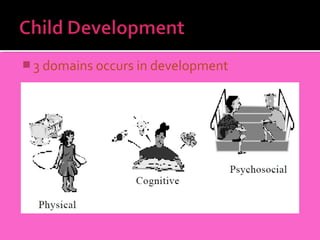
 3 domains occurs in development
 Language is code that we learn to use in
  order to communicate ideas and express our
  wants and needs. Reading, writing, speaking,
  and some gesture system are all forms of
  language
 Language is the systematic and conventional
  use of sounds (or signs or written symbols)
  for the purpose of communication or self-
  expression
Speech is the spoken form of
           language
 Children learn language and speech by
 listening to the language around them and
 practicing what they hear. In this way, they
 figure out the rules of the language code. It is
 not learned all at once but in stages over
 time.
Harvey Daniels in “Nine Ideas About
          Language” says:

  “ Children learn their native
language swiftly, efficiently, and
   largely without instruction
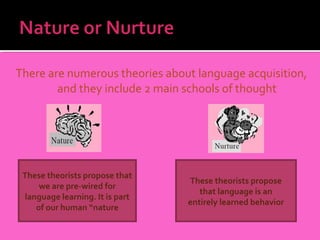
There are numerous theories about language acquisition,
        and they include 2 main schools of thought


 These theorists propose that
                                 These theorists propose
     we are pre-wired for
                                    that language is an
 language learning. It is part
                                 entirely learned behavior
    of our human “nature
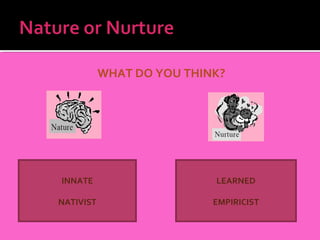
WHAT DO YOU THINK?


INNATE                     LEARNED

NATIVIST                   EMPIRICIST
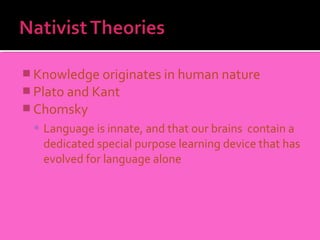
 Knowledge originates in human nature
 Plato and Kant
 Chomsky
  Language is innate, and that our brains contain a
   dedicated special purpose learning device that has
   evolved for language alone
Language Acquisition Device (LAD)
Receive primary linguistic input in the form of sentences
  of the language heard by the child, and produces, as
     output, grammatical sentences of the language

  Children are not predisposed to learn any particular
   language; all are born with the same facility and will
     develop as native speakers of the language of the
    community into which they are born. The child has
  innate knowledge of universal principles that govern
                 the structure of language
UNIVERSAL GRAMMAR
 Language is essentially the same experience for all
 human beings, no matter what language they speak,
 where they are or how they interact with their model

  Some forms of languages is common to almost all
                   human beings.

Language is an ability human process, not by virtue of
   specific learning or teaching, but by virtue of their
                         humaness
 Behaviorism & associationism
 Knowledge originates   in the environment, and
  comes in through the senses
 Children are ‘conditioned” to learn language by
  a stimulus-response pattern
 Aristotle
 Skinner
   There are no limits to what a human being can
   become, given time, opportunity and the application
   of very general laws of learning
 Constructivist & Emergentist
 Recognizes that many factors influence
  language development
 Outcomes can arise for reasons that are not
  obvious or predictable from any of the
  individual inputs to the problem
There are three well known theories:
1. Development cognitive theory (Jean Piaget)
2. Information processing model
3. Social interaction (Lev Vgotsky)
 Children construct their own knowledge in
  response to their experiences
 Children learn many things on their own
  without the intervention of older children or
  adults
 Children are intrinsically motivated to learn
  and do not need rewards from adults to
  motivate learning
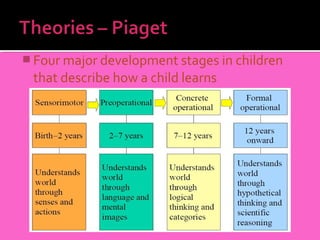
 Four major development stages in children
 that describe how a child learns
 How the brain processes information and
 draws comparisons between the brain and a
 computer
 Social interaction plays an important role in
  the learning process
 Zone of Proximal Development describes the
  differences between what a child will do on
  his/her own or with guidance
nature VS nurture

nature VS nurture

  • 1.
    The cognitive basisof language: how children learn language. The nature vs. nurture debate: behaviorism or an innate capacity for acquisition?
  • 2.
    How do childrendevelop? What is Language? How do children acquire Language?
  • 4.
     3 domainsoccurs in development
  • 5.
     Language iscode that we learn to use in order to communicate ideas and express our wants and needs. Reading, writing, speaking, and some gesture system are all forms of language  Language is the systematic and conventional use of sounds (or signs or written symbols) for the purpose of communication or self- expression
  • 6.
    Speech is thespoken form of language
  • 7.
     Children learnlanguage and speech by listening to the language around them and practicing what they hear. In this way, they figure out the rules of the language code. It is not learned all at once but in stages over time.
  • 8.
    Harvey Daniels in“Nine Ideas About Language” says: “ Children learn their native language swiftly, efficiently, and largely without instruction
  • 9.
    There are numeroustheories about language acquisition, and they include 2 main schools of thought These theorists propose that These theorists propose we are pre-wired for that language is an language learning. It is part entirely learned behavior of our human “nature
  • 10.
    WHAT DO YOUTHINK? INNATE LEARNED NATIVIST EMPIRICIST
  • 11.
     Knowledge originatesin human nature  Plato and Kant  Chomsky  Language is innate, and that our brains contain a dedicated special purpose learning device that has evolved for language alone
  • 12.
    Language Acquisition Device(LAD) Receive primary linguistic input in the form of sentences of the language heard by the child, and produces, as output, grammatical sentences of the language Children are not predisposed to learn any particular language; all are born with the same facility and will develop as native speakers of the language of the community into which they are born. The child has innate knowledge of universal principles that govern the structure of language
  • 13.
    UNIVERSAL GRAMMAR Languageis essentially the same experience for all human beings, no matter what language they speak, where they are or how they interact with their model Some forms of languages is common to almost all human beings. Language is an ability human process, not by virtue of specific learning or teaching, but by virtue of their humaness
  • 14.
     Behaviorism &associationism  Knowledge originates in the environment, and comes in through the senses  Children are ‘conditioned” to learn language by a stimulus-response pattern  Aristotle  Skinner  There are no limits to what a human being can become, given time, opportunity and the application of very general laws of learning
  • 15.
     Constructivist &Emergentist  Recognizes that many factors influence language development  Outcomes can arise for reasons that are not obvious or predictable from any of the individual inputs to the problem
  • 16.
    There are threewell known theories: 1. Development cognitive theory (Jean Piaget) 2. Information processing model 3. Social interaction (Lev Vgotsky)
  • 17.
     Children constructtheir own knowledge in response to their experiences  Children learn many things on their own without the intervention of older children or adults  Children are intrinsically motivated to learn and do not need rewards from adults to motivate learning
  • 18.
     Four majordevelopment stages in children that describe how a child learns
  • 19.
     How thebrain processes information and draws comparisons between the brain and a computer
  • 20.
     Social interactionplays an important role in the learning process  Zone of Proximal Development describes the differences between what a child will do on his/her own or with guidance