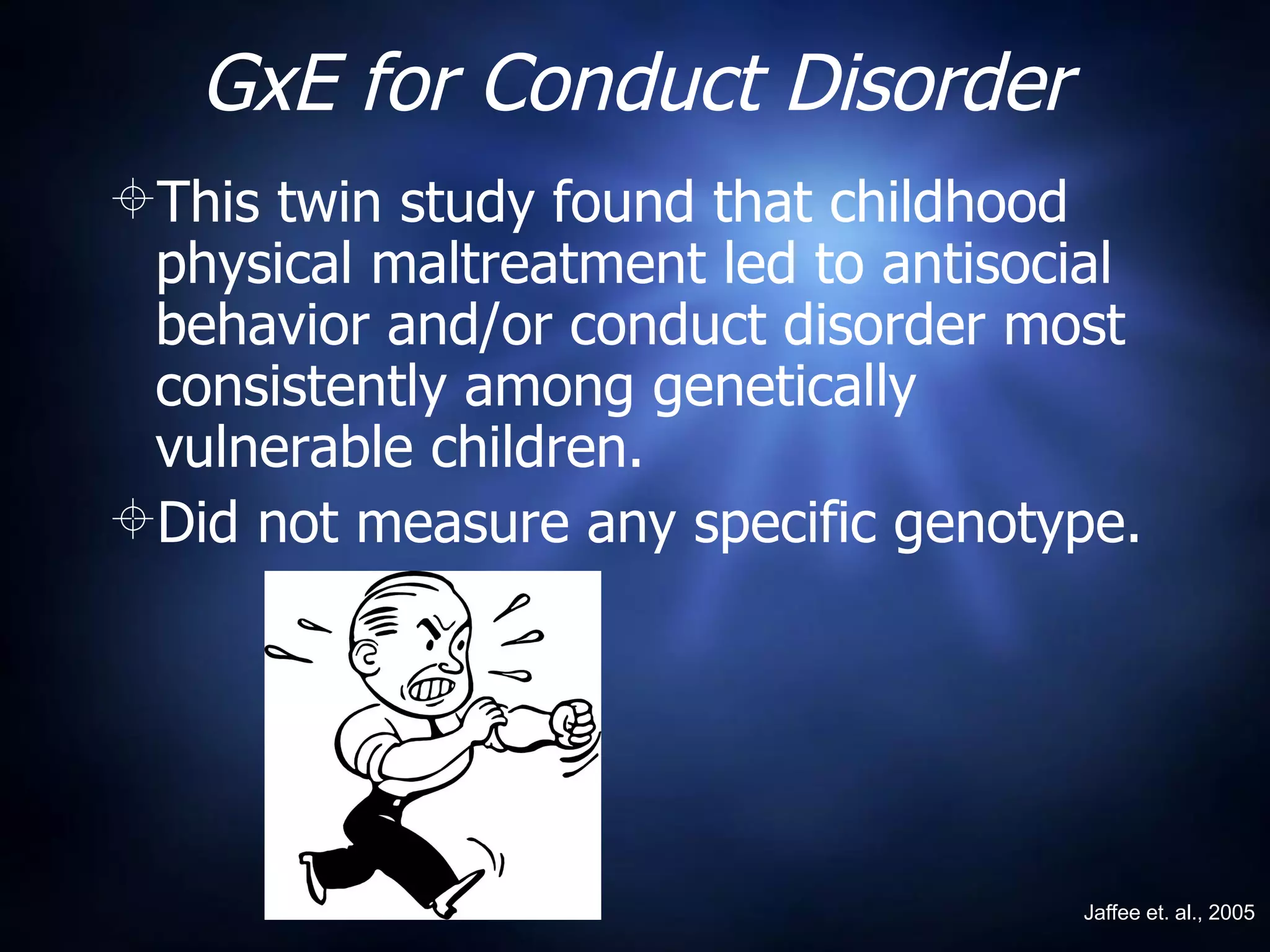
The document discusses gene-environment interactions (GxE) and how they relate to aggression. It provides several examples of studies finding GxE effects on aggression-related behaviors and neurotransmitter functioning. Specifically, it finds that childhood maltreatment leads to aggression in genetically vulnerable individuals, and that early life stress can interact with serotonin-regulating genes to increase depression risk. Accounting for GxE is important as it provides more accurate and predictive models than examining genes or environment alone. Understanding these interactions is crucial for identifying at-risk groups and developing effective interventions.







![Coded Agents – with UiPath SDK + LangGraph [Virtual Hands-on Workshop]](https://cdn.slidesharecdn.com/ss_thumbnails/codedagentsdeck-251215155422-5497c599-thumbnail.jpg?width=640&height=640&fit=bounds)


