
Integrating
humanitarian operations
David Alexander
University College London
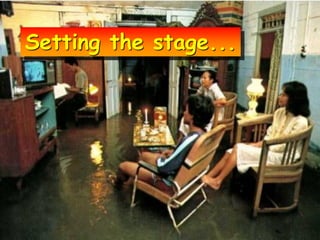
Setting the stage...
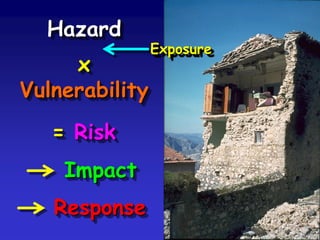
Hazard
x
Vulnerability
= Risk
Impact
Response
Exposure
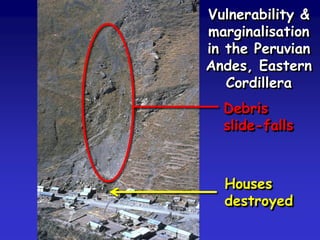
Vulnerability &
marginalisation
in the Peruvian
Andes, Eastern
Cordillera
Debris
slide-falls
Houses
destroyed
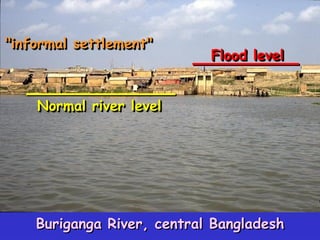
"informal settlement"
Normal river level
Flood level
Buriganga River, central Bangladesh
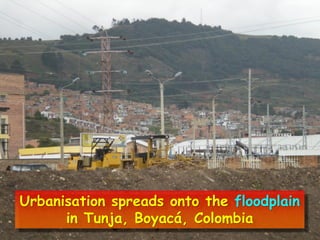
Urbanisation spreads onto the floodplain
in Tunja, Boyacá, Colombia
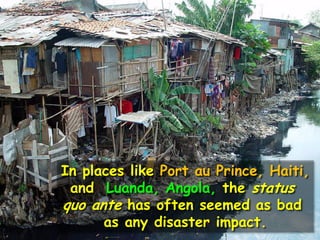
In places like Port au Prince, Haiti,
and Luanda, Angola, the status
quo ante has often seemed as bad
as any disaster impact.
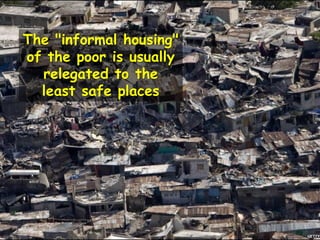
The "informal housing"
of the poor is usually
relegated to the
least safe places
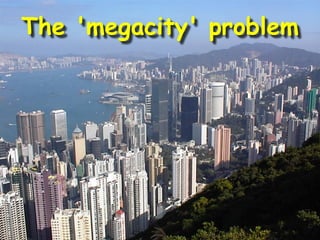
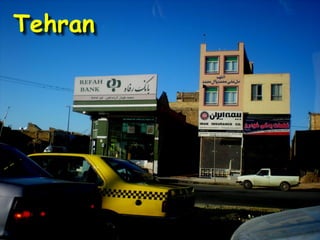
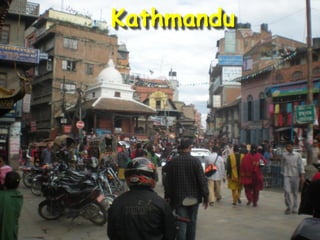
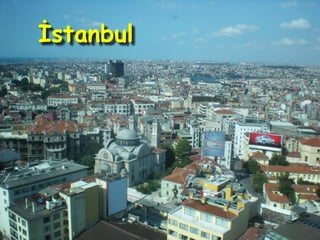
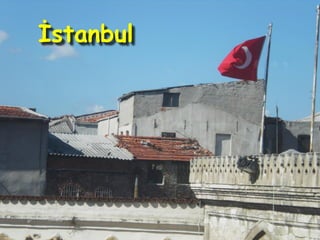
The 'megacity' problem
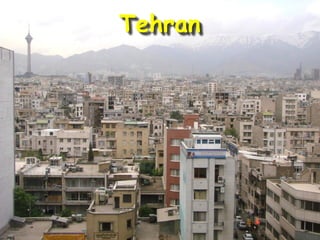
Tehran
Tehran
Kathmandu
Kathmandu
İstanbul
İstanbul
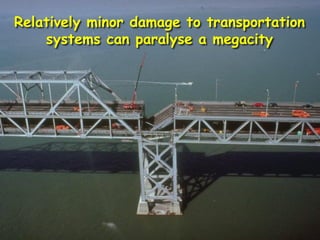
Relatively minor damage to transportation
systems can paralyse a megacity
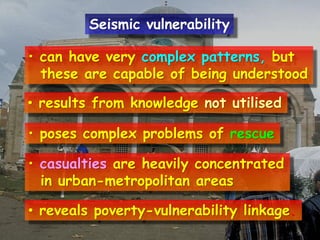
• can have very complex patterns, but
these are capable of being understood
• results from knowledge not utilised
• poses complex problems of rescue
• casualties are heavily concentrated
in urban-metropolitan areas
• reveals poverty-vulnerability linkage.
Seismic vulnerability
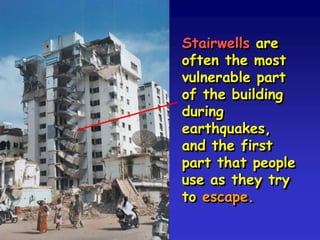
Stairwells are
often the most
vulnerable part
of the building
during
earthquakes,
and the first
part that people
use as they try
to escape.
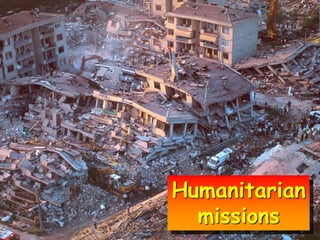
Humanitarian
missions
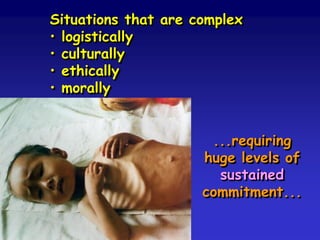
Situations that are complex
• logistically
• culturally
• ethically
• morally
...requiring
huge levels of
sustained
commitment...
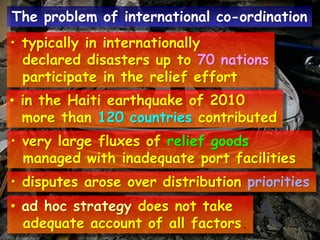
• typically in internationally
declared disasters up to 70 nations
participate in the relief effort
• in the Haiti earthquake of 2010
more than 120 countries contributed
• very large fluxes of relief goods
managed with inadequate port facilities
• disputes arose over distribution priorities
• ad hoc strategy does not take
adequate account of all factors.
The problem of international co-ordination
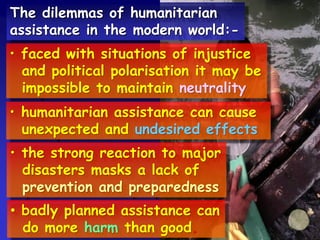
The dilemmas of humanitarian
assistance in the modern world:-
• faced with situations of injustice
and political polarisation it may be
impossible to maintain neutrality
• humanitarian assistance can cause
unexpected and undesired effects
• the strong reaction to major
disasters masks a lack of
prevention and preparedness
• badly planned assistance can
do more harm than good.
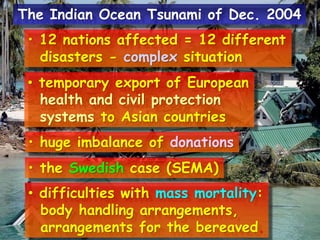
• 12 nations affected = 12 different
disasters - complex situation
• temporary export of European
health and civil protection
systems to Asian countries
• huge imbalance of donations
• the Swedish case (SEMA)
• difficulties with mass mortality:
body handling arrangements,
arrangements for the bereaved.
The Indian Ocean Tsunami of Dec. 2004
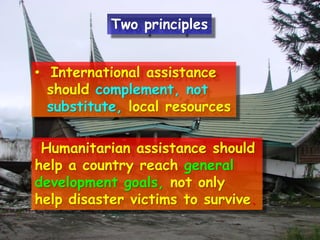
• International assistance
should complement, not
substitute, local resources
Humanitarian assistance should
help a country reach general
development goals, not only
help disaster victims to survive.
Two principles
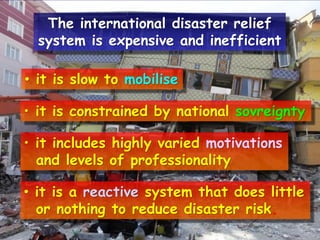
• it is slow to mobilise
• it is constrained by national sovreignty
• it includes highly varied motivations
and levels of professionality
• it is a reactive system that does little
or nothing to reduce disaster risk.
The international disaster relief
system is expensive and inefficient
• 43 FFHs studied in three disasters
• average cost: $2000/bed/day
• occupancy <50%
• "No FFH arrived early
enough to provide emergency
medical trauma care".
Foreign field hospitals: Von Schreeb et al.
[2008 - PDM 23(2): 144 et seq.]
Non era una situazione insolita....
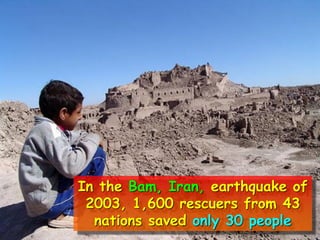
In the Bam, Iran, earthquake of
2003, 1,600 rescuers from 43
nations saved only 30 people
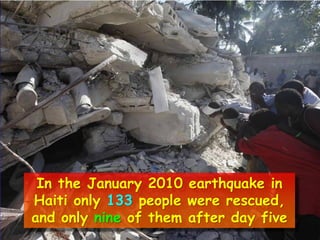
In the January 2010 earthquake in
Haiti only 133 people were rescued,
and only nine of them after day five
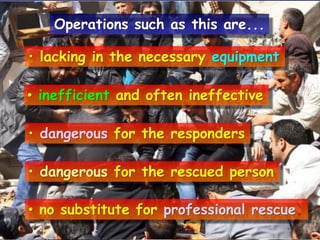
• lacking in the necessary equipment
• inefficient and often ineffective
• dangerous for the responders
• dangerous for the rescued person
• no substitute for professional rescue.
Operations such as this are...
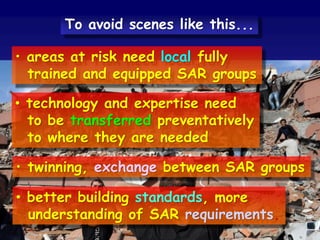
• areas at risk need local fully
trained and equipped SAR groups
• technology and expertise need
to be transferred preventatively
to where they are needed
• twinning, exchange between SAR groups
• better building standards, more
understanding of SAR requirements.
To avoid scenes like this...
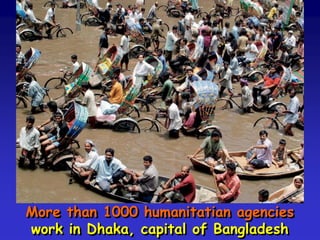
More than 1000 humanitatian agencies
work in Dhaka, capital of Bangladesh
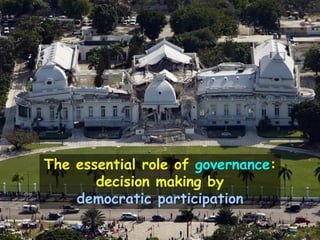
The essential role of governance:
decision making by
democratic participation
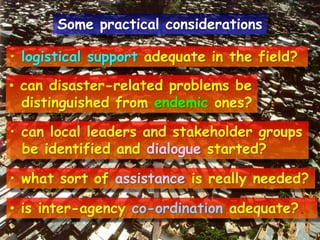
• logistical support adequate in the field?
• can disaster-related problems be
distinguished from endemic ones?
• can local leaders and stakeholder groups
be identified and dialogue started?
• what sort of assistance is really needed?
• is inter-agency co-ordination adequate?.
Some practical considerations
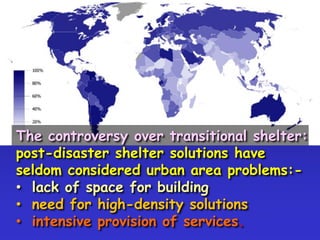
The controversy over transitional shelter:
post-disaster shelter solutions have
seldom considered urban area problems:-
• lack of space for building
• need for high-density solutions
• intensive provision of services.
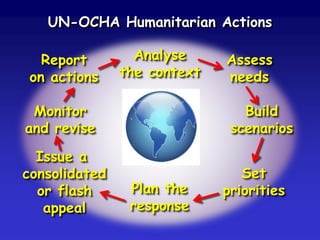
Analyse
the context
Assess
needs
Build
scenarios
Set
prioritiesPlan the
response
Issue a
consolidated
or flash
appeal
Monitor
and revise
Report
on actions
UN-OCHA Humanitarian Actions
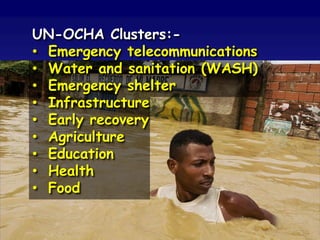
UN-OCHA Clusters:-
• Emergency telecommunications
• Water and sanitation (WASH)
• Emergency shelter
• Infrastructure
• Early recovery
• Agriculture
• Education
• Health
• Food
• radical changes are needed to adapt
the world relief system to new realities
• currently the system is inefficient
and still too heavily based on
reaction rather than prevention
• integration is a matter of voluntary
collaboration among a heterogeneous
group of agencies, according to
a somewhat arbitrary set of rules.
In synthesis...
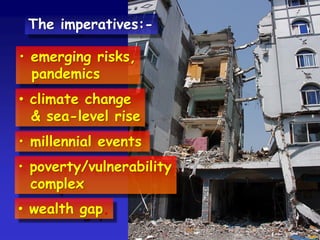
• emerging risks,
pandemics
• climate change
& sea-level rise
• millennial events
• poverty/vulnerability
complex
• wealth gap.
The imperatives:-
www.slideshare.net
/dealexander
www.emergency-
planning.blogspot.com
david.alexander@ucl.ac.uk

NATO-ATC: Integrating Humanitarian Operations

  • 1.
  • 2.
  • 3.
  • 4.
    Vulnerability & marginalisation in thePeruvian Andes, Eastern Cordillera Debris slide-falls Houses destroyed
  • 5.
    "informal settlement" Normal riverlevel Flood level Buriganga River, central Bangladesh
  • 6.
    Urbanisation spreads ontothe floodplain in Tunja, Boyacá, Colombia
  • 7.
    In places likePort au Prince, Haiti, and Luanda, Angola, the status quo ante has often seemed as bad as any disaster impact.
  • 8.
    The "informal housing" ofthe poor is usually relegated to the least safe places
  • 9.
  • 10.
  • 11.
  • 12.
  • 13.
  • 14.
  • 15.
  • 16.
    Relatively minor damageto transportation systems can paralyse a megacity
  • 17.
    • can havevery complex patterns, but these are capable of being understood • results from knowledge not utilised • poses complex problems of rescue • casualties are heavily concentrated in urban-metropolitan areas • reveals poverty-vulnerability linkage. Seismic vulnerability
  • 18.
    Stairwells are often themost vulnerable part of the building during earthquakes, and the first part that people use as they try to escape.
  • 19.
  • 20.
    Situations that arecomplex • logistically • culturally • ethically • morally ...requiring huge levels of sustained commitment...
  • 21.
    • typically ininternationally declared disasters up to 70 nations participate in the relief effort • in the Haiti earthquake of 2010 more than 120 countries contributed • very large fluxes of relief goods managed with inadequate port facilities • disputes arose over distribution priorities • ad hoc strategy does not take adequate account of all factors. The problem of international co-ordination
  • 22.
    The dilemmas ofhumanitarian assistance in the modern world:- • faced with situations of injustice and political polarisation it may be impossible to maintain neutrality • humanitarian assistance can cause unexpected and undesired effects • the strong reaction to major disasters masks a lack of prevention and preparedness • badly planned assistance can do more harm than good.
  • 23.
    • 12 nationsaffected = 12 different disasters - complex situation • temporary export of European health and civil protection systems to Asian countries • huge imbalance of donations • the Swedish case (SEMA) • difficulties with mass mortality: body handling arrangements, arrangements for the bereaved. The Indian Ocean Tsunami of Dec. 2004
  • 24.
    • International assistance shouldcomplement, not substitute, local resources Humanitarian assistance should help a country reach general development goals, not only help disaster victims to survive. Two principles
  • 25.
    • it isslow to mobilise • it is constrained by national sovreignty • it includes highly varied motivations and levels of professionality • it is a reactive system that does little or nothing to reduce disaster risk. The international disaster relief system is expensive and inefficient
  • 26.
    • 43 FFHsstudied in three disasters • average cost: $2000/bed/day • occupancy <50% • "No FFH arrived early enough to provide emergency medical trauma care". Foreign field hospitals: Von Schreeb et al. [2008 - PDM 23(2): 144 et seq.]
  • 27.
    Non era unasituazione insolita.... In the Bam, Iran, earthquake of 2003, 1,600 rescuers from 43 nations saved only 30 people
  • 28.
    In the January2010 earthquake in Haiti only 133 people were rescued, and only nine of them after day five
  • 29.
    • lacking inthe necessary equipment • inefficient and often ineffective • dangerous for the responders • dangerous for the rescued person • no substitute for professional rescue. Operations such as this are...
  • 30.
    • areas atrisk need local fully trained and equipped SAR groups • technology and expertise need to be transferred preventatively to where they are needed • twinning, exchange between SAR groups • better building standards, more understanding of SAR requirements. To avoid scenes like this...
  • 31.
    More than 1000humanitatian agencies work in Dhaka, capital of Bangladesh
  • 32.
    The essential roleof governance: decision making by democratic participation
  • 34.
    • logistical supportadequate in the field? • can disaster-related problems be distinguished from endemic ones? • can local leaders and stakeholder groups be identified and dialogue started? • what sort of assistance is really needed? • is inter-agency co-ordination adequate?. Some practical considerations
  • 35.
    The controversy overtransitional shelter: post-disaster shelter solutions have seldom considered urban area problems:- • lack of space for building • need for high-density solutions • intensive provision of services.
  • 36.
    Analyse the context Assess needs Build scenarios Set prioritiesPlan the response Issuea consolidated or flash appeal Monitor and revise Report on actions UN-OCHA Humanitarian Actions
  • 37.
    UN-OCHA Clusters:- • Emergencytelecommunications • Water and sanitation (WASH) • Emergency shelter • Infrastructure • Early recovery • Agriculture • Education • Health • Food
  • 38.
    • radical changesare needed to adapt the world relief system to new realities • currently the system is inefficient and still too heavily based on reaction rather than prevention • integration is a matter of voluntary collaboration among a heterogeneous group of agencies, according to a somewhat arbitrary set of rules. In synthesis...
  • 39.
    • emerging risks, pandemics •climate change & sea-level rise • millennial events • poverty/vulnerability complex • wealth gap. The imperatives:-
  • 40.