DISASTER MANAGEMENT
     AN OVERVIEW
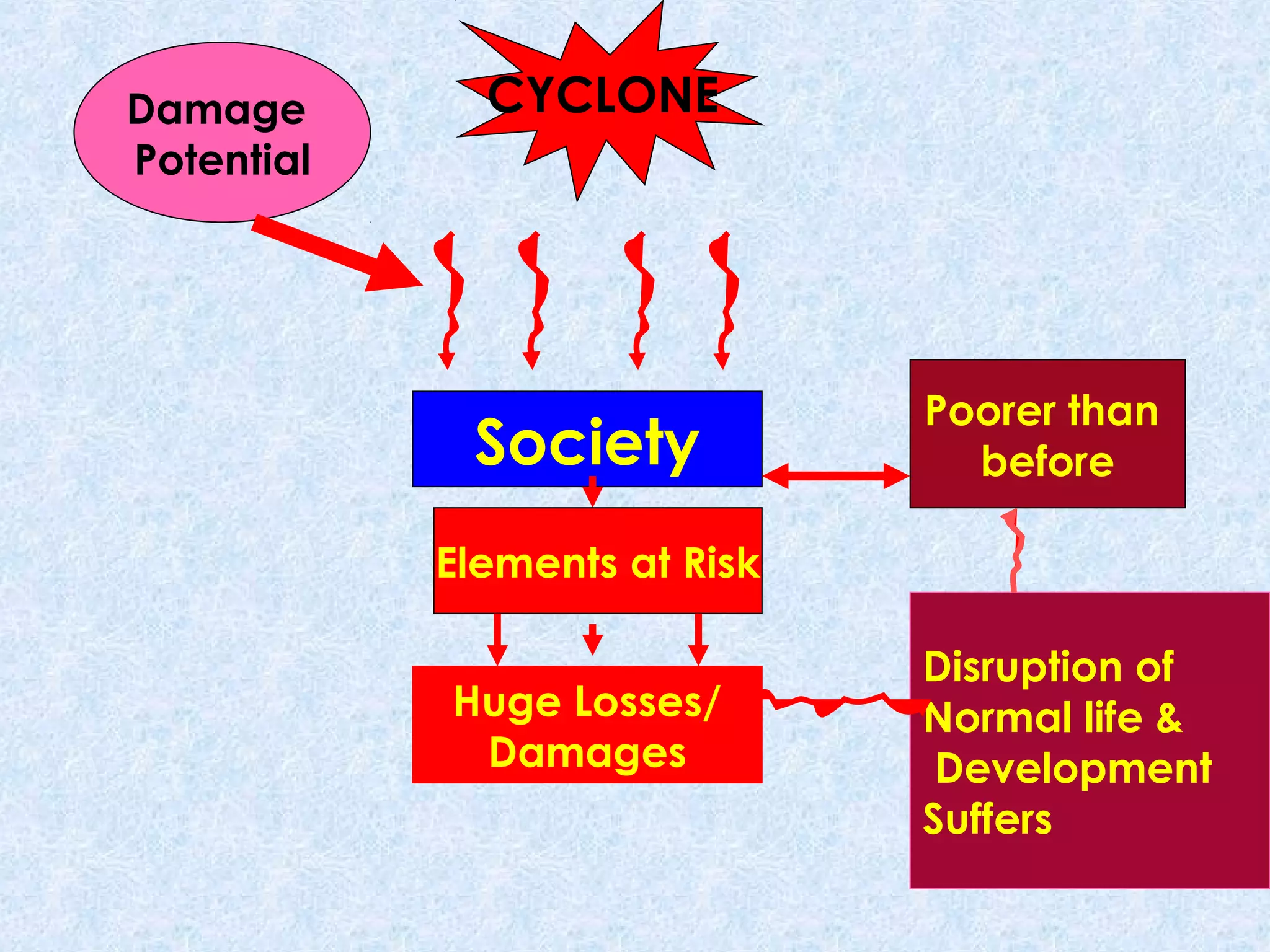
Damage        CYCLONE
Potential


                               Poorer than
             Society             before

            Elements at Risk

                               Disruption of
            Huge Losses/       Normal life &
             Damages            Development
                               Suffers
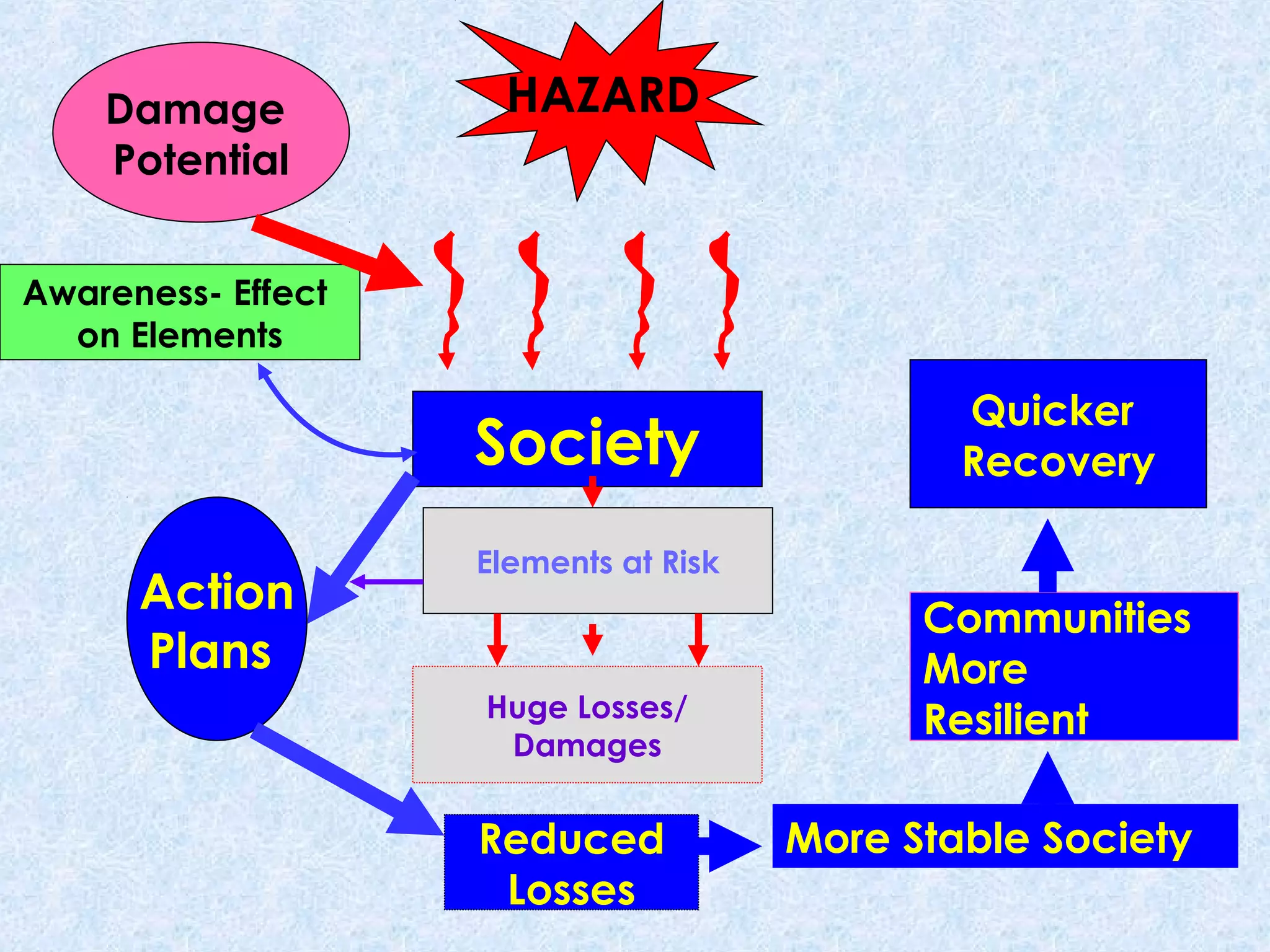
Damage           HAZARD
    Potential


Awareness- Effect
  on Elements

                                               Quicker
                    Society                    Recovery

                    Elements at Risk
      Action                                 Communities
      Plans                                  More
                    Huge Losses/             Resilient
                     Damages


                    Reduced            More Stable Society
                     Losses
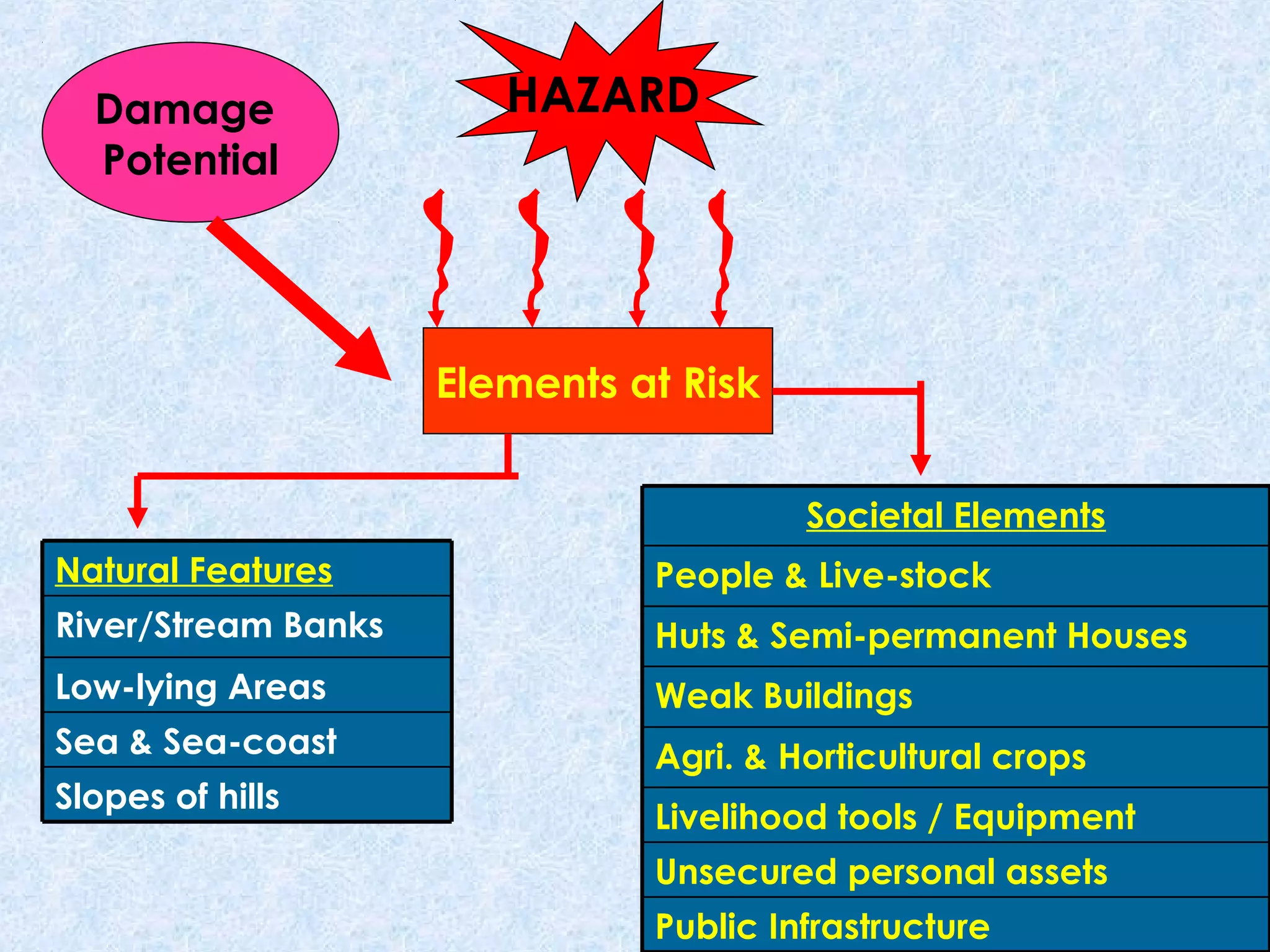
Damage                HAZARD
  Potential


                     Elements at Risk


                                        Societal Elements
Natural Features               People & Live-stock
River/Stream Banks             Huts & Semi-permanent Houses
Low-lying Areas                Weak Buildings
Sea & Sea-coast                Agri. & Horticultural crops
Slopes of hills
                               Livelihood tools / Equipment
                               Unsecured personal assets
                               Public Infrastructure
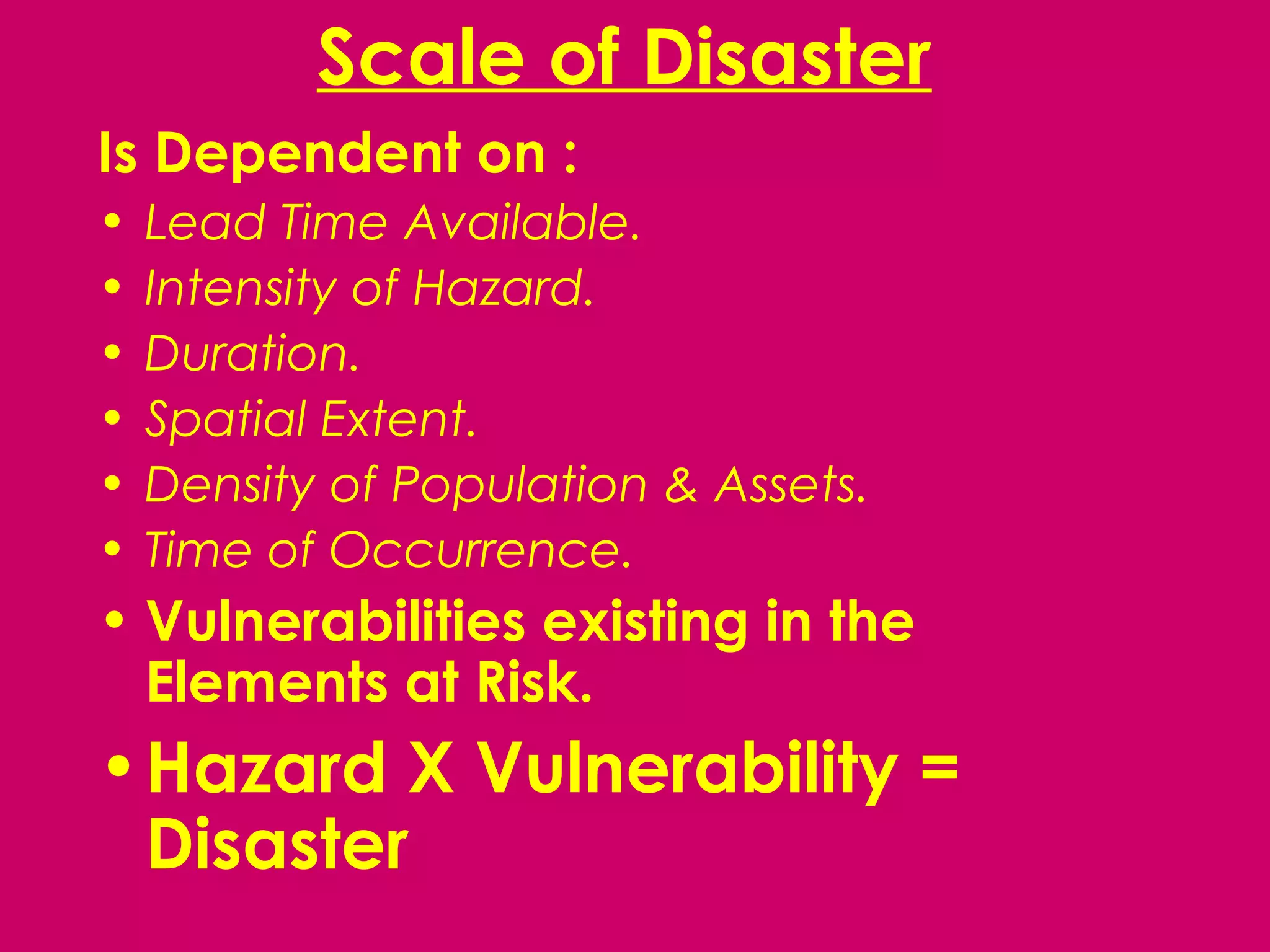
Scale of Disaster
Is Dependent on :
•   Lead Time Available.
•   Intensity of Hazard.
•   Duration.
•   Spatial Extent.
•   Density of Population & Assets.
•   Time of Occurrence.
• Vulnerabilities existing in the
  Elements at Risk.
• Hazard X Vulnerability =
  Disaster
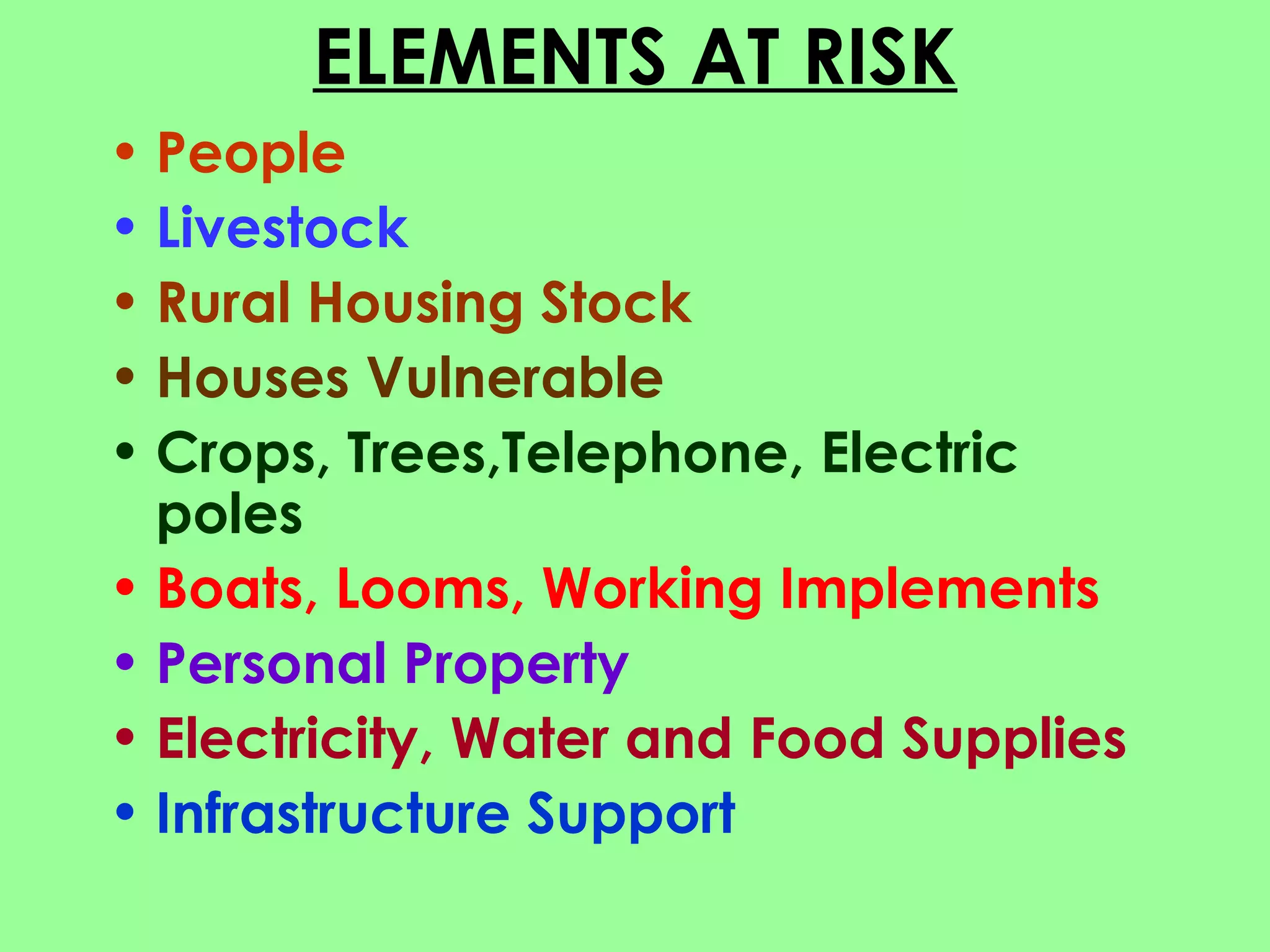
ELEMENTS AT RISK
• People
• Livestock
• Rural Housing Stock
• Houses Vulnerable
• Crops, Trees,Telephone, Electric
  poles
• Boats, Looms, Working Implements
• Personal Property
• Electricity, Water and Food Supplies
• Infrastructure Support
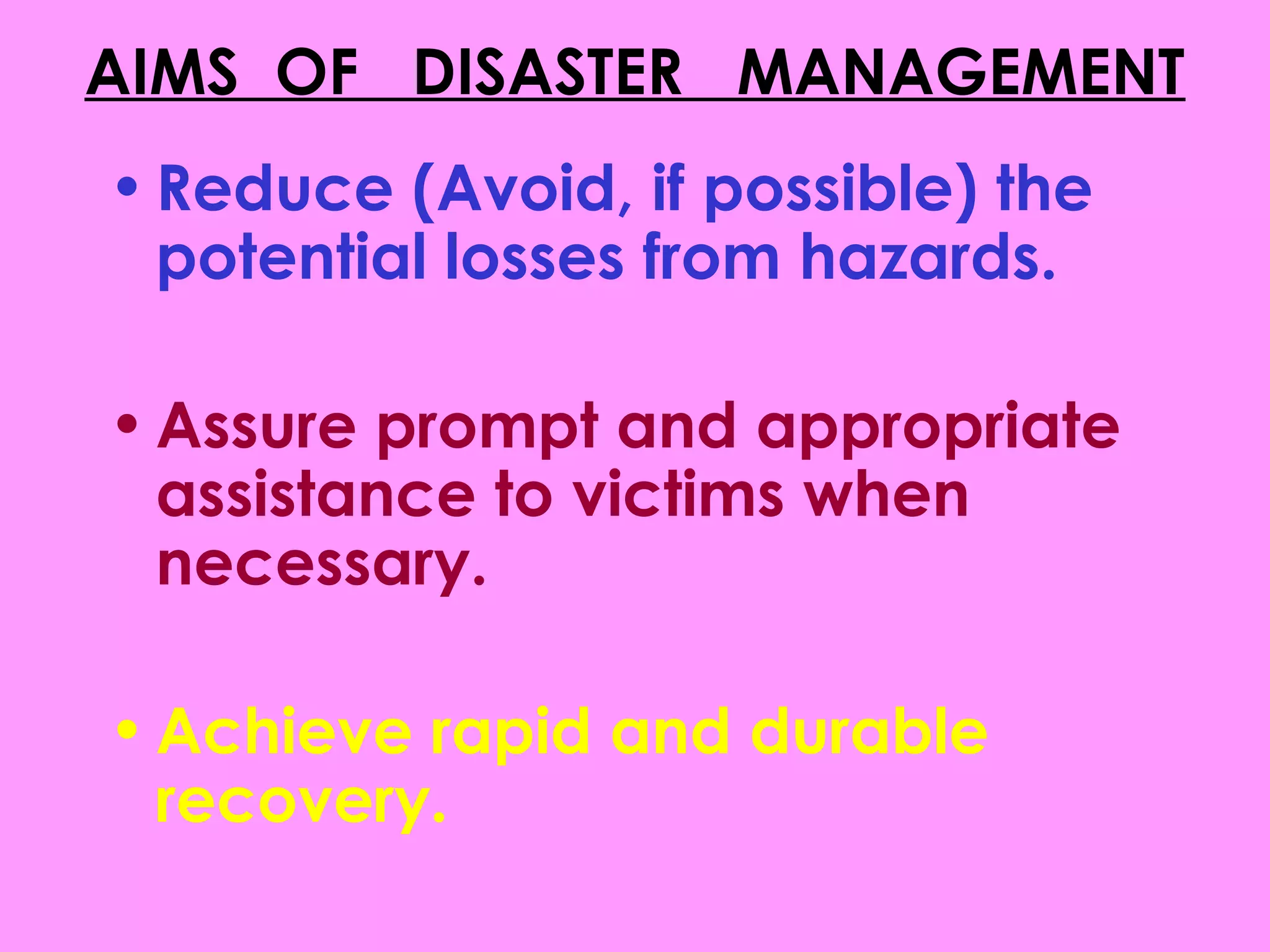
AIMS OF DISASTER MANAGEMENT
• Reduce (Avoid, if possible) the
  potential losses from hazards.

• Assure prompt and appropriate
  assistance to victims when
  necessary.

• Achieve rapid and durable
  recovery.
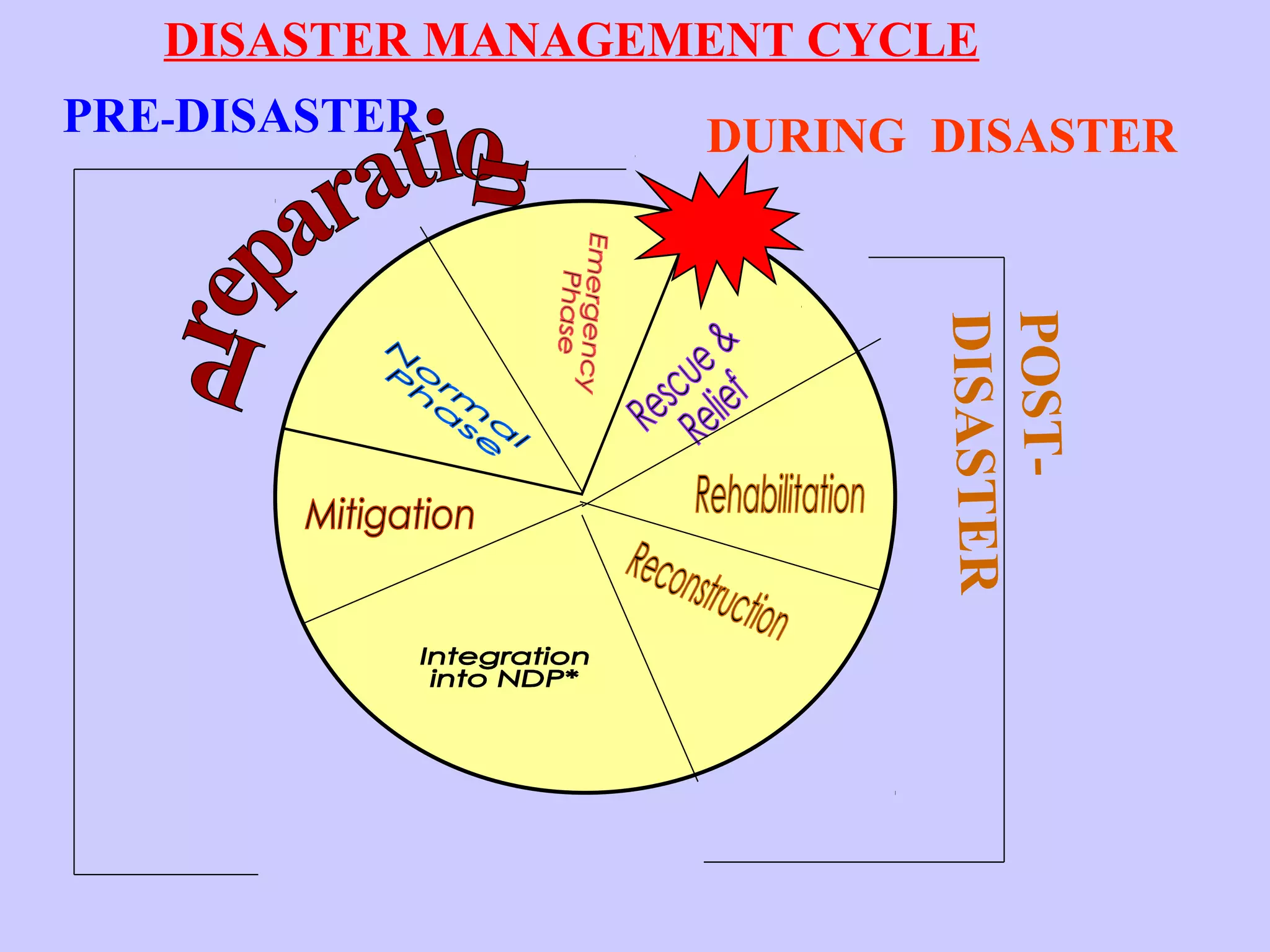
DISASTER MANAGEMENT CYCLE
PRE-DISASTER       DURING DISASTER


                          POST-
                          DISASTER
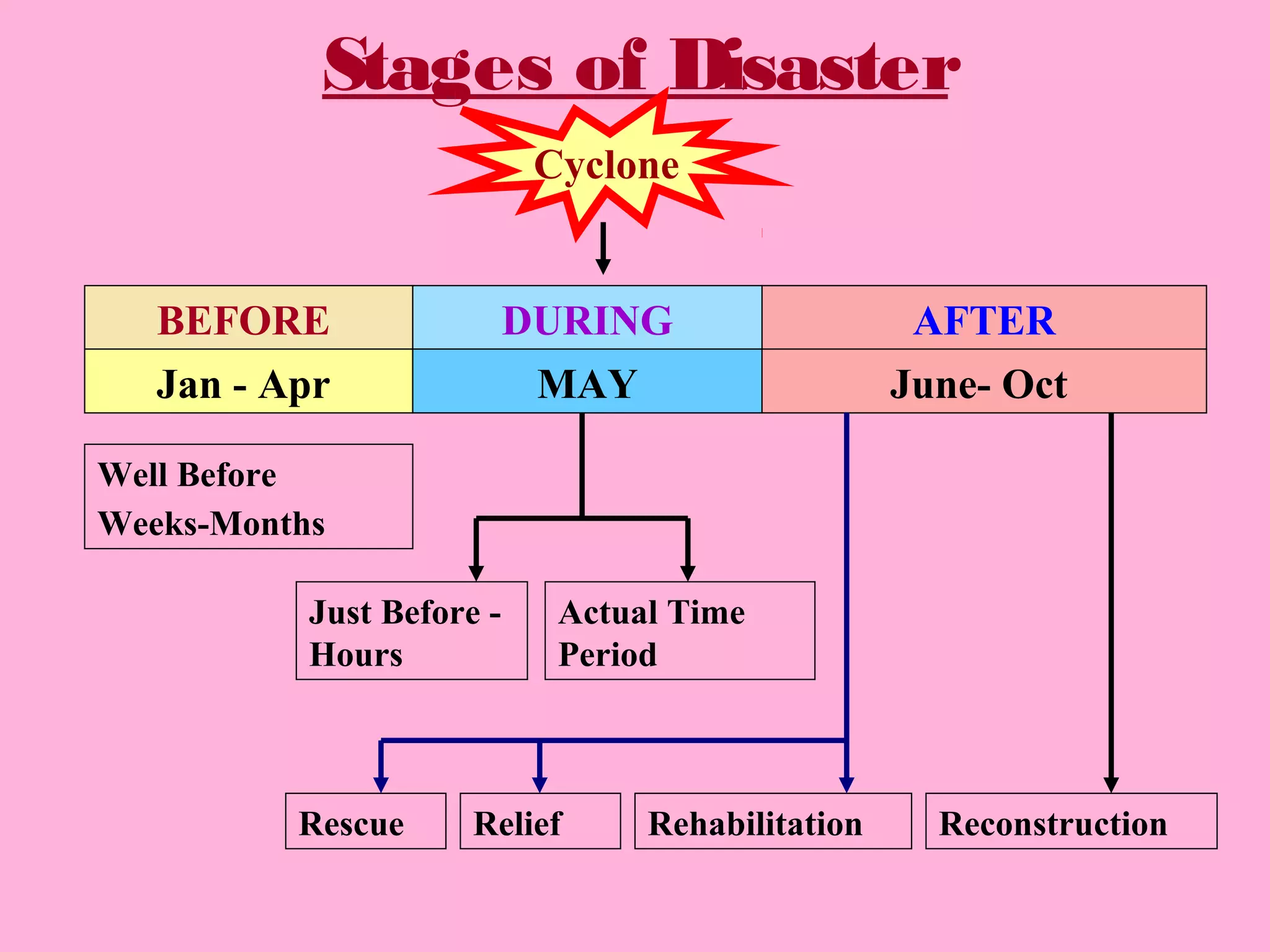
Stages of Disaster
                            Cyclone


   BEFORE                  DURING                   AFTER
   Jan - Apr                MAY                    June- Oct

Well Before
Weeks-Months

           Just Before -     Actual Time
           Hours             Period


          Rescue      Relief      Rehabilitation     Reconstruction
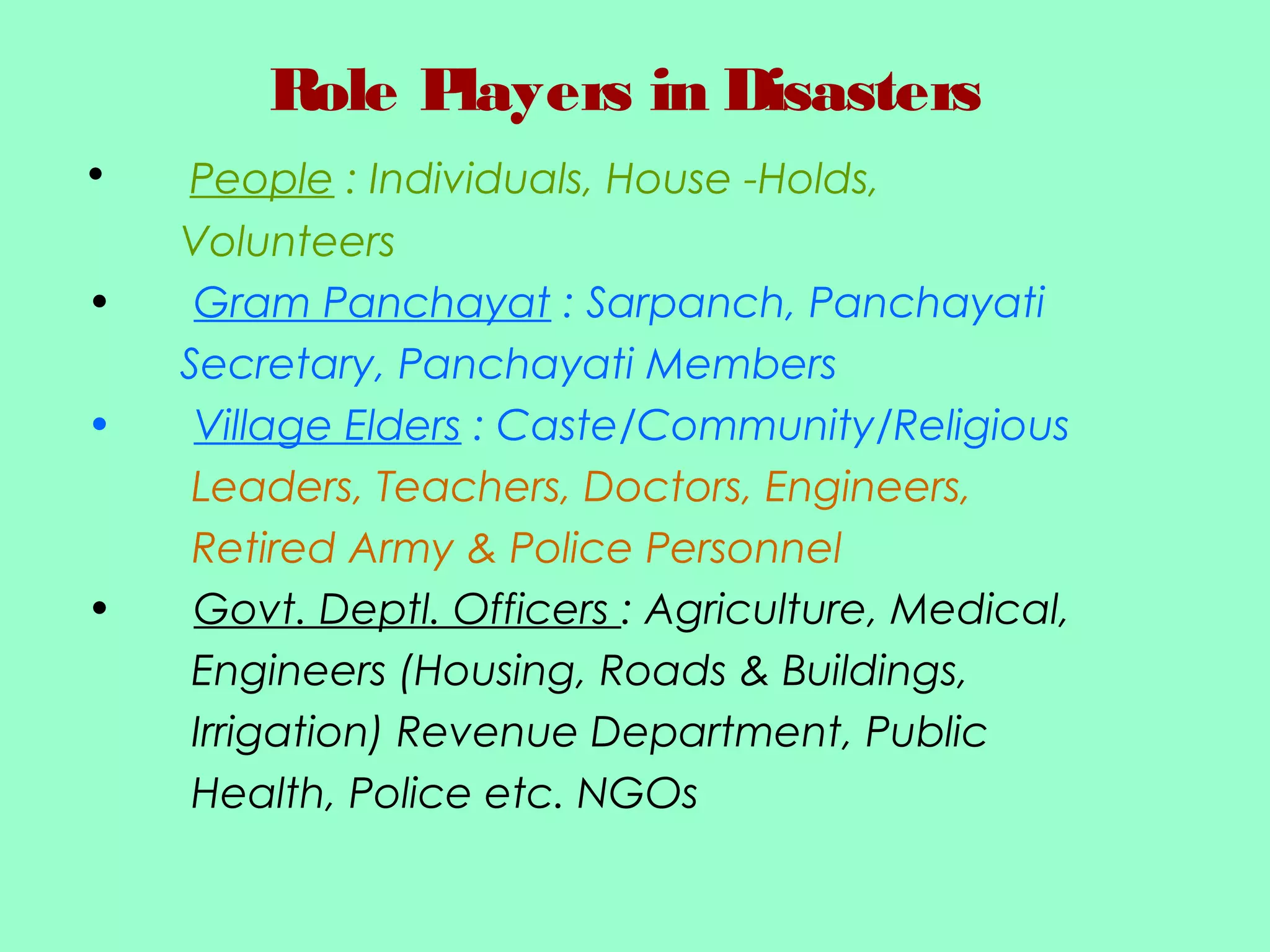
Role Players in Disasters
•   People : Individuals, House -Holds,
    Volunteers
•    Gram Panchayat : Sarpanch, Panchayati
    Secretary, Panchayati Members
•    Village Elders : Caste/Community/Religious
     Leaders, Teachers, Doctors, Engineers,
     Retired Army & Police Personnel
•    Govt. Deptl. Officers : Agriculture, Medical,
     Engineers (Housing, Roads & Buildings,
     Irrigation) Revenue Department, Public
     Health, Police etc. NGOs
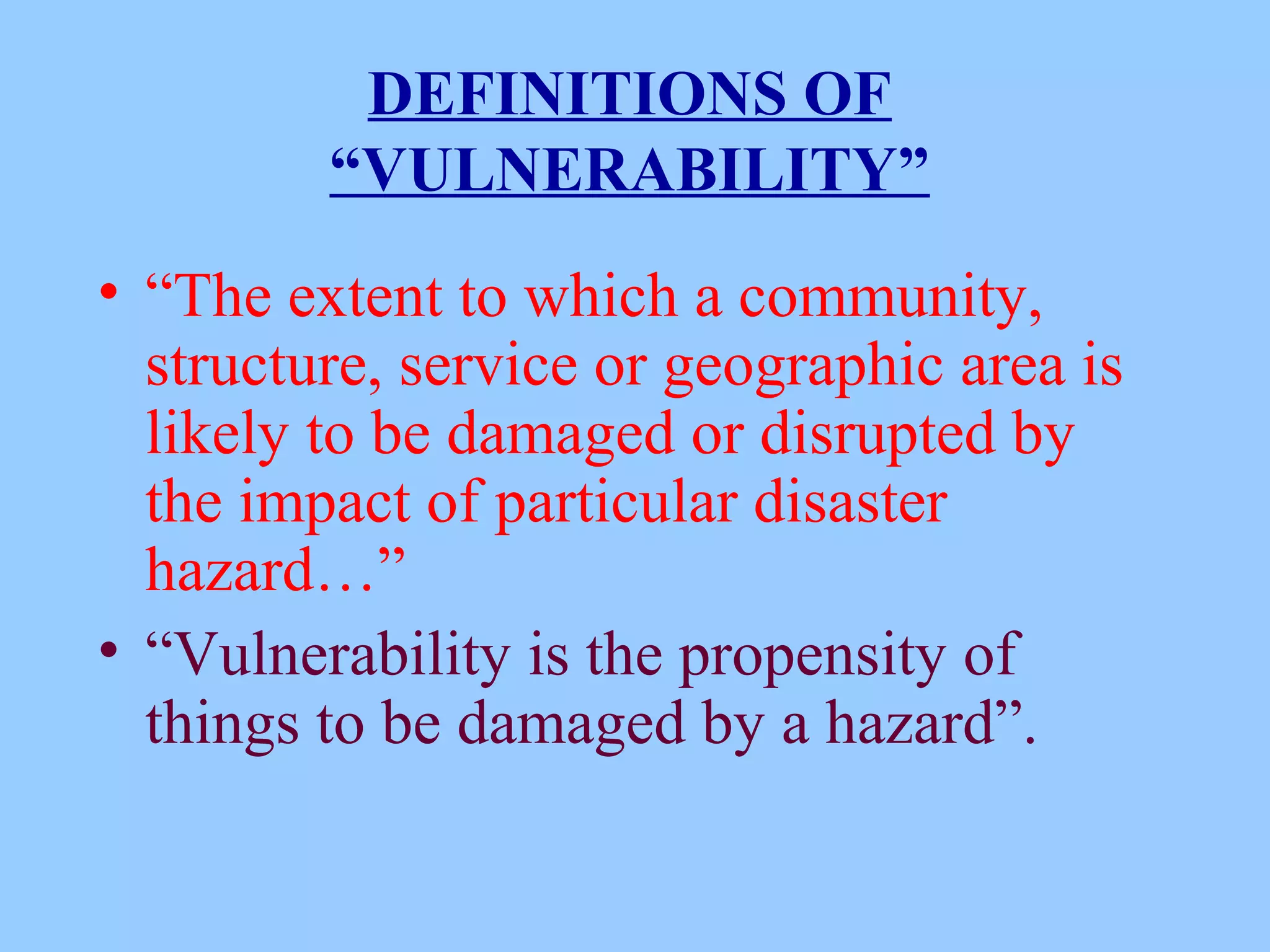
DEFINITIONS OF
         “VULNERABILITY”
• “The extent to which a community,
  structure, service or geographic area is
  likely to be damaged or disrupted by
  the impact of particular disaster
  hazard…”
• “Vulnerability is the propensity of
  things to be damaged by a hazard”.
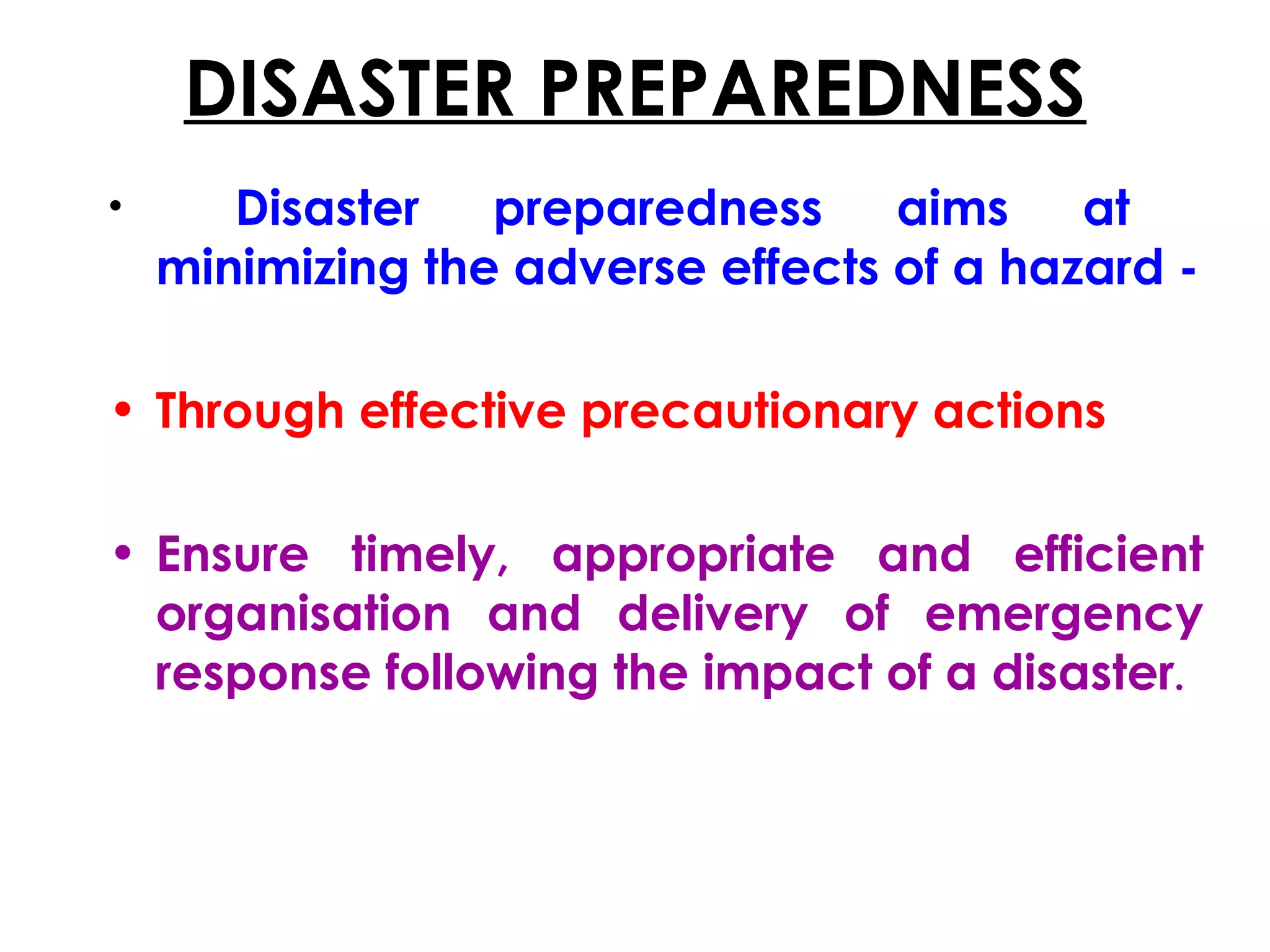
DISASTER PREPAREDNESS
•      Disaster preparedness aims at
    minimizing the adverse effects of a hazard -

• Through effective precautionary actions

• Ensure timely, appropriate and efficient
  organisation and delivery of emergency
  response following the impact of a disaster.
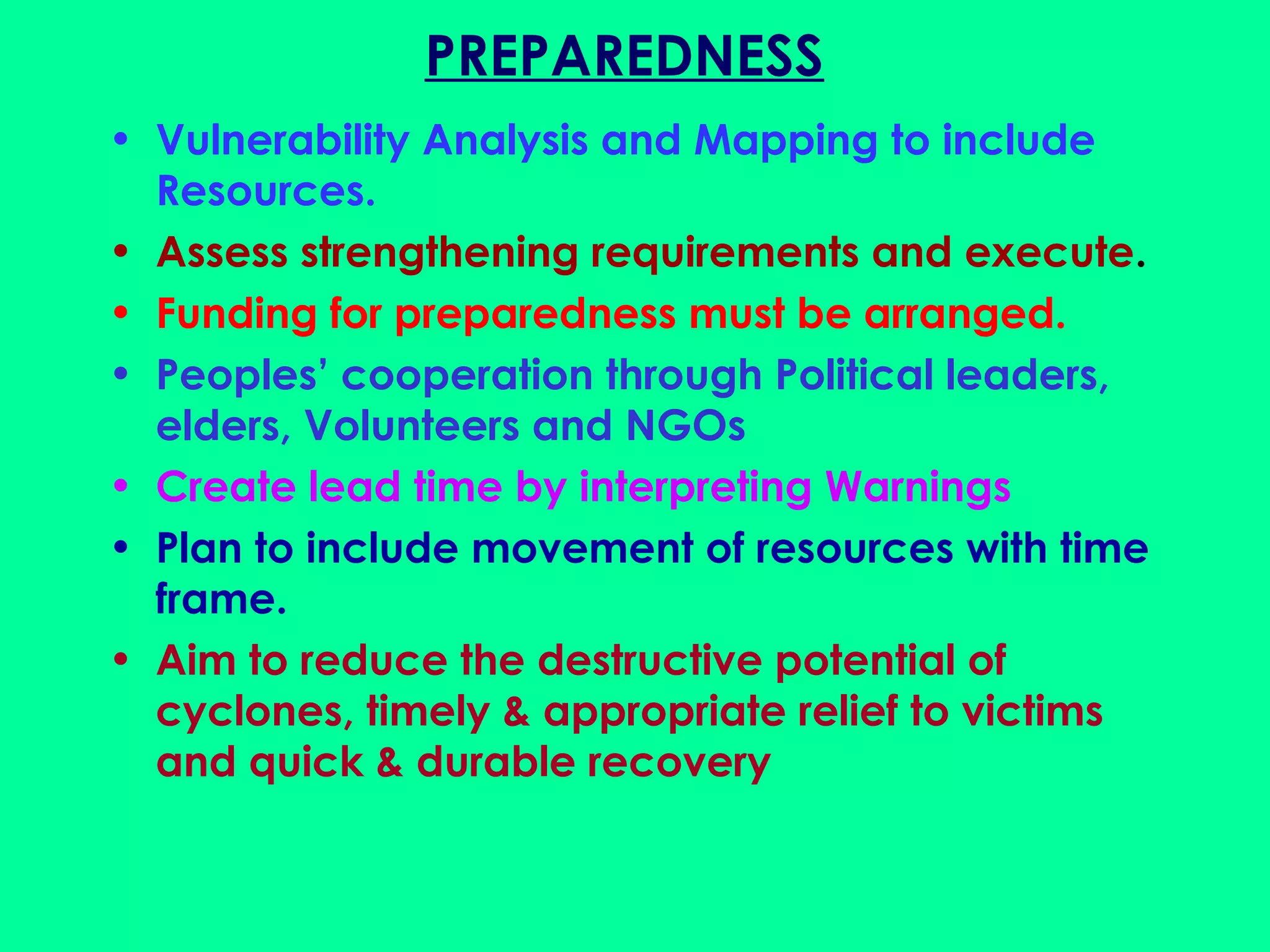
PREPAREDNESS
• Vulnerability Analysis and Mapping to include
  Resources.
• Assess strengthening requirements and execute.
• Funding for preparedness must be arranged.
• Peoples’ cooperation through Political leaders,
  elders, Volunteers and NGOs
• Create lead time by interpreting Warnings
• Plan to include movement of resources with time
  frame.
• Aim to reduce the destructive potential of
  cyclones, timely & appropriate relief to victims
  and quick & durable recovery
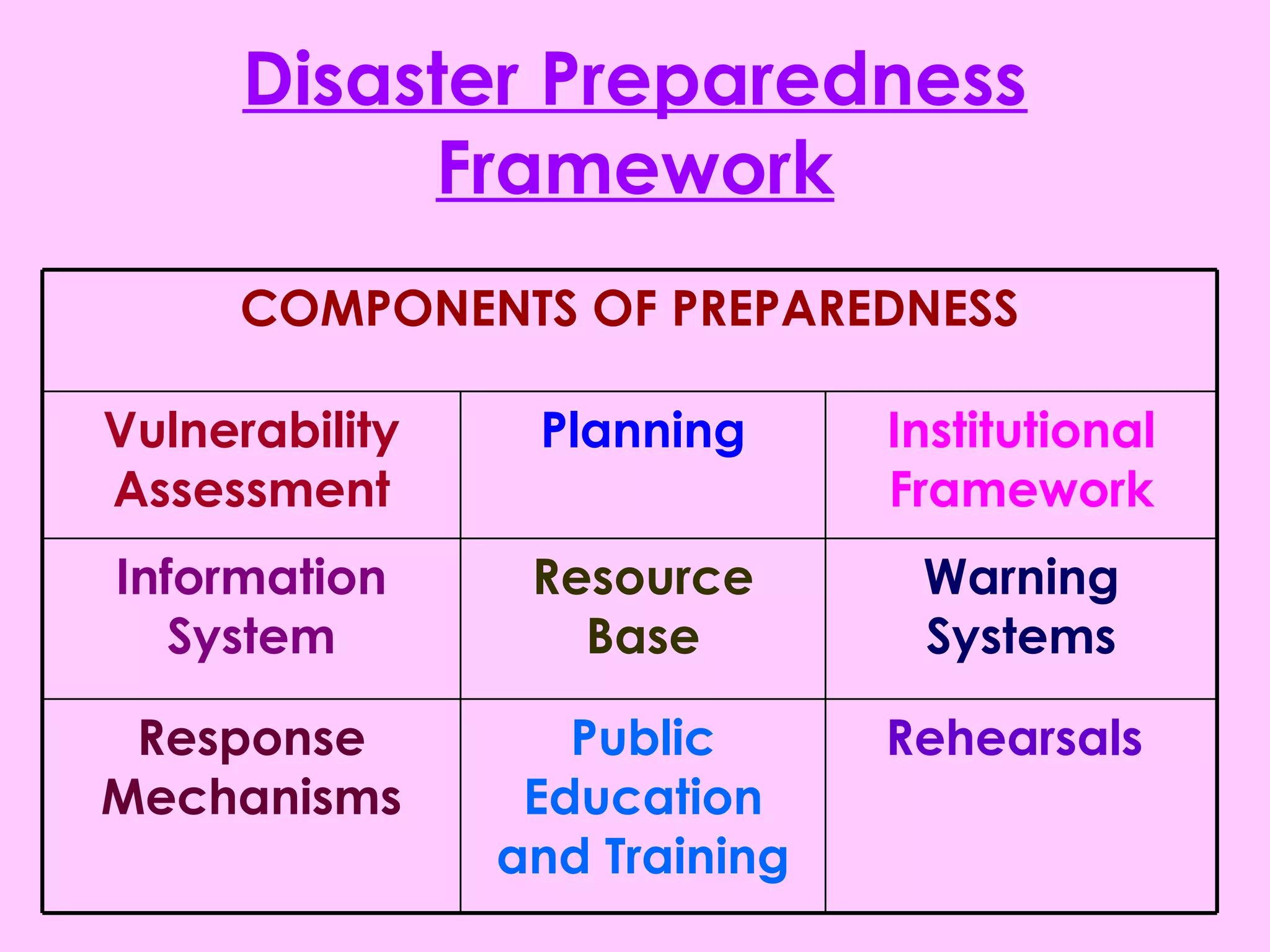
Disaster Preparedness
           Framework
      COMPONENTS OF PREPAREDNESS

Vulnerability    Planning      Institutional
Assessment                     Framework
Information      Resource       Warning
   System          Base         Systems

 Response          Public      Rehearsals
Mechanisms       Education
                and Training
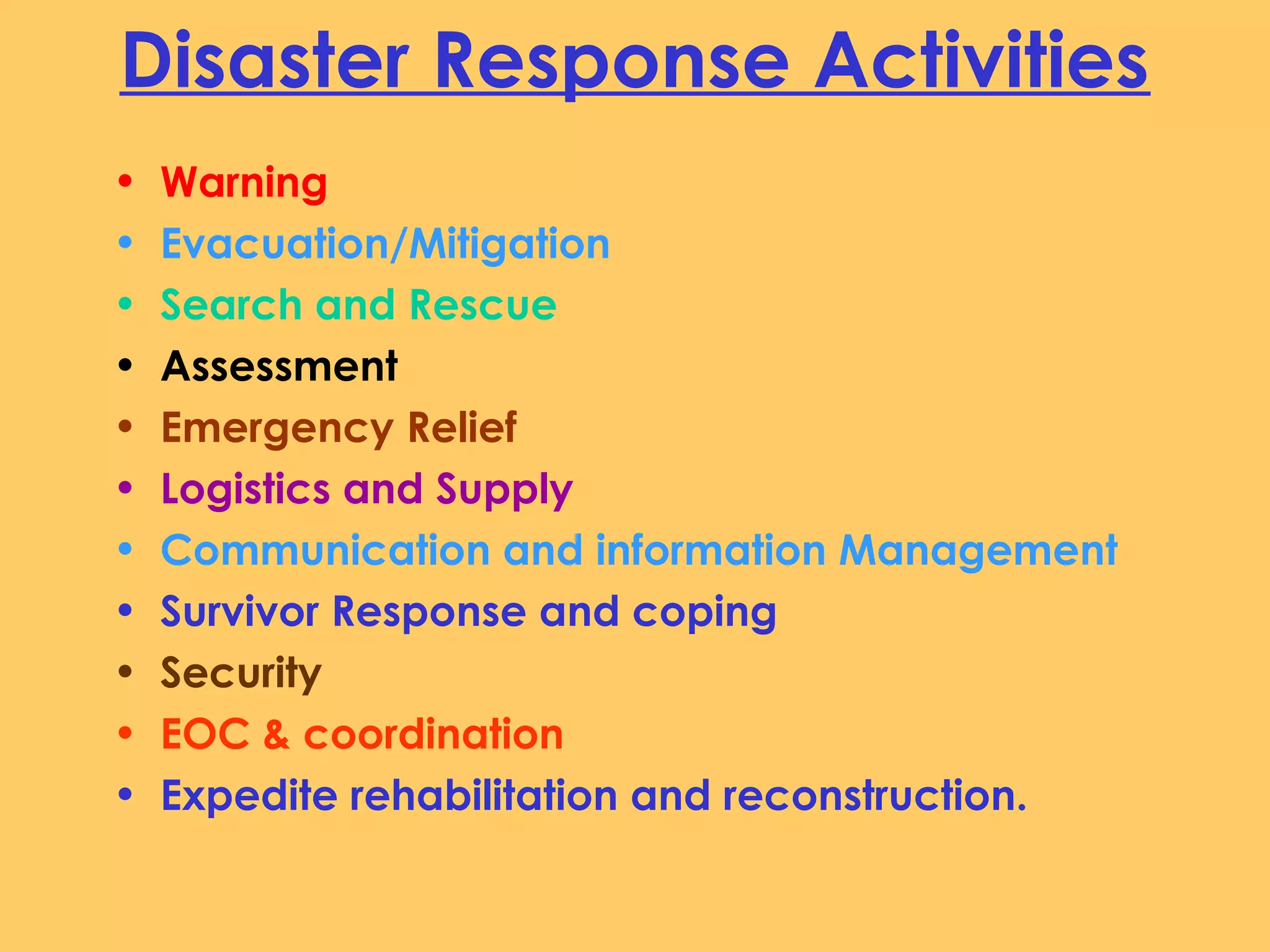
Disaster Response Activities
•   Warning
•   Evacuation/Mitigation
•   Search and Rescue
•   Assessment
•   Emergency Relief
•   Logistics and Supply
•   Communication and information Management
•   Survivor Response and coping
•   Security
•   EOC & coordination
•   Expedite rehabilitation and reconstruction.
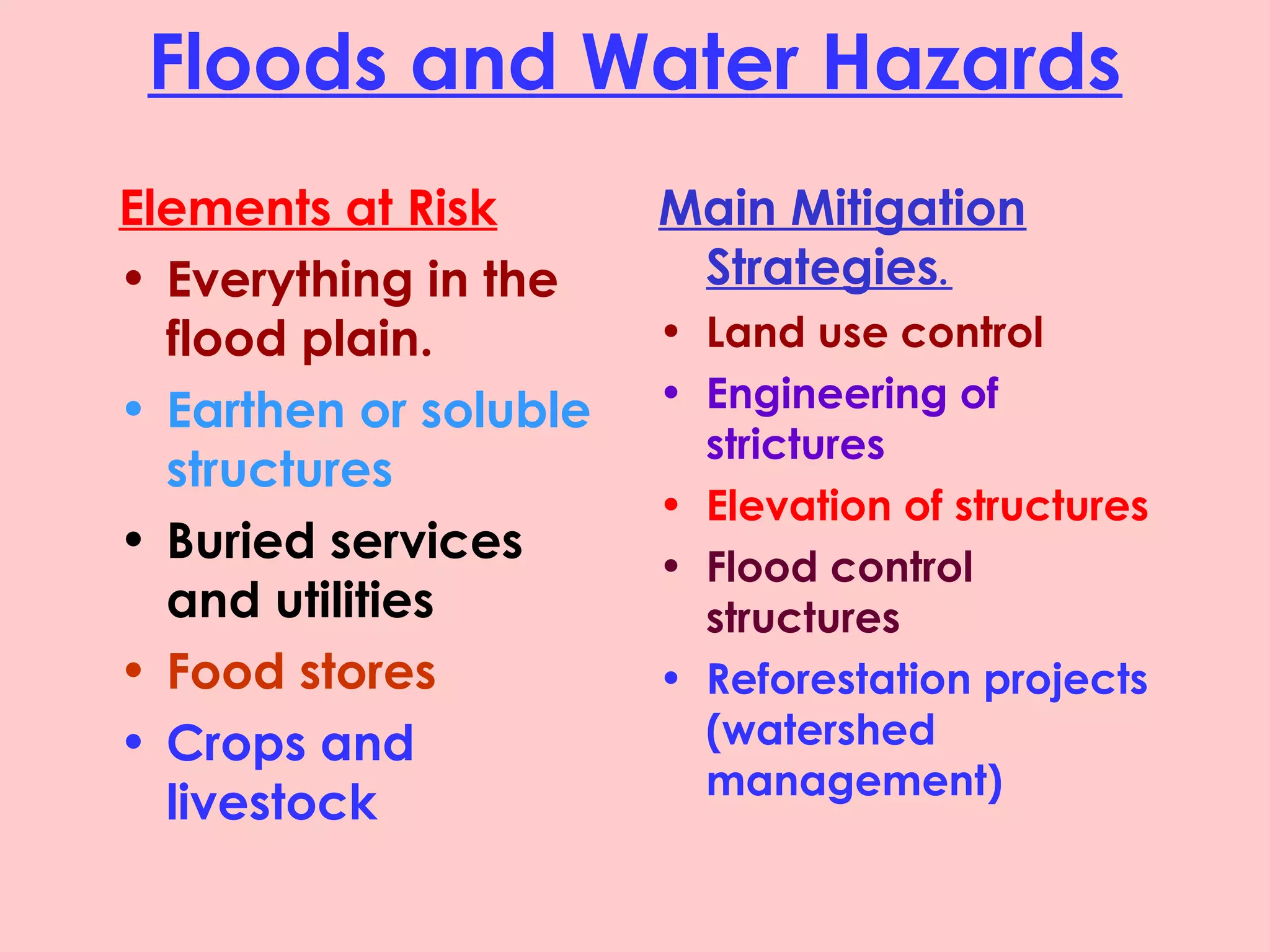
Floods and Water Hazards
Elements at Risk       Main Mitigation
• Everything in the     Strategies.
  flood plain.         • Land use control
• Earthen or soluble   • Engineering of
                         strictures
  structures
                       • Elevation of structures
• Buried services      • Flood control
  and utilities          structures
• Food stores          • Reforestation projects
• Crops and              (watershed
                         management)
  livestock
Strong Winds
                            Main Mitigation
Elements at Risk
                             Strategies.
• Lightweight structures.
• Elevated utilities        • Structural
  (Power and                  engineering
  communication lines)        measures.
• Fishing boats and         • Planting of
  other maritime
  industries.
                              windbreaks.

Disaster overview

  • 1.
  • 2.
    Damage CYCLONE Potential Poorer than Society before Elements at Risk Disruption of Huge Losses/ Normal life & Damages Development Suffers
  • 3.
    Damage HAZARD Potential Awareness- Effect on Elements Quicker Society Recovery Elements at Risk Action Communities Plans More Huge Losses/ Resilient Damages Reduced More Stable Society Losses
  • 4.
    Damage HAZARD Potential Elements at Risk Societal Elements Natural Features People & Live-stock River/Stream Banks Huts & Semi-permanent Houses Low-lying Areas Weak Buildings Sea & Sea-coast Agri. & Horticultural crops Slopes of hills Livelihood tools / Equipment Unsecured personal assets Public Infrastructure
  • 5.
    Scale of Disaster IsDependent on : • Lead Time Available. • Intensity of Hazard. • Duration. • Spatial Extent. • Density of Population & Assets. • Time of Occurrence. • Vulnerabilities existing in the Elements at Risk. • Hazard X Vulnerability = Disaster
  • 6.
    ELEMENTS AT RISK •People • Livestock • Rural Housing Stock • Houses Vulnerable • Crops, Trees,Telephone, Electric poles • Boats, Looms, Working Implements • Personal Property • Electricity, Water and Food Supplies • Infrastructure Support
  • 7.
    AIMS OF DISASTERMANAGEMENT • Reduce (Avoid, if possible) the potential losses from hazards. • Assure prompt and appropriate assistance to victims when necessary. • Achieve rapid and durable recovery.
  • 8.
    DISASTER MANAGEMENT CYCLE PRE-DISASTER DURING DISASTER POST- DISASTER
  • 9.
    Stages of Disaster Cyclone BEFORE DURING AFTER Jan - Apr MAY June- Oct Well Before Weeks-Months Just Before - Actual Time Hours Period Rescue Relief Rehabilitation Reconstruction
  • 10.
    Role Players inDisasters • People : Individuals, House -Holds, Volunteers • Gram Panchayat : Sarpanch, Panchayati Secretary, Panchayati Members • Village Elders : Caste/Community/Religious Leaders, Teachers, Doctors, Engineers, Retired Army & Police Personnel • Govt. Deptl. Officers : Agriculture, Medical, Engineers (Housing, Roads & Buildings, Irrigation) Revenue Department, Public Health, Police etc. NGOs
  • 11.
    DEFINITIONS OF “VULNERABILITY” • “The extent to which a community, structure, service or geographic area is likely to be damaged or disrupted by the impact of particular disaster hazard…” • “Vulnerability is the propensity of things to be damaged by a hazard”.
  • 12.
    DISASTER PREPAREDNESS • Disaster preparedness aims at minimizing the adverse effects of a hazard - • Through effective precautionary actions • Ensure timely, appropriate and efficient organisation and delivery of emergency response following the impact of a disaster.
  • 13.
    PREPAREDNESS • Vulnerability Analysisand Mapping to include Resources. • Assess strengthening requirements and execute. • Funding for preparedness must be arranged. • Peoples’ cooperation through Political leaders, elders, Volunteers and NGOs • Create lead time by interpreting Warnings • Plan to include movement of resources with time frame. • Aim to reduce the destructive potential of cyclones, timely & appropriate relief to victims and quick & durable recovery
  • 14.
    Disaster Preparedness Framework COMPONENTS OF PREPAREDNESS Vulnerability Planning Institutional Assessment Framework Information Resource Warning System Base Systems Response Public Rehearsals Mechanisms Education and Training
  • 15.
    Disaster Response Activities • Warning • Evacuation/Mitigation • Search and Rescue • Assessment • Emergency Relief • Logistics and Supply • Communication and information Management • Survivor Response and coping • Security • EOC & coordination • Expedite rehabilitation and reconstruction.
  • 16.
    Floods and WaterHazards Elements at Risk Main Mitigation • Everything in the Strategies. flood plain. • Land use control • Earthen or soluble • Engineering of strictures structures • Elevation of structures • Buried services • Flood control and utilities structures • Food stores • Reforestation projects • Crops and (watershed management) livestock
  • 17.
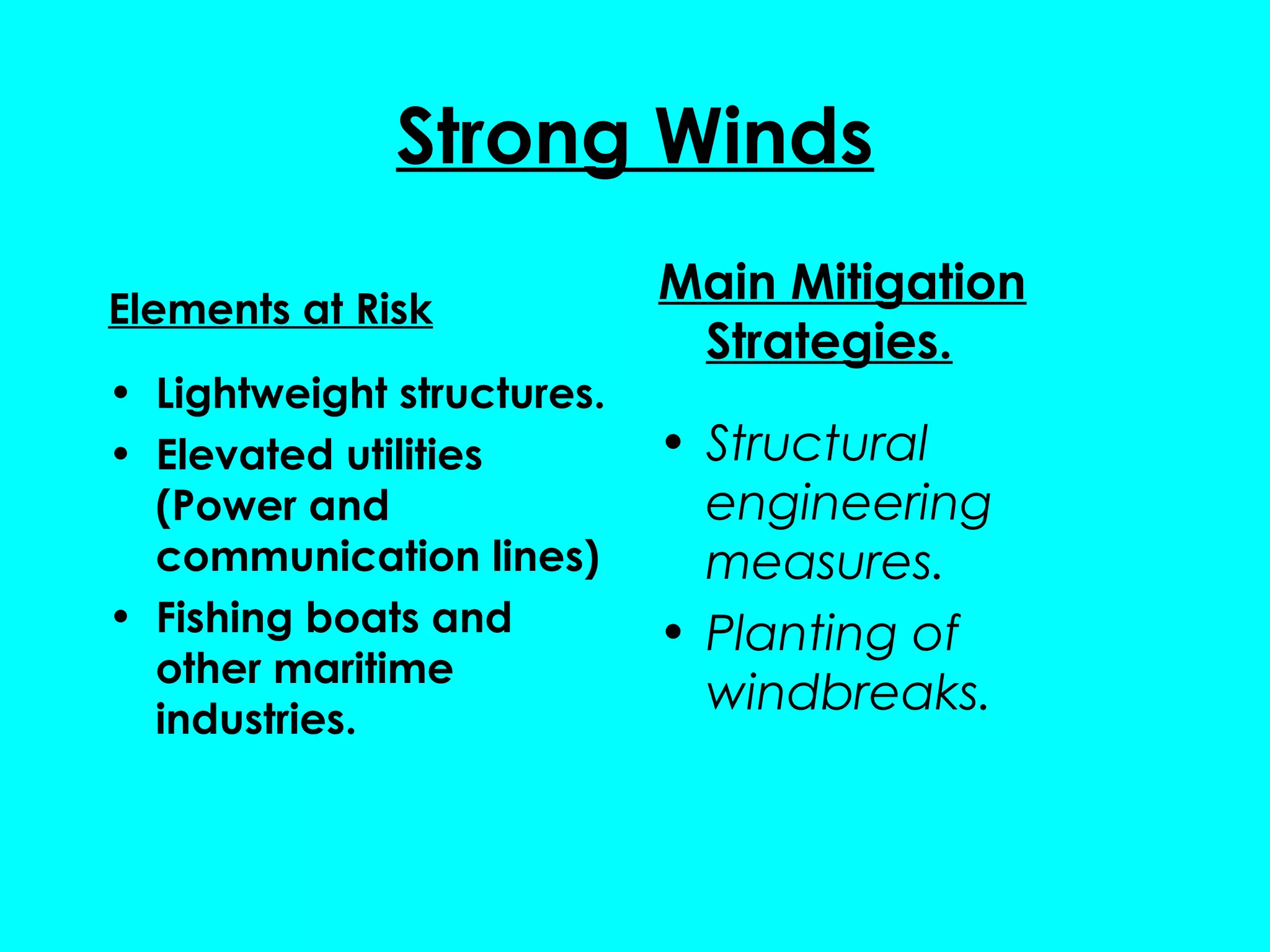
    Strong Winds Main Mitigation Elements at Risk Strategies. • Lightweight structures. • Elevated utilities • Structural (Power and engineering communication lines) measures. • Fishing boats and • Planting of other maritime industries. windbreaks.

Editor's Notes

  • #3 If you look at the right half of the slide you will find that the damage potential in the hazard causes the damages to the society Life comes to a halt and the poorer sections of the society can never recover to the pre-disaster causes serious disruption to life of the society But with awareness and preparation through action plans the society suffers less damages and is thus a more stable society.to recover faster.
  • #4 If you look at the right half of the slide you will find that the damage potential in the hazard causes the damages to the society Life comes to a halt and the poorer sections of the society can never recover to the pre-disaster causes serious disruption to life of the society But with awareness and preparation through action plans the society suffers less damages and is thus a more stable society.to recover faster.
  • #5 If you look at the right half of the slide you will find that the damage potential in the hazard causes the damages to the society Life comes to a halt and the poorer sections of the society can never recover to the pre-disaster causes serious disruption to life of the society But with awareness and preparation through action plans the society suffers less damages and is thus a more stable society.to recover faster.