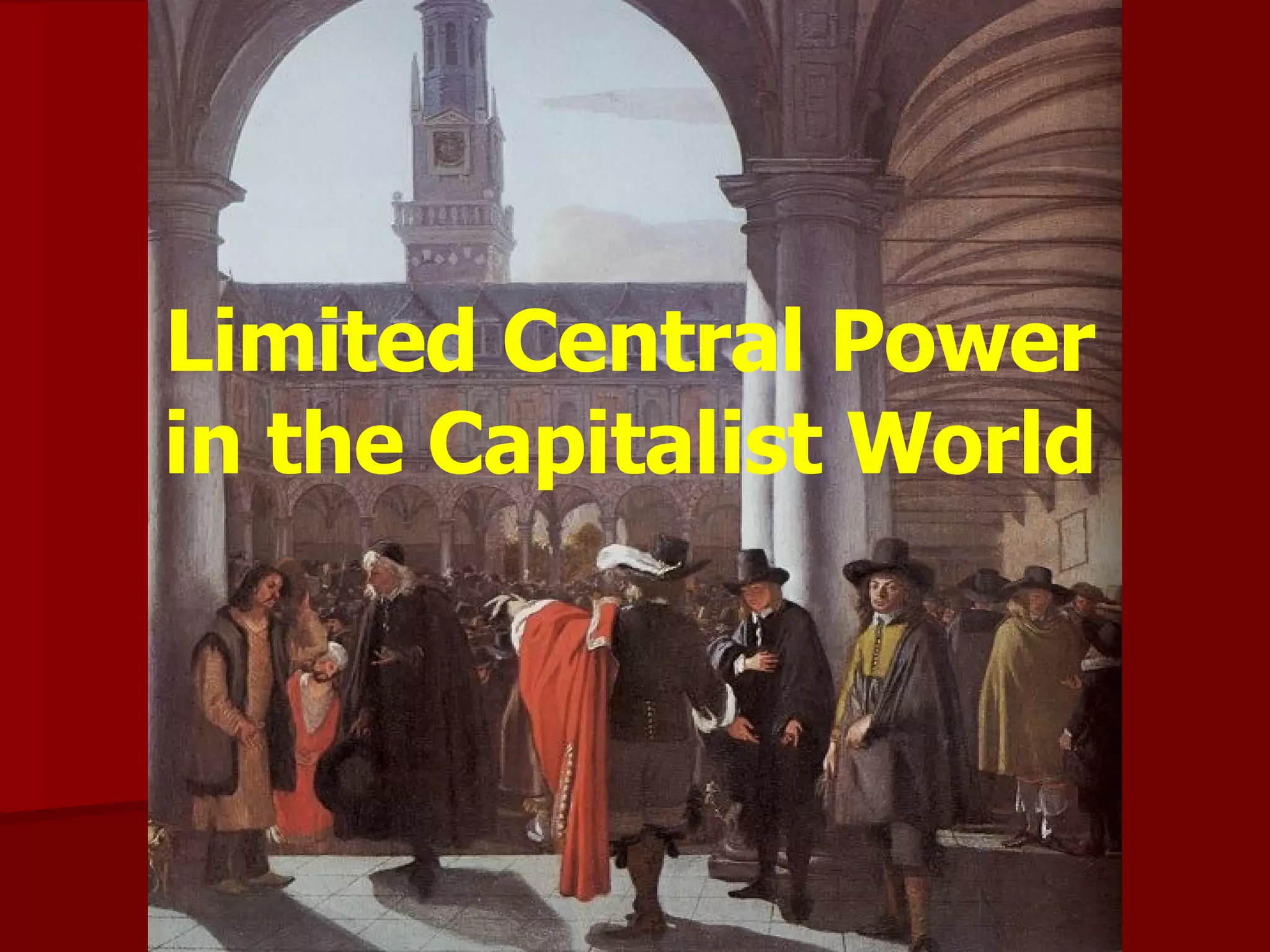




















Limited Central Power in the Capitalist World Limited Central Power in the Capitalist World
England & The Netherlands Develop A Constitutional Government
The Dutch Republic The Dutch Republic
The Dutch Republic The Dutch gain independence from Spain with the Peace of Westphalia in 1648 Started breaking away after the Spanish Armada was defeated by England in 1588
The Dutch Republic The Dutch Republic is much different than absolutist governments of its time The Dutch government was decentralized The power of one office or individual was checked by other offices & individuals
Accomplishments of Dutch Republic Accomplishments of Dutch Republic Ended Spanish naval supremacy Drove Portuguese from their colonies Set up colonies & trading companies in Asia, Africa, & North America (New Amsterdam)….
 
Emergence of the Monarchy Republicans and leader John Oldenbarnvelt overthrown & executed by royalist uprising Monarchist leaders from the House of Orange took control of the Netherlands
The Dutch Golden Age Modern Republic Modern Banks Insurance Companies Stock Market The Dutch Republic is first in many things
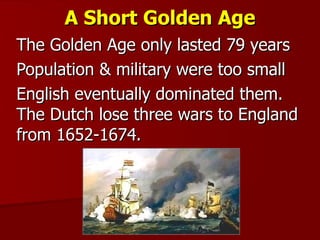
A Short Golden Age The Golden Age only lasted 79 years Population & military were too small English eventually dominated them. The Dutch lose three wars to England from 1652-1674.
England England
Problems In England James I inherited many problems: Religious conflict, debt, weak military, conflict with Parliament, falling wages, a rising population, & an upset lower class James tries to deal with these problems
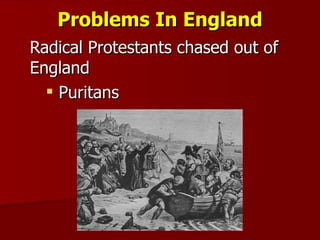
Problems In England Radical Protestants chased out of England Puritans
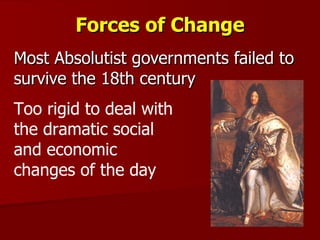
Forces of Change Most Absolutist governments failed to survive the 18th century Too rigid to deal with the dramatic social and economic changes of the day
Expanding Capitalism Many commodities traded in the 17th century Eastern Europe traded grains, timber, and fish Western Europe traded manufactured goods
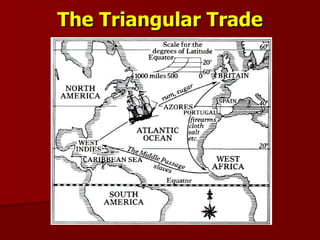
The Triangular Trade
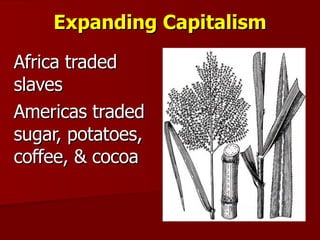
Expanding Capitalism Africa traded slaves Americas traded sugar, potatoes, coffee, & cocoa
 
Expanding Capitalism Modern capitalistic institutions develop in the 17th century Banks make large amounts of capital available for business ventures Bank of Amsterdam Bank of England
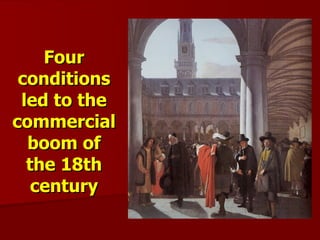
Four conditions led to the commercial boom of the 18th century
Governments needed supplies for armies and navies Rising European population meant an increased market Developed agriculture in tropical plantations Brazilian gold and diamond strikes increased prices and encouraged people to go into business
Inflation benefited business owners and landowners who rented short-term leases Rising prices and stagnate wages hurt the nobles and working class
The Growth of Free Enterprise An increasing European population demanded more and more food Businesses responded by investing in agriculture This led to many agricultural improvements in the 18th century
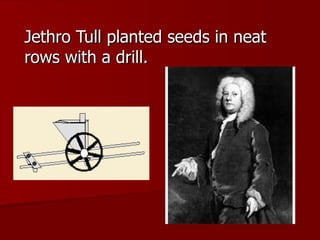
Jethro Tull planted seeds in neat rows with a drill.
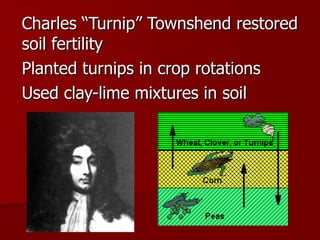
Charles “Turnip” Townshend restored soil fertility Planted turnips in crop rotations Used clay-lime mixtures in soil
Robert Bakewell increased the size of cattle Used selective breeding Arthur Young spread the ideas of these three people
Tulipomania 1634-37! Ottoman Sultan Suleiman the Magnificent cultivated tulips and made them the symbol of his court. A Flemish diplomat named Busbecq brought them to Europe in 1573. The tulip the 'signature' flower of the very wealthiest members of Dutch society. Created instant prestige and boosted your social status.
The tulip became the object of  one of the wildest episodes of financial speculation in history .  Single bulbs that might produce the unique striped flower, sold for up to  4000 guilders!
In 1635 that kind of money would buy:  two loads of wheat, four loads of rye, four fattened oxen, five hogs, twelve sheep, two hogsheads of wine, four barrels of beer, two barrels of butter, a thousand pounds of cheese, a bed with accessories, a suit of clothes, a silver goblet-and a ship to carry it in .  In the space of a few weeks in 1637, the tulip market collapsed.  Many people lost everything !
The English Enclosure Acts
The Enclosure Acts forced small farmers and medieval style communities off their land Many peasants moved to the cities to find work Large estate owners were given the land to modernize and improve English agriculture Some peasants stayed to work as low paid laborers
European Domestic Industry from 1500 to 1700 Business owners gave parts to villagers to take home, finish, and return The textile industry was domestic Paper, glass, pottery, and metal industries were also domesticated
Joint Stock & Insurance Companies: Late 17th Century The companies opened investment to the public in the 17th century East India Company and Lloyds of London Stock exchanges developed in London and Paris as a result
Trade and Public Finance: The French and the English Smuggling was out of control in the 18th century Many goods were illegally traded between England, France, and their colonies Mercantilist governments of England and France made it illegal to buy goods from another country
Capitalist businessmen went around laws They found ways to sell their products internationally
Population Increase Europe’s population increased 58% from 118 to 185 million people in the 18th century Improved sanitary conditions increased the life expectancy of many… As did medical treatment and increased agricultural production
Excess population leaves Western Europe Some went to Eastern Europe 2 million went to the Americans Europeans who traveled to the colonies gained easy upward social mobility Self reliance in the colonies was encouraged
Mobility of Europeans around the world led to them becoming fascinated with other places and cultures
Mass Discontent Increased crime, formation of mobs, and frequent riots plagued growing cities Criminals were beaten, condemned to galley slavery, or sent to prison ships The poor were sent to workhouses and lived in horrible conditions
 

Limited Central Power In The Capitalist World

  • 1.
    Limited Central Powerin the Capitalist World Limited Central Power in the Capitalist World
  • 2.
    England & TheNetherlands Develop A Constitutional Government
  • 3.
    The Dutch RepublicThe Dutch Republic
  • 4.
    The Dutch RepublicThe Dutch gain independence from Spain with the Peace of Westphalia in 1648 Started breaking away after the Spanish Armada was defeated by England in 1588
  • 5.
    The Dutch RepublicThe Dutch Republic is much different than absolutist governments of its time The Dutch government was decentralized The power of one office or individual was checked by other offices & individuals
  • 6.
    Accomplishments of DutchRepublic Accomplishments of Dutch Republic Ended Spanish naval supremacy Drove Portuguese from their colonies Set up colonies & trading companies in Asia, Africa, & North America (New Amsterdam)….
  • 7.
  • 8.
    Emergence of theMonarchy Republicans and leader John Oldenbarnvelt overthrown & executed by royalist uprising Monarchist leaders from the House of Orange took control of the Netherlands
  • 9.
    The Dutch GoldenAge Modern Republic Modern Banks Insurance Companies Stock Market The Dutch Republic is first in many things
  • 10.
    A Short GoldenAge The Golden Age only lasted 79 years Population & military were too small English eventually dominated them. The Dutch lose three wars to England from 1652-1674.
  • 11.
  • 12.
    Problems In EnglandJames I inherited many problems: Religious conflict, debt, weak military, conflict with Parliament, falling wages, a rising population, & an upset lower class James tries to deal with these problems
  • 13.
    Problems In EnglandRadical Protestants chased out of England Puritans
  • 14.
    Forces of ChangeMost Absolutist governments failed to survive the 18th century Too rigid to deal with the dramatic social and economic changes of the day
  • 15.
    Expanding Capitalism Manycommodities traded in the 17th century Eastern Europe traded grains, timber, and fish Western Europe traded manufactured goods
  • 16.
  • 17.
    Expanding Capitalism Africatraded slaves Americas traded sugar, potatoes, coffee, & cocoa
  • 18.
  • 19.
    Expanding Capitalism Moderncapitalistic institutions develop in the 17th century Banks make large amounts of capital available for business ventures Bank of Amsterdam Bank of England
  • 20.
    Four conditions ledto the commercial boom of the 18th century
  • 21.
    Governments needed suppliesfor armies and navies Rising European population meant an increased market Developed agriculture in tropical plantations Brazilian gold and diamond strikes increased prices and encouraged people to go into business
  • 22.
    Inflation benefited businessowners and landowners who rented short-term leases Rising prices and stagnate wages hurt the nobles and working class
  • 23.
    The Growth ofFree Enterprise An increasing European population demanded more and more food Businesses responded by investing in agriculture This led to many agricultural improvements in the 18th century
  • 24.
    Jethro Tull plantedseeds in neat rows with a drill.
  • 25.
    Charles “Turnip” Townshendrestored soil fertility Planted turnips in crop rotations Used clay-lime mixtures in soil
  • 26.
    Robert Bakewell increasedthe size of cattle Used selective breeding Arthur Young spread the ideas of these three people
  • 27.
    Tulipomania 1634-37! OttomanSultan Suleiman the Magnificent cultivated tulips and made them the symbol of his court. A Flemish diplomat named Busbecq brought them to Europe in 1573. The tulip the 'signature' flower of the very wealthiest members of Dutch society. Created instant prestige and boosted your social status.
  • 28.
    The tulip becamethe object of one of the wildest episodes of financial speculation in history . Single bulbs that might produce the unique striped flower, sold for up to 4000 guilders!
  • 29.
    In 1635 thatkind of money would buy: two loads of wheat, four loads of rye, four fattened oxen, five hogs, twelve sheep, two hogsheads of wine, four barrels of beer, two barrels of butter, a thousand pounds of cheese, a bed with accessories, a suit of clothes, a silver goblet-and a ship to carry it in . In the space of a few weeks in 1637, the tulip market collapsed. Many people lost everything !
  • 30.
  • 31.
    The Enclosure Actsforced small farmers and medieval style communities off their land Many peasants moved to the cities to find work Large estate owners were given the land to modernize and improve English agriculture Some peasants stayed to work as low paid laborers
  • 32.
    European Domestic Industryfrom 1500 to 1700 Business owners gave parts to villagers to take home, finish, and return The textile industry was domestic Paper, glass, pottery, and metal industries were also domesticated
  • 33.
    Joint Stock &Insurance Companies: Late 17th Century The companies opened investment to the public in the 17th century East India Company and Lloyds of London Stock exchanges developed in London and Paris as a result
  • 34.
    Trade and PublicFinance: The French and the English Smuggling was out of control in the 18th century Many goods were illegally traded between England, France, and their colonies Mercantilist governments of England and France made it illegal to buy goods from another country
  • 35.
    Capitalist businessmen wentaround laws They found ways to sell their products internationally
  • 36.
    Population Increase Europe’spopulation increased 58% from 118 to 185 million people in the 18th century Improved sanitary conditions increased the life expectancy of many… As did medical treatment and increased agricultural production
  • 37.
    Excess population leavesWestern Europe Some went to Eastern Europe 2 million went to the Americans Europeans who traveled to the colonies gained easy upward social mobility Self reliance in the colonies was encouraged
  • 38.
    Mobility of Europeansaround the world led to them becoming fascinated with other places and cultures
  • 39.
    Mass Discontent Increasedcrime, formation of mobs, and frequent riots plagued growing cities Criminals were beaten, condemned to galley slavery, or sent to prison ships The poor were sent to workhouses and lived in horrible conditions
  • 40.