SAR OF PHENOTHIAZINE
SIRAJUDDIN MOLLA (B. PHARMACY)
ROLL NO. 27701918043
3RD YEAR, 5TH SEM
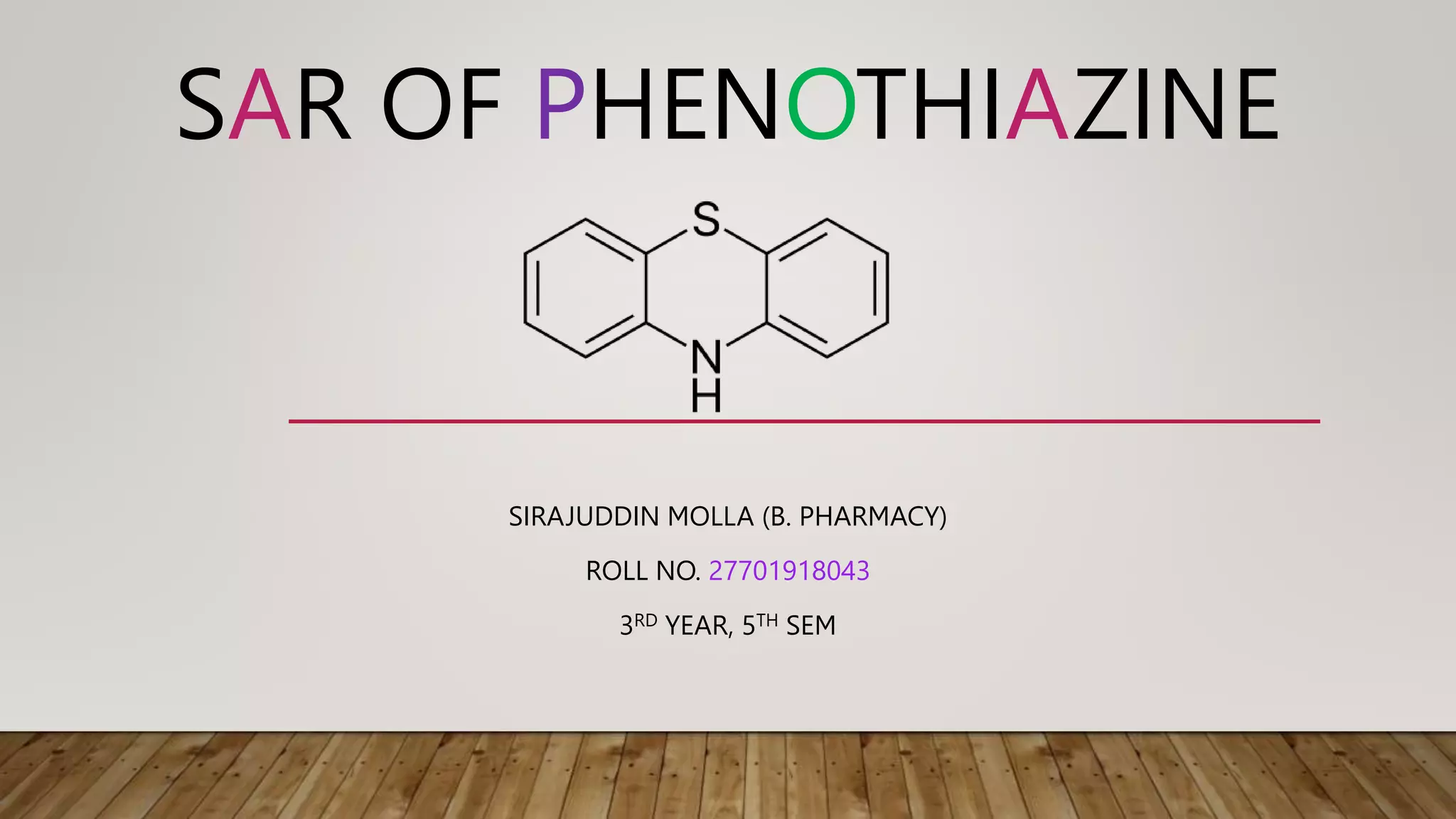
Phenothiazine
Introduction..
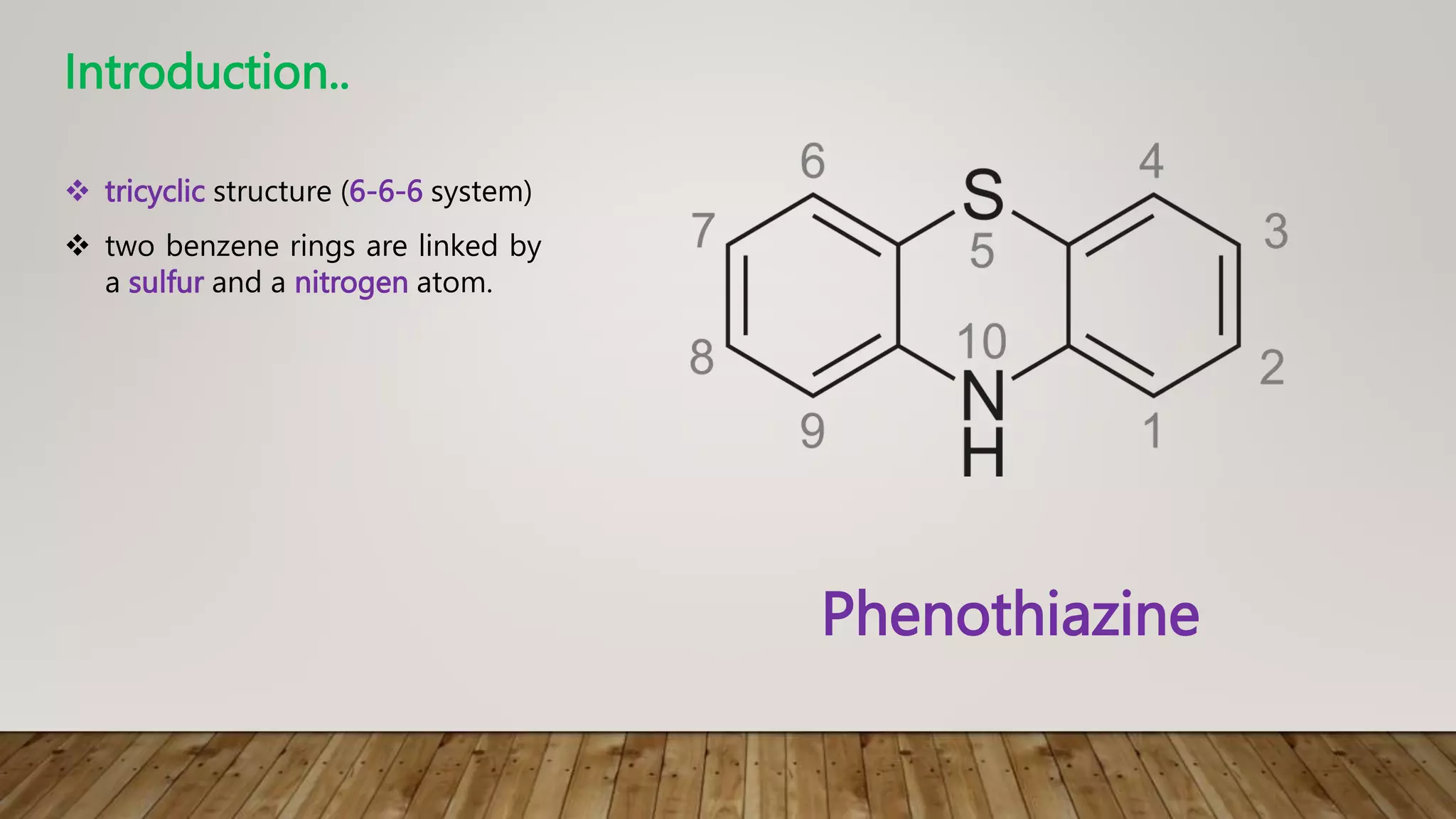
 tricyclic structure (6-6-6 system)
 two benzene rings are linked by
a sulfur and a nitrogen atom.
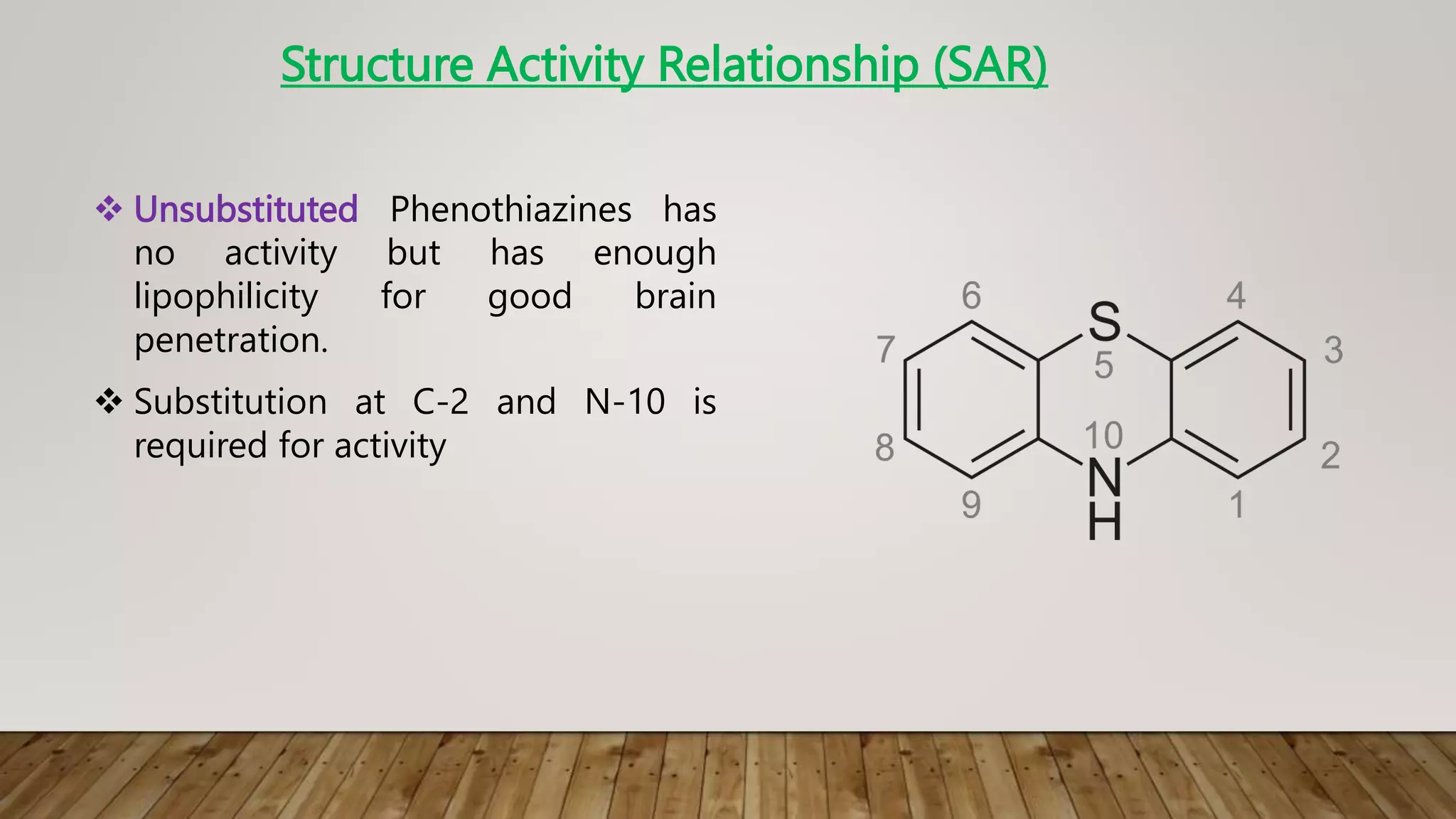
 Unsubstituted Phenothiazines has
no activity but has enough
lipophilicity for good brain
penetration.
 Substitution at C-2 and N-10 is
required for activity
Structure Activity Relationship (SAR)
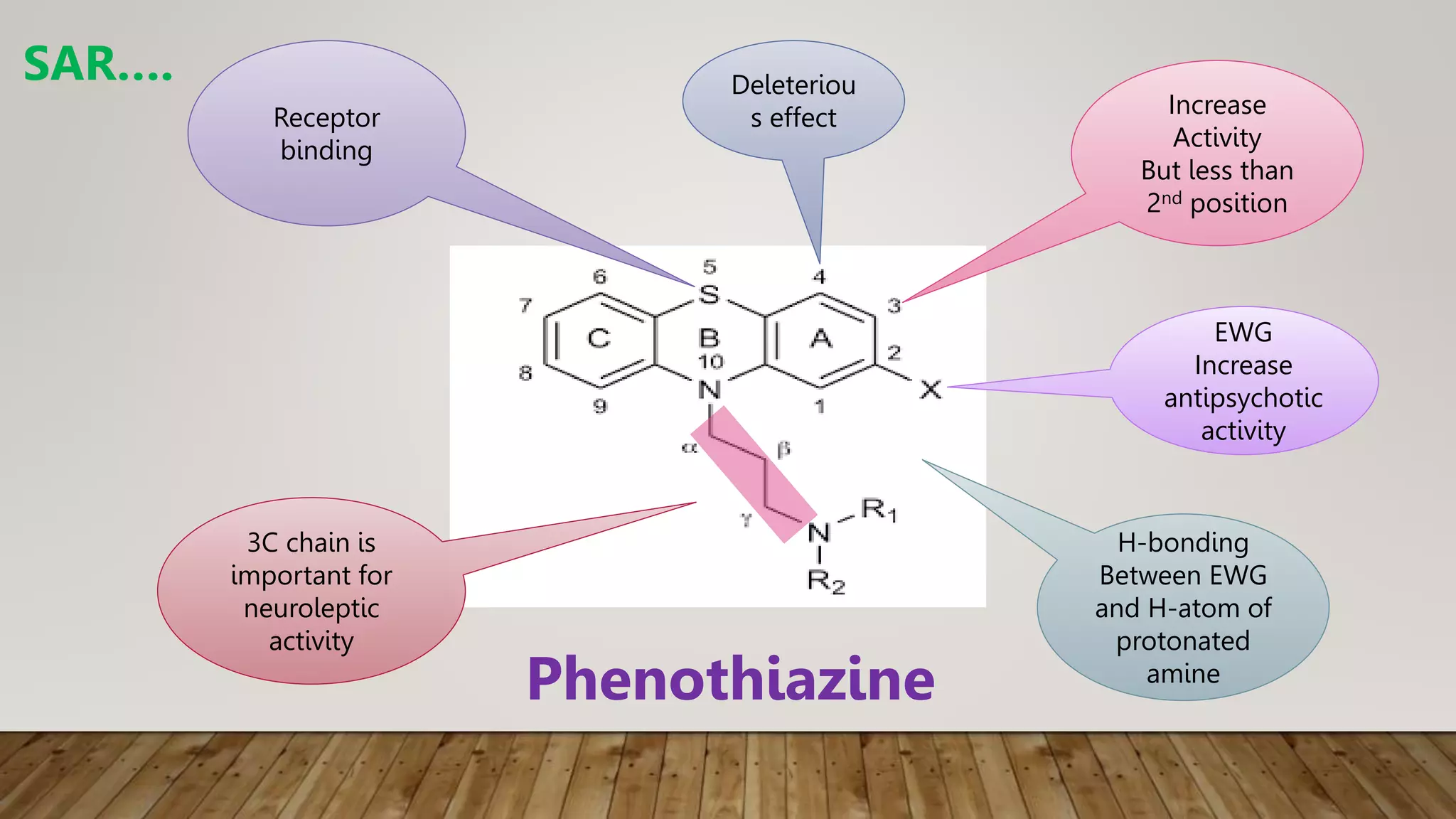
Deleteriou
s effect Increase
Activity
But less than
2nd position
Receptor
binding
3C chain is
important for
neuroleptic
activity
H-bonding
Between EWG
and H-atom of
protonated
amine
Phenothiazine
EWG
Increase
antipsychotic
activity
SAR….
SAR….
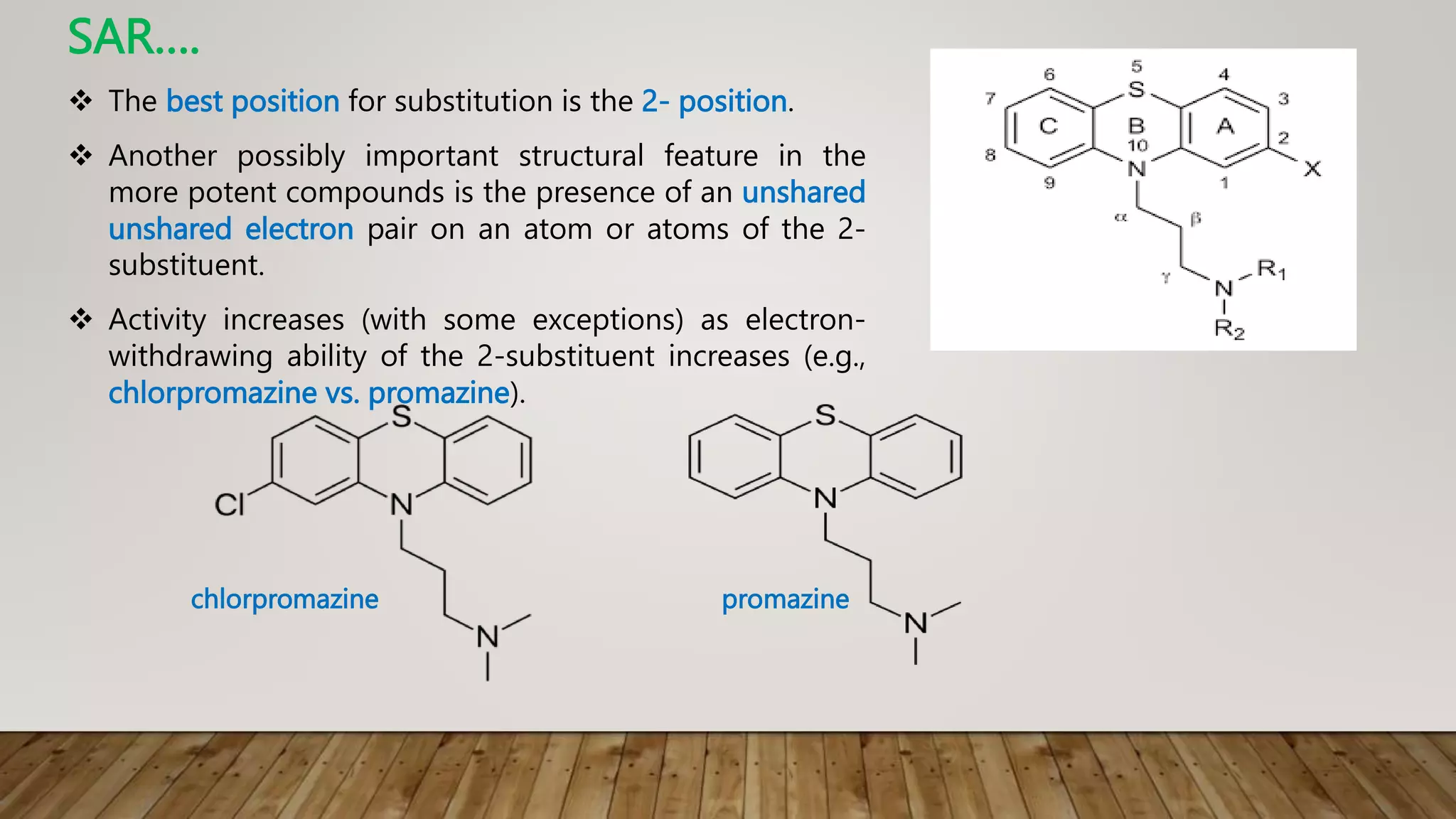
 The best position for substitution is the 2- position.
 Another possibly important structural feature in the
more potent compounds is the presence of an unshared
unshared electron pair on an atom or atoms of the 2-
substituent.
 Activity increases (with some exceptions) as electron-
withdrawing ability of the 2-substituent increases (e.g.,
chlorpromazine vs. promazine).
chlorpromazine promazine
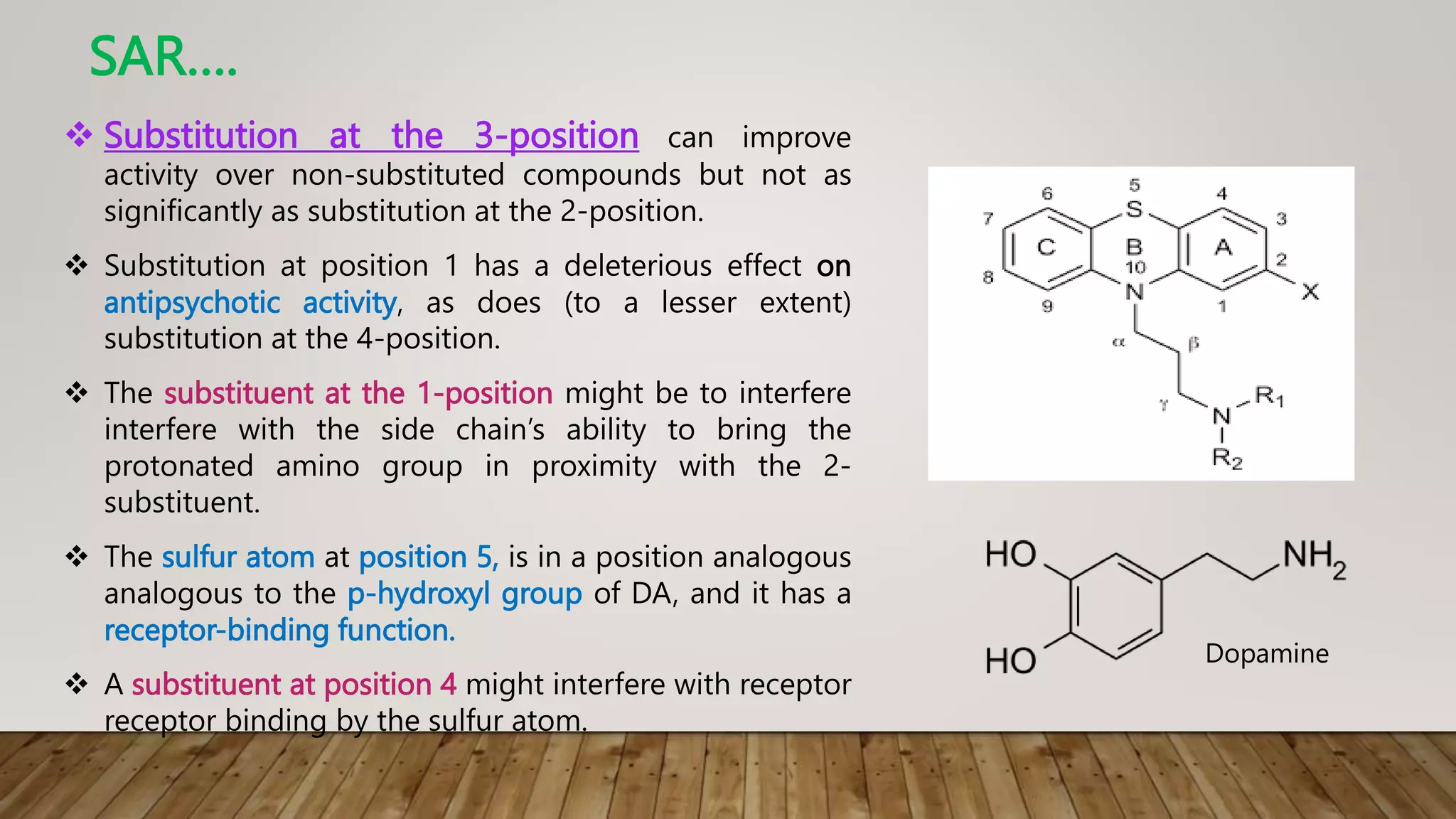
 Substitution at the 3-position can improve
activity over non-substituted compounds but not as
significantly as substitution at the 2-position.
 Substitution at position 1 has a deleterious effect on
antipsychotic activity, as does (to a lesser extent)
substitution at the 4-position.
 The substituent at the 1-position might be to interfere
interfere with the side chain’s ability to bring the
protonated amino group in proximity with the 2-
substituent.
 The sulfur atom at position 5, is in a position analogous
analogous to the p-hydroxyl group of DA, and it has a
receptor-binding function.
 A substituent at position 4 might interfere with receptor
receptor binding by the sulfur atom.
SAR….
Dopamine
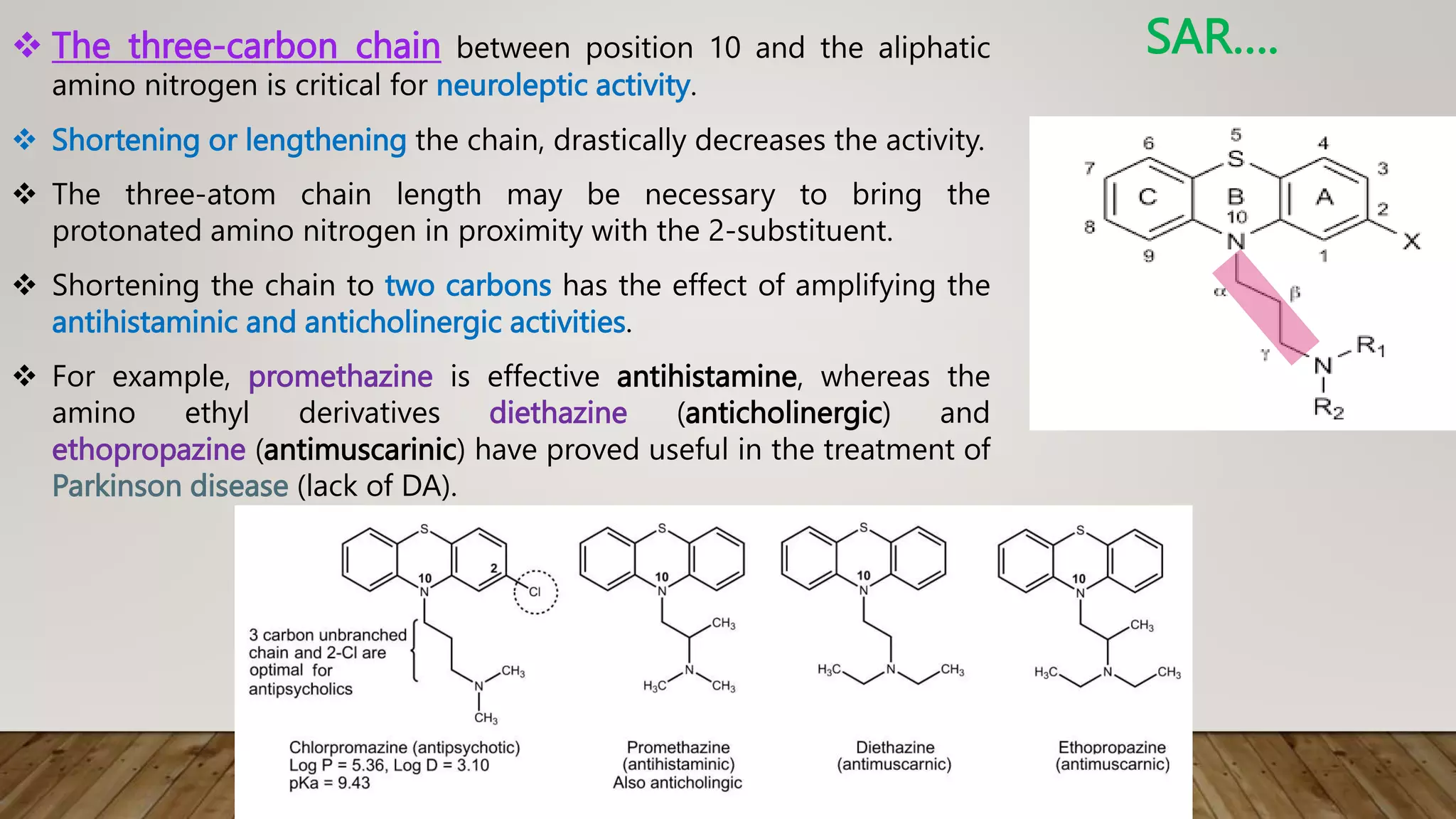
 The three-carbon chain between position 10 and the aliphatic
amino nitrogen is critical for neuroleptic activity.
 Shortening or lengthening the chain, drastically decreases the activity.
 The three-atom chain length may be necessary to bring the
protonated amino nitrogen in proximity with the 2-substituent.
 Shortening the chain to two carbons has the effect of amplifying the
antihistaminic and anticholinergic activities.
 For example, promethazine is effective antihistamine, whereas the
amino ethyl derivatives diethazine (anticholinergic) and
ethopropazine (antimuscarinic) have proved useful in the treatment of
Parkinson disease (lack of DA).
SAR….
SAR….
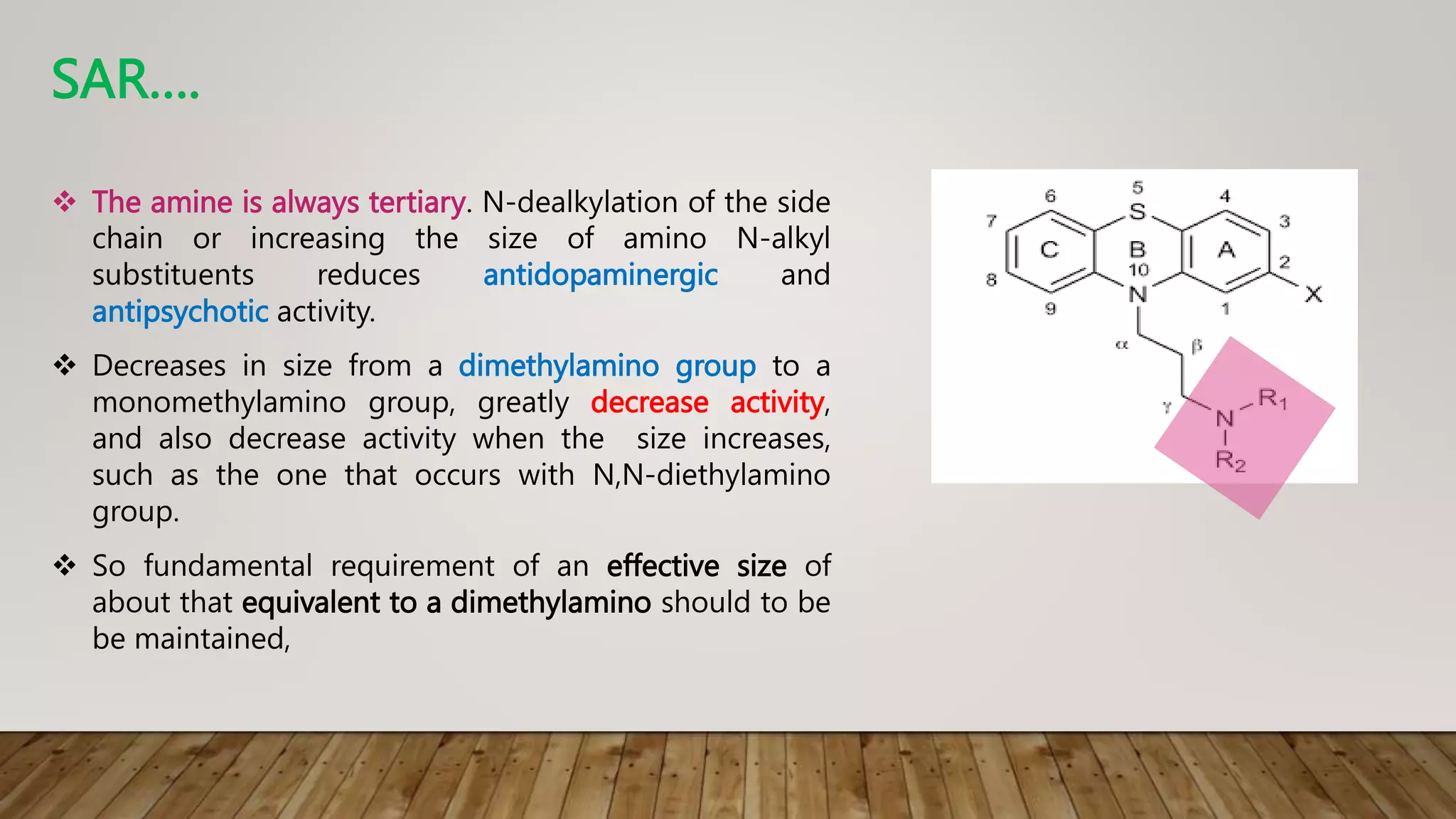
 The amine is always tertiary. N-dealkylation of the side
chain or increasing the size of amino N-alkyl
substituents reduces antidopaminergic and
antipsychotic activity.
 Decreases in size from a dimethylamino group to a
monomethylamino group, greatly decrease activity,
and also decrease activity when the size increases,
such as the one that occurs with N,N-diethylamino
group.
 So fundamental requirement of an effective size of
about that equivalent to a dimethylamino should to be
be maintained,
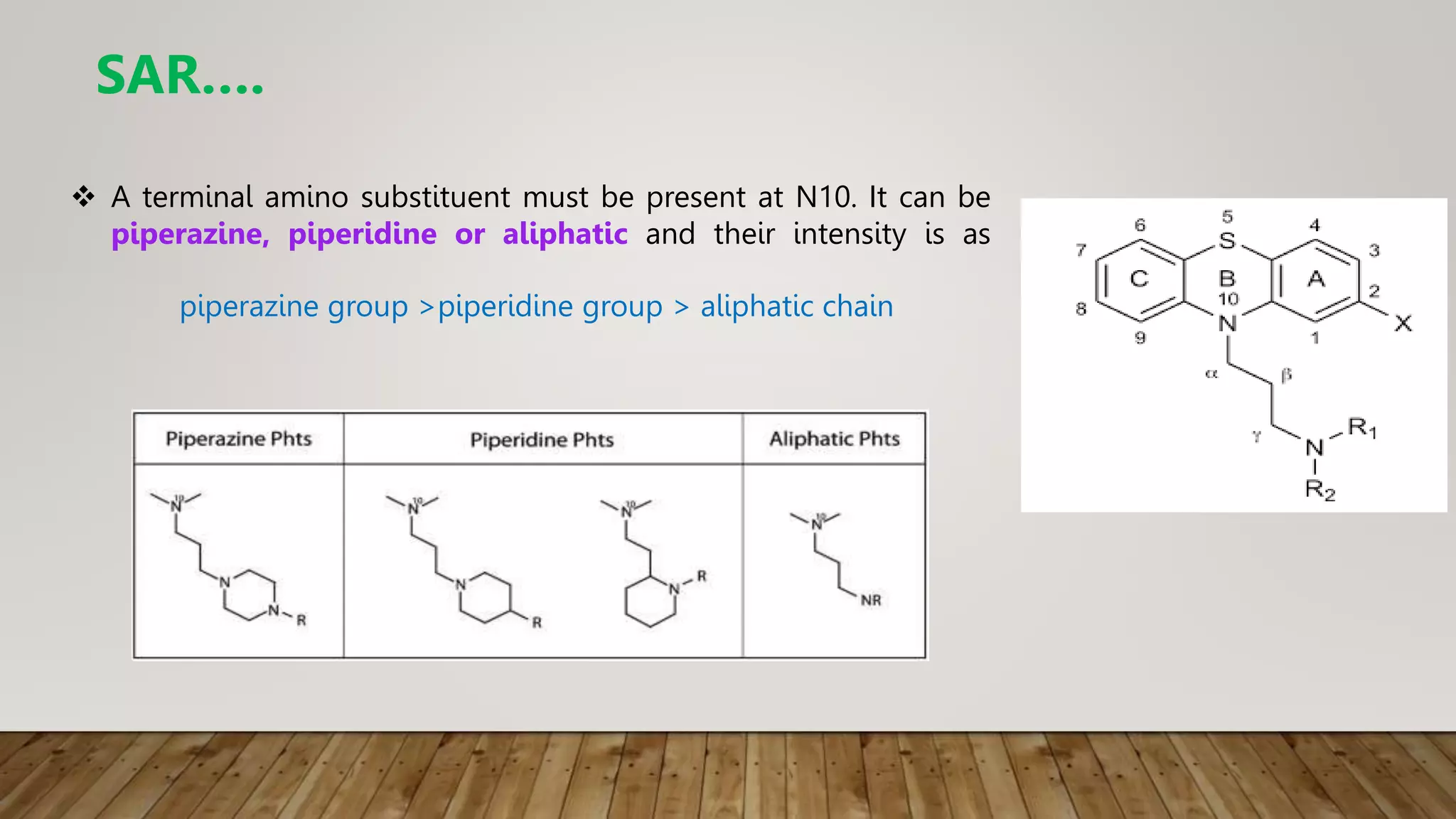
 A terminal amino substituent must be present at N10. It can be
piperazine, piperidine or aliphatic and their intensity is as
piperazine group >piperidine group > aliphatic chain
SAR….
Significance…
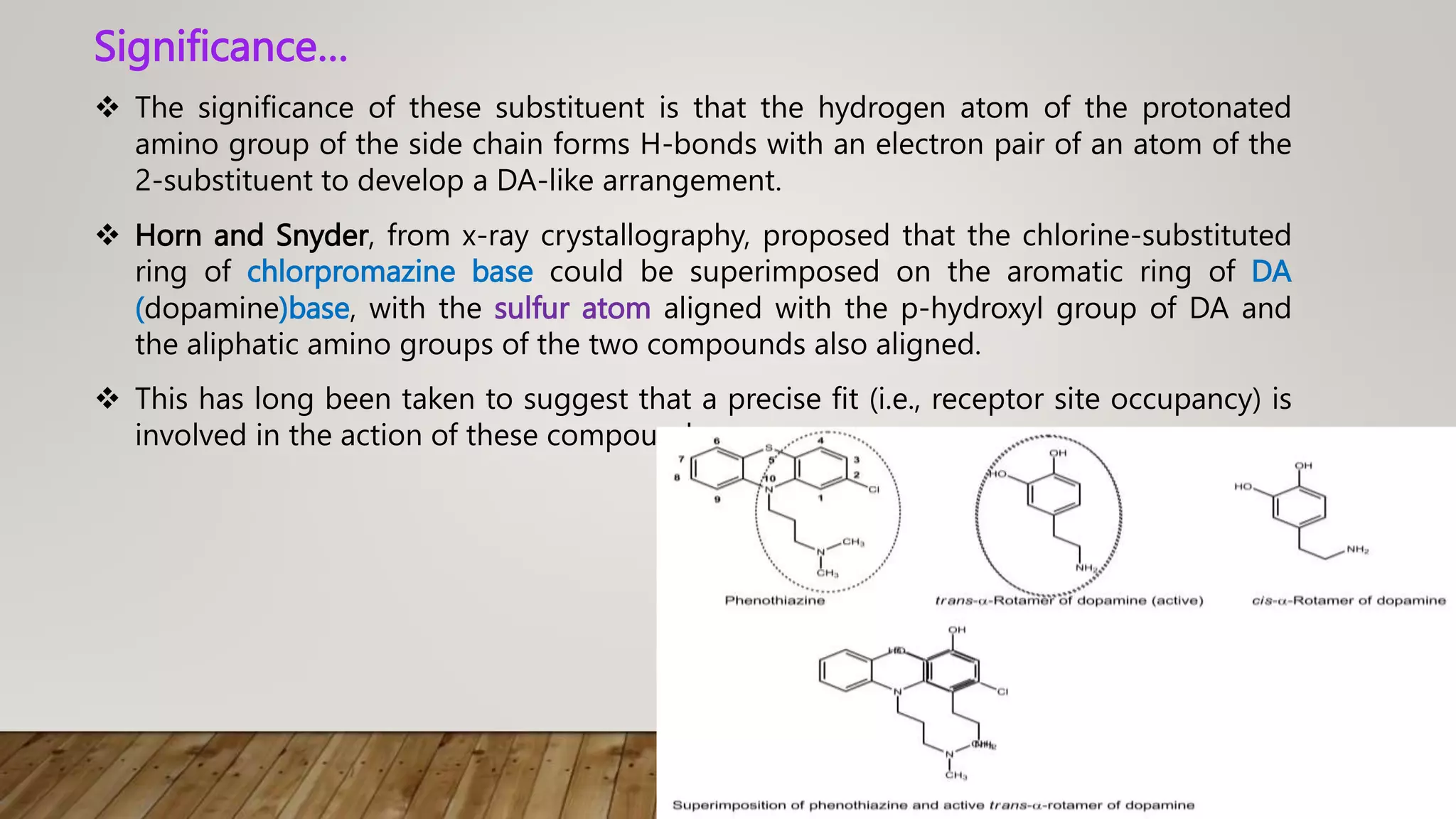
 The significance of these substituent is that the hydrogen atom of the protonated
amino group of the side chain forms H-bonds with an electron pair of an atom of the
2-substituent to develop a DA-like arrangement.
 Horn and Snyder, from x-ray crystallography, proposed that the chlorine-substituted
ring of chlorpromazine base could be superimposed on the aromatic ring of DA
(dopamine)base, with the sulfur atom aligned with the p-hydroxyl group of DA and
the aliphatic amino groups of the two compounds also aligned.
 This has long been taken to suggest that a precise fit (i.e., receptor site occupancy) is
involved in the action of these compounds.
MOA
 Neuroleptic disorder, or thought disorders (psychoses),
most notably the schizophrenias occurs due to
overproduction and overactivity of DA (dopamine)
 The action of these agents, competitive antagonism of DA
at D2 or occasionally D3 or D4 receptors in the limbic
system.
 Although the actual structural or anatomical lesions are not
not known, the basic defect appears to involve overactivity
Importance..
Antipsychotic drugs—also known as
neuroleptic drugs,
antischizophrenic drugs,
or major tranquilizers
—are used in the symptomatic
treatment of thought disorders
(psychoses), most notably the
schizophrenias.
Reference
1. Wilson and Giswold’s Organic medicinal and
Pharmaceutical Chemistry.
2. Foye’s Principles of Medicinal Chemistry.
SAR of phenothiazine.pptx

SAR of phenothiazine.pptx

  • 1.
    SAR OF PHENOTHIAZINE SIRAJUDDINMOLLA (B. PHARMACY) ROLL NO. 27701918043 3RD YEAR, 5TH SEM
  • 2.
    Phenothiazine Introduction..  tricyclic structure(6-6-6 system)  two benzene rings are linked by a sulfur and a nitrogen atom.
  • 3.
     Unsubstituted Phenothiazineshas no activity but has enough lipophilicity for good brain penetration.  Substitution at C-2 and N-10 is required for activity Structure Activity Relationship (SAR)
  • 4.
    Deleteriou s effect Increase Activity Butless than 2nd position Receptor binding 3C chain is important for neuroleptic activity H-bonding Between EWG and H-atom of protonated amine Phenothiazine EWG Increase antipsychotic activity SAR….
  • 5.
    SAR….  The bestposition for substitution is the 2- position.  Another possibly important structural feature in the more potent compounds is the presence of an unshared unshared electron pair on an atom or atoms of the 2- substituent.  Activity increases (with some exceptions) as electron- withdrawing ability of the 2-substituent increases (e.g., chlorpromazine vs. promazine). chlorpromazine promazine
  • 6.
     Substitution atthe 3-position can improve activity over non-substituted compounds but not as significantly as substitution at the 2-position.  Substitution at position 1 has a deleterious effect on antipsychotic activity, as does (to a lesser extent) substitution at the 4-position.  The substituent at the 1-position might be to interfere interfere with the side chain’s ability to bring the protonated amino group in proximity with the 2- substituent.  The sulfur atom at position 5, is in a position analogous analogous to the p-hydroxyl group of DA, and it has a receptor-binding function.  A substituent at position 4 might interfere with receptor receptor binding by the sulfur atom. SAR…. Dopamine
  • 7.
     The three-carbonchain between position 10 and the aliphatic amino nitrogen is critical for neuroleptic activity.  Shortening or lengthening the chain, drastically decreases the activity.  The three-atom chain length may be necessary to bring the protonated amino nitrogen in proximity with the 2-substituent.  Shortening the chain to two carbons has the effect of amplifying the antihistaminic and anticholinergic activities.  For example, promethazine is effective antihistamine, whereas the amino ethyl derivatives diethazine (anticholinergic) and ethopropazine (antimuscarinic) have proved useful in the treatment of Parkinson disease (lack of DA). SAR….
  • 8.
    SAR….  The amineis always tertiary. N-dealkylation of the side chain or increasing the size of amino N-alkyl substituents reduces antidopaminergic and antipsychotic activity.  Decreases in size from a dimethylamino group to a monomethylamino group, greatly decrease activity, and also decrease activity when the size increases, such as the one that occurs with N,N-diethylamino group.  So fundamental requirement of an effective size of about that equivalent to a dimethylamino should to be be maintained,
  • 9.
     A terminalamino substituent must be present at N10. It can be piperazine, piperidine or aliphatic and their intensity is as piperazine group >piperidine group > aliphatic chain SAR….
  • 10.
    Significance…  The significanceof these substituent is that the hydrogen atom of the protonated amino group of the side chain forms H-bonds with an electron pair of an atom of the 2-substituent to develop a DA-like arrangement.  Horn and Snyder, from x-ray crystallography, proposed that the chlorine-substituted ring of chlorpromazine base could be superimposed on the aromatic ring of DA (dopamine)base, with the sulfur atom aligned with the p-hydroxyl group of DA and the aliphatic amino groups of the two compounds also aligned.  This has long been taken to suggest that a precise fit (i.e., receptor site occupancy) is involved in the action of these compounds.
  • 11.
    MOA  Neuroleptic disorder,or thought disorders (psychoses), most notably the schizophrenias occurs due to overproduction and overactivity of DA (dopamine)  The action of these agents, competitive antagonism of DA at D2 or occasionally D3 or D4 receptors in the limbic system.  Although the actual structural or anatomical lesions are not not known, the basic defect appears to involve overactivity
  • 12.
    Importance.. Antipsychotic drugs—also knownas neuroleptic drugs, antischizophrenic drugs, or major tranquilizers —are used in the symptomatic treatment of thought disorders (psychoses), most notably the schizophrenias.
  • 13.
    Reference 1. Wilson andGiswold’s Organic medicinal and Pharmaceutical Chemistry. 2. Foye’s Principles of Medicinal Chemistry.