ANALGESICS
• Introduction
• Opioid analgesics –Classification
- Mechanism of action
-Morphine
-Other opioids
-Uses
• Prostaglandin synthesis & inhibition
• NSAIDS - Classification
- Mechanism of action
-Aspirin
-Other NSAIDS
Contents
• Topical analgesics
• Enzyme derived analgesics
• NSAIDS as host modulating agent in
periodontal disease
• References
PAIN
An unpleasant sensory & emotional
experience associated with actual or
potential tissue damage, or described
in terms of such damage
-IASP
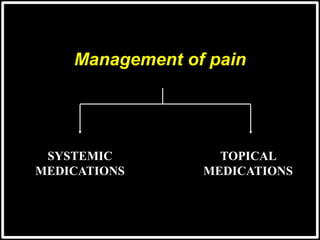
Management of pain
TOPICAL
MEDICATIONS
SYSTEMIC
MEDICATIONS
Analgesic
A drug that selectively relieves pain by acting in the
CNS or on peripheral pain mechanisms, without
significantly altering consciousness
Classesof analgesicdrugs
• Opioid analgesics
• Nonsteroidal anti-inflammatory drugs (NSAIDS)
• Enzyme derived analgesics
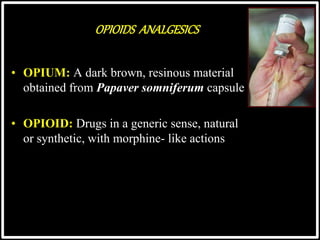
OPIOIDS ANALGESICS
• OPIUM: A dark brown, resinous material
obtained from Papaver somniferum capsule
• OPIOID: Drugs in a generic sense, natural
or synthetic, with morphine- like actions
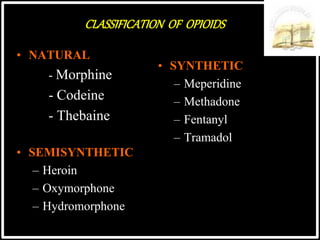
CLASSIFICATION OF OPIOIDS
• NATURAL
- Morphine
- Codeine
- Thebaine
• SEMISYNTHETIC
– Heroin
– Oxymorphone
– Hydromorphone
• SYNTHETIC
– Meperidine
– Methadone
– Fentanyl
– Tramadol
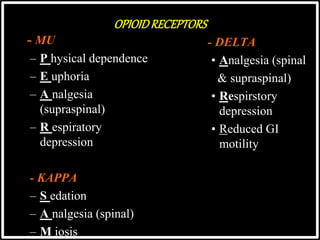
OPIOIDRECEPTORS
- MU
– P hysical dependence
– E uphoria
– A nalgesia
(supraspinal)
– R espiratory
depression
- KAPPA
– S edation
– A nalgesia (spinal)
– M iosis
- DELTA
• Analgesia (spinal
& supraspinal)
• Respirstory
depression
• Reduced GI
motility
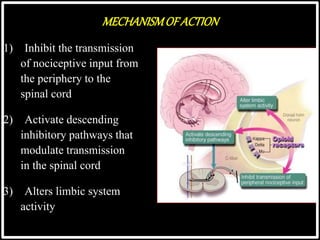
MECHANISMOF ACTION
1) Inhibit the transmission
of nociceptive input from
the periphery to the
spinal cord
2) Activate descending
inhibitory pathways that
modulate transmission
in the spinal cord
3) Alters limbic system
activity
Action Of Morphine
• Analgesia
• Sedation
• Euphoria
• Mood change
• Mental cloudiness
MORHINE
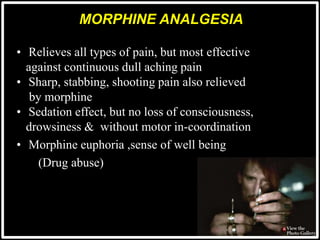
MORPHINE ANALGESIA
• Relieves all types of pain, but most effective
against continuous dull aching pain
• Sharp, stabbing, shooting pain also relieved
by morphine
• Sedation effect, but no loss of consciousness,
drowsiness & without motor in-coordination
• Morphine euphoria ,sense of well being
(Drug abuse)
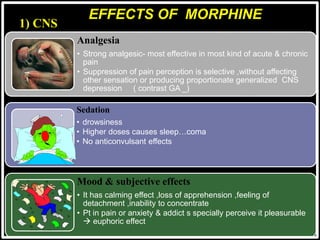
Analgesia
• Strong analgesic- most effective in most kind of acute & chronic
pain
• Suppression of pain perception is selective ,without affecting
other sensation or producing proportionate generalized CNS
depression ( contrast GA _)
Sedation
• drowsiness
• Higher doses causes sleep…coma
• No anticonvulsant effects
Mood & subjective effects
• It has calming effect ,loss of apprehension ,feeling of
detachment ,inability to concentrate
• Pt in pain or anxiety & addict s specially perceive it pleasurable
 euphoric effect
1) CNS
EFFECTS OF MORPHINE
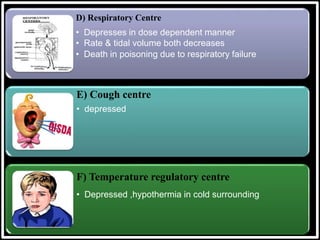
D) Respiratory Centre
• Depresses in dose dependent manner
• Rate & tidal volume both decreases
• Death in poisoning due to respiratory failure
E) Cough centre
• depressed
F) Temperature regulatory centre
• Depressed ,hypothermia in cold surrounding
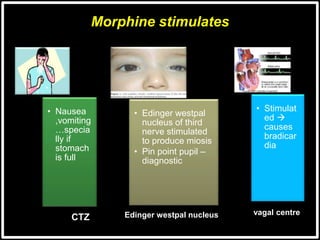
Morphine stimulates
CTZ
• Nausea
,vomiting
…specia
lly if
stomach
is full
Edinger westpal nucleus
• Edinger westpal
nucleus of third
nerve stimulated
to produce miosis
• Pin point pupil –
diagnostic
vagal centre
• Stimulat
ed 
causes
bradicar
dia
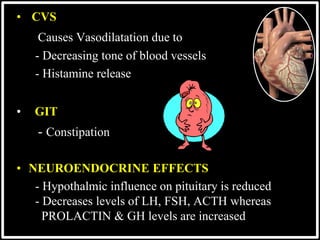
• CVS
Causes Vasodilatation due to
- Decreasing tone of blood vessels
- Histamine release
• GIT
- Constipation
• NEUROENDOCRINE EFFECTS
- Hypothalmic influence on pituitary is reduced
- Decreases levels of LH, FSH, ACTH whereas
PROLACTIN & GH levels are increased
Effects on smooth muscles
• BILIARY TRACT
Marked increase in the pressure in the biliary
tract
• URINARY BLADDER
Have urinary retention difficulty in micturation
• BRONCHIAL MUSCLE
Bronchoconstriction can result. (Asthmatics)
Pharmacokinetics
• Oral absorption-Unreliable
(High First pass Metabolism)
• Primarily metabolised in liver
• Freely crosses the placenta &
can effect the foetus
Adverse effects
• Side effects
• Idiosyncrasy and allergy
• Apnoea
• Acute morhine poisoning
( LD- 250mg )
• Tolerance and dependence
Therapeutic uses of morphine
• As Analgesic (Severe Pain)
• Preanesthetic medications
• Relief of anxiety & apprehension
• Acute pulmonary edema
• Diarrhoea
• Cough
• Obstetrical analgesia
• DOSE: 10-15 mg i.m/ s.c
MORPHINE SULPHATE 10, 15 mg inj
Contraindications
• Bronchial Asthma
• Infants & Elderly
• Head Injury
• Undiagnosed Acute
Abdominal pain.
• Respiratory diseases
(Emphysema, COPD)
CODEINE
• One tenth the potency (analgesic) of
morphine
• More selective COUGH SUPPRESSANT
• Good activity by oral route
• Abuse Liability is low
AVAILABLE : COREX , COMTUS syp.
(10 mg / 5 ml)
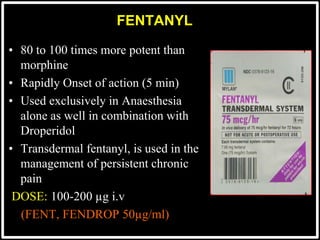
FENTANYL
• 80 to 100 times more potent than
morphine
• Rapidly Onset of action (5 min)
• Used exclusively in Anaesthesia
alone as well in combination with
Droperidol
• Transdermal fentanyl, is used in the
management of persistent chronic
pain
DOSE: 100-200 µg i.v
(FENT, FENDROP 50µg/ml)
TRAMADOL
• Recently introduced Centrally Acting Analgesic
• Has dual Norepinephrine & Serotonin reuptake
inhibitory effects
• 10 times potent than morphine & produces less
adverse effects
• Used to treat osteoarthritis, low back pain,
diabetic neuropathy & cancer pain
DOSE: 50-100 mg oral/ i.v. 4-6 hrly
(CONTRAMAL, DOMADOL)
PETHIDINE (MEPERIDINE)
• Equal analgesic efficacy to morphine & some properties
like Atropine
• Unlike morphine:
- More respiratory depression
- Less histamine release (Safer in ASTHMATICS)
- Less constipation
• Used primarily ANALGESIC (substitute of morphine)
• DOSE : 50-100 mg i.m, s.c/ orally
(PETHIDINE HCL 100mg/ 2ml inj.;50-100mg Tab
• Synthetic opioid with pharmacological activity &
potency same as morphine
• Long duration of activity( PPB >90%)
• Powerful pain reliever
• Used as SUBSTITUTION Therapy of opioid
dependence
DOSE: 10 mg inj. PHYSEPTONE
METHADONE
PENTAZOCINE
• Mixed opioid agonist-antagonist action
• Efficacy lower than morphine
• Useful in Mild-Moderate pain conditions
• Causes Tachycardia & rise in BP (C/I- MI)
• Should not be used in opioid dependent subjects
DOSE: 50-100 mg oral , 30-60 mg i.m /s.c
(FORTWIN, FORTSTAR)
Strategies to minimize opioid side effects
• Slow titration of doses
• Changing the dosing regimen or route of
administration
• Using a Nonopioid Or Adjuvant Analgesic for an
opioid sparing effect
• Adding a drug to counteract the side effect
• Constipation prophylaxis
Pure opioid antagonist
Naloxone
• Competitive antagonist of all type of opioid receptors
• No physical or psychological dependence
• 0.4 -0.8 mg : all action of morphine
• 4-10 mg : action of nalorphine & pentazocine
• Blocks action of endogenous opioid peptides
• Inactive orally ,
• i.v. : 2-3 mins
Uses
• Morphine poisoning , Neonatal asphyxia
Endogenous opioid peptide
• There are 3 distinct families of opioid peptides,
derived from specific polypeptide
1. Endorphins :
• β-END having 31 amino acids, derived from POMC
( Pro-opio-melanocortin)
• Primarily μ agonist but also has δ action
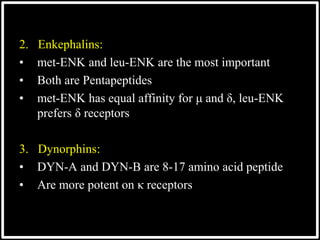
2. Enkephalins:
• met-ENK and leu-ENK are the most important
• Both are Pentapeptides
• met-ENK has equal affinity for μ and δ, leu-ENK
prefers δ receptors
3. Dynorphins:
• DYN-A and DYN-B are 8-17 amino acid peptide
• Are more potent on κ receptors
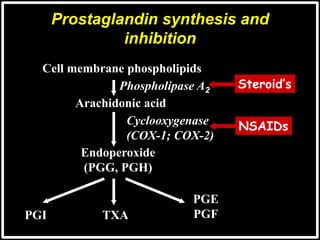
Prostaglandin synthesis and
inhibition
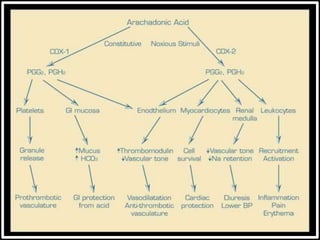
Cell membrane phospholipids
Phospholipase A2
Arachidonic acid
Cyclooxygenase
(COX-1; COX-2)
Endoperoxide
(PGG, PGH)
TXAPGI
PGE
PGF
NSAIDs
Steroid’s
NON-STEROIDAL
ANTI-INFLAMMATORY
DRUGS (NSAIDS)
- Analgesic, Antipyretic & Anti-inflammatory actions.
- Act primarily on Peripheral Pain Receptors
& CNS to raise the pain threshold
- Compared to Morphine
- Weaker analgesics
- Do not depress CNS
- Do not produce physical dependence
& have no abuse liability
INTRODUCTION
CLASSIFICATION
A) NONSELECTIVE COX INHIBITORS
(CONVENTIONAL NSAIDS)
1. Salicylates: Aspirin, Diflunisal
2. Pyrazolone derivatives: Phenylbutazone,
Oxyphenbutazone
3. Indole derivatives: Indomethacin, Sulindac
4. Propionic acid derivatives: Ibuprofen, Naproxen,
Ketoprofen
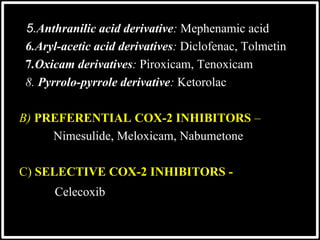
5.Anthranilic acid derivative: Mephenamic acid
6.Aryl-acetic acid derivatives: Diclofenac, Tolmetin
7.Oxicam derivatives: Piroxicam, Tenoxicam
8. Pyrrolo-pyrrole derivative: Ketorolac
B) PREFERENTIAL COX-2 INHIBITORS –
Nimesulide, Meloxicam, Nabumetone
C) SELECTIVE COX-2 INHIBITORS -
Celecoxib
@drashishagg
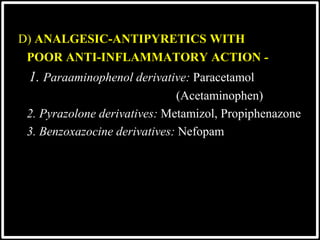
D) ANALGESIC-ANTIPYRETICS WITH
POOR ANTI-INFLAMMATORY ACTION -
1. Paraaminophenol derivative: Paracetamol
(Acetaminophen)
2. Pyrazolone derivatives: Metamizol, Propiphenazone
3. Benzoxazocine derivatives: Nefopam
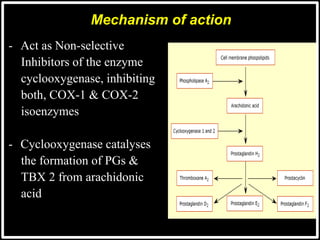
- Act as Non-selective
Inhibitors of the enzyme
cyclooxygenase, inhibiting
both, COX-1 & COX-2
isoenzymes
- Cyclooxygenase catalyses
the formation of PGs &
TBX 2 from arachidonic
acid
Mechanism of action
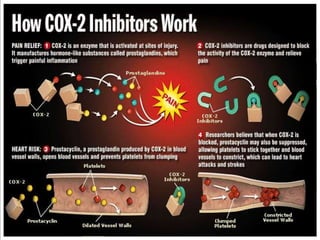
COX-1
- Present as part of everyday physiological function.
- Protects the stomach by limiting acid secretion
- Helps platelets limit bleeding by increasing their
adhesiveness
COX-2
- Its expression is induced by various stimuli such as
the inflammation or at the site of the injury
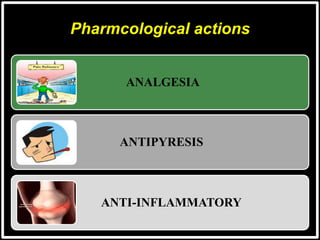
Pharmcological actions
ANALGESIA
ANTIPYRESIS
ANTI-INFLAMMATORY
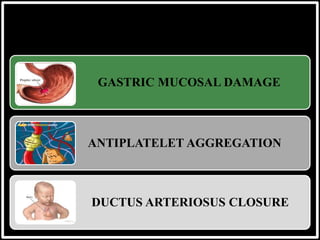
GASTRIC MUCOSAL DAMAGE
ANTIPLATELET AGGREGATION
DUCTUS ARTERIOSUS CLOSURE
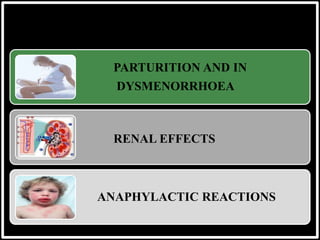
PARTURITION AND IN
DYSMENORRHOEA
RENAL EFFECTS
ANAPHYLACTIC REACTIONS
@drashishagg
ASPIRIN
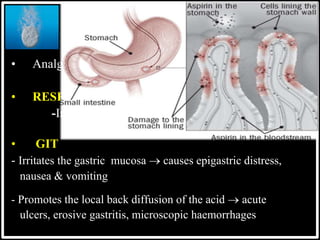
• Analgesic, Antipyretic & Anti-inflammatory Effects.
• RESPIRATORY SYSTEM
-Increases rate & depth.
• GIT
- Irritates the gastric mucosa  causes epigastric distress,
nausea & vomiting
- Promotes the local back diffusion of the acid  acute
ulcers, erosive gastritis, microscopic haemorrhages
SALICYLATES
@drashishagg
• CVS
- No direct effect
- Larger doses increase cardiac output to meet increased
peripheral O2 demand caused by direct vasodilation
• BLOOD
- Inhibits TXA2 synthesis by platelets
- Interferes with Platelet aggregation (BT)
• METABOLIC EFFECTS
- Increased utilization of Glucose, blood sugar may
decrease specially in diabetics
@drashishagg
Pharmacokinetics
- Poor Absorption- Stomach & Small Intestine
- Metabolism- Gut wall, Liver, Plasma & other tissues
to release salicylic acid. Excretion- Urine
Adverse effects
- Nausea,Vomiting, Epigastric distress & occult
blood in stools, rashes, urticaria, asthma, angioedema
- Anti-inflammatory doses – syndrome Salicylism –
dizziness, tinitus, reversible impairment
of hearing & vision, excitement
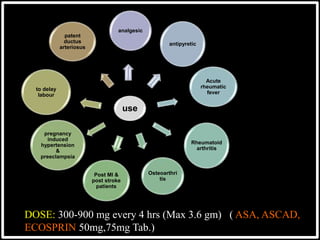
use
analgesic
antipyretic
Acute
rheumatic
fever
Rheumatoid
arthritis
Osteoarthri
tis
Post MI &
post stroke
patients
pregnancy
induced
hypertension
&
preeclampsia
to delay
labour
patent
ductus
arteriosus
DOSE: 300-900 mg every 4 hrs (Max 3.6 gm) ( ASA, ASCAD,
ECOSPRIN 50mg,75mg Tab.)
@drashishagg
PHENYLBUTAZONE
- Potent anti-inflammatory drug.
- Poor analgesic & antipyretic activity
Adverse effects:
- More toxic than Aspirin
- Bone marrow depression, Agranulocytosis
- Banned in some countries
DOSE: 100-200 mg BD or TDS after meals
(ZOLANDIN 100,200 mg Tab)
PYRAZOLONE DERIVATIVES
@drashishagg
INDOMETHACIN
- Potent anti-inflammatory, antipyretic & good
analgesic
- Analgesic action better than PBZ
Adverse effects:
- High incidence of GI & CNS side effects
- C/I in drivers, epileptics, pregnancy & children
Uses:
- Rheumatoid Arthritis not controlled by aspirin
- Acts rapidly in Acute Gout
DOSE: 25-50 mg BD /TDS (INDOCAP, IDICIN)
INDOLE DERIVATIVES
IBUPROFEN
- Analgesic, Antipyretic & Anti-inflammatory activity
is lower than aspirin
- Inhibit platelet aggregation & prolong bleeding time
Adverse effects:
- Better tolerated than aspirin (Incidence is lower)
- Gastric discomfort, nausea & vomiting are most
 common side effects
- Headache, dizziness, blurring of vision, tinnitus
PROPIONIC ACID DERIVATIVES
Pharmacokinetics:
 - Absorbed orally, highly bound to plasma proteins
 (90-99%)
 - Metabolized in liver & excreted in urine & bile
- Enter brain, synovial fluid & cross placenta
Interactions:
- As they inhibit platelet function, use with
 anticoagulants should be avoided
 - Likely to decrease diuretic & antihypertensive action
 of thiazides, furosemide and -blockers
- As Analgesic & Antipyretic
- In Rheumatoid Arthritis, Osteoarthritis & other
Musculoskeletal Disorders, specially where pain is
more prominent than inflammation
- Indicated in soft tissue injuries, fractures, tooth
extraction, supppress swelling & inflammation
DOSE: 400-800 mg TDS
(BRUFEN, EMFLAM, IBUGESIC
200, 400, 600 mg Tab)
Uses
MEPHENAMIC ACID
- An Analgesic, Antipyretic & Anti-inflammatory drug,
- Exerts Peripheral as well as Central Analgesic Action
Adverse effects :
- Diarrhoea
- Epigastric distress is complained, but gut bleeding is
 not significant
ANTHRANILIC ACID DERIVATIVE
@drashishagg
Pharmacokinetics:
- Oral absorption is slow but almost complete
- Partly metabolized & excreted in urine & in bile
Uses:
 - Analgesic in muscle, joint & soft tissue pain where
 strong anti-inflammatory action is not needed (MPDS)
- Useful in rheumatoid & osteoarthritis
DOSE: 250-500 mg TDS
(MEFTAL, PONSTAN, MEDOL
250, 500 mg cap)
• Introduction
• Opioid analgesics –Classification
- Mechanism of action
-Morphine
-Other opioids
-Uses
• Prostaglandin synthesis & inhibition
• NSAIDS - Classification
- Mechanism of action
-Aspirin
-Other NSAIDS
Contents
CLASSIFICATION
A) NONSELECTIVE COX INHIBITORS
(CONVENTIONAL NSAIDS)
1. Salicylates: Aspirin, Diflunisal
2. Pyrazolone derivatives: Phenylbutazone,
Oxyphenbutazone
3. Indole derivatives: Indomethacin, Sulindac
4. Propionic acid derivatives: Ibuprofen, Naproxen,
Ketoprofen
5.Anthranilic acid derivative: Mephenamic acid
6.Aryl-acetic acid derivatives: Diclofenac, Tolmetin
7.Oxicam derivatives: Piroxicam, Tenoxicam
8. Pyrrolo-pyrrole derivative: Ketorolac
B) PREFERENTIAL COX-2 INHIBITORS –
Nimesulide, Meloxicam, Nabumetone
C) SELECTIVE COX-2 INHIBITORS -
Celecoxib
@drashishagg
DICLOFENAC SODIUM
- Analgesic, Antipyretic, Anti-inflammatory action
- Inhibits PG synthesis & has short lasting antiplatelet
 action

Pharmacokinetics:
- Well absorbed orally, metabolized & excreted both
 in urine & bile
- Has good tissue penetrability & conc. in synovial
 fluid is maintained longer period, exerting extended
 therapeutic action in joints
ARYL-ACETICACID DERIVATIVE
@drashishagg
Adverse effects
- Are generally mild: Epigastric pain, nausea,
headache, dizziness, rashes
- Gastric ulceration & bleeding -less common
Uses:
- Most extensively used NSAID
- Rheumatoid & Osteoarthris, post-traumatic
inflammatory conditions - affords quick relief of
pain & wound edema (Dental Extractions)
DOSE: 50 mg TDS, 75 mg i.m
(VOVERAN, DICLONAC, DICLOMAX
(25, 50 mg Tab., 75 mg /3ml inj)
PIROXICAM
 - Long acting potent NSAID with good anti-
 inflammatory, analgesic & antiplatelet action

 - Reversible inhibitor of COX; lowers PG conc. in
 synovial fluid & inhibits platelet aggregation-
 prolonging bleeding time
 - In addition, it decreases the production of IgM
 rheumatoid factor
OXICAM DERIVATIVES
@drashishagg
Pharmacokinetics:
- Rapidly & completed absorbed
- Metabolized in liver & excreted in urine
- Plasma t1/2 is 2 days. So, single daily administration
 is sufficient
Adverse effects:
- Heart burn, nausea & anorexia, but it is tolerated &
less ulcerogenic than PBZ; causes less faecal blood
loss than aspirin
Uses:
- Suitable for use as short term analgesic as well as long
term anti-inflammatory action in –
Rheumatoid & Osteo-arthritis, Ankylosing spondylitis,
acute gout, musculoskeletal injuries, dental pain
DOSE: 20 mg BD for 2 days followed by 20 mg OD
(DOLONEX, PIROX)
10, 20 mg cap)
KETOROLAC
- Potent analgesic & modest anti-inflammatory activity.
- In postoperative pain it has equalled the efficacy of
morphine
- Inhibits PG synthesis & is believed to relieve pain by
a peripheral mechanism
- Rapidly absorbed after oral & i.m. administration
& excreted unchanged in urine
PYRROLO-PYRROLE DERIVATIVE
Adverse effects:
- Nausea, abdominal pain, dyspepsia, ulceration, loose
stools, drowsiness, headache, dizziness, nervousness,
pruritus, pain at injection site
- Rise in serum transaminases & fluid retention have
been noted
Contra-indications:
- Should not be given to patients on the anti-coagulants
Uses:
- In post-operative & acute musculoskeletal pain:
 15-30 mg every 4-6 hours (max. 90 mg/ day)
 - Also for renal colic, migraine & pain due to
 due to bony metastasis
 - Used in a dose of 10-20 mg 6 hourly short term
 management of moderate pain
AVAILABLE : KETOROL, KETANOV (10 mg Tab)
@drashishagg
NIMESULIDE
- Sulfonamide derivative
- Selective inhibitor of PG synthesis & there is
some relative COX-2 selectivity
Uses
 - Short lasting painful inflammatory conditions like
 sports injuries, sinusitis & other ENT disorders,
 dental surgery, bursitis, low backache, Postop pain,
 osteoarthritis & for fever
Preferential COX-2 inhibitors
@drashishagg
Pharmacokinetics:
 - Completely absorbed orally
 - Metabolism-Liver & Excretion- Urine
Adverse effects
- Epigastralgia, heart burn, loose motions
- Dermatological rash, pruritus
- Hepatic failure & Renal failure in neonate (BANNED)
DOSE- 100mg BD
( NIMULID, NIMEGESIC, NIMODOL 100 mg Tab)
- Recently developed preferential COX-2 inhibitor
- Has less analgesic, antipyretic activities, effective
in the treatment of rheumatoid & osteoarthritis as
well as soft tissue injury
- Lower incidence of gastric erosions, ulcers &
bleeding
DOSE: 500 mg OD
(NABUFLAM, NILTIS 500 mg Tab)
NABUMETONE
@drashishagg
• Directly targets COX-2 which is produced at the site
of inflammation
• Selectivity for COX-2 can half the risk of peptic
ulceration
• Cox-2-selectivity might be an increase in the risk for
heart attack, thrombosis & stroke by a relative
increase in thromboxane
Selective COX-2 inhibitors
CELECOXIB, ETORICOXIB,PARECOXIB
Uses-
- Osteoarthritis
 - Rheumatoid arthritis
 - Ankylosing spondylitis
 - For the management of acute pain in adults
Pharmacokinetics:
- Slow absorption
 - Metabolism-Liver & Excretion- Urine
Dose :
- Celecoxib- 100-200 mg BD (CELACT,ZYCEL)
- Etoricoxib- 60-120 mg OD (ETODY,ETOXIB)
- Parecoxib- 40 mg 6-12 hrs (REVALDO,PAROXIB)
Precautions:
- In patient who has clinical signs of liver toxicity or if
systemic manifestations arise, valdecoxib should be
discontinued
- Should be used with caution in patients with CHF or
hypertension since fluid retention & edema can occur
PARACETAMOL (ACETAMINOPHEN)
-- Central Analgesic action is like aspirin, i.e. it raises
- pain threshold, but has weak Anti-inflammatory
- action
- Paracetamol is a good & promptly acting Antipyretic
Para-amino phenol derivatives
Uses:
 -Most commonly used analgesic for Headache,
 Musculoskeletal pain
 - Best drug to be used as Antipyretic
 - Can be used in All Age groups(infants to elderly),
 pregnant/lactating women, & in patients in whom
 aspirin is contraindicated
Adverse effects:
 Safe & Well tolerated, Nausea occur occasionally,
 High doses-Hepatic necrosis
Pharmacokinetics:
Well absorbed orally. Metabolism-Liver
 Excretion in Urine
DOSE- 0.5-1gm TDS 500mg Tab
(CROCIN, PARACIN, METACIN, PYRIGESIC)
@drashishagg
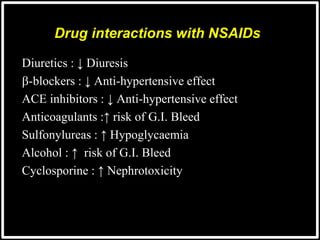
Diuretics : ↓ Diuresis
-blockers : ↓ Anti-hypertensive effect
ACE inhibitors : ↓ Anti-hypertensive effect
Anticoagulants :↑ risk of G.I. Bleed
Sulfonylureas : ↑ Hypoglycaemia
Alcohol : ↑ risk of G.I. Bleed
Cyclosporine : ↑ Nephrotoxicity
Drug interactions with NSAIDs
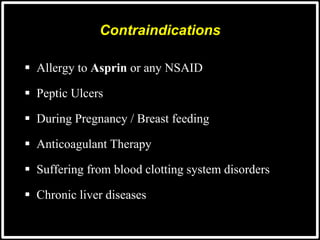
 Allergy to Asprin or any NSAID
 Peptic Ulcers
 During Pregnancy / Breast feeding
 Anticoagulant Therapy
 Suffering from blood clotting system disorders
 Chronic liver diseases
Contraindications
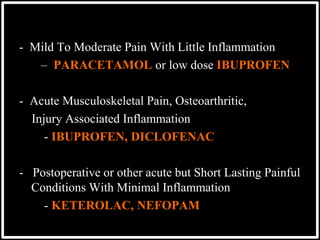
- Mild To Moderate Pain With Little Inflammation
– PARACETAMOL or low dose IBUPROFEN
- Acute Musculoskeletal Pain, Osteoarthritic,
Injury Associated Inflammation
- IBUPROFEN, DICLOFENAC
- Postoperative or other acute but Short Lasting Painful
Conditions With Minimal Inflammation
- KETEROLAC, NEFOPAM
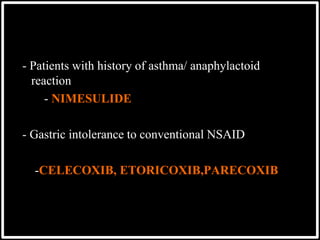
- Patients with history of asthma/ anaphylactoid
reaction
- NIMESULIDE
- Gastric intolerance to conventional NSAID
-CELECOXIB, ETORICOXIB,PARECOXIB
@drashishagg
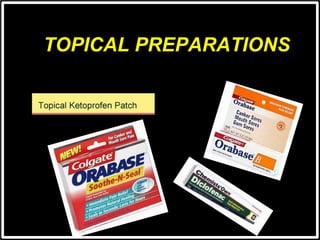
TOPICAL PREPARATIONS
Advantages of topical medications
• Greater safety
• Rapid onset of action
• High concentrations can be attained at desired site
without exposing the rest of the body
• Fewer chances of drug interactions
• Non-invasive
• Better acceptability
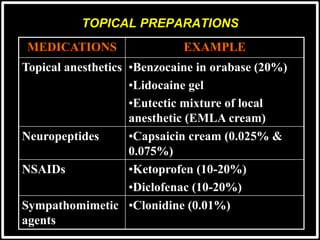
TOPICAL PREPARATIONS
MEDICATIONS EXAMPLE
Topical anesthetics •Benzocaine in orabase (20%)
•Lidocaine gel
•Eutectic mixture of local
anesthetic (EMLA cream)
Neuropeptides •Capsaicin cream (0.025% &
0.075%)
NSAIDs •Ketoprofen (10-20%)
•Diclofenac (10-20%)
Sympathomimetic
agents
•Clonidine (0.01%)
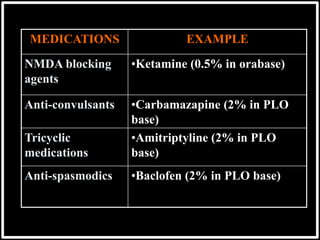
MEDICATIONS EXAMPLE
NMDA blocking
agents
•Ketamine (0.5% in orabase)
Anti-convulsants •Carbamazapine (2% in PLO
base)
Tricyclic
medications
•Amitriptyline (2% in PLO
base)
Anti-spasmodics •Baclofen (2% in PLO base)
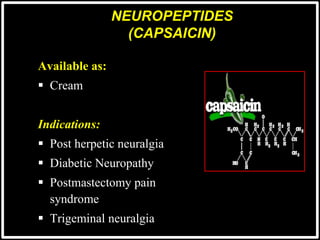
NEUROPEPTIDES
(CAPSAICIN)
Available as:
 Cream
Indications:
 Post herpetic neuralgia
 Diabetic Neuropathy
 Postmastectomy pain
syndrome
 Trigeminal neuralgia
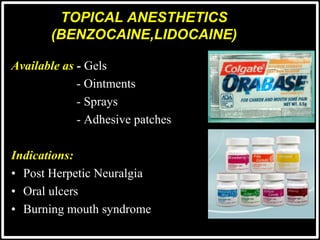
TOPICAL ANESTHETICS
(BENZOCAINE,LIDOCAINE)
Available as - Gels
- Ointments
- Sprays
- Adhesive patches
Indications:
• Post Herpetic Neuralgia
• Oral ulcers
• Burning mouth syndrome
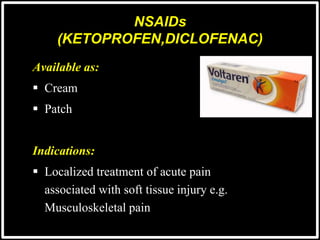
NSAIDs
(KETOPROFEN,DICLOFENAC)
Available as:
 Cream
 Patch
Indications:
 Localized treatment of acute pain
associated with soft tissue injury e.g.
Musculoskeletal pain
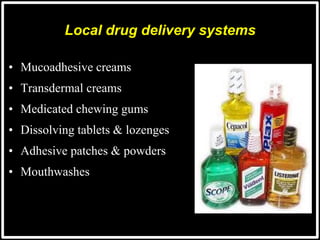
Local drug delivery systems
• Mucoadhesive creams
• Transdermal creams
• Medicated chewing gums
• Dissolving tablets & lozenges
• Adhesive patches & powders
• Mouthwashes
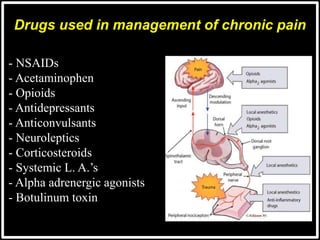
- NSAIDs
- Acetaminophen
- Opioids
- Antidepressants
- Anticonvulsants
- Neuroleptics
- Corticosteroids
- Systemic L. A.’s
- Alpha adrenergic agonists
- Botulinum toxin
Drugs used in management of chronic pain
Analgesics in pregnancy
• Acetaminophen
-Most Useful
-Any Stage
• Morphine
• Meperidine
• Aspirin (Not in 3rd trim.)
• Ibuprofen (Not in 3rd trim.)
• Pentazocine (With Caution)
NSAIDS as host modulating agent in
periodontal disease
In vitro model
The first evidence that NSAIDs block PG production in
gingival tissue ( Gomes & co workers in 1976 )
He demonstrated that inflamed gingival fragment taken
from monkey, release PG in culture medium ,&
indomethacin reduced the PG production by 90 %
• NSAIDS block PGE2 production , thereby reducing
inflammation & inhibiting osteoclast activity in
periodontal tissue
• Studies have shown that systemic NSAIDS such as
indomethacin, flurbiprofen & naproxen administered
daily for upto 3 yrs significantly slowed the rate of
alveolar bone loss compared with placebo
• However daily administration for extended period is
necessary for periodontal benefits
• NSAIDS are associated with severe side effects
• Research shows that periodontal benefits of taking
long term NSAIDS are lost when patient stops taking
drug
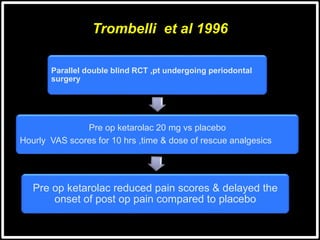
Trombelli et al 1996
Parallel double blind RCT ,pt undergoing periodontal
surgery
Pre op ketarolac 20 mg vs placebo
Hourly VAS scores for 10 hrs ,time & dose of rescue analgesics
Pre op ketarolac reduced pain scores & delayed the
onset of post op pain compared to placebo
• Sakuma et al+ and Miyaura et al* - IL-1α, TNF- α,
lipopolysaccharide, and basic fibroblast growth factor
failed to induce osteoclast formation in EP4- deficient
mice cultures
• Suggesting that osteoclast formation is mediated by
EP4 receptors by PGE2, which was produced through
COX-2
+ J Bone Miner Res 2000:15:218-227
*J Biol Chem 2000:275: 19819-19823
CONCLUSION
• Analgesics are definitely useful in reducing
pain & improving the quality of life but have
their own spectrum of adverse effects.
• No single drug is superior to all others for
every patient. Choice of drug is inescapably
empirical.
• Essentials of Medical Pharmacology
- K.D.TRIPATHI (6th Ed.)
• Drugs, Diseases and the Periodontium
-Robin A. Seymour and Peter A. Heasman
• Pharmacology
- DALE,RANG AND RITTER (4th Ed.)
• The role of COX-2 and prostaglandin E2 in periodontal
diseases periodontology 2000,vol.40,2006,144-163
• Dental Therapeutic Update October 2002
THANK YOU
analgesics and dentistry

analgesics and dentistry

  • 2.
  • 3.
    • Introduction • Opioidanalgesics –Classification - Mechanism of action -Morphine -Other opioids -Uses • Prostaglandin synthesis & inhibition • NSAIDS - Classification - Mechanism of action -Aspirin -Other NSAIDS Contents
  • 4.
    • Topical analgesics •Enzyme derived analgesics • NSAIDS as host modulating agent in periodontal disease • References
  • 5.
    PAIN An unpleasant sensory& emotional experience associated with actual or potential tissue damage, or described in terms of such damage -IASP
  • 6.
  • 7.
    Analgesic A drug thatselectively relieves pain by acting in the CNS or on peripheral pain mechanisms, without significantly altering consciousness
  • 8.
    Classesof analgesicdrugs • Opioidanalgesics • Nonsteroidal anti-inflammatory drugs (NSAIDS) • Enzyme derived analgesics
  • 9.
    OPIOIDS ANALGESICS • OPIUM:A dark brown, resinous material obtained from Papaver somniferum capsule • OPIOID: Drugs in a generic sense, natural or synthetic, with morphine- like actions
  • 10.
    CLASSIFICATION OF OPIOIDS •NATURAL - Morphine - Codeine - Thebaine • SEMISYNTHETIC – Heroin – Oxymorphone – Hydromorphone • SYNTHETIC – Meperidine – Methadone – Fentanyl – Tramadol
  • 11.
    OPIOIDRECEPTORS - MU – Physical dependence – E uphoria – A nalgesia (supraspinal) – R espiratory depression - KAPPA – S edation – A nalgesia (spinal) – M iosis - DELTA • Analgesia (spinal & supraspinal) • Respirstory depression • Reduced GI motility
  • 12.
    MECHANISMOF ACTION 1) Inhibitthe transmission of nociceptive input from the periphery to the spinal cord 2) Activate descending inhibitory pathways that modulate transmission in the spinal cord 3) Alters limbic system activity
  • 13.
    Action Of Morphine •Analgesia • Sedation • Euphoria • Mood change • Mental cloudiness MORHINE
  • 14.
    MORPHINE ANALGESIA • Relievesall types of pain, but most effective against continuous dull aching pain • Sharp, stabbing, shooting pain also relieved by morphine • Sedation effect, but no loss of consciousness, drowsiness & without motor in-coordination • Morphine euphoria ,sense of well being (Drug abuse)
  • 15.
    Analgesia • Strong analgesic-most effective in most kind of acute & chronic pain • Suppression of pain perception is selective ,without affecting other sensation or producing proportionate generalized CNS depression ( contrast GA _) Sedation • drowsiness • Higher doses causes sleep…coma • No anticonvulsant effects Mood & subjective effects • It has calming effect ,loss of apprehension ,feeling of detachment ,inability to concentrate • Pt in pain or anxiety & addict s specially perceive it pleasurable  euphoric effect 1) CNS EFFECTS OF MORPHINE
  • 16.
    D) Respiratory Centre •Depresses in dose dependent manner • Rate & tidal volume both decreases • Death in poisoning due to respiratory failure E) Cough centre • depressed F) Temperature regulatory centre • Depressed ,hypothermia in cold surrounding
  • 17.
    Morphine stimulates CTZ • Nausea ,vomiting …specia llyif stomach is full Edinger westpal nucleus • Edinger westpal nucleus of third nerve stimulated to produce miosis • Pin point pupil – diagnostic vagal centre • Stimulat ed  causes bradicar dia
  • 18.
    • CVS Causes Vasodilatationdue to - Decreasing tone of blood vessels - Histamine release • GIT - Constipation • NEUROENDOCRINE EFFECTS - Hypothalmic influence on pituitary is reduced - Decreases levels of LH, FSH, ACTH whereas PROLACTIN & GH levels are increased
  • 19.
    Effects on smoothmuscles • BILIARY TRACT Marked increase in the pressure in the biliary tract • URINARY BLADDER Have urinary retention difficulty in micturation • BRONCHIAL MUSCLE Bronchoconstriction can result. (Asthmatics)
  • 20.
    Pharmacokinetics • Oral absorption-Unreliable (HighFirst pass Metabolism) • Primarily metabolised in liver • Freely crosses the placenta & can effect the foetus
  • 21.
    Adverse effects • Sideeffects • Idiosyncrasy and allergy • Apnoea • Acute morhine poisoning ( LD- 250mg ) • Tolerance and dependence
  • 22.
    Therapeutic uses ofmorphine • As Analgesic (Severe Pain) • Preanesthetic medications • Relief of anxiety & apprehension • Acute pulmonary edema • Diarrhoea • Cough • Obstetrical analgesia • DOSE: 10-15 mg i.m/ s.c MORPHINE SULPHATE 10, 15 mg inj
  • 23.
    Contraindications • Bronchial Asthma •Infants & Elderly • Head Injury • Undiagnosed Acute Abdominal pain. • Respiratory diseases (Emphysema, COPD)
  • 24.
    CODEINE • One tenththe potency (analgesic) of morphine • More selective COUGH SUPPRESSANT • Good activity by oral route • Abuse Liability is low AVAILABLE : COREX , COMTUS syp. (10 mg / 5 ml)
  • 25.
    FENTANYL • 80 to100 times more potent than morphine • Rapidly Onset of action (5 min) • Used exclusively in Anaesthesia alone as well in combination with Droperidol • Transdermal fentanyl, is used in the management of persistent chronic pain DOSE: 100-200 µg i.v (FENT, FENDROP 50µg/ml)
  • 26.
    TRAMADOL • Recently introducedCentrally Acting Analgesic • Has dual Norepinephrine & Serotonin reuptake inhibitory effects • 10 times potent than morphine & produces less adverse effects • Used to treat osteoarthritis, low back pain, diabetic neuropathy & cancer pain DOSE: 50-100 mg oral/ i.v. 4-6 hrly (CONTRAMAL, DOMADOL)
  • 27.
    PETHIDINE (MEPERIDINE) • Equalanalgesic efficacy to morphine & some properties like Atropine • Unlike morphine: - More respiratory depression - Less histamine release (Safer in ASTHMATICS) - Less constipation • Used primarily ANALGESIC (substitute of morphine) • DOSE : 50-100 mg i.m, s.c/ orally (PETHIDINE HCL 100mg/ 2ml inj.;50-100mg Tab
  • 28.
    • Synthetic opioidwith pharmacological activity & potency same as morphine • Long duration of activity( PPB >90%) • Powerful pain reliever • Used as SUBSTITUTION Therapy of opioid dependence DOSE: 10 mg inj. PHYSEPTONE METHADONE
  • 29.
    PENTAZOCINE • Mixed opioidagonist-antagonist action • Efficacy lower than morphine • Useful in Mild-Moderate pain conditions • Causes Tachycardia & rise in BP (C/I- MI) • Should not be used in opioid dependent subjects DOSE: 50-100 mg oral , 30-60 mg i.m /s.c (FORTWIN, FORTSTAR)
  • 30.
    Strategies to minimizeopioid side effects • Slow titration of doses • Changing the dosing regimen or route of administration • Using a Nonopioid Or Adjuvant Analgesic for an opioid sparing effect • Adding a drug to counteract the side effect • Constipation prophylaxis
  • 31.
    Pure opioid antagonist Naloxone •Competitive antagonist of all type of opioid receptors • No physical or psychological dependence • 0.4 -0.8 mg : all action of morphine • 4-10 mg : action of nalorphine & pentazocine • Blocks action of endogenous opioid peptides • Inactive orally , • i.v. : 2-3 mins Uses • Morphine poisoning , Neonatal asphyxia
  • 32.
    Endogenous opioid peptide •There are 3 distinct families of opioid peptides, derived from specific polypeptide 1. Endorphins : • β-END having 31 amino acids, derived from POMC ( Pro-opio-melanocortin) • Primarily μ agonist but also has δ action
  • 33.
    2. Enkephalins: • met-ENKand leu-ENK are the most important • Both are Pentapeptides • met-ENK has equal affinity for μ and δ, leu-ENK prefers δ receptors 3. Dynorphins: • DYN-A and DYN-B are 8-17 amino acid peptide • Are more potent on κ receptors
  • 34.
    Prostaglandin synthesis and inhibition Cellmembrane phospholipids Phospholipase A2 Arachidonic acid Cyclooxygenase (COX-1; COX-2) Endoperoxide (PGG, PGH) TXAPGI PGE PGF NSAIDs Steroid’s
  • 36.
  • 37.
    - Analgesic, Antipyretic& Anti-inflammatory actions. - Act primarily on Peripheral Pain Receptors & CNS to raise the pain threshold - Compared to Morphine - Weaker analgesics - Do not depress CNS - Do not produce physical dependence & have no abuse liability INTRODUCTION
  • 38.
    CLASSIFICATION A) NONSELECTIVE COXINHIBITORS (CONVENTIONAL NSAIDS) 1. Salicylates: Aspirin, Diflunisal 2. Pyrazolone derivatives: Phenylbutazone, Oxyphenbutazone 3. Indole derivatives: Indomethacin, Sulindac 4. Propionic acid derivatives: Ibuprofen, Naproxen, Ketoprofen
  • 39.
    5.Anthranilic acid derivative:Mephenamic acid 6.Aryl-acetic acid derivatives: Diclofenac, Tolmetin 7.Oxicam derivatives: Piroxicam, Tenoxicam 8. Pyrrolo-pyrrole derivative: Ketorolac B) PREFERENTIAL COX-2 INHIBITORS – Nimesulide, Meloxicam, Nabumetone C) SELECTIVE COX-2 INHIBITORS - Celecoxib
  • 40.
    @drashishagg D) ANALGESIC-ANTIPYRETICS WITH POORANTI-INFLAMMATORY ACTION - 1. Paraaminophenol derivative: Paracetamol (Acetaminophen) 2. Pyrazolone derivatives: Metamizol, Propiphenazone 3. Benzoxazocine derivatives: Nefopam
  • 41.
    - Act asNon-selective Inhibitors of the enzyme cyclooxygenase, inhibiting both, COX-1 & COX-2 isoenzymes - Cyclooxygenase catalyses the formation of PGs & TBX 2 from arachidonic acid Mechanism of action
  • 42.
    COX-1 - Present aspart of everyday physiological function. - Protects the stomach by limiting acid secretion - Helps platelets limit bleeding by increasing their adhesiveness COX-2 - Its expression is induced by various stimuli such as the inflammation or at the site of the injury
  • 43.
  • 44.
    GASTRIC MUCOSAL DAMAGE ANTIPLATELETAGGREGATION DUCTUS ARTERIOSUS CLOSURE
  • 45.
    PARTURITION AND IN DYSMENORRHOEA RENALEFFECTS ANAPHYLACTIC REACTIONS
  • 46.
    @drashishagg ASPIRIN • Analgesic, Antipyretic& Anti-inflammatory Effects. • RESPIRATORY SYSTEM -Increases rate & depth. • GIT - Irritates the gastric mucosa  causes epigastric distress, nausea & vomiting - Promotes the local back diffusion of the acid  acute ulcers, erosive gastritis, microscopic haemorrhages SALICYLATES
  • 47.
    @drashishagg • CVS - Nodirect effect - Larger doses increase cardiac output to meet increased peripheral O2 demand caused by direct vasodilation • BLOOD - Inhibits TXA2 synthesis by platelets - Interferes with Platelet aggregation (BT) • METABOLIC EFFECTS - Increased utilization of Glucose, blood sugar may decrease specially in diabetics
  • 48.
    @drashishagg Pharmacokinetics - Poor Absorption-Stomach & Small Intestine - Metabolism- Gut wall, Liver, Plasma & other tissues to release salicylic acid. Excretion- Urine Adverse effects - Nausea,Vomiting, Epigastric distress & occult blood in stools, rashes, urticaria, asthma, angioedema - Anti-inflammatory doses – syndrome Salicylism – dizziness, tinitus, reversible impairment of hearing & vision, excitement
  • 49.
    use analgesic antipyretic Acute rheumatic fever Rheumatoid arthritis Osteoarthri tis Post MI & poststroke patients pregnancy induced hypertension & preeclampsia to delay labour patent ductus arteriosus DOSE: 300-900 mg every 4 hrs (Max 3.6 gm) ( ASA, ASCAD, ECOSPRIN 50mg,75mg Tab.)
  • 50.
    @drashishagg PHENYLBUTAZONE - Potent anti-inflammatorydrug. - Poor analgesic & antipyretic activity Adverse effects: - More toxic than Aspirin - Bone marrow depression, Agranulocytosis - Banned in some countries DOSE: 100-200 mg BD or TDS after meals (ZOLANDIN 100,200 mg Tab) PYRAZOLONE DERIVATIVES
  • 51.
    @drashishagg INDOMETHACIN - Potent anti-inflammatory,antipyretic & good analgesic - Analgesic action better than PBZ Adverse effects: - High incidence of GI & CNS side effects - C/I in drivers, epileptics, pregnancy & children Uses: - Rheumatoid Arthritis not controlled by aspirin - Acts rapidly in Acute Gout DOSE: 25-50 mg BD /TDS (INDOCAP, IDICIN) INDOLE DERIVATIVES
  • 52.
    IBUPROFEN - Analgesic, Antipyretic& Anti-inflammatory activity is lower than aspirin - Inhibit platelet aggregation & prolong bleeding time Adverse effects: - Better tolerated than aspirin (Incidence is lower) - Gastric discomfort, nausea & vomiting are most  common side effects - Headache, dizziness, blurring of vision, tinnitus PROPIONIC ACID DERIVATIVES
  • 53.
    Pharmacokinetics:  - Absorbedorally, highly bound to plasma proteins  (90-99%)  - Metabolized in liver & excreted in urine & bile - Enter brain, synovial fluid & cross placenta Interactions: - As they inhibit platelet function, use with  anticoagulants should be avoided  - Likely to decrease diuretic & antihypertensive action  of thiazides, furosemide and -blockers
  • 54.
    - As Analgesic& Antipyretic - In Rheumatoid Arthritis, Osteoarthritis & other Musculoskeletal Disorders, specially where pain is more prominent than inflammation - Indicated in soft tissue injuries, fractures, tooth extraction, supppress swelling & inflammation DOSE: 400-800 mg TDS (BRUFEN, EMFLAM, IBUGESIC 200, 400, 600 mg Tab) Uses
  • 55.
    MEPHENAMIC ACID - AnAnalgesic, Antipyretic & Anti-inflammatory drug, - Exerts Peripheral as well as Central Analgesic Action Adverse effects : - Diarrhoea - Epigastric distress is complained, but gut bleeding is  not significant ANTHRANILIC ACID DERIVATIVE
  • 56.
    @drashishagg Pharmacokinetics: - Oral absorptionis slow but almost complete - Partly metabolized & excreted in urine & in bile Uses:  - Analgesic in muscle, joint & soft tissue pain where  strong anti-inflammatory action is not needed (MPDS) - Useful in rheumatoid & osteoarthritis DOSE: 250-500 mg TDS (MEFTAL, PONSTAN, MEDOL 250, 500 mg cap)
  • 58.
    • Introduction • Opioidanalgesics –Classification - Mechanism of action -Morphine -Other opioids -Uses • Prostaglandin synthesis & inhibition • NSAIDS - Classification - Mechanism of action -Aspirin -Other NSAIDS Contents
  • 59.
    CLASSIFICATION A) NONSELECTIVE COXINHIBITORS (CONVENTIONAL NSAIDS) 1. Salicylates: Aspirin, Diflunisal 2. Pyrazolone derivatives: Phenylbutazone, Oxyphenbutazone 3. Indole derivatives: Indomethacin, Sulindac 4. Propionic acid derivatives: Ibuprofen, Naproxen, Ketoprofen
  • 60.
    5.Anthranilic acid derivative:Mephenamic acid 6.Aryl-acetic acid derivatives: Diclofenac, Tolmetin 7.Oxicam derivatives: Piroxicam, Tenoxicam 8. Pyrrolo-pyrrole derivative: Ketorolac B) PREFERENTIAL COX-2 INHIBITORS – Nimesulide, Meloxicam, Nabumetone C) SELECTIVE COX-2 INHIBITORS - Celecoxib
  • 61.
    @drashishagg DICLOFENAC SODIUM - Analgesic,Antipyretic, Anti-inflammatory action - Inhibits PG synthesis & has short lasting antiplatelet  action  Pharmacokinetics: - Well absorbed orally, metabolized & excreted both  in urine & bile - Has good tissue penetrability & conc. in synovial  fluid is maintained longer period, exerting extended  therapeutic action in joints ARYL-ACETICACID DERIVATIVE
  • 62.
    @drashishagg Adverse effects - Aregenerally mild: Epigastric pain, nausea, headache, dizziness, rashes - Gastric ulceration & bleeding -less common Uses: - Most extensively used NSAID - Rheumatoid & Osteoarthris, post-traumatic inflammatory conditions - affords quick relief of pain & wound edema (Dental Extractions) DOSE: 50 mg TDS, 75 mg i.m (VOVERAN, DICLONAC, DICLOMAX (25, 50 mg Tab., 75 mg /3ml inj)
  • 63.
    PIROXICAM  - Longacting potent NSAID with good anti-  inflammatory, analgesic & antiplatelet action   - Reversible inhibitor of COX; lowers PG conc. in  synovial fluid & inhibits platelet aggregation-  prolonging bleeding time  - In addition, it decreases the production of IgM  rheumatoid factor OXICAM DERIVATIVES
  • 64.
    @drashishagg Pharmacokinetics: - Rapidly &completed absorbed - Metabolized in liver & excreted in urine - Plasma t1/2 is 2 days. So, single daily administration  is sufficient Adverse effects: - Heart burn, nausea & anorexia, but it is tolerated & less ulcerogenic than PBZ; causes less faecal blood loss than aspirin
  • 65.
    Uses: - Suitable foruse as short term analgesic as well as long term anti-inflammatory action in – Rheumatoid & Osteo-arthritis, Ankylosing spondylitis, acute gout, musculoskeletal injuries, dental pain DOSE: 20 mg BD for 2 days followed by 20 mg OD (DOLONEX, PIROX) 10, 20 mg cap)
  • 66.
    KETOROLAC - Potent analgesic& modest anti-inflammatory activity. - In postoperative pain it has equalled the efficacy of morphine - Inhibits PG synthesis & is believed to relieve pain by a peripheral mechanism - Rapidly absorbed after oral & i.m. administration & excreted unchanged in urine PYRROLO-PYRROLE DERIVATIVE
  • 67.
    Adverse effects: - Nausea,abdominal pain, dyspepsia, ulceration, loose stools, drowsiness, headache, dizziness, nervousness, pruritus, pain at injection site - Rise in serum transaminases & fluid retention have been noted Contra-indications: - Should not be given to patients on the anti-coagulants
  • 68.
    Uses: - In post-operative& acute musculoskeletal pain:  15-30 mg every 4-6 hours (max. 90 mg/ day)  - Also for renal colic, migraine & pain due to  due to bony metastasis  - Used in a dose of 10-20 mg 6 hourly short term  management of moderate pain AVAILABLE : KETOROL, KETANOV (10 mg Tab)
  • 69.
    @drashishagg NIMESULIDE - Sulfonamide derivative -Selective inhibitor of PG synthesis & there is some relative COX-2 selectivity Uses  - Short lasting painful inflammatory conditions like  sports injuries, sinusitis & other ENT disorders,  dental surgery, bursitis, low backache, Postop pain,  osteoarthritis & for fever Preferential COX-2 inhibitors
  • 70.
    @drashishagg Pharmacokinetics:  - Completelyabsorbed orally  - Metabolism-Liver & Excretion- Urine Adverse effects - Epigastralgia, heart burn, loose motions - Dermatological rash, pruritus - Hepatic failure & Renal failure in neonate (BANNED) DOSE- 100mg BD ( NIMULID, NIMEGESIC, NIMODOL 100 mg Tab)
  • 71.
    - Recently developedpreferential COX-2 inhibitor - Has less analgesic, antipyretic activities, effective in the treatment of rheumatoid & osteoarthritis as well as soft tissue injury - Lower incidence of gastric erosions, ulcers & bleeding DOSE: 500 mg OD (NABUFLAM, NILTIS 500 mg Tab) NABUMETONE
  • 72.
    @drashishagg • Directly targetsCOX-2 which is produced at the site of inflammation • Selectivity for COX-2 can half the risk of peptic ulceration • Cox-2-selectivity might be an increase in the risk for heart attack, thrombosis & stroke by a relative increase in thromboxane Selective COX-2 inhibitors CELECOXIB, ETORICOXIB,PARECOXIB
  • 73.
    Uses- - Osteoarthritis  -Rheumatoid arthritis  - Ankylosing spondylitis  - For the management of acute pain in adults Pharmacokinetics: - Slow absorption  - Metabolism-Liver & Excretion- Urine
  • 74.
    Dose : - Celecoxib-100-200 mg BD (CELACT,ZYCEL) - Etoricoxib- 60-120 mg OD (ETODY,ETOXIB) - Parecoxib- 40 mg 6-12 hrs (REVALDO,PAROXIB) Precautions: - In patient who has clinical signs of liver toxicity or if systemic manifestations arise, valdecoxib should be discontinued - Should be used with caution in patients with CHF or hypertension since fluid retention & edema can occur
  • 76.
    PARACETAMOL (ACETAMINOPHEN) -- CentralAnalgesic action is like aspirin, i.e. it raises - pain threshold, but has weak Anti-inflammatory - action - Paracetamol is a good & promptly acting Antipyretic Para-amino phenol derivatives
  • 77.
    Uses:  -Most commonlyused analgesic for Headache,  Musculoskeletal pain  - Best drug to be used as Antipyretic  - Can be used in All Age groups(infants to elderly),  pregnant/lactating women, & in patients in whom  aspirin is contraindicated Adverse effects:  Safe & Well tolerated, Nausea occur occasionally,  High doses-Hepatic necrosis
  • 78.
    Pharmacokinetics: Well absorbed orally.Metabolism-Liver  Excretion in Urine DOSE- 0.5-1gm TDS 500mg Tab (CROCIN, PARACIN, METACIN, PYRIGESIC)
  • 79.
    @drashishagg Diuretics : ↓Diuresis -blockers : ↓ Anti-hypertensive effect ACE inhibitors : ↓ Anti-hypertensive effect Anticoagulants :↑ risk of G.I. Bleed Sulfonylureas : ↑ Hypoglycaemia Alcohol : ↑ risk of G.I. Bleed Cyclosporine : ↑ Nephrotoxicity Drug interactions with NSAIDs
  • 80.
     Allergy toAsprin or any NSAID  Peptic Ulcers  During Pregnancy / Breast feeding  Anticoagulant Therapy  Suffering from blood clotting system disorders  Chronic liver diseases Contraindications
  • 81.
    - Mild ToModerate Pain With Little Inflammation – PARACETAMOL or low dose IBUPROFEN - Acute Musculoskeletal Pain, Osteoarthritic, Injury Associated Inflammation - IBUPROFEN, DICLOFENAC - Postoperative or other acute but Short Lasting Painful Conditions With Minimal Inflammation - KETEROLAC, NEFOPAM
  • 82.
    - Patients withhistory of asthma/ anaphylactoid reaction - NIMESULIDE - Gastric intolerance to conventional NSAID -CELECOXIB, ETORICOXIB,PARECOXIB
  • 83.
  • 84.
    Advantages of topicalmedications • Greater safety • Rapid onset of action • High concentrations can be attained at desired site without exposing the rest of the body • Fewer chances of drug interactions • Non-invasive • Better acceptability
  • 85.
    TOPICAL PREPARATIONS MEDICATIONS EXAMPLE Topicalanesthetics •Benzocaine in orabase (20%) •Lidocaine gel •Eutectic mixture of local anesthetic (EMLA cream) Neuropeptides •Capsaicin cream (0.025% & 0.075%) NSAIDs •Ketoprofen (10-20%) •Diclofenac (10-20%) Sympathomimetic agents •Clonidine (0.01%)
  • 86.
    MEDICATIONS EXAMPLE NMDA blocking agents •Ketamine(0.5% in orabase) Anti-convulsants •Carbamazapine (2% in PLO base) Tricyclic medications •Amitriptyline (2% in PLO base) Anti-spasmodics •Baclofen (2% in PLO base)
  • 87.
    NEUROPEPTIDES (CAPSAICIN) Available as:  Cream Indications: Post herpetic neuralgia  Diabetic Neuropathy  Postmastectomy pain syndrome  Trigeminal neuralgia
  • 88.
    TOPICAL ANESTHETICS (BENZOCAINE,LIDOCAINE) Available as- Gels - Ointments - Sprays - Adhesive patches Indications: • Post Herpetic Neuralgia • Oral ulcers • Burning mouth syndrome
  • 89.
    NSAIDs (KETOPROFEN,DICLOFENAC) Available as:  Cream Patch Indications:  Localized treatment of acute pain associated with soft tissue injury e.g. Musculoskeletal pain
  • 90.
    Local drug deliverysystems • Mucoadhesive creams • Transdermal creams • Medicated chewing gums • Dissolving tablets & lozenges • Adhesive patches & powders • Mouthwashes
  • 91.
    - NSAIDs - Acetaminophen -Opioids - Antidepressants - Anticonvulsants - Neuroleptics - Corticosteroids - Systemic L. A.’s - Alpha adrenergic agonists - Botulinum toxin Drugs used in management of chronic pain
  • 92.
    Analgesics in pregnancy •Acetaminophen -Most Useful -Any Stage • Morphine • Meperidine • Aspirin (Not in 3rd trim.) • Ibuprofen (Not in 3rd trim.) • Pentazocine (With Caution)
  • 93.
    NSAIDS as hostmodulating agent in periodontal disease In vitro model The first evidence that NSAIDs block PG production in gingival tissue ( Gomes & co workers in 1976 ) He demonstrated that inflamed gingival fragment taken from monkey, release PG in culture medium ,& indomethacin reduced the PG production by 90 %
  • 94.
    • NSAIDS blockPGE2 production , thereby reducing inflammation & inhibiting osteoclast activity in periodontal tissue • Studies have shown that systemic NSAIDS such as indomethacin, flurbiprofen & naproxen administered daily for upto 3 yrs significantly slowed the rate of alveolar bone loss compared with placebo • However daily administration for extended period is necessary for periodontal benefits
  • 95.
    • NSAIDS areassociated with severe side effects • Research shows that periodontal benefits of taking long term NSAIDS are lost when patient stops taking drug
  • 96.
    Trombelli et al1996 Parallel double blind RCT ,pt undergoing periodontal surgery Pre op ketarolac 20 mg vs placebo Hourly VAS scores for 10 hrs ,time & dose of rescue analgesics Pre op ketarolac reduced pain scores & delayed the onset of post op pain compared to placebo
  • 97.
    • Sakuma etal+ and Miyaura et al* - IL-1α, TNF- α, lipopolysaccharide, and basic fibroblast growth factor failed to induce osteoclast formation in EP4- deficient mice cultures • Suggesting that osteoclast formation is mediated by EP4 receptors by PGE2, which was produced through COX-2 + J Bone Miner Res 2000:15:218-227 *J Biol Chem 2000:275: 19819-19823
  • 98.
    CONCLUSION • Analgesics aredefinitely useful in reducing pain & improving the quality of life but have their own spectrum of adverse effects. • No single drug is superior to all others for every patient. Choice of drug is inescapably empirical.
  • 99.
    • Essentials ofMedical Pharmacology - K.D.TRIPATHI (6th Ed.) • Drugs, Diseases and the Periodontium -Robin A. Seymour and Peter A. Heasman • Pharmacology - DALE,RANG AND RITTER (4th Ed.) • The role of COX-2 and prostaglandin E2 in periodontal diseases periodontology 2000,vol.40,2006,144-163 • Dental Therapeutic Update October 2002
  • 100.