1 
PROTEIN BASED NANO 
MACHINES FOR SPACE 
APPLICATIONS 
Dr. Constantinos Mavroidis, Associate Professor 
Department of Mechanical and Aerospace Engineering 
Rutgers, The State University of New Jersey 
NIAC Phase I Grant
2 
THE TEAM 
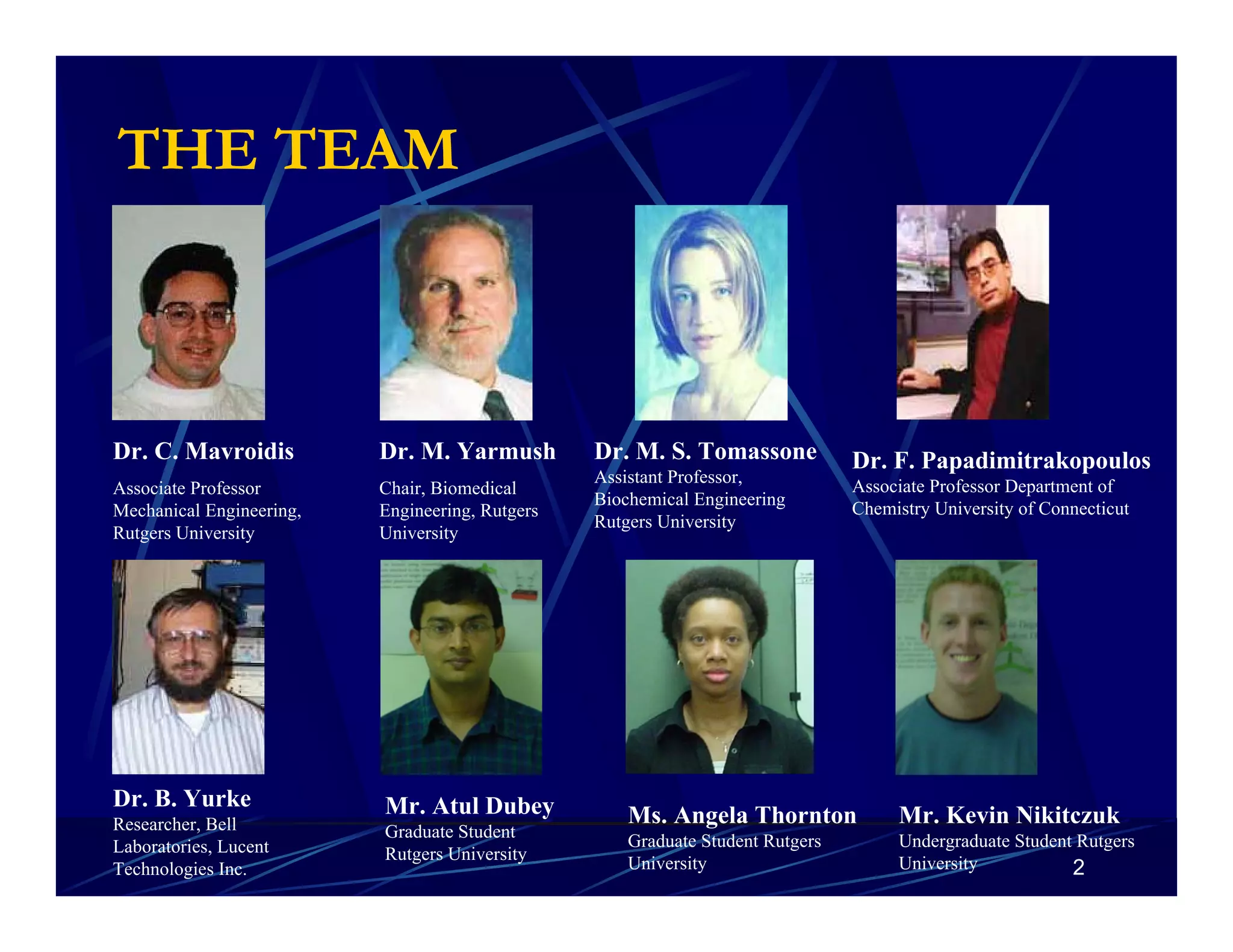
Dr. C. Mavroidis 
Associate Professor 
Mechanical Engineering, 
Rutgers University 
Dr. M. Yarmush 
Chair, Biomedical 
Engineering, Rutgers 
University 
Dr. M. S. Tomassone 
Assistant Professor, 
Biochemical Engineering 
Rutgers University 
Dr. F. Papadimitrakopoulos 
Associate Professor Department of 
Chemistry University of Connecticut 
Dr. B. Yurke 
Researcher, Bell 
Laboratories, Lucent 
Technologies Inc. 
Mr. Atul Dubey 
Graduate Student 
Rutgers University 
Ms. Angela Thornton 
Graduate Student Rutgers 
University 
Mr. Kevin Nikitczuk 
Undergraduate Student Rutgers 
University
OUR VISION 
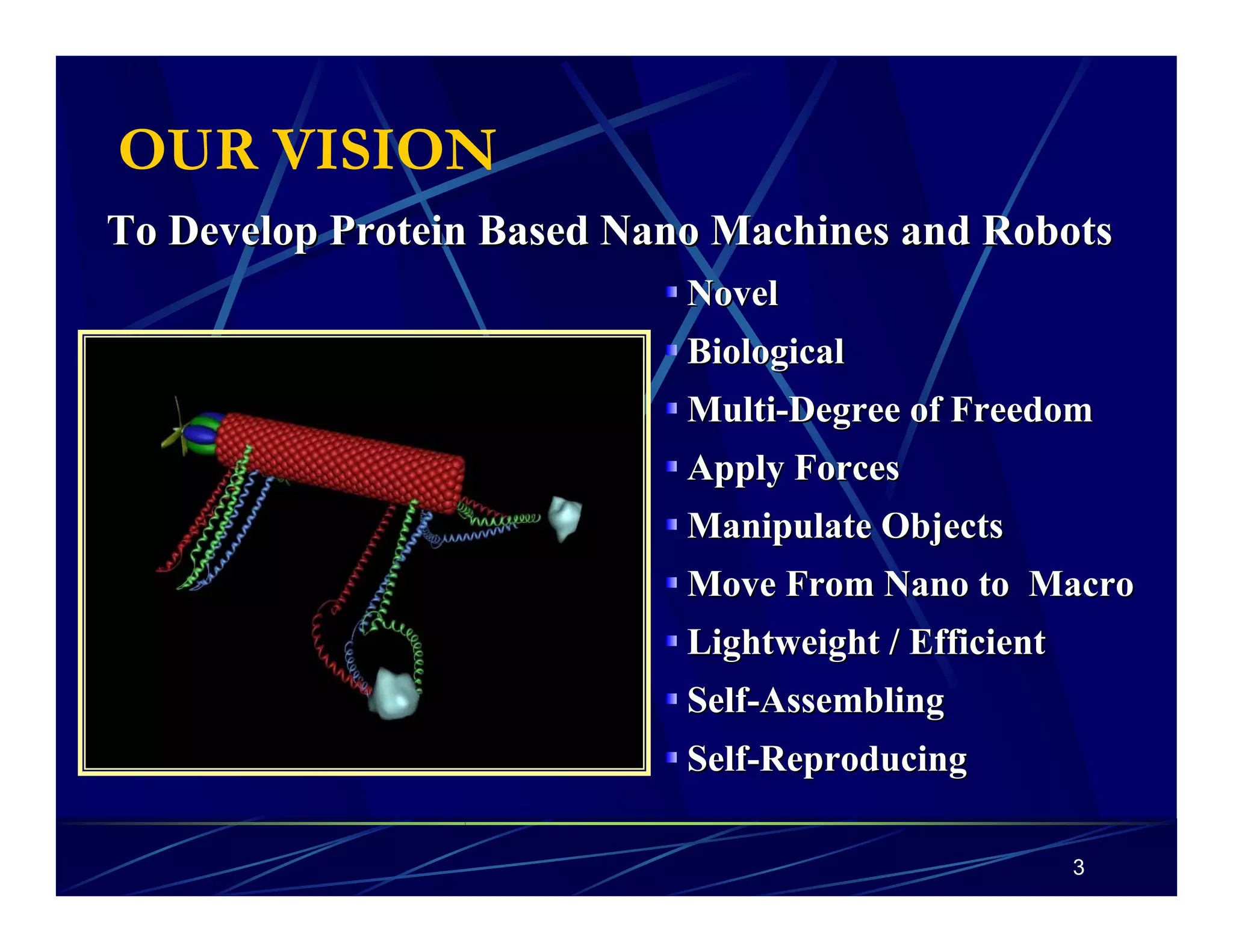
To Develop Protein Based NanoMachines and Robots 
Novel 
Biological 
Multi-Degree of Freedom 
Apply Forces 
Manipulate Objects 
Move From Nano to Macro 
Lightweight / Efficient 
Self-Assembling 
Self-Reproducing 
3
4 
APPLICATIONS 
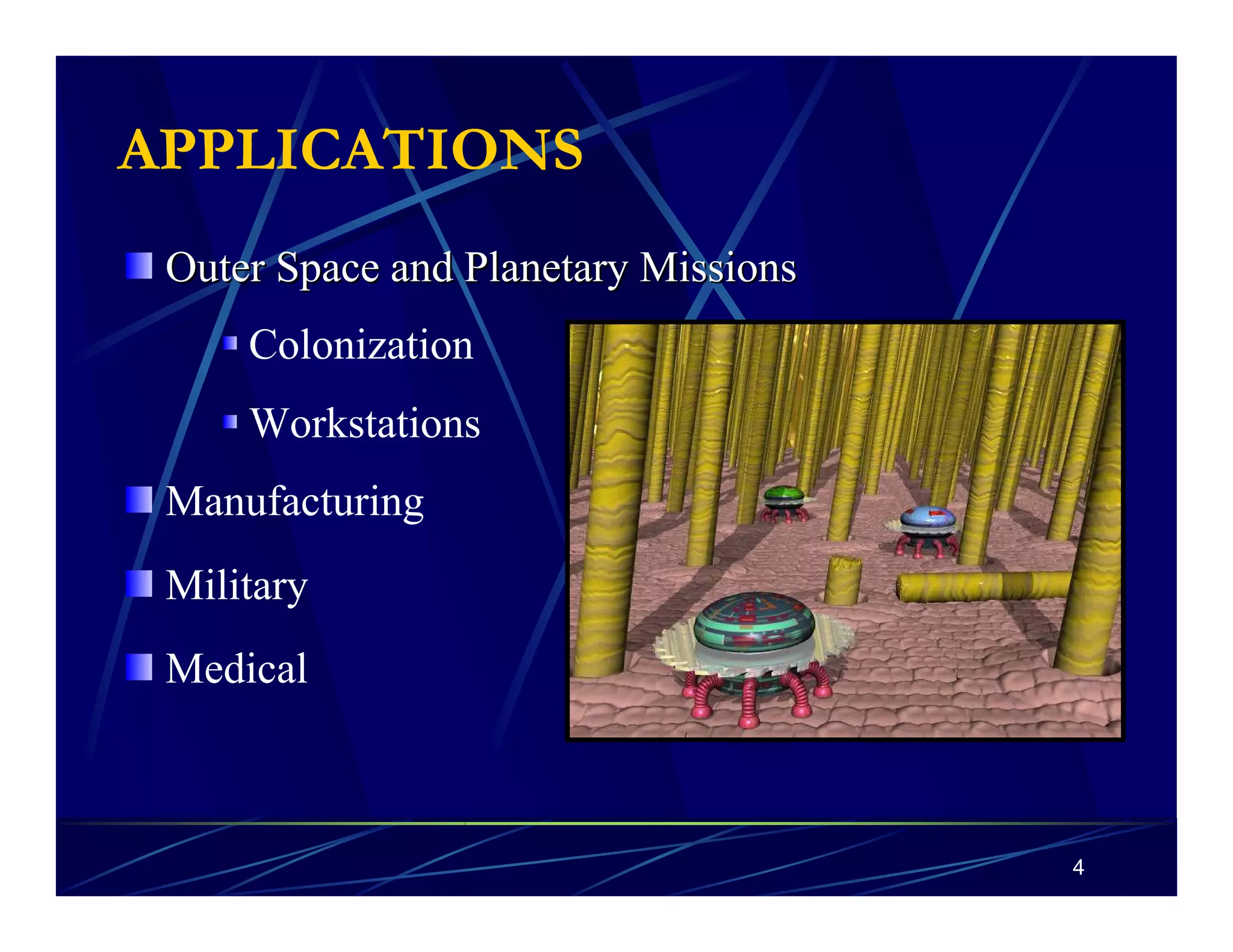
Outer Space and Planetary Missions 
Colonization 
Workstations 
Manufacturing 
Military 
Medical
5 
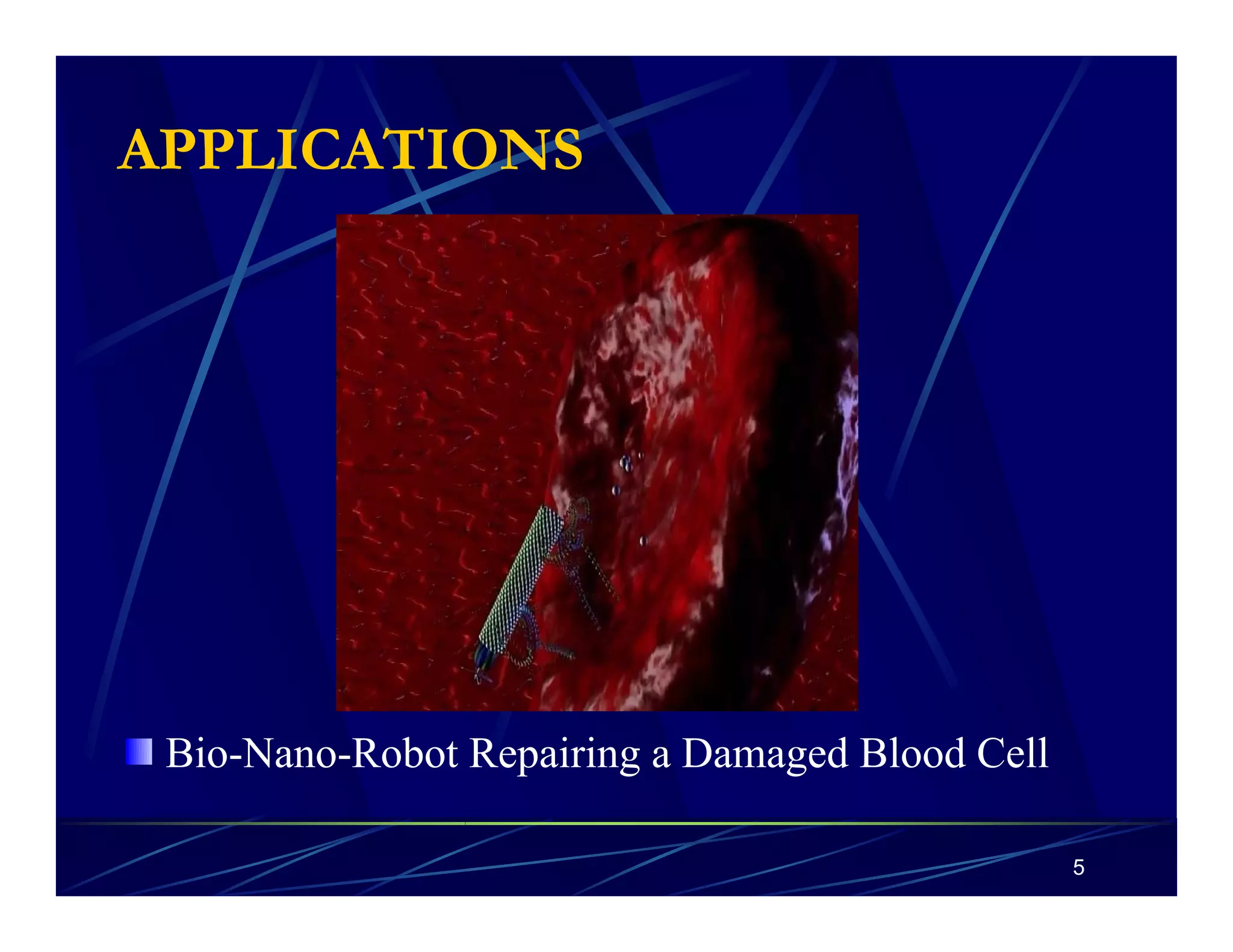
APPLICATIONS 
Bio-Nano-Robot Repairing a Damaged Blood Cell
6 
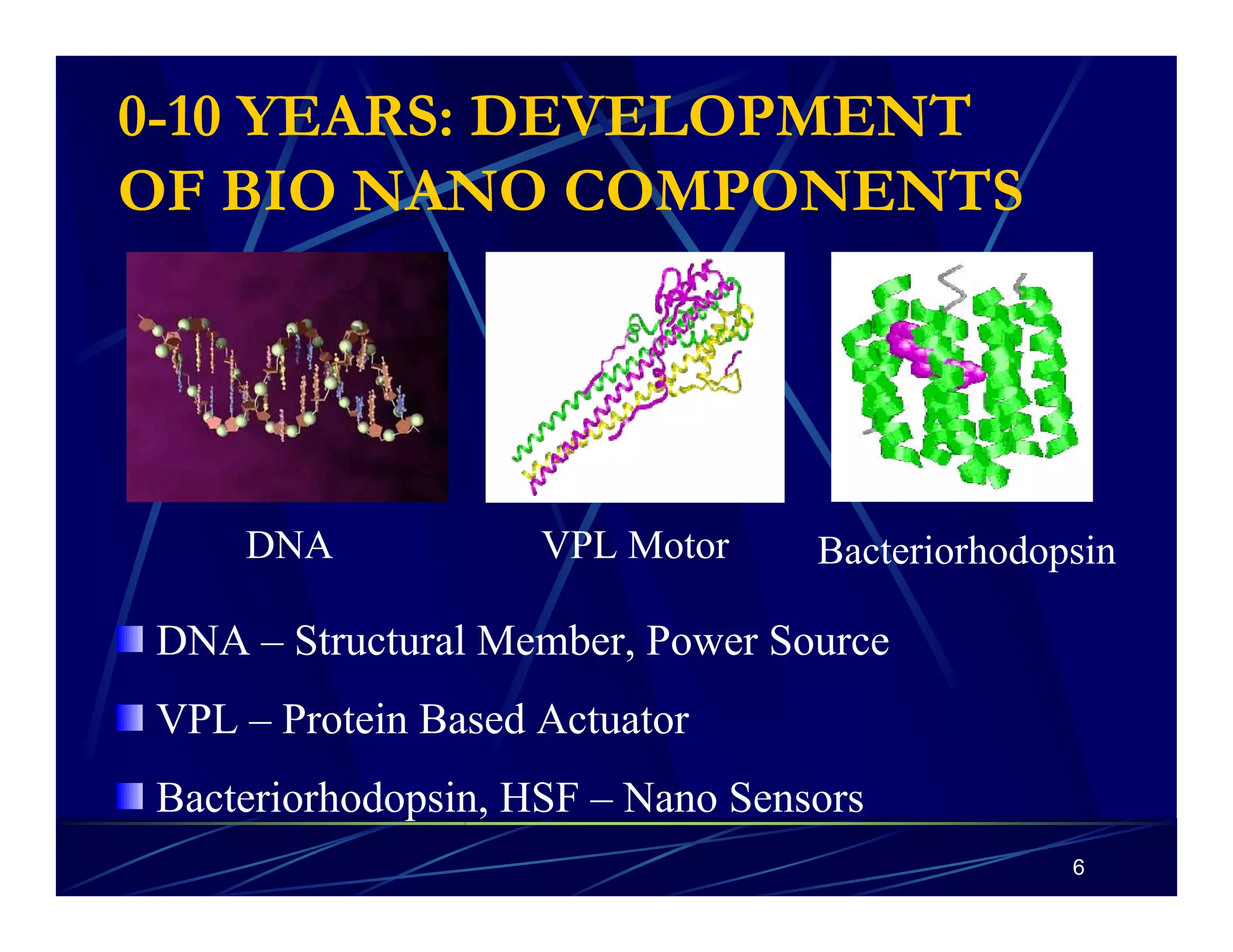
0-10 YEARS: DEVELOPMENT 
OF BIO NANO COMPONENTS 
DNA VPL Motor Bacteriorhodopsin 
DNA – Structural Member, Power Source 
VPL – Protein Based Actuator 
Bacteriorhodopsin, HSF – Nano Sensors
7 
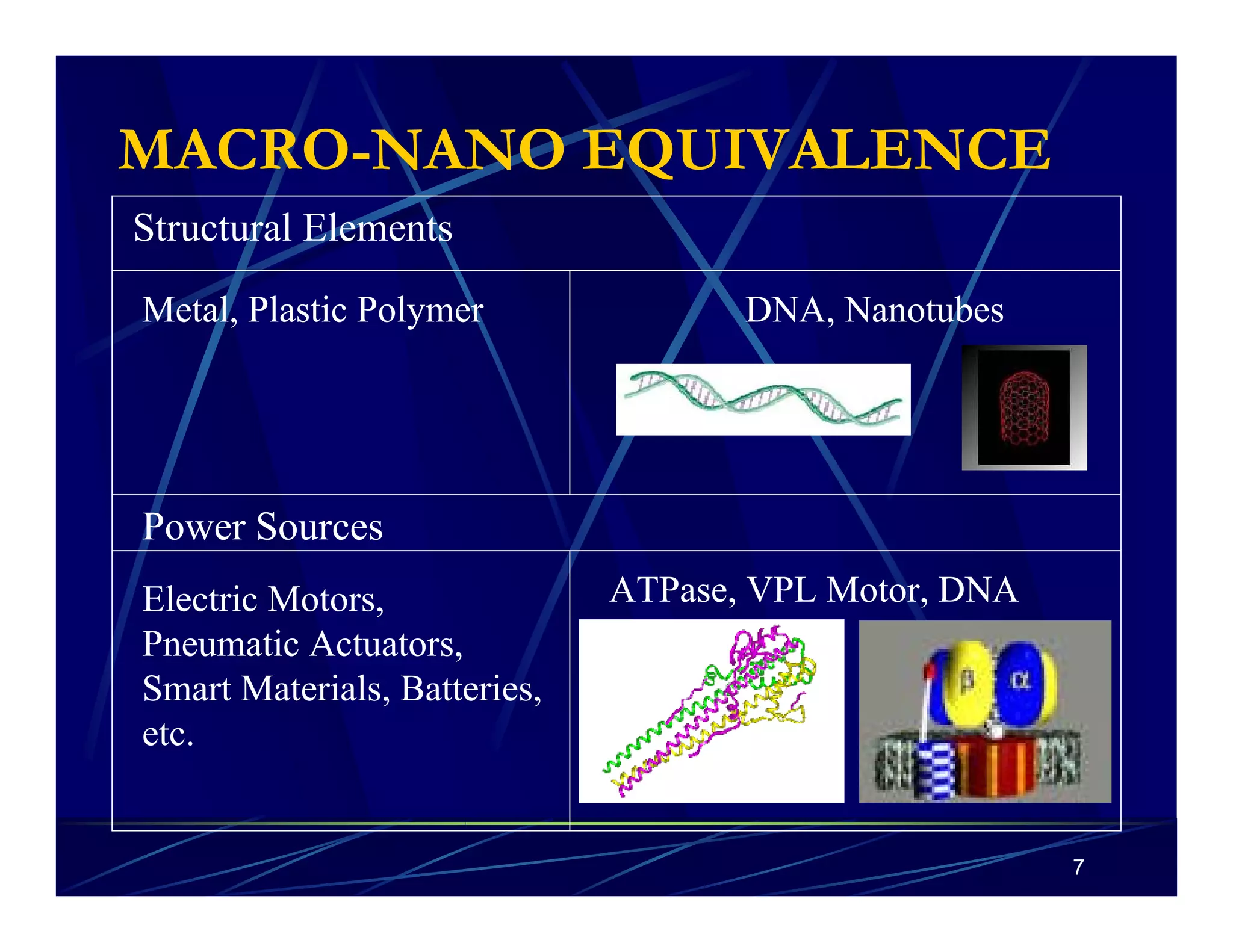
MACRO-NANO EQUIVALENCE 
Structural Elements 
Metal, Plastic Polymer DNA, Nanotubes 
Power Sources 
Electric Motors, 
Pneumatic Actuators, 
Smart Materials, Batteries, 
etc. 
ATPase, VPL Motor, DNA
8 
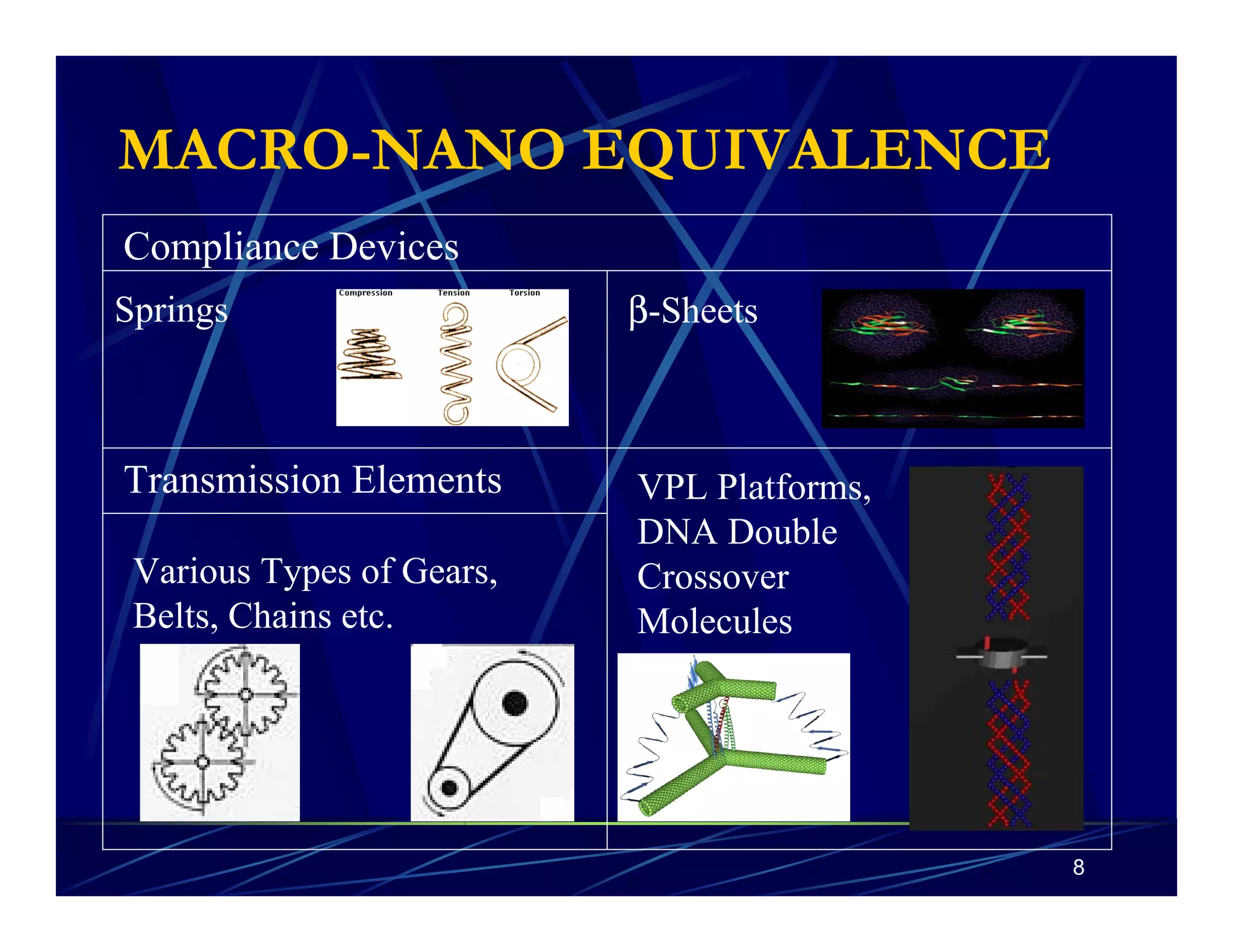
MACRO-NANO EQUIVALENCE 
Compliance Devices 
Springs 
Various Types of Gears, 
Belts, Chains etc. 
β-Sheets 
VPL Platforms, 
DNA Double 
Crossover 
Molecules 
Transmission Elements
9 
MACRO-NANO EQUIVALENCE 
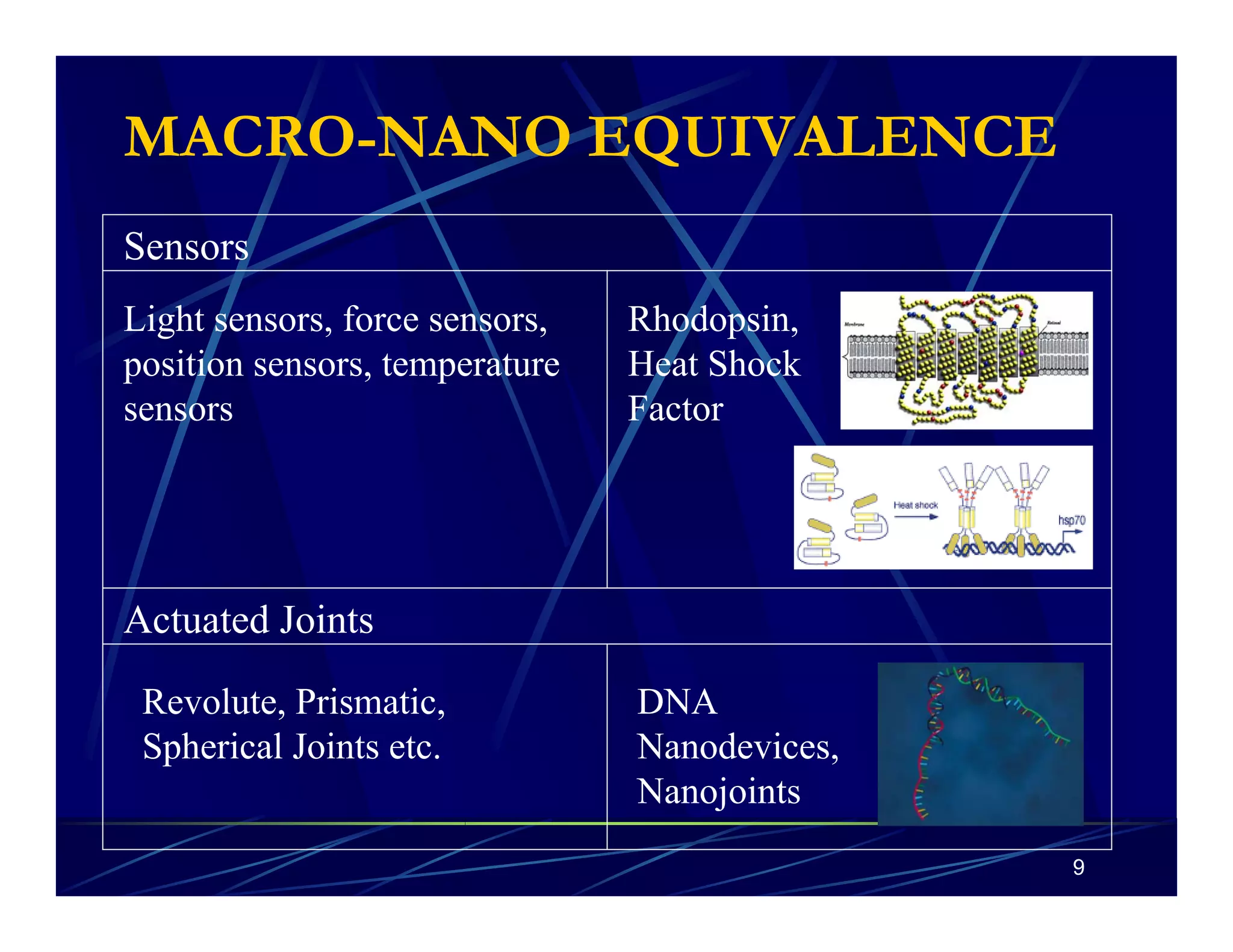
Sensors 
Light sensors, force sensors, 
position sensors, temperature 
sensors 
Actuated Joints 
Revolute, Prismatic, 
Spherical Joints etc. 
Rhodopsin, 
Heat Shock 
Factor 
DNA 
Nanodevices, 
Nanojoints
10 
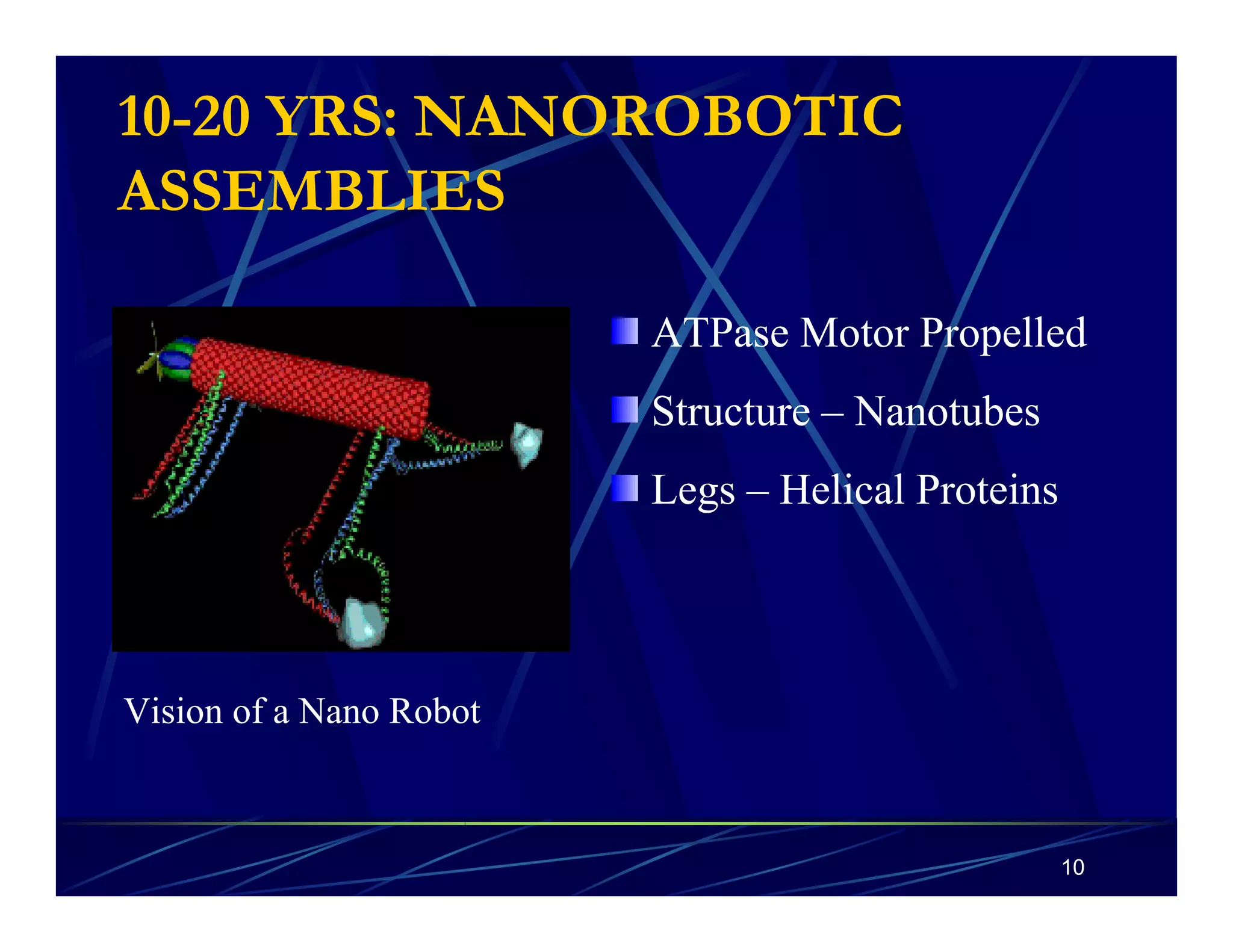
10-20 YRS: NANOROBOTIC 
ASSEMBLIES 
ATPase Motor Propelled 
Structure – Nanotubes 
Legs – Helical Proteins 
Vision of a Nano Robot
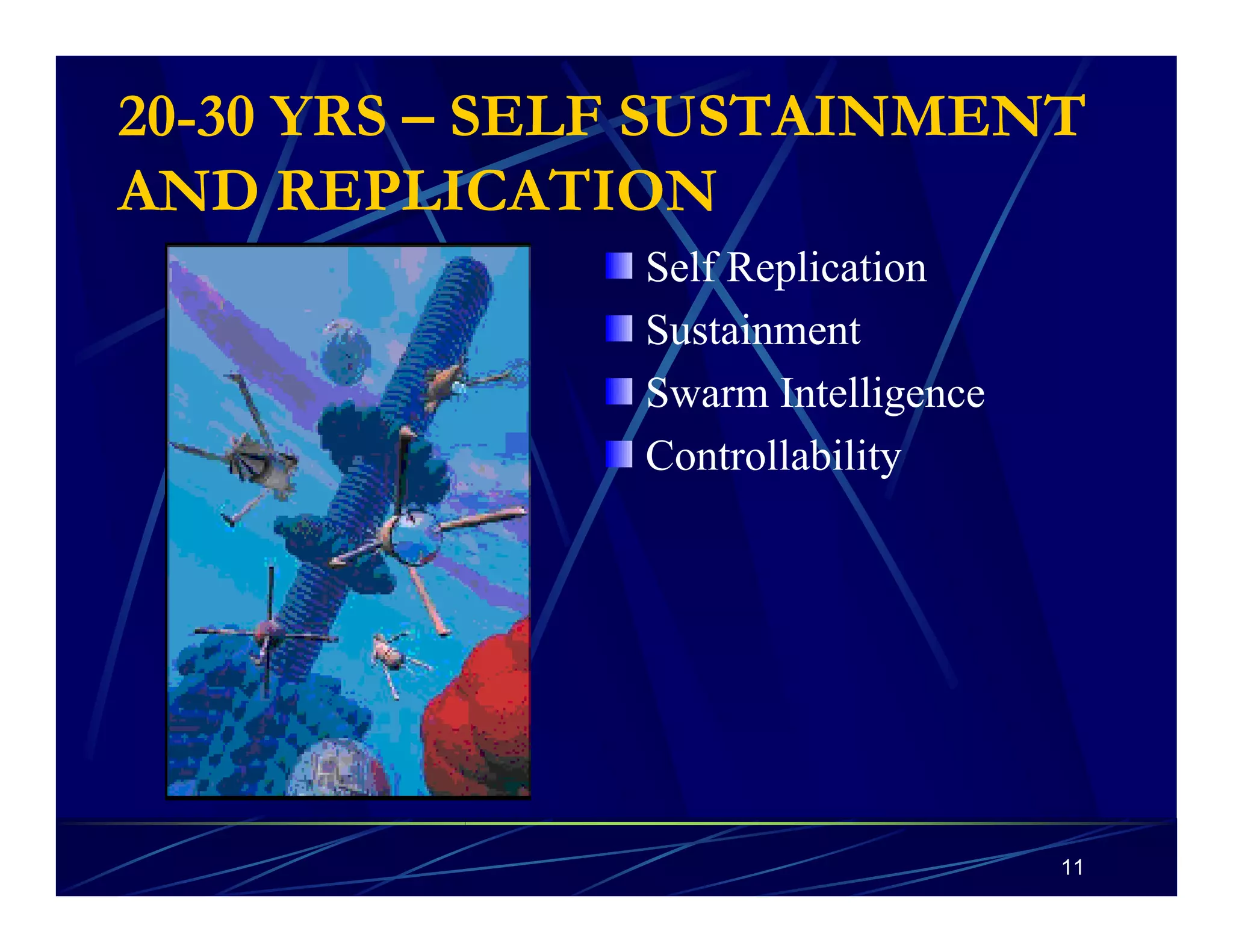
20-30 YRS – SELF SUSTAINMENT 
AND REPLICATION 
11 
Self Replication 
Sustainment 
Swarm Intelligence 
Controllability
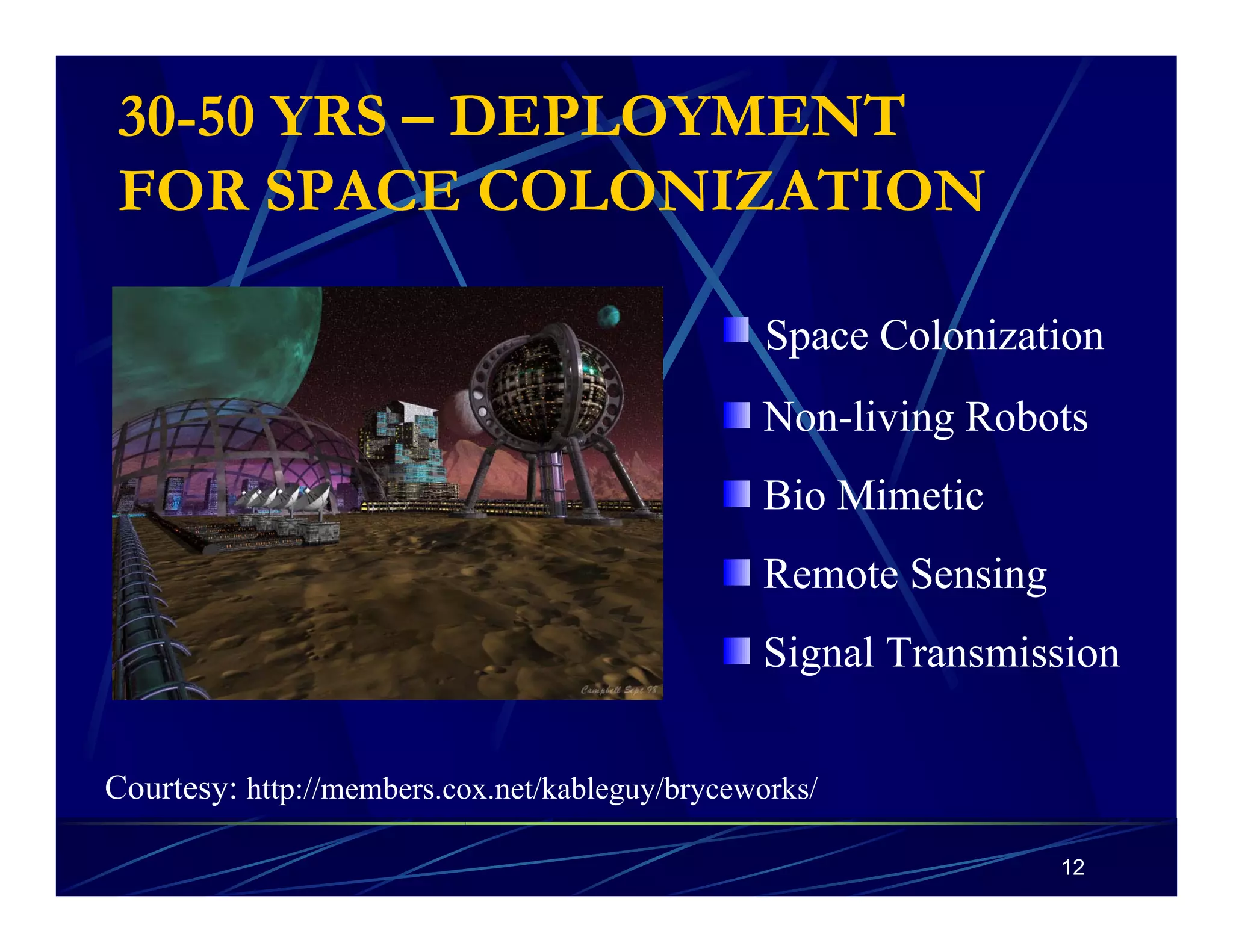
Space Colonization 
Non-living Robots 
Bio Mimetic 
Remote Sensing 
Signal Transmission 
12 
30-50 YRS – DEPLOYMENT 
FOR SPACE COLONIZATION 
Courtesy: http://members.cox.net/kableguy/bryceworks/
13 
SPECIFIC AIMS FOR PHASE I 
Identify Proteins for Use in Nanoscale Mechanisms 
Develop Concepts for Bio NanoMachine components 
Develop Dynamic Models and Realistic Simulations 
Perform a Series of Biomolecular Experiments 
Assembly and Interface NanoMachine Components
14 
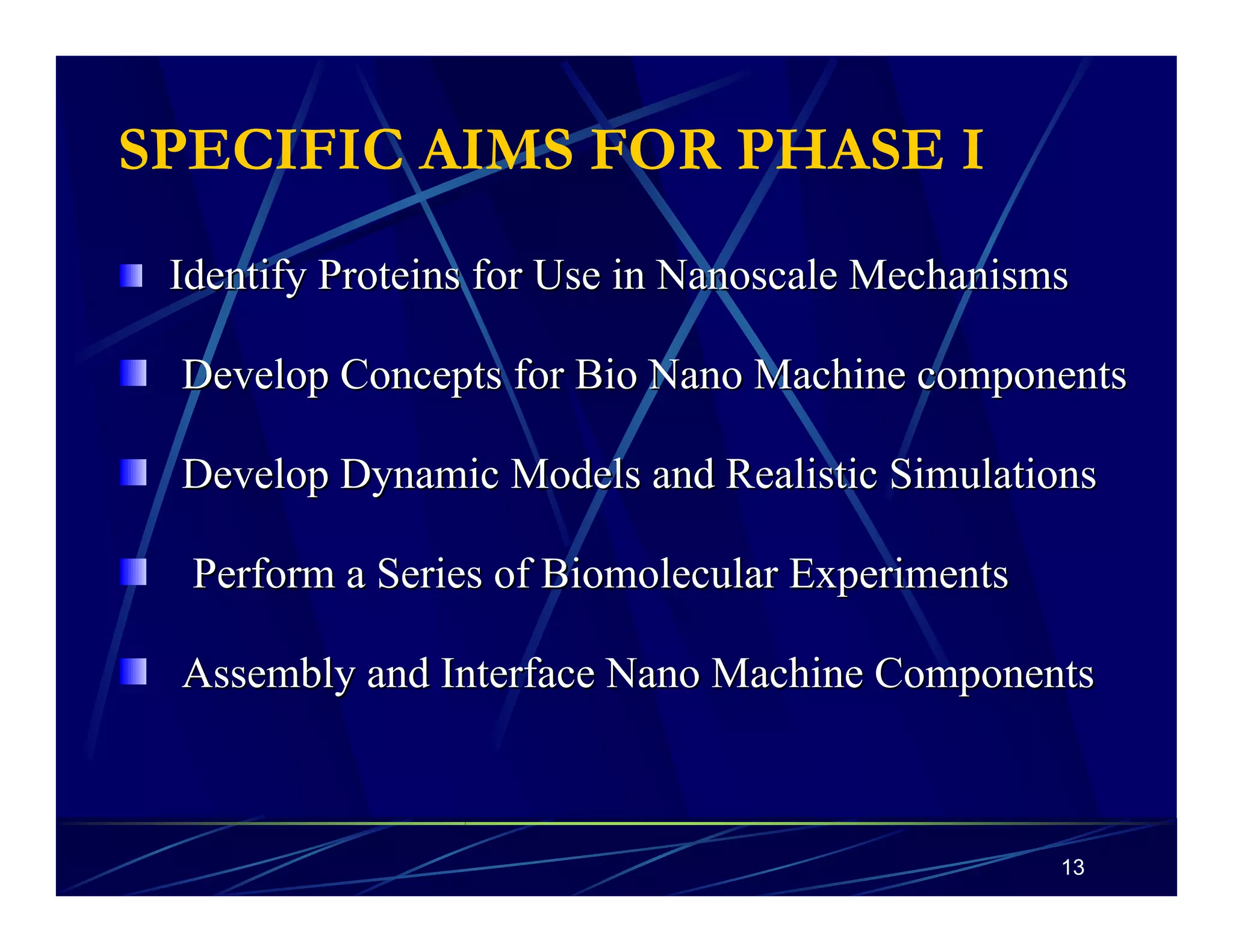
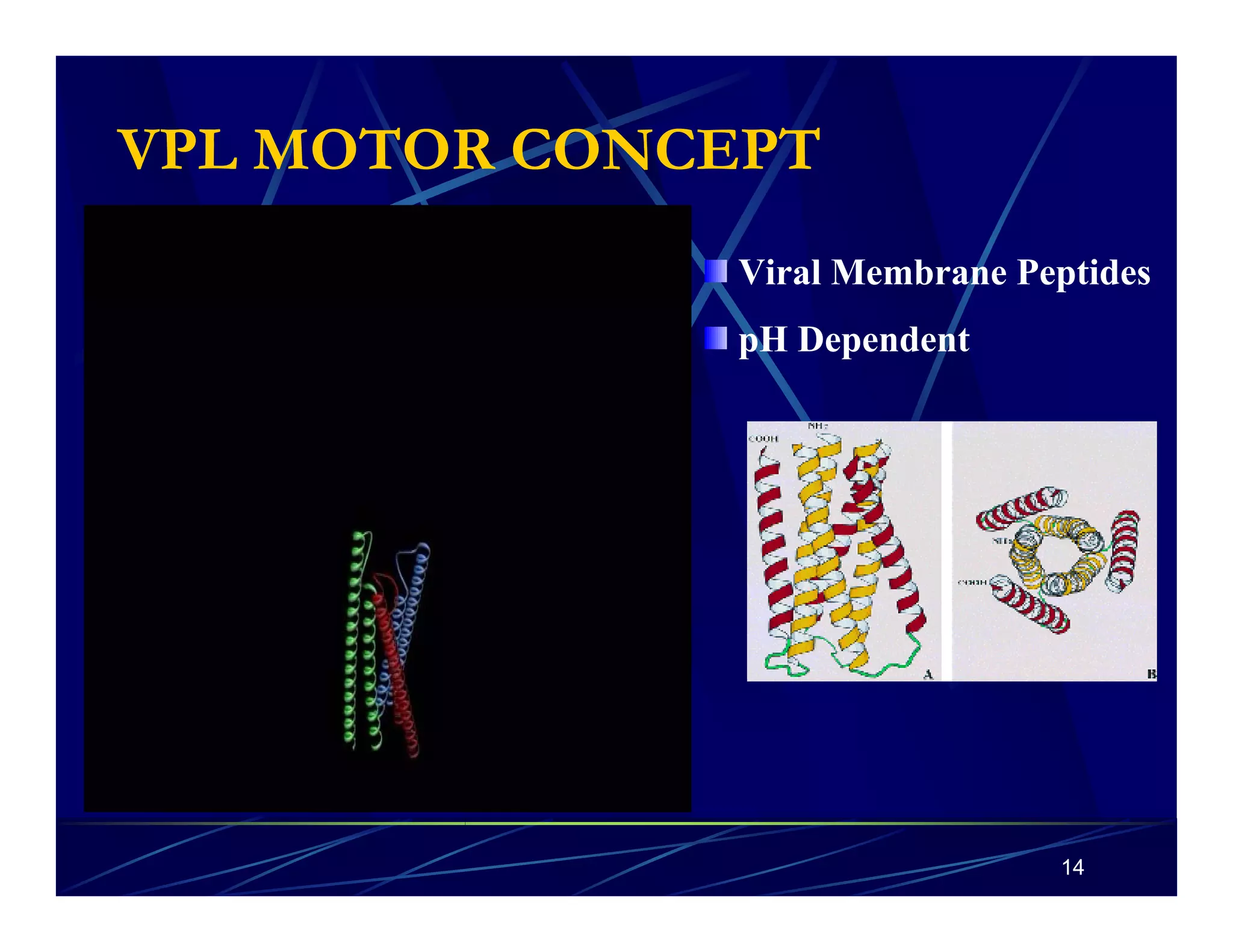
VPL MOTOR CONCEPT 
Viral Membrane Peptides 
pH Dependent
15 
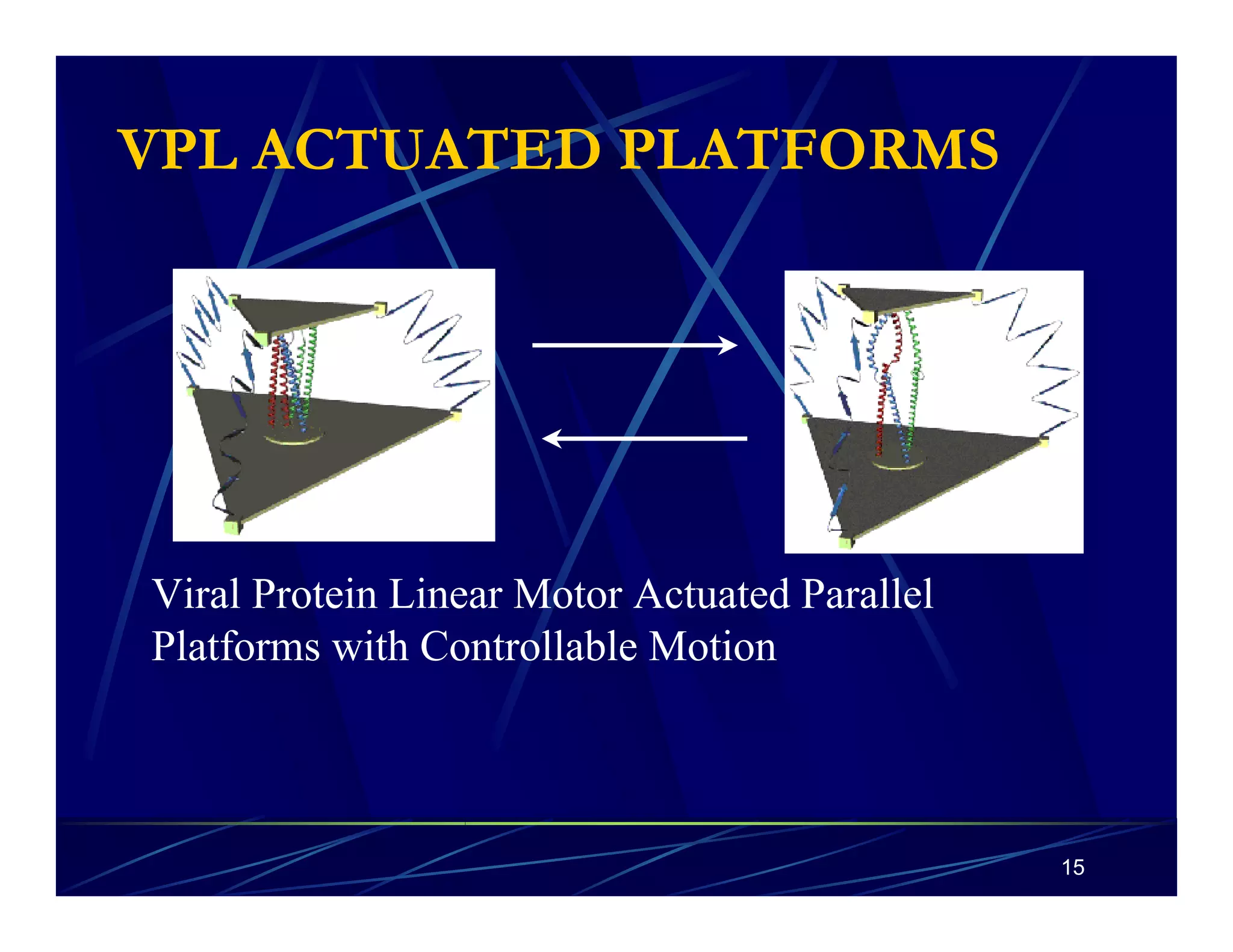
VPL ACTUATED PLATFORMS 
Viral Protein Linear Motor Actuated Parallel 
Platforms with Controllable Motion
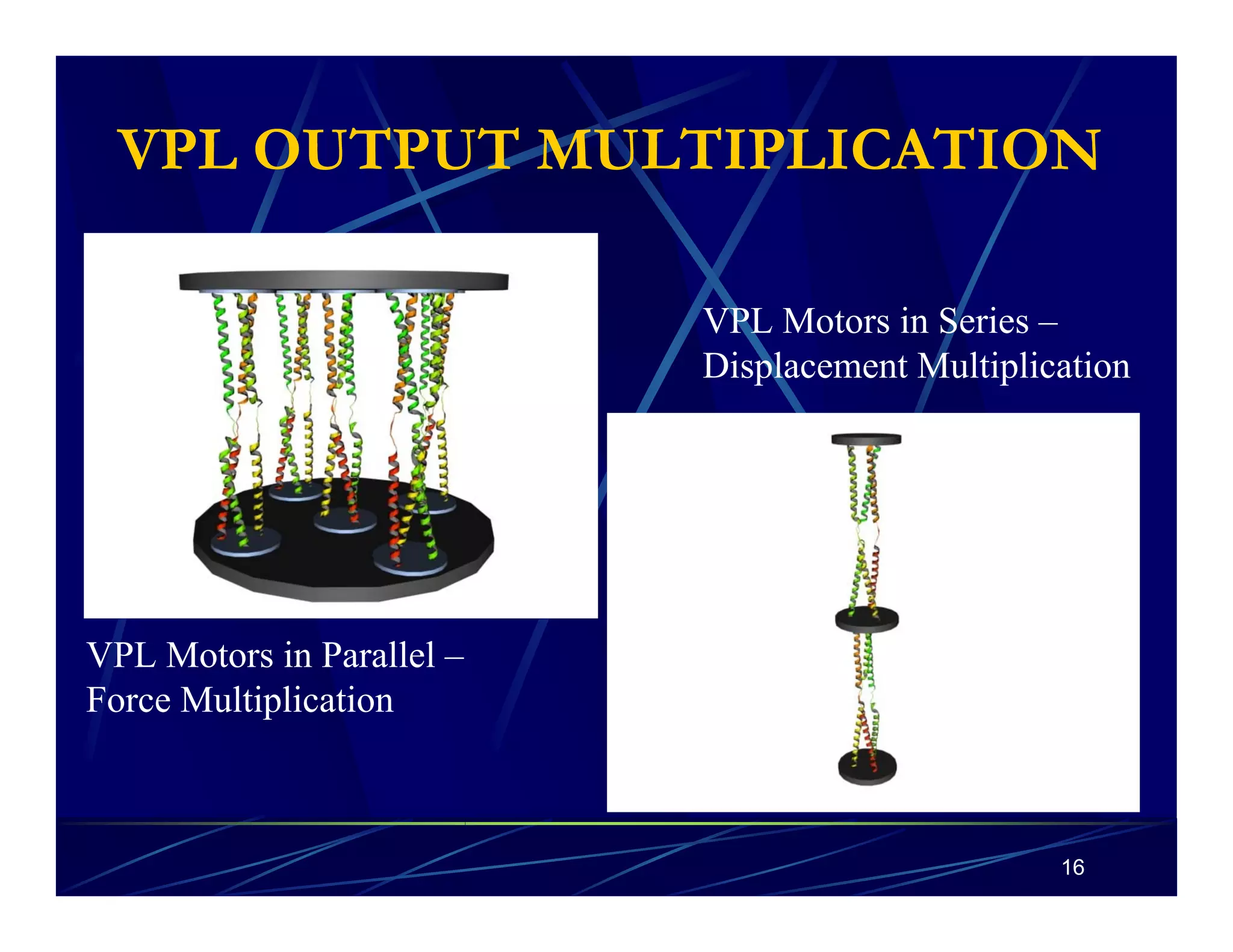
VPL OUTPUT MULTIPLICATION 
16 
VPL Motors in Parallel – 
Force Multiplication 
VPL Motors in Series – 
Displacement Multiplication
17 
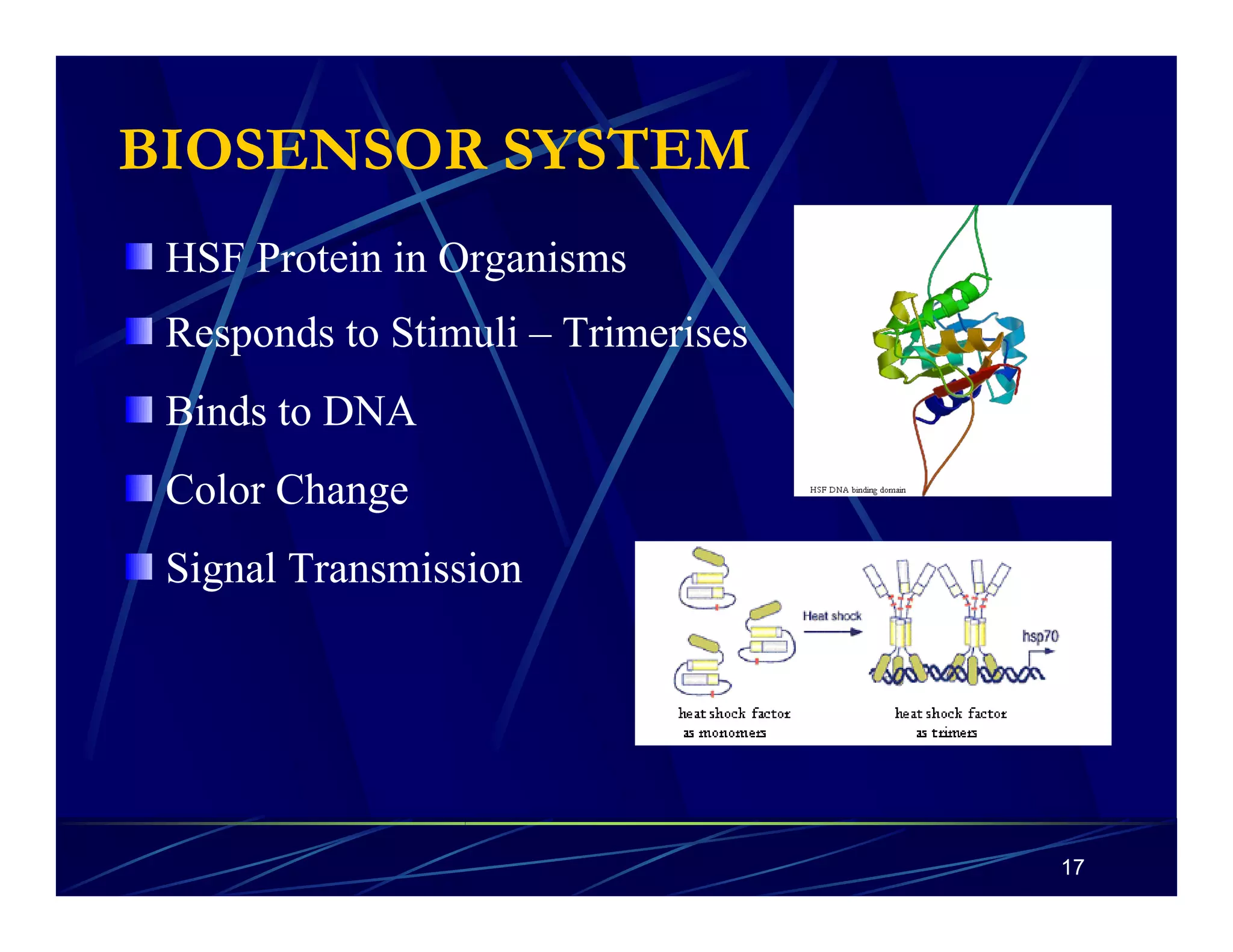
BIOSENSOR SYSTEM 
HSF Protein in Organisms 
Responds to Stimuli – Trimerises 
Binds to DNA 
Color Change 
Signal Transmission
18 
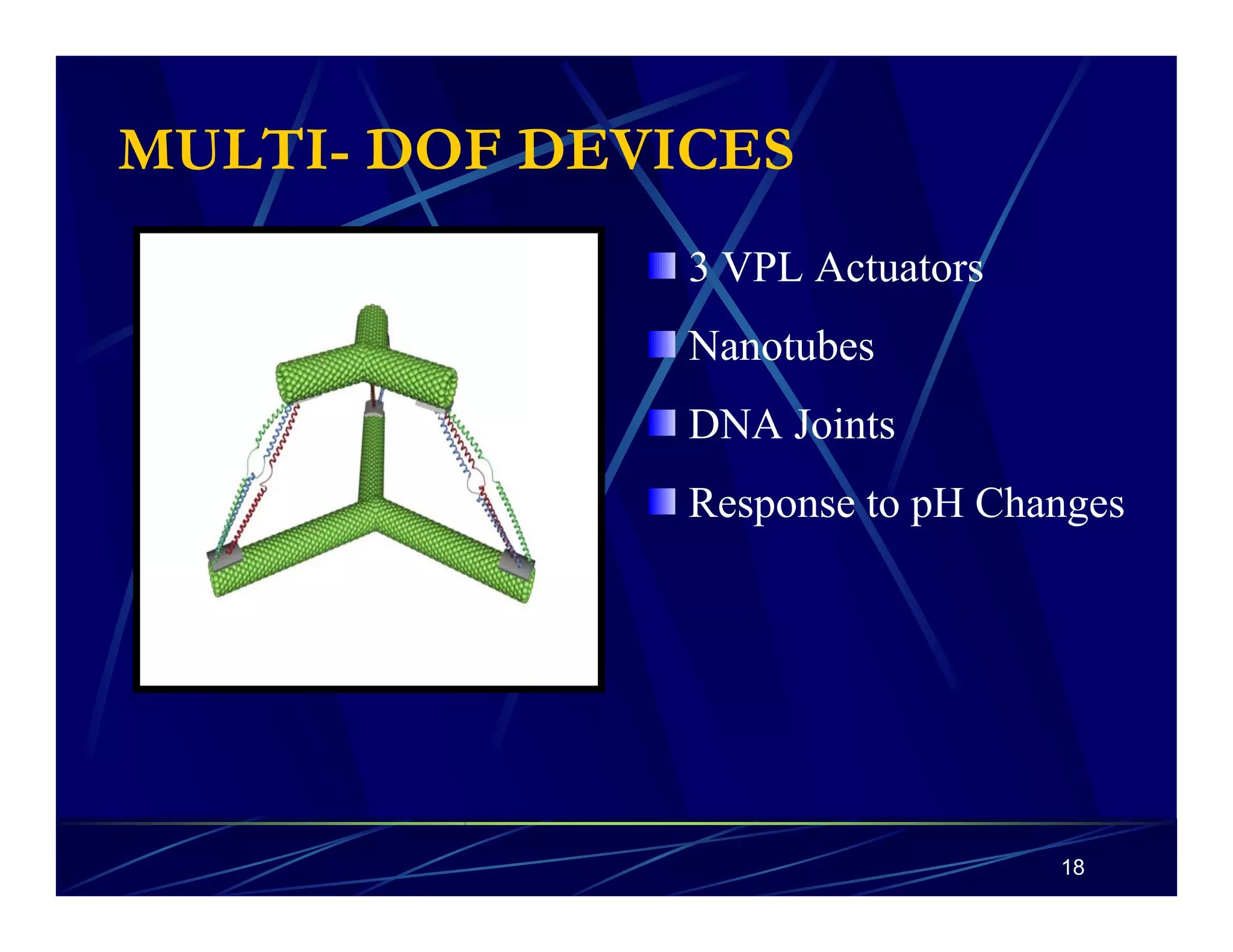
MULTI- DOF DEVICES 
3 VPL Actuators 
Nanotubes 
DNA Joints 
Response to pH Changes
COMPUTATIONAL STUDIES 
Model Reversible Folding of VPL Motor Protein 
Estimate Forces, Displacements etc. Through Energy 
Software Usage - CHARMM 
Input – Structure Files in .pdb Format 
Output – Simulated Energy and Displacements 
Microsecond Modeling – Assumptions, Targeted MD 
Parallel Processing Facilities at CAIP (Teal) 
Comparison with Experimental Observations 
19
20 
EXPERIMENTAL WORK 
Peptide Selection 
Protein Expression 
Protein Purification 
Protein Conformation as a Function of pH 
Calculate Force Expended upon Extension 
Reversibility 
Different Sequence - Different Designs
21 
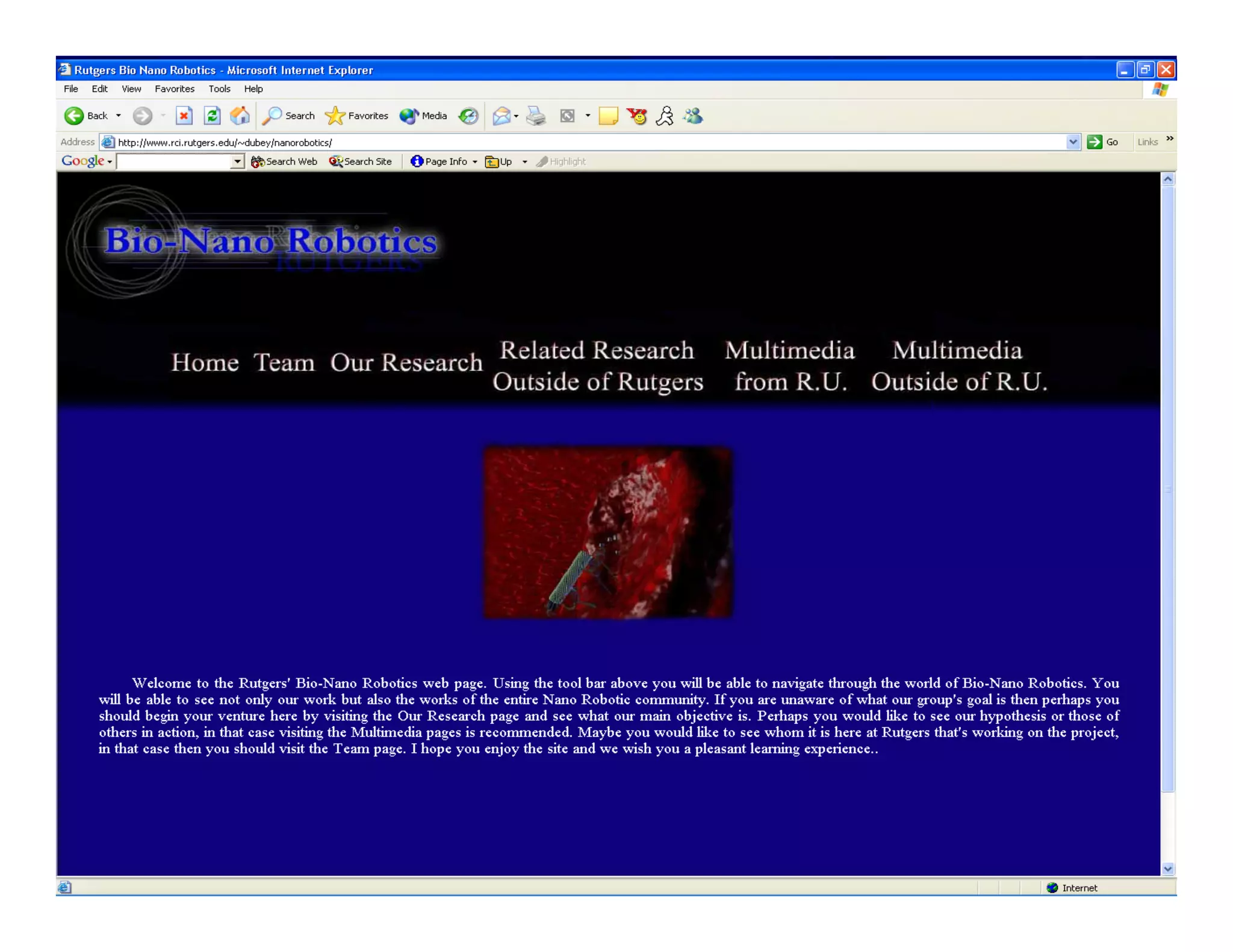
WEBPAGE 
http://bionano.rutgers.edu
22
OUTREACH ACTIVITIES 
High School Students in Research 
Minority Students in Research 
Undergraduate Students Employed 
Technology Transfer 
International and Industry Collaboration 
Colloquiums, Symposia and Journal Clubs 
Interdepartmental Course on Bio Nano Technology 
23
24 
ACKNOWLEDGEMENTS 
NASA Institute of Advanced Concepts (NIAC) 
SROA Program and Rutgers University, NJ 
NSF Nanomanufacturing Program

Nano machines

  • 1.
    1 PROTEIN BASEDNANO MACHINES FOR SPACE APPLICATIONS Dr. Constantinos Mavroidis, Associate Professor Department of Mechanical and Aerospace Engineering Rutgers, The State University of New Jersey NIAC Phase I Grant
  • 2.
    2 THE TEAM Dr. C. Mavroidis Associate Professor Mechanical Engineering, Rutgers University Dr. M. Yarmush Chair, Biomedical Engineering, Rutgers University Dr. M. S. Tomassone Assistant Professor, Biochemical Engineering Rutgers University Dr. F. Papadimitrakopoulos Associate Professor Department of Chemistry University of Connecticut Dr. B. Yurke Researcher, Bell Laboratories, Lucent Technologies Inc. Mr. Atul Dubey Graduate Student Rutgers University Ms. Angela Thornton Graduate Student Rutgers University Mr. Kevin Nikitczuk Undergraduate Student Rutgers University
  • 3.
    OUR VISION ToDevelop Protein Based NanoMachines and Robots Novel Biological Multi-Degree of Freedom Apply Forces Manipulate Objects Move From Nano to Macro Lightweight / Efficient Self-Assembling Self-Reproducing 3
  • 4.
    4 APPLICATIONS OuterSpace and Planetary Missions Colonization Workstations Manufacturing Military Medical
  • 5.
    5 APPLICATIONS Bio-Nano-RobotRepairing a Damaged Blood Cell
  • 6.
    6 0-10 YEARS:DEVELOPMENT OF BIO NANO COMPONENTS DNA VPL Motor Bacteriorhodopsin DNA – Structural Member, Power Source VPL – Protein Based Actuator Bacteriorhodopsin, HSF – Nano Sensors
  • 7.
    7 MACRO-NANO EQUIVALENCE Structural Elements Metal, Plastic Polymer DNA, Nanotubes Power Sources Electric Motors, Pneumatic Actuators, Smart Materials, Batteries, etc. ATPase, VPL Motor, DNA
  • 8.
    8 MACRO-NANO EQUIVALENCE Compliance Devices Springs Various Types of Gears, Belts, Chains etc. β-Sheets VPL Platforms, DNA Double Crossover Molecules Transmission Elements
  • 9.
    9 MACRO-NANO EQUIVALENCE Sensors Light sensors, force sensors, position sensors, temperature sensors Actuated Joints Revolute, Prismatic, Spherical Joints etc. Rhodopsin, Heat Shock Factor DNA Nanodevices, Nanojoints
  • 10.
    10 10-20 YRS:NANOROBOTIC ASSEMBLIES ATPase Motor Propelled Structure – Nanotubes Legs – Helical Proteins Vision of a Nano Robot
  • 11.
    20-30 YRS –SELF SUSTAINMENT AND REPLICATION 11 Self Replication Sustainment Swarm Intelligence Controllability
  • 12.
    Space Colonization Non-livingRobots Bio Mimetic Remote Sensing Signal Transmission 12 30-50 YRS – DEPLOYMENT FOR SPACE COLONIZATION Courtesy: http://members.cox.net/kableguy/bryceworks/
  • 13.
    13 SPECIFIC AIMSFOR PHASE I Identify Proteins for Use in Nanoscale Mechanisms Develop Concepts for Bio NanoMachine components Develop Dynamic Models and Realistic Simulations Perform a Series of Biomolecular Experiments Assembly and Interface NanoMachine Components
  • 14.
    14 VPL MOTORCONCEPT Viral Membrane Peptides pH Dependent
  • 15.
    15 VPL ACTUATEDPLATFORMS Viral Protein Linear Motor Actuated Parallel Platforms with Controllable Motion
  • 16.
    VPL OUTPUT MULTIPLICATION 16 VPL Motors in Parallel – Force Multiplication VPL Motors in Series – Displacement Multiplication
  • 17.
    17 BIOSENSOR SYSTEM HSF Protein in Organisms Responds to Stimuli – Trimerises Binds to DNA Color Change Signal Transmission
  • 18.
    18 MULTI- DOFDEVICES 3 VPL Actuators Nanotubes DNA Joints Response to pH Changes
  • 19.
    COMPUTATIONAL STUDIES ModelReversible Folding of VPL Motor Protein Estimate Forces, Displacements etc. Through Energy Software Usage - CHARMM Input – Structure Files in .pdb Format Output – Simulated Energy and Displacements Microsecond Modeling – Assumptions, Targeted MD Parallel Processing Facilities at CAIP (Teal) Comparison with Experimental Observations 19
  • 20.
    20 EXPERIMENTAL WORK Peptide Selection Protein Expression Protein Purification Protein Conformation as a Function of pH Calculate Force Expended upon Extension Reversibility Different Sequence - Different Designs
  • 21.
  • 22.
  • 23.
    OUTREACH ACTIVITIES HighSchool Students in Research Minority Students in Research Undergraduate Students Employed Technology Transfer International and Industry Collaboration Colloquiums, Symposia and Journal Clubs Interdepartmental Course on Bio Nano Technology 23
  • 24.
    24 ACKNOWLEDGEMENTS NASAInstitute of Advanced Concepts (NIAC) SROA Program and Rutgers University, NJ NSF Nanomanufacturing Program