Muscle 
Physiology
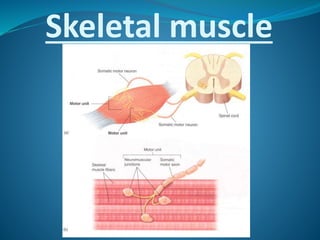
Skeletal muscle
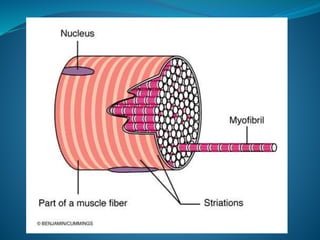
The muscle is formed of bundles of 
muscle fibres. 
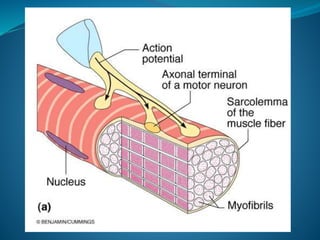
- Each fibre is a single cylindrical 
elongated multinucleated cell 10-80 
microns in diameter. 
- It is surrounded by inner plasma 
membrane and outer sarcolemma.
-The fibre contain cytoplasm 
(sarcoplasm) that contains large 
number of mitochondria, K+, 
Mg++, enzymes and energy 
sources as glycogen, ATP & 
creatine phosphate also contain 
sarcoplasmic reticulum. 
-Each fibre contains several 
hundred myofibrils.
Each myofibril consisted of 
several filaments. 
-These filaments are made up 
of the contractile proteins 
of muscle (actin and myosin) 
and regulatory proteins of 
muscle (troponin and 
tropomyosin).
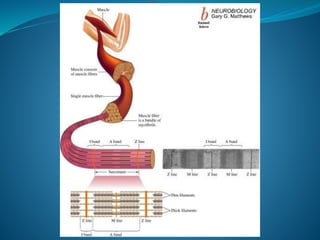
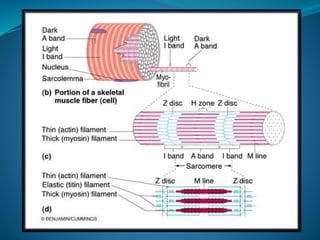
The arrangement of these 
contractile proteins in the 
filament shows cross striations 
with alternative dark (A) and 
light (I) bands.
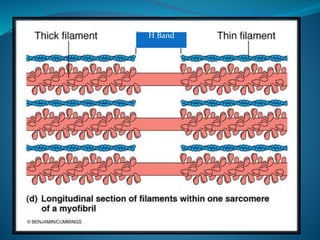
- The dark band: 
.Called A band. 
.Contain myosin filaments and ends 
of actin filaments. 
.Has lighter central H-zone (has no 
actin filaments). 
.M-line in middle of H-zone due to 
central bulge on thick myosin 
filament.
The light band: 
. Called I band (Isotropic to light). 
. Contain thin actin filaments + troponin. 
. Contain central Z-line (site of 
attachment of thin filaments). 
-Longitudinal striations are due to 
longitudinal arrangement of the muscle 
fibres and transverse striations are due to 
alternating light and dark bands.
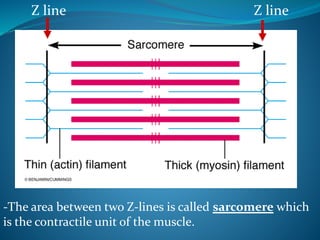
Z line Z line 
-The area between two Z-lines is called sarcomere which 
is the contractile unit of the muscle.
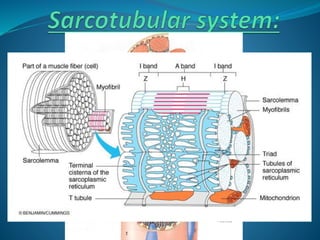
Sarcotubular system: 
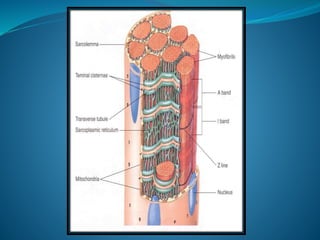
It is a system of tubules present in the 
sarcoplasm of the muscle fibre and made 
of: 
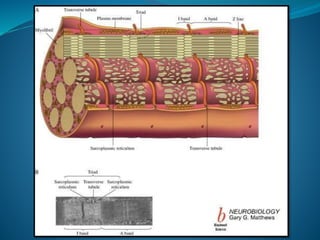
1) T- tubules (transverse tubules): 
It is a deep infolding of the sarcolemma as 
an extension of the extracellular space (at 
junction between A & I bands), this 
infolding is perpendicular on the 
myofibril so it is called transverse tubule.
T-tubule membrane contains a voltage 
sensitive receptor that open the Ca++ 
channels on the sarcoplasmic 
reticulum 
- Through this tubule the action 
potential from the cell membrane is 
rapidly spread to all myofibrils.
2) The sarcoplasmic reticulum: 
- It is formed of irregular 
longitudinal tubules that run 
parallel and surround the myofibrils 
to be a source of Ca++ ions, via Ca+2 
channels. 
- At site of contact to T-tubules it 
dilate to form terminal cisterns. 
Each 2 terminal cisterns with 
adjacent T-tubules is called triad.
How does sarcotubular system work? 
Stimulation of the sarcolemma  
stimulation of the T-tubule receptors 
 It will open Ca+2 channels present 
in the membrane of cisterns  
release of calcium required for 
muscle contraction.
* Muscle proteins: 
[A] Contractile proteins: 
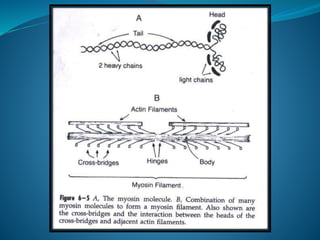
1-Myosin: 
- Myosin is complex protein with M.W. 480,000. 
- Composed of 6 polypeptide chains (2 heavy 
chains and 4 light chains). 
- The 2 heavy chains wrap spirally around each 
other as double helix forming long tail, while the 
terminal part combine with the 4 light chains 
forming 2 globular heads, the head contains 
actin-binding sites and ATP-ase enzyme (help 
ATP hydrolysis).
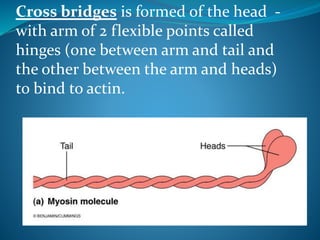
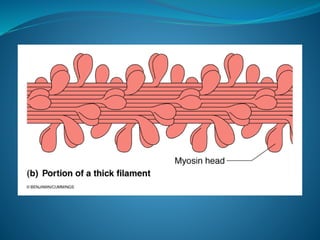
Cross bridges is formed of the head - 
with arm of 2 flexible points called 
hinges (one between arm and tail and 
the other between the arm and heads) 
to bind to actin.
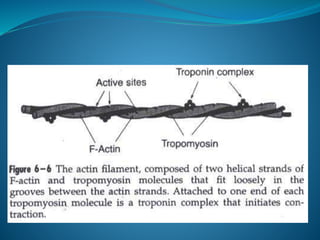
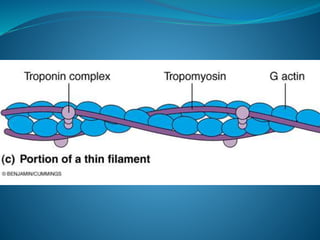
2- Actin: 
- It is small globular protein with 
M.W. 42,000. 
- The globules attached to each 
other to form filamentous structure 
arranged in two chains as long 
double helix.
H Band
[B] Regulatory protein: 
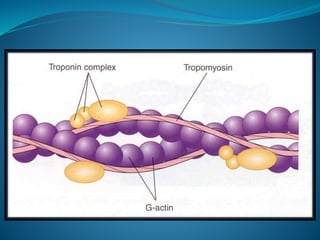
1- Tropomyosin: 
It is long filament of two polypeptide 
chains twisting on each other and 
located between the 2 chains of 
actin covering its active sites which 
combine to myosin.
2- Troponin: 
- Small globules located at intervals 
along tropomyosin. 
- Of 3 subunits with MW 18,000-25,000. 
1-Troponin T: 
binds troponin to tropomyosin. 
2-Troponin I: 
inhibits binding of actin & myosin. 
3-Troponin C: 
binds Ca+2 ions  contraction.
Physiology (Muscle)
Physiology (Muscle)

Physiology (Muscle)

  • 1.
  • 2.
  • 7.
    The muscle isformed of bundles of muscle fibres. - Each fibre is a single cylindrical elongated multinucleated cell 10-80 microns in diameter. - It is surrounded by inner plasma membrane and outer sarcolemma.
  • 8.
    -The fibre containcytoplasm (sarcoplasm) that contains large number of mitochondria, K+, Mg++, enzymes and energy sources as glycogen, ATP & creatine phosphate also contain sarcoplasmic reticulum. -Each fibre contains several hundred myofibrils.
  • 9.
    Each myofibril consistedof several filaments. -These filaments are made up of the contractile proteins of muscle (actin and myosin) and regulatory proteins of muscle (troponin and tropomyosin).
  • 10.
    The arrangement ofthese contractile proteins in the filament shows cross striations with alternative dark (A) and light (I) bands.
  • 12.
    - The darkband: .Called A band. .Contain myosin filaments and ends of actin filaments. .Has lighter central H-zone (has no actin filaments). .M-line in middle of H-zone due to central bulge on thick myosin filament.
  • 13.
    The light band: . Called I band (Isotropic to light). . Contain thin actin filaments + troponin. . Contain central Z-line (site of attachment of thin filaments). -Longitudinal striations are due to longitudinal arrangement of the muscle fibres and transverse striations are due to alternating light and dark bands.
  • 14.
    Z line Zline -The area between two Z-lines is called sarcomere which is the contractile unit of the muscle.
  • 17.
    Sarcotubular system: Itis a system of tubules present in the sarcoplasm of the muscle fibre and made of: 1) T- tubules (transverse tubules): It is a deep infolding of the sarcolemma as an extension of the extracellular space (at junction between A & I bands), this infolding is perpendicular on the myofibril so it is called transverse tubule.
  • 18.
    T-tubule membrane containsa voltage sensitive receptor that open the Ca++ channels on the sarcoplasmic reticulum - Through this tubule the action potential from the cell membrane is rapidly spread to all myofibrils.
  • 19.
    2) The sarcoplasmicreticulum: - It is formed of irregular longitudinal tubules that run parallel and surround the myofibrils to be a source of Ca++ ions, via Ca+2 channels. - At site of contact to T-tubules it dilate to form terminal cisterns. Each 2 terminal cisterns with adjacent T-tubules is called triad.
  • 20.
    How does sarcotubularsystem work? Stimulation of the sarcolemma  stimulation of the T-tubule receptors  It will open Ca+2 channels present in the membrane of cisterns  release of calcium required for muscle contraction.
  • 21.
    * Muscle proteins: [A] Contractile proteins: 1-Myosin: - Myosin is complex protein with M.W. 480,000. - Composed of 6 polypeptide chains (2 heavy chains and 4 light chains). - The 2 heavy chains wrap spirally around each other as double helix forming long tail, while the terminal part combine with the 4 light chains forming 2 globular heads, the head contains actin-binding sites and ATP-ase enzyme (help ATP hydrolysis).
  • 23.
    Cross bridges isformed of the head - with arm of 2 flexible points called hinges (one between arm and tail and the other between the arm and heads) to bind to actin.
  • 25.
    2- Actin: -It is small globular protein with M.W. 42,000. - The globules attached to each other to form filamentous structure arranged in two chains as long double helix.
  • 27.
  • 28.
    [B] Regulatory protein: 1- Tropomyosin: It is long filament of two polypeptide chains twisting on each other and located between the 2 chains of actin covering its active sites which combine to myosin.
  • 29.
    2- Troponin: -Small globules located at intervals along tropomyosin. - Of 3 subunits with MW 18,000-25,000. 1-Troponin T: binds troponin to tropomyosin. 2-Troponin I: inhibits binding of actin & myosin. 3-Troponin C: binds Ca+2 ions  contraction.