MAGIC, Multiparent advanced generation intercross a
new genetic resource for multiple trait improvement and

QTL discovery in crops
   G.Kalidasan
    Quantitative traits
     Phenotype expression
     Natural variation

    Experimental System

     Selection or Natural Population

     Experimental Population

    Multiparent Advanced Generation Intercross Population

    Case Studies
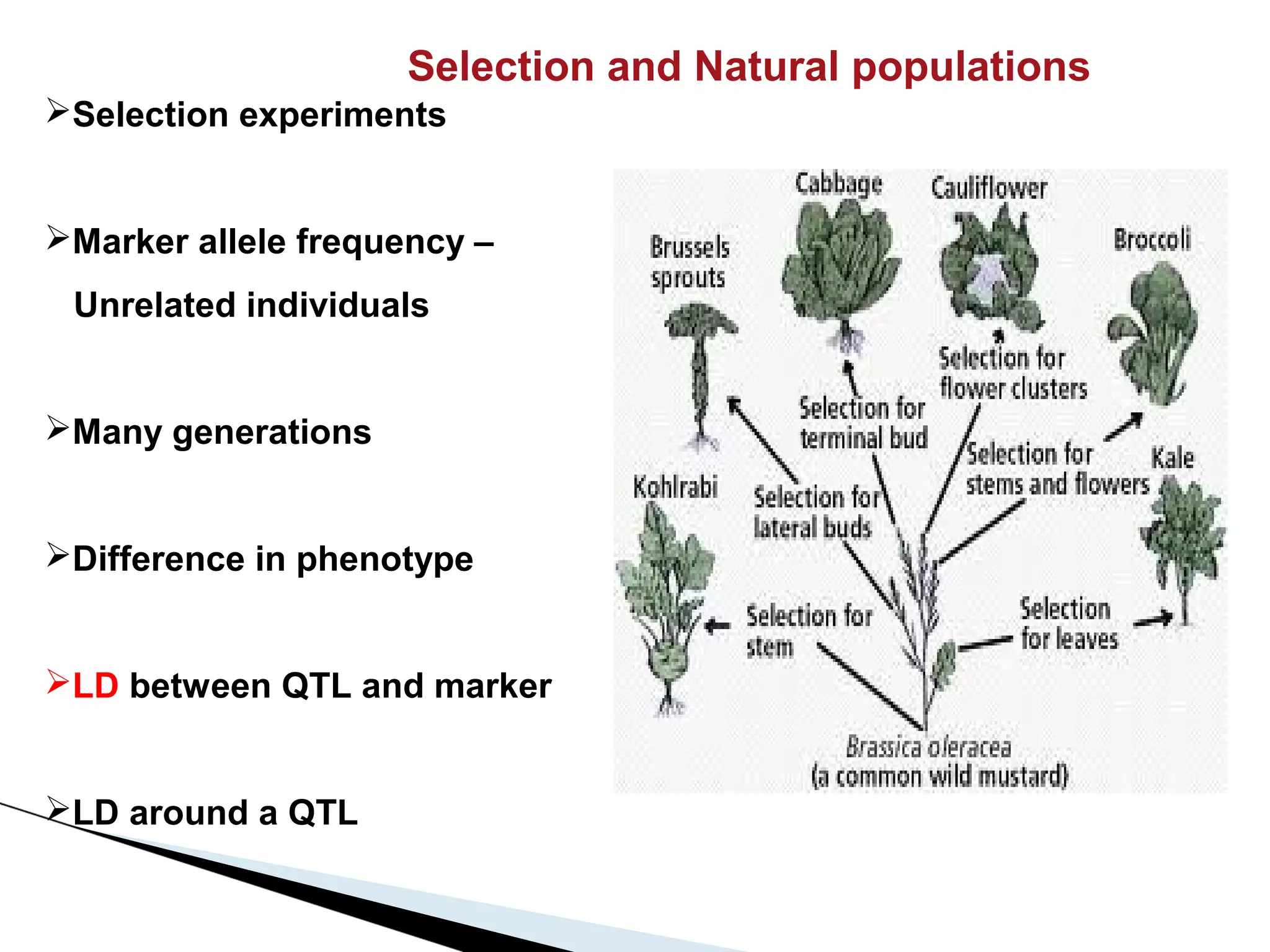
Selection and Natural populations
Selection experiments


Marker allele frequency –
 Unrelated individuals


Many generations


Difference in phenotype


LD between QTL and marker


LD around a QTL
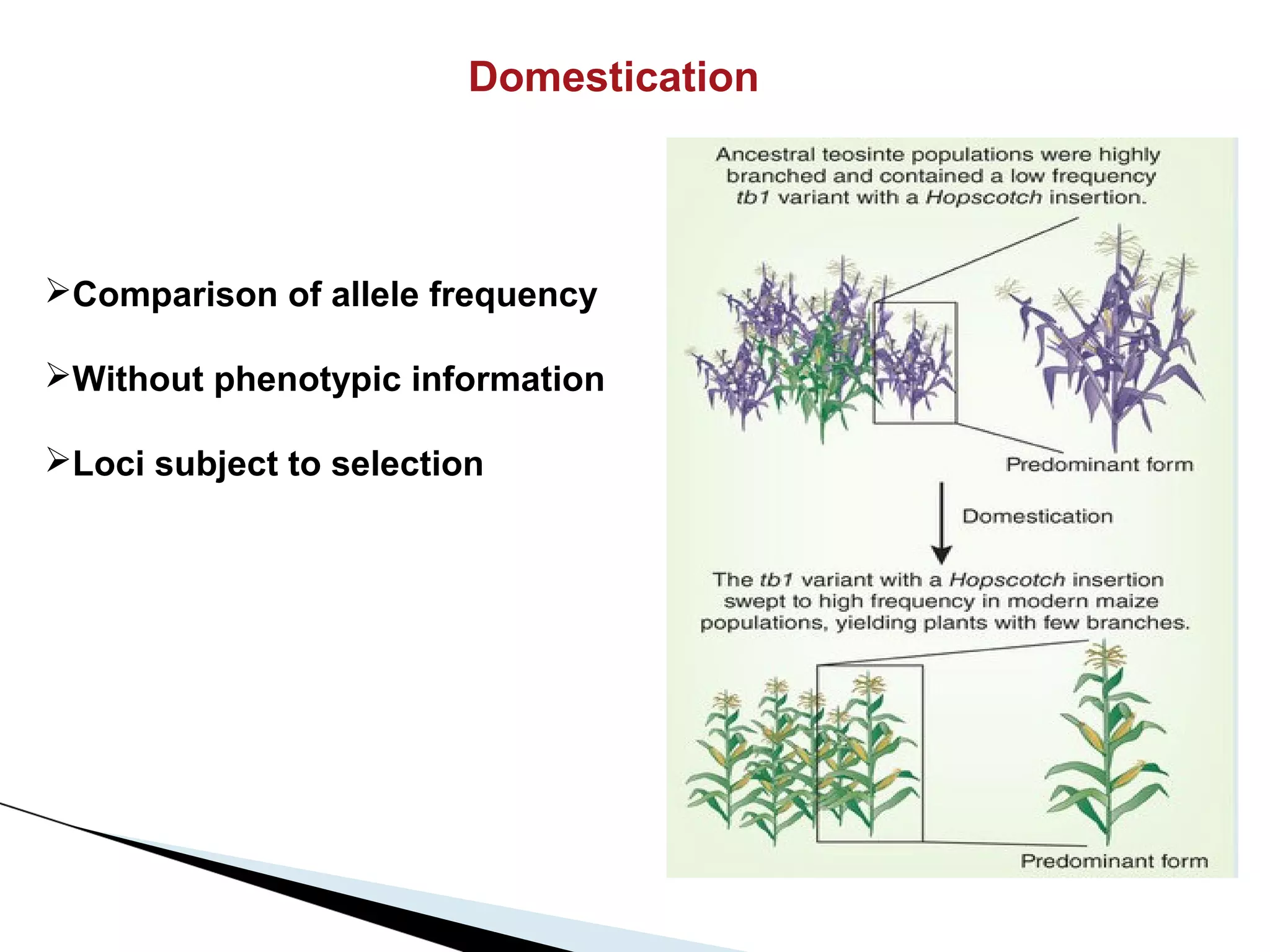
Domestication


Comparison of allele frequency

Without phenotypic information

Loci subject to selection
   Exploits LD in diverse population
   Human
   Crops
   Maize


Advantage
   Cheaper and high density markers


Disadvantage
   Spurious associations
   Greater precision but low power
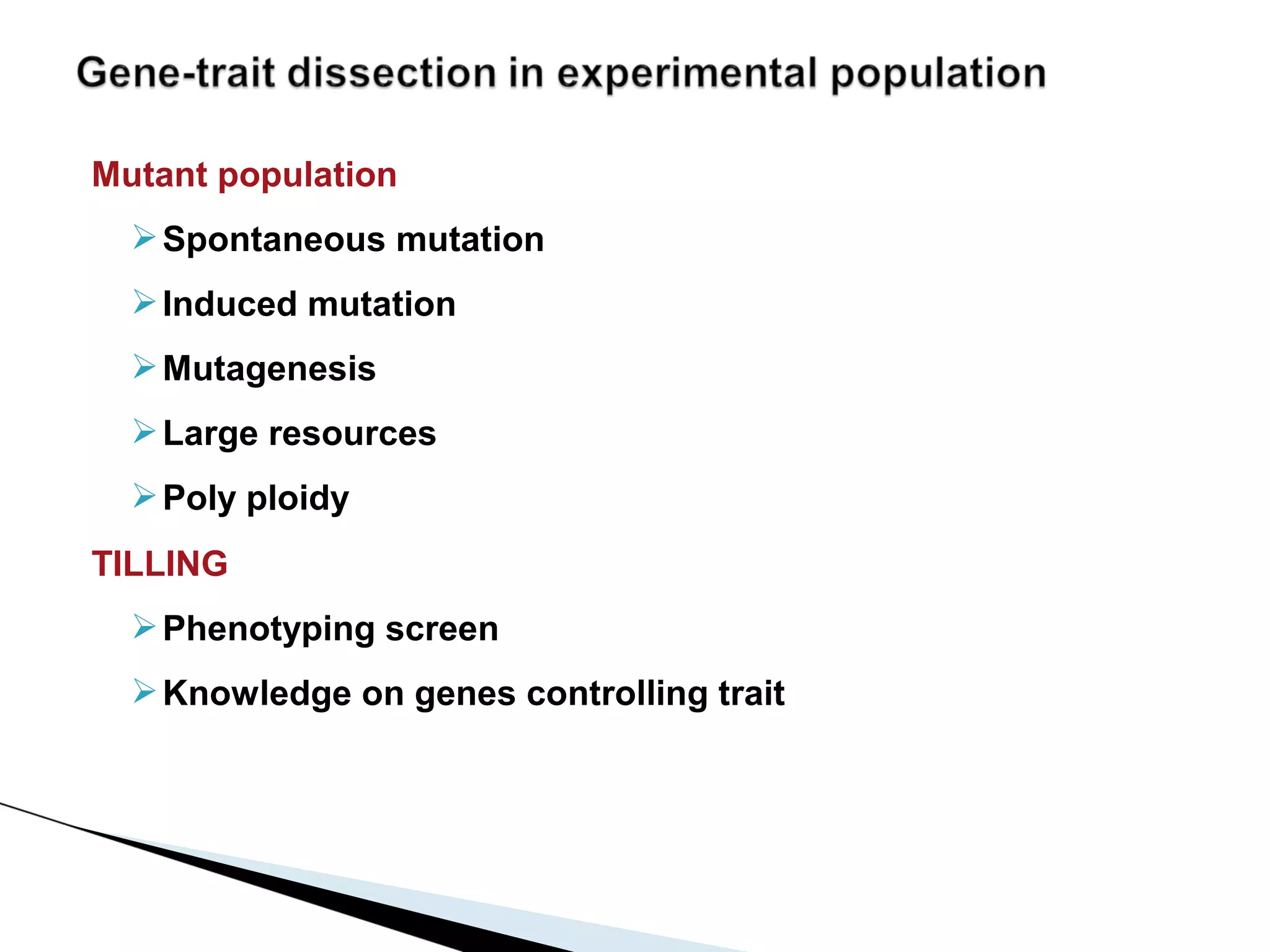
Mutant population
   Spontaneous mutation
   Induced mutation
   Mutagenesis
   Large resources
   Poly ploidy
TILLING
   Phenotyping screen
   Knowledge on genes controlling trait
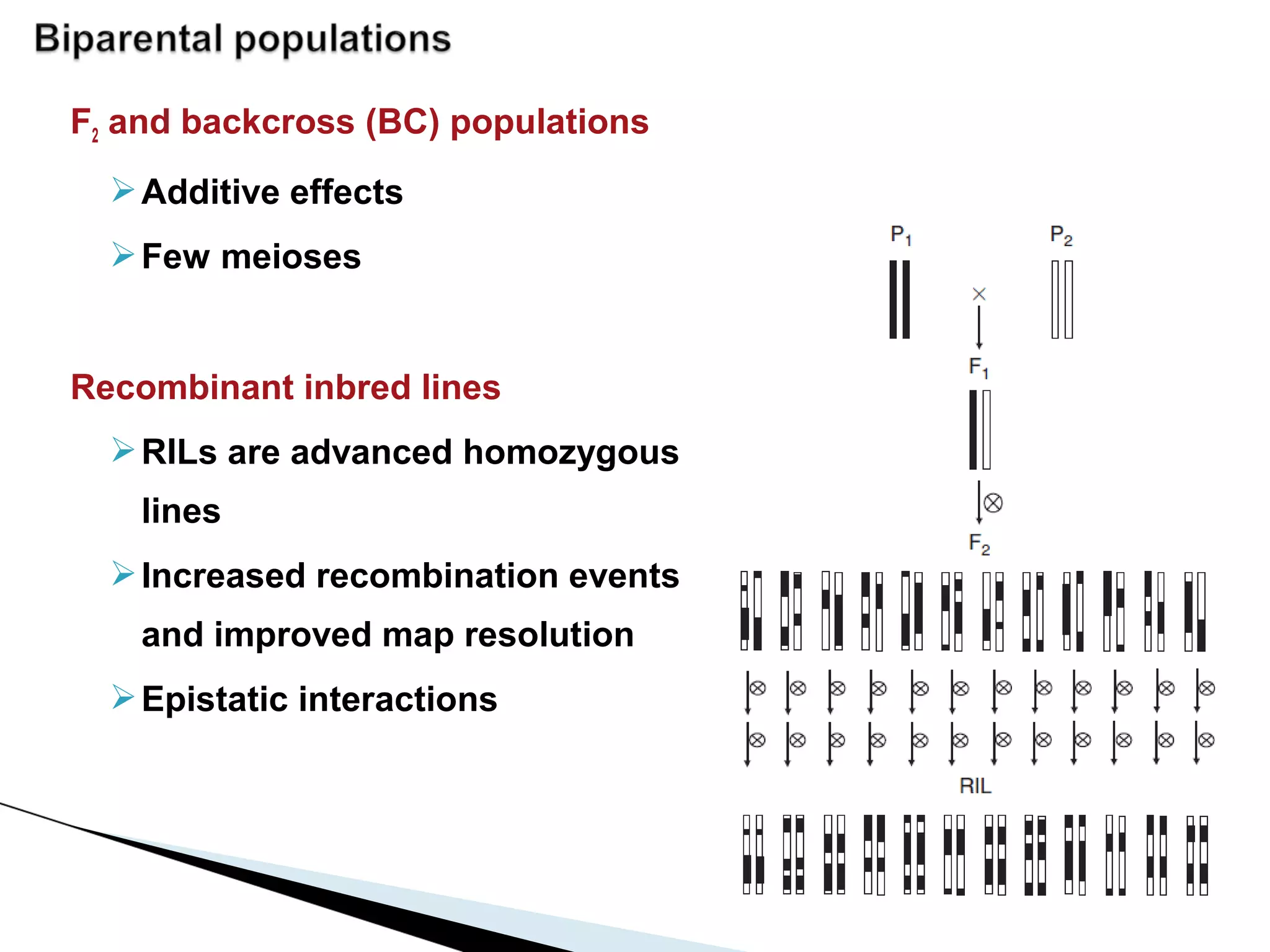
F2 and backcross (BC) populations
   Additive effects
   Few meioses


Recombinant inbred lines
   RILs are advanced homozygous
    lines
   Increased recombination events
    and improved map resolution
   Epistatic interactions
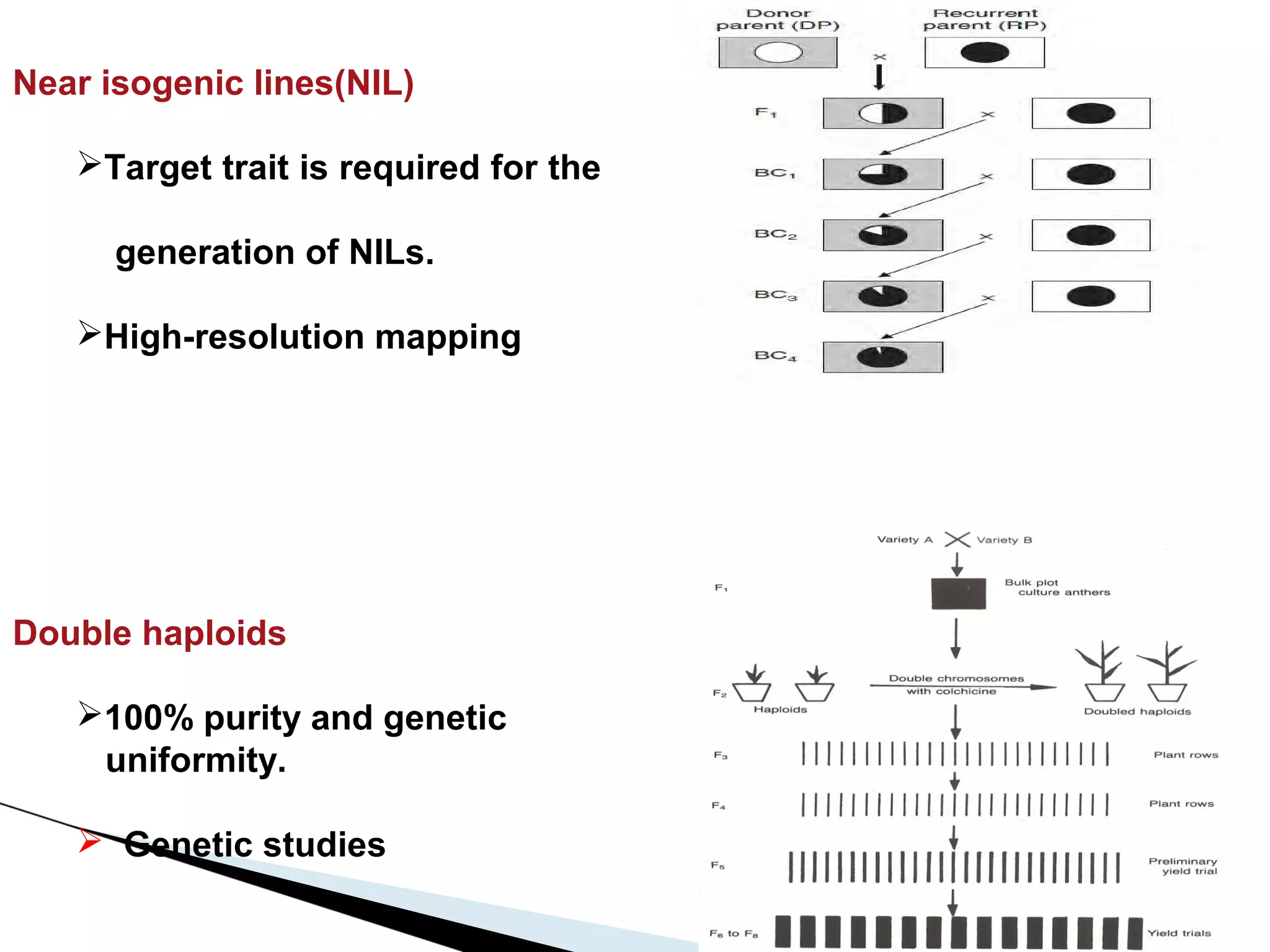
Near isogenic lines(NIL)

   Target trait is required for the

      generation of NILs.

   High-resolution mapping


Double haploids

   100% purity and genetic
    uniformity.

    Genetic studies
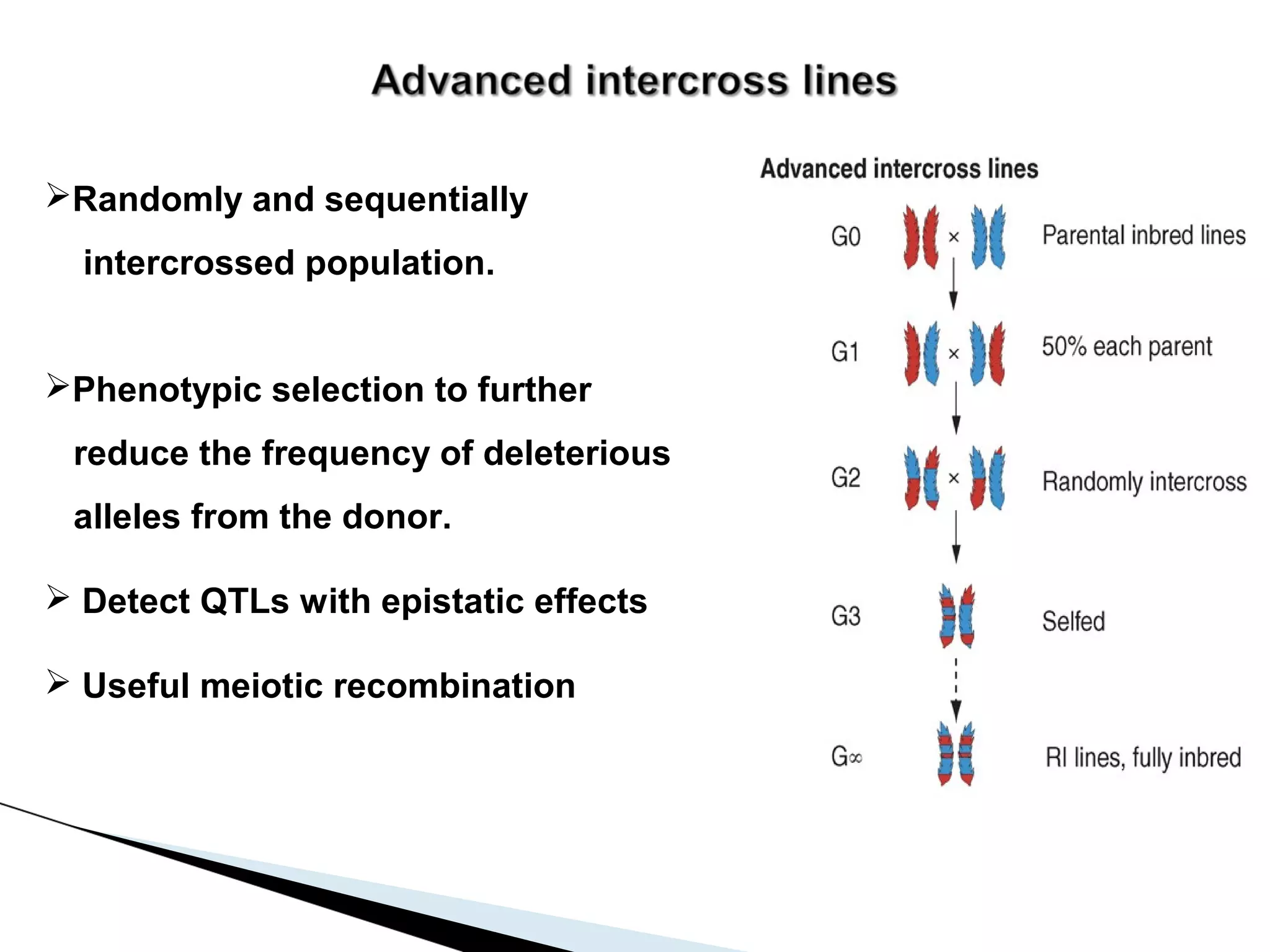
Randomly and sequentially
  intercrossed population.


Phenotypic selection to further
 reduce the frequency of deleterious
 alleles from the donor.

 Detect QTLs with epistatic effects

 Useful meiotic recombination
Linkage map
   DNA Markers
   Position and relative genetic distance
   For identifying chromosomal regions that contain genes
    controlling simple or complex traits using QTL analysis

   QTL mapping

   Advantage

     High detection power
     Few markers are required


   Disadvantage

     Large confidence interval of upto 5 to 30cM
     Limited resolution
     Only two alleles tested
Multiparent advanced generation intercross
   Animals. (Mott et al., 2000) and (Yalchin et al., 2005)

   Fine-mapping of multiple QTLs for multiple traits in the same
    population.

   Advanced intercrossed lines (AILs)

    Each generation reduces the extent of linkage disequilibrium
    (LD), thus allowing QTL to be mapped more accurately.

   Lines derived from early generations can be used for QTL
    detection and coarse mapping

   While those derived from later generations will only detect
    marker-trait associations if markers are located very close to
    the QTL.
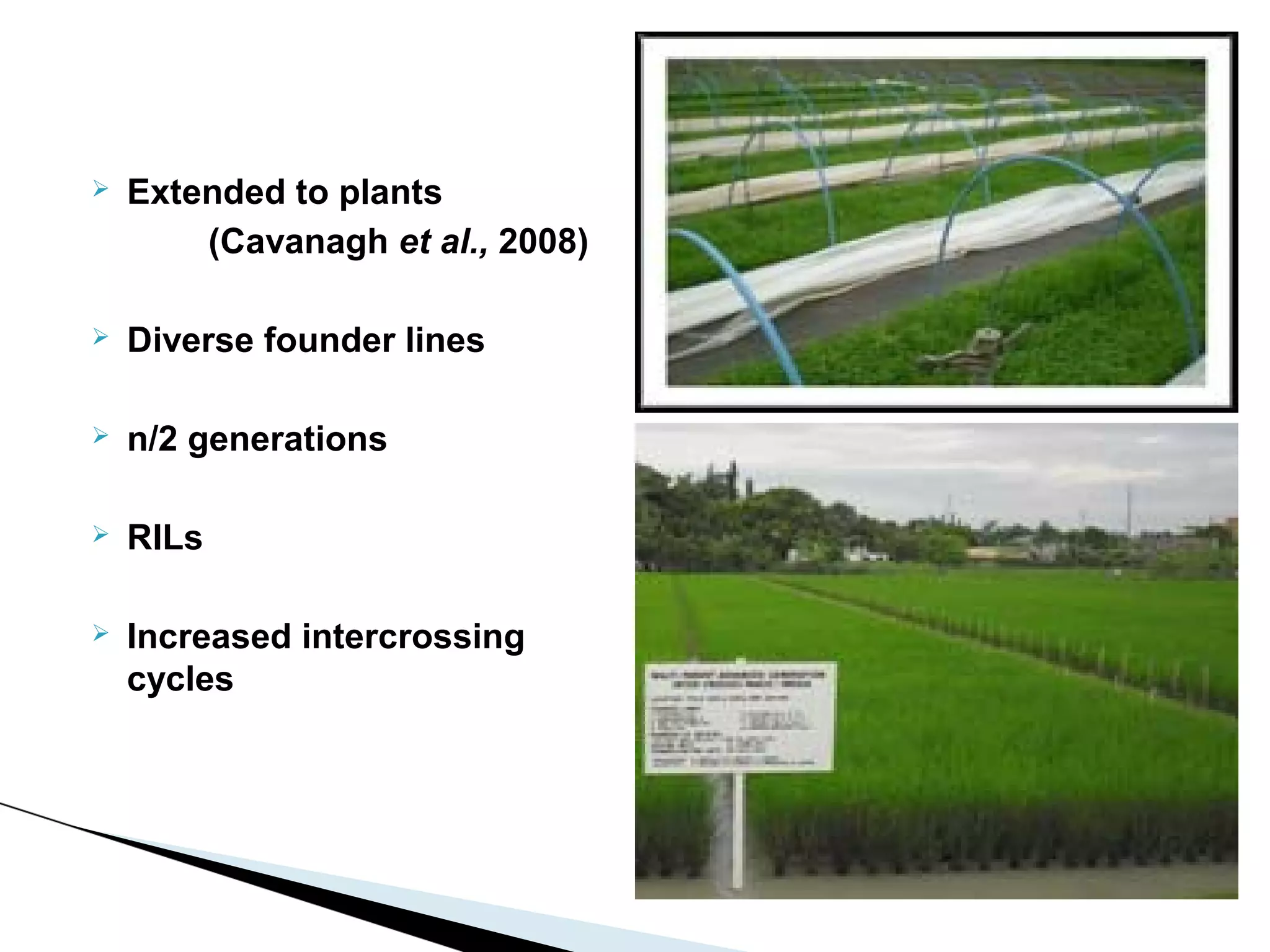
   Extended to plants
        (Cavanagh et al., 2008)

   Diverse founder lines

   n/2 generations

   RILs

   Increased intercrossing
    cycles
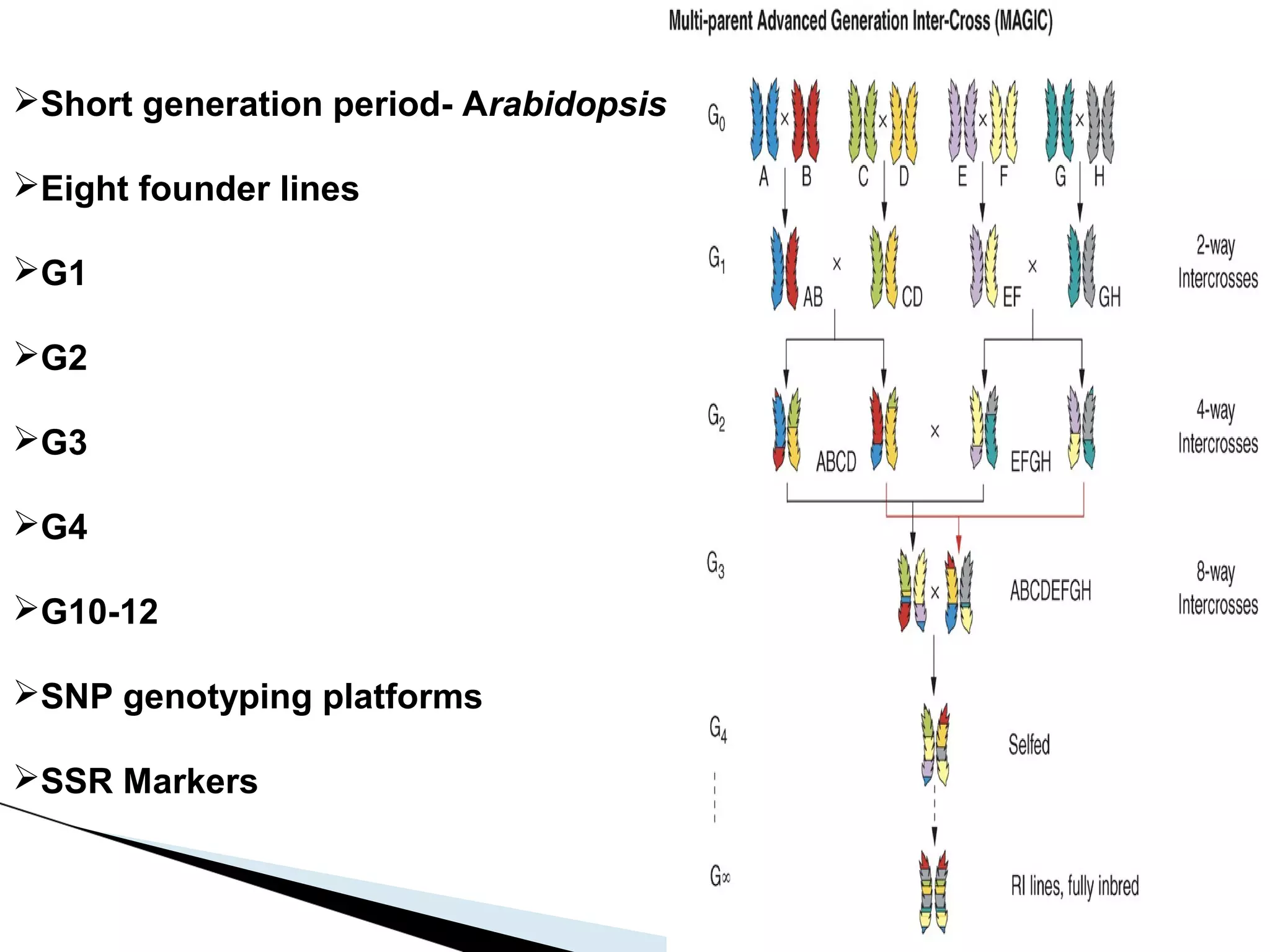
Short generation period- Arabidopsis

Eight founder lines

G1

G2

G3

G4

G10-12

SNP genotyping platforms

SSR Markers
   Statistics tools

   Linear mixed effect model and Hierarchical Bayes QTL
    mapping - study the interrelationship between individuals MLs
    and founder lines and increases the precision to detect QTL

   HAPPY- a software package for Multipoint QTL Mapping in
    Genetically Heterogeneous Animals

   R/mp Map- A computational platform for the genetic analysis of
    multi-parent recombinant inbred lines
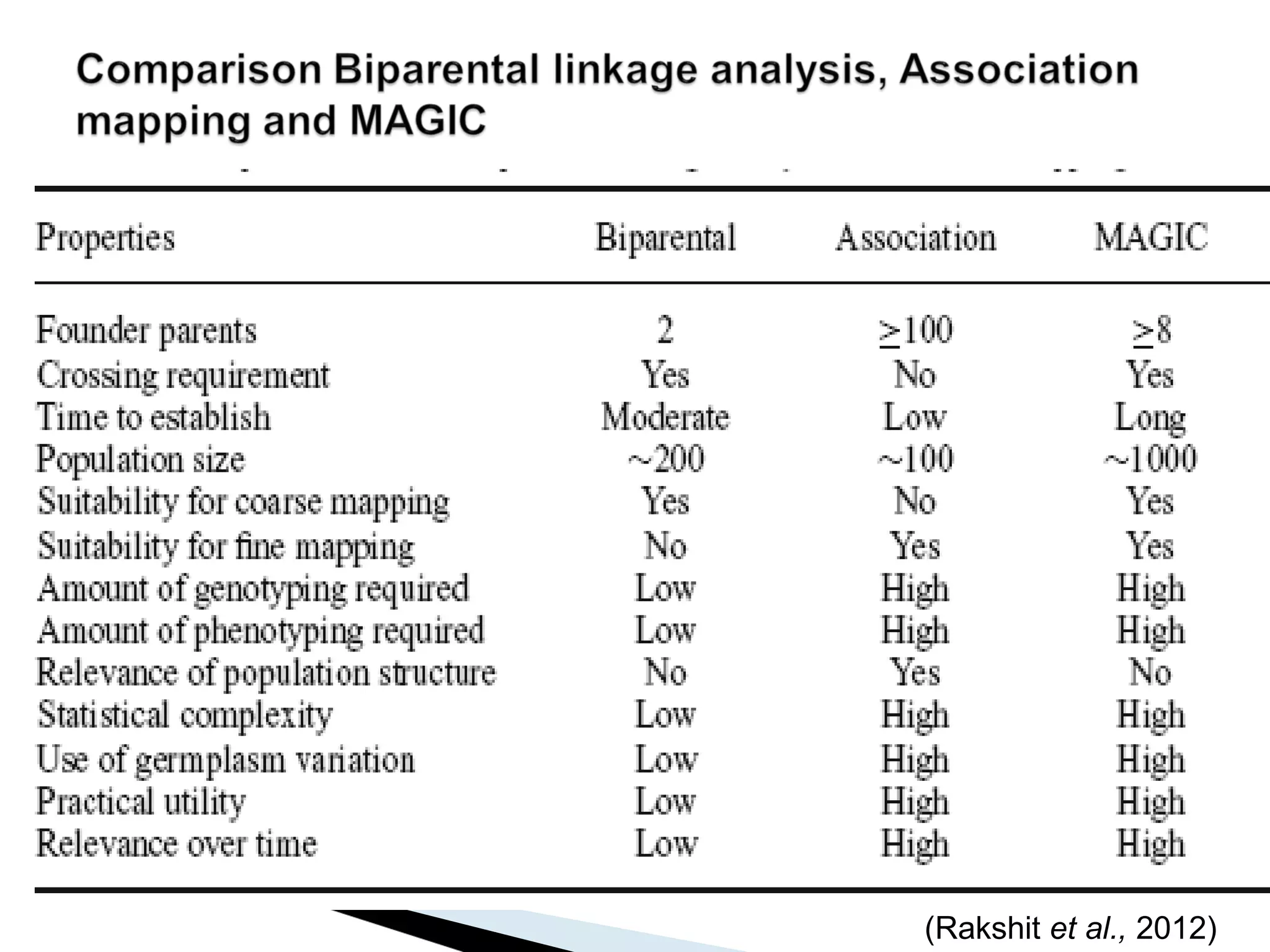
Advantages

   Shuffling the genes across different parents enable accurately
    ordering the genes

   Increased recombination - novel rearrangements of alleles and
    greater genetic diversity.

   Best combinations of genes for important traits development

   1000 Magic individuals

   Seeds retained - fine mapping

   Epistatic and G X E interactions

   Facilitate the discovery, identification and manipulation of new
    forms of allelic variability
Disadvantages

   Extensive segregation

   More time

   Large scale phenotyping
(Rakshit et al., 2012)
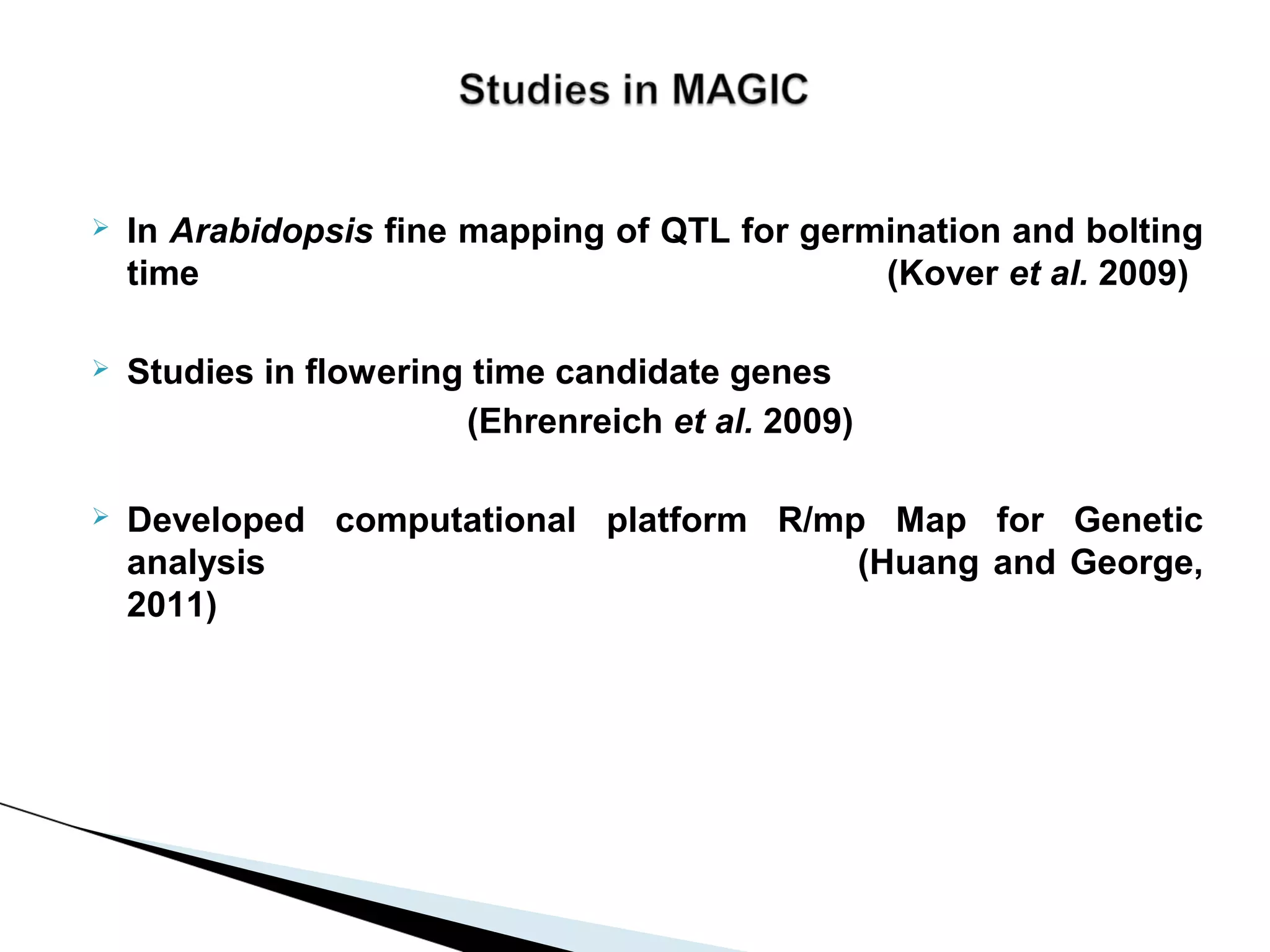
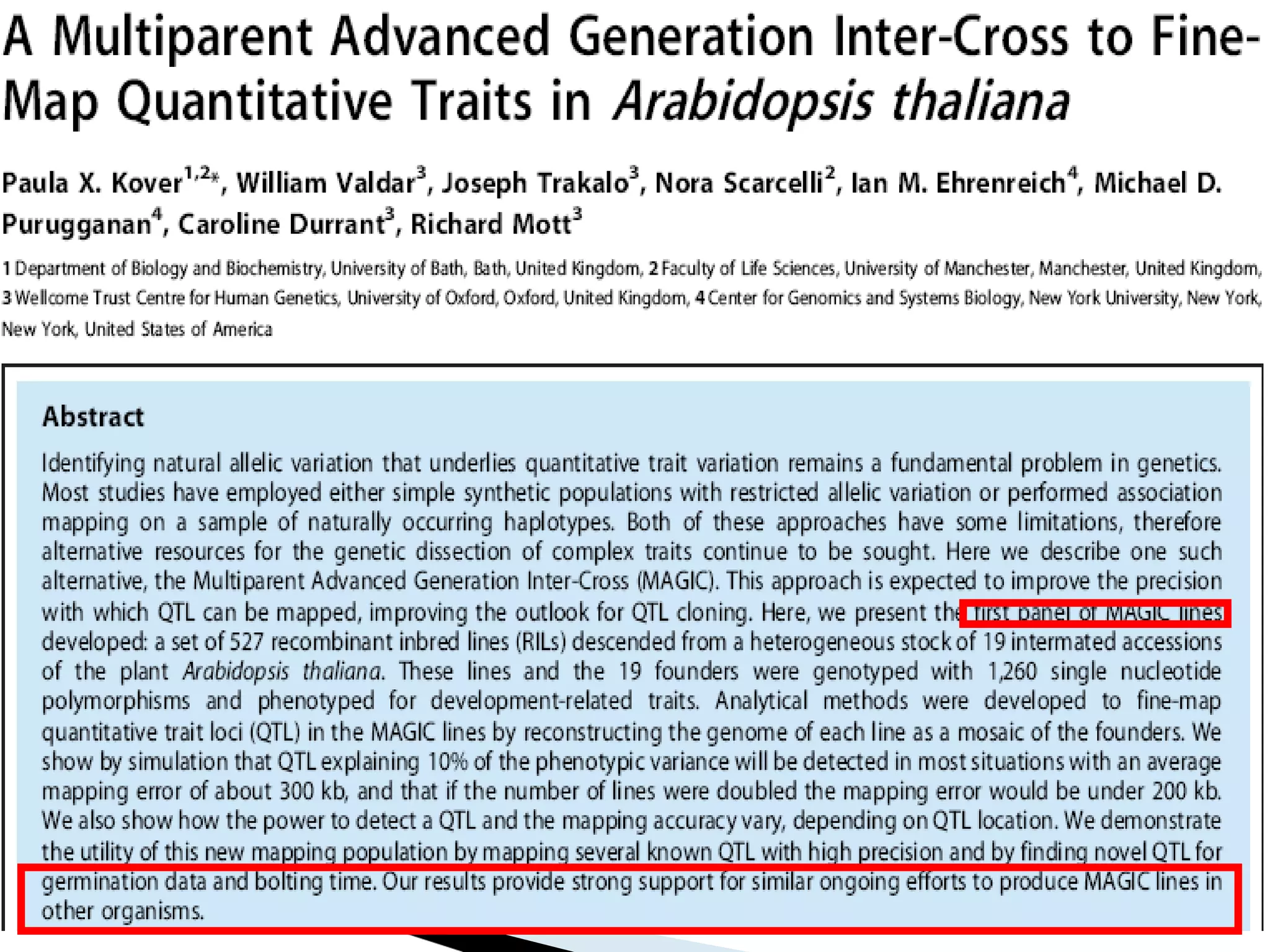
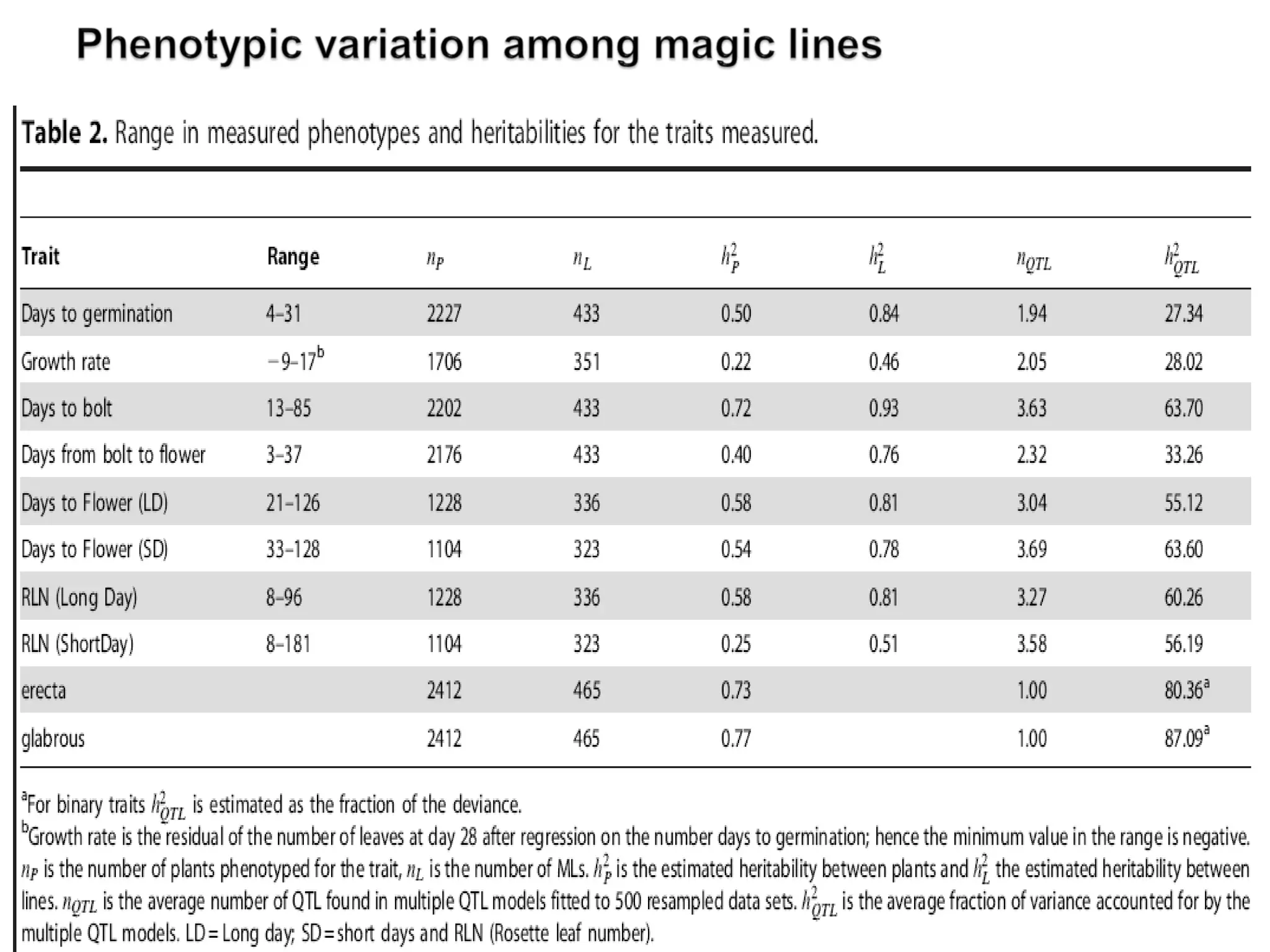
   In Arabidopsis fine mapping of QTL for germination and bolting
    time                                       (Kover et al. 2009)

   Studies in flowering time candidate genes
                        (Ehrenreich et al. 2009)

   Developed computational platform R/mp Map for Genetic
    analysis                             (Huang and George,
    2011)
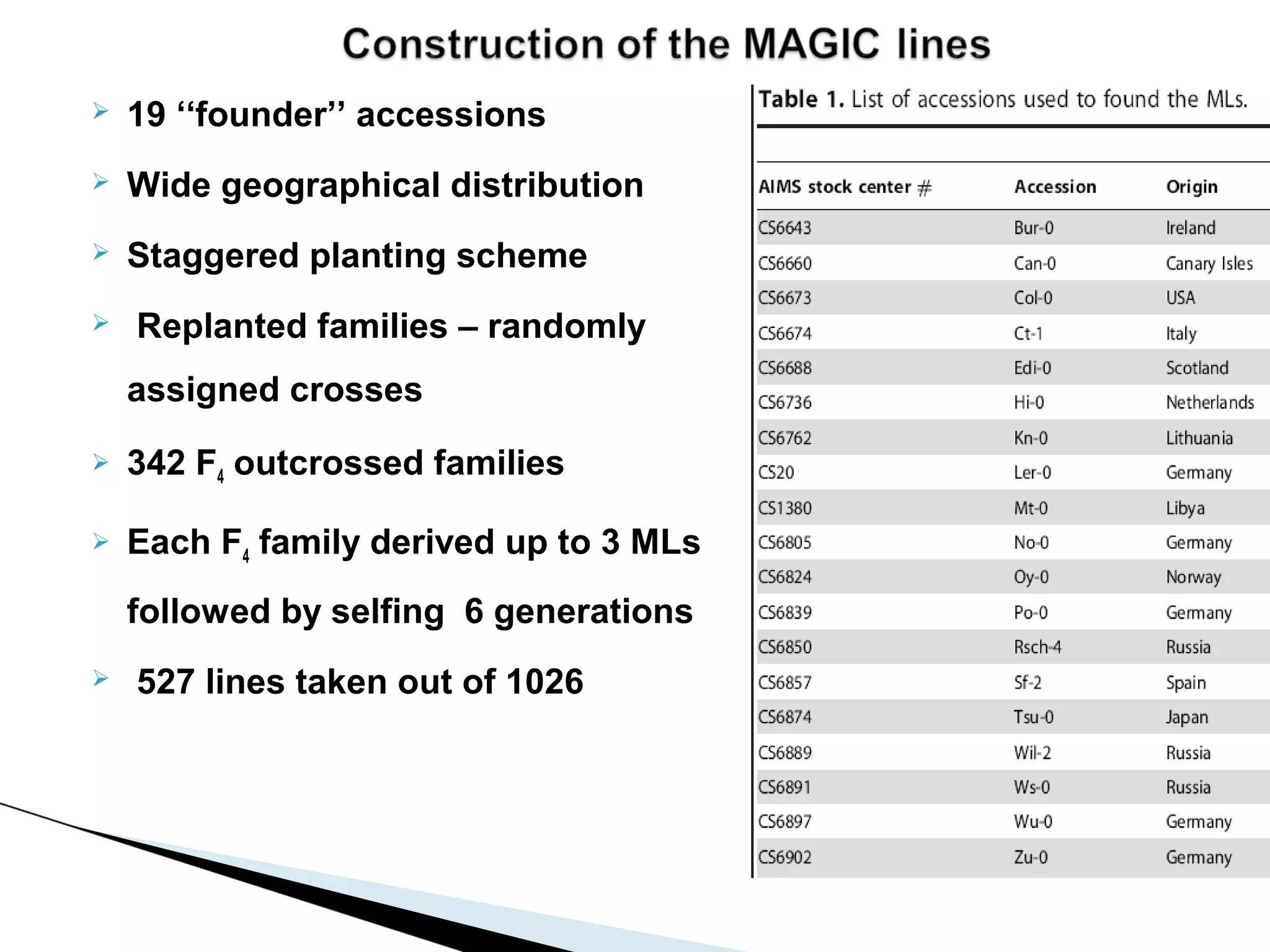
   19 ‘‘founder’’ accessions
   Wide geographical distribution
   Staggered planting scheme
   Replanted families – randomly
    assigned crosses
   342 F4 outcrossed families

   Each F4 family derived up to 3 MLs
    followed by selfing 6 generations
   527 lines taken out of 1026
   Developmental quantitative traits

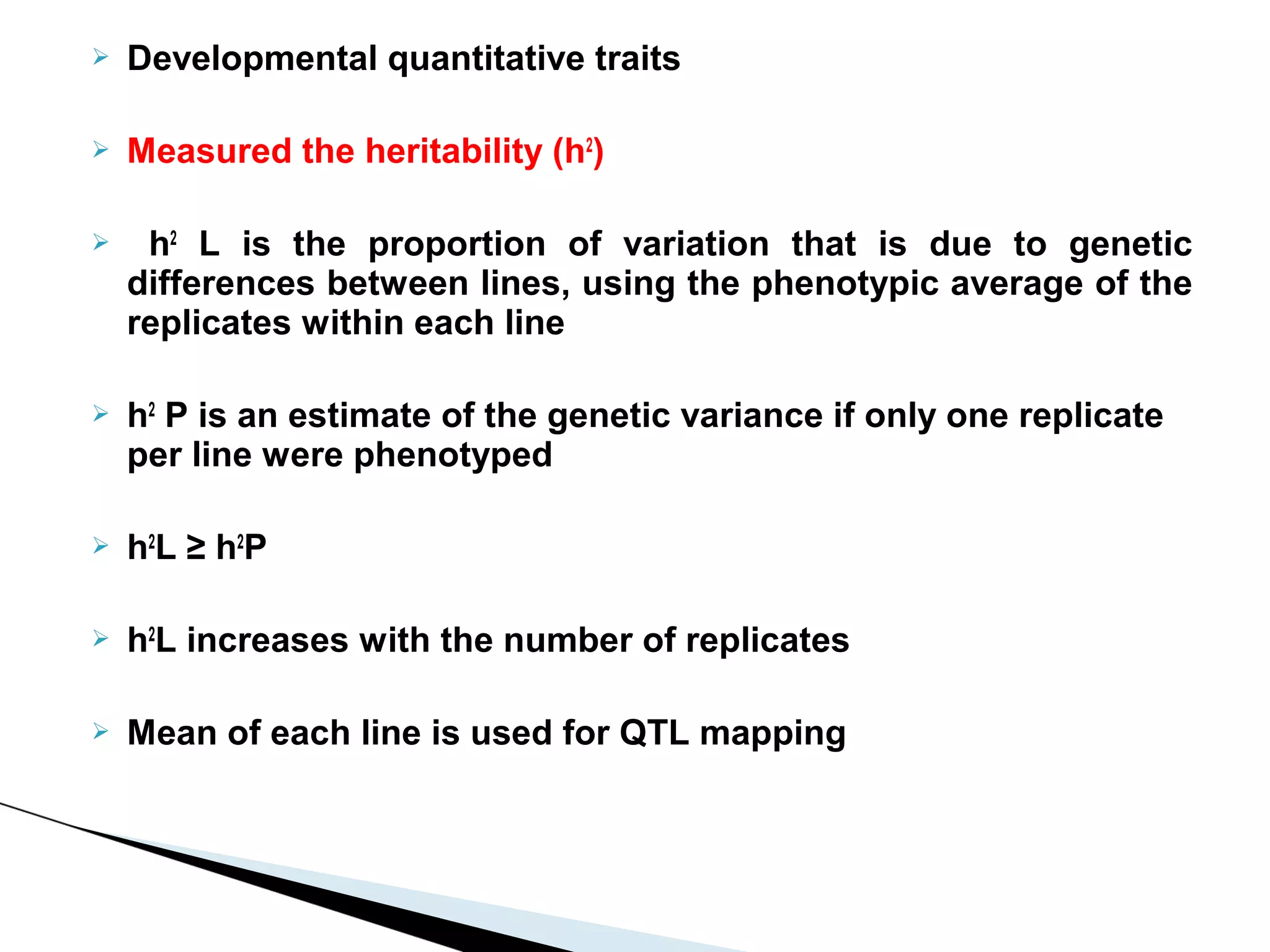
   Measured the heritability (h2)

    h2 L is the proportion of variation that is due to genetic
    differences between lines, using the phenotypic average of the
    replicates within each line

   h2 P is an estimate of the genetic variance if only one replicate
    per line were phenotyped

   h2L ≥ h2P

   h2L increases with the number of replicates

   Mean of each line is used for QTL mapping
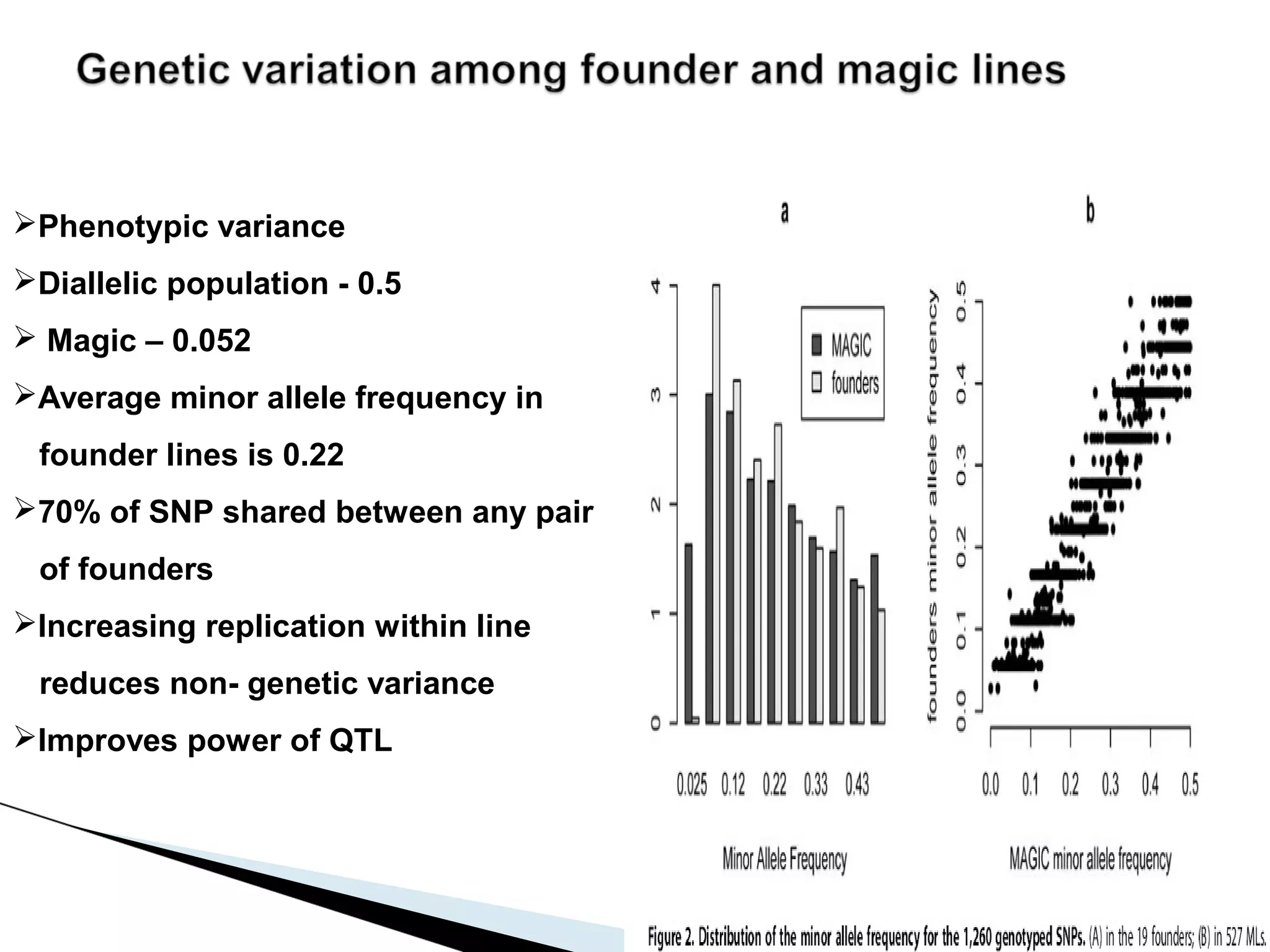
Phenotypic variance
Diallelic population - 0.5
 Magic – 0.052
Average minor allele frequency in
 founder lines is 0.22
70% of SNP shared between any pair
 of founders
Increasing replication within line
 reduces non- genetic variance
Improves power of QTL
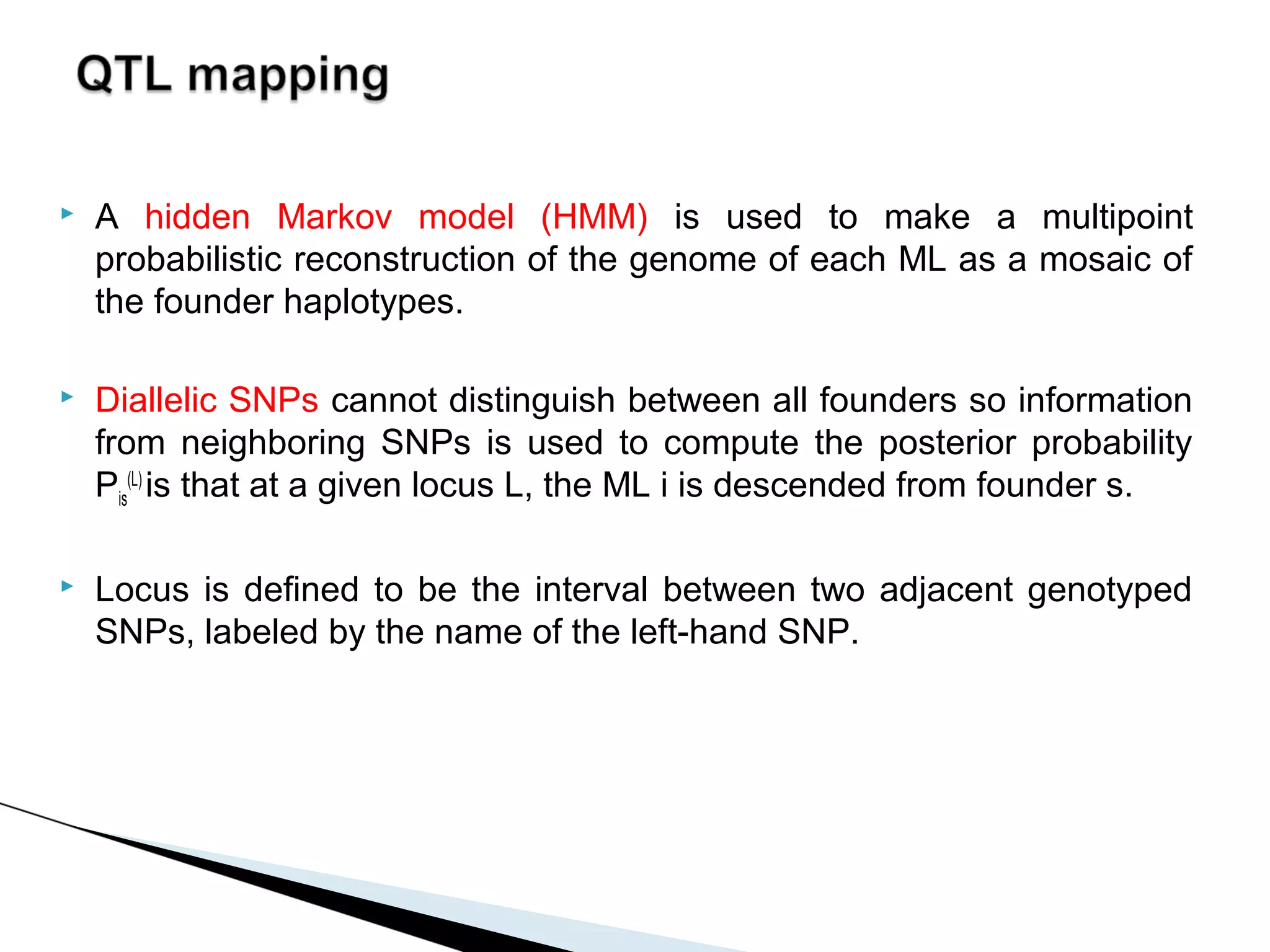
   A hidden Markov model (HMM) is used to make a multipoint
    probabilistic reconstruction of the genome of each ML as a mosaic of
    the founder haplotypes.

   Diallelic SNPs cannot distinguish between all founders so information
    from neighboring SNPs is used to compute the posterior probability
    Pis(L) is that at a given locus L, the ML i is descended from founder s.

   Locus is defined to be the interval between two adjacent genotyped
    SNPs, labeled by the name of the left-hand SNP.
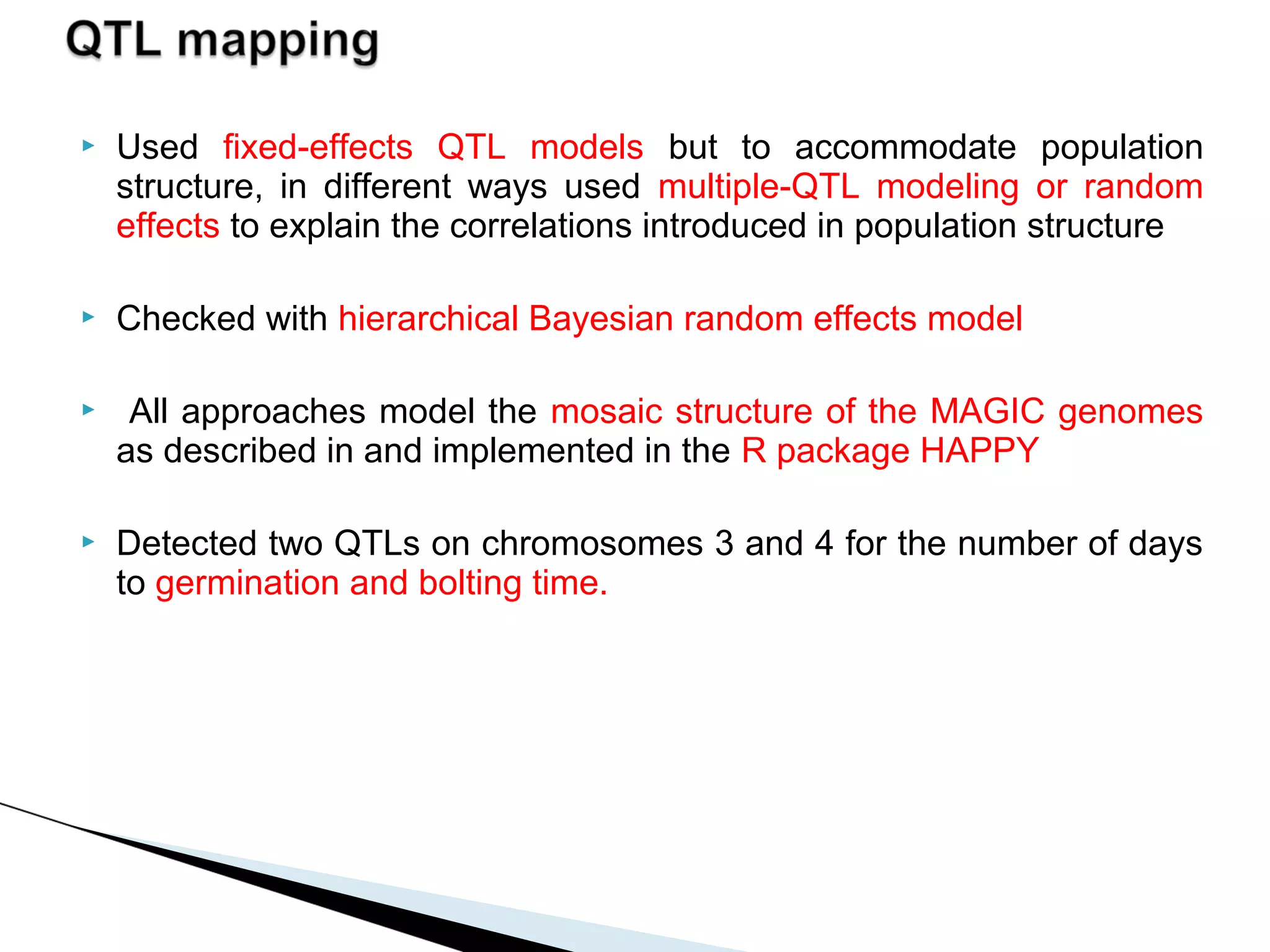
   Used fixed-effects QTL models but to accommodate population
    structure, in different ways used multiple-QTL modeling or random
    effects to explain the correlations introduced in population structure

   Checked with hierarchical Bayesian random effects model

    All approaches model the mosaic structure of the MAGIC genomes
    as described in and implemented in the R package HAPPY

   Detected two QTLs on chromosomes 3 and 4 for the number of days
    to germination and bolting time.
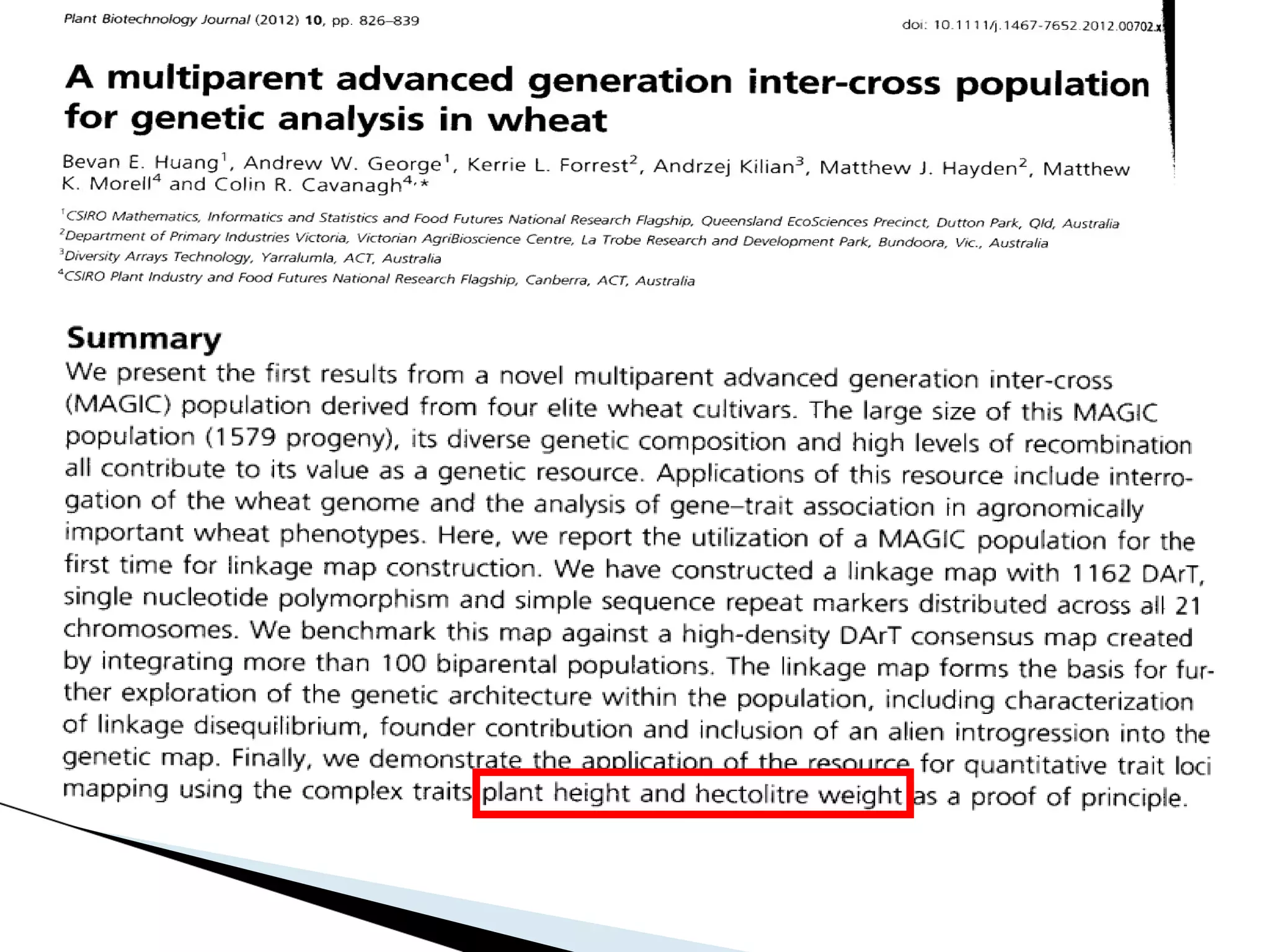
   Constructed a linkage map from a four parent MAGIC population and
    validate it against a comprehensive DArT consensus map drawing
    together maps from over 100 biparental populations

   Incorporated the alien introgressions in to the linkage map

   Level of LD across the genome and compare it with previous
    estimates for LD from previous studies

   The power and precision of MAGIC for QTL mapping for plant height ,
    an important trait for yield potential
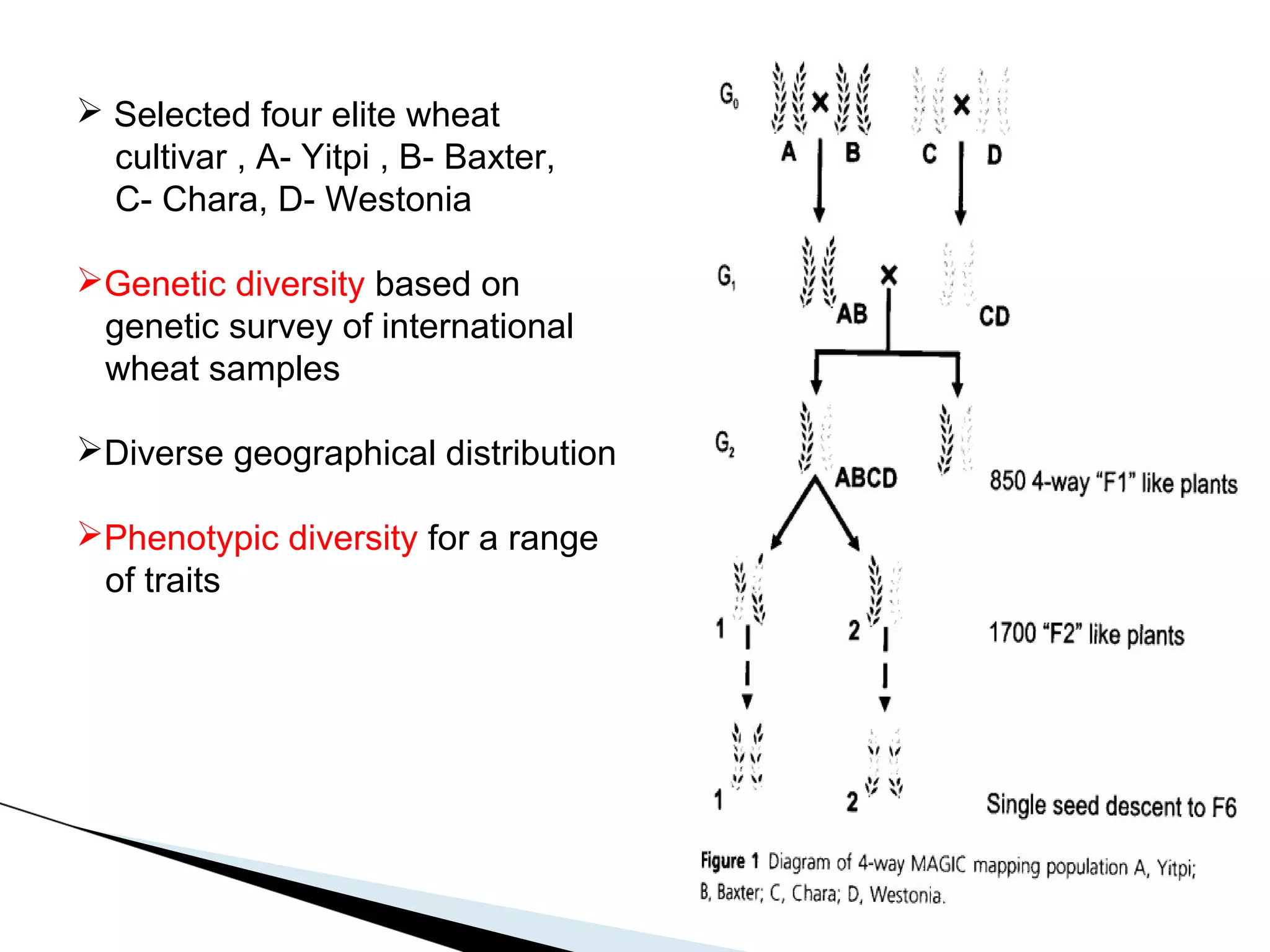
 Selected four elite wheat
  cultivar , A- Yitpi , B- Baxter,
  C- Chara, D- Westonia

Genetic diversity based on
 genetic survey of international
 wheat samples

Diverse geographical distribution

Phenotypic diversity for a range
 of traits
Genotyping

   Used 1285 DArT markers, 57 SSR markers and 1536 SNPs

   384 SNPs observed to be polymorphic among the parental lines
     were selected for genome wide coverage

Phenotyping

   1100 RILs – Plant height was recorded
   R package mpMap

   Filtered with monomorphic markers

   Estimated the recombination fraction all pairs of loci with function
    ‘mpestrf’

   Grouped the markers based on estimated recombination fractions
    and LOD scores with the function ‘mpgroup’

   For map resolution computed recombination events for all lines
    using the function ‘mpprob’

   Which calculates the multipoint probablity at each locus that the
    observed genotype is inherited from each of the four founder
   Both internal and external comparisons was done

   Examined a series of diagnostic plots to propose changes to
    ordering which were then tested through ‘ compare orders’ function
    in R/mpMap

   Used heatmaps based on both recombination fractions and LD
    using R/Ldheatmap

   The tool provided visualization of the relationships between all pairs
    of markers
External comparison

   Diagnostic checks are compared it to an external DArT consensus
    wheat map

   Each individual consensus map was based on genotyping involving
    the analyis of between 206 and 1525markers, with an average
    density of 582 markers
   Test the introgression in magic population

   Sr36 is an introgression from Triticum timopheevii for stem rust
    resistance – carried in variety Baxter on chromosome 2B cause
    segregation distortion

   Aimed to identify markers associated with it and identify lines
    containing it

   Computed the degree of segregation distortion for which i) the
    Baxter allele differed from all other founder alleles

   ii) mutual recombination of < 0.05 was observed were tagged as
    potential markers in the introgression

   Estimated the probablity of a line having inherited an allele from the
    founder Baxter for the identified markers(‘mpprob’)
Linkage disequilbrium

   Multipoint probablities were computed using the function ‘mpprob’ in
    R/mpMap and LD was computed using the function ‘mpcalcld’

QTL Mapping

   For all analyses used the ‘mplMmm’ function in the R package
    mpMap, which performs the interval mapping in the context of a
    linear mixed model

   Three QTL for plant height were detected near known genes on
    chromosomes 2D, 4B, 4D.
   (MAGIC) populations combine the advantages of linkage analysis and
    association studies.

   The increased recombination in MAGIC populations leads to novel
    rearrangements of alleles and greater genetic diversity

   Can facilitate the discovery, identification and manipulation of new
    forms of allelic variability

   They require longer time and more resource to be generated and they
    are likely to show extensive segregation for developmental traits.

   MAGIC populations are likely to bring paradigm shift towards QTL
    analysis in plant species
   The experimental method was underway since it has to be studied
    in many crops

   The tools used for QTL mapping are very complex, so simplified
    models has to be developed in near future for understanding.

   In near future the method will bring success in finding our economic
    interest of traits in plants.

MAGIC :Multiparent advanced generation intercross and QTL discovery

  • 1.
    MAGIC, Multiparent advancedgeneration intercross a new genetic resource for multiple trait improvement and QTL discovery in crops G.Kalidasan
  • 2.
    Quantitative traits  Phenotype expression  Natural variation  Experimental System  Selection or Natural Population  Experimental Population  Multiparent Advanced Generation Intercross Population  Case Studies
  • 3.
    Selection and Naturalpopulations Selection experiments Marker allele frequency – Unrelated individuals Many generations Difference in phenotype LD between QTL and marker LD around a QTL
  • 4.
    Domestication Comparison of allelefrequency Without phenotypic information Loci subject to selection
  • 5.
    Exploits LD in diverse population  Human  Crops  Maize Advantage  Cheaper and high density markers Disadvantage  Spurious associations  Greater precision but low power
  • 6.
    Mutant population  Spontaneous mutation  Induced mutation  Mutagenesis  Large resources  Poly ploidy TILLING  Phenotyping screen  Knowledge on genes controlling trait
  • 7.
    F2 and backcross(BC) populations  Additive effects  Few meioses Recombinant inbred lines  RILs are advanced homozygous lines  Increased recombination events and improved map resolution  Epistatic interactions
  • 8.
    Near isogenic lines(NIL) Target trait is required for the generation of NILs. High-resolution mapping Double haploids 100% purity and genetic uniformity.  Genetic studies
  • 9.
    Randomly and sequentially intercrossed population. Phenotypic selection to further reduce the frequency of deleterious alleles from the donor.  Detect QTLs with epistatic effects  Useful meiotic recombination
  • 10.
    Linkage map  DNA Markers  Position and relative genetic distance  For identifying chromosomal regions that contain genes controlling simple or complex traits using QTL analysis  QTL mapping  Advantage  High detection power  Few markers are required   Disadvantage  Large confidence interval of upto 5 to 30cM  Limited resolution  Only two alleles tested
  • 11.
    Multiparent advanced generationintercross  Animals. (Mott et al., 2000) and (Yalchin et al., 2005)  Fine-mapping of multiple QTLs for multiple traits in the same population.  Advanced intercrossed lines (AILs)  Each generation reduces the extent of linkage disequilibrium (LD), thus allowing QTL to be mapped more accurately.  Lines derived from early generations can be used for QTL detection and coarse mapping  While those derived from later generations will only detect marker-trait associations if markers are located very close to the QTL.
  • 12.
    Extended to plants (Cavanagh et al., 2008)  Diverse founder lines  n/2 generations  RILs  Increased intercrossing cycles
  • 13.
    Short generation period-Arabidopsis Eight founder lines G1 G2 G3 G4 G10-12 SNP genotyping platforms SSR Markers
  • 14.
    Statistics tools  Linear mixed effect model and Hierarchical Bayes QTL mapping - study the interrelationship between individuals MLs and founder lines and increases the precision to detect QTL  HAPPY- a software package for Multipoint QTL Mapping in Genetically Heterogeneous Animals  R/mp Map- A computational platform for the genetic analysis of multi-parent recombinant inbred lines
  • 15.
    Advantages  Shuffling the genes across different parents enable accurately ordering the genes  Increased recombination - novel rearrangements of alleles and greater genetic diversity.  Best combinations of genes for important traits development  1000 Magic individuals  Seeds retained - fine mapping  Epistatic and G X E interactions  Facilitate the discovery, identification and manipulation of new forms of allelic variability
  • 16.
    Disadvantages  Extensive segregation  More time  Large scale phenotyping
  • 17.
  • 18.
    In Arabidopsis fine mapping of QTL for germination and bolting time (Kover et al. 2009)  Studies in flowering time candidate genes (Ehrenreich et al. 2009)  Developed computational platform R/mp Map for Genetic analysis (Huang and George, 2011)
  • 20.
    19 ‘‘founder’’ accessions  Wide geographical distribution  Staggered planting scheme  Replanted families – randomly assigned crosses  342 F4 outcrossed families  Each F4 family derived up to 3 MLs followed by selfing 6 generations  527 lines taken out of 1026
  • 22.
    Developmental quantitative traits  Measured the heritability (h2)  h2 L is the proportion of variation that is due to genetic differences between lines, using the phenotypic average of the replicates within each line  h2 P is an estimate of the genetic variance if only one replicate per line were phenotyped  h2L ≥ h2P  h2L increases with the number of replicates  Mean of each line is used for QTL mapping
  • 23.
    Phenotypic variance Diallelic population- 0.5  Magic – 0.052 Average minor allele frequency in founder lines is 0.22 70% of SNP shared between any pair of founders Increasing replication within line reduces non- genetic variance Improves power of QTL
  • 24.
    A hidden Markov model (HMM) is used to make a multipoint probabilistic reconstruction of the genome of each ML as a mosaic of the founder haplotypes.  Diallelic SNPs cannot distinguish between all founders so information from neighboring SNPs is used to compute the posterior probability Pis(L) is that at a given locus L, the ML i is descended from founder s.  Locus is defined to be the interval between two adjacent genotyped SNPs, labeled by the name of the left-hand SNP.
  • 25.
    Used fixed-effects QTL models but to accommodate population structure, in different ways used multiple-QTL modeling or random effects to explain the correlations introduced in population structure  Checked with hierarchical Bayesian random effects model  All approaches model the mosaic structure of the MAGIC genomes as described in and implemented in the R package HAPPY  Detected two QTLs on chromosomes 3 and 4 for the number of days to germination and bolting time.
  • 27.
    Constructed a linkage map from a four parent MAGIC population and validate it against a comprehensive DArT consensus map drawing together maps from over 100 biparental populations  Incorporated the alien introgressions in to the linkage map  Level of LD across the genome and compare it with previous estimates for LD from previous studies  The power and precision of MAGIC for QTL mapping for plant height , an important trait for yield potential
  • 28.
     Selected fourelite wheat cultivar , A- Yitpi , B- Baxter, C- Chara, D- Westonia Genetic diversity based on genetic survey of international wheat samples Diverse geographical distribution Phenotypic diversity for a range of traits
  • 29.
    Genotyping  Used 1285 DArT markers, 57 SSR markers and 1536 SNPs  384 SNPs observed to be polymorphic among the parental lines were selected for genome wide coverage Phenotyping  1100 RILs – Plant height was recorded
  • 30.
    R package mpMap  Filtered with monomorphic markers  Estimated the recombination fraction all pairs of loci with function ‘mpestrf’  Grouped the markers based on estimated recombination fractions and LOD scores with the function ‘mpgroup’  For map resolution computed recombination events for all lines using the function ‘mpprob’  Which calculates the multipoint probablity at each locus that the observed genotype is inherited from each of the four founder
  • 31.
    Both internal and external comparisons was done  Examined a series of diagnostic plots to propose changes to ordering which were then tested through ‘ compare orders’ function in R/mpMap  Used heatmaps based on both recombination fractions and LD using R/Ldheatmap  The tool provided visualization of the relationships between all pairs of markers
  • 32.
    External comparison  Diagnostic checks are compared it to an external DArT consensus wheat map  Each individual consensus map was based on genotyping involving the analyis of between 206 and 1525markers, with an average density of 582 markers
  • 33.
    Test the introgression in magic population  Sr36 is an introgression from Triticum timopheevii for stem rust resistance – carried in variety Baxter on chromosome 2B cause segregation distortion  Aimed to identify markers associated with it and identify lines containing it  Computed the degree of segregation distortion for which i) the Baxter allele differed from all other founder alleles  ii) mutual recombination of < 0.05 was observed were tagged as potential markers in the introgression  Estimated the probablity of a line having inherited an allele from the founder Baxter for the identified markers(‘mpprob’)
  • 34.
    Linkage disequilbrium  Multipoint probablities were computed using the function ‘mpprob’ in R/mpMap and LD was computed using the function ‘mpcalcld’ QTL Mapping  For all analyses used the ‘mplMmm’ function in the R package mpMap, which performs the interval mapping in the context of a linear mixed model  Three QTL for plant height were detected near known genes on chromosomes 2D, 4B, 4D.
  • 35.
    (MAGIC) populations combine the advantages of linkage analysis and association studies.  The increased recombination in MAGIC populations leads to novel rearrangements of alleles and greater genetic diversity  Can facilitate the discovery, identification and manipulation of new forms of allelic variability  They require longer time and more resource to be generated and they are likely to show extensive segregation for developmental traits.  MAGIC populations are likely to bring paradigm shift towards QTL analysis in plant species
  • 36.
    The experimental method was underway since it has to be studied in many crops  The tools used for QTL mapping are very complex, so simplified models has to be developed in near future for understanding.  In near future the method will bring success in finding our economic interest of traits in plants.

Editor's Notes

  • #10 By waiting until an advanced generation, one could allow for phenotypic selection to further reduce the frequency of deleterious or undesirable alleles from the donor.