Design for business impact:
How design triggers transformation


                        Ravi Chhatpar
                     Strategy Director,
                    December 10, 2010
we are frog
what does it mean for design to have
        business impact?
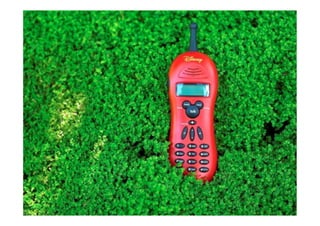
design transforms brands
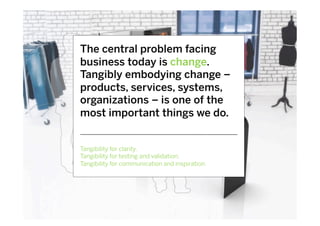
The central problem facing
business today is change.
Tangibly embodying change –
products, services, systems,
organizations – is one of the
most important things we do.


Tangibility for clarity.
Tangibility for testing and validation.
Tangibility for communication and inspiration.
1
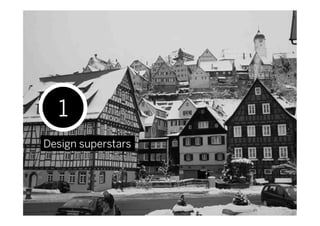
Design superstars
Strategic design


  1                 2
Design superstars
innovative insights
inspire
innovative design.
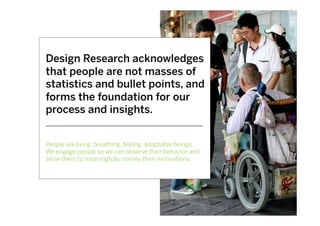
Design Research acknowledges
that people are not masses of
statistics and bullet points, and
forms the foundation for our
process and insights.


People are living, breathing, feeling, adaptable beings.
We engage people so we can observe their behavior and
allow them to meaningfully convey their motivations.
More process: business strategy, ethnography,
  cognitive science, psychology, technology


     Solutions                Participant                                   Opportunity
                               Quotes                 Technology                Map     Participant
                 Insights                    Behavior   Insights
Archive                                       Modes                                      Boards
                        Consumer Trends                       Experience Brand Audit
                                            Framework
                                                                Timeline
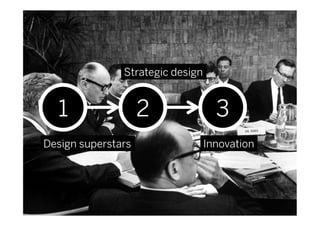
Strategic design


  1                 2               3
Design superstars                 Innovation
Design: more than just drawing and sketching
Design as a management philosophy to drive
innovation
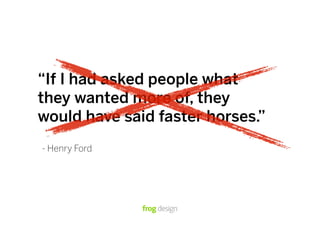
“If I had asked people what
they wanted more of, they
would have said faster horses.”
- Henry Ford
“It is not enough for a man to
know how to ride; he must
know how to fall.”
- Old Mexican proverb
Accepting the cost of failure
The customer story

             awareness                    endorsement
             exposure                     recommend


  motivation             adoption
  triggers               action


                                    USE


                                                      meaning
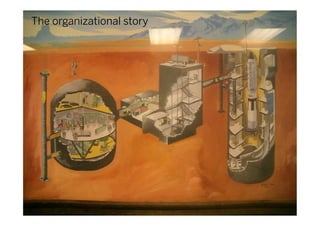
The organizational story
Embracing the coarse process
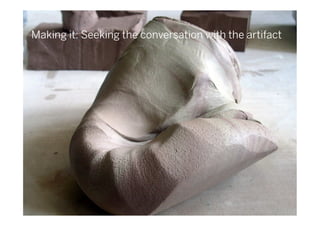
Making it: Seeking the conversation with the artifact
From vision to making the design a reality
FAILURE POINTS


        INSIGHT                      DESIGN                BUILD


“the planners, strategists      then the designers   then development
and design researchers              “design it”       teams “build it”
     do their thing”
INSIGHT              DESIGN            BUILD


 convergence of                convergence of design
insight with design              with development
INSIGHT          DESIGN              BUILD


 convergence of                       convergence of design
insight with design                     with development


                3rd level of convergence:
       prototyping, development, engineering
           become a source of ideas directly
       impacting the vision and the solutions.
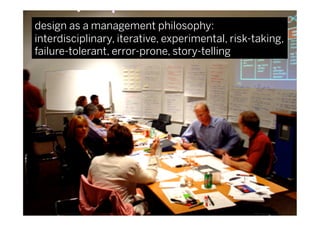
design as a management philosophy:
interdisciplinary, iterative, experimental, risk-taking,
failure-tolerant, error-prone, story-telling
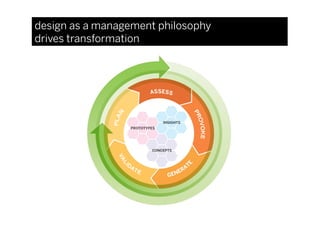
design as a management philosophy
drives transformation
the challenge of design that transforms
Commonly heard from our clients…

     We already tried that,
      and it didn’t work.         No one is asking
                                      for that.

                                          We already solved
                                         that problem in the
      We need something totally
                                         upcoming version.
     new and di erent from what
       everyone else is doing.
                                          We already have that
                                            feature. You can
           We don’t really know what        already do that.
            people actually do after
             they buy our product.
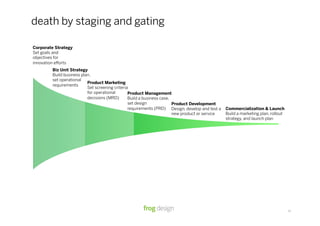
death by staging and gating

Corporate Strategy
Set goals and
objectives for
innovation e orts
        Biz Unit Strategy
        Build business plan,
        set operational
                          Product Marketing
        requirements
                          Set screening criteria
                          for operational       Product Management
                          decisions (MRD)       Build a business case,
                                                set design             Product Development
                                                requirements (PRD) Design, develop and test a   Commercialization & Launch
                                                                       new product or service   Build a marketing plan, rollout
                                                                                                strategy, and launch plan


                                                                                                                                  !"#
designing systems, not products
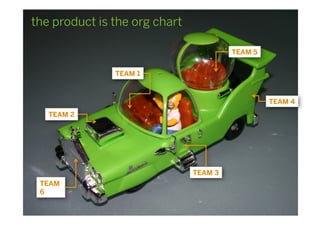
the product is the org chart

                                        TEAM 5


               TEAM 1


                                                 TEAM 4
   TEAM 2


                               TEAM 3
 TEAM
 6
making yet another ‘better’ mousetrap


 Feature fatigue
 Complexity in the value proposition
 Good enough for customers
beating the tyranny of ‘good enough’


   It’s not about designing V-next; rethink the complete experience.
the ‘small’ di erences between experiences:
      “oh we don’t really need all that!”


   There’s only a small delta between a fail and massive success.
we must di erentiate ourselves!
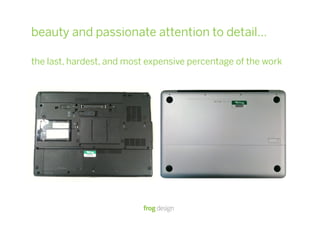
beauty and passionate attention to detail…

the last, hardest, and most expensive percentage of the work
innovation is very expensive and easily commoditized


How much to invest when perceived value of your product is eroding to zero?
<Jobs?>
Design for business Impact: How design triggers transformation

Design for business Impact: How design triggers transformation

  • 1.
    Design for businessimpact: How design triggers transformation Ravi Chhatpar Strategy Director, December 10, 2010
  • 2.
  • 3.
    what does itmean for design to have business impact?
  • 9.
  • 10.
    The central problemfacing business today is change. Tangibly embodying change – products, services, systems, organizations – is one of the most important things we do. Tangibility for clarity. Tangibility for testing and validation. Tangibility for communication and inspiration.
  • 11.
  • 14.
    Strategic design 1 2 Design superstars
  • 15.
  • 16.
    Design Research acknowledges thatpeople are not masses of statistics and bullet points, and forms the foundation for our process and insights. People are living, breathing, feeling, adaptable beings. We engage people so we can observe their behavior and allow them to meaningfully convey their motivations.
  • 17.
    More process: businessstrategy, ethnography, cognitive science, psychology, technology Solutions Participant Opportunity Quotes Technology Map Participant Insights Behavior Insights Archive Modes Boards Consumer Trends Experience Brand Audit Framework Timeline
  • 18.
    Strategic design 1 2 3 Design superstars Innovation
  • 19.
    Design: more thanjust drawing and sketching
  • 20.
    Design as amanagement philosophy to drive innovation
  • 21.
    “If I hadasked people what they wanted more of, they would have said faster horses.” - Henry Ford
  • 22.
    “It is notenough for a man to know how to ride; he must know how to fall.” - Old Mexican proverb
  • 23.
  • 26.
    The customer story awareness endorsement exposure recommend motivation adoption triggers action USE meaning
  • 27.
  • 28.
  • 29.
    Making it: Seekingthe conversation with the artifact
  • 30.
    From vision tomaking the design a reality
  • 31.
    FAILURE POINTS INSIGHT DESIGN BUILD “the planners, strategists then the designers then development and design researchers “design it” teams “build it” do their thing”
  • 32.
    INSIGHT DESIGN BUILD convergence of convergence of design insight with design with development
  • 33.
    INSIGHT DESIGN BUILD convergence of convergence of design insight with design with development 3rd level of convergence: prototyping, development, engineering become a source of ideas directly impacting the vision and the solutions.
  • 34.
    design as amanagement philosophy: interdisciplinary, iterative, experimental, risk-taking, failure-tolerant, error-prone, story-telling
  • 35.
    design as amanagement philosophy drives transformation
  • 36.
    the challenge ofdesign that transforms
  • 37.
    Commonly heard fromour clients… We already tried that, and it didn’t work. No one is asking for that. We already solved that problem in the We need something totally upcoming version. new and di erent from what everyone else is doing. We already have that feature. You can We don’t really know what already do that. people actually do after they buy our product.
  • 38.
    death by stagingand gating Corporate Strategy Set goals and objectives for innovation e orts Biz Unit Strategy Build business plan, set operational Product Marketing requirements Set screening criteria for operational Product Management decisions (MRD) Build a business case, set design Product Development requirements (PRD) Design, develop and test a Commercialization & Launch new product or service Build a marketing plan, rollout strategy, and launch plan !"#
  • 39.
  • 40.
    the product isthe org chart TEAM 5 TEAM 1 TEAM 4 TEAM 2 TEAM 3 TEAM 6
  • 41.
    making yet another‘better’ mousetrap Feature fatigue Complexity in the value proposition Good enough for customers
  • 42.
    beating the tyrannyof ‘good enough’ It’s not about designing V-next; rethink the complete experience.
  • 43.
    the ‘small’ dierences between experiences: “oh we don’t really need all that!” There’s only a small delta between a fail and massive success.
  • 44.
    we must dierentiate ourselves!
  • 45.
    beauty and passionateattention to detail… the last, hardest, and most expensive percentage of the work
  • 46.
    innovation is veryexpensive and easily commoditized How much to invest when perceived value of your product is eroding to zero?
  • 47.