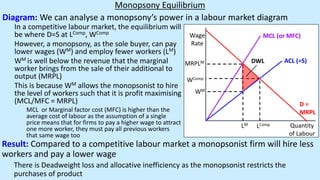
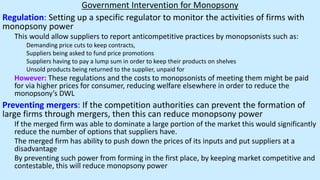
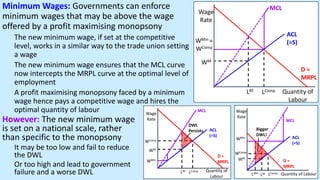
Monopsony is defined as a market structure with a single buyer that can influence the price paid to suppliers, leading to lower wages and reduced employment compared to competitive markets. Examples of monopsonistic behavior include firms like the NHS or supermarkets exploiting their buyer power in labor markets. Responses to counteract monopsony include the formation of cooperatives and trade unions to negotiate fairer prices and wages, while government interventions such as minimum wage laws aim to address the inefficiencies introduced by monopsony.