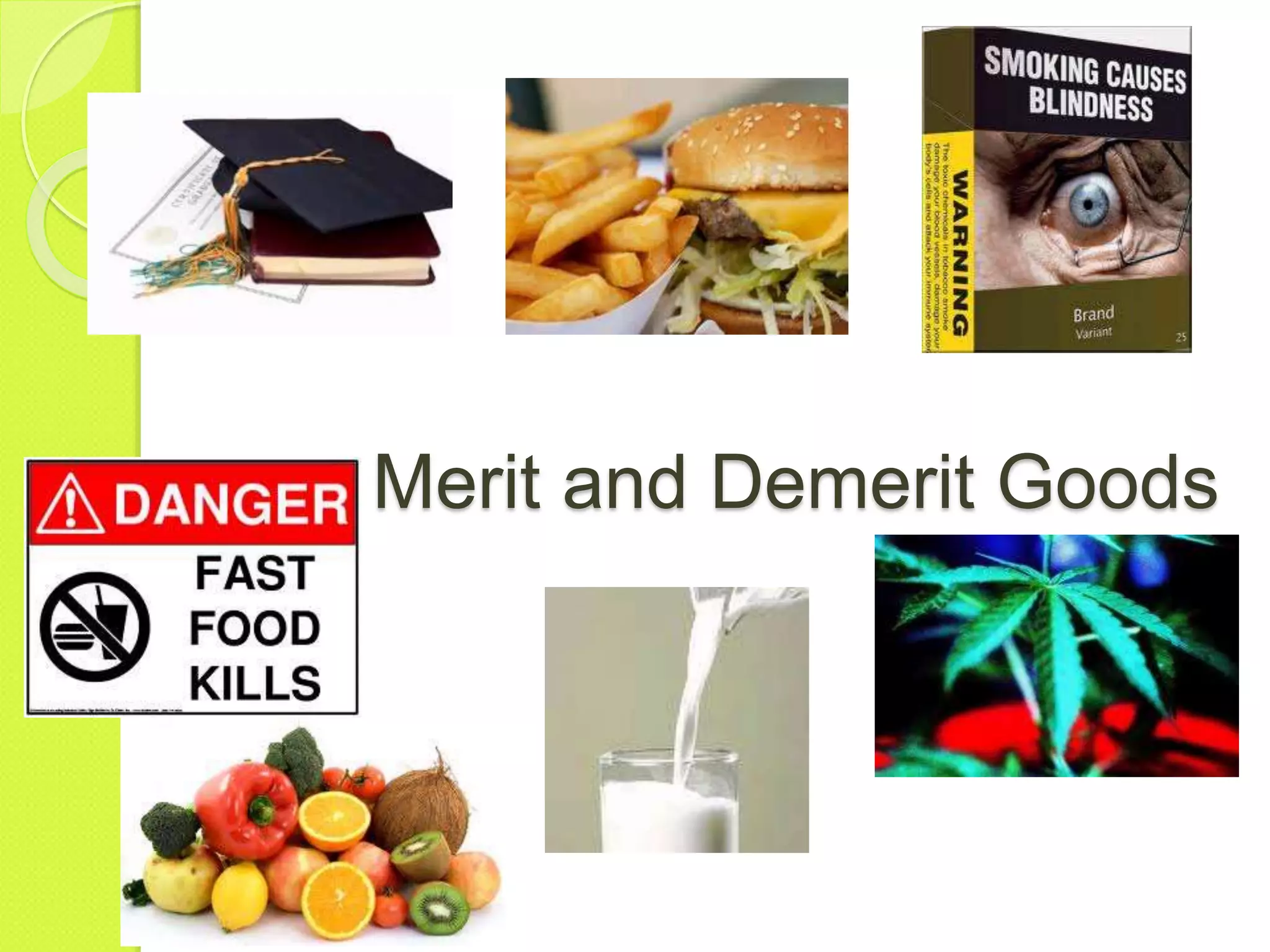
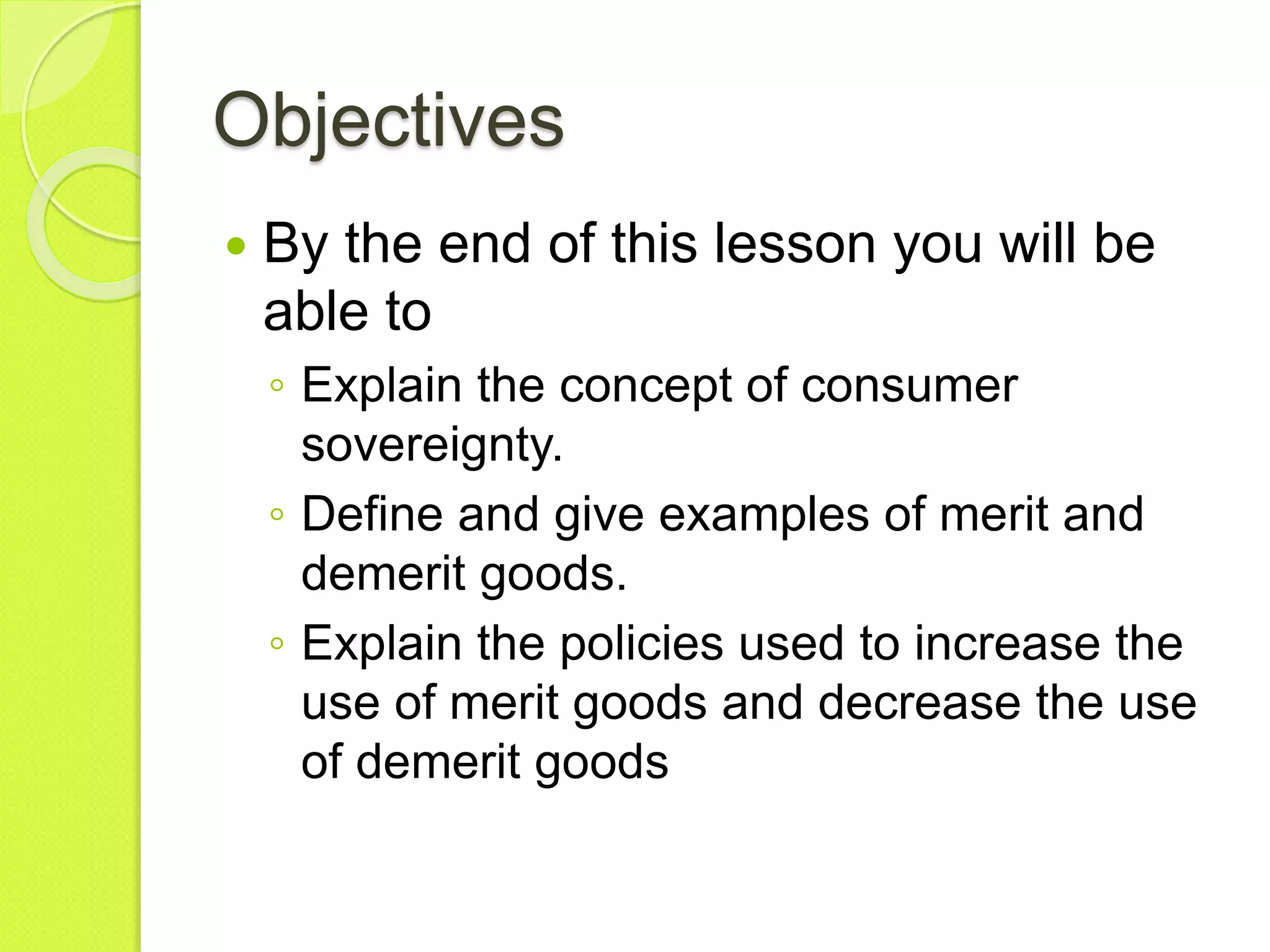
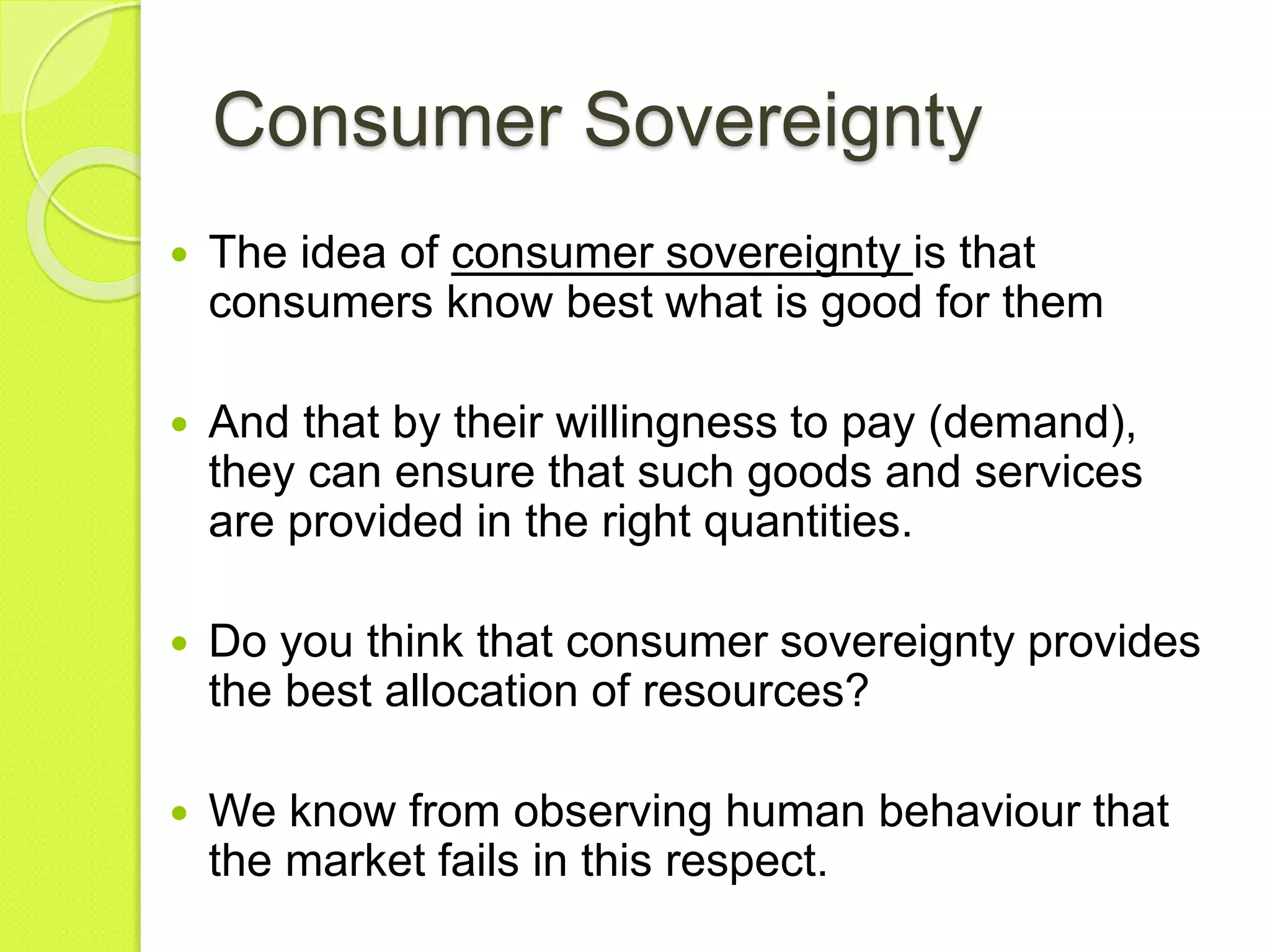
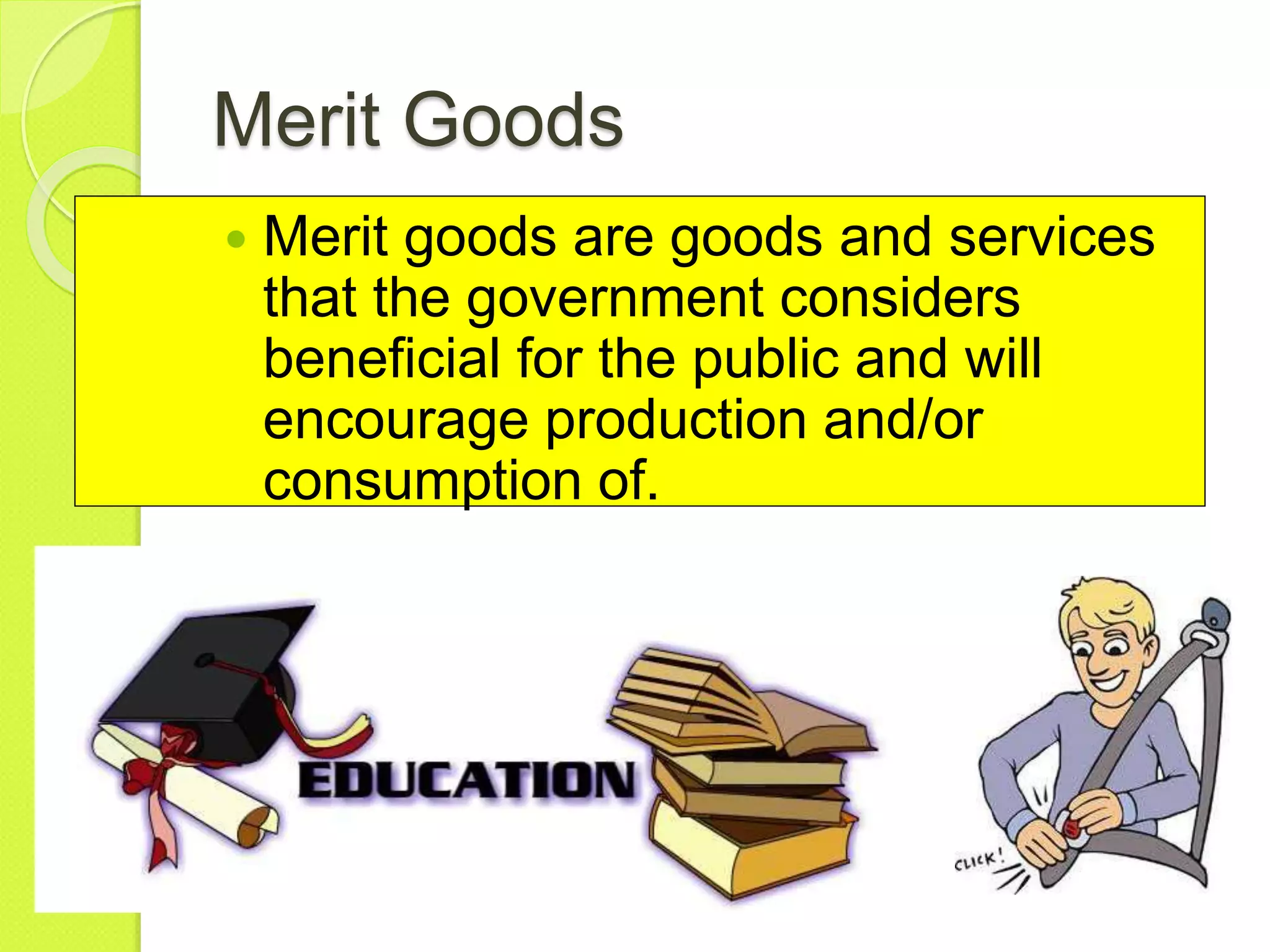
Merit and Demerit Goods
Objectives
 By the end of this lesson you will be
able to
◦ Explain the concept of consumer
sovereignty.
◦ Define and give examples of merit and
demerit goods.
◦ Explain the policies used to increase the
use of merit goods and decrease the use
of demerit goods
Consumer Sovereignty
 The idea of consumer sovereignty is that
consumers know best what is good for them
 And that by their willingness to pay (demand),
they can ensure that such goods and services
are provided in the right quantities.
 Do you think that consumer sovereignty provides
the best allocation of resources?
 We know from observing human behaviour that
the market fails in this respect.
Merit Goods
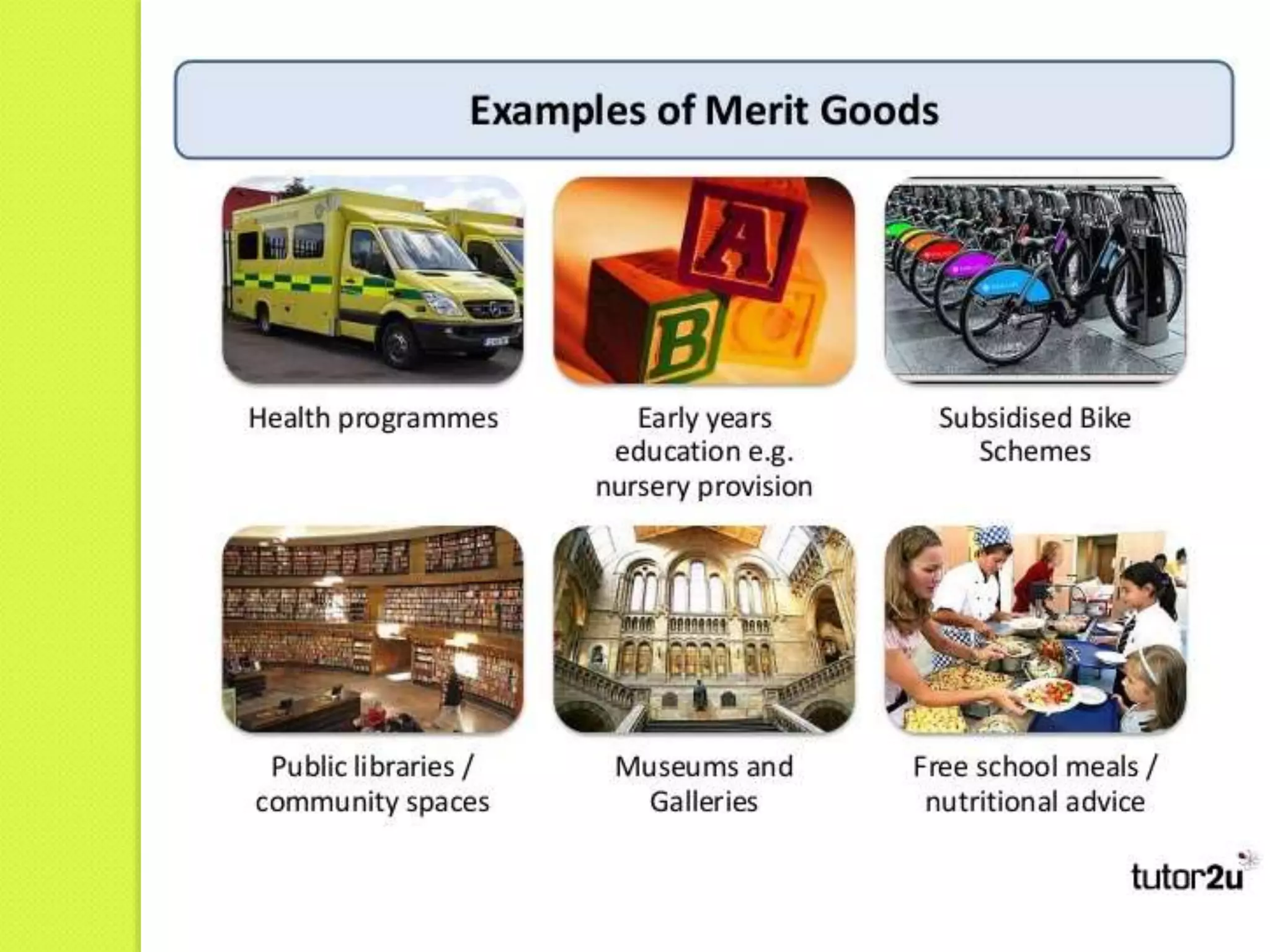
 Merit goods are goods and services
that the government considers
beneficial for the public and will
encourage production and/or
consumption of.
 Merit goods and services create positive
externalities when consumed and these
3rd party spill over benefits can have a
significant effect on social welfare.
 Market failure occurs when merit goods
and services are under-consumed under
free market conditions.
 Policy intervention can help either
through offering financial incentives (e.g.
consumer or producer subsidies) or
 through behavioral nudges and
information campaigns designed to
change our choices.
Merit Goods
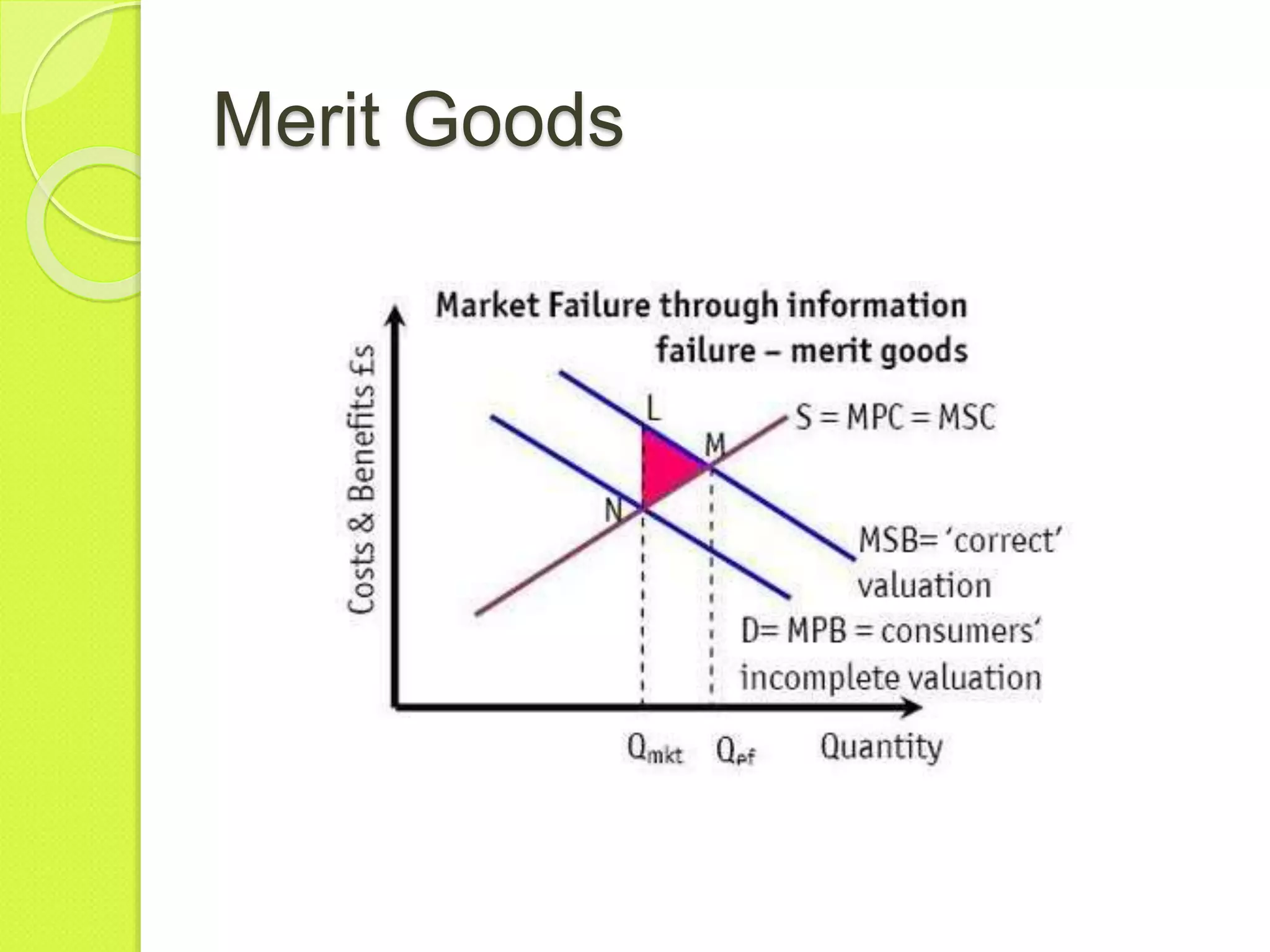
 Merit goods are provided by the
market but are likely to be:
 over-priced and under-produced
 This is because the market
(consumers and producers) only
consider the private benefit and
costs not the social benefits that
result from consuming more merit
goods.
Merit Goods
Government Intervention
 The government will encourage more
consumption of something that is
considered good for us.
 Example Public education.
 Without the government providing public
education there would still be private schools but
not enough schools to satisfy societies demand
for education.
 There would certainly be some families that
couldn’t afford education
Government Intervention
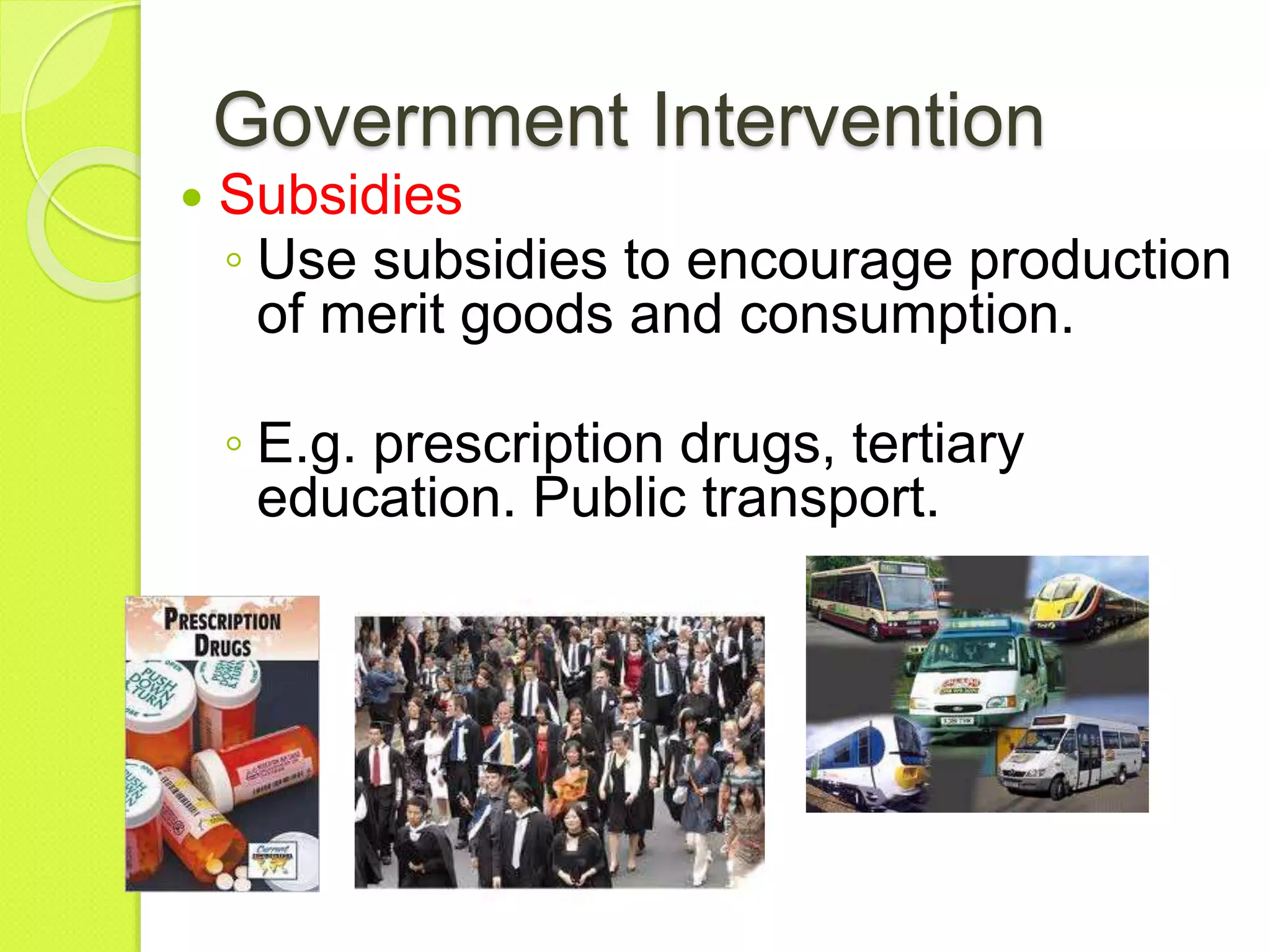
 Subsidies
◦ Use subsidies to encourage production
of merit goods and consumption.
◦ E.g. prescription drugs, tertiary
education. Public transport.
Government Intervention
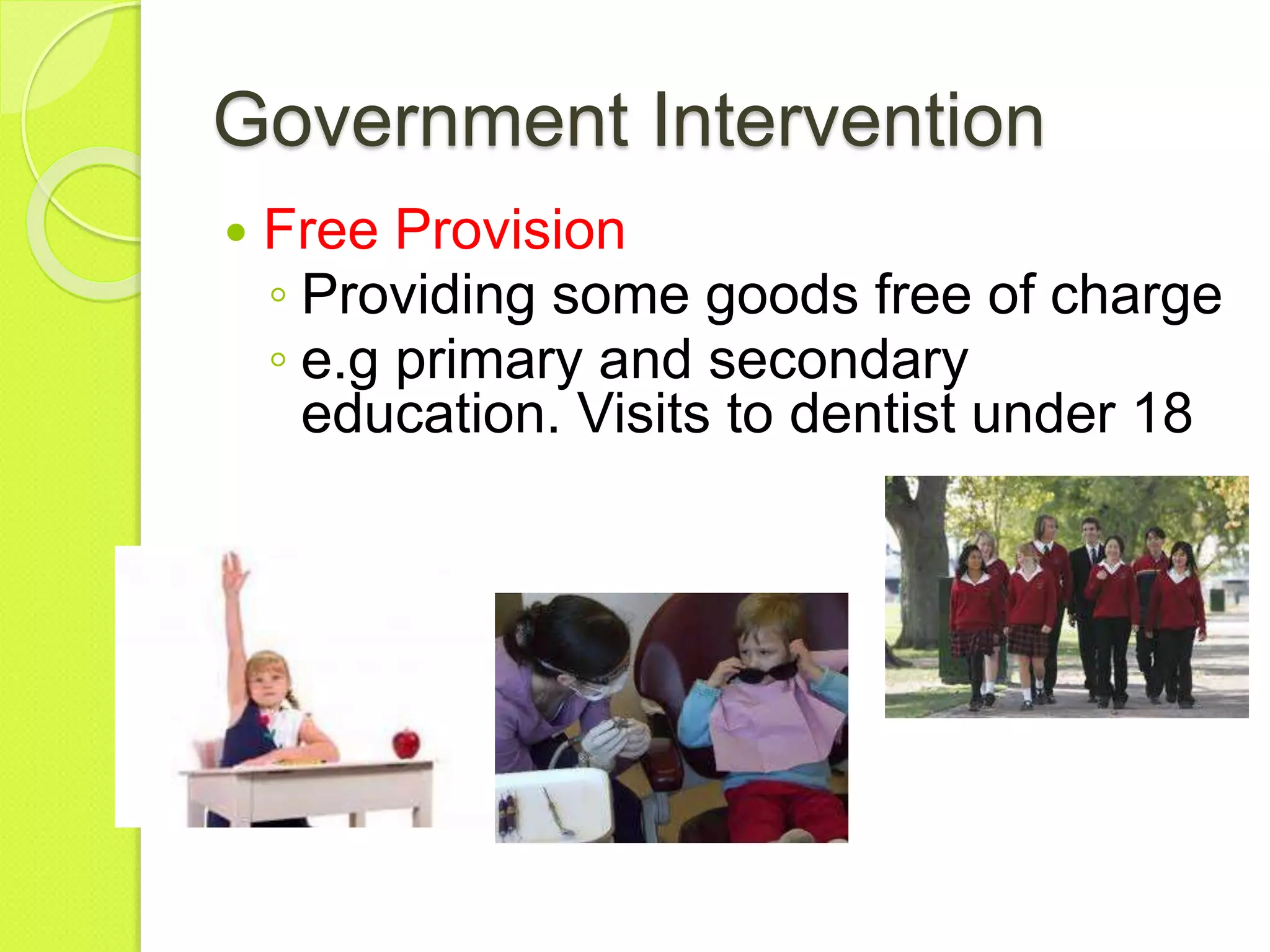
 Free Provision
◦ Providing some goods free of charge
◦ e.g primary and secondary
education. Visits to dentist under 18
Government Intervention
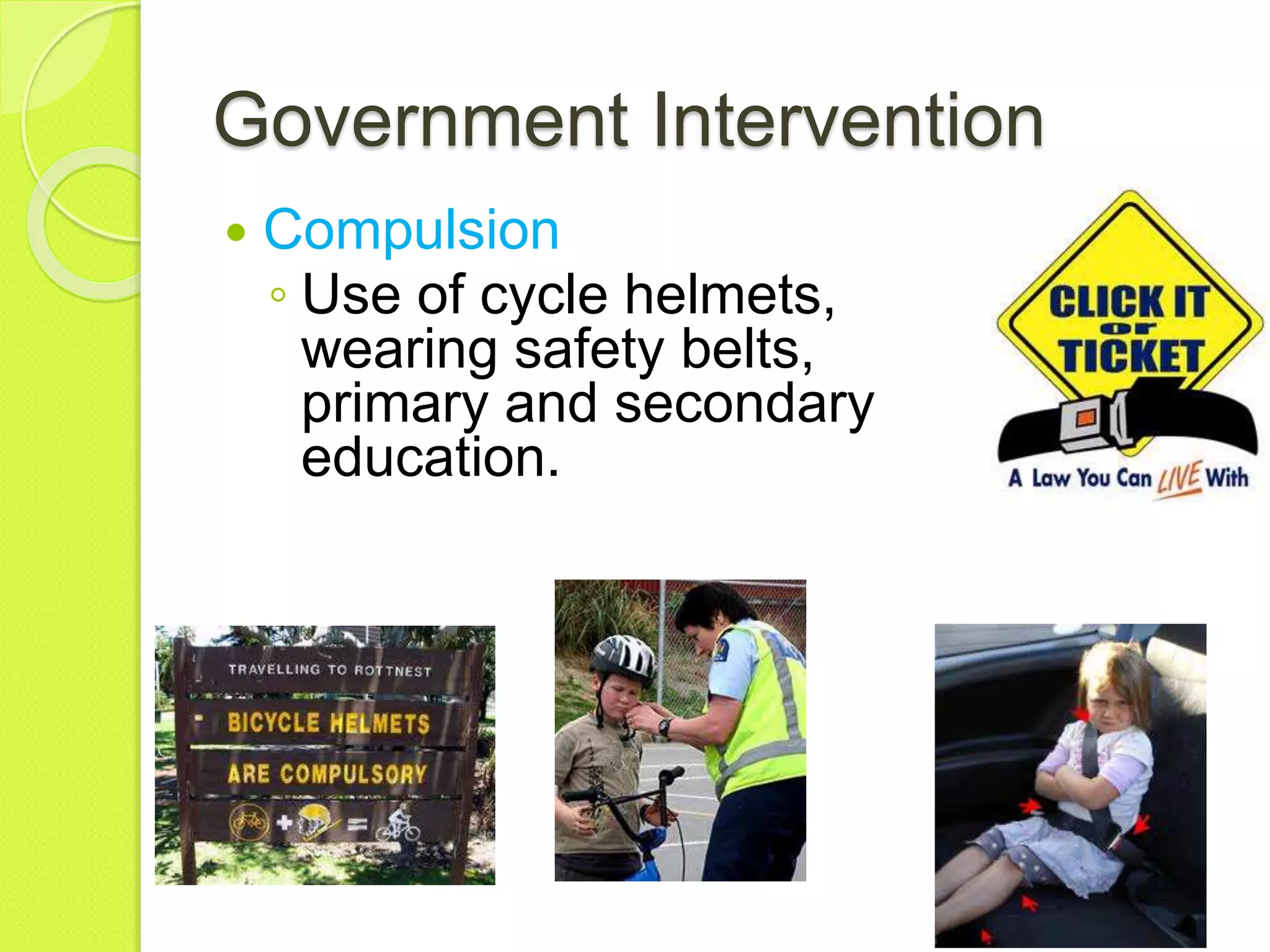
 Compulsion
◦ Use of cycle helmets,
wearing safety belts,
primary and secondary
education.
Government Intervention
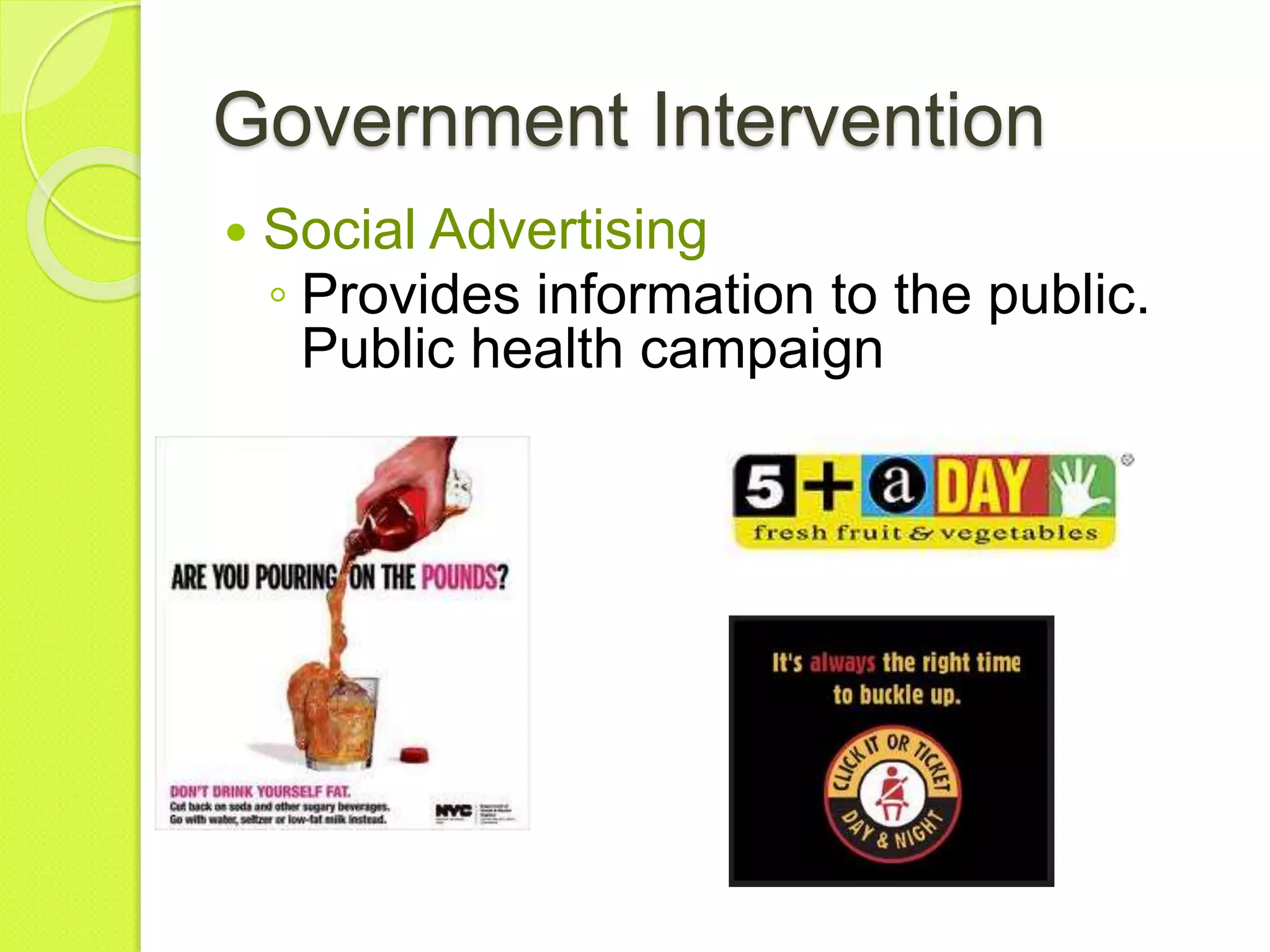
 Social Advertising
◦ Provides information to the public.
Public health campaign
Government Intervention
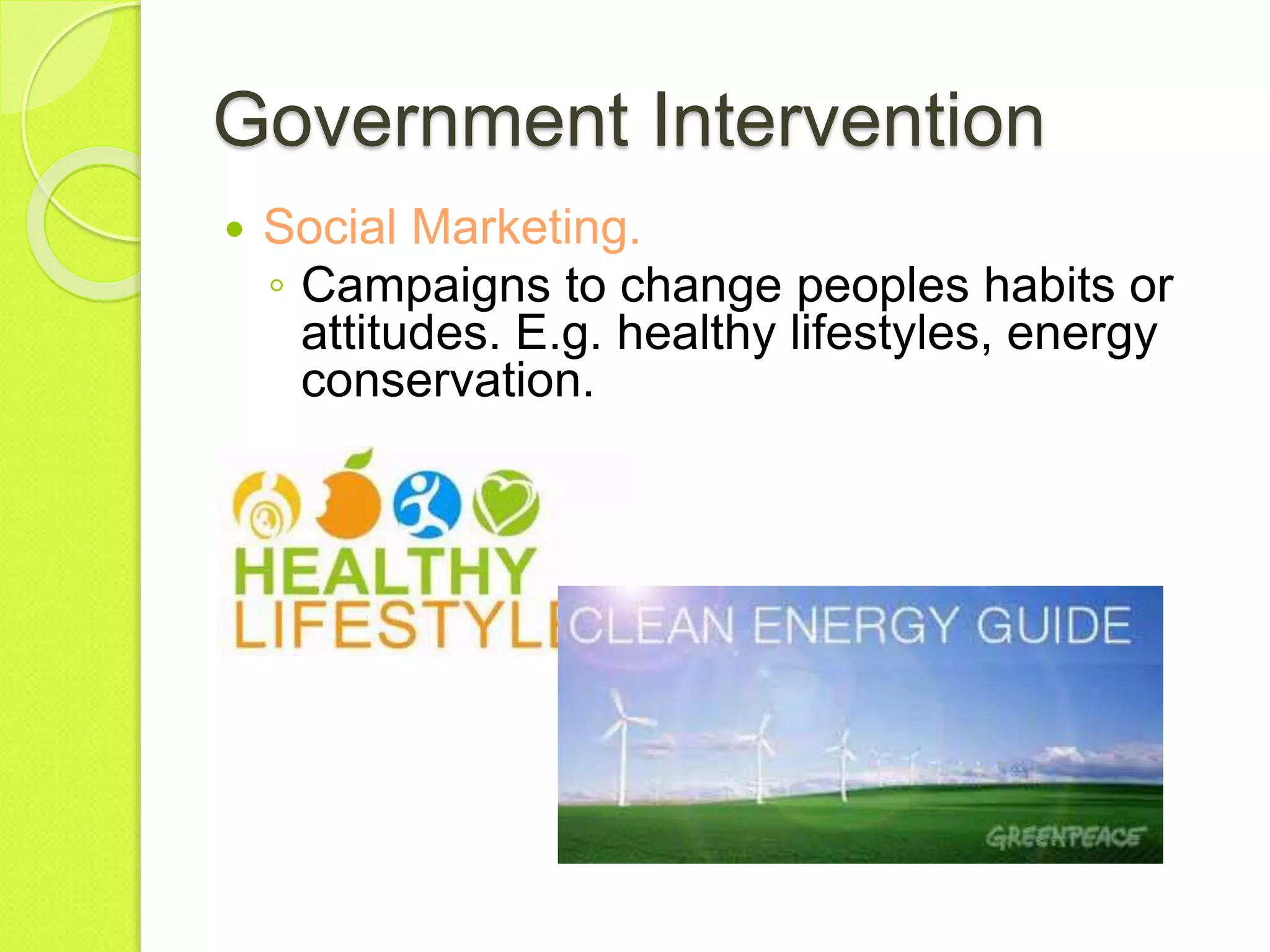
 Social Marketing.
◦ Campaigns to change peoples habits or
attitudes. E.g. healthy lifestyles, energy
conservation.
Demerit Goods
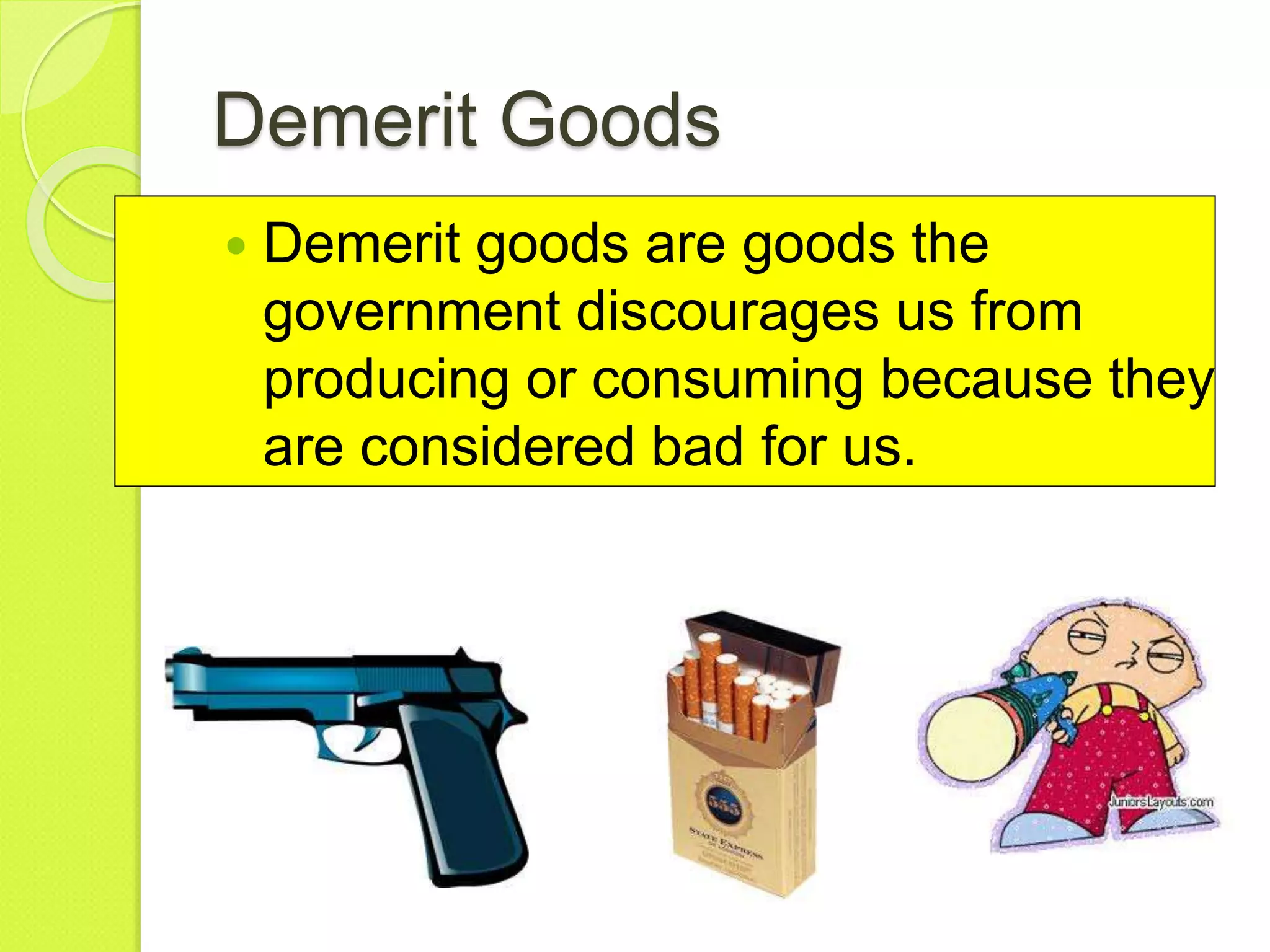
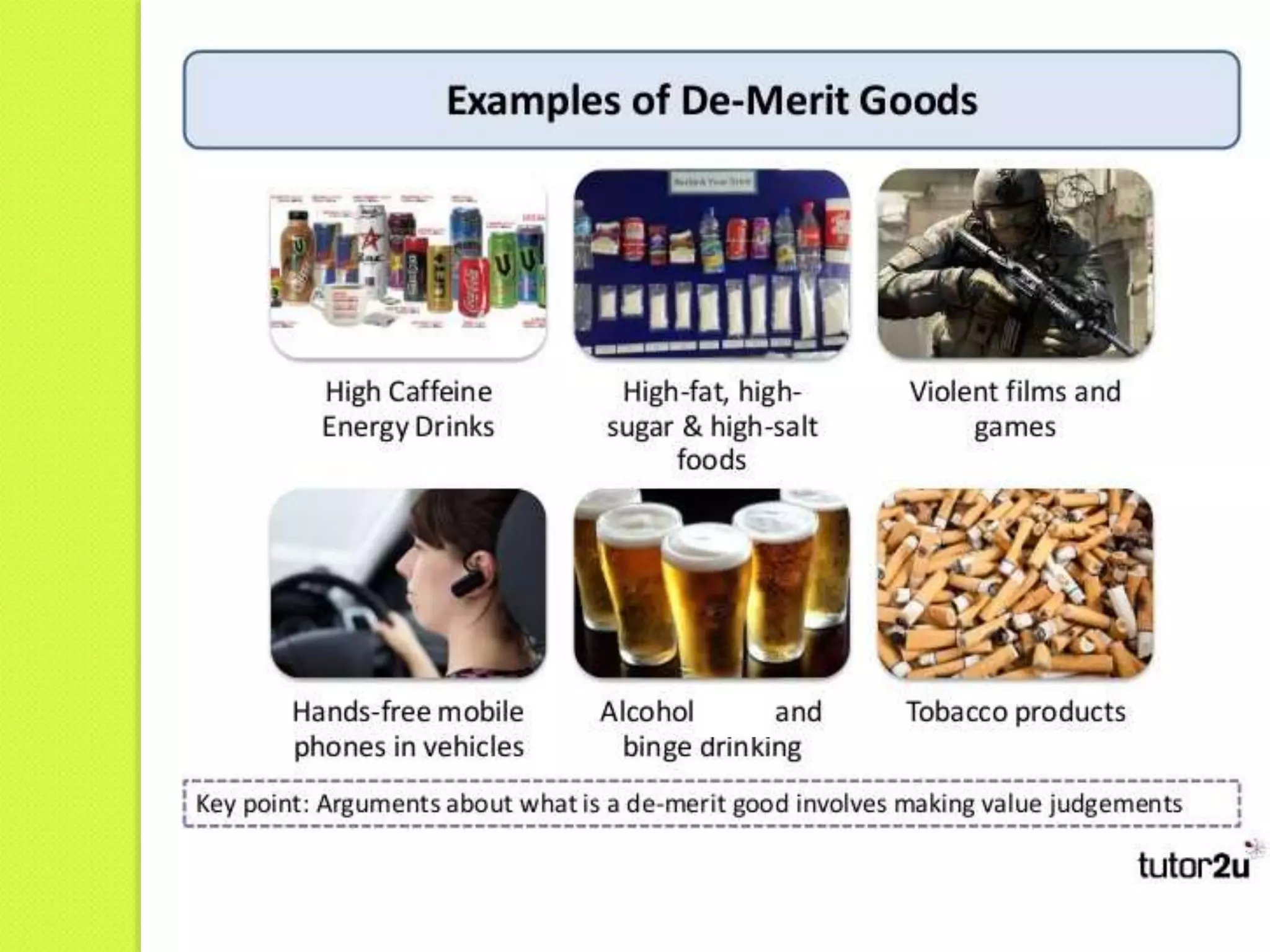
 Demerit goods are goods the
government discourages us from
producing or consuming because they
are considered bad for us.
Demerit Goods
 De-merit goods are thought to be ‘bad’ for
you
 Consumption can lead to negative
externalities
 The social cost of consumption is higher than
the private cost
 Consumers may be unaware of the negative
externalities that these goods create – they
have imperfect information about long-term
damage to their own health.
 Government may decide to intervene in the
market for de-merit goods and impose taxes
on producers or consumers.
Demerit Goods
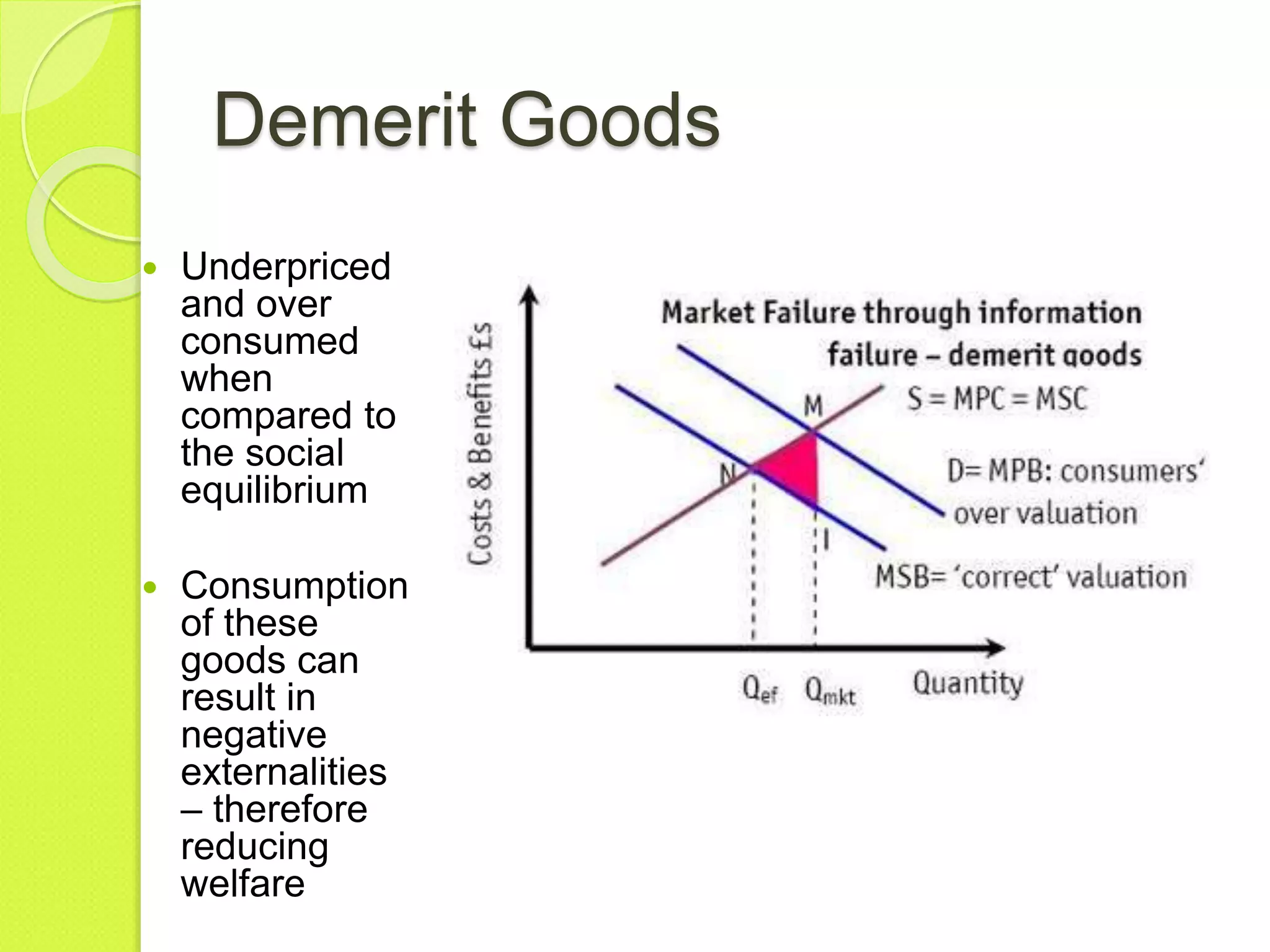
 Underpriced
and over
consumed
when
compared to
the social
equilibrium
 Consumption
of these
goods can
result in
negative
externalities
– therefore
reducing
welfare
Demerit Goods - Government
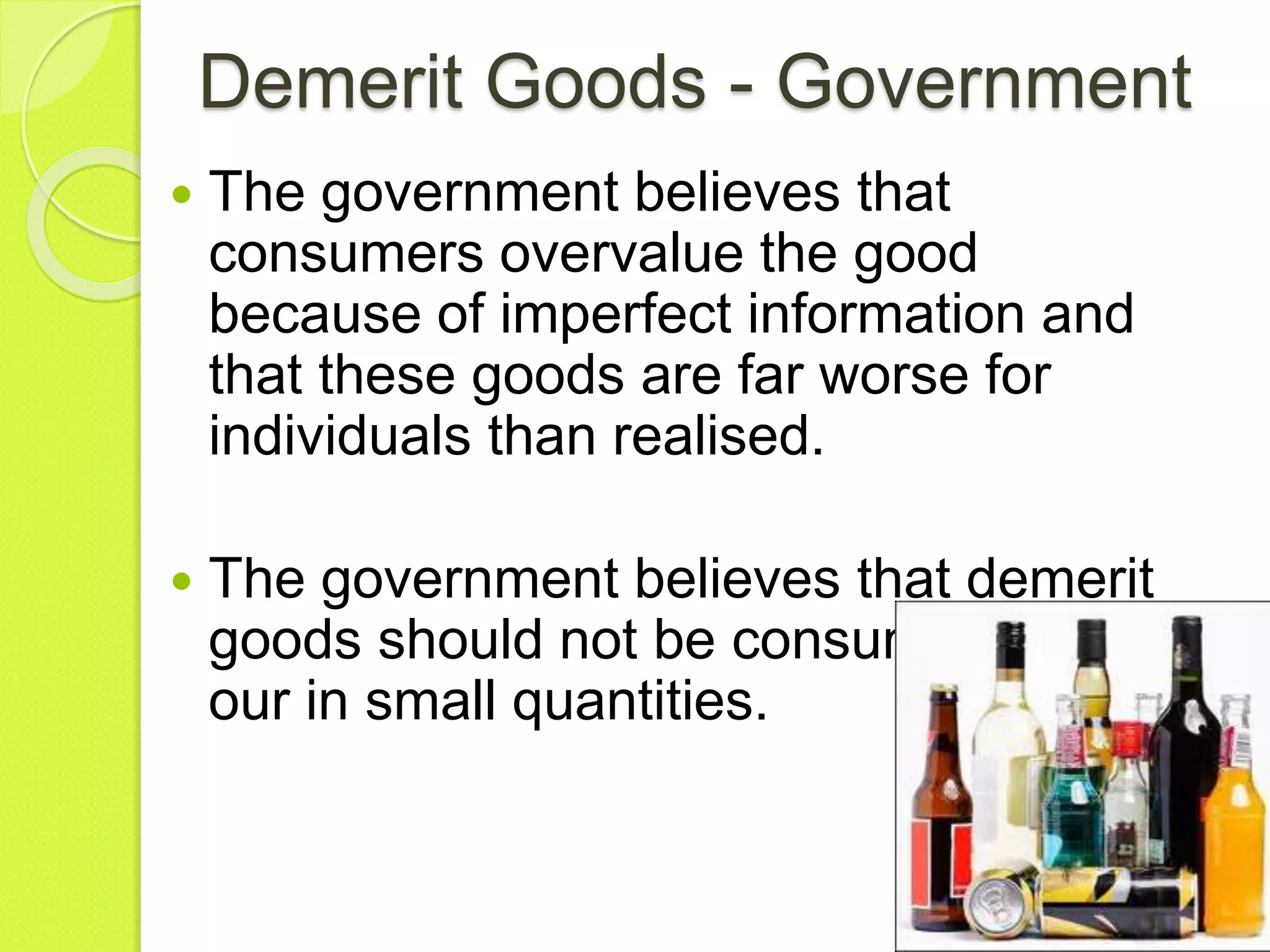
 The government believes that
consumers overvalue the good
because of imperfect information and
that these goods are far worse for
individuals than realised.
 The government believes that demerit
goods should not be consumed at all
our in small quantities.
Government Intervention
 Taxes
◦ Tax increase costs, reduces supply, reduces QD. E.g. Tax
on alcohol, cigarettes
 Regulations
◦ Laws to discourage consumption and production.
Firearms, noise levels.
 Bans
◦ Government overrides consumer sovereignty. E.g Class
A drugs, smoking in public buildings.
 Public Education Program me
◦ Providing publicity and education programs to discourage
demerit goods. E.g Drink driving, inappropriate diets.

Merit and Demerit Goods 2022.ppt

  • 1.
  • 2.
    Objectives  By theend of this lesson you will be able to ◦ Explain the concept of consumer sovereignty. ◦ Define and give examples of merit and demerit goods. ◦ Explain the policies used to increase the use of merit goods and decrease the use of demerit goods
  • 3.
    Consumer Sovereignty  Theidea of consumer sovereignty is that consumers know best what is good for them  And that by their willingness to pay (demand), they can ensure that such goods and services are provided in the right quantities.  Do you think that consumer sovereignty provides the best allocation of resources?  We know from observing human behaviour that the market fails in this respect.
  • 4.
    Merit Goods  Meritgoods are goods and services that the government considers beneficial for the public and will encourage production and/or consumption of.
  • 6.
     Merit goodsand services create positive externalities when consumed and these 3rd party spill over benefits can have a significant effect on social welfare.  Market failure occurs when merit goods and services are under-consumed under free market conditions.  Policy intervention can help either through offering financial incentives (e.g. consumer or producer subsidies) or  through behavioral nudges and information campaigns designed to change our choices.
  • 7.
    Merit Goods  Meritgoods are provided by the market but are likely to be:  over-priced and under-produced  This is because the market (consumers and producers) only consider the private benefit and costs not the social benefits that result from consuming more merit goods.
  • 8.
  • 9.
    Government Intervention  Thegovernment will encourage more consumption of something that is considered good for us.  Example Public education.  Without the government providing public education there would still be private schools but not enough schools to satisfy societies demand for education.  There would certainly be some families that couldn’t afford education
  • 10.
    Government Intervention  Subsidies ◦Use subsidies to encourage production of merit goods and consumption. ◦ E.g. prescription drugs, tertiary education. Public transport.
  • 11.
    Government Intervention  FreeProvision ◦ Providing some goods free of charge ◦ e.g primary and secondary education. Visits to dentist under 18
  • 12.
    Government Intervention  Compulsion ◦Use of cycle helmets, wearing safety belts, primary and secondary education.
  • 13.
    Government Intervention  SocialAdvertising ◦ Provides information to the public. Public health campaign
  • 14.
    Government Intervention  SocialMarketing. ◦ Campaigns to change peoples habits or attitudes. E.g. healthy lifestyles, energy conservation.
  • 15.
    Demerit Goods  Demeritgoods are goods the government discourages us from producing or consuming because they are considered bad for us.
  • 16.
    Demerit Goods  De-meritgoods are thought to be ‘bad’ for you  Consumption can lead to negative externalities  The social cost of consumption is higher than the private cost  Consumers may be unaware of the negative externalities that these goods create – they have imperfect information about long-term damage to their own health.  Government may decide to intervene in the market for de-merit goods and impose taxes on producers or consumers.
  • 18.
    Demerit Goods  Underpriced andover consumed when compared to the social equilibrium  Consumption of these goods can result in negative externalities – therefore reducing welfare
  • 19.
    Demerit Goods -Government  The government believes that consumers overvalue the good because of imperfect information and that these goods are far worse for individuals than realised.  The government believes that demerit goods should not be consumed at all our in small quantities.
  • 20.
    Government Intervention  Taxes ◦Tax increase costs, reduces supply, reduces QD. E.g. Tax on alcohol, cigarettes  Regulations ◦ Laws to discourage consumption and production. Firearms, noise levels.  Bans ◦ Government overrides consumer sovereignty. E.g Class A drugs, smoking in public buildings.  Public Education Program me ◦ Providing publicity and education programs to discourage demerit goods. E.g Drink driving, inappropriate diets.