

Moment Generating Function &
Bernoulli Experiment
Numerical And Statistical
Method
Prepared by: Ghanashyam prajapati
Moment Generating Function
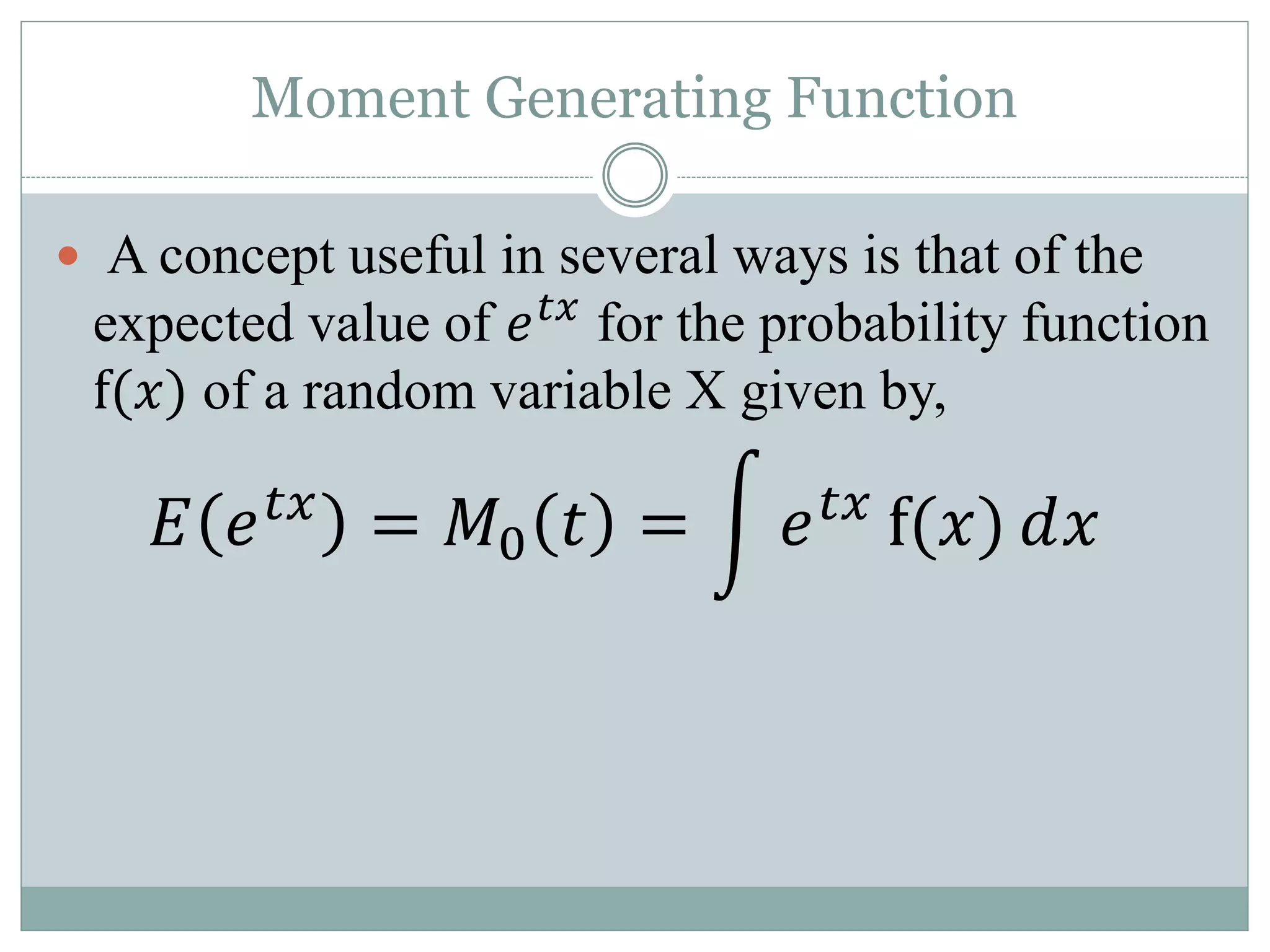
 A concept useful in several ways is that of the
expected value of 𝑒 𝑡𝑥
for the probability function
f(𝑥) of a random variable X given by,
𝐸 𝑒 𝑡𝑥
= 𝑀0 𝑡 = 𝑒 𝑡𝑥
f(𝑥) ⅆ𝑥
 Where the integration is taken over the whole
range of x.
 When this integral has meaning for some range
of values of t,0 the exponential could be
expanded and term by term integration
performed, giving.
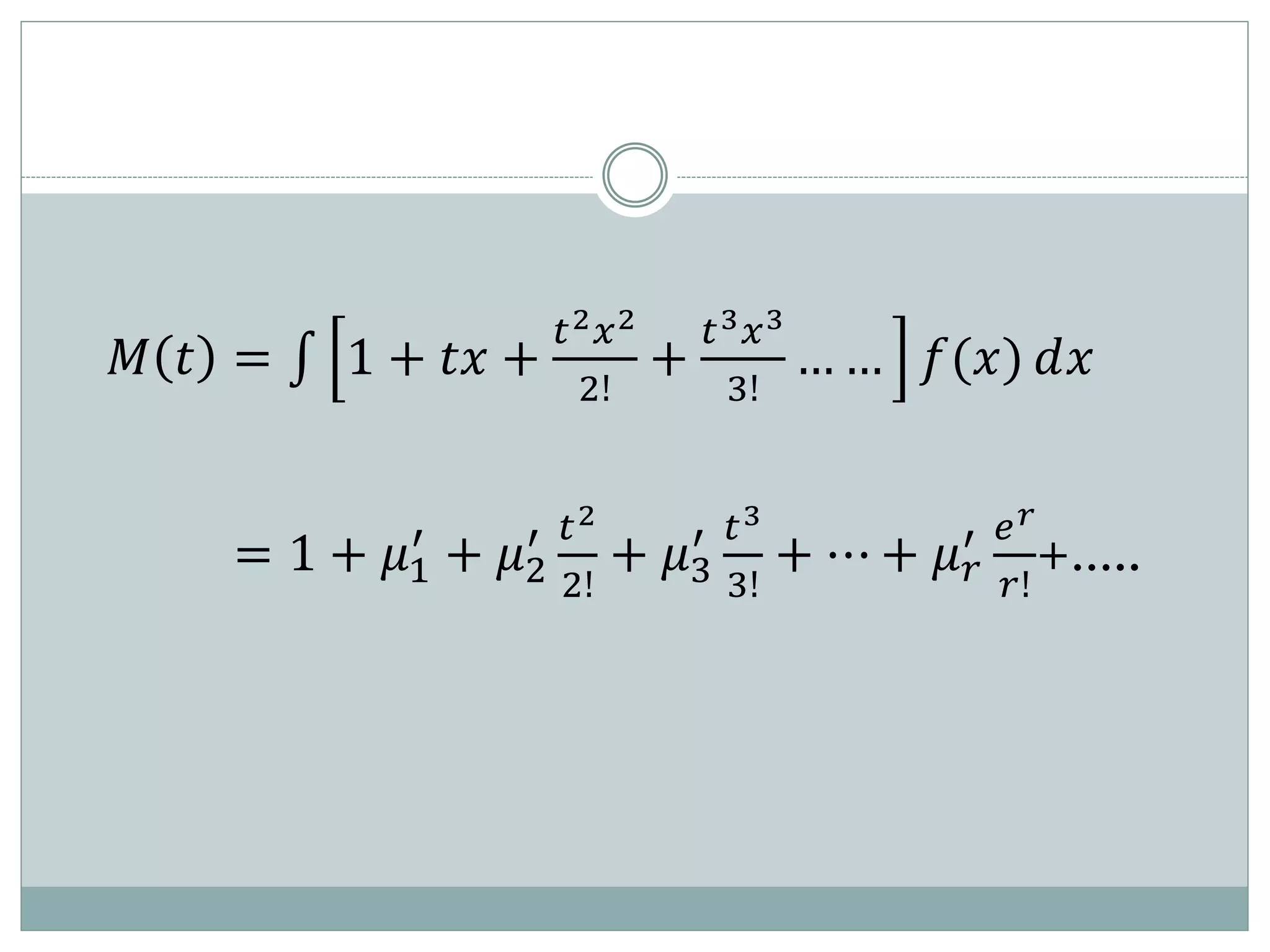
𝑀 𝑡 = 1 + 𝑡𝑥 +
𝑡2 𝑥2
2!
+
𝑡3 𝑥3
3!
… … 𝑓(𝑥) ⅆ𝑥
= 1 + 𝜇1
′
+ 𝜇2
′ 𝑡2
2!
+ 𝜇3
′ 𝑡3
3!
+ ⋯ + 𝜇 𝑟
′ 𝑒 𝑟
𝑟!
+…..
 Where 𝜇 𝑟
′ is the usual moment of order r about the origin
M(t) thus defined is called Moment Generating Function
for obvious reasons.
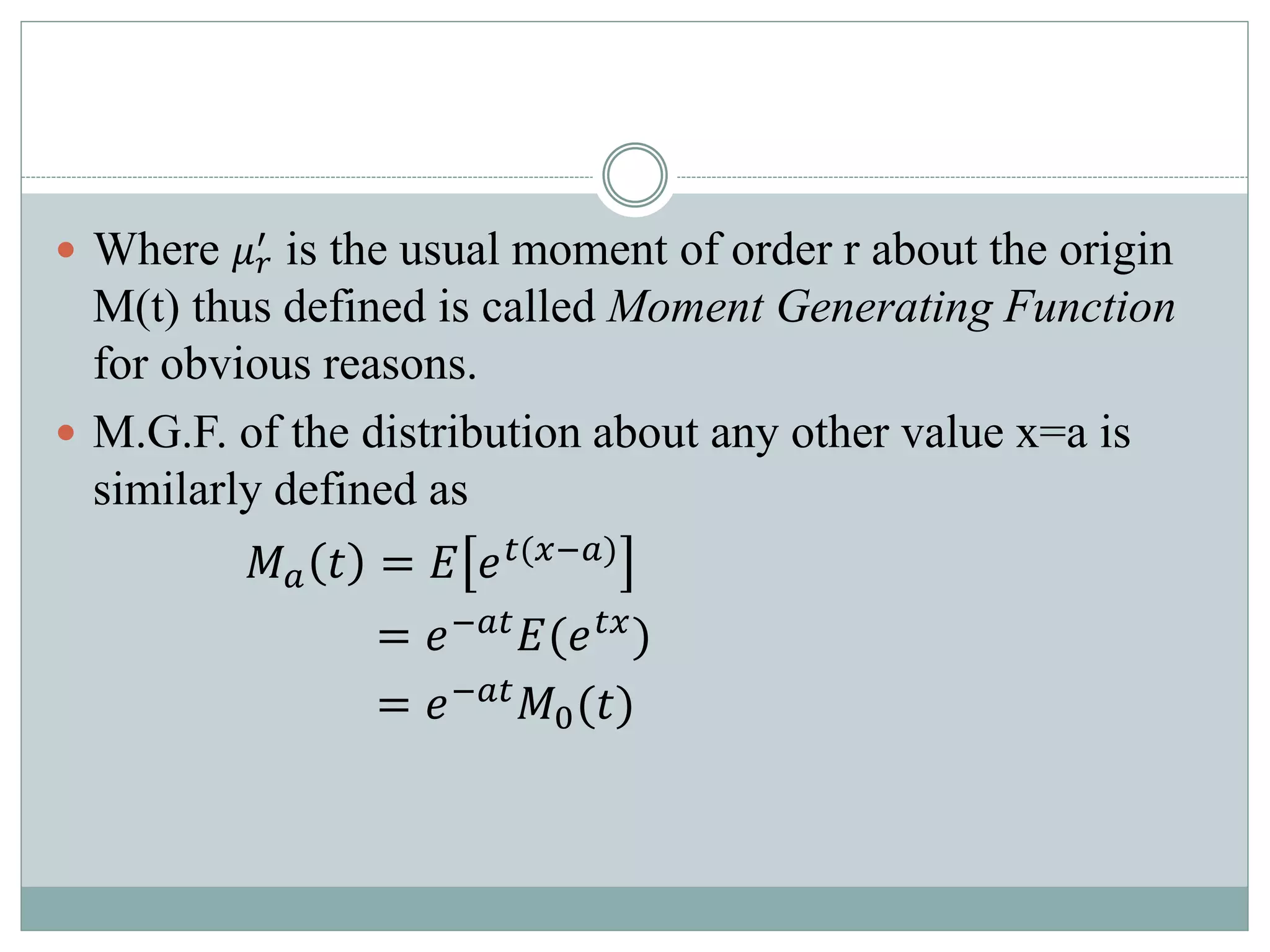
 M.G.F. of the distribution about any other value x=a is
similarly defined as
𝑀 𝑎 𝑡 = 𝐸 𝑒 𝑡(𝑥−𝑎)
= 𝑒−𝑎𝑡
𝐸(𝑒 𝑡𝑥
)
= 𝑒−𝑎𝑡
𝑀0(𝑡)
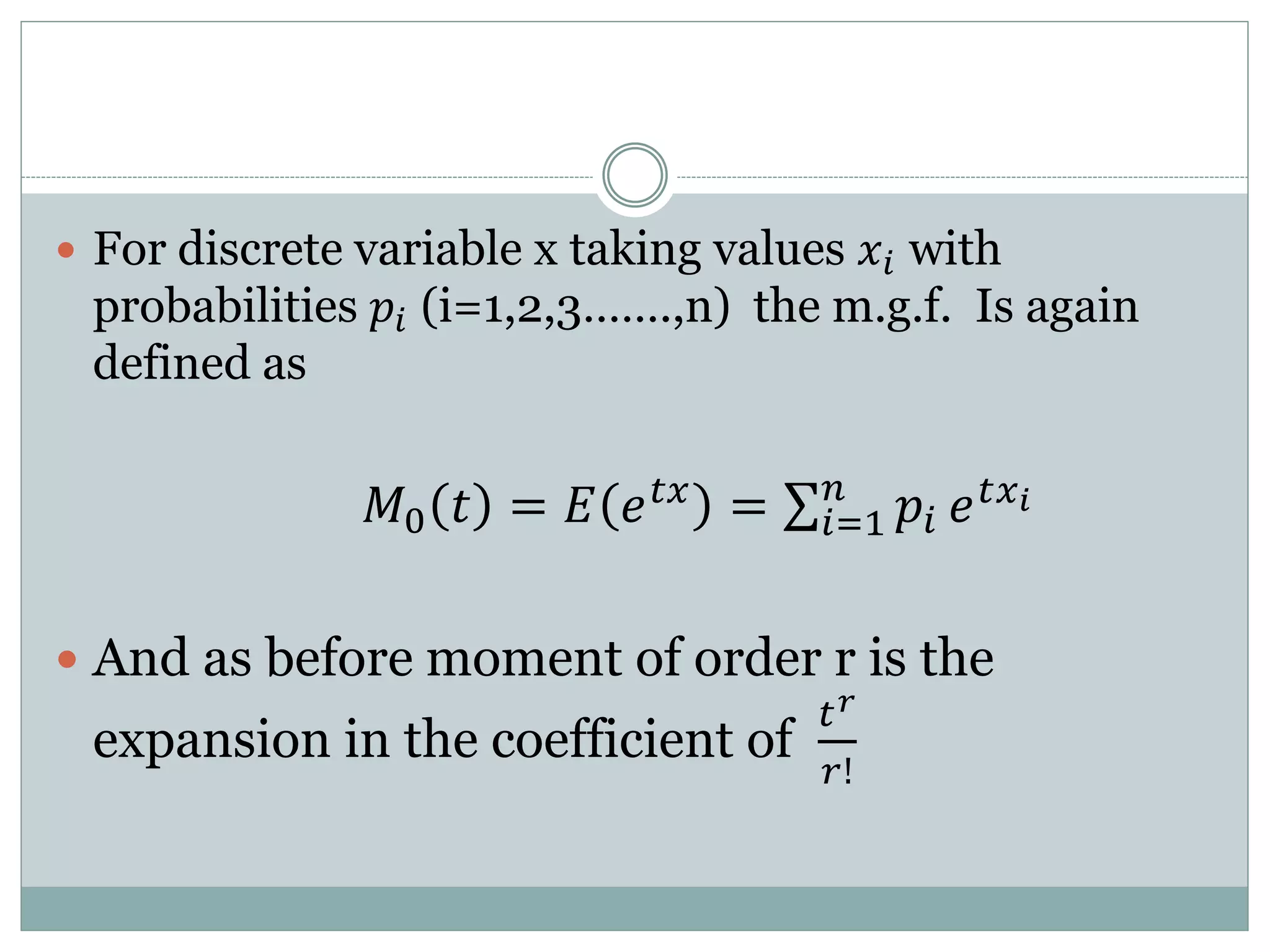
 For discrete variable x taking values 𝑥𝑖 with
probabilities 𝑝𝑖 (i=1,2,3…….,n) the m.g.f. Is again
defined as
𝑀0 𝑡 = 𝐸 𝑒 𝑡𝑥
= 𝑖=1
𝑛
𝑝𝑖 𝑒 𝑡𝑥 𝑖
 And as before moment of order r is the
expansion in the coefficient of
𝑡 𝑟
𝑟!
Important properties of M.G.F
1. The m.g.f. of the sum of two independent variables
is the product of their m.g.f.’s
2. Variables which have the same m.g.f. conform to
the same distribution.
Bernoulli trial experiments
 Suppose that you toss a coin ten times . What is the
probability that heads appears seven out of the ten
times?
 If you guess at the answers of ten multiple choice
questions, what are your chances for a passing
grade?
 These problems are examples of a certain type of
probability problem, Bernoulli trials.
 Such problems involved repeated trials of an
experiment with only two possible outcomes: heads
or tails, right or wrong, win or loss, and so on. We
classify the two outcomes as success or failure.
 Note:- when the outcomes of an experiment are
divided into two parts, it is called the situation of
dichotomy.
 We classify an experiment as a Bernoulli trial
experiment as follows:
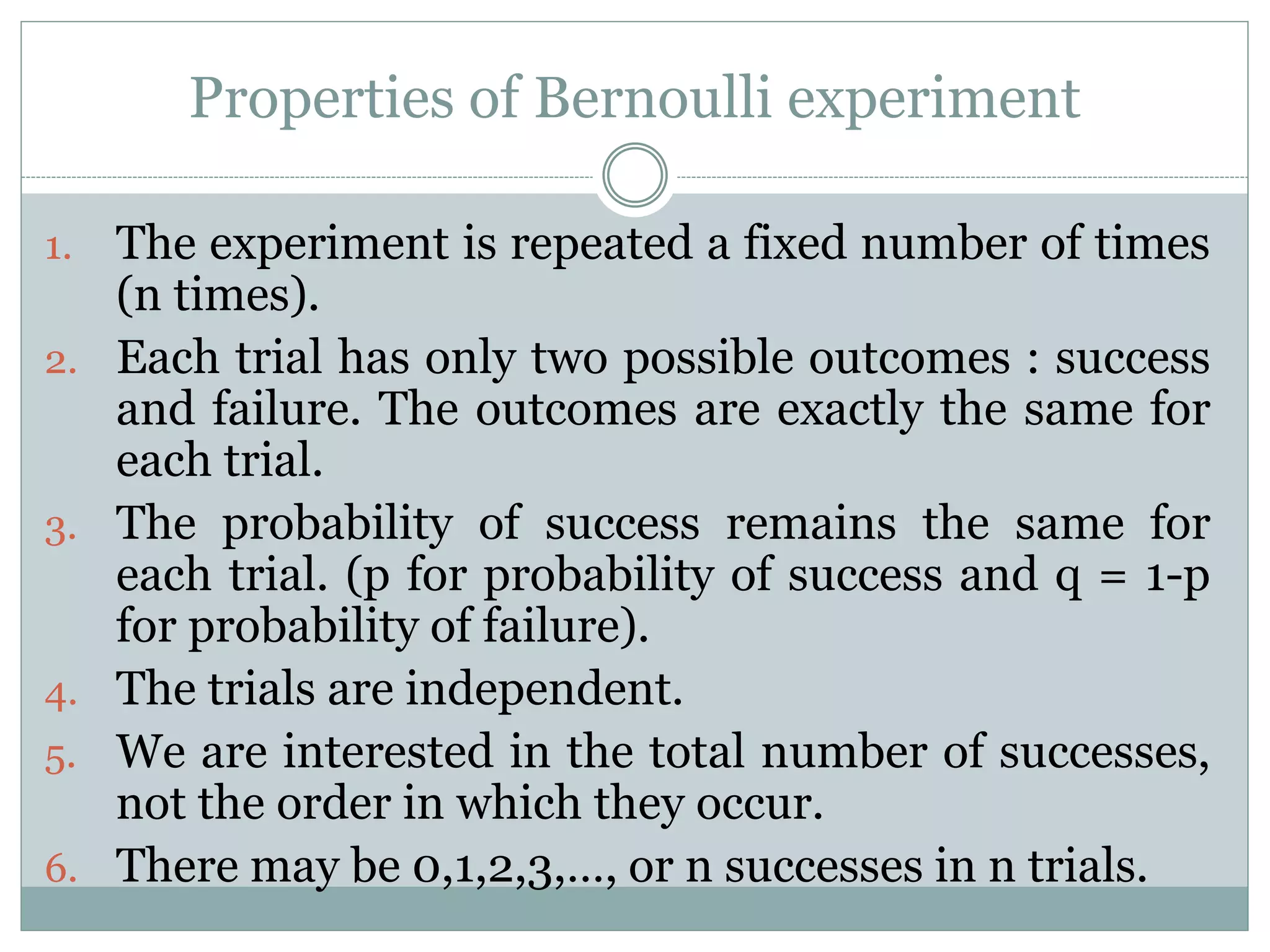
Properties of Bernoulli experiment
1. The experiment is repeated a fixed number of times
(n times).
2. Each trial has only two possible outcomes : success
and failure. The outcomes are exactly the same for
each trial.
3. The probability of success remains the same for
each trial. (p for probability of success and q = 1-p
for probability of failure).
4. The trials are independent.
5. We are interested in the total number of successes,
not the order in which they occur.
6. There may be 0,1,2,3,…, or n successes in n trials.
Example:-1
 student guesses at all the answers on a ten-question
multiple-choice quiz (four choices of an answer on
each question). This fulfills the properties of a
Bernoulli trial because
 1) each guess in a trial (n=10).
 2) there are two possible outcomes : correct and
incorrect.
 3)the probability of a correct answers is p=1/4,and
the probability of an incorrect answers is q=1-
p=3/4 on each trial, and
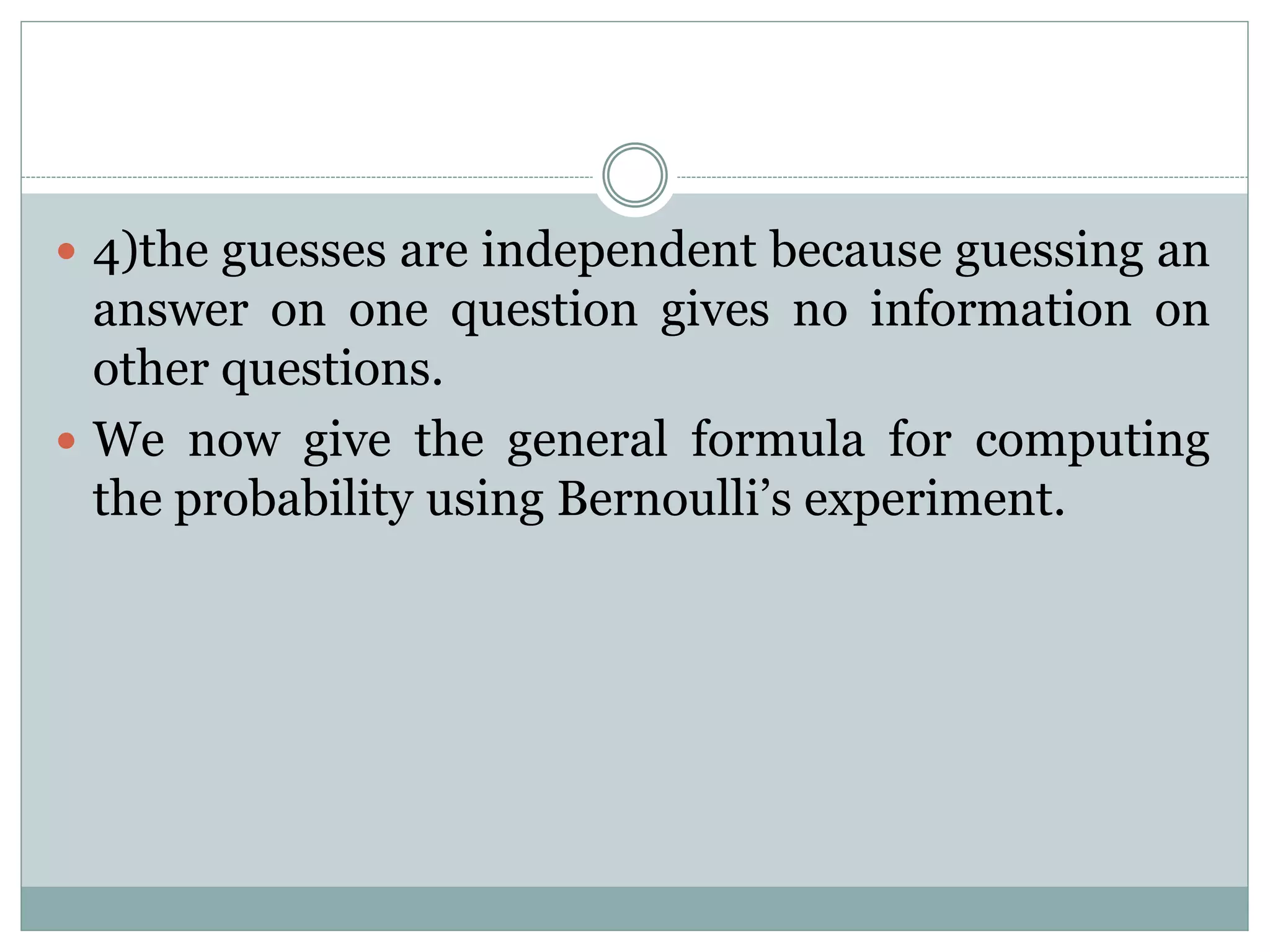
 4)the guesses are independent because guessing an
answer on one question gives no information on
other questions.
 We now give the general formula for computing
the probability using Bernoulli’s experiment.
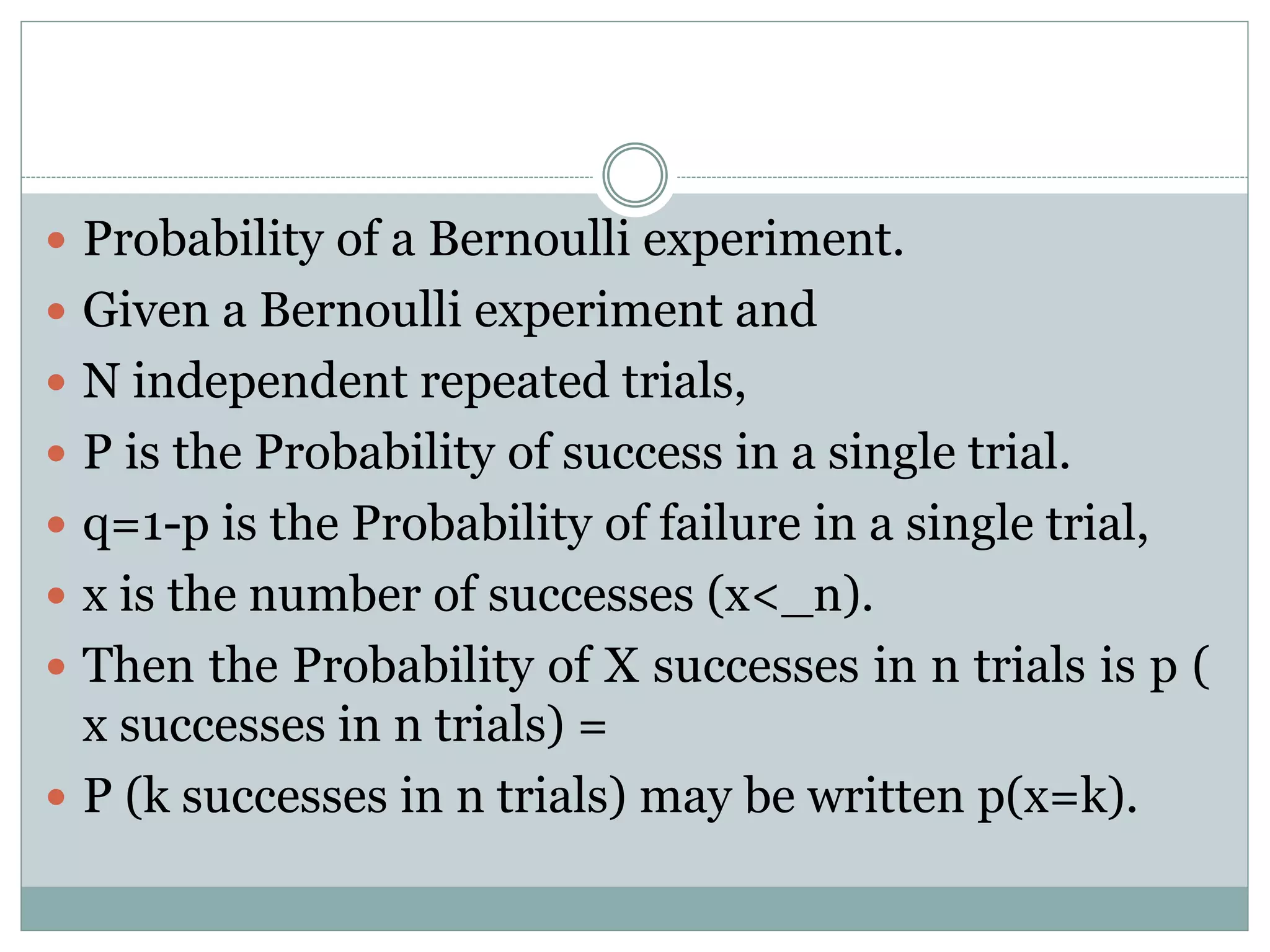
 Probability of a Bernoulli experiment.
 Given a Bernoulli experiment and
 N independent repeated trials,
 P is the Probability of success in a single trial.
 q=1-p is the Probability of failure in a single trial,
 x is the number of successes (x<_n).
 Then the Probability of X successes in n trials is p (
x successes in n trials) =
 P (k successes in n trials) may be written p(x=k).
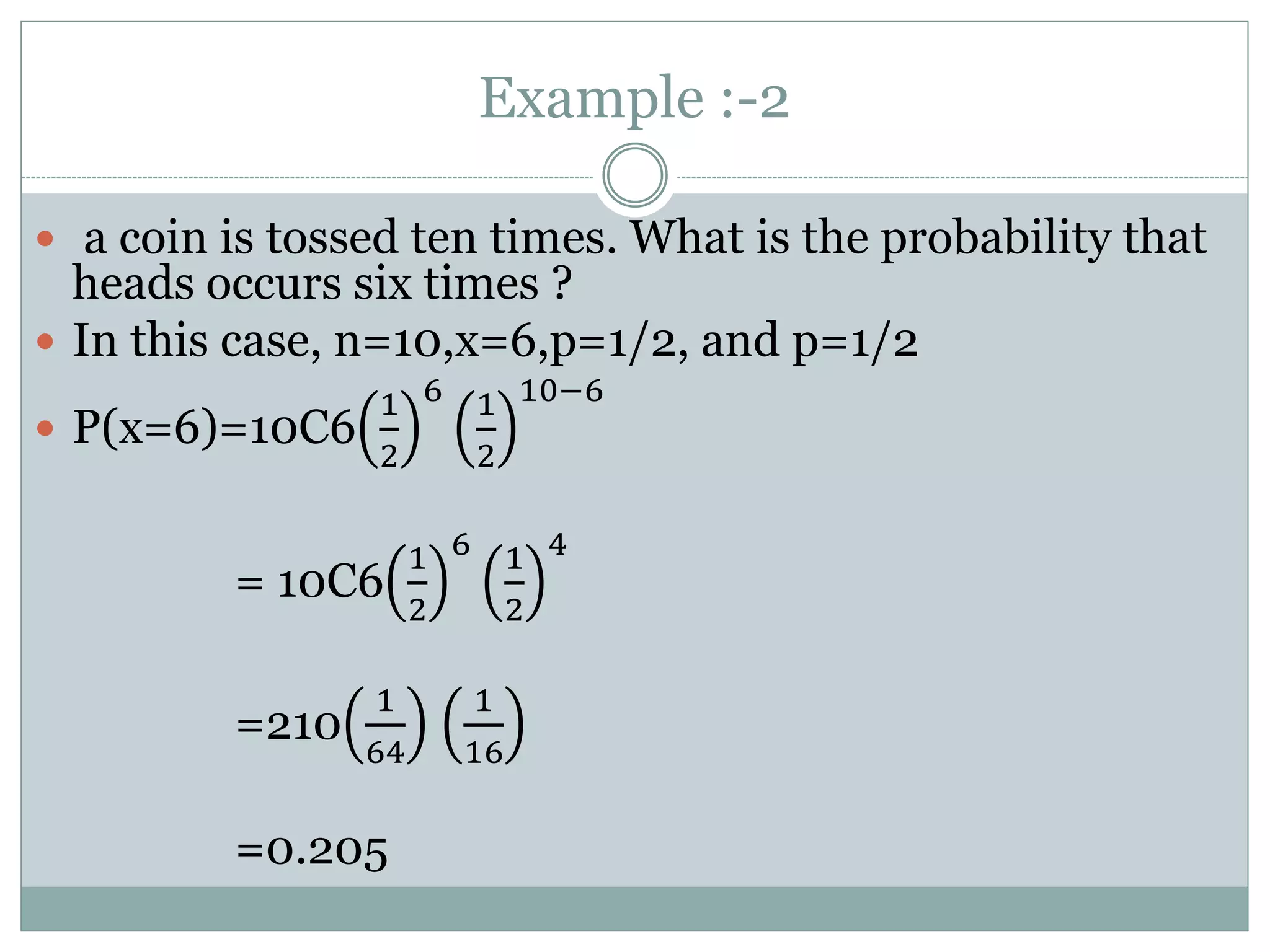
Example :-2
 a coin is tossed ten times. What is the probability that
heads occurs six times ?
 In this case, n=10,x=6,p=1/2, and p=1/2
 P(x=6)=10C6
1
2
6 1
2
10−6
= 10C6
1
2
6 1
2
4
=210
1
64
1
16
=0.205
Moment generating function &amp; bernoulli experiment

Moment generating function &amp; bernoulli experiment

  • 1.
    Moment Generating Function& Bernoulli Experiment Numerical And Statistical Method Prepared by: Ghanashyam prajapati
  • 2.
    Moment Generating Function A concept useful in several ways is that of the expected value of 𝑒 𝑡𝑥 for the probability function f(𝑥) of a random variable X given by, 𝐸 𝑒 𝑡𝑥 = 𝑀0 𝑡 = 𝑒 𝑡𝑥 f(𝑥) ⅆ𝑥
  • 3.
     Where theintegration is taken over the whole range of x.  When this integral has meaning for some range of values of t,0 the exponential could be expanded and term by term integration performed, giving.
  • 4.
    𝑀 𝑡 =1 + 𝑡𝑥 + 𝑡2 𝑥2 2! + 𝑡3 𝑥3 3! … … 𝑓(𝑥) ⅆ𝑥 = 1 + 𝜇1 ′ + 𝜇2 ′ 𝑡2 2! + 𝜇3 ′ 𝑡3 3! + ⋯ + 𝜇 𝑟 ′ 𝑒 𝑟 𝑟! +…..
  • 5.
     Where 𝜇𝑟 ′ is the usual moment of order r about the origin M(t) thus defined is called Moment Generating Function for obvious reasons.  M.G.F. of the distribution about any other value x=a is similarly defined as 𝑀 𝑎 𝑡 = 𝐸 𝑒 𝑡(𝑥−𝑎) = 𝑒−𝑎𝑡 𝐸(𝑒 𝑡𝑥 ) = 𝑒−𝑎𝑡 𝑀0(𝑡)
  • 6.
     For discretevariable x taking values 𝑥𝑖 with probabilities 𝑝𝑖 (i=1,2,3…….,n) the m.g.f. Is again defined as 𝑀0 𝑡 = 𝐸 𝑒 𝑡𝑥 = 𝑖=1 𝑛 𝑝𝑖 𝑒 𝑡𝑥 𝑖  And as before moment of order r is the expansion in the coefficient of 𝑡 𝑟 𝑟!
  • 7.
    Important properties ofM.G.F 1. The m.g.f. of the sum of two independent variables is the product of their m.g.f.’s 2. Variables which have the same m.g.f. conform to the same distribution.
  • 8.
    Bernoulli trial experiments Suppose that you toss a coin ten times . What is the probability that heads appears seven out of the ten times?  If you guess at the answers of ten multiple choice questions, what are your chances for a passing grade?  These problems are examples of a certain type of probability problem, Bernoulli trials.
  • 9.
     Such problemsinvolved repeated trials of an experiment with only two possible outcomes: heads or tails, right or wrong, win or loss, and so on. We classify the two outcomes as success or failure.  Note:- when the outcomes of an experiment are divided into two parts, it is called the situation of dichotomy.  We classify an experiment as a Bernoulli trial experiment as follows:
  • 10.
    Properties of Bernoulliexperiment 1. The experiment is repeated a fixed number of times (n times). 2. Each trial has only two possible outcomes : success and failure. The outcomes are exactly the same for each trial. 3. The probability of success remains the same for each trial. (p for probability of success and q = 1-p for probability of failure). 4. The trials are independent. 5. We are interested in the total number of successes, not the order in which they occur. 6. There may be 0,1,2,3,…, or n successes in n trials.
  • 11.
    Example:-1  student guessesat all the answers on a ten-question multiple-choice quiz (four choices of an answer on each question). This fulfills the properties of a Bernoulli trial because  1) each guess in a trial (n=10).  2) there are two possible outcomes : correct and incorrect.  3)the probability of a correct answers is p=1/4,and the probability of an incorrect answers is q=1- p=3/4 on each trial, and
  • 12.
     4)the guessesare independent because guessing an answer on one question gives no information on other questions.  We now give the general formula for computing the probability using Bernoulli’s experiment.
  • 13.
     Probability ofa Bernoulli experiment.  Given a Bernoulli experiment and  N independent repeated trials,  P is the Probability of success in a single trial.  q=1-p is the Probability of failure in a single trial,  x is the number of successes (x<_n).  Then the Probability of X successes in n trials is p ( x successes in n trials) =  P (k successes in n trials) may be written p(x=k).
  • 14.
    Example :-2  acoin is tossed ten times. What is the probability that heads occurs six times ?  In this case, n=10,x=6,p=1/2, and p=1/2  P(x=6)=10C6 1 2 6 1 2 10−6 = 10C6 1 2 6 1 2 4 =210 1 64 1 16 =0.205