Downloaded 1,853 times



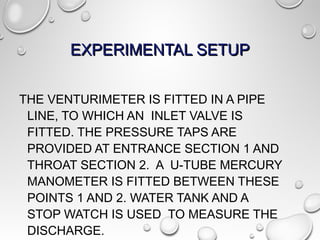


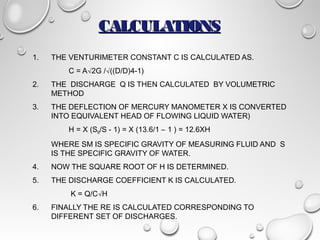
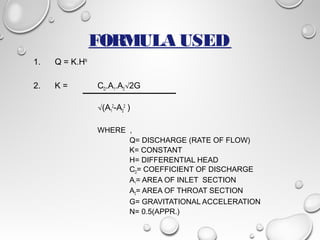


This document describes the working principle and experimental setup for calibrating a venturimeter. A venturimeter consists of an inlet section followed by a converging section, cylindrical throat, and gradually diverging cone. It works by creating a pressure difference between the inlet and throat sections due to an increase in flow velocity at the throat. This pressure difference is measured to determine the flow rate. The experiment involves taking pressure and flow rate measurements at the inlet and throat sections using a manometer and collecting water over time. The data is then used to calculate discharge coefficients and Reynolds numbers to calibrate the venturimeter.


