PRINCIPLES OF COOKING
Moist methods of cooking food
Principles of Cooking
• Cooking can be defined as the transfer of energy from a heat source
to a food
• Energy alters the food’s molecular structure, changes its texture,
flavor, aroma, and appearance
• When food is cooked, the process destroys microorganisms and
makes food easier to ingest and digest
• Boiling
• Poaching
• Steaming
• Stewing
• Braising
Moist Cooking Methods
Cooking Methods
Moist Heat:
• Poach, simmer, boil
Cooking in water or seasoned, flavored liquid
• Steam
Expose foods directly to steam
• Braise
Cooked covered in a small amount of liquid
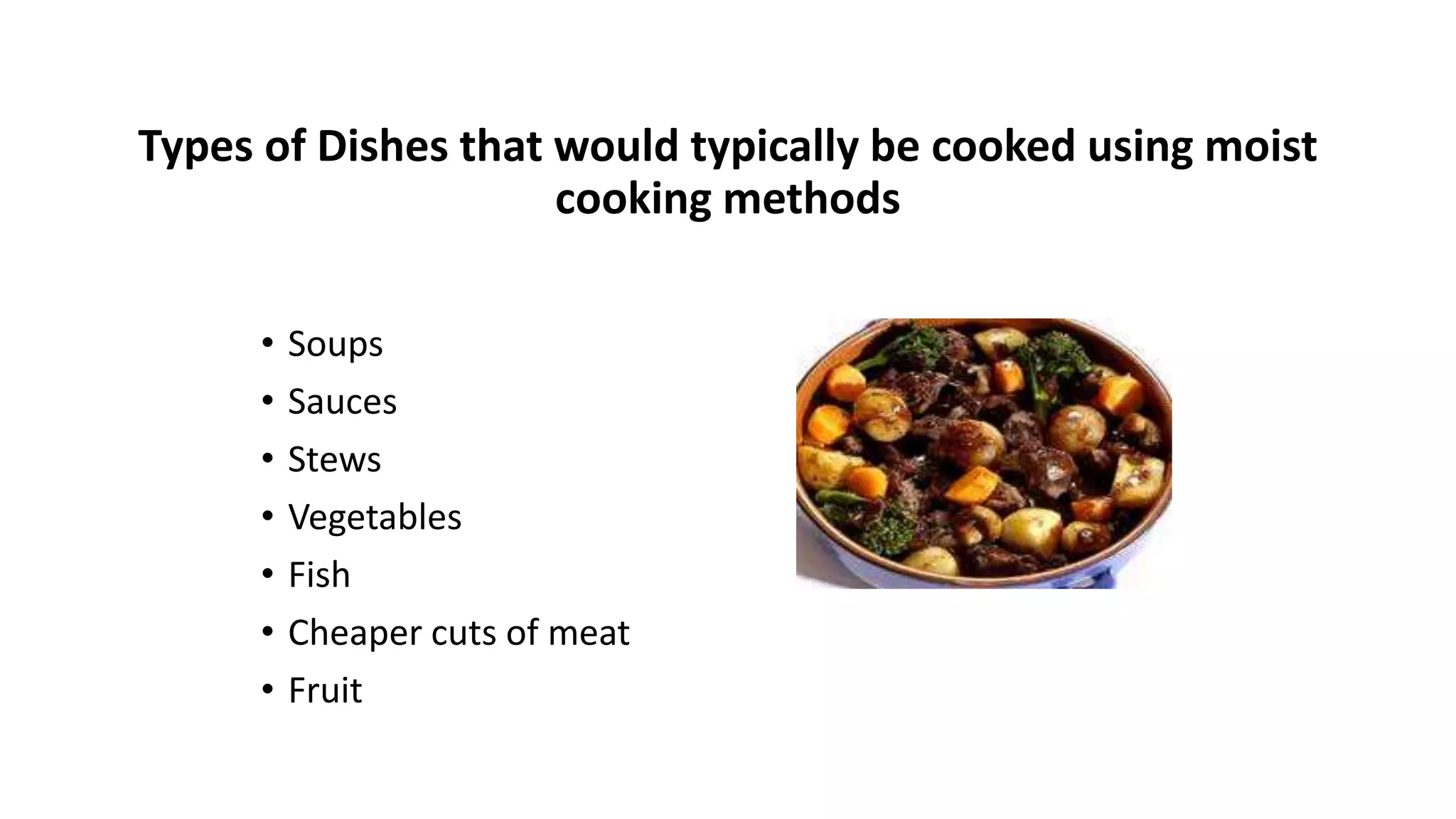
• Soups
• Sauces
• Stews
• Vegetables
• Fish
• Cheaper cuts of meat
• Fruit
Types of Dishes that would typically be cooked using moist
cooking methods
• Poaching is cooking in a liquid when the temperature of the liquid is
held at simmering point which is just bellow boiling.
• Fish or other delicate foods can be poached and the cooking liquor
can then be used to enhance the flavour of the sauce which will
accompany it,
Poaching
• Shallow poaching in a pan with a small amount of liquid is
often used for fish or chicken dishes, normally started on top
of the cooker but finished in a covered container in the oven
• Deep Poaching is when an ingredient is covered with liquid
and almost always carried out on the top of the cooker.
Methods of Poaching
• Healthy Cooking Method
• Fast Method of Cooking
• Poaching liquid can be used for the sauce to accompany the dish
• Keeps the flavour of the ingredients
• Delicate foods will not break up during cooking
Purposes of Poaching
• Boiling is cooking foods in liquid at boiling point
• Always carried out in a pan on the top of the stove covered by a pan
lid.
• Many different types of foods can be cooked by boiling.
• Mainly used for soups and vegetables.
Boiling
Boiling
• The temperature of boiling water is 212ᵒF at sea level. This point is
raised by the presence of solids in the water and lowered by higher
altitudes.
• At 5000 feet, water boils at about 203ᵒF; therefore, it takes longer to
boil foods at high altitudes because of lower boiling temperature.
• To cook food rapidly
• Not suitable for delicate dishes as the agitation of the boiling water
will cause delicate foods to break up during the cooking process.
• Not generally used for high protein foods because the heat toughens
the protein
• Soups and sauces should only be boiled for a short time to start off
the cooking of the dish
Purposes of Boiling
• Eggs
• Vegetables
• Soups
• Sauces
• Certain cuts of meat
Types of food suitable for boiling
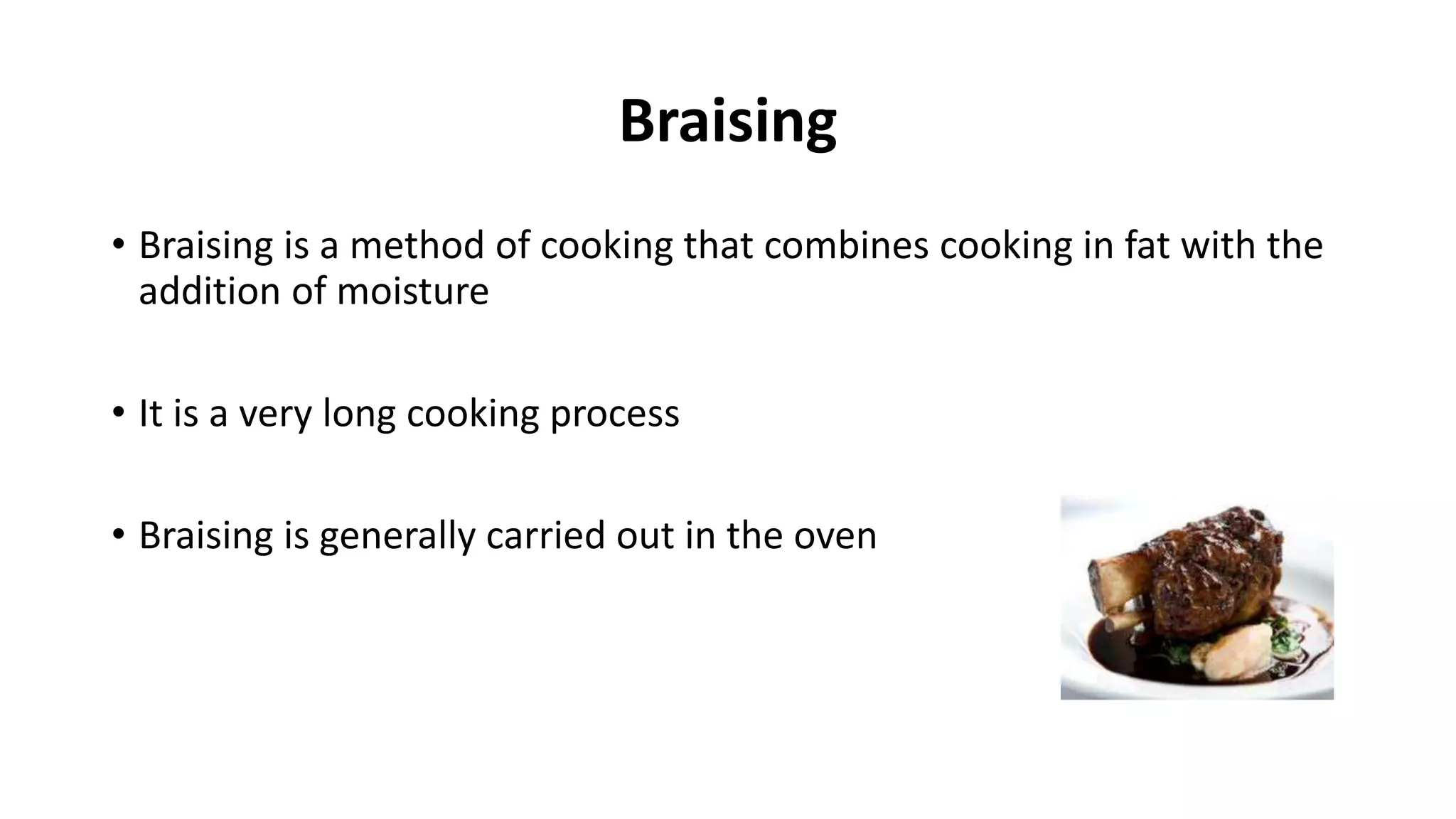
• Braising is a method of cooking that combines cooking in fat with the
addition of moisture
• It is a very long cooking process
• Braising is generally carried out in the oven
Braising
• Stewing is cooking in a small amount of water, which may either be
boiling or simmering.
• Whether a food is to be simmered, stewed or boiled the liquid usually
is brought to a full boil first. This compensates for the lowering of the
temperature when the food is added. The heat is adjusted to
maintain a steady temperature.
• It is a very long cooking process
Stewing
• Cheaper cuts of meat
• Fruit
• Vegetables
• Chicken
• Sweetbreads
• Ham
Types of foods suitable for braising/stewing
• When stewing food is normally cut into small, even sized, diced pieces
• When braising food items can be left whole or in larger sizes.
• Stewing normally takes place on the stove top covered in liquid
• Braising normally takes place in the oven does not have to be covered
in liquid
Differences between braising and stewing
• Stock
• Beer
• Wine
• Water
• Cider
Liquids that can be used for
Braising/Stewing
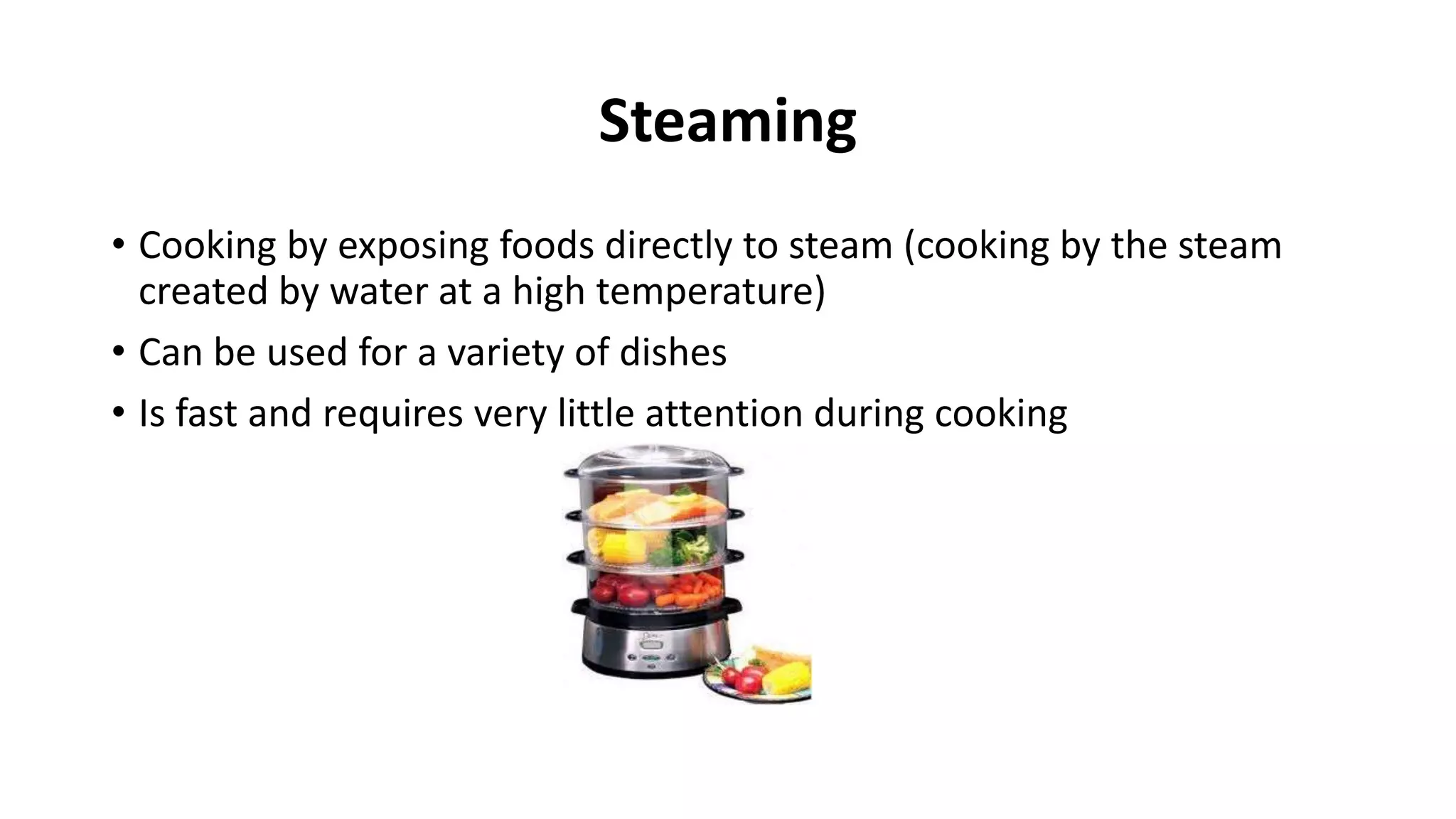
• Cooking by exposing foods directly to steam (cooking by the steam
created by water at a high temperature)
• Can be used for a variety of dishes
• Is fast and requires very little attention during cooking
Steaming
• Sponge based deserts
• Vegetables
• Chicken
• Certain cuts of meat
• Fish
• Fruit
Types of dishes suitable for Steaming

Moist methods of cooking food

  • 1.
    PRINCIPLES OF COOKING Moistmethods of cooking food
  • 2.
    Principles of Cooking •Cooking can be defined as the transfer of energy from a heat source to a food • Energy alters the food’s molecular structure, changes its texture, flavor, aroma, and appearance • When food is cooked, the process destroys microorganisms and makes food easier to ingest and digest
  • 3.
    • Boiling • Poaching •Steaming • Stewing • Braising Moist Cooking Methods
  • 4.
    Cooking Methods Moist Heat: •Poach, simmer, boil Cooking in water or seasoned, flavored liquid • Steam Expose foods directly to steam • Braise Cooked covered in a small amount of liquid
  • 5.
    • Soups • Sauces •Stews • Vegetables • Fish • Cheaper cuts of meat • Fruit Types of Dishes that would typically be cooked using moist cooking methods
  • 6.
    • Poaching iscooking in a liquid when the temperature of the liquid is held at simmering point which is just bellow boiling. • Fish or other delicate foods can be poached and the cooking liquor can then be used to enhance the flavour of the sauce which will accompany it, Poaching
  • 7.
    • Shallow poachingin a pan with a small amount of liquid is often used for fish or chicken dishes, normally started on top of the cooker but finished in a covered container in the oven • Deep Poaching is when an ingredient is covered with liquid and almost always carried out on the top of the cooker. Methods of Poaching
  • 8.
    • Healthy CookingMethod • Fast Method of Cooking • Poaching liquid can be used for the sauce to accompany the dish • Keeps the flavour of the ingredients • Delicate foods will not break up during cooking Purposes of Poaching
  • 9.
    • Boiling iscooking foods in liquid at boiling point • Always carried out in a pan on the top of the stove covered by a pan lid. • Many different types of foods can be cooked by boiling. • Mainly used for soups and vegetables. Boiling
  • 10.
    Boiling • The temperatureof boiling water is 212ᵒF at sea level. This point is raised by the presence of solids in the water and lowered by higher altitudes. • At 5000 feet, water boils at about 203ᵒF; therefore, it takes longer to boil foods at high altitudes because of lower boiling temperature.
  • 11.
    • To cookfood rapidly • Not suitable for delicate dishes as the agitation of the boiling water will cause delicate foods to break up during the cooking process. • Not generally used for high protein foods because the heat toughens the protein • Soups and sauces should only be boiled for a short time to start off the cooking of the dish Purposes of Boiling
  • 12.
    • Eggs • Vegetables •Soups • Sauces • Certain cuts of meat Types of food suitable for boiling
  • 13.
    • Braising isa method of cooking that combines cooking in fat with the addition of moisture • It is a very long cooking process • Braising is generally carried out in the oven Braising
  • 14.
    • Stewing iscooking in a small amount of water, which may either be boiling or simmering. • Whether a food is to be simmered, stewed or boiled the liquid usually is brought to a full boil first. This compensates for the lowering of the temperature when the food is added. The heat is adjusted to maintain a steady temperature. • It is a very long cooking process Stewing
  • 15.
    • Cheaper cutsof meat • Fruit • Vegetables • Chicken • Sweetbreads • Ham Types of foods suitable for braising/stewing
  • 16.
    • When stewingfood is normally cut into small, even sized, diced pieces • When braising food items can be left whole or in larger sizes. • Stewing normally takes place on the stove top covered in liquid • Braising normally takes place in the oven does not have to be covered in liquid Differences between braising and stewing
  • 17.
    • Stock • Beer •Wine • Water • Cider Liquids that can be used for Braising/Stewing
  • 18.
    • Cooking byexposing foods directly to steam (cooking by the steam created by water at a high temperature) • Can be used for a variety of dishes • Is fast and requires very little attention during cooking Steaming
  • 19.
    • Sponge baseddeserts • Vegetables • Chicken • Certain cuts of meat • Fish • Fruit Types of dishes suitable for Steaming