An introduction
Cooking
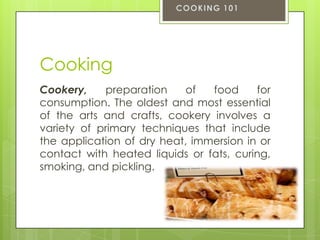
Cookery,
preparation
of
food
for
consumption. The oldest and most essential
of the arts and crafts, cookery involves a
variety of primary techniques that include
the application of dry heat, immersion in or
contact with heated liquids or fats, curing,
smoking, and pickling.
Cooking Terms
1.
2.
3.
4.
5.
6.

Bake – to cook in an oven
Barbecue – to cook over live coals, free
flame oven, or oven electric unit
Beat – to introduce air in mixture
Blanch – to submerge food in boiling water
Boil – to cook in hot water usually at 100%
Caramelize – to heat sugar until it turns
golden brown.
7.
8.
9.
10.
11.
12.
13.
14.
15.

16.

Braise – to cook in a small amount of liquid
Broil – to cook by direct heat
Baste – to moisten food while cooking to add
flavour
Chop – to cut into small pieces
Dice – to cut into cubes about ½ inch.
Dredge – to coat or sprinkle with flour
Fold – to combine by using two motion
Fry – to cook in fat
Grill – as in broil
Grind – cutting or crushing
17.
18.
19.
20.
21.
22.

23.
24.

Lard – to insert strips of fat
Marinate – to allow food to stand in an acid-soy
sauce mixture
Mince – to cut or chop into small pieces
Pan broil – to cook uncovered on a hot surface
Parch – to brown by means of dry heat
Pare – to cut off the outside covering
Pot roast – as in braising
Roast – to cook uncovered by dry heat under
coals
25.
26.
27.
28.
29.
30.
31.
32.
33.

34.

Scald – to heat milk just below melting point
Scallop – to bake food with a sauce or liquid
Sear – to brown the surface of meat
Steam – to cook in a steam
Steep – to allow substance to stand in a liquid
below the boiling point to extract flavour
Sterilize – to destroy microorganisms by applying
dry heat
Stew – to cook in a small quantity of liquid
Stir – to mix in circular motion
Toast – to brown(as in bread)
Whip – to beat rapidly
Proper Techniques in Preparation
and Cooking
1. Wash fruits and vegetable before peeling.
2. Do not cut up fruits and vegetable long
before cooking.
3. Peel fruits and vegetables very thinly.
Use small amount of water when cooking
vegetables. Do not throw away the water.
Use it for soups and sauce.
4. Bring the water to a boiling point before
putting the vegetable.
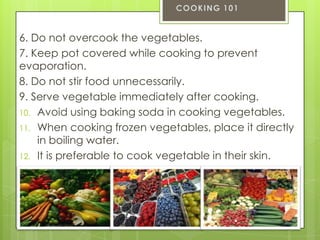
6. Do not overcook the vegetables.
7. Keep pot covered while cooking to prevent
evaporation.
8. Do not stir food unnecessarily.
9. Serve vegetable immediately after cooking.
10. Avoid using baking soda in cooking vegetables.
11. When cooking frozen vegetables, place it directly
in boiling water.
12. It is preferable to cook vegetable in their skin.
13. In cleaning rice, wash it only once or twice.
14. Do not over fry meats, because the protein
content is made indigestible.
15. In boiling meat use low heat.
16. Coffee should be prepared just before serving.
17. When frying keep your fat from over smoking.
18. Avoid overproduction.
19. When making dough, be sure to dissolve yeast in
lukewarm water.
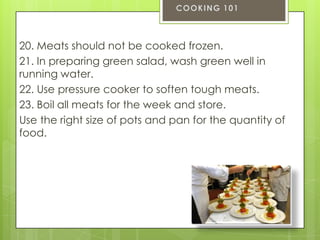
20. Meats should not be cooked frozen.
21. In preparing green salad, wash green well in
running water.
22. Use pressure cooker to soften tough meats.
23. Boil all meats for the week and store.
Use the right size of pots and pan for the quantity of
food.
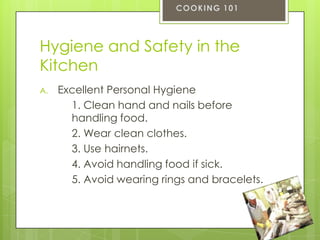
Hygiene and Safety in the
Kitchen
A.

Excellent Personal Hygiene
1. Clean hand and nails before
handling food.
2. Wear clean clothes.
3. Use hairnets.
4. Avoid handling food if sick.
5. Avoid wearing rings and bracelets.
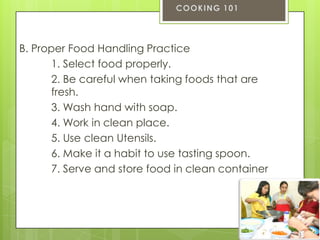
B. Proper Food Handling Practice
1. Select food properly.
2. Be careful when taking foods that are
fresh.
3. Wash hand with soap.
4. Work in clean place.
5. Use clean Utensils.
6. Make it a habit to use tasting spoon.
7. Serve and store food in clean container
C. Proper Dishwashing Technique
1. Rinse or soak pans and other utensils as
used.
2. Stock the dishes in the proper order
namely glassware, the silverware, the
china third and the utensils last.
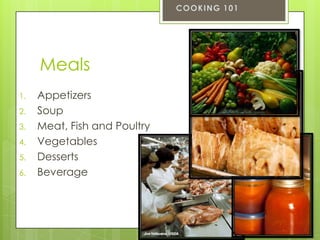
Meals
1.
2.
3.

4.
5.
6.

Appetizers
Soup
Meat, Fish and Poultry
Vegetables
Desserts
Beverage
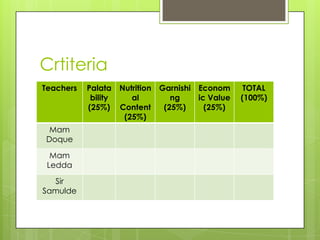
Crtiteria
Teachers

Mam
Doque
Mam
Ledda
Sir
Samulde

Palata Nutrition Garnishi Econom
bility
al
ng
ic Value
(25%) Content
(25%)
(25%)
(25%)

TOTAL
(100%)

Basic culinary arts

  • 1.
  • 2.
    Cooking Cookery, preparation of food for consumption. The oldestand most essential of the arts and crafts, cookery involves a variety of primary techniques that include the application of dry heat, immersion in or contact with heated liquids or fats, curing, smoking, and pickling.
  • 3.
    Cooking Terms 1. 2. 3. 4. 5. 6. Bake –to cook in an oven Barbecue – to cook over live coals, free flame oven, or oven electric unit Beat – to introduce air in mixture Blanch – to submerge food in boiling water Boil – to cook in hot water usually at 100% Caramelize – to heat sugar until it turns golden brown.
  • 4.
    7. 8. 9. 10. 11. 12. 13. 14. 15. 16. Braise – tocook in a small amount of liquid Broil – to cook by direct heat Baste – to moisten food while cooking to add flavour Chop – to cut into small pieces Dice – to cut into cubes about ½ inch. Dredge – to coat or sprinkle with flour Fold – to combine by using two motion Fry – to cook in fat Grill – as in broil Grind – cutting or crushing
  • 5.
    17. 18. 19. 20. 21. 22. 23. 24. Lard – toinsert strips of fat Marinate – to allow food to stand in an acid-soy sauce mixture Mince – to cut or chop into small pieces Pan broil – to cook uncovered on a hot surface Parch – to brown by means of dry heat Pare – to cut off the outside covering Pot roast – as in braising Roast – to cook uncovered by dry heat under coals
  • 6.
    25. 26. 27. 28. 29. 30. 31. 32. 33. 34. Scald – toheat milk just below melting point Scallop – to bake food with a sauce or liquid Sear – to brown the surface of meat Steam – to cook in a steam Steep – to allow substance to stand in a liquid below the boiling point to extract flavour Sterilize – to destroy microorganisms by applying dry heat Stew – to cook in a small quantity of liquid Stir – to mix in circular motion Toast – to brown(as in bread) Whip – to beat rapidly
  • 7.
    Proper Techniques inPreparation and Cooking 1. Wash fruits and vegetable before peeling. 2. Do not cut up fruits and vegetable long before cooking. 3. Peel fruits and vegetables very thinly. Use small amount of water when cooking vegetables. Do not throw away the water. Use it for soups and sauce. 4. Bring the water to a boiling point before putting the vegetable.
  • 8.
    6. Do notovercook the vegetables. 7. Keep pot covered while cooking to prevent evaporation. 8. Do not stir food unnecessarily. 9. Serve vegetable immediately after cooking. 10. Avoid using baking soda in cooking vegetables. 11. When cooking frozen vegetables, place it directly in boiling water. 12. It is preferable to cook vegetable in their skin.
  • 9.
    13. In cleaningrice, wash it only once or twice. 14. Do not over fry meats, because the protein content is made indigestible. 15. In boiling meat use low heat. 16. Coffee should be prepared just before serving. 17. When frying keep your fat from over smoking. 18. Avoid overproduction. 19. When making dough, be sure to dissolve yeast in lukewarm water.
  • 10.
    20. Meats shouldnot be cooked frozen. 21. In preparing green salad, wash green well in running water. 22. Use pressure cooker to soften tough meats. 23. Boil all meats for the week and store. Use the right size of pots and pan for the quantity of food.
  • 11.
    Hygiene and Safetyin the Kitchen A. Excellent Personal Hygiene 1. Clean hand and nails before handling food. 2. Wear clean clothes. 3. Use hairnets. 4. Avoid handling food if sick. 5. Avoid wearing rings and bracelets.
  • 12.
    B. Proper FoodHandling Practice 1. Select food properly. 2. Be careful when taking foods that are fresh. 3. Wash hand with soap. 4. Work in clean place. 5. Use clean Utensils. 6. Make it a habit to use tasting spoon. 7. Serve and store food in clean container
  • 13.
    C. Proper DishwashingTechnique 1. Rinse or soak pans and other utensils as used. 2. Stock the dishes in the proper order namely glassware, the silverware, the china third and the utensils last.
  • 14.
    Meals 1. 2. 3. 4. 5. 6. Appetizers Soup Meat, Fish andPoultry Vegetables Desserts Beverage
  • 15.
    Crtiteria Teachers Mam Doque Mam Ledda Sir Samulde Palata Nutrition GarnishiEconom bility al ng ic Value (25%) Content (25%) (25%) (25%) TOTAL (100%)