Methods of Cooking
Objectives:
At the end of the lesson, the students should be able
to:
a.Discuss the History of Cooking;
b.Discuss the importance of Cooking; and
c.Identify what are the three (3) Types of Cooking.
History of Cooking
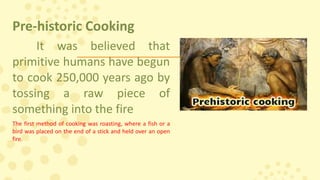
Pre-historic Cooking
It was believed that
primitive humans have begun
to cook 250,000 years ago by
tossing a raw piece of
something into the fire
The first method of cooking was roasting, where a fish or a
bird was placed on the end of a stick and held over an open
fire.
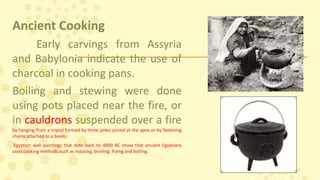
Ancient Cooking
Early carvings from Assyria
and Babylonia indicate the use of
charcoal in cooking pans.
Boiling and stewing were done
using pots placed near the fire, or
in cauldrons suspended over a fire
by hanging from a tripod formed by three poles joined at the apex or by fastening
chains attached to a beam.
Egyptian wall paintings that date back to 4000 BC show that ancient Egyptians
used cooking methods such as roasting, broiling, frying and boiling.
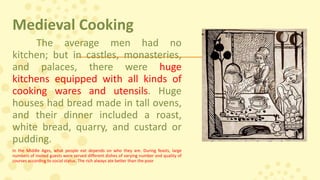
Medieval Cooking
The average men had no
kitchen; but in castles, monasteries,
and palaces, there were huge
kitchens equipped with all kinds of
cooking wares and utensils. Huge
houses had bread made in tall ovens,
and their dinner included a roast,
white bread, quarry, and custard or
pudding.
In the Middle Ages, what people eat depends on who they are. During feasts, large
numbers of invited guests were served different dishes of varying number and quality of
courses according to social status. The rich always ate better than the poor
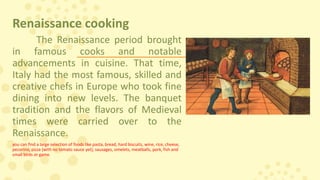
Renaissance cooking
The Renaissance period brought
in famous cooks and notable
advancements in cuisine. That time,
Italy had the most famous, skilled and
creative chefs in Europe who took fine
dining into new levels. The banquet
tradition and the flavors of Medieval
times were carried over to the
Renaissance.
you can find a large selection of foods like pasta, bread, hard biscuits, wine, rice, cheese,
pecorino, pizza (with no tomato sauce yet), sausages, omelets, meatballs, pork, fish and
small birds or game.
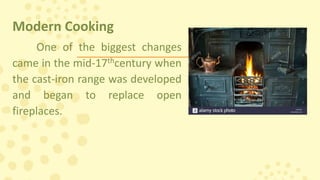
Modern Cooking
One of the biggest changes
came in the mid-17thcentury when
the cast-iron range was developed
and began to replace open
fireplaces.
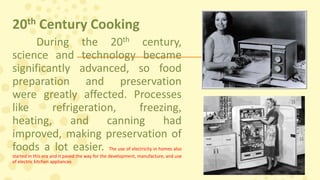
20th Century Cooking
During the 20th century,
science and technology became
significantly advanced, so food
preparation and preservation
were greatly affected. Processes
like refrigeration, freezing,
heating, and canning had
improved, making preservation of
foods a lot easier. The use of electricity in homes also
started in this era and it paved the way for the development, manufacture, and use
of electric kitchen appliances
Why is Cooking
Important?
Cooking is an important activity since it is
associated with a lot of benefits. Cooking
meal at home will bring the greatest form
of family bonding. Cooking saves a lot of
money than buying already prepared meal
or eating in a restaurant.
Cooking involves the application of heat to foodstuffs. The basic object of cooking is to tenderize food so that it will be easier
to digest. Cooking is already part of our curriculum. But cooking can be more than just a chore you have to do – it can also
be a teaching activity.
Dry Cooking Method
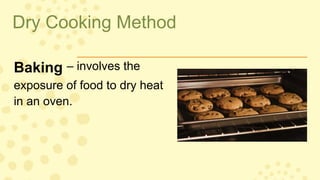
Baking – involves the
exposure of food to dry heat
in an oven.
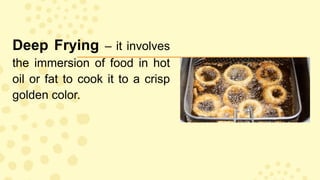
Deep Frying – it involves
the immersion of food in hot
oil or fat to cook it to a crisp
golden color.
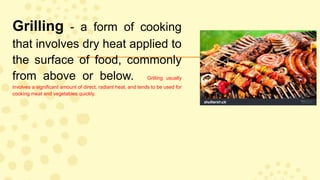
Grilling - a form of cooking
that involves dry heat applied to
the surface of food, commonly
from above or below. Grilling usually
involves a significant amount of direct, radiant heat, and tends to be used for
cooking meat and vegetables quickly.
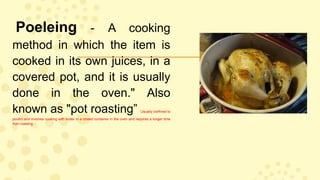
Poeleing - A cooking
method in which the item is
cooked in its own juices, in a
covered pot, and it is usually
done in the oven." Also
known as "pot roasting” Usually confined to
poultry and involves cooking with butter in a closed container in the oven and requires a longer time
than roasting.
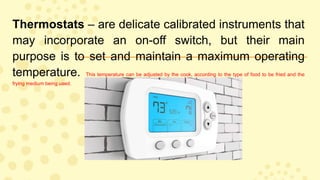
Thermostats – are delicate calibrated instruments that
may incorporate an on-off switch, but their main
purpose is to set and maintain a maximum operating
temperature. This temperature can be adjusted by the cook, according to the type of food to be fried and the
frying medium being used.
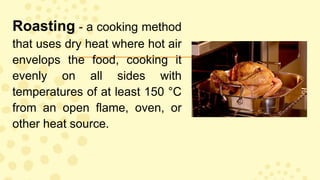
Roasting - a cooking method
that uses dry heat where hot air
envelops the food, cooking it
evenly on all sides with
temperatures of at least 150 °C
from an open flame, oven, or
other heat source.
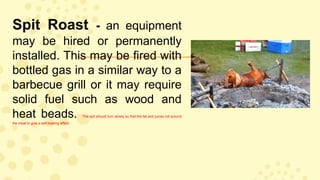
Spit Roast - an equipment
may be hired or permanently
installed. This may be fired with
bottled gas in a similar way to a
barbecue grill or it may require
solid fuel such as wood and
heat beads. The spit should turn slowly so that the fat and juices roll around
the meat to give a self-basting effect.
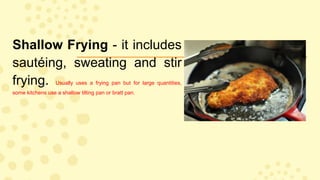
Shallow Frying - it includes
sautéing, sweating and stir
frying. Usually uses a frying pan but for large quantities,
some kitchens use a shallow tilting pan or bratt pan.
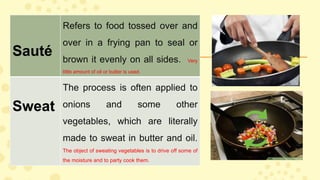
Sauté
Refers to food tossed over and
over in a frying pan to seal or
brown it evenly on all sides. Very
little amount of oil or butter is used.
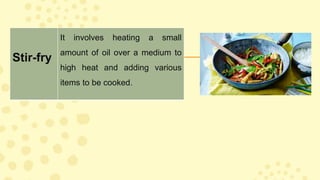
Sweat
The process is often applied to
onions and some other
vegetables, which are literally
made to sweat in butter and oil.
The object of sweating vegetables is to drive off some of
the moisture and to party cook them.
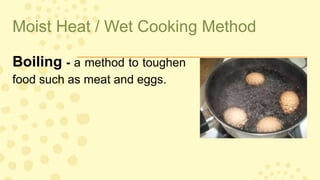
Stir-fry
It involves heating a small
amount of oil over a medium to
high heat and adding various
items to be cooked.
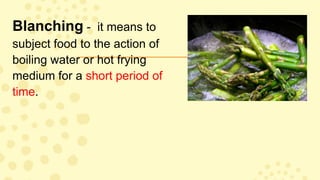
Moist Heat / Wet Cooking Method
Boiling - a method to toughen
food such as meat and eggs.
Blanching - it means to
subject food to the action of
boiling water or hot frying
medium for a short period of
time.
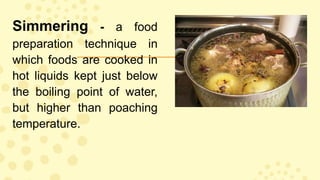
Simmering - a food
preparation technique in
which foods are cooked in
hot liquids kept just below
the boiling point of water,
but higher than poaching
temperature.
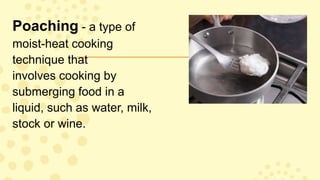
Poaching - a type of
moist-heat cooking
technique that
involves cooking by
submerging food in a
liquid, such as water, milk,
stock or wine.
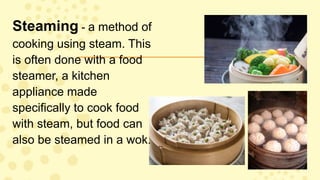
Steaming - a method of
cooking using steam. This
is often done with a food
steamer, a kitchen
appliance made
specifically to cook food
with steam, but food can
also be steamed in a wok.
Combination Cooking Method
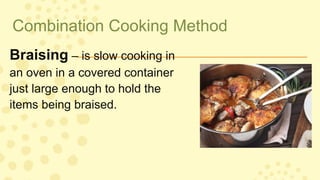
Braising – is slow cooking in
an oven in a covered container
just large enough to hold the
items being braised.
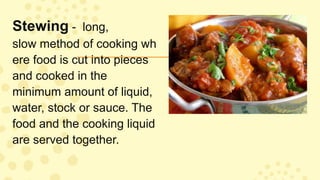
Stewing - long,
slow method of cooking wh
ere food is cut into pieces
and cooked in the
minimum amount of liquid,
water, stock or sauce. The
food and the cooking liquid
are served together.

Methods of Cooking - NEW.pptx

  • 1.
  • 2.
    Objectives: At the endof the lesson, the students should be able to: a.Discuss the History of Cooking; b.Discuss the importance of Cooking; and c.Identify what are the three (3) Types of Cooking.
  • 3.
  • 4.
    Pre-historic Cooking It wasbelieved that primitive humans have begun to cook 250,000 years ago by tossing a raw piece of something into the fire The first method of cooking was roasting, where a fish or a bird was placed on the end of a stick and held over an open fire.
  • 5.
    Ancient Cooking Early carvingsfrom Assyria and Babylonia indicate the use of charcoal in cooking pans. Boiling and stewing were done using pots placed near the fire, or in cauldrons suspended over a fire by hanging from a tripod formed by three poles joined at the apex or by fastening chains attached to a beam. Egyptian wall paintings that date back to 4000 BC show that ancient Egyptians used cooking methods such as roasting, broiling, frying and boiling.
  • 6.
    Medieval Cooking The averagemen had no kitchen; but in castles, monasteries, and palaces, there were huge kitchens equipped with all kinds of cooking wares and utensils. Huge houses had bread made in tall ovens, and their dinner included a roast, white bread, quarry, and custard or pudding. In the Middle Ages, what people eat depends on who they are. During feasts, large numbers of invited guests were served different dishes of varying number and quality of courses according to social status. The rich always ate better than the poor
  • 7.
    Renaissance cooking The Renaissanceperiod brought in famous cooks and notable advancements in cuisine. That time, Italy had the most famous, skilled and creative chefs in Europe who took fine dining into new levels. The banquet tradition and the flavors of Medieval times were carried over to the Renaissance. you can find a large selection of foods like pasta, bread, hard biscuits, wine, rice, cheese, pecorino, pizza (with no tomato sauce yet), sausages, omelets, meatballs, pork, fish and small birds or game.
  • 8.
    Modern Cooking One ofthe biggest changes came in the mid-17thcentury when the cast-iron range was developed and began to replace open fireplaces.
  • 9.
    20th Century Cooking Duringthe 20th century, science and technology became significantly advanced, so food preparation and preservation were greatly affected. Processes like refrigeration, freezing, heating, and canning had improved, making preservation of foods a lot easier. The use of electricity in homes also started in this era and it paved the way for the development, manufacture, and use of electric kitchen appliances
  • 10.
  • 11.
    Cooking is animportant activity since it is associated with a lot of benefits. Cooking meal at home will bring the greatest form of family bonding. Cooking saves a lot of money than buying already prepared meal or eating in a restaurant. Cooking involves the application of heat to foodstuffs. The basic object of cooking is to tenderize food so that it will be easier to digest. Cooking is already part of our curriculum. But cooking can be more than just a chore you have to do – it can also be a teaching activity.
  • 12.
    Dry Cooking Method Baking– involves the exposure of food to dry heat in an oven.
  • 13.
    Deep Frying –it involves the immersion of food in hot oil or fat to cook it to a crisp golden color.
  • 14.
    Grilling - aform of cooking that involves dry heat applied to the surface of food, commonly from above or below. Grilling usually involves a significant amount of direct, radiant heat, and tends to be used for cooking meat and vegetables quickly.
  • 15.
    Poeleing - Acooking method in which the item is cooked in its own juices, in a covered pot, and it is usually done in the oven." Also known as "pot roasting” Usually confined to poultry and involves cooking with butter in a closed container in the oven and requires a longer time than roasting.
  • 16.
    Thermostats – aredelicate calibrated instruments that may incorporate an on-off switch, but their main purpose is to set and maintain a maximum operating temperature. This temperature can be adjusted by the cook, according to the type of food to be fried and the frying medium being used.
  • 17.
    Roasting - acooking method that uses dry heat where hot air envelops the food, cooking it evenly on all sides with temperatures of at least 150 °C from an open flame, oven, or other heat source.
  • 18.
    Spit Roast -an equipment may be hired or permanently installed. This may be fired with bottled gas in a similar way to a barbecue grill or it may require solid fuel such as wood and heat beads. The spit should turn slowly so that the fat and juices roll around the meat to give a self-basting effect.
  • 19.
    Shallow Frying -it includes sautéing, sweating and stir frying. Usually uses a frying pan but for large quantities, some kitchens use a shallow tilting pan or bratt pan.
  • 20.
    Sauté Refers to foodtossed over and over in a frying pan to seal or brown it evenly on all sides. Very little amount of oil or butter is used. Sweat The process is often applied to onions and some other vegetables, which are literally made to sweat in butter and oil. The object of sweating vegetables is to drive off some of the moisture and to party cook them.
  • 21.
    Stir-fry It involves heatinga small amount of oil over a medium to high heat and adding various items to be cooked.
  • 22.
    Moist Heat /Wet Cooking Method Boiling - a method to toughen food such as meat and eggs.
  • 23.
    Blanching - itmeans to subject food to the action of boiling water or hot frying medium for a short period of time.
  • 24.
    Simmering - afood preparation technique in which foods are cooked in hot liquids kept just below the boiling point of water, but higher than poaching temperature.
  • 25.
    Poaching - atype of moist-heat cooking technique that involves cooking by submerging food in a liquid, such as water, milk, stock or wine.
  • 26.
    Steaming - amethod of cooking using steam. This is often done with a food steamer, a kitchen appliance made specifically to cook food with steam, but food can also be steamed in a wok.
  • 27.
    Combination Cooking Method Braising– is slow cooking in an oven in a covered container just large enough to hold the items being braised.
  • 28.
    Stewing - long, slowmethod of cooking wh ere food is cut into pieces and cooked in the minimum amount of liquid, water, stock or sauce. The food and the cooking liquid are served together.