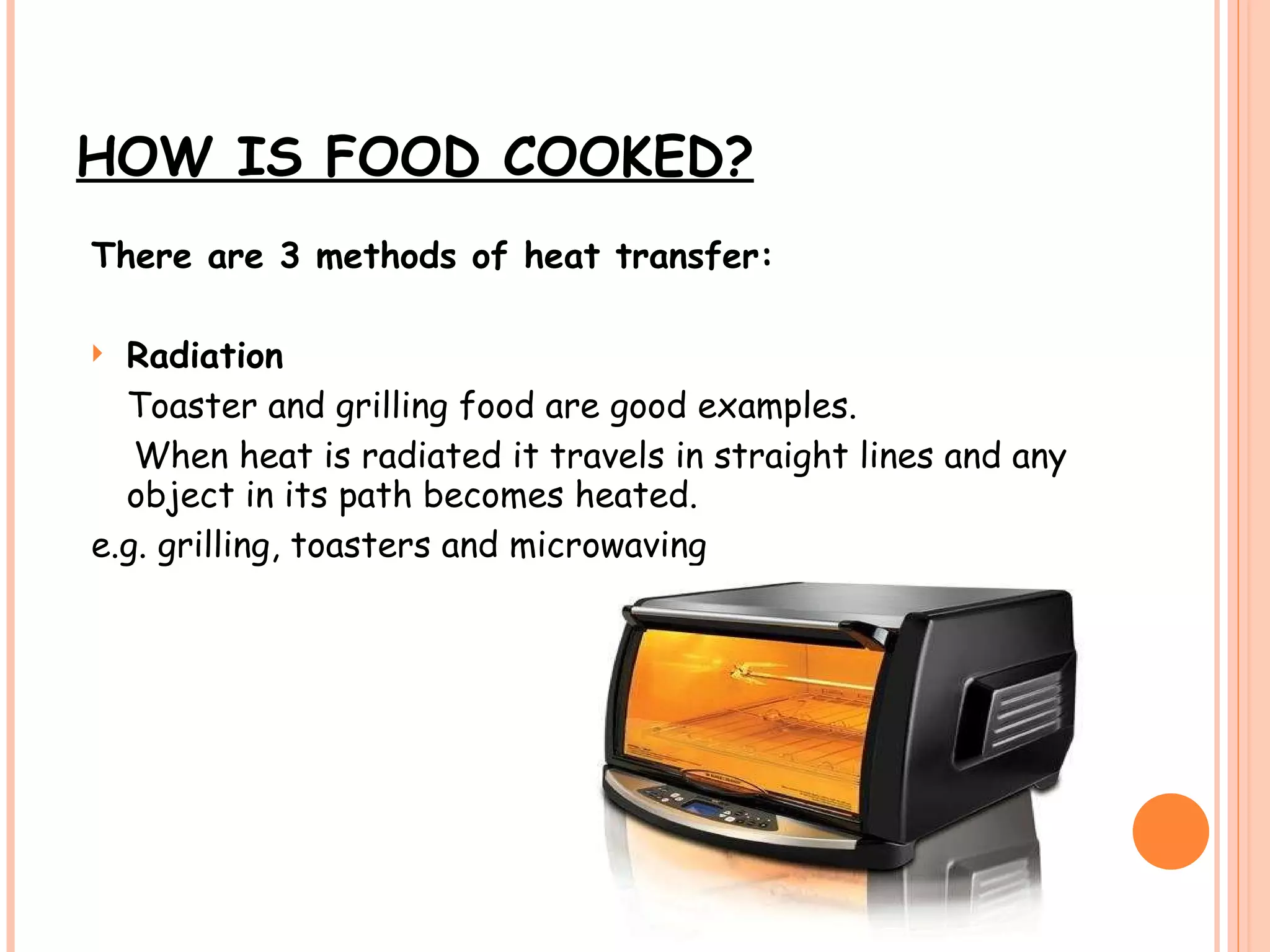
HOW IS FOOD COOKED? There are 3 methods of heat transfer: Radiation Toaster and grilling food are good examples.  When heat is radiated it travels in straight lines and any object in its path becomes heated.  e.g. grilling, toasters and microwaving    
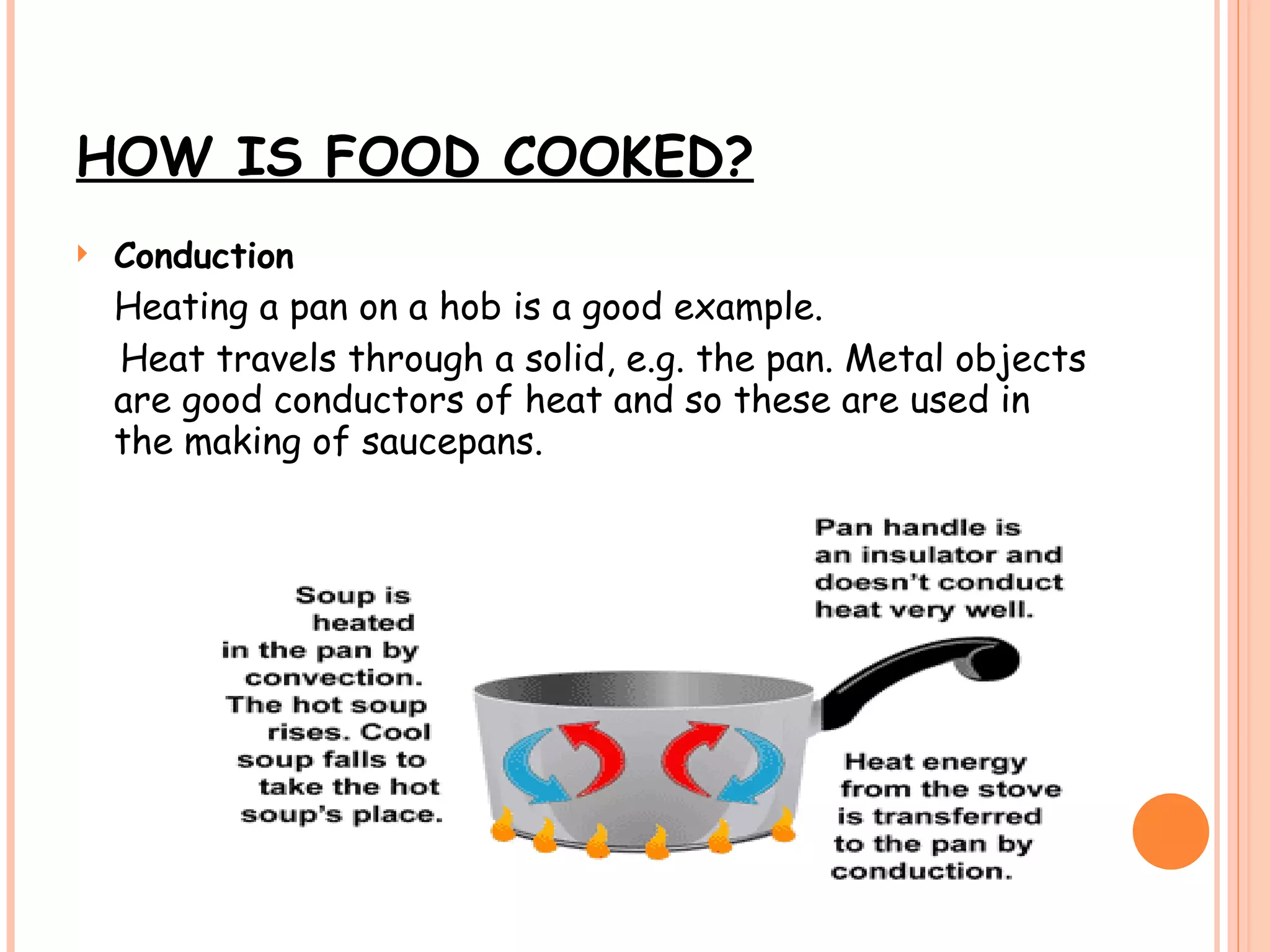
HOW IS FOOD COOKED? Conduction Heating a pan on a hob is a good example. Heat travels through a solid, e.g. the pan. Metal objects are good conductors of heat and so these are used in the making of saucepans.  
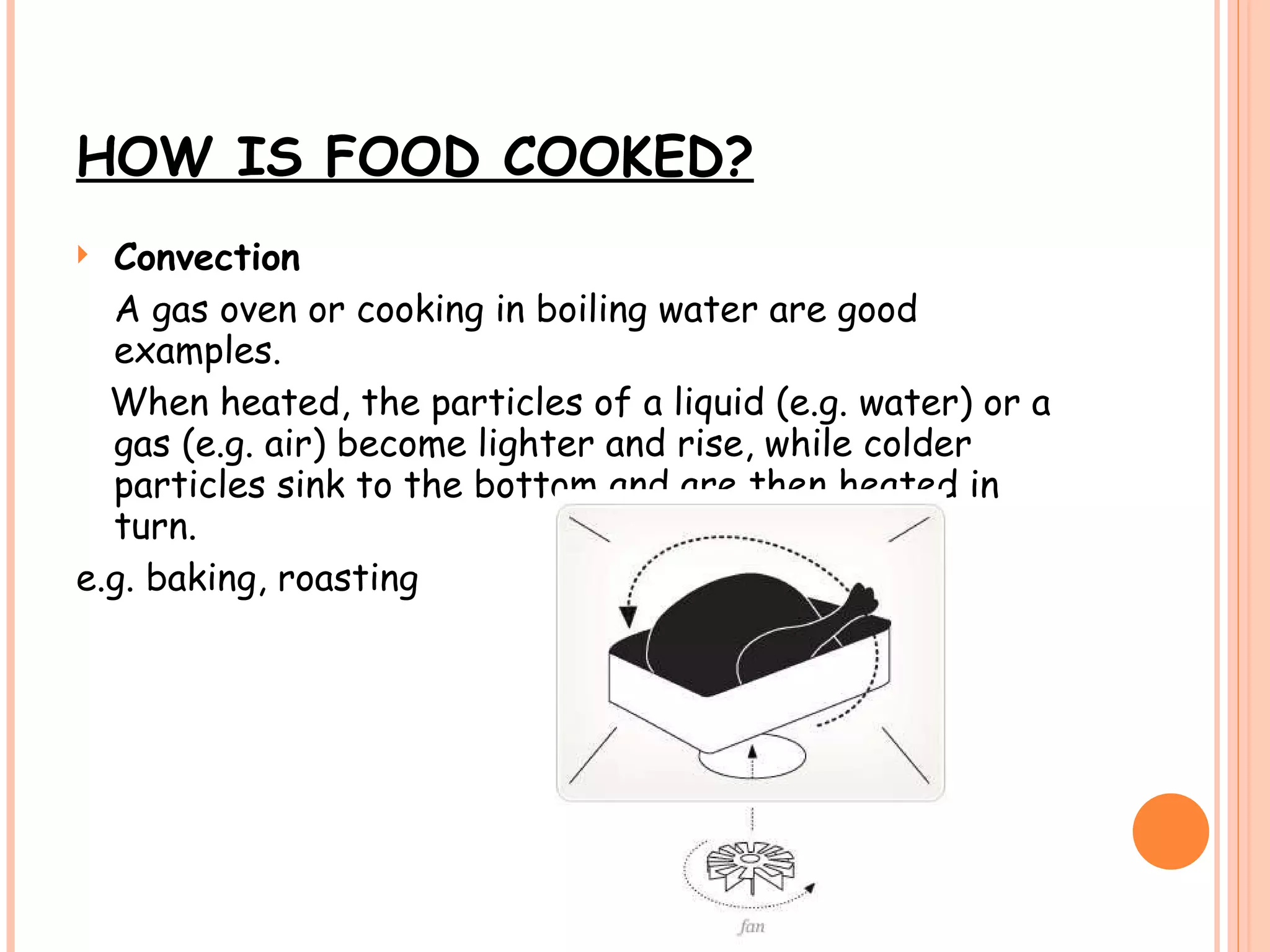
HOW IS FOOD COOKED? Convection A gas oven or cooking in boiling water are good examples.  When heated, the particles of a liquid (e.g. water) or a gas (e.g. air) become lighter and rise, while colder particles sink to the bottom and are then heated in turn. e.g. baking, roasting
Energy efficiency in the kitchen: Gas cookers are cheaper and use less energy than electric cookers. Microwaves use very little energy. Toasters usually use less energy than a grill. Only boil as much water as you need in a  kettle. When the oven is on, try to cook several dishes at once. Choose the correct size pan for the rings on the hob.  When boiling, don’t use more water than is necessary, turn heat down once boiling, cover pan.  Choose appliances with a low wattage.
Moist heat   Moist-heat cooking methods use a liquid for cooking – usually water, stock or steam.  T he advantage of steam is that it transfers more heat at the same temperature. As a result, the food cooks faster and fewer nutrients are lost.
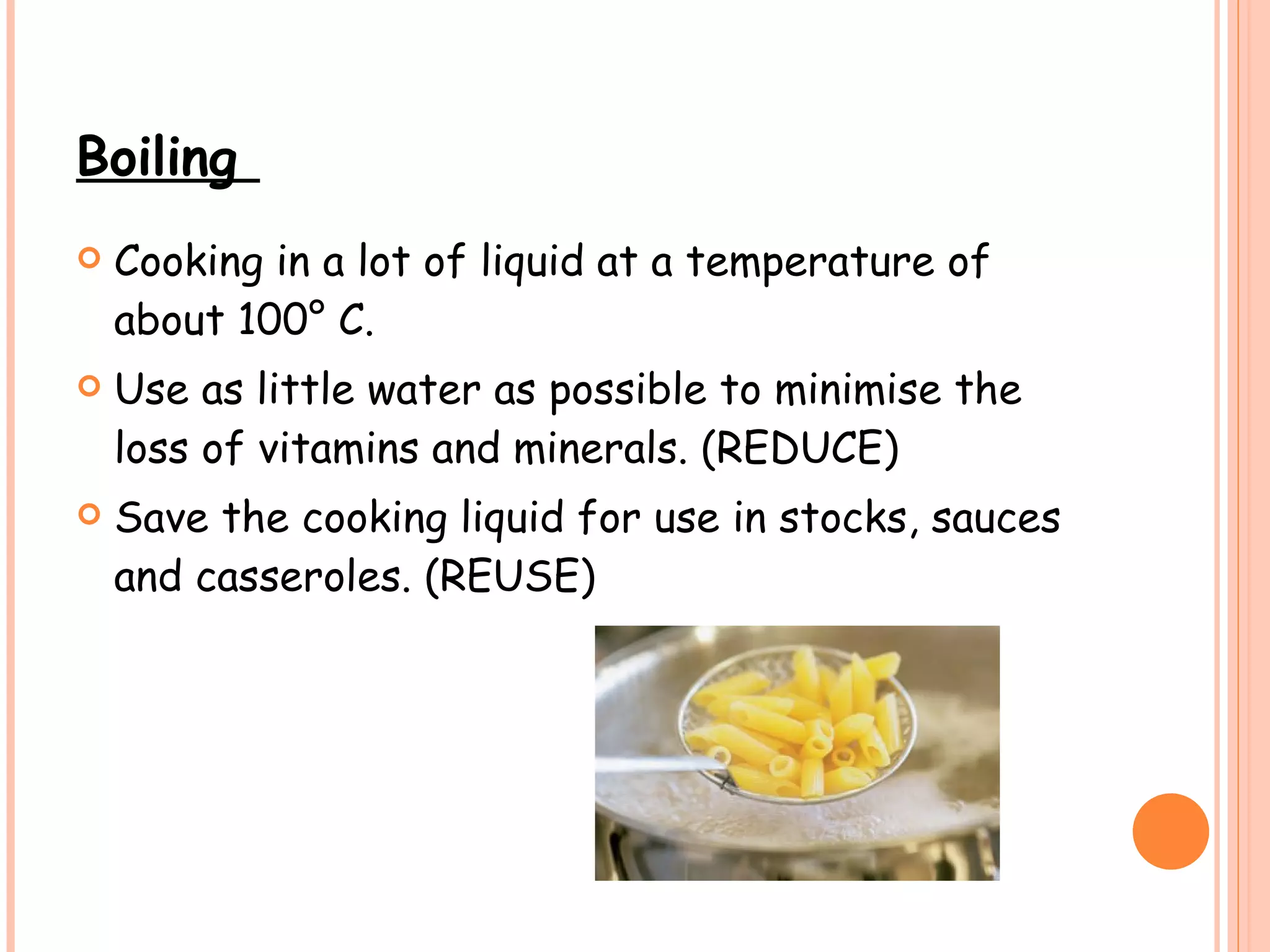
Boiling  Cooking in a lot of liquid at a temperature of about 100° C. Use as little water as possible to minimise the loss of vitamins and minerals. (REDUCE) Save the cooking liquid for use in stocks, sauces and casseroles. (REUSE)
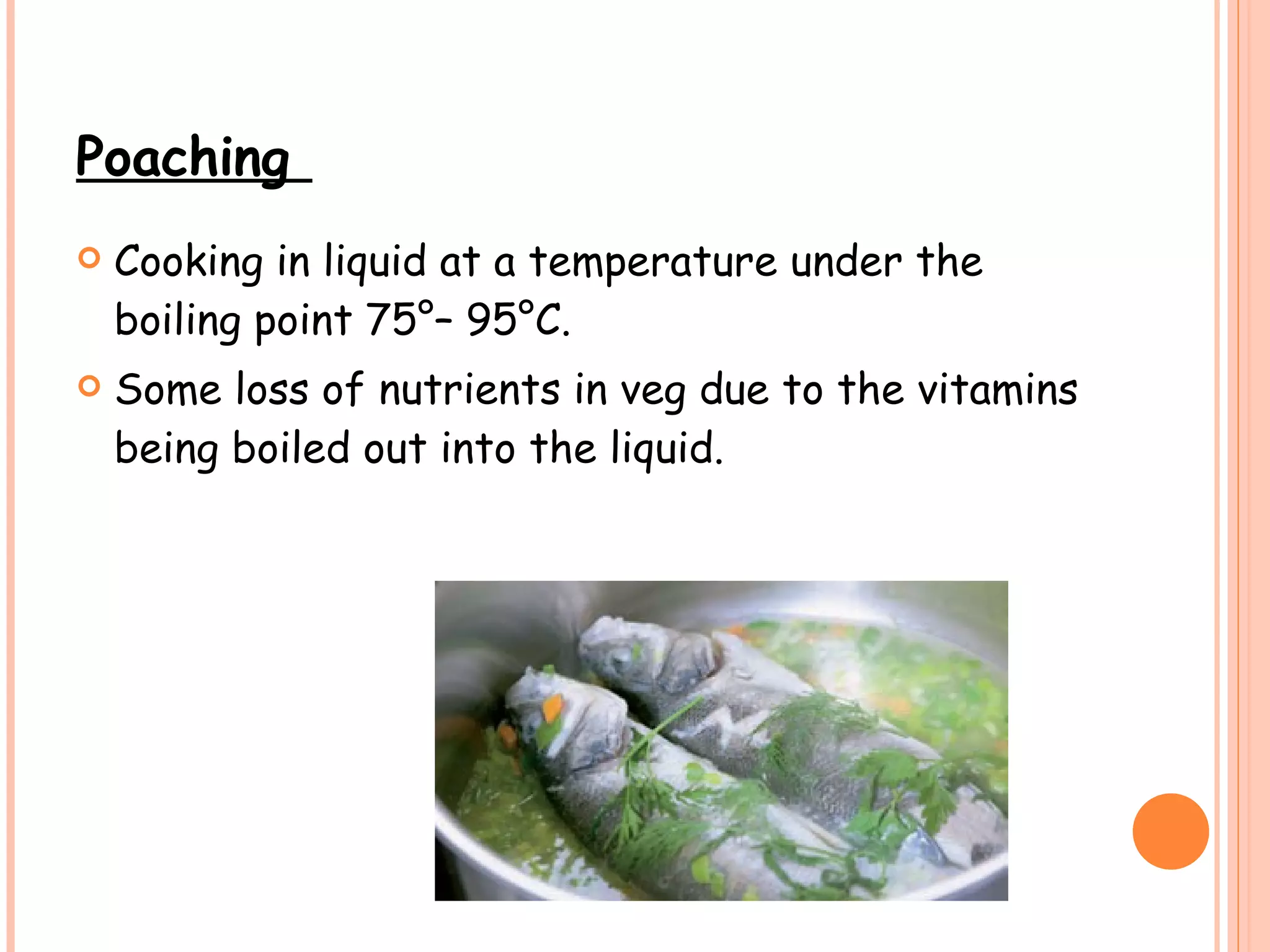
Poaching  Cooking in liquid at a temperature under the boiling point 75°– 95°C. Some loss of nutrients in veg due to the vitamins being boiled out into the liquid.
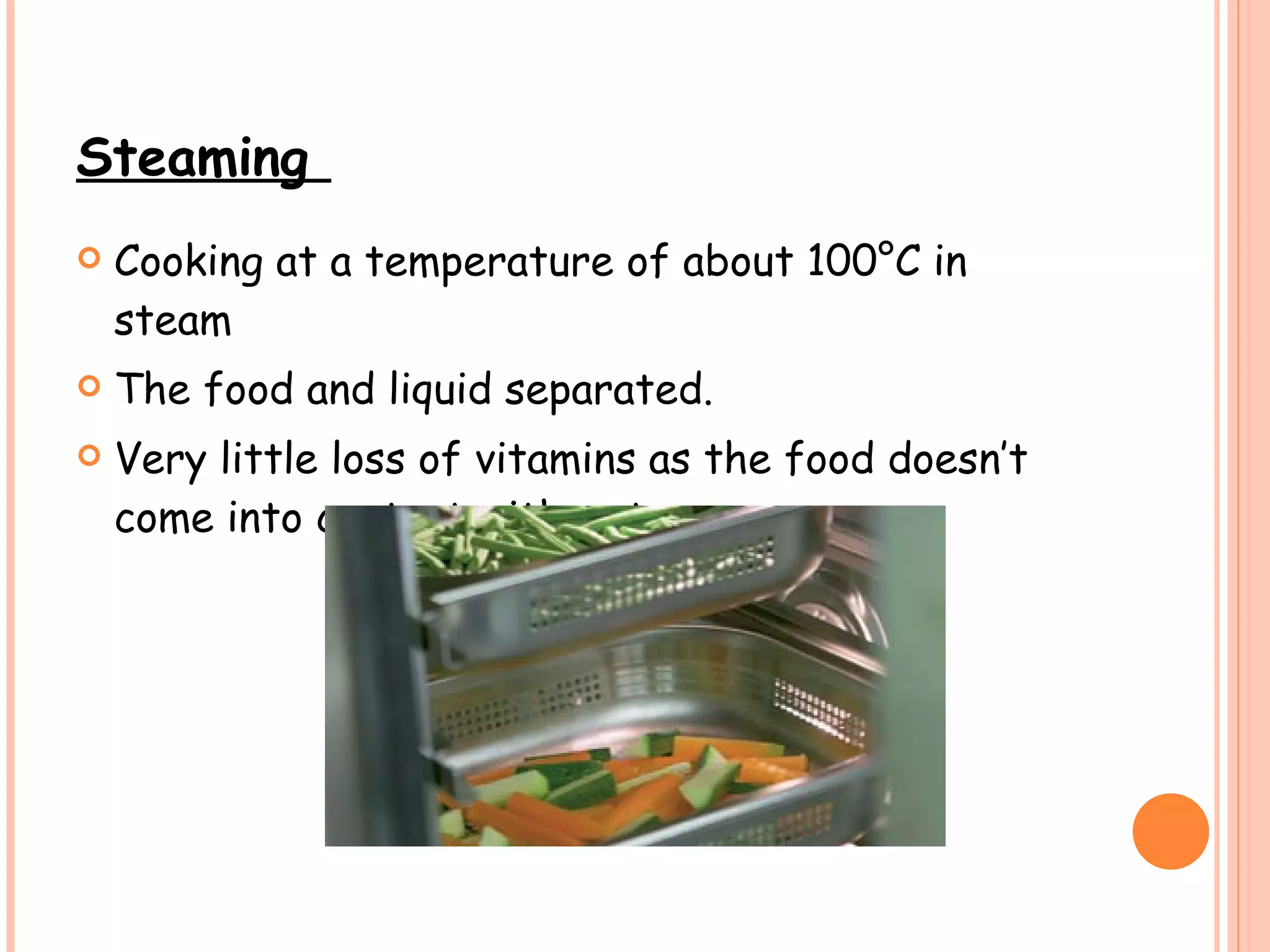
Steaming  Cooking at a temperature of about 100°C in steam The food and liquid separated.  Very little loss of vitamins as the food doesn’t come into contact with water.
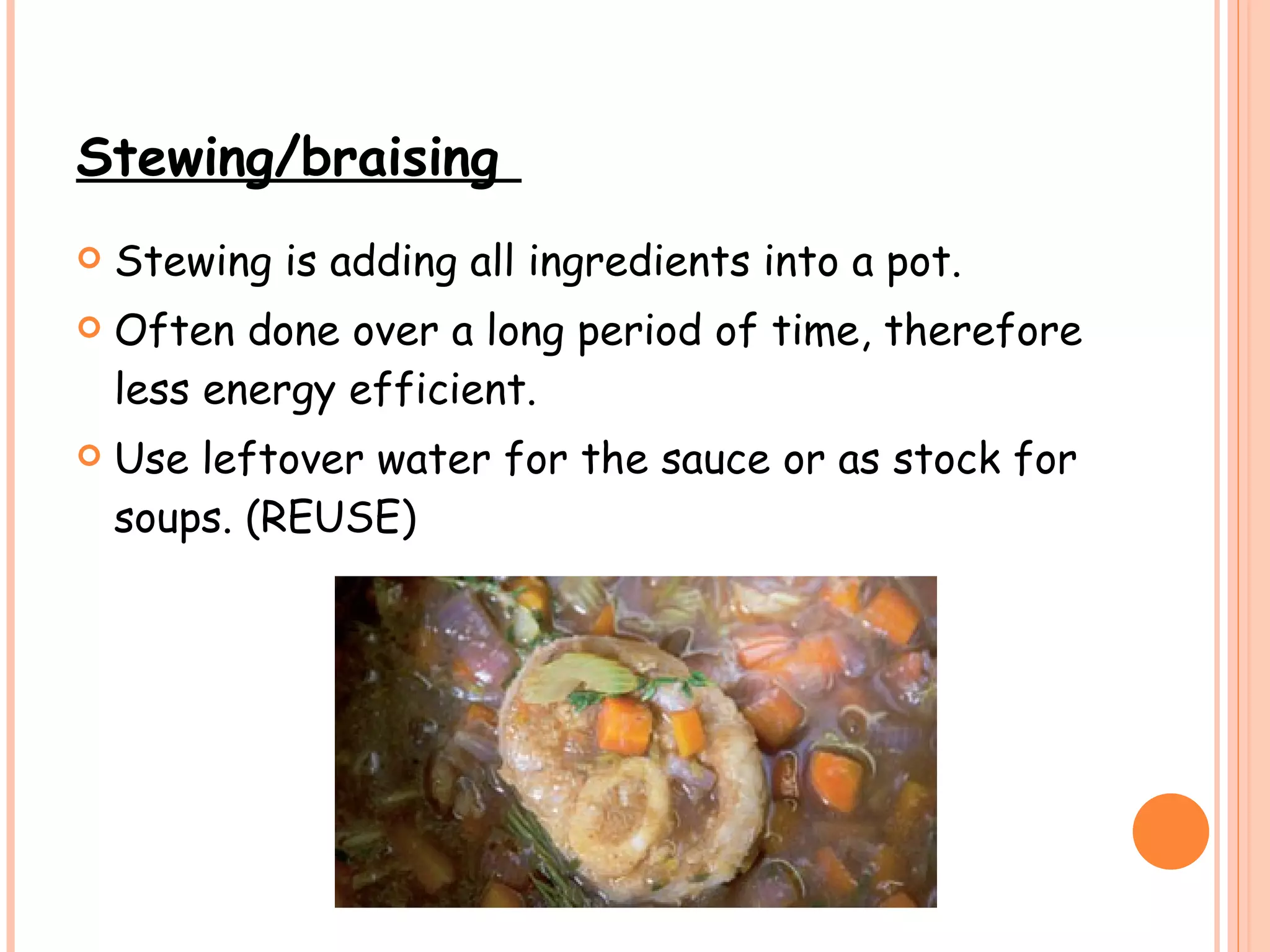
Stewing/braising  Stewing is adding all ingredients into a pot.  Often done over a long period of time, therefore less energy efficient.  Use leftover water for the sauce or as stock for soups. (REUSE)
Homework Choose a recipe which using a moist method of cooking: boil, poach, steam, stew.  Write out the method with ingredients list and an equipment list and say which method of cooking you will be using.  I want this handed in!!!   Bring in the ingredients  on  Monday 9 th  May  to make.  Recipe must be able to make within an  hour ! Keep it simple…soup, steamed fish or veg, casserole, something with boiled potatoes.
Year 10s Get your folders out the green box on the desk. Sit in your place. Get paper ready for mind mapping dry heat methods.
Dry heat   Heat is transferred through air or fat. The cooking temperature is between 120° – 150°C. Suitable for foods rich in proteins, like meat, fish and seafood and where a crust is desired.
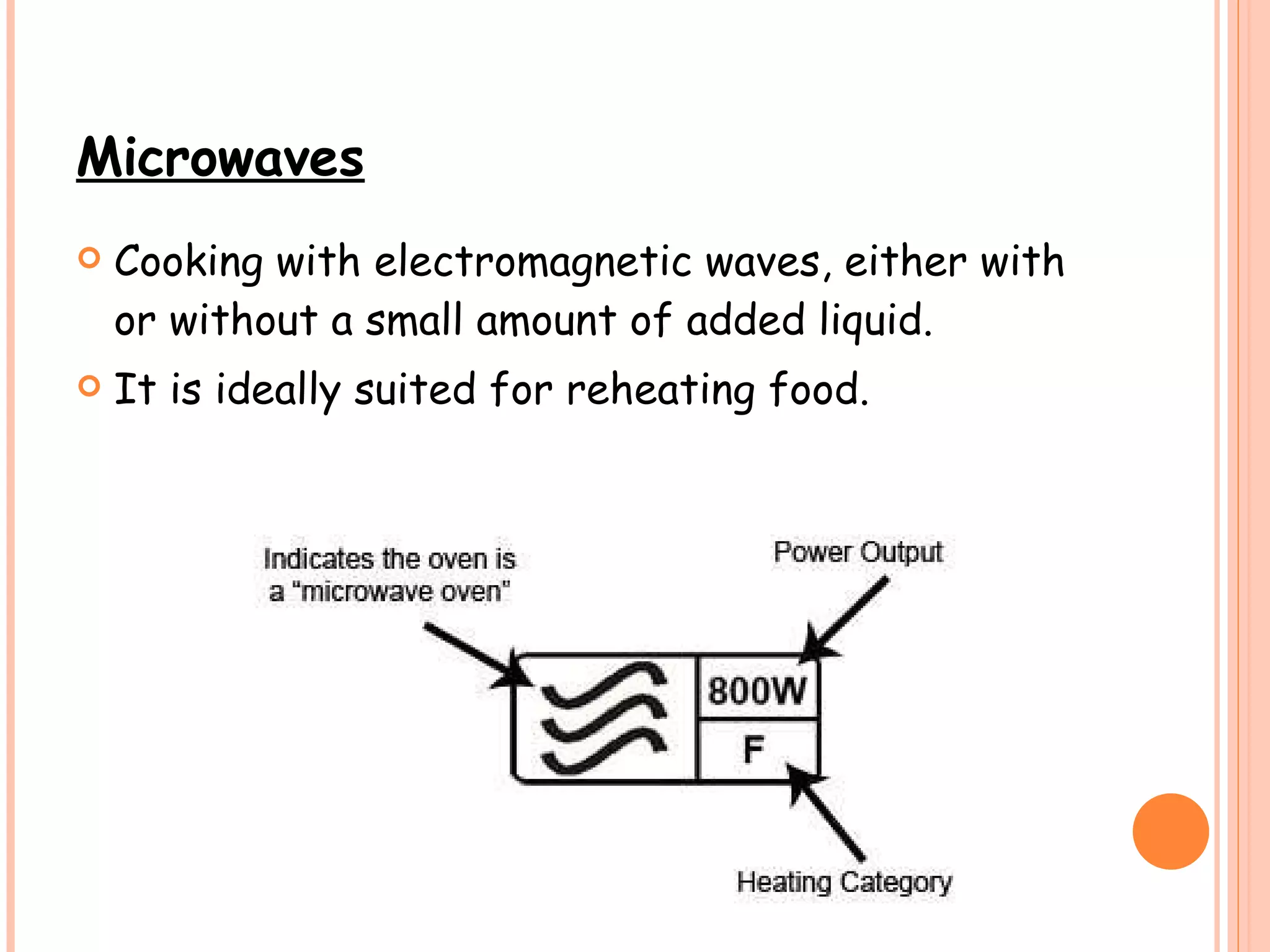
Microwaves   Cooking with electromagnetic waves, either with or without a small amount of added liquid.  It is ideally suited for reheating food.
Roasting  Cooking with browning on the stove or in the oven with or without adding fat, at a temperature of 140°– 200°C.  Roast at intense heat to seal the juices inside the meat, then cook at low heat until done. This reduces the loss of vitamins, minerals and moisture.
Sautéing Dry-heat cooking method in which heat is conducted by a small amount of fat (the food is kept in motion).
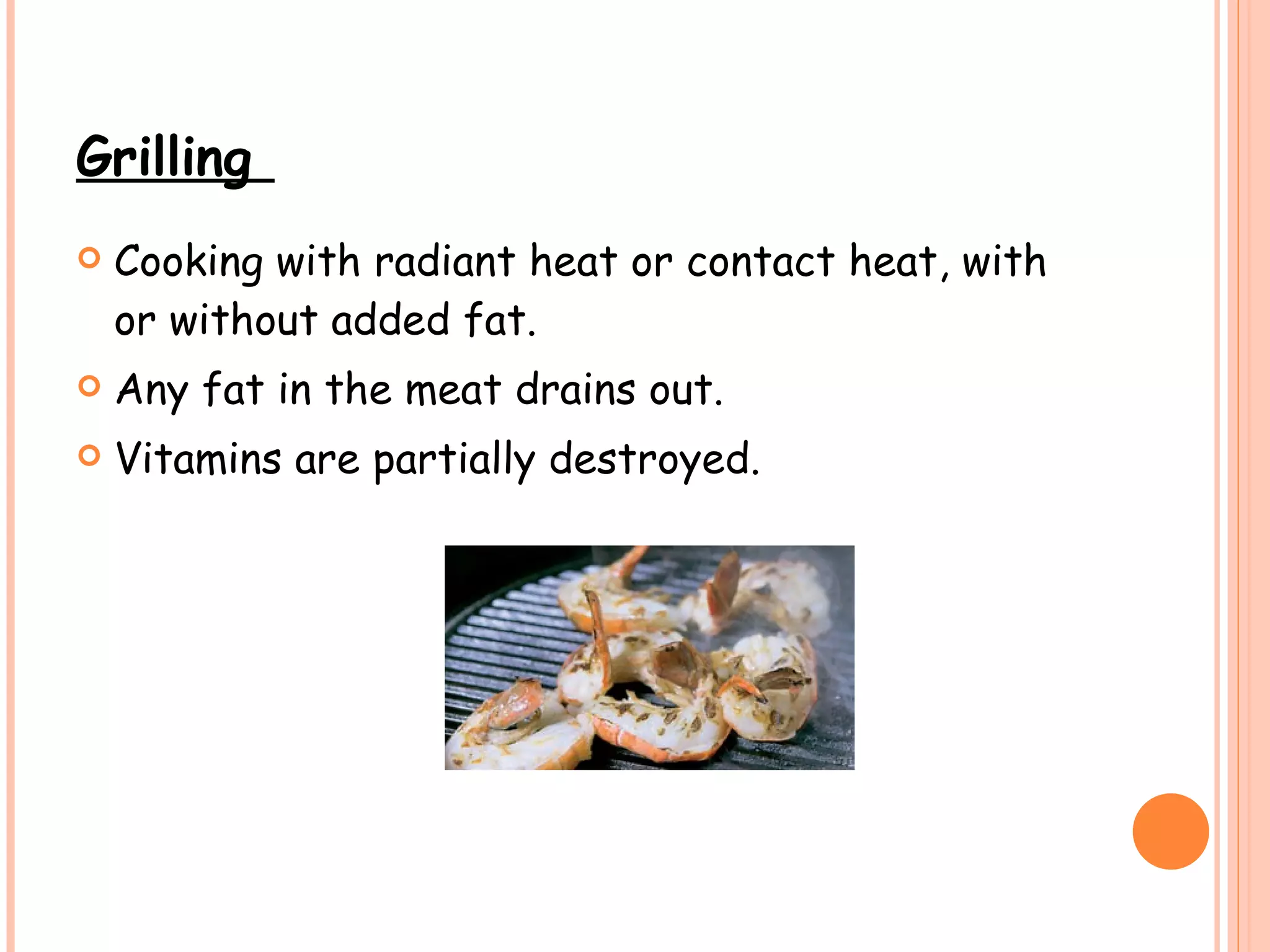
Grilling  Cooking with radiant heat or contact heat, with or without added fat.   Any fat in the meat drains out. Vitamins are partially destroyed.
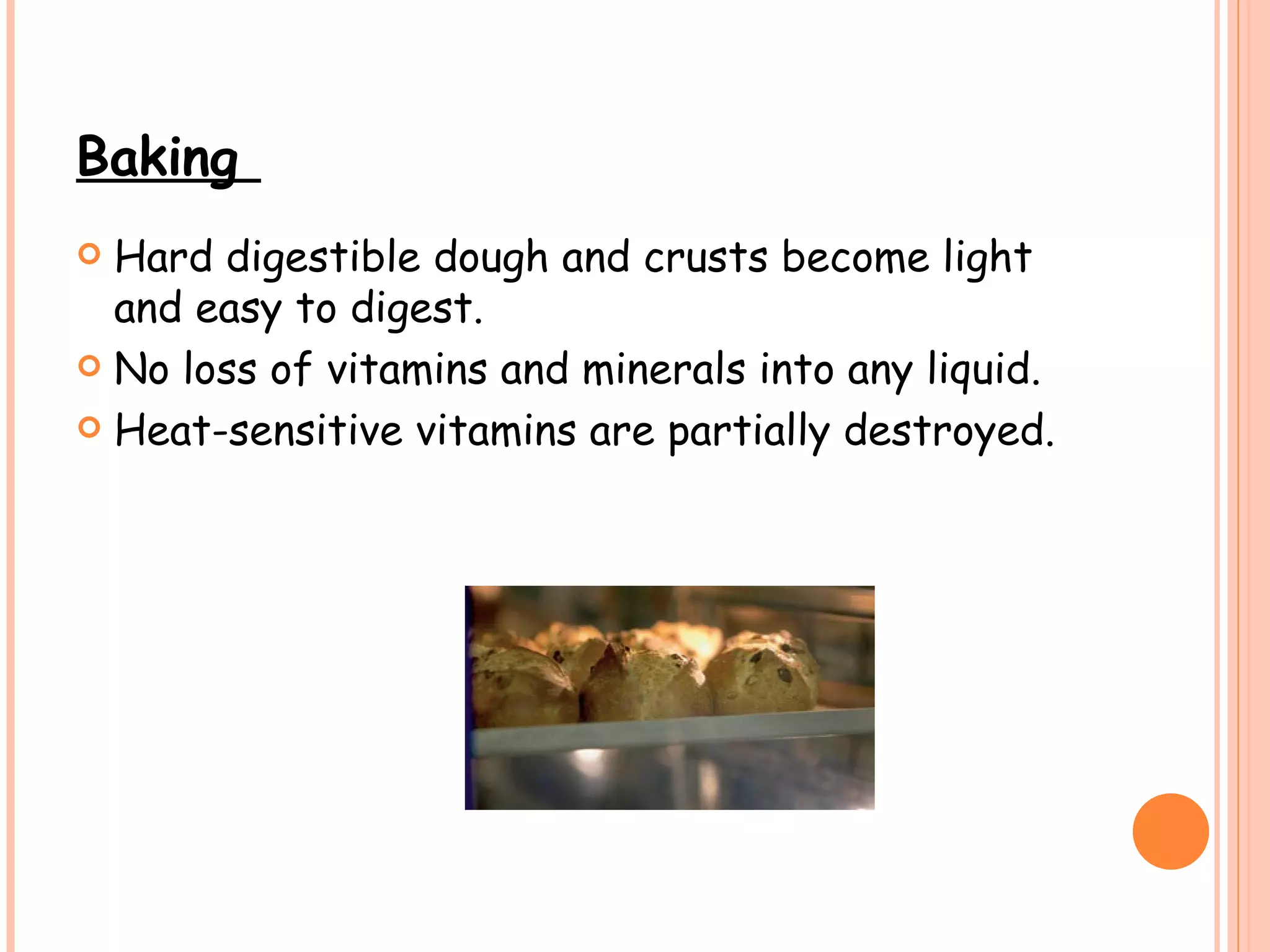
Baking  Hard digestible dough and crusts become light and easy to digest. No loss of vitamins and minerals into any liquid. Heat-sensitive vitamins are partially destroyed.
Fry cooking   Cooking with browning in hot oil at a temperature of 140° – 190°C. The methods are defined according to the amount of fat used.  Correct frying of potatoes and vegetables preserves vitamins and minerals better than boiling or steaming, but increases the amount of fat and energy.
Deep fry The food is entirely submerged in hot fat. Fry as quickly as possible. Longer frying time increases fat absorption.  The smaller the food being fried, the greater the amount of fat absorbed. Drain the food of oil before serving.
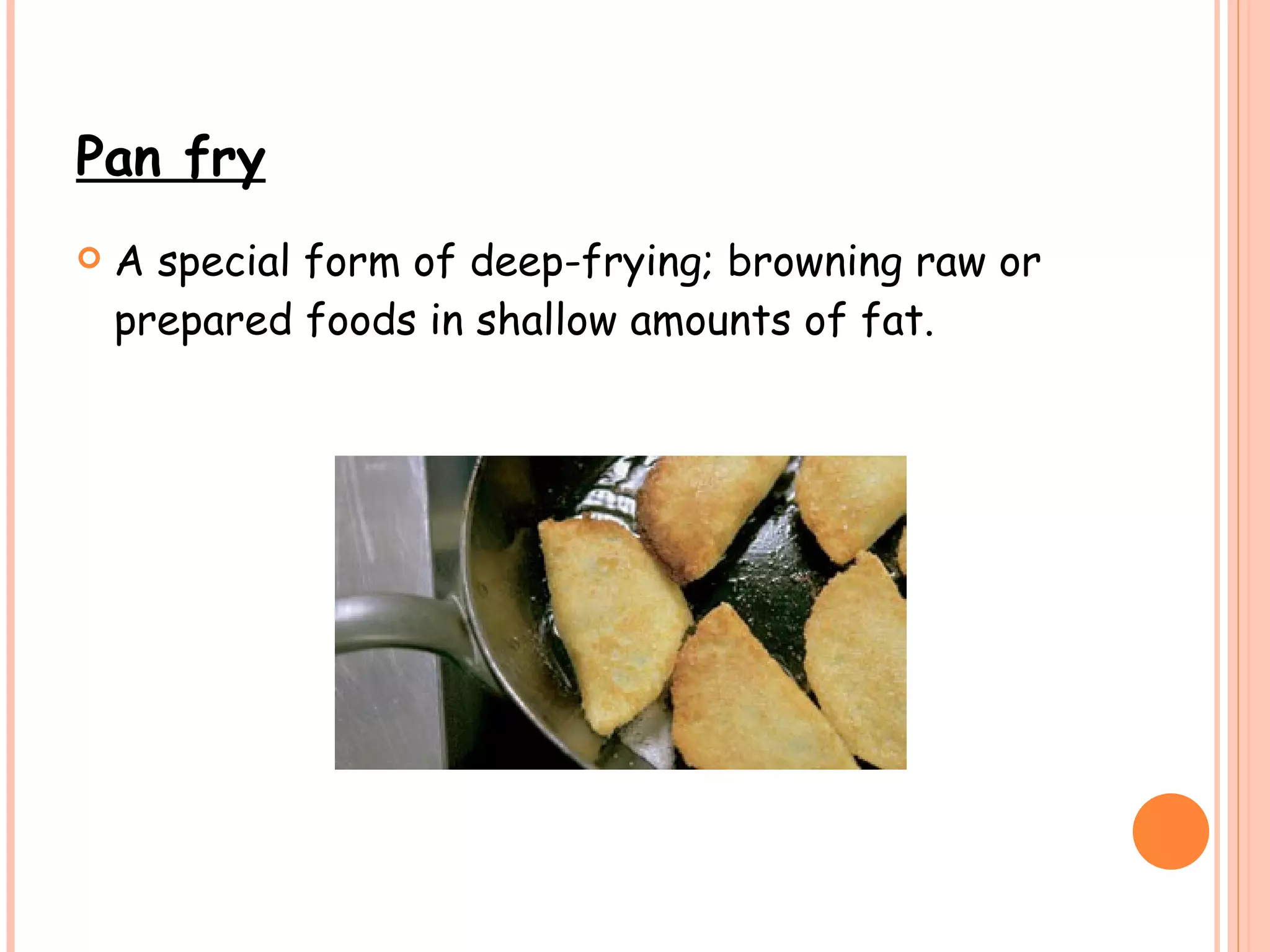
Pan fry   A special form of deep-frying; browning raw or prepared foods in shallow amounts of fat.
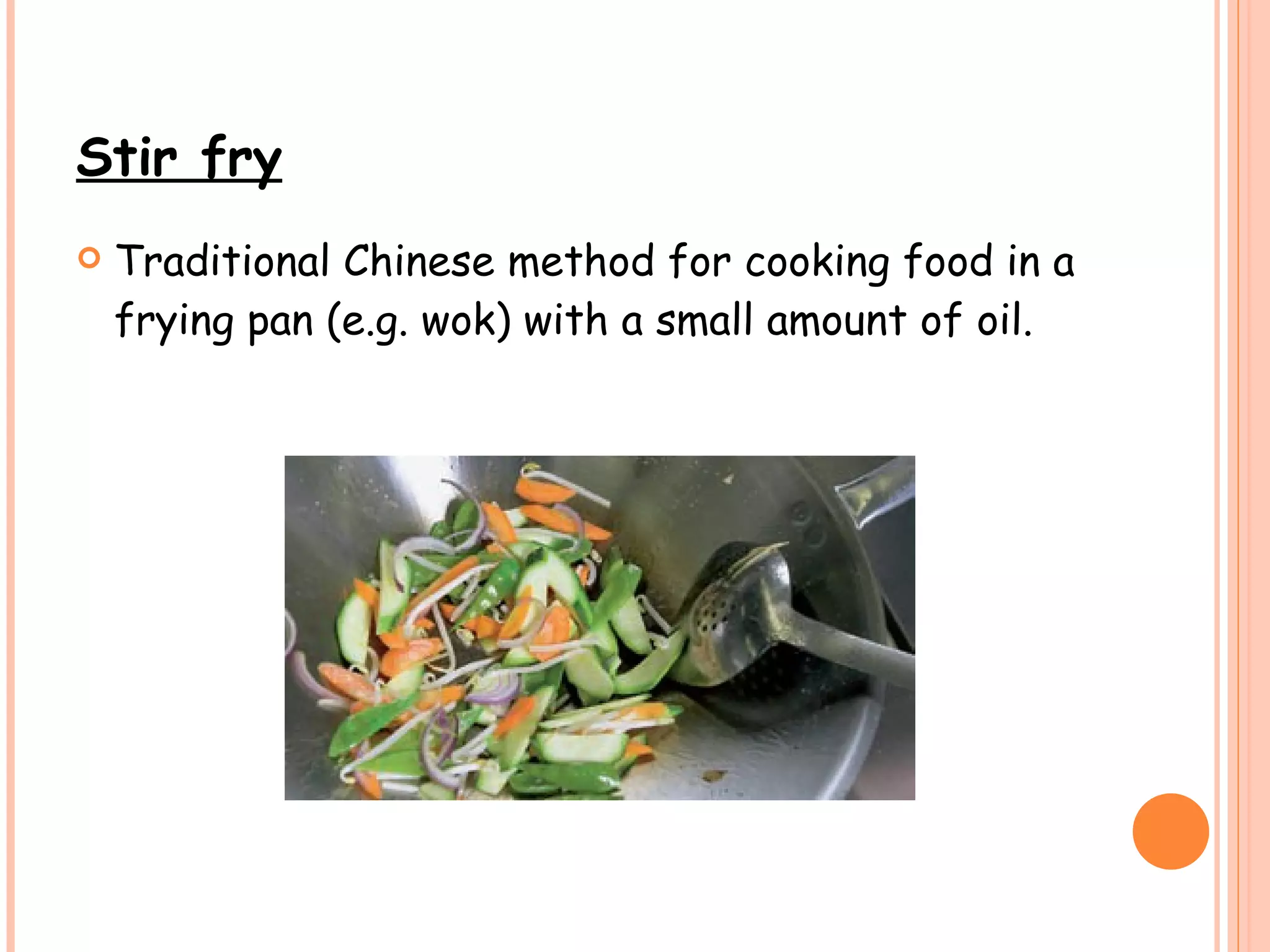
Stir fry   Traditional Chinese method for cooking food in a frying pan (e.g. wok) with a small amount of oil.
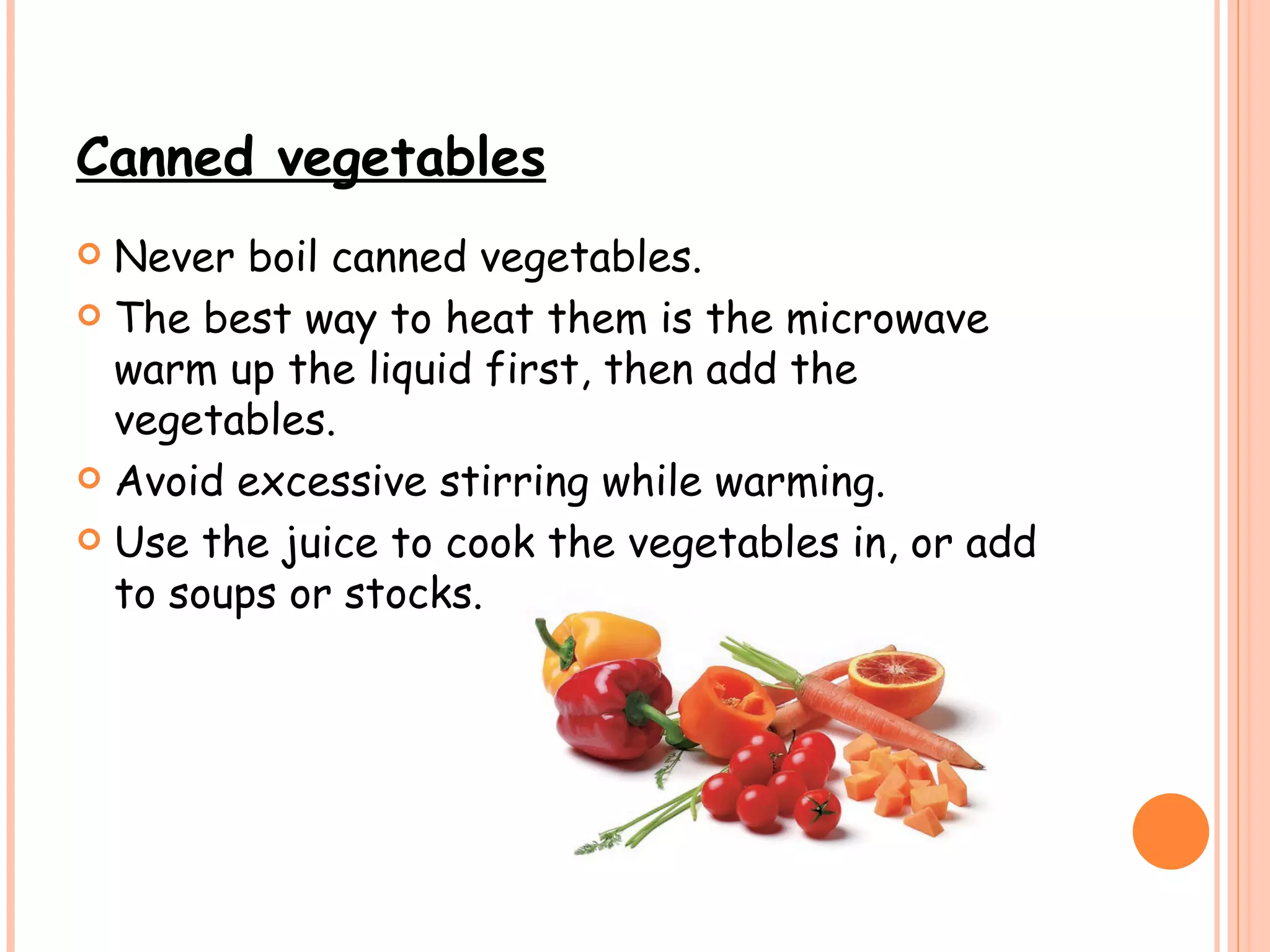
Canned vegetables Never boil canned vegetables. The best way to heat them is the microwave warm up the liquid first, then add the vegetables. Avoid excessive stirring while warming. Use the juice to cook the vegetables in, or add to soups or stocks.
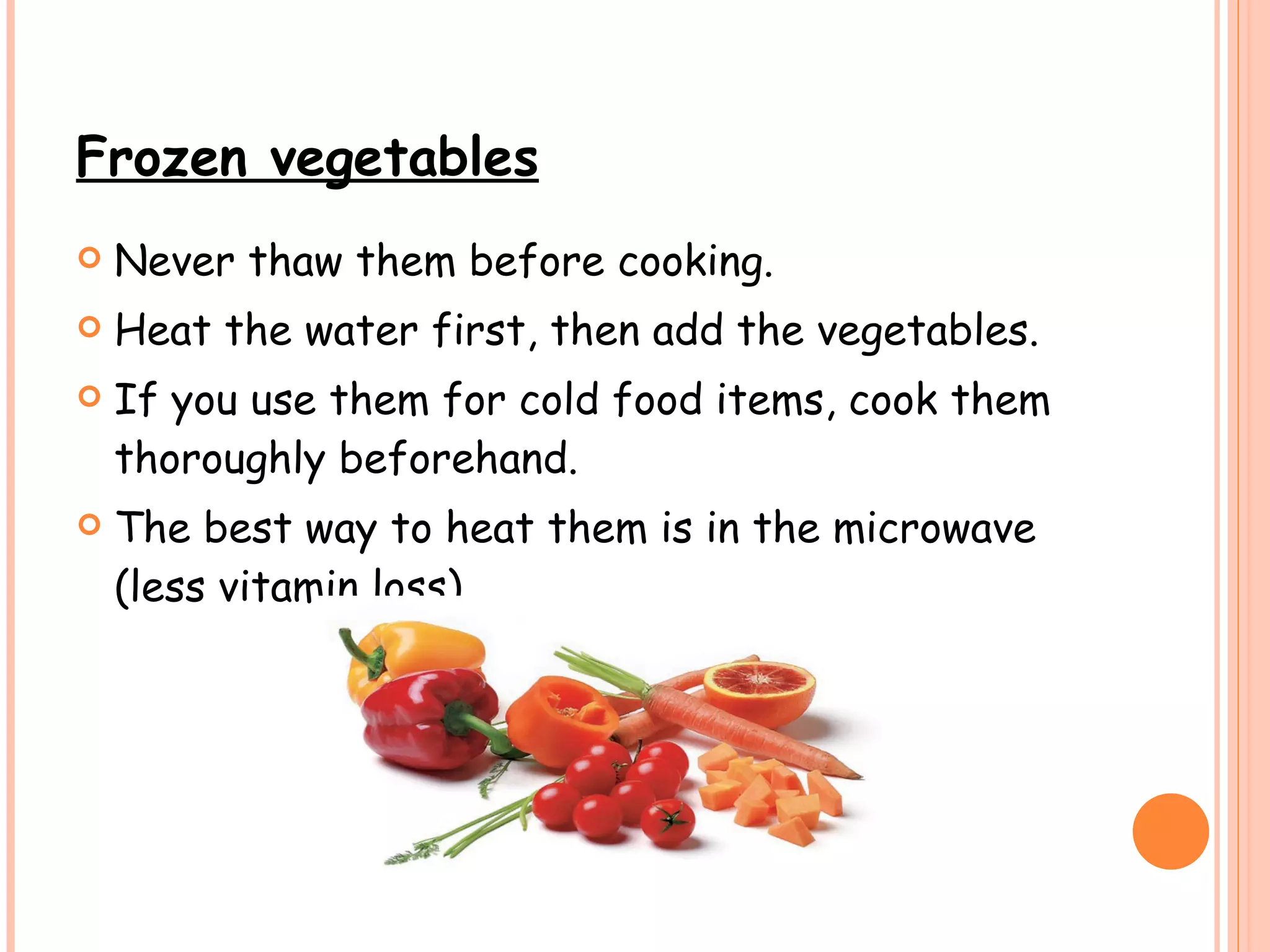
Frozen vegetables Never thaw them before cooking. Heat the water first, then add the vegetables. If you use them for cold food items, cook them thoroughly beforehand. The best way to heat them is in the microwave (less vitamin loss).
Vitamin loss Whenever possible, wash vegetables whole and before peeling under running water.  Peel thinly or cook with skin on.  Cut into large pieces. Raw vegetables and fruit salads add a little lemon juice or vinegar to slow down vitamin C loss. Use the smallest amount of water necessary. Cook with the lid on.   Cook until just tender, not mushy. Serve immediately. Keeping food warm causes a vitamin C loss of 4 – 17% every hour.
Homework Choose a recipe which using a dry method of cooking: roast, sauté, grill, bake or fry. Write out the method with ingredients list and an equipment list and say which method of cooking you will be using.  I want this handed in!!!   Bring in the ingredients  on  Monday 16 th  May  to make.  Recipe must be able to make within an  hour ! Keep it simple…cake, brownies, stir fry, bread, pizza.
Aim of today’s lesson: To produce a food product using a dry method of cooking. Use your time wisely, I want to check drawers and cupboards by  11.25am at the latest. No ingredients: Complete analysing a food product worksheet Complete the packaging crossword Complete the packaging exam worksheet Complete the preservative and food spoilage worksheet

Cooking Methods

  • 1.
    HOW IS FOODCOOKED? There are 3 methods of heat transfer: Radiation Toaster and grilling food are good examples. When heat is radiated it travels in straight lines and any object in its path becomes heated. e.g. grilling, toasters and microwaving    
  • 2.
    HOW IS FOODCOOKED? Conduction Heating a pan on a hob is a good example. Heat travels through a solid, e.g. the pan. Metal objects are good conductors of heat and so these are used in the making of saucepans.  
  • 3.
    HOW IS FOODCOOKED? Convection A gas oven or cooking in boiling water are good examples. When heated, the particles of a liquid (e.g. water) or a gas (e.g. air) become lighter and rise, while colder particles sink to the bottom and are then heated in turn. e.g. baking, roasting
  • 4.
    Energy efficiency inthe kitchen: Gas cookers are cheaper and use less energy than electric cookers. Microwaves use very little energy. Toasters usually use less energy than a grill. Only boil as much water as you need in a kettle. When the oven is on, try to cook several dishes at once. Choose the correct size pan for the rings on the hob. When boiling, don’t use more water than is necessary, turn heat down once boiling, cover pan. Choose appliances with a low wattage.
  • 5.
    Moist heat Moist-heat cooking methods use a liquid for cooking – usually water, stock or steam. T he advantage of steam is that it transfers more heat at the same temperature. As a result, the food cooks faster and fewer nutrients are lost.
  • 6.
    Boiling Cookingin a lot of liquid at a temperature of about 100° C. Use as little water as possible to minimise the loss of vitamins and minerals. (REDUCE) Save the cooking liquid for use in stocks, sauces and casseroles. (REUSE)
  • 7.
    Poaching Cookingin liquid at a temperature under the boiling point 75°– 95°C. Some loss of nutrients in veg due to the vitamins being boiled out into the liquid.
  • 8.
    Steaming Cookingat a temperature of about 100°C in steam The food and liquid separated. Very little loss of vitamins as the food doesn’t come into contact with water.
  • 9.
    Stewing/braising Stewingis adding all ingredients into a pot. Often done over a long period of time, therefore less energy efficient. Use leftover water for the sauce or as stock for soups. (REUSE)
  • 10.
    Homework Choose arecipe which using a moist method of cooking: boil, poach, steam, stew. Write out the method with ingredients list and an equipment list and say which method of cooking you will be using. I want this handed in!!! Bring in the ingredients on Monday 9 th May to make. Recipe must be able to make within an hour ! Keep it simple…soup, steamed fish or veg, casserole, something with boiled potatoes.
  • 11.
    Year 10s Getyour folders out the green box on the desk. Sit in your place. Get paper ready for mind mapping dry heat methods.
  • 12.
    Dry heat Heat is transferred through air or fat. The cooking temperature is between 120° – 150°C. Suitable for foods rich in proteins, like meat, fish and seafood and where a crust is desired.
  • 13.
    Microwaves Cooking with electromagnetic waves, either with or without a small amount of added liquid. It is ideally suited for reheating food.
  • 14.
    Roasting Cookingwith browning on the stove or in the oven with or without adding fat, at a temperature of 140°– 200°C. Roast at intense heat to seal the juices inside the meat, then cook at low heat until done. This reduces the loss of vitamins, minerals and moisture.
  • 15.
    Sautéing Dry-heat cookingmethod in which heat is conducted by a small amount of fat (the food is kept in motion).
  • 16.
    Grilling Cookingwith radiant heat or contact heat, with or without added fat. Any fat in the meat drains out. Vitamins are partially destroyed.
  • 17.
    Baking Harddigestible dough and crusts become light and easy to digest. No loss of vitamins and minerals into any liquid. Heat-sensitive vitamins are partially destroyed.
  • 18.
    Fry cooking Cooking with browning in hot oil at a temperature of 140° – 190°C. The methods are defined according to the amount of fat used. Correct frying of potatoes and vegetables preserves vitamins and minerals better than boiling or steaming, but increases the amount of fat and energy.
  • 19.
    Deep fry Thefood is entirely submerged in hot fat. Fry as quickly as possible. Longer frying time increases fat absorption. The smaller the food being fried, the greater the amount of fat absorbed. Drain the food of oil before serving.
  • 20.
    Pan fry A special form of deep-frying; browning raw or prepared foods in shallow amounts of fat.
  • 21.
    Stir fry Traditional Chinese method for cooking food in a frying pan (e.g. wok) with a small amount of oil.
  • 22.
    Canned vegetables Neverboil canned vegetables. The best way to heat them is the microwave warm up the liquid first, then add the vegetables. Avoid excessive stirring while warming. Use the juice to cook the vegetables in, or add to soups or stocks.
  • 23.
    Frozen vegetables Neverthaw them before cooking. Heat the water first, then add the vegetables. If you use them for cold food items, cook them thoroughly beforehand. The best way to heat them is in the microwave (less vitamin loss).
  • 24.
    Vitamin loss Wheneverpossible, wash vegetables whole and before peeling under running water. Peel thinly or cook with skin on. Cut into large pieces. Raw vegetables and fruit salads add a little lemon juice or vinegar to slow down vitamin C loss. Use the smallest amount of water necessary. Cook with the lid on. Cook until just tender, not mushy. Serve immediately. Keeping food warm causes a vitamin C loss of 4 – 17% every hour.
  • 25.
    Homework Choose arecipe which using a dry method of cooking: roast, sauté, grill, bake or fry. Write out the method with ingredients list and an equipment list and say which method of cooking you will be using. I want this handed in!!! Bring in the ingredients on Monday 16 th May to make. Recipe must be able to make within an hour ! Keep it simple…cake, brownies, stir fry, bread, pizza.
  • 26.
    Aim of today’slesson: To produce a food product using a dry method of cooking. Use your time wisely, I want to check drawers and cupboards by 11.25am at the latest. No ingredients: Complete analysing a food product worksheet Complete the packaging crossword Complete the packaging exam worksheet Complete the preservative and food spoilage worksheet