RATIONALE
• Everything starts with the menu.
• The menu dictates much about how
your operation will be organized
and managed, the extent to which it
meet its goals, and even how the
building itself - certainly the
interior - should be designed and
constructed.
MENU
• Is a list of available
foods offered in any
food service
operation.
IMPORTANCE OF MENU
• For guest, it communicates the operation’s image. It contributes to the over-all
dining experience by helping to set a mood and build interest and excitement.
• For production employees, it dictates what foods must be prepared.
• For service employees, their task is influenced by what items are offered on the
menu.
• For managers, it is the chief-in-house marketing and sales tool.
• it tells what food and beverage items must be purchased and what equipment
must they have to have, the number of employees they need to hire and their skill
level.
WAYS IN
CATEGORIZING
THE MENU
ACCORDING TO MENU
SCHEDULES
(How often they are used)
• FIXED MENUS – a single menu used for several
months or longer.
• CYCLE MENUS – designed to provide variety for
guests who eat frequently or even daily like in
schools, hospitals, and offices.
• Three basic types of menu is designed around the three traditional meal
periods:
BREAKFAST – menus are fairly standard, items are “simple”, “fast”, and
“inexpensive”
LUNCH – it usually features menu items that are easy and quick to make; it is
lighter than dinner menu.
DINNER – is the main meal for most people, it is heavier in character and more
elaborate than those offered at breakfast or lunch.
ACCORDING TO
MENU TYPES
ACCORDING TO MENU PRICING
STYLES
3 Styles of Menu in the Food Service Industry
• A LA CARTE MENU
• SEMI A LA CARTE MENU
• PRIX FIXE MENU
A LA CARTE MENU
• Menu that is priced separately
from appetizers to desserts.
SEMI A LA CARTE MENU
• A menu in this category usually
prices appetizers, soups, and
desserts separately. The entrée
usually will include a salad,
potato, vegetable, and sometimes
a beverage.
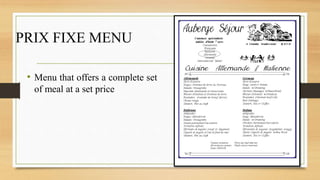
PRIX FIXE MENU
• Menu that offers a complete set
of meal at a set price
MENU OFFERING / SPECIALTY
MENUS:
• Children’s Menu
• Senior Citizen’s Menu
• Alcoholic Beverage
• Dessert
• Room Service
• Take-out
• Country Style / California Menu
• Ethnic
MENU PLANNING
• Consists of selecting new menu items for an
existing menu.
PURPOSE OF MENU PLANNING
-Work will flow more smoothly
-Guests will be served more effectively
-Profit will be greater
2 BASIC RULES IN MENU PLANNING:
1. Knowing your guests
2. Knowing your operation.
5 COMPONENTS OF OPERATION:
1. Theme or Cuisine
2. Equipment
3. Personnel
4. Quality Standards
5. Budget
Categories of Menu Items Listed on the
Menu:
• Appetizers / Soups
• Salads
• Entrees
• Starch Items (Potatoes, Rice, Pasta)
• Vegetables
• Desserts
• Beverages
SELECTING MENU ITEMS:
• SOURCES FOR SELECTING MENU
• Old Menus
• Books
• Trade Magazines
• Cookbooks for the Home Market
• STEPS IN SELECTING MENU ITEMS
• Entrees
• Appetizers / Soups
• Starch Items and vegetables
• Salads
• Desserts
• Beverages
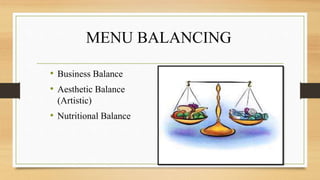
• Business Balance
• Aesthetic Balance
(Artistic)
• Nutritional Balance
MENU BALANCING
MENU DESIGN
Characteristics of a well-designed
menu:
• It complements a restaurant’s over-all theme.
• It blends with the interior design of the
restaurant
• It communicates with the guests
• It helps sell the operation and its menu
items.
MENU COPY
We have three elements of menu copy:
• Headings – includes major heads, subheads, and names of menu
items.
• Descriptive Copy – informs the guests about the menu items
and helps increase sales. The menu items’ main ingredient,
important secondary ingredients and method of preparation.
• Supplemental Merchandising Copy – it includes basic
information: address, telephone number, days and hours of
operation, meals served, reservations and payment policies.
FOR COMPLETE
INFO ABOUT MENU
CHECK OUR
YOUTUBE VIDEO
DOWN BELOW

MENU

  • 2.
    RATIONALE • Everything startswith the menu. • The menu dictates much about how your operation will be organized and managed, the extent to which it meet its goals, and even how the building itself - certainly the interior - should be designed and constructed.
  • 3.
    MENU • Is alist of available foods offered in any food service operation.
  • 4.
    IMPORTANCE OF MENU •For guest, it communicates the operation’s image. It contributes to the over-all dining experience by helping to set a mood and build interest and excitement. • For production employees, it dictates what foods must be prepared. • For service employees, their task is influenced by what items are offered on the menu. • For managers, it is the chief-in-house marketing and sales tool. • it tells what food and beverage items must be purchased and what equipment must they have to have, the number of employees they need to hire and their skill level.
  • 5.
  • 6.
    ACCORDING TO MENU SCHEDULES (Howoften they are used) • FIXED MENUS – a single menu used for several months or longer. • CYCLE MENUS – designed to provide variety for guests who eat frequently or even daily like in schools, hospitals, and offices.
  • 7.
    • Three basictypes of menu is designed around the three traditional meal periods: BREAKFAST – menus are fairly standard, items are “simple”, “fast”, and “inexpensive” LUNCH – it usually features menu items that are easy and quick to make; it is lighter than dinner menu. DINNER – is the main meal for most people, it is heavier in character and more elaborate than those offered at breakfast or lunch. ACCORDING TO MENU TYPES
  • 8.
    ACCORDING TO MENUPRICING STYLES 3 Styles of Menu in the Food Service Industry • A LA CARTE MENU • SEMI A LA CARTE MENU • PRIX FIXE MENU
  • 9.
    A LA CARTEMENU • Menu that is priced separately from appetizers to desserts.
  • 10.
    SEMI A LACARTE MENU • A menu in this category usually prices appetizers, soups, and desserts separately. The entrée usually will include a salad, potato, vegetable, and sometimes a beverage.
  • 11.
    PRIX FIXE MENU •Menu that offers a complete set of meal at a set price
  • 12.
    MENU OFFERING /SPECIALTY MENUS: • Children’s Menu • Senior Citizen’s Menu • Alcoholic Beverage • Dessert • Room Service • Take-out • Country Style / California Menu • Ethnic
  • 13.
    MENU PLANNING • Consistsof selecting new menu items for an existing menu. PURPOSE OF MENU PLANNING -Work will flow more smoothly -Guests will be served more effectively -Profit will be greater
  • 14.
    2 BASIC RULESIN MENU PLANNING: 1. Knowing your guests 2. Knowing your operation. 5 COMPONENTS OF OPERATION: 1. Theme or Cuisine 2. Equipment 3. Personnel 4. Quality Standards 5. Budget
  • 16.
    Categories of MenuItems Listed on the Menu: • Appetizers / Soups • Salads • Entrees • Starch Items (Potatoes, Rice, Pasta) • Vegetables • Desserts • Beverages
  • 17.
    SELECTING MENU ITEMS: •SOURCES FOR SELECTING MENU • Old Menus • Books • Trade Magazines • Cookbooks for the Home Market • STEPS IN SELECTING MENU ITEMS • Entrees • Appetizers / Soups • Starch Items and vegetables • Salads • Desserts • Beverages
  • 18.
    • Business Balance •Aesthetic Balance (Artistic) • Nutritional Balance MENU BALANCING
  • 19.
    MENU DESIGN Characteristics ofa well-designed menu: • It complements a restaurant’s over-all theme. • It blends with the interior design of the restaurant • It communicates with the guests • It helps sell the operation and its menu items.
  • 20.
    MENU COPY We havethree elements of menu copy: • Headings – includes major heads, subheads, and names of menu items. • Descriptive Copy – informs the guests about the menu items and helps increase sales. The menu items’ main ingredient, important secondary ingredients and method of preparation. • Supplemental Merchandising Copy – it includes basic information: address, telephone number, days and hours of operation, meals served, reservations and payment policies.
  • 21.
    FOR COMPLETE INFO ABOUTMENU CHECK OUR YOUTUBE VIDEO DOWN BELOW