Heat Transfer (2151903)
Mechanical Department
Sem.: 5th
D (D2)
• Prepared By: Sajan Gohel (160123119010)
 Modes of heat transfer
 Effect of temperature on thermal conductivity of
different solids, liquids and gases.
 Derivation of generalized equation in cylindrical
Heat Transfer Modes
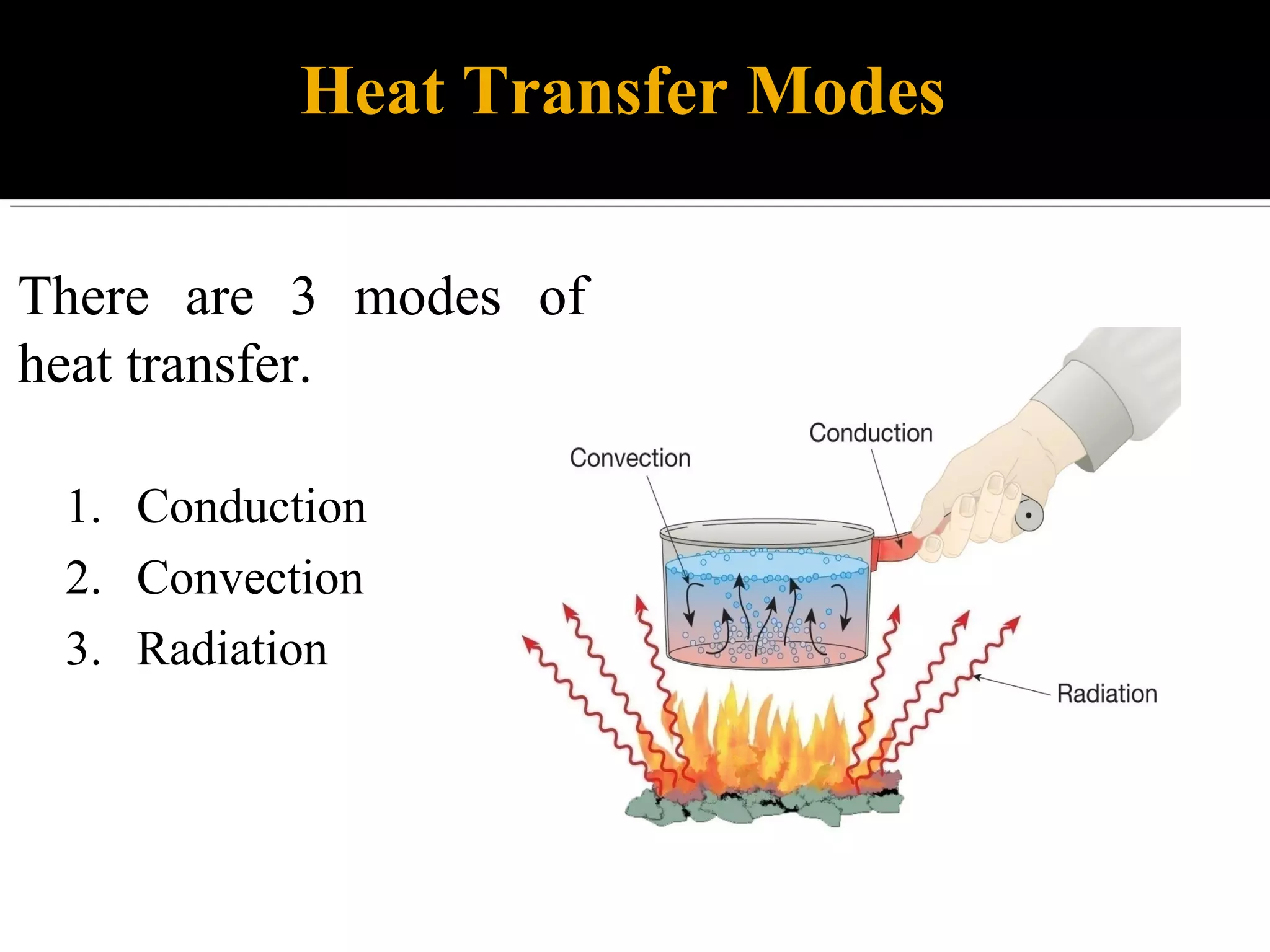
There are 3 modes of
heat transfer.
1. Conduction
2. Convection
3. Radiation
Conduction
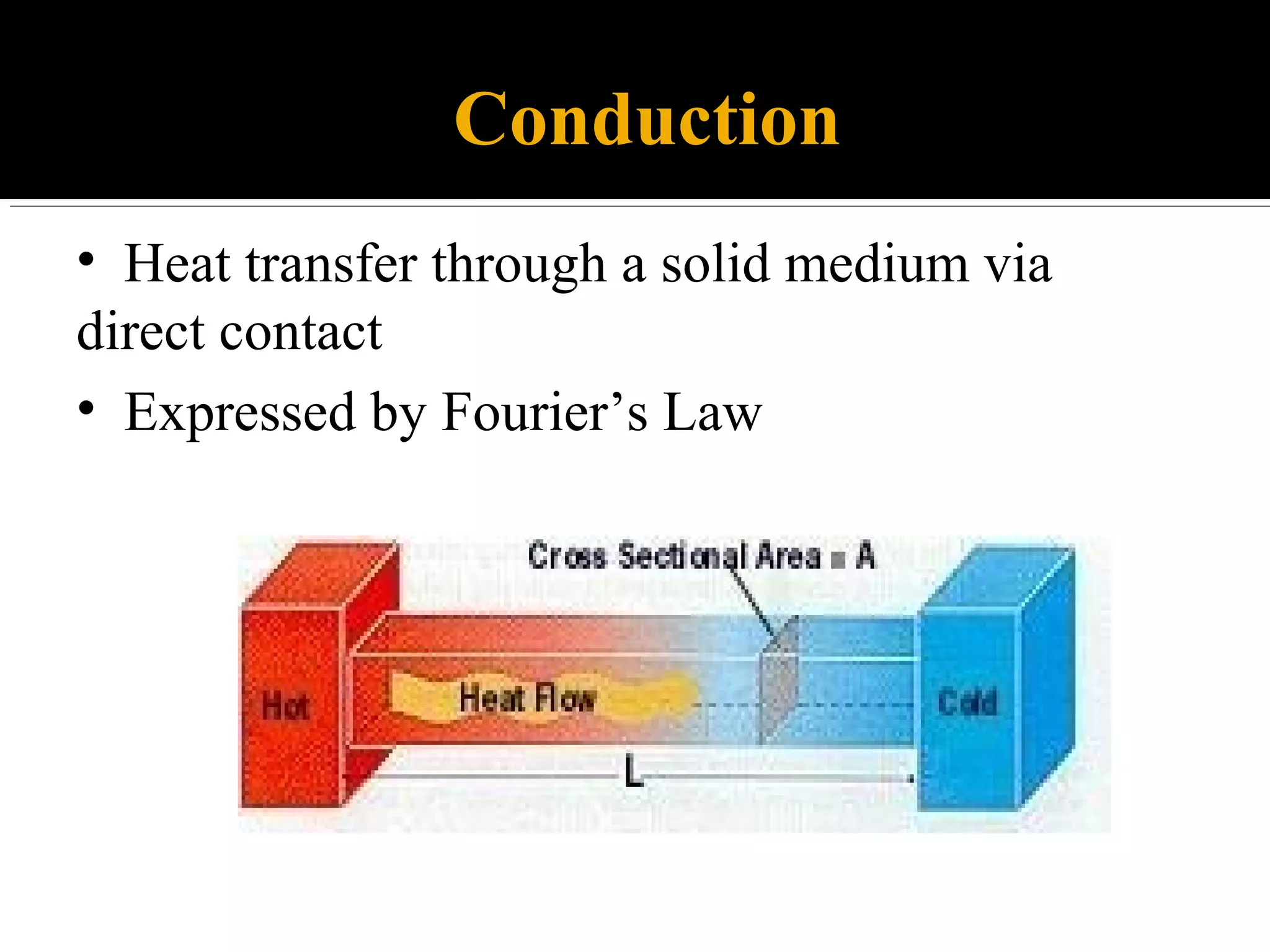
• Heat transfer through a solid medium via
direct contact
• Expressed by Fourier’s Law
Convection
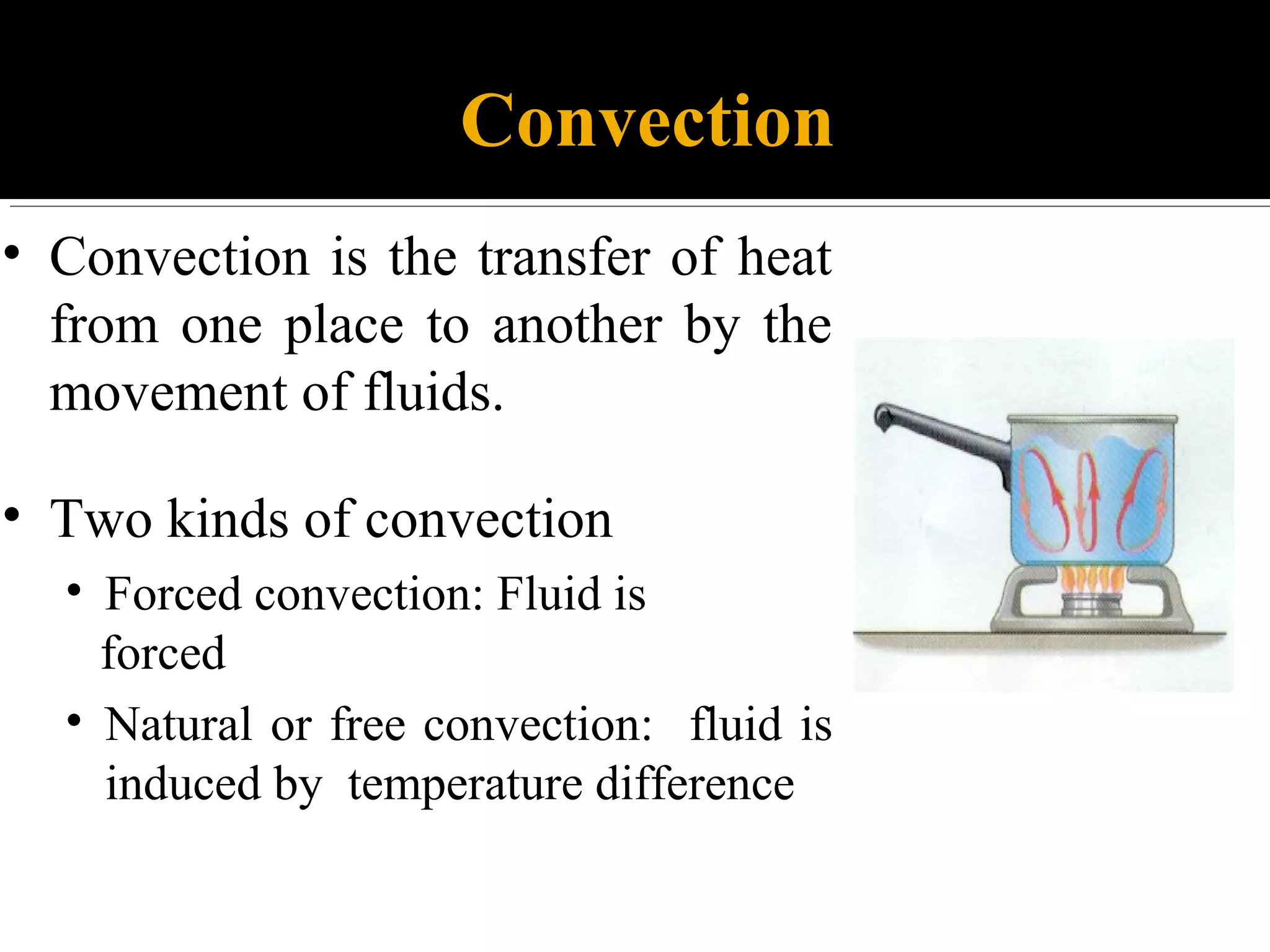
• Convection is the transfer of heat
from one place to another by the
movement of fluids.
• Two kinds of convection
• Forced convection: Fluid is
forced
• Natural or free convection: fluid is
induced by temperature difference
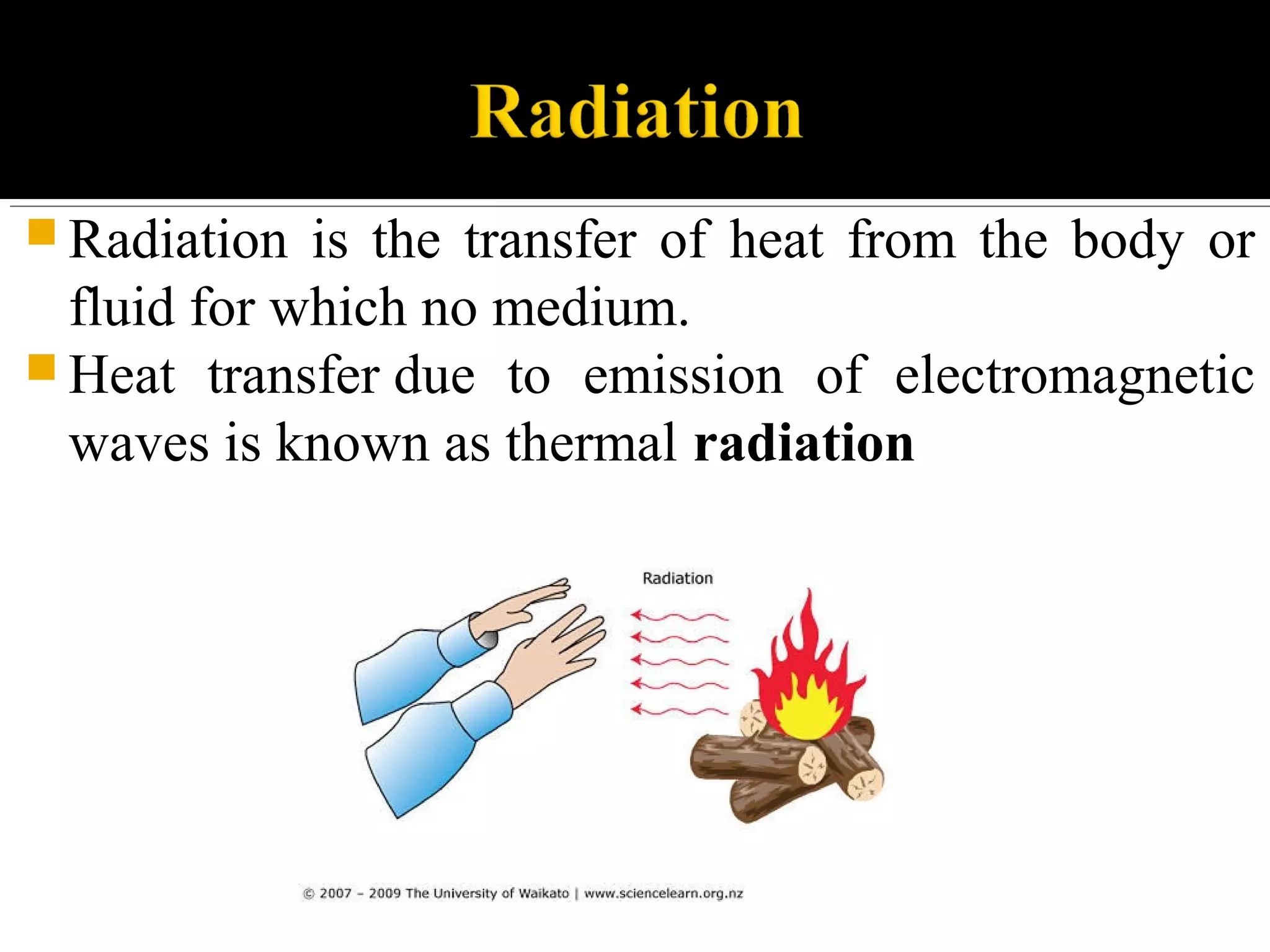
 Radiation is the transfer of heat from the body or
fluid for which no medium.
 Heat transfer due to emission of electromagnetic
waves is known as thermal radiation
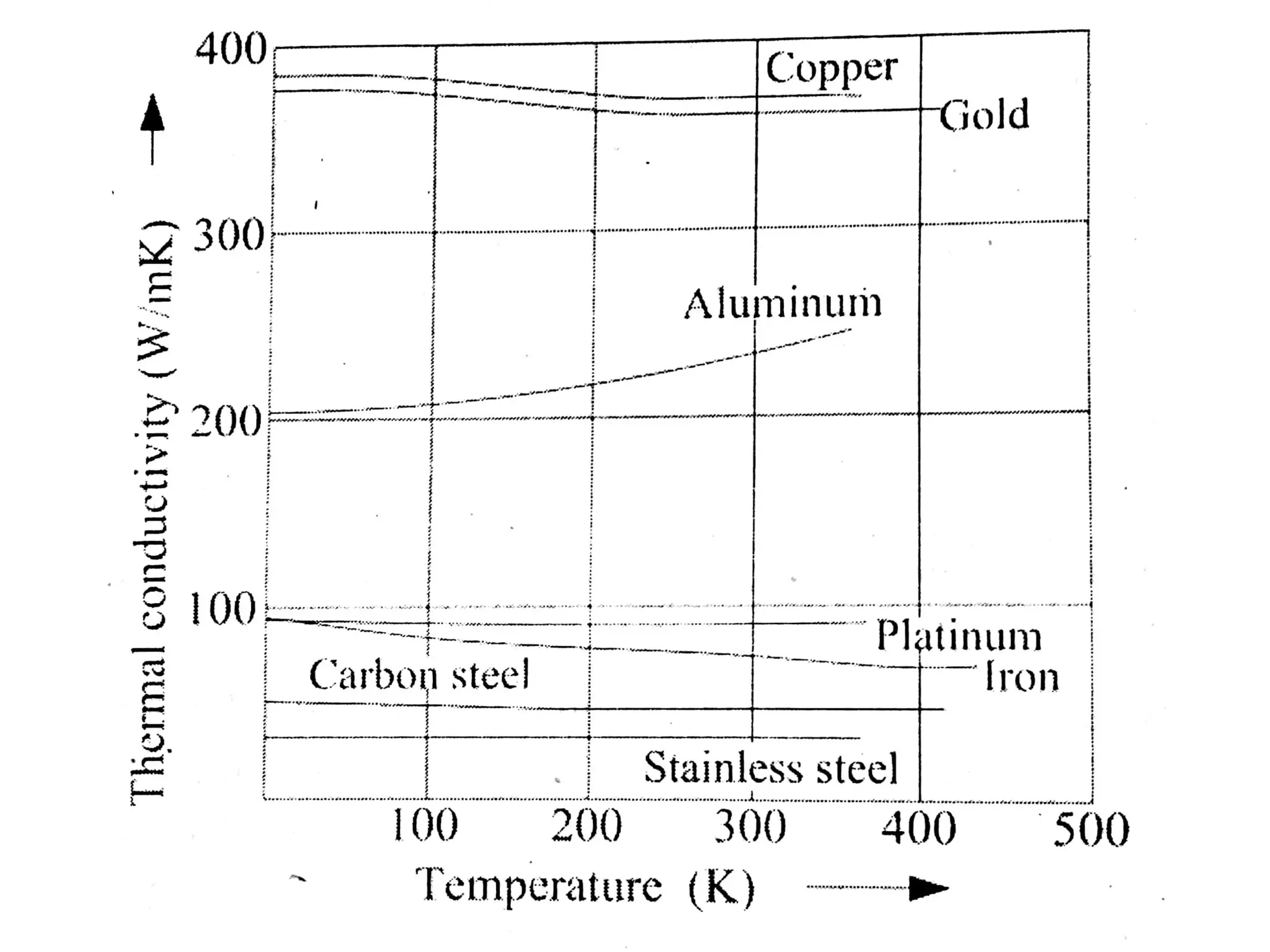
 Thermals conductivity of pure metals is due to
migration of three electrons (Kc) and lattice
vibrations (Kl).
K = Ke + Kl
 In pure metals, heat is transferred due to movement
of free electron in clouds and also due to vibrational
energy in lattice structure.
 Thermal conductivity of pure metal is decreases
with the increasing in temperature.
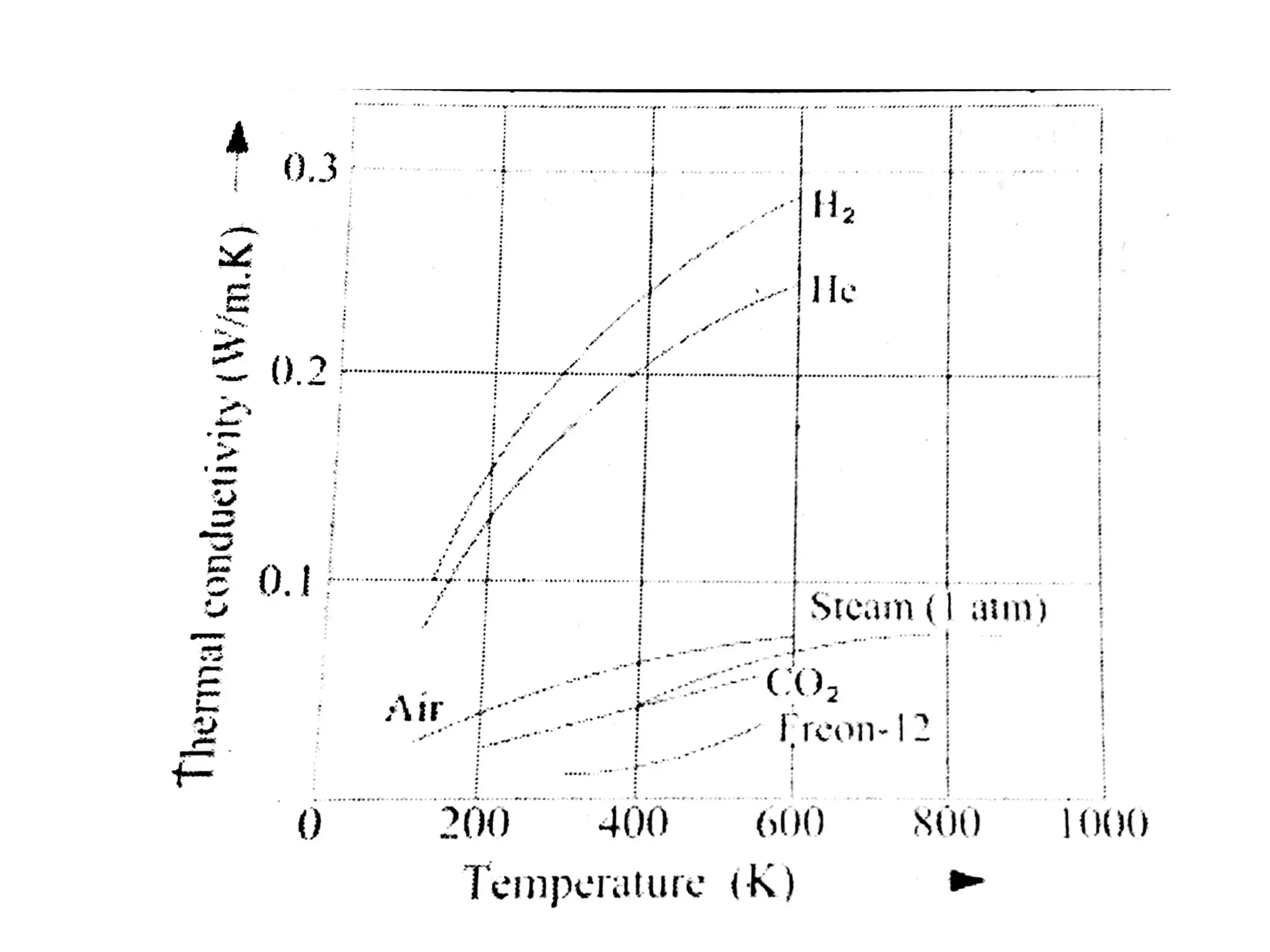
 Thermal conductivity of gases is smaller then that
of solids because there intermolecular spacing is
much larger.
 The thermal conductivity of all the gases increases
with increases with increases in temperature.
 This is because at high temperature collision among
gas particles increases and heat transfer increases.
K = 0.006 to 0.05 W/mK
K tα∆
K tα∆
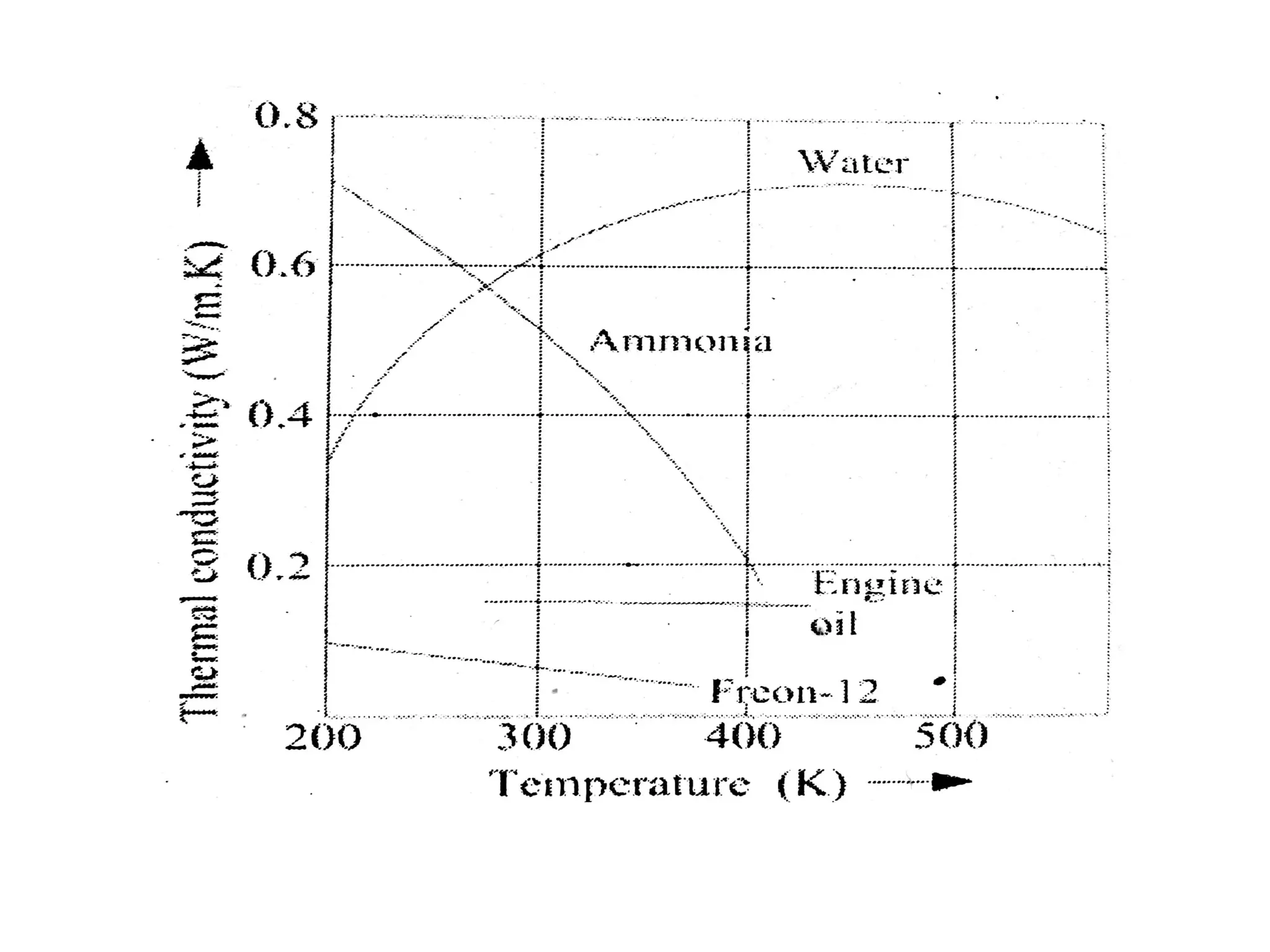
 Heat conduction in liquids is also same as in gases.
 In case of liquids, close spacing of molecules and
strong molecular attraction force compare to gases
cause more heat exchange via collision.
 So the thermal conductivity of liquids usually lies
between those of gases and solids.
 In most of the liquids value of thermal conductivity
tends to decrease with increase in temperature.
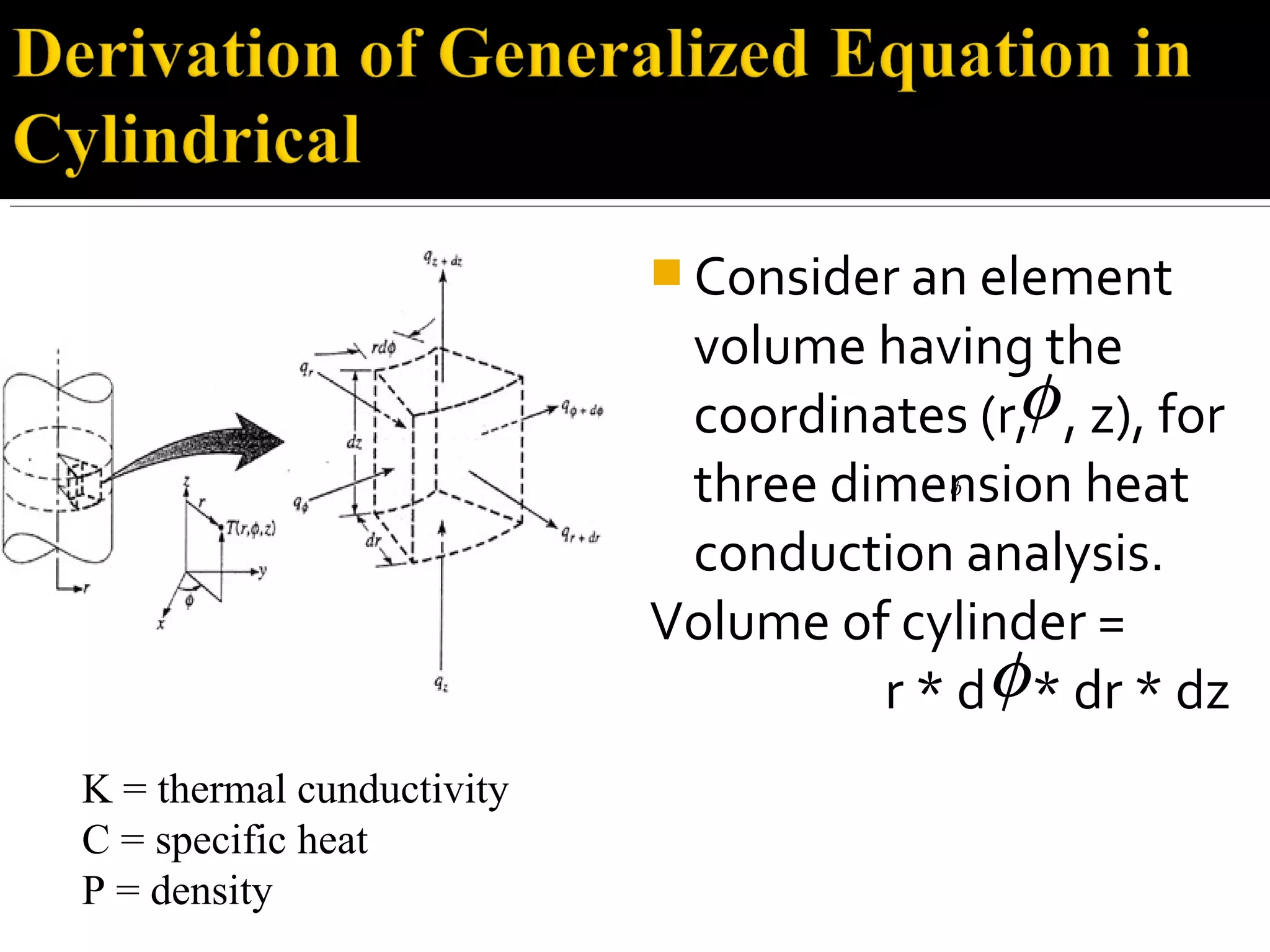
 Consider an element
volume having the
coordinates (r, , z), for
three dimension heat
conduction analysis.
Volume of cylinder =
r * d * dr * dz
φ
φ
φ
K = thermal cunductivity
C = specific heat
P = density
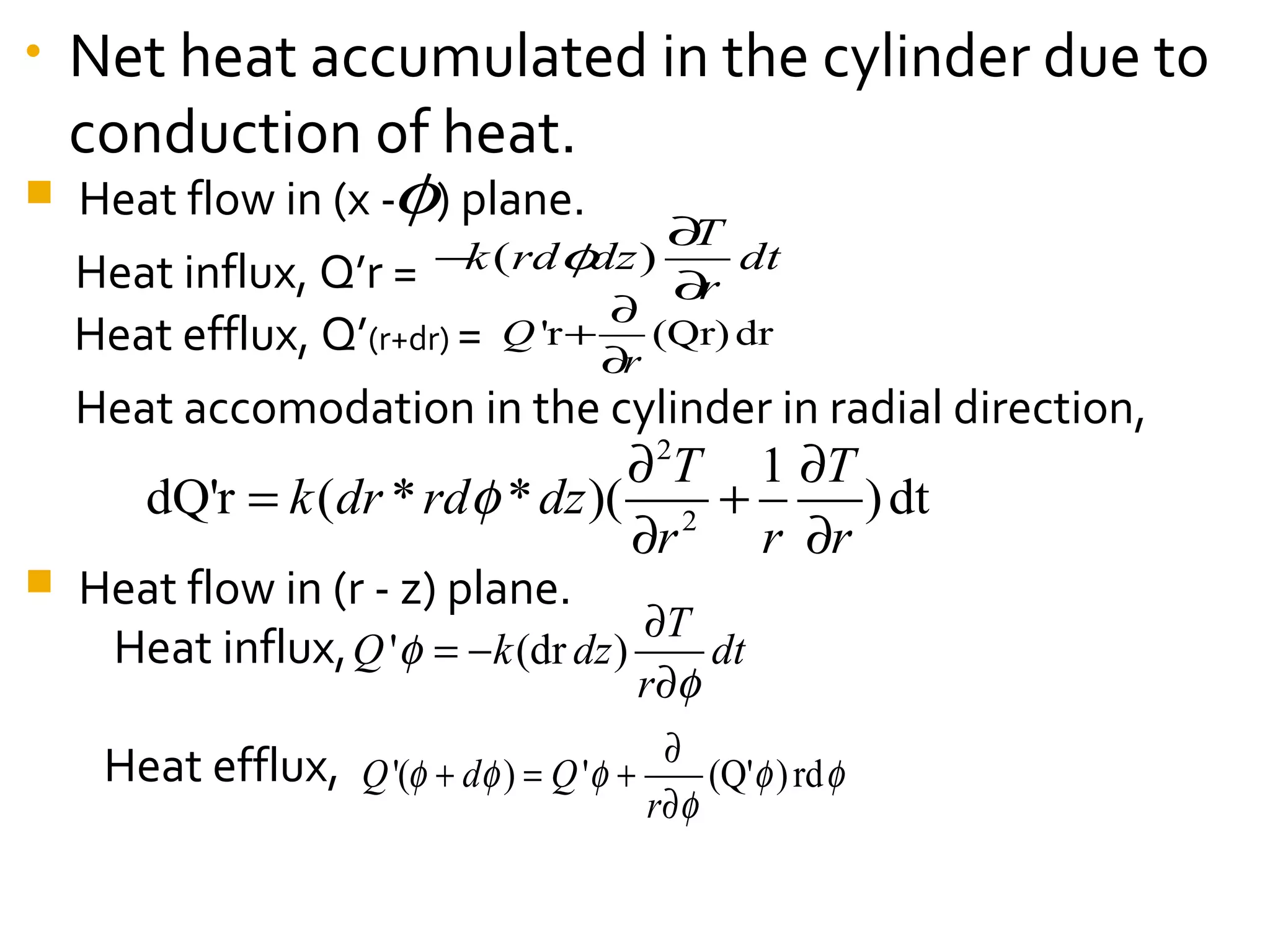
• Net heat accumulated in the cylinder due to
conduction of heat.
 Heat flow in (x - ) plane.
Heat influx, Q’r =
Heat efflux, Q’(r+dr) =
Heat accomodation in the cylinder in radial direction,
 Heat flow in (r - z) plane.
Heat influx,
Heat efflux,
φ
'r (Qr)drQ
r
∂
+
∂
' (dr )
T
Q k dz dt
r
φ
φ
∂
= −
∂
'( ) ' (Q' )rdQ d Q
r
φ φ φ φ φ
φ
∂
+ = +
∂
2
2
1
dQ'r ( * * )( )dt
T T
k dr rd dz
r r r
φ
∂ ∂
= +
∂ ∂
( )
T
k rd dz dt
r
φ
∂
−
∂
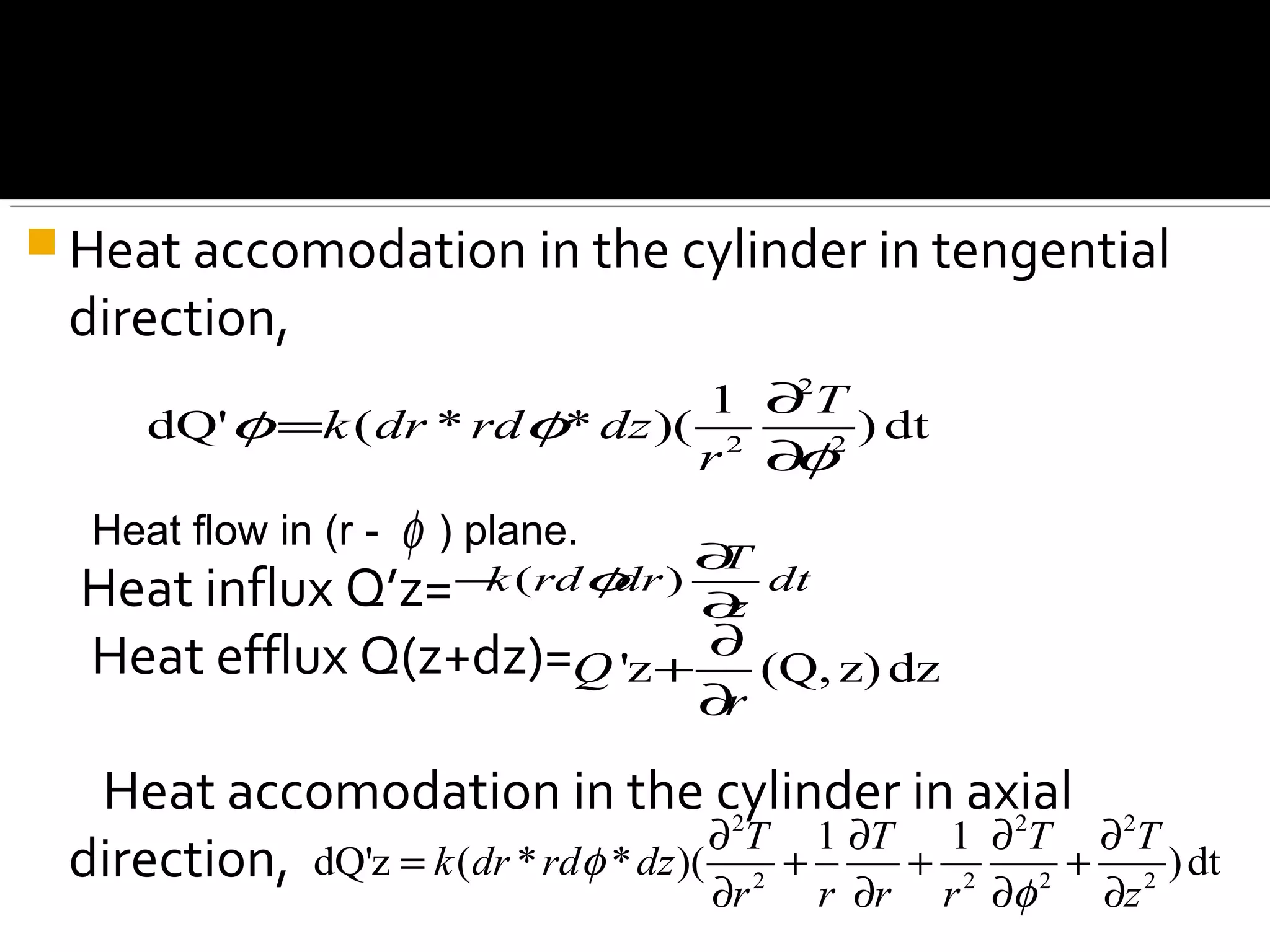
 Heat accomodation in the cylinder in tengential
direction,
Heat influx Q’z=
Heat efflux Q(z+dz)=
Heat accomodation in the cylinder in axial
direction,
2
2 2
1
dQ' ( * * )( ) dt
T
k dr rd dz
r
φ φ
φ
∂
=
∂
Heat flow in (r - ) plane.φ
( )
T
k rd dr dt
z
φ
∂
−
∂
'z (Q, z) dzQ
r
∂
+
∂
2 2 2
2 2 2 2
1 1
dQ'z ( * * )( )dt
T T T T
k dr rd dz
r r r r z
φ
φ
∂ ∂ ∂ ∂
= + + +
∂ ∂ ∂ ∂
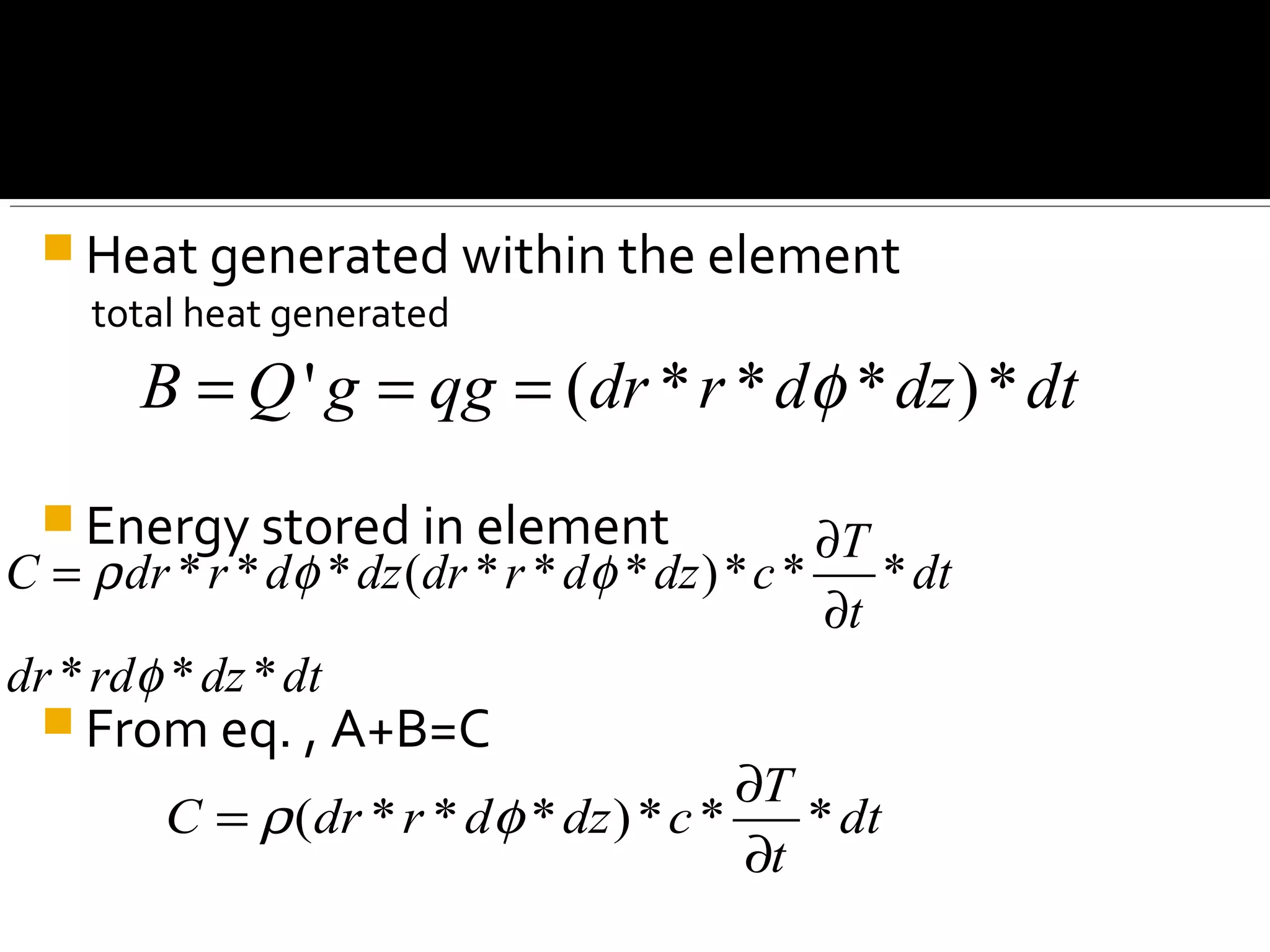
 Heat generated within the element
total heat generated
 Energy stored in element
 From eq. , A+B=C
' ( * * * )*B Q g qg dr r d dz dtφ= = =
* * * ( * * * )* * *
* * *
T
C dr r d dz dr r d dz c dt
t
dr rd dz dt
ρ φ φ
φ
∂
=
∂
( * * * )* * *
T
C dr r d dz c dt
t
ρ φ
∂
=
∂
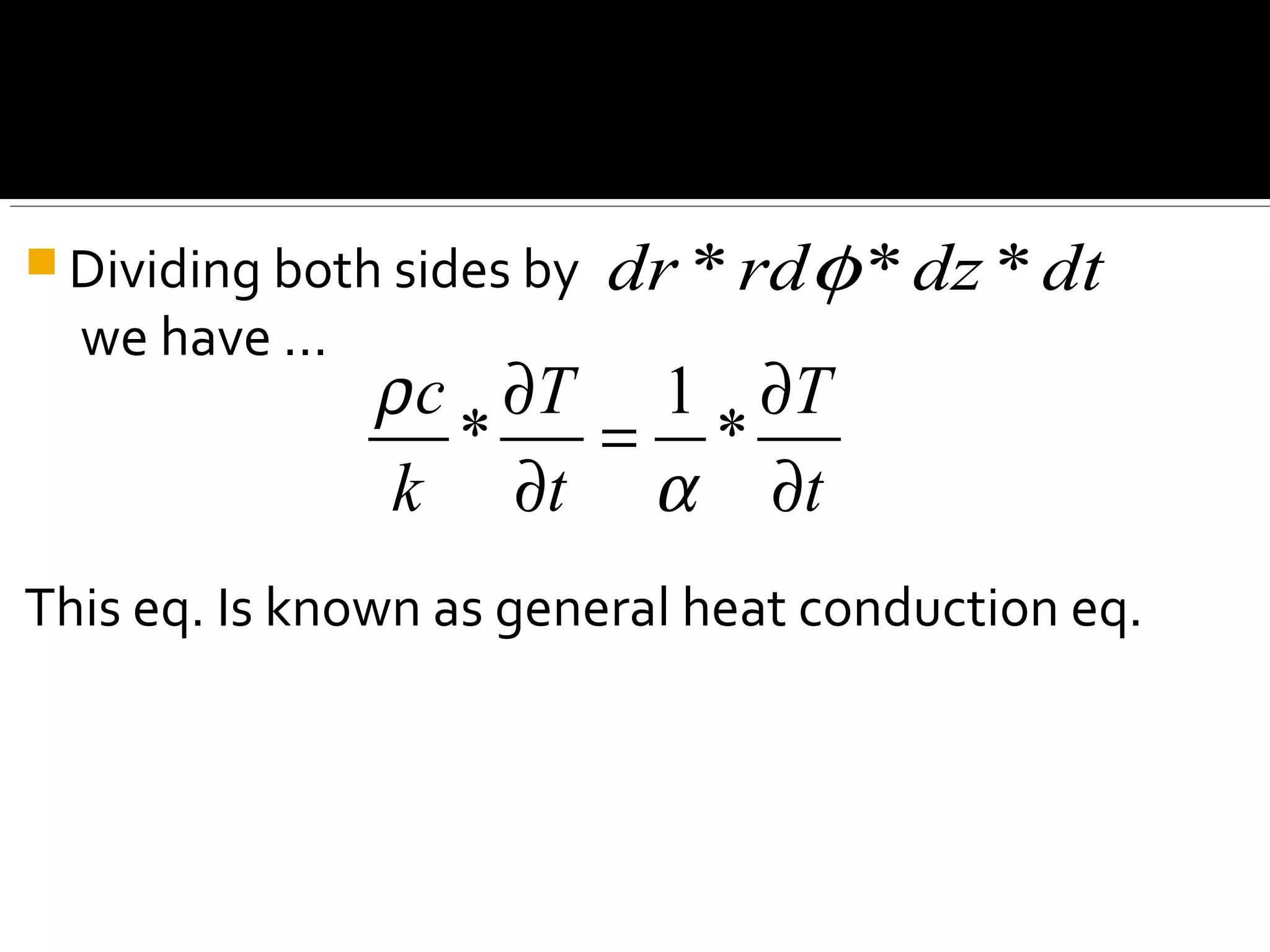
 Dividing both sides by
we have ...
This eq. Is known as general heat conduction eq.
* * *dr rd dz dtφ
1
* *
c T T
k t t
ρ
α
∂ ∂
=
∂ ∂
modes of heat transfer, effect of temperature, cylindrical component

modes of heat transfer, effect of temperature, cylindrical component

  • 1.
    Heat Transfer (2151903) MechanicalDepartment Sem.: 5th D (D2) • Prepared By: Sajan Gohel (160123119010)
  • 2.
     Modes ofheat transfer  Effect of temperature on thermal conductivity of different solids, liquids and gases.  Derivation of generalized equation in cylindrical
  • 3.
    Heat Transfer Modes Thereare 3 modes of heat transfer. 1. Conduction 2. Convection 3. Radiation
  • 4.
    Conduction • Heat transferthrough a solid medium via direct contact • Expressed by Fourier’s Law
  • 5.
    Convection • Convection isthe transfer of heat from one place to another by the movement of fluids. • Two kinds of convection • Forced convection: Fluid is forced • Natural or free convection: fluid is induced by temperature difference
  • 6.
     Radiation isthe transfer of heat from the body or fluid for which no medium.  Heat transfer due to emission of electromagnetic waves is known as thermal radiation
  • 7.
     Thermals conductivityof pure metals is due to migration of three electrons (Kc) and lattice vibrations (Kl). K = Ke + Kl  In pure metals, heat is transferred due to movement of free electron in clouds and also due to vibrational energy in lattice structure.  Thermal conductivity of pure metal is decreases with the increasing in temperature.
  • 9.
     Thermal conductivityof gases is smaller then that of solids because there intermolecular spacing is much larger.  The thermal conductivity of all the gases increases with increases with increases in temperature.  This is because at high temperature collision among gas particles increases and heat transfer increases. K = 0.006 to 0.05 W/mK K tα∆ K tα∆
  • 11.
     Heat conductionin liquids is also same as in gases.  In case of liquids, close spacing of molecules and strong molecular attraction force compare to gases cause more heat exchange via collision.  So the thermal conductivity of liquids usually lies between those of gases and solids.  In most of the liquids value of thermal conductivity tends to decrease with increase in temperature.
  • 13.
     Consider anelement volume having the coordinates (r, , z), for three dimension heat conduction analysis. Volume of cylinder = r * d * dr * dz φ φ φ K = thermal cunductivity C = specific heat P = density
  • 14.
    • Net heataccumulated in the cylinder due to conduction of heat.  Heat flow in (x - ) plane. Heat influx, Q’r = Heat efflux, Q’(r+dr) = Heat accomodation in the cylinder in radial direction,  Heat flow in (r - z) plane. Heat influx, Heat efflux, φ 'r (Qr)drQ r ∂ + ∂ ' (dr ) T Q k dz dt r φ φ ∂ = − ∂ '( ) ' (Q' )rdQ d Q r φ φ φ φ φ φ ∂ + = + ∂ 2 2 1 dQ'r ( * * )( )dt T T k dr rd dz r r r φ ∂ ∂ = + ∂ ∂ ( ) T k rd dz dt r φ ∂ − ∂
  • 15.
     Heat accomodationin the cylinder in tengential direction, Heat influx Q’z= Heat efflux Q(z+dz)= Heat accomodation in the cylinder in axial direction, 2 2 2 1 dQ' ( * * )( ) dt T k dr rd dz r φ φ φ ∂ = ∂ Heat flow in (r - ) plane.φ ( ) T k rd dr dt z φ ∂ − ∂ 'z (Q, z) dzQ r ∂ + ∂ 2 2 2 2 2 2 2 1 1 dQ'z ( * * )( )dt T T T T k dr rd dz r r r r z φ φ ∂ ∂ ∂ ∂ = + + + ∂ ∂ ∂ ∂
  • 16.
     Heat generatedwithin the element total heat generated  Energy stored in element  From eq. , A+B=C ' ( * * * )*B Q g qg dr r d dz dtφ= = = * * * ( * * * )* * * * * * T C dr r d dz dr r d dz c dt t dr rd dz dt ρ φ φ φ ∂ = ∂ ( * * * )* * * T C dr r d dz c dt t ρ φ ∂ = ∂
  • 17.
     Dividing bothsides by we have ... This eq. Is known as general heat conduction eq. * * *dr rd dz dtφ 1 * * c T T k t t ρ α ∂ ∂ = ∂ ∂