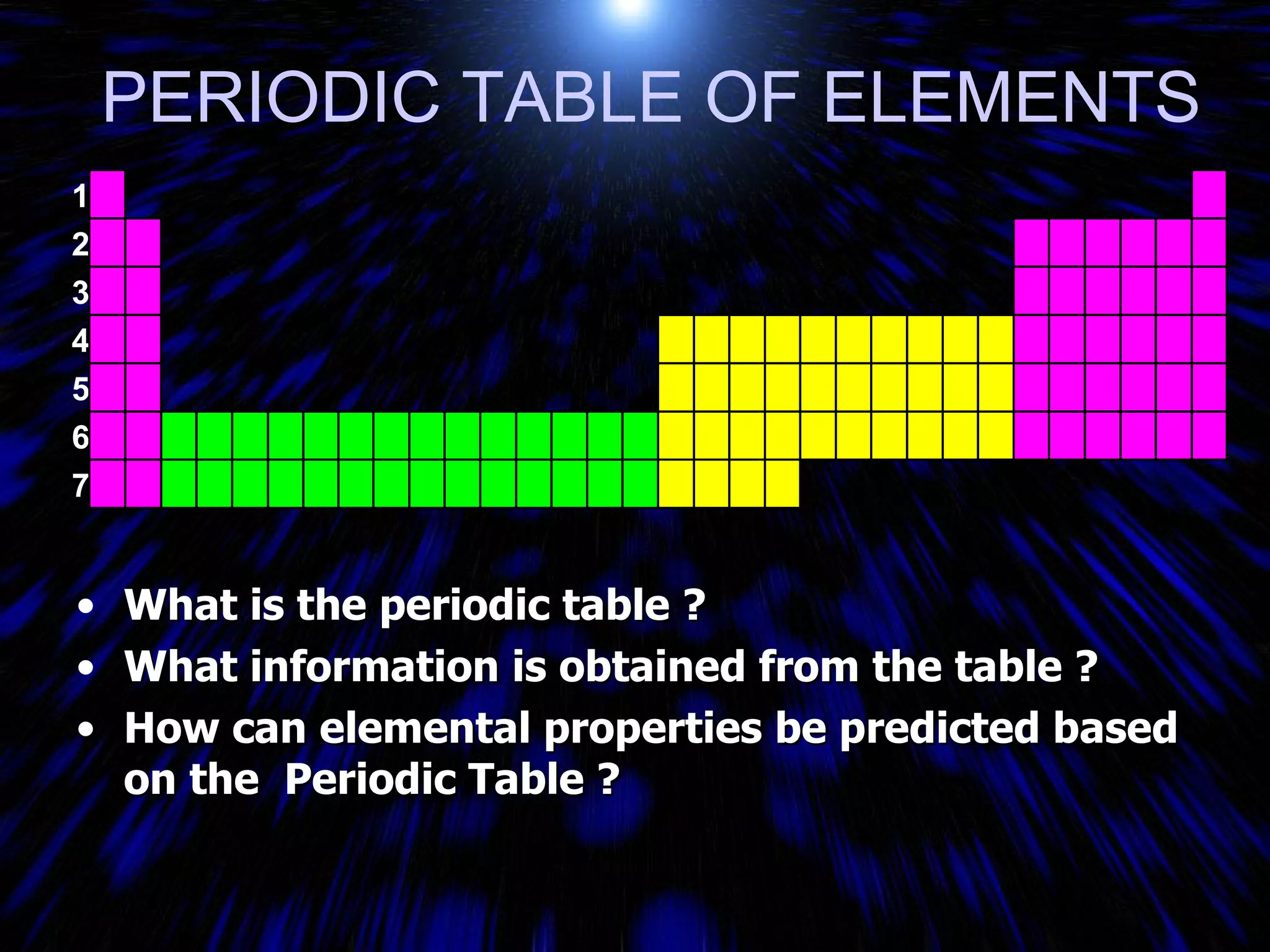
PERIODIC TABLE OF ELEMENTS What is the periodic table ? What information is obtained from the table ? How can elemental properties be predicted based on the  Periodic Table ?
PERIODIC TABLE The periodic table is your most important tool on the EOC.  It organizes information on the elements.
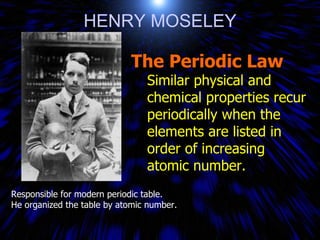
HENRY MOSELEY Responsible for modern periodic table.  He organized the table by atomic number. The Periodic Law Similar physical and chemical properties recur periodically when the elements are listed in order of increasing atomic number.
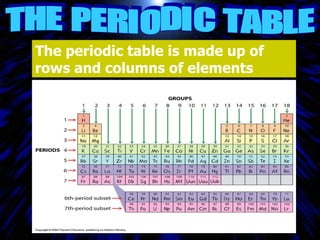
The periodic table is made up of rows and columns of elements THE PERIODIC TABLE
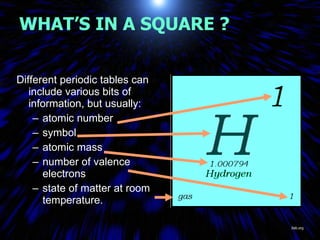
Different periodic tables can include various bits of information, but usually: atomic number symbol atomic mass number of valence electrons state of matter at room temperature. WHAT’S IN A SQUARE ? Jlab.org
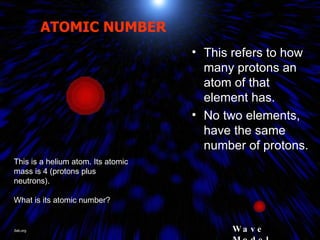
ATOMIC NUMBER This refers to how many protons an atom of that element has. No two elements, have the same number of protons. This is a helium atom. Its atomic mass is 4 (protons plus neutrons). What is its atomic number? Wave Model Jlab.org
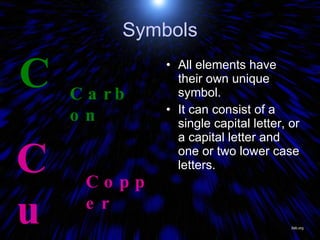
Symbols All elements have their own unique symbol. It can consist of a single capital letter, or a capital letter and one or two lower case letters. C Carbon Cu Copper Jlab.org
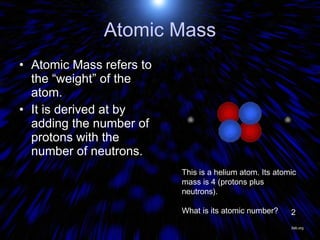
Atomic Mass Atomic Mass refers to the “weight” of the atom. It is derived at by adding the number of protons with the number of neutrons.  This is a helium atom. Its atomic mass is 4 (protons plus neutrons). What is its atomic number?  Jlab.org 2
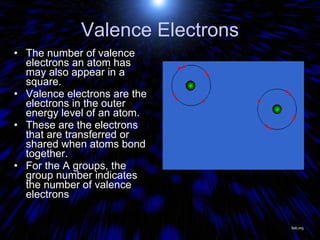
Valence Electrons The number of valence electrons an atom has may also appear in a square. Valence electrons are the electrons in the outer energy level of an atom. These are the electrons that are transferred or shared when atoms bond together. For the A groups, the group number indicates the number of valence electrons Jlab.org
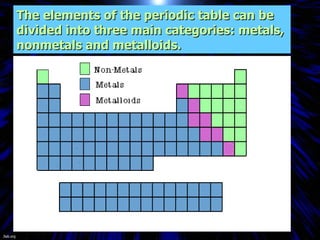
The elements of the periodic table can be divided into three main categories: metals, nonmetals and metalloids. Jlab.org
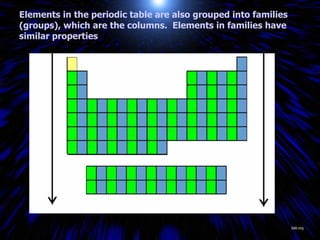
Elements in the periodic table are also grouped into families (groups), which are the columns.  Elements in families have similar properties Jlab.org
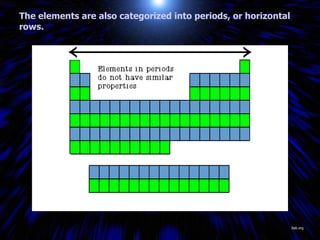
The elements are also categorized into periods, or horizontal rows. Jlab.org
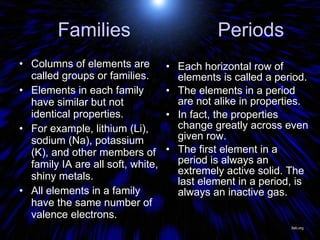
Families  Periods Columns of elements are called groups or families.  Elements in each family have similar but not identical properties. For example, lithium (Li), sodium (Na), potassium (K), and other members of family IA are all soft, white, shiny metals. All elements in a family have the same number of valence electrons. Each horizontal row of elements is called a period. The elements in a period are not alike in properties. In fact, the properties change greatly across even given row. The first element in a period is always an extremely active solid. The last element in a period, is always an inactive gas. Jlab.org
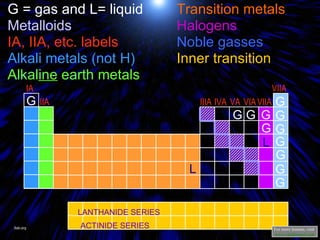
Alkali metals (not H) Alkal ine  earth metals Transition metals Halogens Noble gasses  Inner transition  G = gas and L= liquid Metalloids IA, IIA, etc. labels For more lessons, visit  www.chalkbored.com Jlab.org LANTHANIDE SERIES ACTINIDE SERIES G G G G G G G G G G G G L L VIIA VIA VA IVA IIIA IIA VIIA IA
http://www.csun.edu/science/chemistry/periodic_table/periodic_table_colors.doc http://www.teachersdomain.org/resource/phy03.sci.phys.matter.ptable/ Click on the website below.  Play the mystery element game.  You may need to register in order to view and play.

Mod+13,+Periodic+Table+Part+C

  • 1.
    PERIODIC TABLE OFELEMENTS What is the periodic table ? What information is obtained from the table ? How can elemental properties be predicted based on the Periodic Table ?
  • 2.
    PERIODIC TABLE Theperiodic table is your most important tool on the EOC. It organizes information on the elements.
  • 3.
    HENRY MOSELEY Responsiblefor modern periodic table. He organized the table by atomic number. The Periodic Law Similar physical and chemical properties recur periodically when the elements are listed in order of increasing atomic number.
  • 4.
    The periodic tableis made up of rows and columns of elements THE PERIODIC TABLE
  • 5.
    Different periodic tablescan include various bits of information, but usually: atomic number symbol atomic mass number of valence electrons state of matter at room temperature. WHAT’S IN A SQUARE ? Jlab.org
  • 6.
    ATOMIC NUMBER Thisrefers to how many protons an atom of that element has. No two elements, have the same number of protons. This is a helium atom. Its atomic mass is 4 (protons plus neutrons). What is its atomic number? Wave Model Jlab.org
  • 7.
    Symbols All elementshave their own unique symbol. It can consist of a single capital letter, or a capital letter and one or two lower case letters. C Carbon Cu Copper Jlab.org
  • 8.
    Atomic Mass AtomicMass refers to the “weight” of the atom. It is derived at by adding the number of protons with the number of neutrons. This is a helium atom. Its atomic mass is 4 (protons plus neutrons). What is its atomic number? Jlab.org 2
  • 9.
    Valence Electrons Thenumber of valence electrons an atom has may also appear in a square. Valence electrons are the electrons in the outer energy level of an atom. These are the electrons that are transferred or shared when atoms bond together. For the A groups, the group number indicates the number of valence electrons Jlab.org
  • 10.
    The elements ofthe periodic table can be divided into three main categories: metals, nonmetals and metalloids. Jlab.org
  • 11.
    Elements in theperiodic table are also grouped into families (groups), which are the columns. Elements in families have similar properties Jlab.org
  • 12.
    The elements arealso categorized into periods, or horizontal rows. Jlab.org
  • 13.
    Families PeriodsColumns of elements are called groups or families. Elements in each family have similar but not identical properties. For example, lithium (Li), sodium (Na), potassium (K), and other members of family IA are all soft, white, shiny metals. All elements in a family have the same number of valence electrons. Each horizontal row of elements is called a period. The elements in a period are not alike in properties. In fact, the properties change greatly across even given row. The first element in a period is always an extremely active solid. The last element in a period, is always an inactive gas. Jlab.org
  • 14.
    Alkali metals (notH) Alkal ine earth metals Transition metals Halogens Noble gasses Inner transition G = gas and L= liquid Metalloids IA, IIA, etc. labels For more lessons, visit www.chalkbored.com Jlab.org LANTHANIDE SERIES ACTINIDE SERIES G G G G G G G G G G G G L L VIIA VIA VA IVA IIIA IIA VIIA IA
  • 15.
    http://www.csun.edu/science/chemistry/periodic_table/periodic_table_colors.doc http://www.teachersdomain.org/resource/phy03.sci.phys.matter.ptable/ Clickon the website below. Play the mystery element game. You may need to register in order to view and play.