Mitral Regurgitation 
Participants: 
Hiba,Hina,Faryal,Fizza,beenish,Aaina,Aisha,Zoobia
Definition: 
In mitral regurgitation 
the valve does not 
close properly. This 
causes blood to leak 
back (regurgitate) 
into the left atrium 
when the left 
ventricle contracts.
Causes 
Possible causes of mitral valve regurgitation 
include: 
• Mitral valve prolapse 
• Rheumatic fever 
• Endocarditis 
• Hypertrophic cardiomyopathy 
• Congenital heart defects 
• Heart attack 
• Coronary heart disease and high blood pressure
Symptoms 
Symptoms may begin suddenly if: 
• A heart attack damages the muscles around 
the mitral valve. 
• The cords that attach the muscle to the valve 
break. 
• An infection of the valve destroys part of the 
valve.
There are often no symptoms. When symptoms 
occur, they often develop gradually, and may 
include: 
• Cough 
• Fatigue, exhaution and light-headedness 
• Rapid breathing 
• Sensation of feeling the heart beat (palpitations) 
or a rapid heartbeat 
• Shortness of breath that increases with activity 
and when lying down 
• Urination, excessive at night. 
• Swollen feet and ankles.
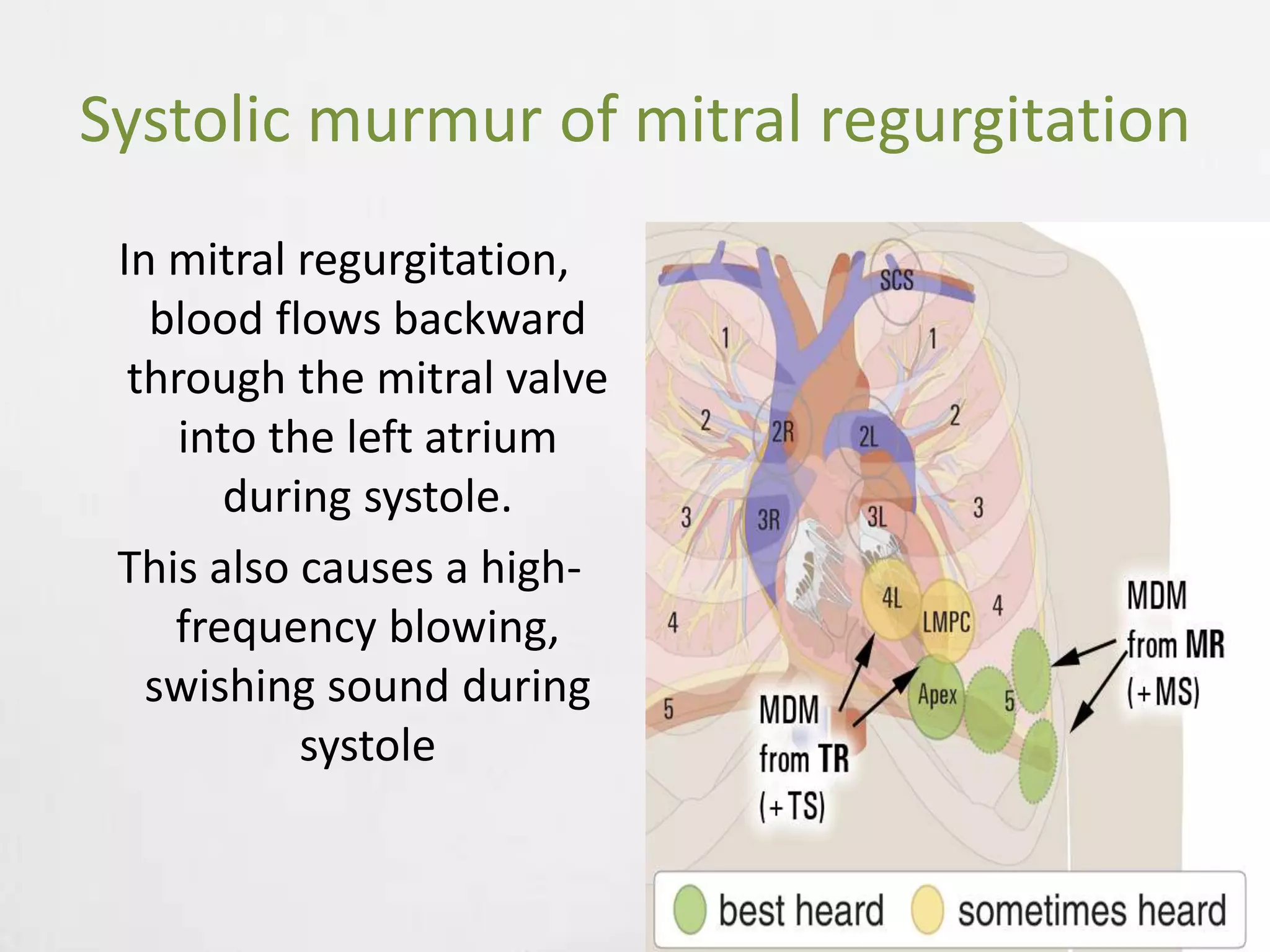
Systolic murmur of mitral regurgitation 
In mitral regurgitation, 
blood flows backward 
through the mitral valve 
into the left atrium 
during systole. 
This also causes a high-frequency 
blowing, 
swishing sound during 
systole
Auscultation of heart may reveal: 
Diminished S1 in acute mitral regurgitation. 
Wide splitting of S2 as a result of early closure of 
aortic valve. 
S3 as a result of LV dysfunction or increased 
blood flow
Exams and Tests 
When listening to your heart and lungs, the health care 
provider may detect: 
• A thrill (vibration) over the heart when feeling the chest 
area 
• An extra heart sound (S4 gallop) 
• A distinctive heart murmur 
• Crackles in the lungs (if fluid backs up into the lungs) 
• The physical exam may also reveal: 
• Ankle and leg swelling 
• Enlarged liver 
• Bulging neck veins 
• Other signs of right-sided heart failure
• The following tests may be done to look at the 
heart valve structure and function: 
• CT scan of the chest 
• Endocardiogram (an ultrasound examination 
of the heart) - transthoracic or 
transesophageal 
• Magnetic resonance imaging (MRI)
• Medication 
• Mild cases may not require any regular medication. If you 
develop symptoms or complications, various medicines 
may be advised. 
• For example: 
• Diuretics(water tablets) usually help if you are breathless. 
They make the kidneys produce more urine. This gets rid of 
excess blood and fluid which may build up in the lungs or 
other parts of the body with the back pressure from the 
heart. 
• Angiotensin-converting Enzyme (ACE) inhibitors are 
medicines which help to reduce the amount of work the 
heart does and to ease symptoms of heart failure. 
• Anti-arrhythmic medication may be needed to control your 
heart rate if you develop atrial fibrillation. 
• Warfarin (anticogulation) is usually advised if you develop 
atrial fibrillation. This helps to prevent blood clots from 
forming.
You may need surgery to replace or repair valve 
if: 
Heart function is poor 
The heart becomes enlarged (dilated) 
Symptoms get worse

Mitral regurgitation

  • 1.
    Mitral Regurgitation Participants: Hiba,Hina,Faryal,Fizza,beenish,Aaina,Aisha,Zoobia
  • 2.
    Definition: In mitralregurgitation the valve does not close properly. This causes blood to leak back (regurgitate) into the left atrium when the left ventricle contracts.
  • 3.
    Causes Possible causesof mitral valve regurgitation include: • Mitral valve prolapse • Rheumatic fever • Endocarditis • Hypertrophic cardiomyopathy • Congenital heart defects • Heart attack • Coronary heart disease and high blood pressure
  • 4.
    Symptoms Symptoms maybegin suddenly if: • A heart attack damages the muscles around the mitral valve. • The cords that attach the muscle to the valve break. • An infection of the valve destroys part of the valve.
  • 5.
    There are oftenno symptoms. When symptoms occur, they often develop gradually, and may include: • Cough • Fatigue, exhaution and light-headedness • Rapid breathing • Sensation of feeling the heart beat (palpitations) or a rapid heartbeat • Shortness of breath that increases with activity and when lying down • Urination, excessive at night. • Swollen feet and ankles.
  • 6.
    Systolic murmur ofmitral regurgitation In mitral regurgitation, blood flows backward through the mitral valve into the left atrium during systole. This also causes a high-frequency blowing, swishing sound during systole
  • 7.
    Auscultation of heartmay reveal: Diminished S1 in acute mitral regurgitation. Wide splitting of S2 as a result of early closure of aortic valve. S3 as a result of LV dysfunction or increased blood flow
  • 8.
    Exams and Tests When listening to your heart and lungs, the health care provider may detect: • A thrill (vibration) over the heart when feeling the chest area • An extra heart sound (S4 gallop) • A distinctive heart murmur • Crackles in the lungs (if fluid backs up into the lungs) • The physical exam may also reveal: • Ankle and leg swelling • Enlarged liver • Bulging neck veins • Other signs of right-sided heart failure
  • 9.
    • The followingtests may be done to look at the heart valve structure and function: • CT scan of the chest • Endocardiogram (an ultrasound examination of the heart) - transthoracic or transesophageal • Magnetic resonance imaging (MRI)
  • 10.
    • Medication •Mild cases may not require any regular medication. If you develop symptoms or complications, various medicines may be advised. • For example: • Diuretics(water tablets) usually help if you are breathless. They make the kidneys produce more urine. This gets rid of excess blood and fluid which may build up in the lungs or other parts of the body with the back pressure from the heart. • Angiotensin-converting Enzyme (ACE) inhibitors are medicines which help to reduce the amount of work the heart does and to ease symptoms of heart failure. • Anti-arrhythmic medication may be needed to control your heart rate if you develop atrial fibrillation. • Warfarin (anticogulation) is usually advised if you develop atrial fibrillation. This helps to prevent blood clots from forming.
  • 11.
    You may needsurgery to replace or repair valve if: Heart function is poor The heart becomes enlarged (dilated) Symptoms get worse