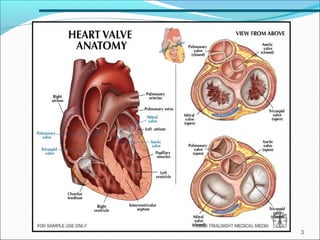
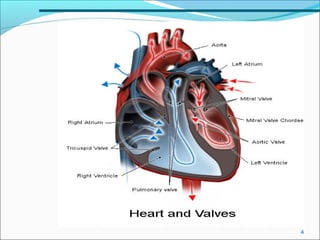
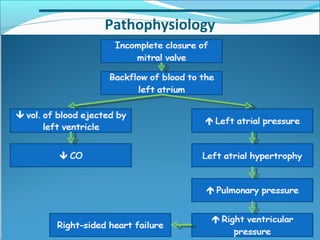
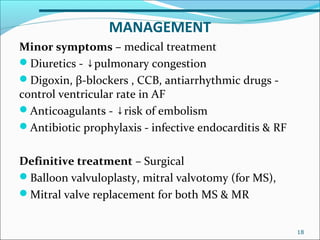
This document discusses valvular heart disorders, focusing on mitral valve stenosis and regurgitation. It defines stenosis as a narrowing of the valve orifice, while regurgitation is the incomplete closure of the mitral valve, allowing blood to flow back into the left atrium. The most common cause of both is rheumatic heart disease. Symptoms of mitral stenosis include dyspnea and fatigue, while regurgitation causes fatigue, dyspnea, and palpitations. Diagnosis is via echocardiogram. Treatment depends on severity but may include medications, balloon valvuloplasty, or valve replacement surgery.