Department of Physiology
UTKARSH SINGH
ROLL NO.17146
1. INTRODUCTION
2. PHYSIOLOGICAL ANATOMY OF THE BLADDER
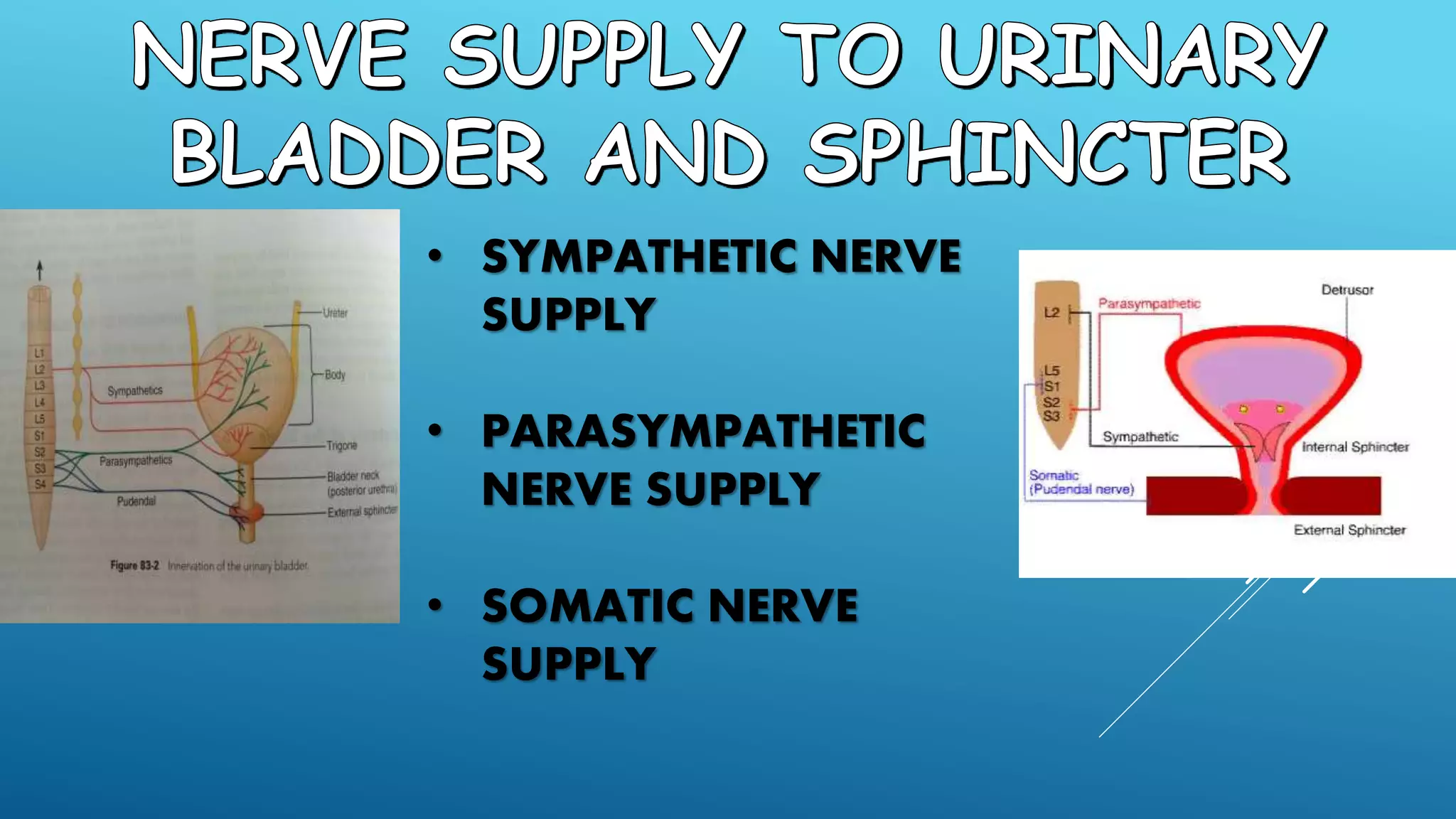
3. NERVE SUPPLY TO URINARY BLADDER AND SPHINCTER
4. MICTURITION REFLEX
5. APPLIED PHYSIOLOGY
REFLEX
It is an involuntary and nearly instantaneous
movement in response to a stimulus
MICTURITION
It is the process by which the urinary
bladder empties when it gets filled.
Urinary bladder is a smooth muscle
chamber. It is composed of the following:-
1) THE BODY
2) TRIGONE
3) INTERNAL SPHINCTER
4) EXTERNAL SPHINCTER
• SYMPATHETIC NERVE
SUPPLY
• PARASYMPATHETIC
NERVE SUPPLY
• SOMATIC NERVE
SUPPLY
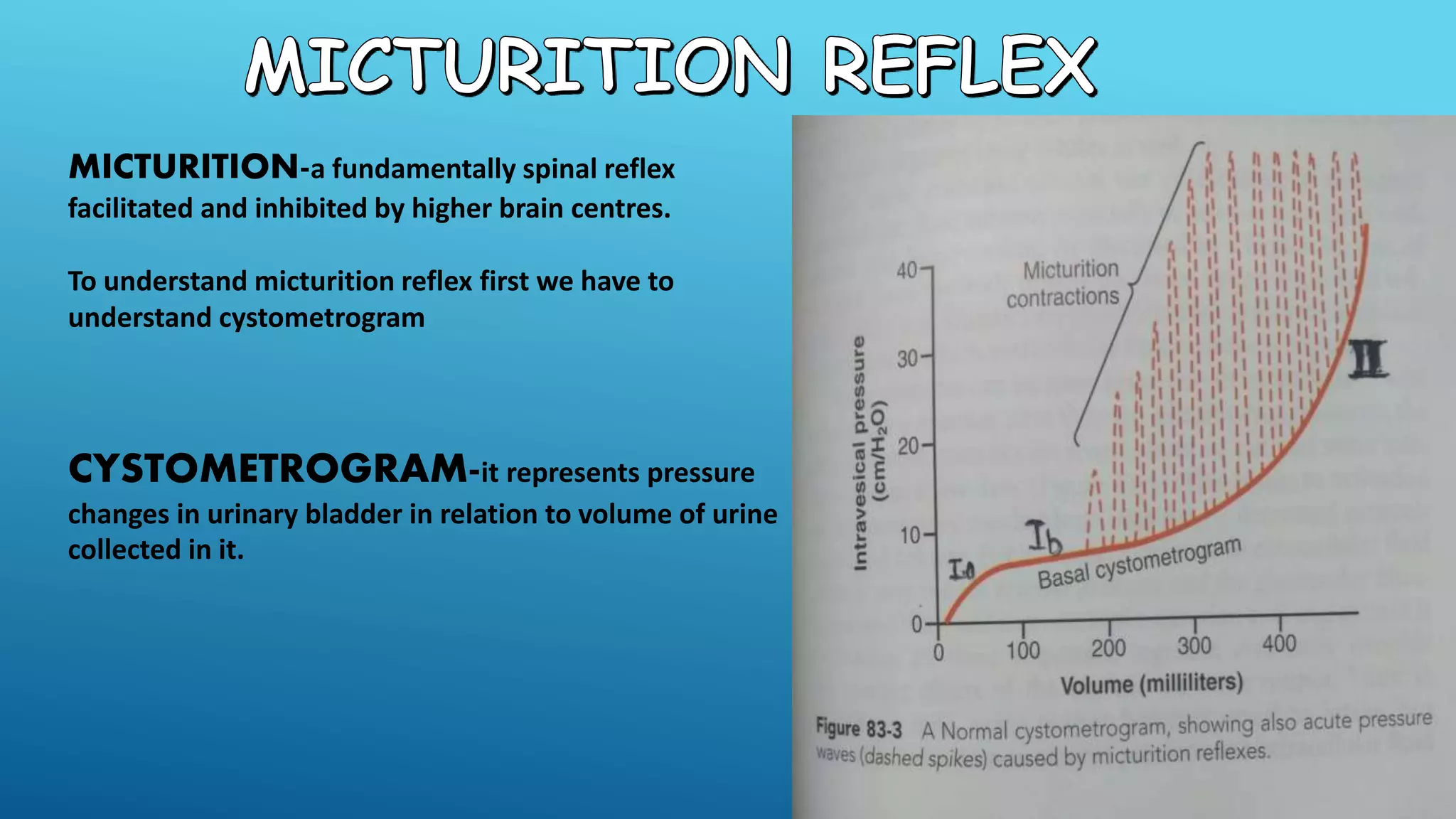
MICTURITION-a fundamentally spinal reflex
facilitated and inhibited by higher brain centres.
To understand micturition reflex first we have to
understand cystometrogram
CYSTOMETROGRAM-it represents pressure
changes in urinary bladder in relation to volume of urine
collected in it.
Once urine enters urethra the stretch receptors in the urethra are
stimulated and send afferent impulses to spinal cord via pelvic nerve
Fibres.
Now the impulse generated from spinal centres inhibit pudendal
nerve. So the external sphincter releases and micturition occurs.
Once a micturition reflex begins it is self regenerative that is the initial
contraction of bladder further activates the receptors to cause still further
increase in sensory impulse from the bladder and urethra.
This cycle continues repeatedly until the force of contraction of bladder
reaches the maximum and the urine is excreted out completely.
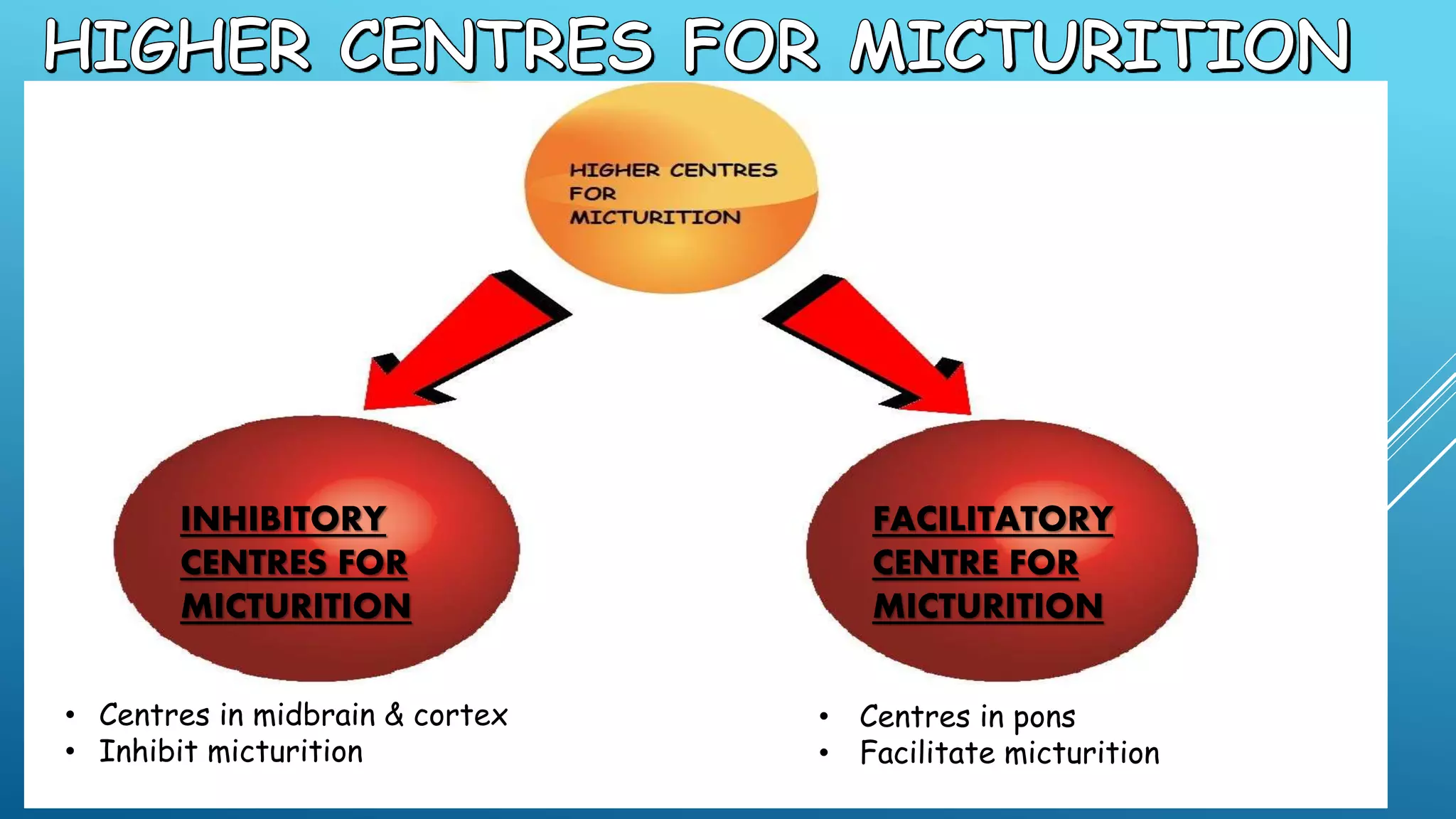
INHIBITORY
CENTRES FOR
MICTURITION
FACILITATORY
CENTRE FOR
MICTURITION
• Centres in midbrain & cortex
• Inhibit micturition
• Centres in pons
• Facilitate micturition
1. ATONIC BLADDER
i. Caused by destruction of sensory nerve fibres.
ii. Detrusor muscle loses the tone.
iii. Bladder completely filled with urine and urine overflows.
iv. It is called overflow dribbling or overflow incontinence.
2. AUTOMATIC BLADDER
i. Characterised by hyperactive micturition reflex.
ii. Even small quantity of urine present in bladder produces micturition reflex.
3. UNINHIBITED NEUROGENIC BLADDER
i. Characterised by frequent and uncontrolled micturition.
ii. It is due to lack of inhibitory signals from brain.
4. NOCTURNAL MICTURITION
i. It is common and normal in infants and children.
ii. It is because of incomplete myelination of motor nerve fibres.
1) GUYTON AND HALL
2) A.K JAIN
3) GANONG’S REVIEW OF MEDICAL PHYSIOLOGY
THANK YOU

micturition reflex

  • 1.
  • 2.
    1. INTRODUCTION 2. PHYSIOLOGICALANATOMY OF THE BLADDER 3. NERVE SUPPLY TO URINARY BLADDER AND SPHINCTER 4. MICTURITION REFLEX 5. APPLIED PHYSIOLOGY
  • 3.
    REFLEX It is aninvoluntary and nearly instantaneous movement in response to a stimulus MICTURITION It is the process by which the urinary bladder empties when it gets filled.
  • 4.
    Urinary bladder isa smooth muscle chamber. It is composed of the following:- 1) THE BODY 2) TRIGONE
  • 5.
    3) INTERNAL SPHINCTER 4)EXTERNAL SPHINCTER
  • 6.
    • SYMPATHETIC NERVE SUPPLY •PARASYMPATHETIC NERVE SUPPLY • SOMATIC NERVE SUPPLY
  • 7.
    MICTURITION-a fundamentally spinalreflex facilitated and inhibited by higher brain centres. To understand micturition reflex first we have to understand cystometrogram CYSTOMETROGRAM-it represents pressure changes in urinary bladder in relation to volume of urine collected in it.
  • 8.
    Once urine entersurethra the stretch receptors in the urethra are stimulated and send afferent impulses to spinal cord via pelvic nerve Fibres. Now the impulse generated from spinal centres inhibit pudendal nerve. So the external sphincter releases and micturition occurs. Once a micturition reflex begins it is self regenerative that is the initial contraction of bladder further activates the receptors to cause still further increase in sensory impulse from the bladder and urethra. This cycle continues repeatedly until the force of contraction of bladder reaches the maximum and the urine is excreted out completely.
  • 9.
    INHIBITORY CENTRES FOR MICTURITION FACILITATORY CENTRE FOR MICTURITION •Centres in midbrain & cortex • Inhibit micturition • Centres in pons • Facilitate micturition
  • 10.
    1. ATONIC BLADDER i.Caused by destruction of sensory nerve fibres. ii. Detrusor muscle loses the tone. iii. Bladder completely filled with urine and urine overflows. iv. It is called overflow dribbling or overflow incontinence. 2. AUTOMATIC BLADDER i. Characterised by hyperactive micturition reflex. ii. Even small quantity of urine present in bladder produces micturition reflex. 3. UNINHIBITED NEUROGENIC BLADDER i. Characterised by frequent and uncontrolled micturition. ii. It is due to lack of inhibitory signals from brain. 4. NOCTURNAL MICTURITION i. It is common and normal in infants and children. ii. It is because of incomplete myelination of motor nerve fibres.
  • 11.
    1) GUYTON ANDHALL 2) A.K JAIN 3) GANONG’S REVIEW OF MEDICAL PHYSIOLOGY
  • 12.