SUBJECT SEMINAR-
NEUROGENIC BLADDER
DR.MANISHA GUPTA
DATE-11/10/2018
Pathophysiology and Evaluation of
Neurogenic bladder
Presenter: Dr Ashok Kumar Rajpura
Moderator: Dr Kuldeep Poonia
Introduction
• Bladder functions-
• Storage-
• Voiding-
• Co-ordination between - Bladder, Bladder neck and external
urethral sphincter
Anatomy
Physiologic Anatomy
• Bladder- Detrusor
• Neck- Trigone, posterior urethra, internal sphincter (smooth
muscle)
• External sphincter- Urogenital diaphragm (striated muscle)
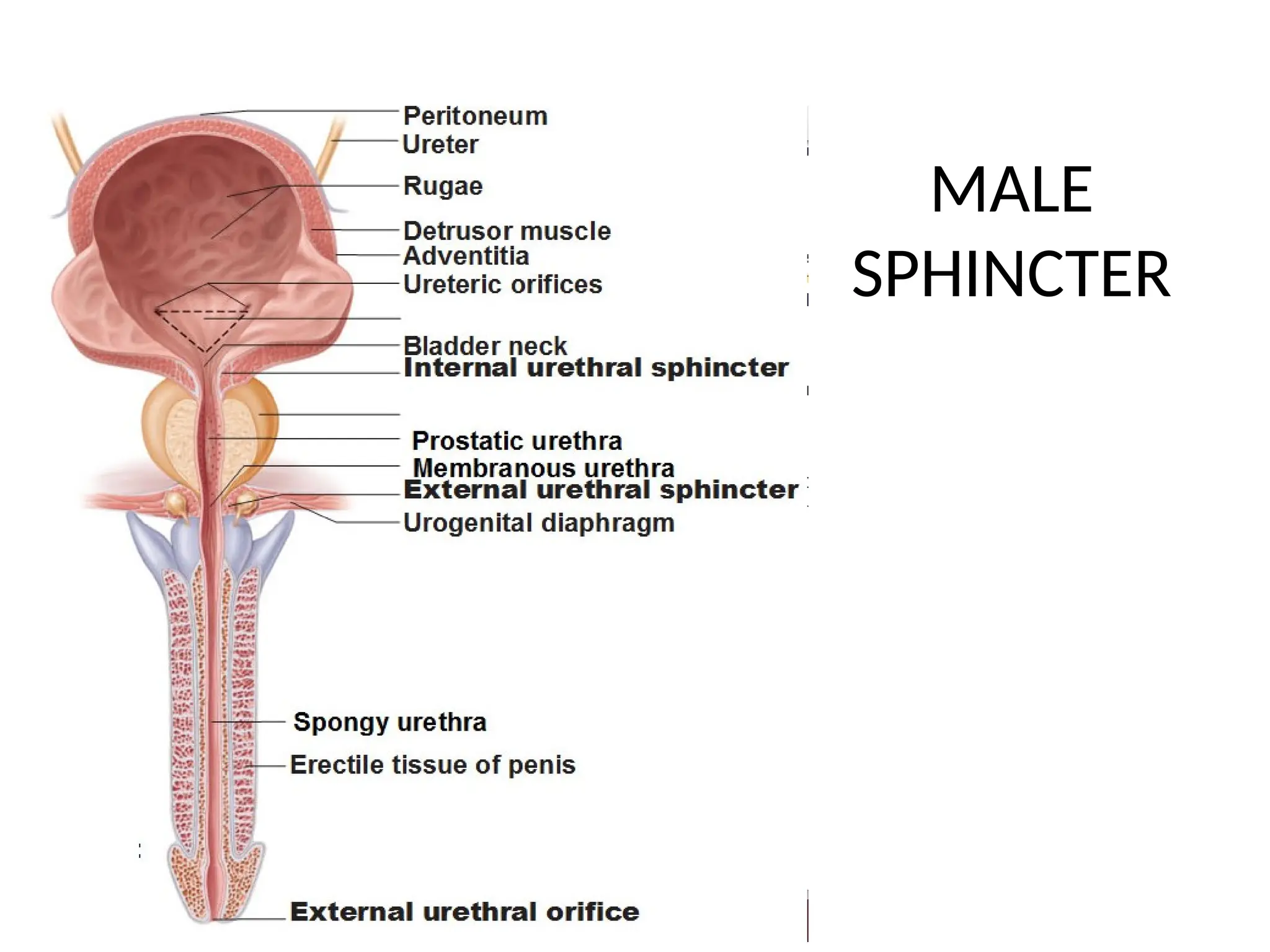
Male Sphincter Anatomy
1. Internal Urethral Sphincter:
Made of smooth muscle, controlled by the autonomic nervous system
2. External Urethral Sphincter:
Made of skeletal muscle and under voluntary control.
MALE
SPHINCTER
Female Sphincter Anatomy
1. Internal Urethral Sphincter:
Located at the bladder neck, though it lacks a specific anatomical structure.
2. External Urethral Sphincter:
Similar in structure and function to the male external sphincter.
FEMALE SPHINCTER
Key Differences
Functionality:
Location and Length:
Why we need innervation for bladder?
• Urine is produced at 0.3 ml/ sec. but emptying
is intermittent. So urine has to be stored.
• It has to be under low pressure to prevent
reflux.
• It has to be co ordinated between body and
base.
Structures involved
• Bladder wall receptors
• Sacral center
• Afferent and efferent nerves
• External sphincter (pudendal nerve)
• Intermediolateral grey sympathetic chain
• The periaqueductal gray (PAG)
• Barrington’s nucleus
• Paracentral lobule and prefrontal regions
Bradley’s loops
UNINHIBITED
BLADDER
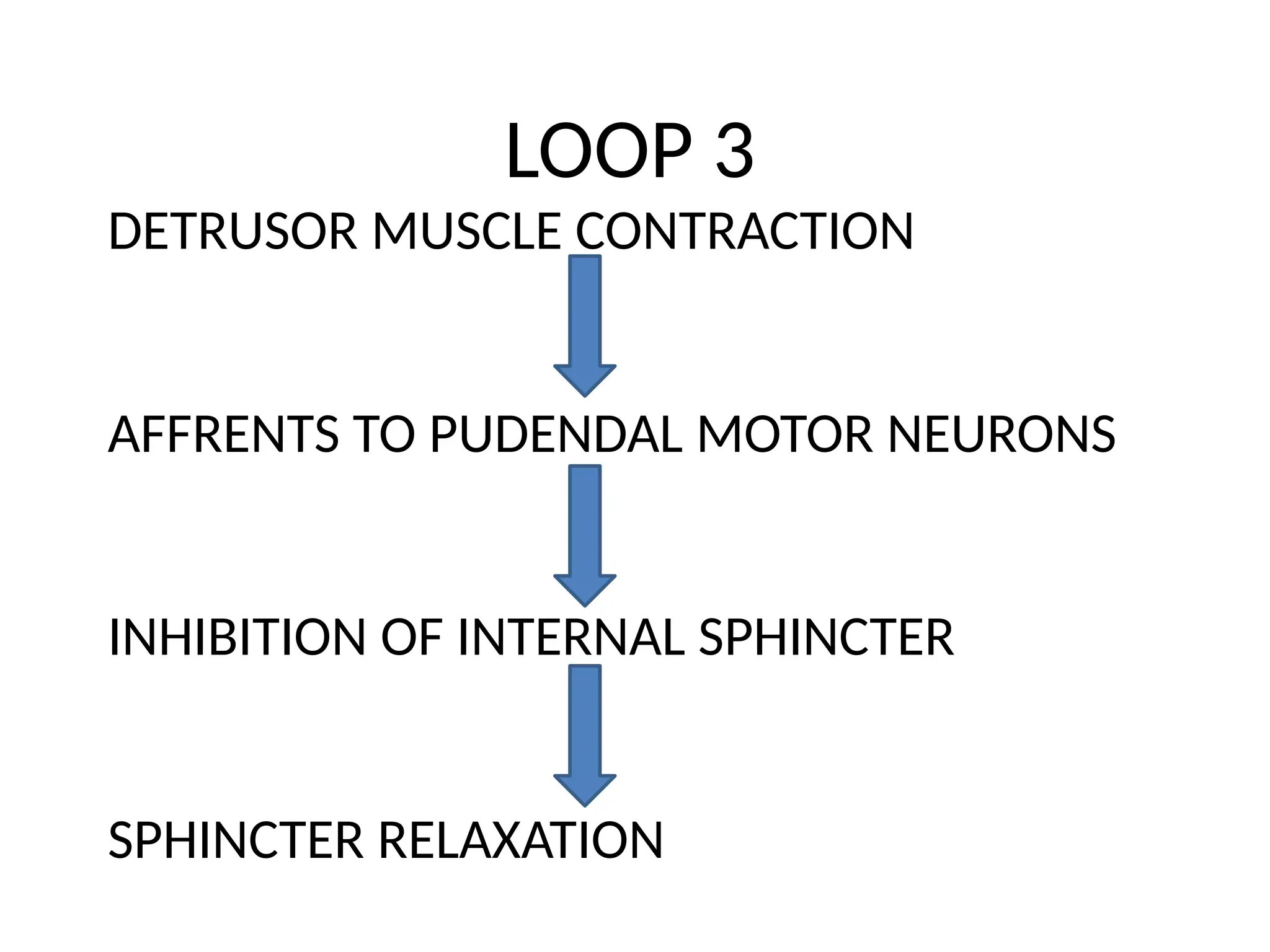
LOOP 3
DETRUSOR MUSCLE CONTRACTION
AFFRENTS TO PUDENDAL MOTOR NEURONS
INHIBITION OF INTERNAL SPHINCTER
SPHINCTER RELAXATION
LOOP 4
MOTOR CORTEX
SACRAL ANTERIOR HORN CELL
VOLUNTARY CONTROL OF SPHINCTER
PHYSIOLOGY OF
MICTURITION
•Spinal control:
- Parasympathetic arc
- Sympathetic arc
- Voluntary (pudendal) arc
•Supraspinal control:
- Pons
- Frontal cortex
- Cerebellum
- Basal ganglia
- Hypothalamus
Cortical Centers for Micturition
• Frontal Lobe
• Send tonically inhibitory signals to the detrusor
muscle to prevent the bladder from emptying
(contracting) until a socially acceptable time and
place to urinate is available.
Pontine Micturition Centre
• Barrington’s Nucleus
• Dorsomedial tegmental region – center for micturition (M-
region).
• Ventrolateral pontine tegmentum – center for storage (L-
region).
• Pontomesencephalic reticular formation
• Mediated by reticulospinal tracts which synapse with detrusor
and sphincter motor center in sacral cord
Innervation
INNERVATIO
N TYPE
ORIGIN NERVE POST-GANGLIONIC
FIBRES
FUNCTION
SYMPATHETI
C
T11-L2
↓
Synapse with
Inferior
Mesenteric/
Hypogastric
plexus
HYPOGASTR
IC NERVE
α –Bladder neck/proximal
urethra(contraction)
β-Bladder fundus-
relaxation
Inhibits Parasympathetic
Ganglia in Detrusor wall
STORAGE
PARASYMPAT
HETIC
S2-4
(DETRUSOR
NUCLEUS)
PELVIC
NERVE
M2,M3(Ach)-Detrusor
contraction
Proximal urethra(NO)-IUS
relaxation
VOIDING
SOMATIC
(to EUS)
S2-4
(PUDENDAL
NUCLEUS)
PUDENDAL
NERVE
Conscious state-
supraspinal centres
activate Pudendal Nu-
keeps EUS tonically
contracted
VOLUNTAR
CONTROL
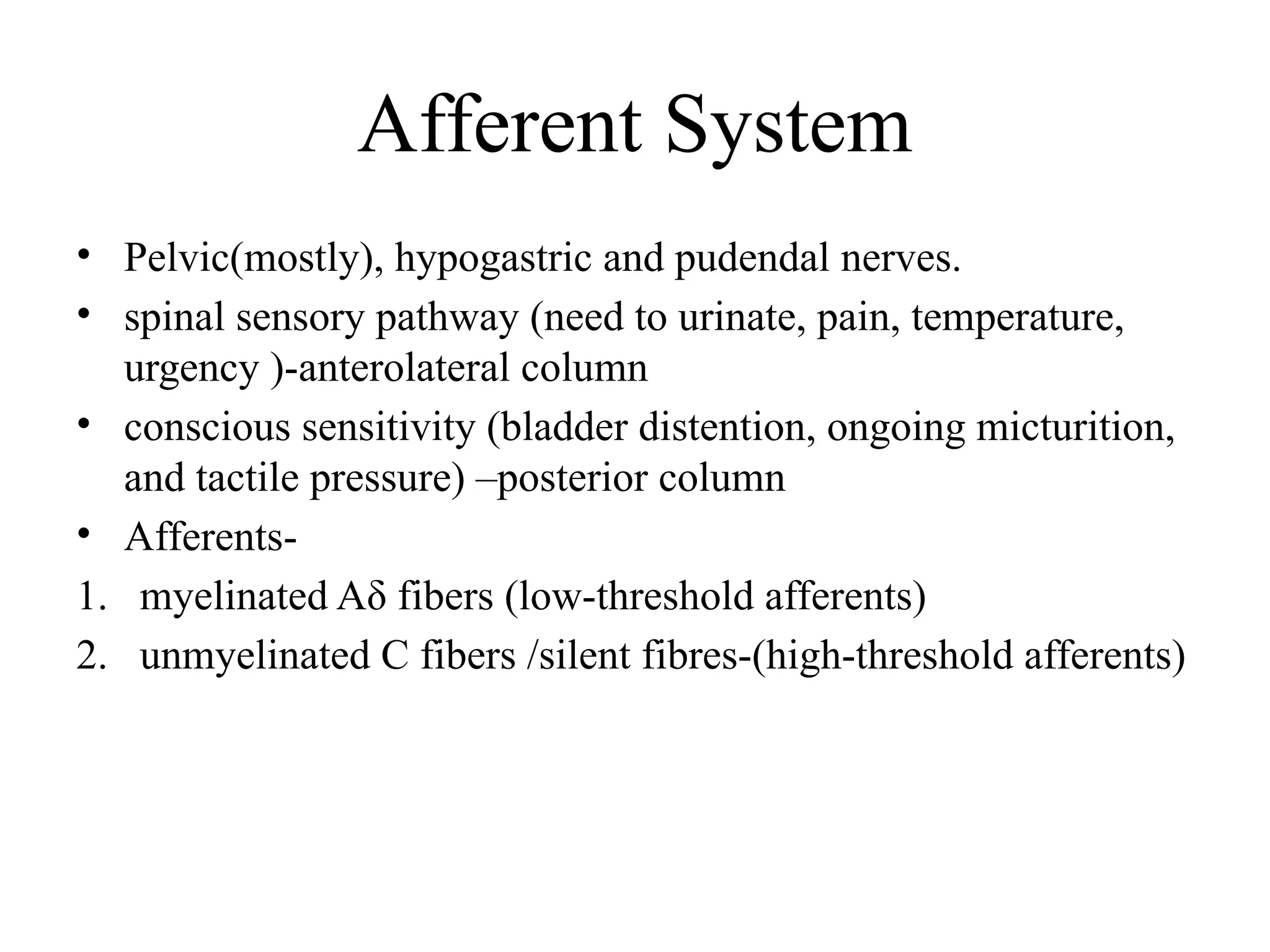
Afferent System
• Pelvic(mostly), hypogastric and pudendal nerves.
• spinal sensory pathway (need to urinate, pain, temperature,
urgency )-anterolateral column
• conscious sensitivity (bladder distention, ongoing micturition,
and tactile pressure) –posterior column
• Afferents-
1. myelinated Aδ fibers (low-threshold afferents)
2. unmyelinated C fibers /silent fibres-(high-threshold afferents)
NEUROGENIC BLADDER: DEFINITION
•Refers to dysfunction of urinary bladder due to
disease of CNS or peripheral nerves involved in the
control of micturition.
NEUROGENIC BLADDER: CAUSES
1. Central Nervous System Disorders:
Stroke:
Parkinson’s Disease:
Multiple Sclerosis (MS):
2. Spinal Cord Injury:
Trauma or Accidents:
Spina Bifida:
3. Peripheral Nerve Damage:
Diabetes:
Pelvic Surgery or Trauma:
4. Other Neurological Conditions:
Cerebral Palsy:
Tumors or Cysts:
Physiology
• More than 100 ml of urine accumulated- bladder
wall receptor are facilitated
• Thereby default relax the body and contract the
sphincter
• At 300 ml the afferent roots and nerves carry
impulses to sacral centre which caries the sense
of fullness through posterior column
• When overdistended- pain through spino-
thalamic tract
• At barrington center and PAG-low pressure filling
can be maintained upto 450-600ml
• Beyond 600ml if urine not emptied-impulses are
transmitted to paracentral areas for facilitation and
prefrontal for inhibition
• Based on social situation bladder can be distended
upto 1.5-2 litre
• Efferent are both facilitatory and inhibitory and
travel via spinal cord tracts and participate in
functional Bradley's loop
• When facilitation is planned by cortical centre,
internal sphincter opens and urine trickles in
proximal urethra and that becomes stimulus for
sacral parasympathetic- contract body and relax
sphincter
• Voluntary activation of Onuf nucleus and
pudendal nerve- external sphincter opens
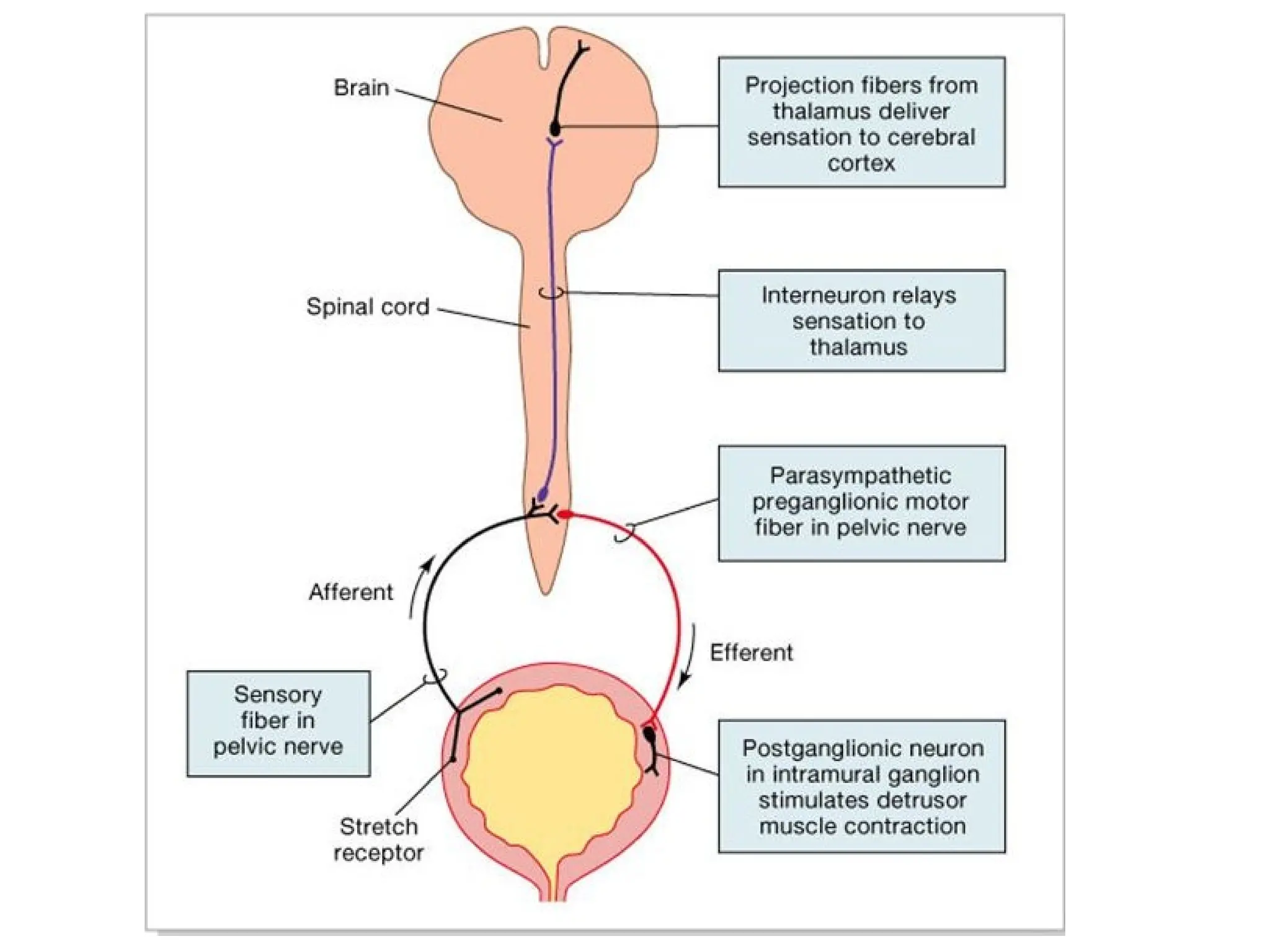
Micturition Reflex
• Sensory signals from the bladder stretch receptors are
conducted to the sacral segments of the cord through the pelvic
nerves and then reflexively back again to the bladder through
the parasympathetic nerve fibers by way of these same nerves.
• Sacral reflex center is the primitive voiding center in infants.
• Ability of the brain to control the PMC is part of the social
training that children experience during growth(18m -3y)
PHASES
• Micturition is considered as having two phases:
• the filling (storage) phase and
• the emptying (voiding) phase.
• Sacral Voiding Centre- Conus medullaris
• Storage phase-
• No neural bladder control
needed to store.
• Storage in the face of
distension or pain requires
neural inhibition of voiding.
• Voiding phase-
• Entirely under neural
control – unlike storage.
• signal to initiate voiding
comes from the bladder, is
okayed by the frontal
cortex, triggered by pons
and executed by sacral cord.
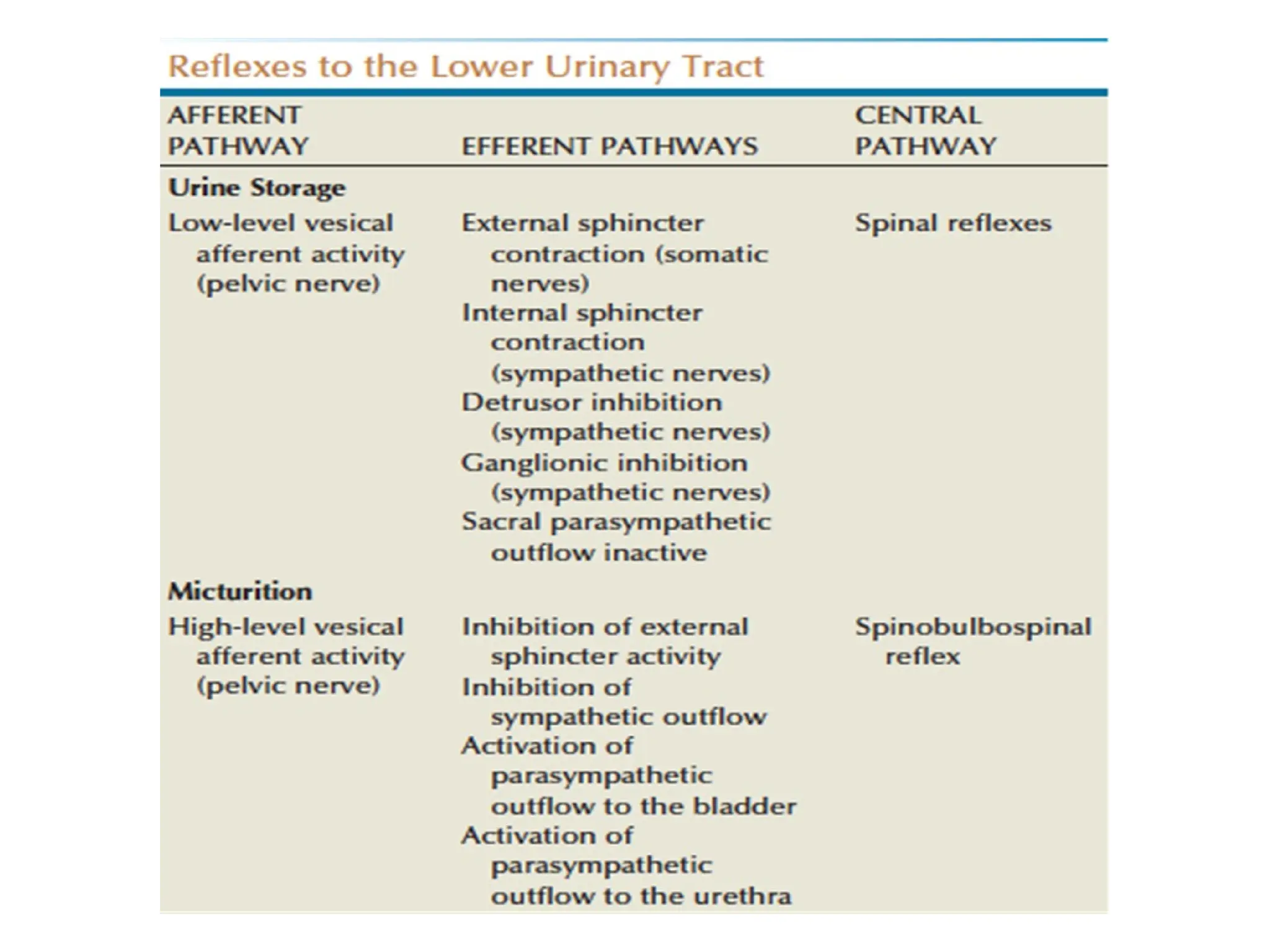
STORAGE PHASE
⮞ During storage , distention of
bladder produces low-level
bladder afferent firing.
⮞ Afferent firing in turn
stimulates the sympathetic
outflow to outlet (base and
urethra) and pudendal outflow
to external urethral sphincter.
⮞ These responses occur by
spinal reflex pathways and
represent “guarding reflexes,”
which promote continence.
⮞ Sympathetic firing also
inhibits detrusor muscle and
transmission in bladder ganglia.
VOIDING PHASE
⮞ At the initiation of micturition,
intense vesical afferent activity
activates the PMC, which inhibits the
spinal guarding reflexes.
⮞ The PMC also stimulates the
parasympathetic outflow to the
bladder and internal sphincter smooth
muscle.
⮞ Maintenance of the voiding reflex is
through ascending afferent input
from the spinal cord, which may pass
through the PAG before reaching
PMC.
Lapides Classification
• Uninhibited neurogenic bladder
• Reflex neurogenic bladder (Automatic bladder)
• Sensory neurogenic bladder
• Motor paralytic bladder
• Autonomous neurogenic bladder(Atonic bladder)
Uninhibited Neurogenic Bladder
• destructive lesion in the corticoregulatory tracts -- over
facilitation of the micturition reflex.
• frequency, urgency, and urge incontinence
• Urodynamics: normal sensation ,involuntary contraction
at low filling volumes, residual urine is characteristically
low
• patient generally can initiate a bladder contraction
voluntarily but is often unable to do so during cystometry
because sufficient urine storage cannot occur before
involuntary contraction is stimulated
Reflex neurogenic bladder
(Automatic Bladder)
• Interruption between the sacral spinal cord and the brainstem
• No bladder sensation, and there is inability to initiate
voluntary micturition.
• Incontinence without sensation generally results from low-
volume involuntary contraction.
• Striated sphincter dyssynergia is the rule
Sensory Neurogenic Bladder
• Selective interruption of sensory fibers between the bladder
and the spinal cord or the afferent tracts to the brain
• Loss of sensation allows for the bladder to distend without
triggering a reflex bladder contraction.
• Unless voiding is initiated on a timed basis ->varying degrees
of bladder overdistention -> hypotonicity.
• If bladder decompensation occurs -> significant amounts of
residual urine;
• cystometric curve: a large capacity bladder with a flat, high-
compliance, low-pressure filling curve.
Motor Neurogenic Bladder
• Destruction of parasympathetic motor innervation
• normal sensation of bladder filling but is unable to generate
detrusor pressure sufficient to empty the bladder
• Symptoms range from painful urinary retention to only a
relative inability to initiate and maintain normal micturition
• Chronic overdistention and decompensation may occur,
resulting in a large-capacity bladder with a flat, low-pressure
filling curve; a large residual urine may result
Autonomous Neurogenic Bladder
(Atonic Bladder)
• Complete motor and sensory separation of the bladder from
the sacral spinal cord
• disease that destroys the sacral cord or causes extensive
damage to the sacral roots or pelvic nerves
• Only bladder wall receptors are there
• Large bladder with no sensation and continuous dribbling
• Low pressure filling and reflux
• Also the type of dysfunction seen in patients
with spinal shock
• Cystometric pattern is initially similar to the
late stages of the motor or sensory bladder,
with a marked shift to the right of the
cystometric filling curve and a large bladder
capacity at low intra -vesical pressure
UMN/Spastic LMN/Flaccid
• Lesion above S2
• Urgency, frequency,
urge incontinence
• +/- post voidal residue
• Interrupted flow
• High bladder pressure
• Detrusor Hyperreflexia
with Detrusor sphincter
dyssynergia
• Low bladder capacity
• Lesion below S2
• Hesitancy, Retention
• post voidal residual urine
>100ml
• Poor or absent flow
• Low bladder pressure
• Detrusor Areflexia with
sphincter insufficiency
• High bladder capacity
WEIN classification
• Continent bladder
• Incontinent bladder
• Both retention and incontinent
• INCONTINENCE
• Caused by bladder
▪Uninhibited contractions, Decreased capacity
• Low bladder wall compliance
▪Normal (cognitive/mobility issue)
• Caused by Outlet
▪Decreased bladder neck pressure
▪Decreased external sphincter tone.
• RETENTION
• Caused by bladder
▪Detrusor Areflexia
▪Large capacity/ high compliance
▪Normal (cognitive/mobility issue)
• Caused by outlet
▪High voiding pressure with low flow rate
▪Internal sphincter dyssynergia
▪External sphincter dyssynergia
▪Overactive sphincter mechanism
The International Continence Society classification
system for vesicourethral activity
Neurogenic Voiding Dysfunctions (NVD) Eur Urol
2003; 44/3 (Curric Urol I–XV)
FOUR SCENARIOS
⮚ Good bladder (compliant), good sphincter
⮚ Good bladder (compliant), bad sphincter
⮚ Bad bladder (low compliance), good sphincter
(innervated, but failing to relax properly)
⮚ Bad bladder (poor compliance), bad sphincter
Neurogenic Voiding Dysfunctions (NVD) Eur
Urol 2003; 44/3 (Curric Urol I–XV)
Evaluation of Bladder dysfunction
• History
• Physical examination
• Laboratory testing
• Imaging studies
• Urodynamic studies
History
• Filling/storage symptoms include urinary urgency, frequency
(more than eight voids per 24 hours), incontinence, and
nocturia.
• Voiding symptoms include hesitancy, straining to void,
dysuria, and double voiding.
• Complaints regarding sexual dysfunction.
• Past history of additional medical, neurological, urologic,
obstetric, and gynaecologic problems or surgeries
Physical examination
• Abdominal examination, inspection of the external genitalia,
and palpation of the flank.
• In men, a digital rectal examination- evaluate prostate
• In women, a vaginal examination
• A complete neurological examination- Bulbocavernous reflex,
anal reflex, perianal sensations and anal tone.
Laboratory testing
• Blood urea nitrogen
• Serum Creatinine
• Urine routine
• Urine culture and sensitivity
• Serum electrolytes
• Input-Output chart
Imaging studies
• Lower Urinary Tract Imaging-
• Cystourethrogram- the presence of vesicoureteral
reflux and the morphologic characteristics of the
bladder, bladder neck, proximal urethra, and striated
sphincter during urine storage, bladder filling, and
voiding
• Direct Visualization by Cystoscopy
• Upper Urinary Tract Imaging-
• Ultrasound- screening modality
• Intravenous Pyelogram, CT, Isotope scans
Urodynamic Studies
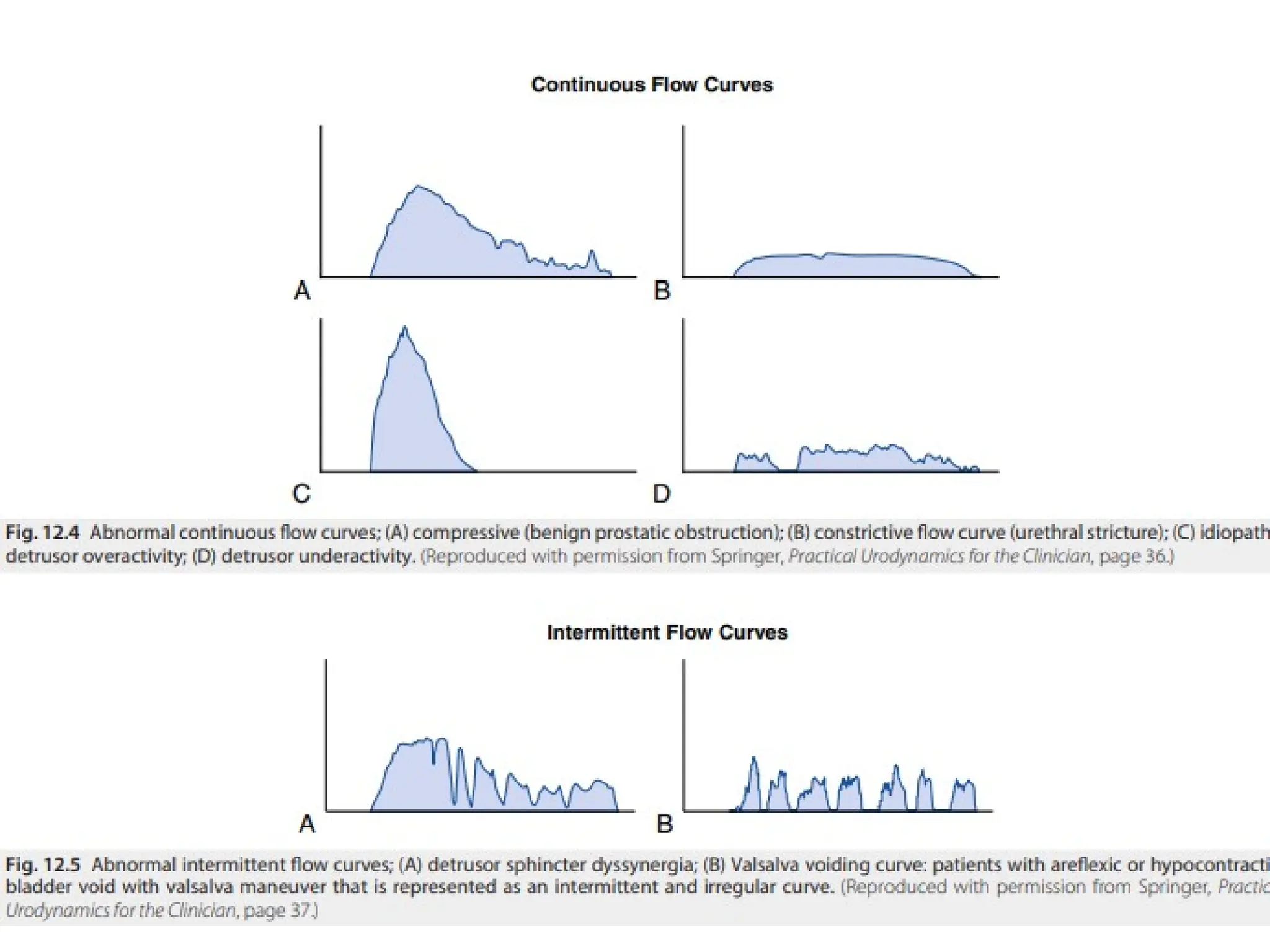
• Uroflowmetry
• Filling and Voiding Cystometry
• Electromyography of external sphincter
• Assessment of Post-voidal residual urine
UROFLOWMETRY
• simple non-invasive test used for measurement of volume of urine
voided per unit time
• Flow depends on two factors—the detrusor contractility and the
urethral resistance.
• The voided volume should be at least 130–150 mL and less than
700 ml to produce accurate curves.
• Young males <40 years : Q max >25 mL/s, and in
females :Q max is 5–10 mL/s more than males at a
given
bladder volume.
Cystometry
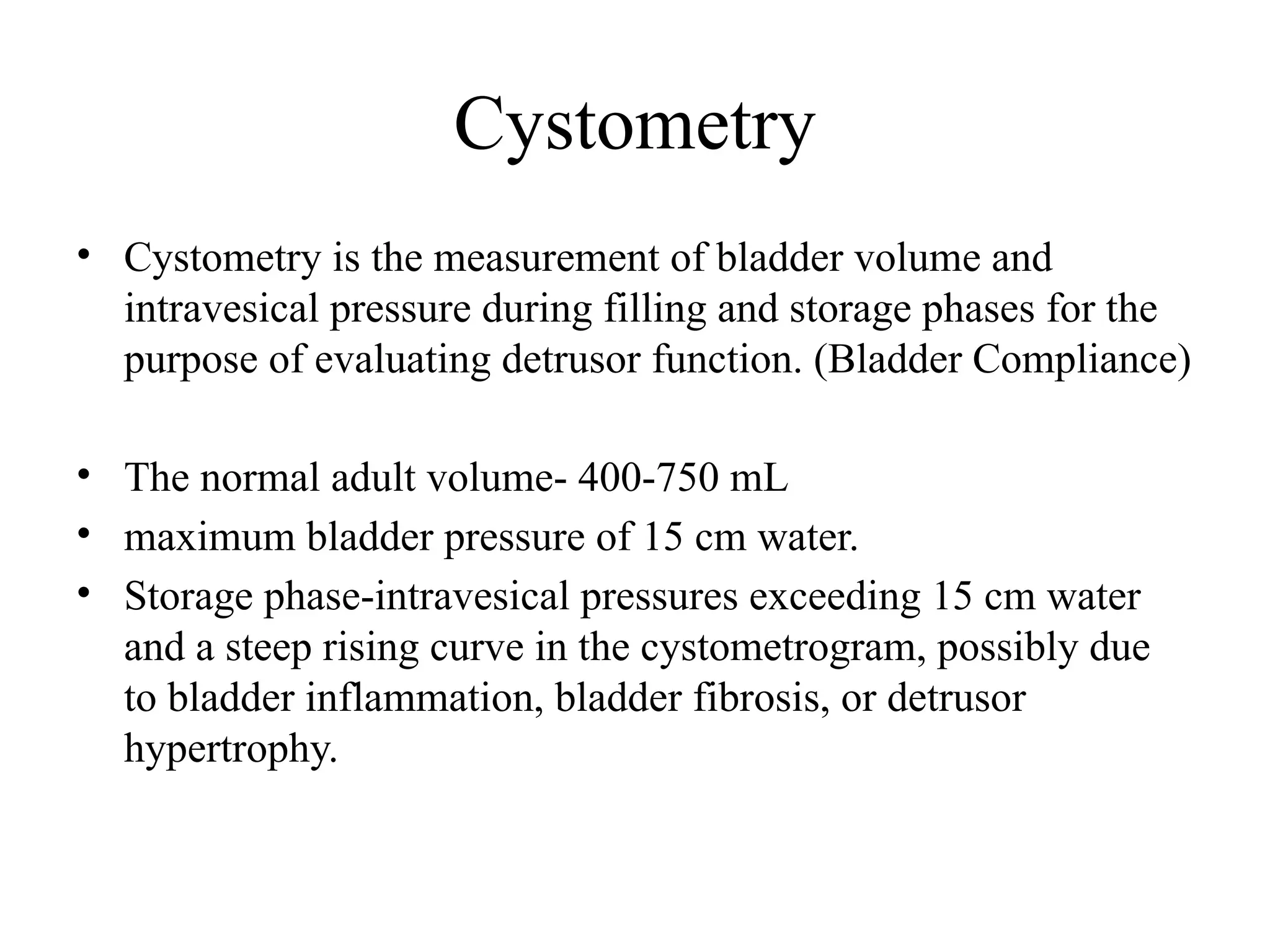
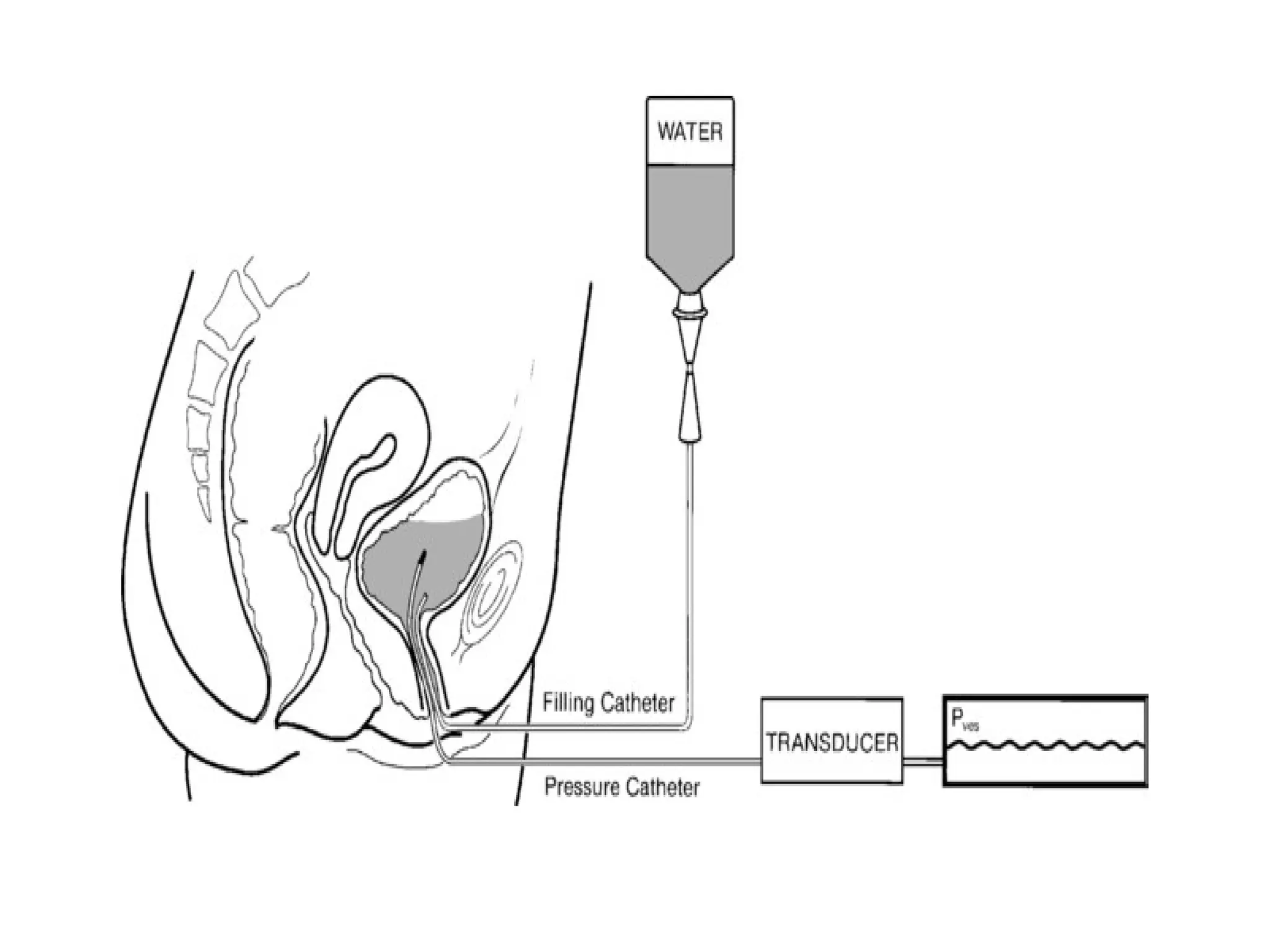
• Cystometry is the measurement of bladder volume and
intravesical pressure during filling and storage phases for the
purpose of evaluating detrusor function. (Bladder Compliance)
• The normal adult volume- 400-750 mL
• maximum bladder pressure of 15 cm water.
• Storage phase-intravesical pressures exceeding 15 cm water
and a steep rising curve in the cystometrogram, possibly due
to bladder inflammation, bladder fibrosis, or detrusor
hypertrophy.
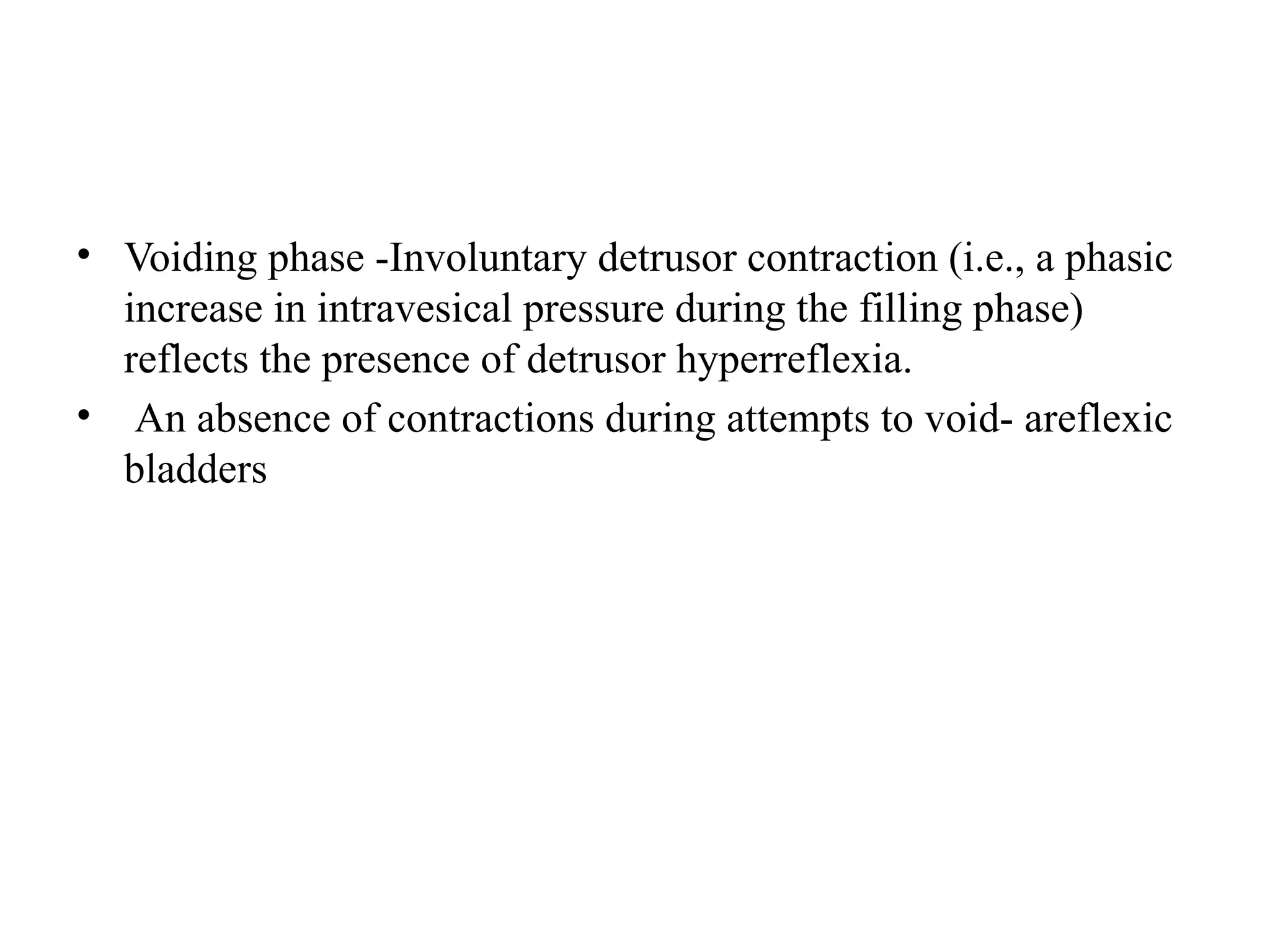
• Voiding phase -Involuntary detrusor contraction (i.e., a phasic
increase in intravesical pressure during the filling phase)
reflects the presence of detrusor hyperreflexia.
• An absence of contractions during attempts to void- areflexic
bladders
Electromyography
• Sphincter EMG -record bioelectric potentials during bladder
filling, storage, and micturition
• Voluntary control of the pelvic floor musculature and
coordination between the detrusor and pelvic floor.
• During bladder filling, EMG activity should gradually increase
and reach a maximum before voiding.
• True striated sphincter dyssynergia occurs only in patients with
neurological disease or injury at the level of the spinal cord and
represents involuntary sphincter contraction at the time of
detrusor contraction.
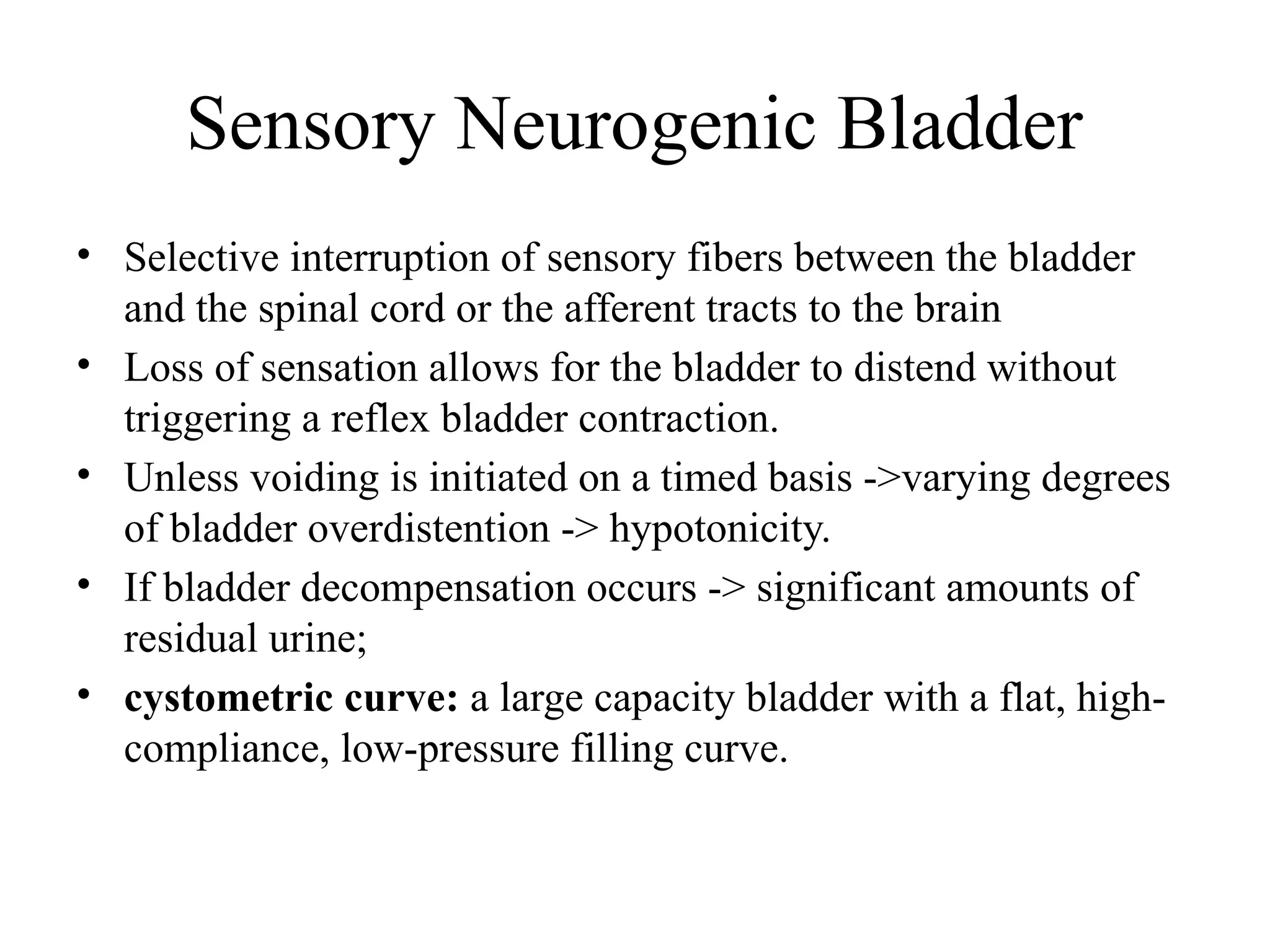
• Detrusor-sphincter dyssynergia occurs in patients with
suprasacral SCI and is caused by interruption of the spinobulbar-
spinal pathway that provides coordinated voiding.
Complications
•Urinary tract infections
•Hydro nephrosis
•Vesicoureteral reflex
•Renal and bladder calculi
•Renal deterioration
•Bladder malignancy
THANK YOU

Pathophysiology and Evaluation of Neurogenic bladder

  • 1.
  • 2.
    Pathophysiology and Evaluationof Neurogenic bladder Presenter: Dr Ashok Kumar Rajpura Moderator: Dr Kuldeep Poonia
  • 3.
    Introduction • Bladder functions- •Storage- • Voiding- • Co-ordination between - Bladder, Bladder neck and external urethral sphincter
  • 4.
  • 5.
    Physiologic Anatomy • Bladder-Detrusor • Neck- Trigone, posterior urethra, internal sphincter (smooth muscle) • External sphincter- Urogenital diaphragm (striated muscle)
  • 6.
    Male Sphincter Anatomy 1.Internal Urethral Sphincter: Made of smooth muscle, controlled by the autonomic nervous system 2. External Urethral Sphincter: Made of skeletal muscle and under voluntary control.
  • 7.
  • 8.
    Female Sphincter Anatomy 1.Internal Urethral Sphincter: Located at the bladder neck, though it lacks a specific anatomical structure. 2. External Urethral Sphincter: Similar in structure and function to the male external sphincter.
  • 9.
  • 10.
  • 11.
    Why we needinnervation for bladder? • Urine is produced at 0.3 ml/ sec. but emptying is intermittent. So urine has to be stored. • It has to be under low pressure to prevent reflux. • It has to be co ordinated between body and base.
  • 12.
    Structures involved • Bladderwall receptors • Sacral center • Afferent and efferent nerves • External sphincter (pudendal nerve) • Intermediolateral grey sympathetic chain • The periaqueductal gray (PAG) • Barrington’s nucleus • Paracentral lobule and prefrontal regions
  • 13.
  • 15.
    LOOP 3 DETRUSOR MUSCLECONTRACTION AFFRENTS TO PUDENDAL MOTOR NEURONS INHIBITION OF INTERNAL SPHINCTER SPHINCTER RELAXATION
  • 16.
    LOOP 4 MOTOR CORTEX SACRALANTERIOR HORN CELL VOLUNTARY CONTROL OF SPHINCTER
  • 17.
    PHYSIOLOGY OF MICTURITION •Spinal control: -Parasympathetic arc - Sympathetic arc - Voluntary (pudendal) arc •Supraspinal control: - Pons - Frontal cortex - Cerebellum - Basal ganglia - Hypothalamus
  • 18.
    Cortical Centers forMicturition • Frontal Lobe • Send tonically inhibitory signals to the detrusor muscle to prevent the bladder from emptying (contracting) until a socially acceptable time and place to urinate is available.
  • 19.
    Pontine Micturition Centre •Barrington’s Nucleus • Dorsomedial tegmental region – center for micturition (M- region). • Ventrolateral pontine tegmentum – center for storage (L- region). • Pontomesencephalic reticular formation • Mediated by reticulospinal tracts which synapse with detrusor and sphincter motor center in sacral cord
  • 20.
  • 21.
    INNERVATIO N TYPE ORIGIN NERVEPOST-GANGLIONIC FIBRES FUNCTION SYMPATHETI C T11-L2 ↓ Synapse with Inferior Mesenteric/ Hypogastric plexus HYPOGASTR IC NERVE α –Bladder neck/proximal urethra(contraction) β-Bladder fundus- relaxation Inhibits Parasympathetic Ganglia in Detrusor wall STORAGE PARASYMPAT HETIC S2-4 (DETRUSOR NUCLEUS) PELVIC NERVE M2,M3(Ach)-Detrusor contraction Proximal urethra(NO)-IUS relaxation VOIDING SOMATIC (to EUS) S2-4 (PUDENDAL NUCLEUS) PUDENDAL NERVE Conscious state- supraspinal centres activate Pudendal Nu- keeps EUS tonically contracted VOLUNTAR CONTROL
  • 22.
    Afferent System • Pelvic(mostly),hypogastric and pudendal nerves. • spinal sensory pathway (need to urinate, pain, temperature, urgency )-anterolateral column • conscious sensitivity (bladder distention, ongoing micturition, and tactile pressure) –posterior column • Afferents- 1. myelinated Aδ fibers (low-threshold afferents) 2. unmyelinated C fibers /silent fibres-(high-threshold afferents)
  • 23.
    NEUROGENIC BLADDER: DEFINITION •Refersto dysfunction of urinary bladder due to disease of CNS or peripheral nerves involved in the control of micturition.
  • 24.
    NEUROGENIC BLADDER: CAUSES 1.Central Nervous System Disorders: Stroke: Parkinson’s Disease: Multiple Sclerosis (MS): 2. Spinal Cord Injury: Trauma or Accidents: Spina Bifida: 3. Peripheral Nerve Damage: Diabetes: Pelvic Surgery or Trauma: 4. Other Neurological Conditions: Cerebral Palsy: Tumors or Cysts:
  • 25.
    Physiology • More than100 ml of urine accumulated- bladder wall receptor are facilitated • Thereby default relax the body and contract the sphincter • At 300 ml the afferent roots and nerves carry impulses to sacral centre which caries the sense of fullness through posterior column • When overdistended- pain through spino- thalamic tract
  • 26.
    • At barringtoncenter and PAG-low pressure filling can be maintained upto 450-600ml • Beyond 600ml if urine not emptied-impulses are transmitted to paracentral areas for facilitation and prefrontal for inhibition • Based on social situation bladder can be distended upto 1.5-2 litre
  • 27.
    • Efferent areboth facilitatory and inhibitory and travel via spinal cord tracts and participate in functional Bradley's loop • When facilitation is planned by cortical centre, internal sphincter opens and urine trickles in proximal urethra and that becomes stimulus for sacral parasympathetic- contract body and relax sphincter • Voluntary activation of Onuf nucleus and pudendal nerve- external sphincter opens
  • 28.
    Micturition Reflex • Sensorysignals from the bladder stretch receptors are conducted to the sacral segments of the cord through the pelvic nerves and then reflexively back again to the bladder through the parasympathetic nerve fibers by way of these same nerves. • Sacral reflex center is the primitive voiding center in infants. • Ability of the brain to control the PMC is part of the social training that children experience during growth(18m -3y)
  • 31.
    PHASES • Micturition isconsidered as having two phases: • the filling (storage) phase and • the emptying (voiding) phase. • Sacral Voiding Centre- Conus medullaris
  • 32.
    • Storage phase- •No neural bladder control needed to store. • Storage in the face of distension or pain requires neural inhibition of voiding. • Voiding phase- • Entirely under neural control – unlike storage. • signal to initiate voiding comes from the bladder, is okayed by the frontal cortex, triggered by pons and executed by sacral cord.
  • 33.
    STORAGE PHASE ⮞ Duringstorage , distention of bladder produces low-level bladder afferent firing. ⮞ Afferent firing in turn stimulates the sympathetic outflow to outlet (base and urethra) and pudendal outflow to external urethral sphincter. ⮞ These responses occur by spinal reflex pathways and represent “guarding reflexes,” which promote continence. ⮞ Sympathetic firing also inhibits detrusor muscle and transmission in bladder ganglia.
  • 34.
    VOIDING PHASE ⮞ Atthe initiation of micturition, intense vesical afferent activity activates the PMC, which inhibits the spinal guarding reflexes. ⮞ The PMC also stimulates the parasympathetic outflow to the bladder and internal sphincter smooth muscle. ⮞ Maintenance of the voiding reflex is through ascending afferent input from the spinal cord, which may pass through the PAG before reaching PMC.
  • 35.
    Lapides Classification • Uninhibitedneurogenic bladder • Reflex neurogenic bladder (Automatic bladder) • Sensory neurogenic bladder • Motor paralytic bladder • Autonomous neurogenic bladder(Atonic bladder)
  • 36.
    Uninhibited Neurogenic Bladder •destructive lesion in the corticoregulatory tracts -- over facilitation of the micturition reflex. • frequency, urgency, and urge incontinence • Urodynamics: normal sensation ,involuntary contraction at low filling volumes, residual urine is characteristically low • patient generally can initiate a bladder contraction voluntarily but is often unable to do so during cystometry because sufficient urine storage cannot occur before involuntary contraction is stimulated
  • 37.
    Reflex neurogenic bladder (AutomaticBladder) • Interruption between the sacral spinal cord and the brainstem • No bladder sensation, and there is inability to initiate voluntary micturition. • Incontinence without sensation generally results from low- volume involuntary contraction. • Striated sphincter dyssynergia is the rule
  • 38.
    Sensory Neurogenic Bladder •Selective interruption of sensory fibers between the bladder and the spinal cord or the afferent tracts to the brain • Loss of sensation allows for the bladder to distend without triggering a reflex bladder contraction. • Unless voiding is initiated on a timed basis ->varying degrees of bladder overdistention -> hypotonicity. • If bladder decompensation occurs -> significant amounts of residual urine; • cystometric curve: a large capacity bladder with a flat, high- compliance, low-pressure filling curve.
  • 39.
    Motor Neurogenic Bladder •Destruction of parasympathetic motor innervation • normal sensation of bladder filling but is unable to generate detrusor pressure sufficient to empty the bladder • Symptoms range from painful urinary retention to only a relative inability to initiate and maintain normal micturition • Chronic overdistention and decompensation may occur, resulting in a large-capacity bladder with a flat, low-pressure filling curve; a large residual urine may result
  • 40.
    Autonomous Neurogenic Bladder (AtonicBladder) • Complete motor and sensory separation of the bladder from the sacral spinal cord • disease that destroys the sacral cord or causes extensive damage to the sacral roots or pelvic nerves • Only bladder wall receptors are there • Large bladder with no sensation and continuous dribbling • Low pressure filling and reflux
  • 41.
    • Also thetype of dysfunction seen in patients with spinal shock • Cystometric pattern is initially similar to the late stages of the motor or sensory bladder, with a marked shift to the right of the cystometric filling curve and a large bladder capacity at low intra -vesical pressure
  • 42.
    UMN/Spastic LMN/Flaccid • Lesionabove S2 • Urgency, frequency, urge incontinence • +/- post voidal residue • Interrupted flow • High bladder pressure • Detrusor Hyperreflexia with Detrusor sphincter dyssynergia • Low bladder capacity • Lesion below S2 • Hesitancy, Retention • post voidal residual urine >100ml • Poor or absent flow • Low bladder pressure • Detrusor Areflexia with sphincter insufficiency • High bladder capacity
  • 44.
    WEIN classification • Continentbladder • Incontinent bladder • Both retention and incontinent
  • 45.
    • INCONTINENCE • Causedby bladder ▪Uninhibited contractions, Decreased capacity • Low bladder wall compliance ▪Normal (cognitive/mobility issue) • Caused by Outlet ▪Decreased bladder neck pressure ▪Decreased external sphincter tone.
  • 46.
    • RETENTION • Causedby bladder ▪Detrusor Areflexia ▪Large capacity/ high compliance ▪Normal (cognitive/mobility issue) • Caused by outlet ▪High voiding pressure with low flow rate ▪Internal sphincter dyssynergia ▪External sphincter dyssynergia ▪Overactive sphincter mechanism
  • 47.
    The International ContinenceSociety classification system for vesicourethral activity Neurogenic Voiding Dysfunctions (NVD) Eur Urol 2003; 44/3 (Curric Urol I–XV)
  • 48.
    FOUR SCENARIOS ⮚ Goodbladder (compliant), good sphincter ⮚ Good bladder (compliant), bad sphincter ⮚ Bad bladder (low compliance), good sphincter (innervated, but failing to relax properly) ⮚ Bad bladder (poor compliance), bad sphincter Neurogenic Voiding Dysfunctions (NVD) Eur Urol 2003; 44/3 (Curric Urol I–XV)
  • 49.
    Evaluation of Bladderdysfunction • History • Physical examination • Laboratory testing • Imaging studies • Urodynamic studies
  • 50.
    History • Filling/storage symptomsinclude urinary urgency, frequency (more than eight voids per 24 hours), incontinence, and nocturia. • Voiding symptoms include hesitancy, straining to void, dysuria, and double voiding. • Complaints regarding sexual dysfunction. • Past history of additional medical, neurological, urologic, obstetric, and gynaecologic problems or surgeries
  • 51.
    Physical examination • Abdominalexamination, inspection of the external genitalia, and palpation of the flank. • In men, a digital rectal examination- evaluate prostate • In women, a vaginal examination • A complete neurological examination- Bulbocavernous reflex, anal reflex, perianal sensations and anal tone.
  • 52.
    Laboratory testing • Bloodurea nitrogen • Serum Creatinine • Urine routine • Urine culture and sensitivity • Serum electrolytes • Input-Output chart
  • 53.
    Imaging studies • LowerUrinary Tract Imaging- • Cystourethrogram- the presence of vesicoureteral reflux and the morphologic characteristics of the bladder, bladder neck, proximal urethra, and striated sphincter during urine storage, bladder filling, and voiding • Direct Visualization by Cystoscopy • Upper Urinary Tract Imaging- • Ultrasound- screening modality • Intravenous Pyelogram, CT, Isotope scans
  • 54.
    Urodynamic Studies • Uroflowmetry •Filling and Voiding Cystometry • Electromyography of external sphincter • Assessment of Post-voidal residual urine
  • 55.
    UROFLOWMETRY • simple non-invasivetest used for measurement of volume of urine voided per unit time • Flow depends on two factors—the detrusor contractility and the urethral resistance. • The voided volume should be at least 130–150 mL and less than 700 ml to produce accurate curves. • Young males <40 years : Q max >25 mL/s, and in females :Q max is 5–10 mL/s more than males at a given bladder volume.
  • 59.
    Cystometry • Cystometry isthe measurement of bladder volume and intravesical pressure during filling and storage phases for the purpose of evaluating detrusor function. (Bladder Compliance) • The normal adult volume- 400-750 mL • maximum bladder pressure of 15 cm water. • Storage phase-intravesical pressures exceeding 15 cm water and a steep rising curve in the cystometrogram, possibly due to bladder inflammation, bladder fibrosis, or detrusor hypertrophy.
  • 60.
    • Voiding phase-Involuntary detrusor contraction (i.e., a phasic increase in intravesical pressure during the filling phase) reflects the presence of detrusor hyperreflexia. • An absence of contractions during attempts to void- areflexic bladders
  • 62.
    Electromyography • Sphincter EMG-record bioelectric potentials during bladder filling, storage, and micturition • Voluntary control of the pelvic floor musculature and coordination between the detrusor and pelvic floor. • During bladder filling, EMG activity should gradually increase and reach a maximum before voiding. • True striated sphincter dyssynergia occurs only in patients with neurological disease or injury at the level of the spinal cord and represents involuntary sphincter contraction at the time of detrusor contraction. • Detrusor-sphincter dyssynergia occurs in patients with suprasacral SCI and is caused by interruption of the spinobulbar- spinal pathway that provides coordinated voiding.
  • 66.
    Complications •Urinary tract infections •Hydronephrosis •Vesicoureteral reflex •Renal and bladder calculi •Renal deterioration •Bladder malignancy
  • 67.

Editor's Notes

  • #55 poor –detrusor hypoactivity or bladder obstruction Normal flow depends on age,sex,race Flow <15 mL/s was generally defined as abnormal in literature, but it is now accepted that absolute flow rates correlate poorly with obstruction
  • #56 Newborn: bladder capacity= 30 mL; and bladder capacity increasing by about 30 mL each year almost until puberty, formula (age in years + 1) × 30 = bladder capacity in mL is useful. Infants= 7 mL/kg.
  • #58  Common uroflowmetry curves are shown in Figure 11.2. The normal curve is shaped like a bell with Qmax achieved within the initial 1/3rd of voiding time (Fig. 11.2A). Falsely high maximum flow rates may be produced by artifacts (Fig. 11.2B). An intermittent curve (Fig. 11.2C) indicates a straining pattern, which further suggest detrusor underactivity. “Constrictive” obstruction, as in stricture urethra produces a flat, box shaped plateau curve (Fig. 11.2D). “Compressive” obstruction, as in BPH leads to curve with Qmax achieved early in flow, followed by a prolonged tail (Fig. 11.2E). This test, despite being non-specific, is still widely used because of the sheer simplicity and ease, and also for follow up after treatment of obstruction.