Microsoft Office Word 2007
Lesson 3: Creating, Saving, &
Managing Files
Samantha TerBeest
Willmar Public Library
Overview
 Creating a Document
 Finding a Saved Document
 Saving as a New Document/Creating a New Folder
 The Save Command
 Moving Files
 Organizing Files & Folders
 Deleting a File or Folder
Creating a Document
 When you first open or type in a Document, it shows
Document1 in the Title Bar.
 If you do not save your information, it will become
lost.
Exercise: The “Formal” Save
 Open Word
 Type: This is the first document that I
will be saving.
 Click the office button,
 Move the pointer down to the Save As command. It
will change color & a menu will appear in the right
plane.
 Click the Word Document in the right plane.
 You are now in the “Save As” Dialog Box.
Creating a Document, Cont.
 At the Top of the Save As Dialog Box:
 You specify the storage location of the document
 By default the storage location will show the “Documents”
folder.
 At the Bottom Plane:
 The File Name box is located here
 You specify the name of the box here
 By default, the name is usually the first line of the Document.
Exercise, Cont.
 Keep the Storage Location as the Documents Folder
 Keep the File Name as the Default Name
 Click the Save command in the Save As dialog
window.
 Close Word. It will close without asking to confirm
saving because you just did.
 You have now successfully created a document
stored in the Documents folder. Its name is This is
the first document that I will be saving.
Finding a Saved Document
 Exercise:
 Click the Start Button at the bottom of the Desktop
Screen.
 Type “Libraries” in the search bar and click Enter.
 Choose Documents from the menu.
 You will now see the contents of the Documents
folder.
 The longer Names of Documents will not always
appear. It is recommended to always have short
names.
Finding a Saved Document, Cont.
 Exercise, Cont:
 Click on the name of the document you created. (Do Not
Double-Click.)
 Notice that detailed information is shown in details
plane at the bottom.
 If there is no plane, click Organize, move the pointer
down to Layout, in the menu click Details Plane.
 Exercise
 Double-click on the document name. Word opens
showing the document.
Saving as a New Document/New Folder
 Exercise:
 Stay in the document you just opened
 Type: Here is some additional text.
 Click the Office button, click Save As.
 We want to save this in a New Folder which we will
create.
Saving as a New Document/New Folder
 New Folder Exercise:
 Click New Folder on the tool bar in the Save As dialog window.
 The new folder is now in the contents pane and is highlight in a
textbox if you want to change the name. Enter a new name
and call it: exercise documents
 Press Enter.
 Now double-click into the folder.
 Click the File Name: box. The name will be selected so you
can just type in the new name. Use: test file 2.
 Click Save.
 The file is now saved. Notice that the title bar now shows a
new name.
 Close Word.
The Save Command
 There is also the Save Command; we have only
used the Save As Command. There are differences
between the two.
 Save As:
 Allows you to store a new file with the modified
information in Word on your computer.
 Save:
 It replaces the stored file with material currently in the
Word program – and thus in the working memory. The
previous file is overwritten and thus destroyed. Word
does not ask for permission to destroy the old file!
The Save Command, Cont.
 Why is Save Good?
 It allows you to save the document periodically.
 You can save, take a break, and come back.
 If the power goes out or your pet unplugs the computer, you will
have a recovered copy of the last stored version.
 Just remember the previously stored version is
replaced.
 If you just deleted a section of text, click Save, and then
change your mind about the deletion, you may be in
trouble.
The Save Command, Cont.
 Save As is for safekeeping of a document version
that you may want to come back to.
 Save as you add material so you will not lose the
latest additions.
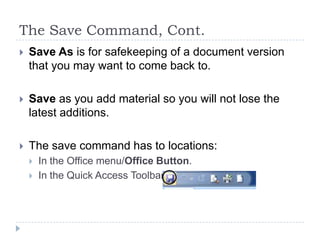
 The save command has to locations:
 In the Office menu/Office Button.
 In the Quick Access Toolbar.
Moving Files
 Moving a file means that it is removed from the source
location and placed into the destination location.
 Exercise:
 Click Start.
 Type “Libraries” in the search bar and click Enter.
 Click Documents.
 Change the view of the contents pane to large icons. Click the
next to , then click Large Icons. (Note: Large Icons
are easier to drag.
 Find the file SampleDocument and drag it to the exercise
documents folder.
 Find the file This is the first… and drag it to the exercise
documents folder.
Organizing Files and Folders
 Exercise:
 Open Word.
 Click the Office Button.
 Click Open.
 In the contents pane, next to Arrange By:, select Date
Modified.
 This will arrange folders and files by the date they were
modified. You can also arrange by title, author, and more.
Deleting a File or Folder
 Exercise:
 Hover the pointer on the WB_PracticeFiles icon with the
zipper. Note: this folder is described as a “Compressed
(zipped) Folder.”
 Right-click on the icon or name.
 In the drop-down menu, click Delete.
 In the Delete Folder dialog, click Yes to move the file to
the Recycle Bin.
End of Lesson 3
 Senior Academy. (2008). Word 2007 Basics: An
Introduction to Microsoft Office Word 2007. Ludwig
Keck.
 Next Class is Tuesday, October 23rd @ 11AM. We
will be learning how to modify text.

Microsoft Office Word 2007 - Lesson 3

  • 1.
    Microsoft Office Word2007 Lesson 3: Creating, Saving, & Managing Files Samantha TerBeest Willmar Public Library
  • 2.
    Overview  Creating aDocument  Finding a Saved Document  Saving as a New Document/Creating a New Folder  The Save Command  Moving Files  Organizing Files & Folders  Deleting a File or Folder
  • 3.
    Creating a Document When you first open or type in a Document, it shows Document1 in the Title Bar.  If you do not save your information, it will become lost.
  • 4.
    Exercise: The “Formal”Save  Open Word  Type: This is the first document that I will be saving.  Click the office button,  Move the pointer down to the Save As command. It will change color & a menu will appear in the right plane.  Click the Word Document in the right plane.  You are now in the “Save As” Dialog Box.
  • 5.
    Creating a Document,Cont.  At the Top of the Save As Dialog Box:  You specify the storage location of the document  By default the storage location will show the “Documents” folder.  At the Bottom Plane:  The File Name box is located here  You specify the name of the box here  By default, the name is usually the first line of the Document.
  • 6.
    Exercise, Cont.  Keepthe Storage Location as the Documents Folder  Keep the File Name as the Default Name  Click the Save command in the Save As dialog window.  Close Word. It will close without asking to confirm saving because you just did.  You have now successfully created a document stored in the Documents folder. Its name is This is the first document that I will be saving.
  • 7.
    Finding a SavedDocument  Exercise:  Click the Start Button at the bottom of the Desktop Screen.  Type “Libraries” in the search bar and click Enter.  Choose Documents from the menu.  You will now see the contents of the Documents folder.  The longer Names of Documents will not always appear. It is recommended to always have short names.
  • 8.
    Finding a SavedDocument, Cont.  Exercise, Cont:  Click on the name of the document you created. (Do Not Double-Click.)  Notice that detailed information is shown in details plane at the bottom.  If there is no plane, click Organize, move the pointer down to Layout, in the menu click Details Plane.  Exercise  Double-click on the document name. Word opens showing the document.
  • 9.
    Saving as aNew Document/New Folder  Exercise:  Stay in the document you just opened  Type: Here is some additional text.  Click the Office button, click Save As.  We want to save this in a New Folder which we will create.
  • 10.
    Saving as aNew Document/New Folder  New Folder Exercise:  Click New Folder on the tool bar in the Save As dialog window.  The new folder is now in the contents pane and is highlight in a textbox if you want to change the name. Enter a new name and call it: exercise documents  Press Enter.  Now double-click into the folder.  Click the File Name: box. The name will be selected so you can just type in the new name. Use: test file 2.  Click Save.  The file is now saved. Notice that the title bar now shows a new name.  Close Word.
  • 11.
    The Save Command There is also the Save Command; we have only used the Save As Command. There are differences between the two.  Save As:  Allows you to store a new file with the modified information in Word on your computer.  Save:  It replaces the stored file with material currently in the Word program – and thus in the working memory. The previous file is overwritten and thus destroyed. Word does not ask for permission to destroy the old file!
  • 12.
    The Save Command,Cont.  Why is Save Good?  It allows you to save the document periodically.  You can save, take a break, and come back.  If the power goes out or your pet unplugs the computer, you will have a recovered copy of the last stored version.  Just remember the previously stored version is replaced.  If you just deleted a section of text, click Save, and then change your mind about the deletion, you may be in trouble.
  • 13.
    The Save Command,Cont.  Save As is for safekeeping of a document version that you may want to come back to.  Save as you add material so you will not lose the latest additions.  The save command has to locations:  In the Office menu/Office Button.  In the Quick Access Toolbar.
  • 14.
    Moving Files  Movinga file means that it is removed from the source location and placed into the destination location.  Exercise:  Click Start.  Type “Libraries” in the search bar and click Enter.  Click Documents.  Change the view of the contents pane to large icons. Click the next to , then click Large Icons. (Note: Large Icons are easier to drag.  Find the file SampleDocument and drag it to the exercise documents folder.  Find the file This is the first… and drag it to the exercise documents folder.
  • 15.
    Organizing Files andFolders  Exercise:  Open Word.  Click the Office Button.  Click Open.  In the contents pane, next to Arrange By:, select Date Modified.  This will arrange folders and files by the date they were modified. You can also arrange by title, author, and more.
  • 16.
    Deleting a Fileor Folder  Exercise:  Hover the pointer on the WB_PracticeFiles icon with the zipper. Note: this folder is described as a “Compressed (zipped) Folder.”  Right-click on the icon or name.  In the drop-down menu, click Delete.  In the Delete Folder dialog, click Yes to move the file to the Recycle Bin.
  • 17.
    End of Lesson3  Senior Academy. (2008). Word 2007 Basics: An Introduction to Microsoft Office Word 2007. Ludwig Keck.  Next Class is Tuesday, October 23rd @ 11AM. We will be learning how to modify text.