Blood typing
Composition
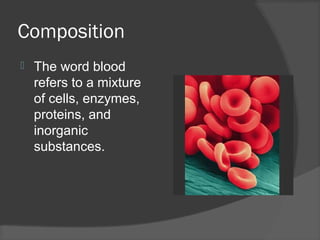
 The word blood
refers to a mixture
of cells, enzymes,
proteins, and
inorganic
substances.
 The fluid portion of the blood is called
the plasma and makes up 55% of
blood’s composition
 Within the plasma are the solid
components such as red blood cells,
white blood cells, and platelets; this
makes up 45% of the composition.
Antigens
 On the surface of each blood cell are
millions of chemical structures called
antigens
 These antigens are responsible for
blood types of the RBC’s
Blood types
 There are more than 15 blood type
systems that have been identified to
date and of those the A-B-O and Rh
systems are the most important.
 Blood types are:
A, B, O, and AB
Those can be Rh+ or Rh- (also known as
antigen D)
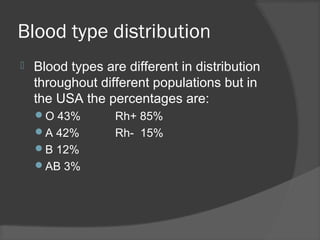
Blood type distribution
 Blood types are different in distribution
throughout different populations but in
the USA the percentages are:
O 43% Rh+ 85%
A 42% Rh- 15%
B 12%
AB 3%
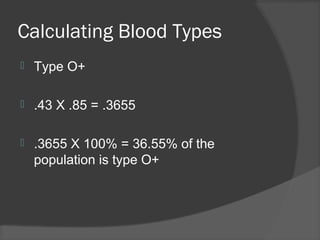
Calculating Blood Types
 Type O+
 .43 X .85 = .3655
 .3655 X 100% = 36.55% of the
population is type O+
Phenotype for blood type
 If an individual is A blood type that
means the individuals red blood cells
have A antigens located on the
surface…same with type B
 Type AB has both antigens
 Type O has neither antigens
 The presence of type D antigen
indicates Rh + and the lack of D
indicates Rh -
Blood typing chart
Antibodies
 For every antigen there is a specific
antibody and an antibody will react only
with a specific antigen
 If a serum containing antibody B, anti-B
for short, is added to blood containing
antigen B then a agglutination or clotting
will occur
Testing for Blood type
 When testing for blood type of an unknown
source, Anti-A and Anti-B sera are used to test
for agglutination as follows
Anti-sera A Anti-sera B Antigen present Blood type
+ - A A
- + B B
+ + A and B AB
- - Neither O

Blood typing

  • 1.
  • 2.
    Composition  The wordblood refers to a mixture of cells, enzymes, proteins, and inorganic substances.
  • 3.
     The fluidportion of the blood is called the plasma and makes up 55% of blood’s composition  Within the plasma are the solid components such as red blood cells, white blood cells, and platelets; this makes up 45% of the composition.
  • 4.
    Antigens  On thesurface of each blood cell are millions of chemical structures called antigens  These antigens are responsible for blood types of the RBC’s
  • 5.
    Blood types  Thereare more than 15 blood type systems that have been identified to date and of those the A-B-O and Rh systems are the most important.  Blood types are: A, B, O, and AB Those can be Rh+ or Rh- (also known as antigen D)
  • 6.
    Blood type distribution Blood types are different in distribution throughout different populations but in the USA the percentages are: O 43% Rh+ 85% A 42% Rh- 15% B 12% AB 3%
  • 7.
    Calculating Blood Types Type O+  .43 X .85 = .3655  .3655 X 100% = 36.55% of the population is type O+
  • 8.
    Phenotype for bloodtype  If an individual is A blood type that means the individuals red blood cells have A antigens located on the surface…same with type B  Type AB has both antigens  Type O has neither antigens  The presence of type D antigen indicates Rh + and the lack of D indicates Rh -
  • 9.
  • 10.
    Antibodies  For everyantigen there is a specific antibody and an antibody will react only with a specific antigen  If a serum containing antibody B, anti-B for short, is added to blood containing antigen B then a agglutination or clotting will occur
  • 11.
    Testing for Bloodtype  When testing for blood type of an unknown source, Anti-A and Anti-B sera are used to test for agglutination as follows Anti-sera A Anti-sera B Antigen present Blood type + - A A - + B B + + A and B AB - - Neither O