Investigating
Homeostasis
Nutrition Standard 1: Plan and
conduct an investigation to provide
evidence that feedback mechanisms
maintain homeostasis.
What is Homeostasis?
 Homeostasis is the maintenance and regulation of

the internal environment within the body.

 The body is not maintaining a constant environment

but rather a narrow range of conditions

 The body is organized so that it has many controls in

place to maintain a healthy environment
Homeostasis Song
From: http://www.youtube.com/watch?v=1iPndNB7mjw
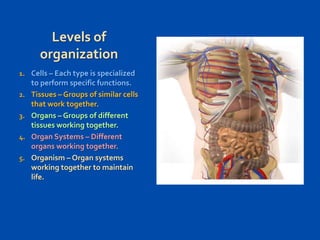
Levels of
organization
1. Cells – Each type is specialized
2.
3.

4.
5.

to perform specific functions.
Tissues – Groups of similar cells
that work together.
Organs – Groups of different
tissues working together.
Organ Systems – Different
organs working together.
Organism – Organ systems
working together to maintain
life.
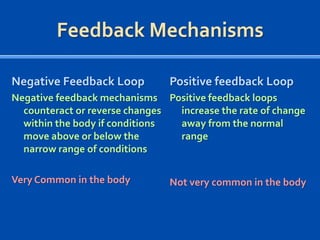
Feedback Mechanisms
Negative Feedback Loop

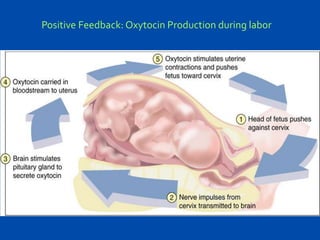
Positive feedback Loop

Negative feedback mechanisms Positive feedback loops
counteract or reverse changes
increase the rate of change
within the body if conditions
away from the normal
move above or below the
range
narrow range of conditions
Very Common in the body

Not very common in the body
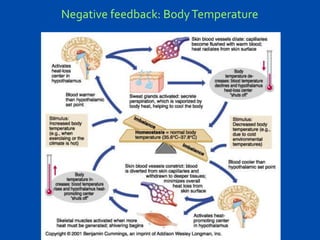
Negative feedback: Body Temperature
Positive Feedback: Oxytocin Production during labor
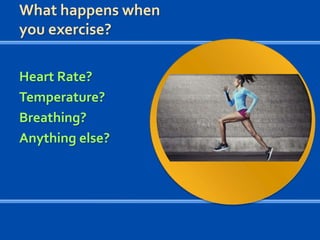
What happens when
you exercise?
Heart Rate?
Temperature?
Breathing?
Anything else?
Disruptions in
Homeostasis
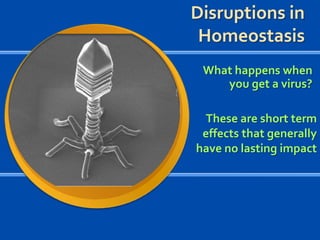
What happens when
you get a virus?
These are short term
effects that generally
have no lasting impact
Long Term Effects
 Long term disruption of homeostasis can cause lasting

damage.
 Example: Diabetes
 If the body fails to regulate blood glucose levels properly it

can affect the entire body
 Kidneys excrete excess glucose and water
 Fat used as energy causes increased blood acidity

 Normal cellular function is compromised throughout the body

Homeostasis

  • 1.
    Investigating Homeostasis Nutrition Standard 1:Plan and conduct an investigation to provide evidence that feedback mechanisms maintain homeostasis.
  • 2.
    What is Homeostasis? Homeostasis is the maintenance and regulation of the internal environment within the body.  The body is not maintaining a constant environment but rather a narrow range of conditions  The body is organized so that it has many controls in place to maintain a healthy environment
  • 3.
  • 4.
    Levels of organization 1. Cells– Each type is specialized 2. 3. 4. 5. to perform specific functions. Tissues – Groups of similar cells that work together. Organs – Groups of different tissues working together. Organ Systems – Different organs working together. Organism – Organ systems working together to maintain life.
  • 6.
    Feedback Mechanisms Negative FeedbackLoop Positive feedback Loop Negative feedback mechanisms Positive feedback loops counteract or reverse changes increase the rate of change within the body if conditions away from the normal move above or below the range narrow range of conditions Very Common in the body Not very common in the body
  • 7.
  • 8.
    Positive Feedback: OxytocinProduction during labor
  • 9.
    What happens when youexercise? Heart Rate? Temperature? Breathing? Anything else?
  • 10.
    Disruptions in Homeostasis What happenswhen you get a virus? These are short term effects that generally have no lasting impact
  • 11.
    Long Term Effects Long term disruption of homeostasis can cause lasting damage.  Example: Diabetes  If the body fails to regulate blood glucose levels properly it can affect the entire body  Kidneys excrete excess glucose and water  Fat used as energy causes increased blood acidity  Normal cellular function is compromised throughout the body