MICROEVOLUTION,MACROEVOLUTION,MEGAEVOLUTION ANDHYPOTHESISOF PUNCTUATED
EQUILIBRIA
Goldschmidt(1940) dividedevolutionintomicroevolution (thatof subspecies) andmacroevolution
(thatof speciesandgeneraandperhapsalsoof highercategories). Simpson(1953) hasproposedthe
additional term“megaevolution”forreallylarge-scale evolution,suchasthat of families,orders,classes
and phyla.Evolutionatthese levelsreceivesmuchattentionfromstudentsof the fossilrecord.B.
Rensch(1959) has modifiedthe termsmicroevolutionintoinfra-specificevolutionandmacroevolution
intotrans-specificevolution.Calow(1983) has regardedmacroevolutionandcladogenesisassynonyms.
For several years(1976 to 1982) StephenJayGouldandNilesEldredge of the AmericanMuseumof
Natural Historyhave questionedthe conventionalview thatevolutionarychangesinthe distantpastare
principallythe outcome of the gradual accumulationof slightinheritedvariations.Theyadvocatedthat
mostevolutionarychangeshave consistedof rapidburstsof speciationalternatingwithlongperiodsin
whichthe individualspeciesremainvirtuallyunmodified.GouldandEldredge maintainthatmost
lineagesdisplaysuchlimitedmorphological changesforlongintervalsof geologictime astoremainin
stasis,or in“equilibria”.Conspicuousorprominentevolutionarychangesare concentratedinthose brief
periods(“punctuations”) whenthe lineagesactuallysplitorbranch.Thisiscalledhypothesisof
punctuatedequilibria.Further,branchingfromasingle lineage(orasingle line of descent)during
macroevolution,will ultimatelyproduce aclusterof lineagesknownasclade.Thus,branching
sometimesiscalledcladogenesis.Whenreferringtoa clade or to a group of relatedclads,itiscommon
to use the adjective
Contents
EVOLUTION (EvolutionaryBiology)104
phylogenetic(nottobe confusedwiththe similarwordphyletic). Phylogeneticpertainstoa portionof
phylogenyconsistingof more thanone lineage,whereasphyleticreferstoasingle lineage.Moreover,a
lineage reconstructedfromfossildatamayexhibitsufficientevolutionarychange thata taxonomist
deemsitappropriate todivide itintotwointergradingspecies.Suchspeciesare knownas
chronospecies,successional species,palaeospeciesorevolutionaryspecies(seeStanley,1979).
1. Microevolution
Evolutionarychangesinpopulationsare ordinarilyvisualizedasgradual,builtuponmanysmall genetic
variationsthatarise andare passedon fromgenerationtogeneration.The shiftinggene frequenciesin
local populationsmaybe thoughtof as microevolution.The progressive replacementof light-coloured
mothsby dark (melanic) mothsinindustrialregionsinEngland(i.e.,industrial melanism) exemplifiesthe
microevolution.Mostpopulationgeneticists endorsethe view thatthe same microevolutionary
processeshave beeninvolvedinthe majortransformationsof organismsoverlongerspanof geologic
time (macroevolution).The traditional outlookisthatsmall variations graduallyaccumulate inevolving
lineagesoverperiodsof millionsof years.
2. Macroevolution
The most significantfeature of macroevolutionisaprogressive,sustainedtendencyforcertain
characters to developalonganevolutionaryline.Trends(ordirectionsof evolution) of thissortare
numerousinthe fossil record.Long-termprogressingtrendsrarelyappearinonlyone structure,but
almostalwaysinvolveacomplex of differentfeatures.Infact,trendsare producedbythe drivingforce
of natural selectionoperatingwithinthe limitsof aparticularadaptive zone orsubzone.Evolutionisnot
random,althoughcertainelementsinthe processare random, andtrendsleadingtogreaterefficiency
are to be expected.Evolutionarytrendsare generallyadaptive movementsalongone pathway,butthey
are neverexclusivelysequential andalwaysinvolvedivergentandrepeatedtakingonof one or the
othercharacters importantinthe trend.The populationsundergoingchange are constantly
experimentingwithinthe adaptivepathway,andparallel probingsof anew subzone byrelatedbut
differentlinesare the rule.The classical example of evolutionarytrendsinmacroevolutionisprovided
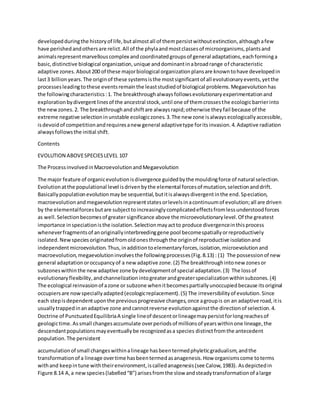
by the horse family,Equidae.Evolutionof horses.Inreconstructingthe phylogenyof ananimal group,it
has beenthe standardpractice to showthe emergence fromacentral,generalizedstockof alarge
numberof divergentbranchesorlineages.Notall branchespersist;indeedthe generalrule isthatall but
a fewperish.The disappearance of manybranchesinthe distantpastmightleadthe observertodayto
the mistakenimpressionthatthe evolutionof aparticulargroupwas notat all elaboratelyforked.Thus,
the evolutionof horsescouldbe erroneouslydepictedasanundeviatingstraight-line progressionfrom
the small,terrier(small dogof variousbreeds)sizedHyracotherium(Eohippus) tothe large modern
horse,Equus.Onthe contrary,a wealthof evidence hasrevealedconvincinglyapatternof many
divergentlineages(Fig. 8.12).Figure 8.12 demonstratesverynicelythe gradual change froma dog-like,
browsingcreature withpaddedfeettoa horse withgrazinghabitsandhoofedspringingfeet.Infact,the
appearance of the onetoedconditionwasalandmark inhorse history. The fleet-footed,one-toed
Pliohippusemergedduringthe Pliocene epochfromthe slow-footed,three-toedMerychippus.This
majoreventisusuallyinterpretedasagradual change withina single lineage.Inotherwords,adirect
ancestral-descendantrelationshipbetweenMerychippusandPleiohippushasbeenwidelyaccepted.
The paleontologistSimpson(1951) departedfromthe view of slow andsteadychange whenhe
suggestedthatsucha major transitionmighthave involvedthe accumulationof small geneticchangesin
relativelyrapidsuccession.Thisacceleratedpace of phyleticgradualismwascalled“quantumevolution”
by Simpson.Proponentsof hypothesisof punctuatedequilibriaexplainedthe suddenappearance of
Pliohippusinaquite contrastbut convincing way.Thus,one mightargue thatMerychippusexistedfora
longperiodwithlittle ornoevolutionarychange (stasis),andeventuallysufferedextinction.Pliohippus
isnot a lineardescendantof Merychippus,butadramaticallynew formthathadearlierarisenasa small
Contents
EVOLUTION ABOVESPECIESLEVEL 105
Fig.8.12. Phylogenetictree of horsesthroughtime,withitsmanydivergentbranches.All branchesdied
out,save one whicheventuallyculminatinginthe moderngroupof horses,Equus.The history of horses
datesback to earlyCenozoictimes,some 60millionyearsago.The Cenozoiceraisdividedintoperiods,
whichinturn are dividedintoepochs(afterSavage,1969).
SouthAmericaNorthAmericaOldWorldRecentPleistocenePiloceneMiocene Oligocene Eocene Equus
Equus toes 1–1 springingStylohippariontoes3– 3 springingNannippusNeohipparionCalippus
PliohippusHippidionGrazersHipparionMegahippusHypohippusAnchitheriumArchaeohippus
MerychippusParahippusMiohippusBrowsersMesohippusEpihippus
Orohippus
toes3 – 3 withpads
To Rhinoceroses
Hyracotherium
toes4 – 3 withpads
peripheral populationof the parentspecies.Itmaybe noticed(Fig.8.12) that not all offshootsof
Merychippusevolvedthe progressivesingle-toedcondition.Severallinesof Pliocene horses,suchas
HipparionandNannippus,retainedthe conservative three-toedpattern.TheseconservativePliocene
horseswere evolutionaryblindalleys,andmaywell have represented“punctuations”thatfailed.
Hipparion
Contents
EVOLUTION (EvolutionaryBiology)106
General principlesof macroevolution.The followingcommonfeatureshave beenderivedfromthe
phylogenyof horsesregardingmacroevolution:1. Macroevolutionfollowsthe acquisitionof new
general adaptationorentrance intoa new adaptive zone.Forexample,Darwin’sfinchesradiatedafter
an apparentlygeneralizedfinchancestorarrivedtooccupythe previouslyunoccupiedGalapagosIslands.
Reptilesradiatedaftercompletelyterrestrial developmentwasestablished asa general adaptation.2.
Macroevolutionalwaysinvolvesevolutionarydivergence.Macroevolutionisnotlinearbutradiating.
Usuallyradiationfollowsgeneral adaptationandthe invasionof anew adaptive zone throughspecial
adaptationindifferent divergentdescendantlines.3.Adaptive radiationormacroevolutiontendsto
produce evolutionarylinesthatconverge inspecial adaptationwithotherdistantlyrelatedgroups
differingintheirmatrix of general adaptation.Forexample,ichthyosaursshow amarkedevolutionary
convergence withanumberof fishgroupsintheirbodyform, mannerof locomotion,foodhabits
(fishes) andfree-swimmingpelagiclife.Theyare convergentinspecialadaptationsbutstill share agroup
of general adaptationswithall otherreptiles.4.Macroevolutionproducesgroupsof parallelspecial
adaptationsamongdivergentbutrelatedstocks.All of themhave acommongeneral adaptation.Among
reptiles,groupaftergrouprepresentativesof everyorderexceptthe cotylosaurshad invadedaquatic
adaptive zonesandbecome completelyaquatic.Amongthese,some groupsflourishandlaterbecome
extinct.These groupswere replacedbyotherparallelgroupswhichinvadedthe same zone and
underwentdifferentiation.The phytosaurs(Triassic) of the orderThecodontiaandthe crocodiles
(Triassictorecent) of the orderCrocodiliainvadedthe aquaticadaptive zone.Butlaterphytosaurs
became extinctandthenthe crocodilesreplacedthem.These provide anexample of parallelismand
ecologicreplacement.Thus,wherethere are repeatedevolutionaryexperimentswiththe same broad
groupof zones,some groupsarise,flourishandbecome extincttobe replacedbyparallel groupsthat
invade the same zone andundergodifferentiationintheirturn.5.Macroevolutionultimatelyleadsto
extinction.Somegroupsacquiredspecial adaptationsforanarrow adaptive subzonesanddue tothese
specializedadaptationstheycouldnotmove intonew majorzones.Because all adaptive zonesfinally
change and disappear,soall groupsrestrictedtoa narrow zone alsodisappeared.Hence,the groups
whichcouldchange the adaptive zonesbyacquiringgeneral adaptationsurvivedandothersbecame
extinct.
3. MegaevolutionMegaevolutionorthe originof new biological organizational plansisrare andshares
featurescommontomicroevolutionandmacroevolution.Onlyafew majorgeneral typeshave
developedduringthe historyof life,butalmostall of thempersistwithoutextinction,althoughafew
have perishedandothersare relict.All of the phylaandmostclassesof microorganisms,plantsand
animalsrepresentmarvellouscomplex andcoordinatedgroupsof general adaptations,eachforminga
basic,distinctive biological organization,unique anddominantinabroadrange of characteristic
adaptive zones.About200 of these majorbiological organizationplansare knowntohave developedin
last3 billionyears.The originof these systemsisthe mostsignificantof all evolutionaryevents,yetthe
processesleadingtothese eventsremainthe leaststudiedof biological problems.Megaevolutionhas
the followingcharacteristics:1. The breakthroughalwaysfollowsevolutionaryexperimentationand
explorationbydivergentlinesof the ancestral stock,until one of themcrossesthe ecologicbarrierinto
the newzones.2. The breakthroughandshiftare alwaysrapid;otherwise theyfail because of the
extreme negative selectioninunstable ecologiczones.3.The new zone isalwaysecologicallyaccessible,
isdevoidof competitionandrequiresanew general adaptivetype foritsinvasion.4.Adaptive radiation
alwaysfollowsthe initial shift.
Contents
EVOLUTION ABOVESPECIESLEVEL 107
The ProcessinvolvedinMacroevolutionandMegaevolution
The major feature of organicevolutionisdivergence guidedbythe mouldingforce of natural selection.
Evolutionatthe populational level isdrivenbythe elemental forcesof mutation,selectionanddrift.
Basicallypopulationevolutionmaybe sequential,butitisalwaysdivergentinthe end.Speciation,
macroevolutionandmegaevolutionrepresentstatesorlevelsinacontinuumof evolution;all are driven
by the elementalforcesbutare subjecttoincreasinglycomplicatedeffectsfromlessunderstoodforces
as well.Selectionbecomesof greater significance above the microevolutionarylevel.Of the greatest
importance inspeciationisthe isolation.Selectionmayactto produce divergenceinthisprocess
wheneverfragmentsof anoriginallyinterbreedinggene pool becomespatiallyorreproductively
isolated.New speciesoriginatedfromoldonesthroughthe originof reproductive isolationand
independentmicroevolution.Thus,inadditiontoelementaryforces,isolation,microevolutionand
macroevolution,megaevolutioninvolvesthe followingprocesses(Fig.8.13) : (1) The possessionof new
general adaptationoroccupancyof a new adaptive zone.(2) The breakthroughintonew zonesor
subzoneswithinthe new adaptive zone bydevelopmentof special adaptation.(3) The lossof
evolutionaryflexibility,andchannelizationintogreaterandgreaterspecializationwithinsubzones.(4)
The ecological reinvasionof azone or subzone whenitbecomespartiallyunoccupiedbecause itsoriginal
occupiersare nowspeciallyadapted(ecologicreplacement).(5) The irreversibilityof evolution.Since
each stepisdependentuponthe previousprogressive changes,once agroupis on an adaptive road,itis
usuallytrappedinanadaptive zone andcannotreverse evolutionagainstthe directionof selection.4.
Doctrine of PunctuatedEquilibriaA single lineof descentorlineagemaypersistforlongreachesof
geologictime.Assmall changesaccumulate overperiodsof millionsof yearswithinone lineage,the
descendantpopulationsmayeventuallybe recognizedasa species distinctfromthe antecedent
population.The persistent
accumulationof small changeswithinalineage hasbeentermedphyleticgradualism,andthe
transformationof a lineage overtime hasbeentermedasanagenesis.How organismscome toterms
withand keepintune withtheirenvironment,iscalledanagenesis(see Calow,1983). Asdepictedin
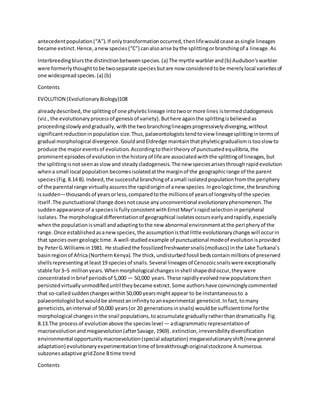
Figure 8.14 A,a newspecies(labelled“B”) arisesfromthe slow andsteadytransformationof alarge
antecedentpopulation(“A”).If onlytransformationoccurred,thenlifewouldcease assingle lineages
became extinct.Hence,anewspecies(“C”) canalsoarise bythe splittingorbranchingof a lineage.As
Interbreedingblursthe distinctionbetweenspecies.(a) The myrtle warblerand(b) Audubon'swarbler
were formerlythoughttobe twoseparate speciesbutare now consideredtobe merelylocal varietiesof
one widespreadspecies.(a) (b)
Contents
EVOLUTION (EvolutionaryBiology)108
alreadydescribed,the splittingof one phyleticlineage intotwoormore lines istermedcladogenesis
(viz.,the evolutionaryprocessof genesisof variety).Buthere againthe splittingisbelievedas
proceedingslowlyandgradually,withthe twobranchinglineagesprogressivelydiverging,without
significantreductioninpopulation size.Thus,palaeontologiststendtoview lineagesplittingintermsof
gradual morphological divergence.GouldandEldredge maintainthatphyleticgradualismistooslowto
produce the majoreventsof evolution.Accordingtotheirtheoryof punctuatedequilibria,the
prominentepisodesof evolutioninthe historyof lifeare associatedwiththe splittingof lineages,but
the splittingisnotseenasslowand steadycladogenesis.The new speciesarisesthroughrapidevolution
whena small local population becomesisolatedatthe marginof the geographicrange of the parent
species(Fig.8.14 B).Indeed,the successful branchingof asmall isolatedpopulationfromthe periphery
of the parental range virtuallyassuresthe rapidoriginof anew species.Ingeologictime,the branching
issudden—thousandsof yearsorless,comparedtothe millionsof yearsof longevityof the species
itself.The punctuational change doesnotcause anyunconventional evolutionaryphenomenon.The
suddenappearance of a speciesis fullyconsistentwithErnstMayr’srapidselectioninperipheral
isolates.The morphological differentiationof geographical isolatesoccursearlyandrapidly,especially
whenthe populationissmall andadaptingtothe new abnormal environmentatthe peripheryof the
range.Once establishedasanewspecies,the assumptionisthatlittle evolutionarychange will occurin
that speciesovergeologictime.A well-studiedexample of punctuational modeof evolutionisprovided
by PeterG.Williamsin1981. He studiedthe fossilizedfreshwatersnails(molluscs) inthe Lake Turkana’s
basinregionof Africa(NorthernKenya).The thick,undisturbedfossil bedscontainmillionsof preserved
shellsrepresentingatleast19 speciesof snails.Several lineagesof Cenozoicsnailswere exceptionally
stable for3–5 millionyears.Whenmorphologicalchangesinshell shapedidoccur,theywere
concentratedinbrief periodsof 5,000 — 50,000 years.These rapidlyevolvednew populationsthen
persistedvirtuallyunmodifieduntiltheybecame extinct.Some authorshave convincinglycommented
that so-calledsuddenchangeswithin50,000 yearsmightappear to be instantaneousto a
palaeontologistbutwouldbe almostaninfinitytoanexperimental geneticist.Infact,tomany
geneticists,aninterval of 50,000 years(or 20 generationsinsnails) wouldbe sufficienttime forthe
morphological changesinthe snail populations,toaccumulate graduallyratherthandramatically.Fig.
8.13.The processof evolutionabove the specieslevel — adiagrammaticrepresentationof
macroevolutionandmegaevolution(afterSavage,1969). extinction,irreversibilitydiversification
environmental opportunitymacroevolution(special adaptation) megaevolutionaryshift(new general
adaptation) evolutionaryexperimentationtime of breakthroughoriginalstockzone A numerous
subzonesadaptive gridZone Btime trend
Contents
EVOLUTION ABOVESPECIESLEVEL 109
WhetherHumanEvolutionisGradual or Punctuated?
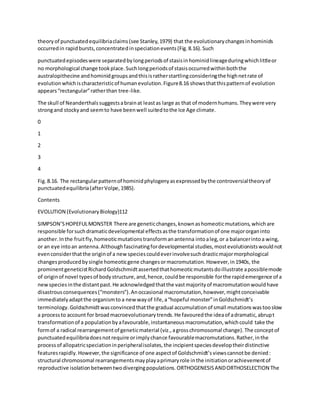
On the basisof phylecticgradualismmode of evolution, ithasbeenstandardpractice toput Homo
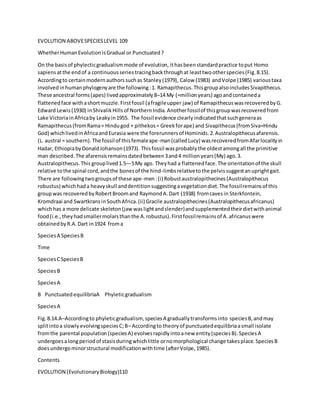
sapiensatthe endof a continuousseriestracingbackthroughat leasttwootherspecies(Fig.8.15).
Accordingto certainmodernauthorssuchas Stanley(1979), Calow (1983) andVolpe (1985) varioustaxa
involved inhumanphylogenyare the following:1. Ramapithecus.ThisgroupalsoincludesSivapithecus.
These ancestral forms(apes) livedapproximately8–14 My (=millionyears) agoandcontaineda
flattenedface withashortmuzzle.Firstfossil (afragileupper jaw) of RamapithecuswasrecoveredbyG.
Edward Lewis(1930) inShivalikHillsof NorthernIndia.Anotherfossilof thisgroupwasrecoveredfrom
Lake VictoriainAfricaby Leakyin1955. The fossil evidence clearlyindicatedthatsuchgeneraas
Ramapithecus(fromRama= Hindugod + pithekos= Greekforape) and Sivapithecus(fromSiva=Hindu
God) whichlivedinAfricaandEurasia were the forerunnersof Hominids.2.Australopithecusafarensis.
(L. austral = southern).The fossil of thisfemaleape-man(calledLucy) wasrecoveredfromAfarlocalityin
Hadar, EthiopiabyDonaldJohanson(1973). Thisfossil wasprobablythe oldestamongall the primitive
man described.The afarensisremainsdatedbetween3and4 millionyears(My) ago.3.
Australopithecus.This grouplived1.5—5My ago. Theyhad a flattenedface.The orientationof the skull
relative tothe spinal cord,andthe bonesof the hind-limbsrelativetothe pelvissuggestanuprightgait.
There are followingtwogroupsof these ape-men:(i) Robustaustralopithecines(Australopithecus
robustus) whichhada heavyskull anddentitionsuggestingavegetationdiet.The fossilremainsof this
groupwas recoveredbyRobertBroomand RaymondA.Dart (1938) fromcavesin Sterkfontein,
Kromdraai and SwartkransinSouthAfrica.(ii) Gracile australopithecines(Australopithecusafricanus)
whichhas a more delicate skeleton(jaw waslightandslender)andsupplementedtheirdietwithanimal
food(i.e.,theyhadsmallermolarsthanthe A.robustus).Firstfossilremainsof A.africanuswere
obtainedbyR.A.Dart in1924 froma
SpeciesA SpeciesB
Time
SpeciesCSpeciesB
SpeciesB
SpeciesA
B PunctuatedequilibriaA Phyleticgradualism
SpeciesA
Fig.8.14.A–Accordingto phyleticgradualism, speciesA graduallytransformsinto speciesB,andmay
splitintoa slowlyevolvingspeciesC;B– Accordingto theoryof punctuatedequilibriaasmall isolate
fromthe parental population(speciesA) evolvesrapidlyintoanew entity(speciesB).SpeciesA
undergoesalongperiodof stasisduringwhichlittle ornomorphological change takesplace.SpeciesB
doesundergominorstructural modificationwithtime (afterVolpe,1985).
Contents
EVOLUTION (EvolutionaryBiology)110
limestonequarrynearTaungvillage inTransvaal regionof SouthAfrica.LouisLeakyandhiswife Mary
Leaky(1959) uncoveredbonyfragmentsof arobustaustralopithecine withenormousteethfrom
Olduvai Gorge inTanzania.It wascalledNutcrackerMan or Zinjanthropusandwasabout1.8 million
yearsold.ZinjanthropusisconsideredaneastAfricanvarietyof A.robustusandhasbeenassigneda
statusof separate species—Australopithecusboisei.4.Homohabilis(“handyman”).The fossil remains
of thishominidwere recoveredbyLeakyin1964 fromrocks of Olduvai Gorge inEast Africa.Thisgroup
livedabout1.5— 2 millionyearsago.Theyhadan erectgait,relativelylarge brainsandwere tool-users.
Theyfabricatedcrude toolsoutof pebblesandusedthemtogathera varietyof plantmaterials(nuts,
seeds,fruits,tubersandroots) andsmall animals(lizardsandrodents).Cooperative behaviourevolved
inthemand promotedthe sharingof the foodfor the firsttime.5. Homo erectus(“uprightwalking
man”).Thisgroup lived1millionyearsago.Theyhada gait evenmore like oursandlargerbrainsthan
the habilines.H.erectususedtoolsof bone andstone andusedfire.Fossil remainsof H.erectuswere
discoveredatTrinil,Java,in1894 by Eugene Dubois.Theyhave beencalledJavamenandhad a cranial
capacityof 775 to 1000 cubiccentimetres(orcc).Anothertype of fossilsof H.erectus,calledpeking
fossils(i.e.,Pekingmen),were discoveredbyDavidsonBlackin1920s. Pekingmenhave the cranial
capacityof 900 to 1200 cc. 6. Homosapiens(“thinkingman”).The grade of sapienscontainsatleasttwo
contrastinglydifferentanatomical types — the bulkilybuiltandheavilymuscledNeanderthal andslim-
bodiedCro-Magnons.The skeletonof Neanderthalman(Homosapiensneanderthalensis) wasfirst
unearthedin1856 in a lime stone cave inthe Neanderravine nearDusseldorf,Germany.The
Neanderthalswere1.5lakhyearsold cave dwellers,short(about5 feet) butpowerfullybuilt,with
prominentfacial browridges.Theyhadlarge brainswithanaver
Fig.8.15.Phylogenyof human.AustralopthecusafarensisfollowedbyHomohabilisandHomoerectus
are believedtohave existedsuccessivelyingeological timeandtoforma lineage leadingtoHomo
sapiens.Inthe distantpast,the Homo assemblage co-existedwiththe Australopithecusgroups.This
phylogenyisbasedonthe viewsbyDonaldJohanson(1979) (afterVolpe,1985).
Homo sapiens
0
1
2
3
H. erectusH. habilisAustralopithecusafarensis
A. africanus
A. robustus
Millionsof yearsago
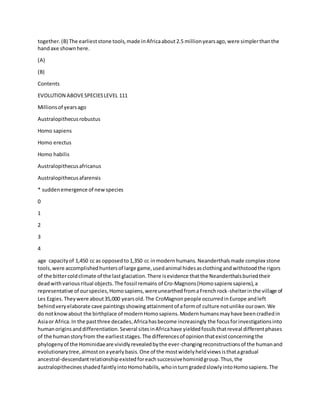
(A) A fossil skullof Homoerectusshowthatthe human braingraduallygrew larger,beginningabout2.5
millionyearsago.Atthe same time the ridgesabove the eyesbecame smaller,andthe face andjaw
beganto jutout less.Increasingintelligenceandthe abilitytomake bettertoolsapparentlywent
together.(B) The earlieststone tools,made inAfricaabout2.5 millionyearsago,were simplerthanthe
handaxe shownhere.
(A)
(B)
Contents
EVOLUTION ABOVESPECIESLEVEL 111
Millionsof yearsago
Australopithecusrobustus
Homo sapiens
Homo erectus
Homo habilis
Australopithecusafricanus
Australopithecusafarensis
* suddenemergence of newspecies
0
1
2
3
4
age capacityof 1,450 cc as opposedto1,350 cc inmodernhumans.Neanderthalsmade complex stone
tools,were accomplishedhuntersof large game,usedanimal hidesasclothingandwithstoodthe rigors
of the bittercoldclimate of the lastglaciation.There isevidence thatthe Neanderthalsburiedtheir
deadwithvariousritual objects.The fossil remains of Cro-Magnons(Homosapienssapiens),a
representative of ourspecies,Homosapiens,wereunearthedfromaFrenchrock-shelterinthe village of
Les Ezgies.Theywere about35,000 yearsold.The CroMagnonpeople occurredinEurope andleft
behindveryelaborate cave paintingsshowingattainmentof aformof culture notunlike ourown.We
do notknowabout the birthplace of modernHomosapiens.Modernhumansmayhave beencradledin
Asiaor Africa.In the pastthree decades,Africahasbecome increasingly the focusforinvestigationsinto
humanoriginsanddifferentiation.Several sitesinAfricahave yieldedfossilsthatreveal differentphases
of the humanstoryfrom the earlieststages.The differencesof opinionthatexistconcerningthe
phylogenyof the Hominidaeare vividlyrevealedbythe ever-changingreconstructionsof the humanand
evolutionarytree,almostonayearlybasis.One of the mostwidelyheldviewsisthatagradual
ancestral-descendantrelationshipexistedforeachsuccessivehominidgroup.Thus,the
australopithecinesshadedfaintlyintoHomohabilis,whointurngradedslowlyintoHomosapiens.The
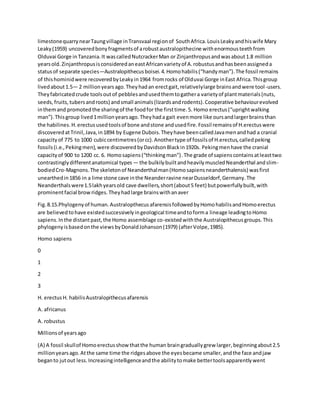
theoryof punctuatedequilibriaclaims(see Stanley,1979) that the evolutionarychangesinhominids
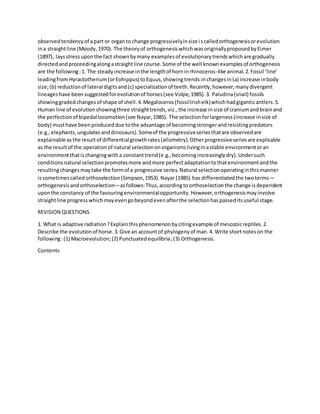
occurredin rapidbursts,concentratedinspeciationevents(Fig.8.16).Such
punctuatedepisodeswere separatedbylongperiodsof stasisinhominidlineageduringwhichlittleor
no morphological change tookplace.Suchlongperiodsof stasisoccurredwithinboththe
australopithecine andhominidgroupsandthisisratherstartlingconsideringthe highnetrate of
evolutionwhichischaracteristicof humanevolution.Figure8.16 showsthatthispatternof evolution
appears“rectangular”ratherthan tree-like.
The skull of Neanderthalssuggestsabrainat leastas large as that of modernhumans.Theywere very
strongand stockyand seemto have beenwell suitedtothe Ice Age climate.
0
1
2
3
4
Fig.8.16. The rectangularpatternof hominidphylogenyasexpressedbythe controversialtheoryof
punctuatedequilibria(afterVolpe,1985).
Contents
EVOLUTION (EvolutionaryBiology)112
SIMPSON’SHOPEFULMONSTER There are geneticchanges,knownashomeoticmutations,whichare
responsible forsuchdramaticdevelopmental effectsasthe transformationof one majororganinto
another.Inthe fruitfly,homeoticmutationstransformanantenna intoaleg,or a balancerintoa wing,
or an eye intoan antenna.Althoughfascinatingfordevelopmental studies,mostevolutionistswouldnot
evenconsiderthatthe originof a newspeciescouldeverinvolvesuchdrasticmajormorphological
changesproducedbysingle homeoticgene changesormacromutation.However,in1940s, the
prominentgeneticistRichardGoldschmidtassertedthathomeoticmutantsdoillustrate apossiblemode
of originof novel typesof bodystructure,and,hence,couldbe responsible forthe rapidemergence of a
newspeciesinthe distantpast.He acknowledgedthatthe vastmajorityof macromutationwouldhave
disastrousconsequences(“monsters”).Anoccasional macromutation,however,mightconceivable
immediatelyadaptthe organismto a new wayof life,a“hopeful monster”inGoldschmidt’s
terminology.Goldschmidtwasconvincedthatthe gradual accumulationof small mutationswastooslow
a processto account for broadmacroevolutionarytrends.He favouredthe ideaof adramatic,abrupt
transformationof a populationbyafavourable,instantaneousmacromutation,whichcould take the
formof a radical rearrangementof geneticmaterial (viz.,agrosschromosomal change).The conceptof
punctuatedequilibriadoesnotrequire orimplychance favourablemacromutations.Rather,inthe
processof allopatricspeciationinperipheralisolates,the incipientspeciesdeveloptheirdistinctive
featuresrapidly.However,the significance of one aspectof Goldschmidt’sviewscannotbe denied:
structural chromosomal rearrangementsmayplayaprimaryrole inthe initiationorachievementof
reproductive isolationbetweentwodivergingpopulations.ORTHOGENESISANDORTHOSELECTION The
observedtendencyof apart or organto change progressivelyinsize iscalledorthogenesisorevolution
ina straightline (Moody,1970). The theoryof orthogenesiswhichwasoriginallyproposedbyEimer
(1897), laysstressuponthe fact shownbymany examplesof evolutionarytrendswhichare gradually
directedandproceedingalongastraightline course.Some of the well knownexamplesof orthogenesis
are the following:1. The steadyincrease inthe lengthof horninrhinoceros-like animal.2.Fossil ‘line’
leadingfromHyractotherium(orEohippus) toEquus,showingtrends inchangesin(a) increase inbody
size;(b) reductionof lateral digitsand(c) specializationof teeth.Recently,however,manydivergent
lineageshave beensuggestedforevolutionof horses(see Volpe,1985).3. Paludina(snail) fossils
showinggraded changesof shape of shell.4.Megaloceros(fossilIrishelk)whichhadgiganticantlers.5.
Human line of evolutionshowingthree straighttrends,viz.,the increase insize of craniumandbrainand
the perfectionof bipedallocomotion(see Nayar,1985). The selectionforlargeness(increase insize of
body) musthave beenproduceddue tothe advantage of becomingstrongerandresistingpredators
(e.g.,elephants,ungulatesanddinosaurs).Someof the progressiveseriesthatare observedare
explainable as the resultof differentialgrowthrates(allometry).Otherprogressiveseriesare explicable
as the resultof the operationof natural selectiononorganismslivinginastable environmentoran
environmentthatischangingwitha constanttrend(e.g.,becomingincreasinglydry).Undersuch
conditionsnatural selectionpromotesmore andmore perfectadaptationtothatenvironmentandthe
resultingchangesmaytake the formof a progressive series.Natural selectionoperatinginthismanner
issometimescalledorthoselection(Simpson,1953).Nayar (1985) has differentiatedthe twoterms—
orthogenesisandorthoselection—asfollows:Thus,accordingtoorthoselectionthe change isdependent
uponthe constancy of the favouringenvironmentalopportunity.However,orthogenesismayinvolve
straightline progresswhichmayevengobeyondevenafterthe selectionhaspasseditsuseful stage.
REVISION QUESTIONS
1. What is adaptive radiation?Explainthisphenomenonbycitingexample of mesozoicreptiles.2.
Describe the evolutionof horse.3.Give an accountof phylogenyof man.4. Write shortnoteson the
following:(1) Macroevolution;(2) Punctuatedequilibria;(3) Orthogenesis.
Contents

Microevolution

  • 1.
    MICROEVOLUTION,MACROEVOLUTION,MEGAEVOLUTION ANDHYPOTHESISOF PUNCTUATED EQUILIBRIA Goldschmidt(1940)dividedevolutionintomicroevolution (thatof subspecies) andmacroevolution (thatof speciesandgeneraandperhapsalsoof highercategories). Simpson(1953) hasproposedthe additional term“megaevolution”forreallylarge-scale evolution,suchasthat of families,orders,classes and phyla.Evolutionatthese levelsreceivesmuchattentionfromstudentsof the fossilrecord.B. Rensch(1959) has modifiedthe termsmicroevolutionintoinfra-specificevolutionandmacroevolution intotrans-specificevolution.Calow(1983) has regardedmacroevolutionandcladogenesisassynonyms. For several years(1976 to 1982) StephenJayGouldandNilesEldredge of the AmericanMuseumof Natural Historyhave questionedthe conventionalview thatevolutionarychangesinthe distantpastare principallythe outcome of the gradual accumulationof slightinheritedvariations.Theyadvocatedthat mostevolutionarychangeshave consistedof rapidburstsof speciationalternatingwithlongperiodsin whichthe individualspeciesremainvirtuallyunmodified.GouldandEldredge maintainthatmost lineagesdisplaysuchlimitedmorphological changesforlongintervalsof geologictime astoremainin stasis,or in“equilibria”.Conspicuousorprominentevolutionarychangesare concentratedinthose brief periods(“punctuations”) whenthe lineagesactuallysplitorbranch.Thisiscalledhypothesisof punctuatedequilibria.Further,branchingfromasingle lineage(orasingle line of descent)during macroevolution,will ultimatelyproduce aclusterof lineagesknownasclade.Thus,branching sometimesiscalledcladogenesis.Whenreferringtoa clade or to a group of relatedclads,itiscommon to use the adjective Contents EVOLUTION (EvolutionaryBiology)104 phylogenetic(nottobe confusedwiththe similarwordphyletic). Phylogeneticpertainstoa portionof phylogenyconsistingof more thanone lineage,whereasphyleticreferstoasingle lineage.Moreover,a lineage reconstructedfromfossildatamayexhibitsufficientevolutionarychange thata taxonomist deemsitappropriate todivide itintotwointergradingspecies.Suchspeciesare knownas chronospecies,successional species,palaeospeciesorevolutionaryspecies(seeStanley,1979). 1. Microevolution Evolutionarychangesinpopulationsare ordinarilyvisualizedasgradual,builtuponmanysmall genetic variationsthatarise andare passedon fromgenerationtogeneration.The shiftinggene frequenciesin local populationsmaybe thoughtof as microevolution.The progressive replacementof light-coloured mothsby dark (melanic) mothsinindustrialregionsinEngland(i.e.,industrial melanism) exemplifiesthe microevolution.Mostpopulationgeneticists endorsethe view thatthe same microevolutionary processeshave beeninvolvedinthe majortransformationsof organismsoverlongerspanof geologic time (macroevolution).The traditional outlookisthatsmall variations graduallyaccumulate inevolving lineagesoverperiodsof millionsof years. 2. Macroevolution The most significantfeature of macroevolutionisaprogressive,sustainedtendencyforcertain characters to developalonganevolutionaryline.Trends(ordirectionsof evolution) of thissortare numerousinthe fossil record.Long-termprogressingtrendsrarelyappearinonlyone structure,but
  • 2.
    almostalwaysinvolveacomplex of differentfeatures.Infact,trendsareproducedbythe drivingforce of natural selectionoperatingwithinthe limitsof aparticularadaptive zone orsubzone.Evolutionisnot random,althoughcertainelementsinthe processare random, andtrendsleadingtogreaterefficiency are to be expected.Evolutionarytrendsare generallyadaptive movementsalongone pathway,butthey are neverexclusivelysequential andalwaysinvolvedivergentandrepeatedtakingonof one or the othercharacters importantinthe trend.The populationsundergoingchange are constantly experimentingwithinthe adaptivepathway,andparallel probingsof anew subzone byrelatedbut differentlinesare the rule.The classical example of evolutionarytrendsinmacroevolutionisprovided by the horse family,Equidae.Evolutionof horses.Inreconstructingthe phylogenyof ananimal group,it has beenthe standardpractice to showthe emergence fromacentral,generalizedstockof alarge numberof divergentbranchesorlineages.Notall branchespersist;indeedthe generalrule isthatall but a fewperish.The disappearance of manybranchesinthe distantpastmightleadthe observertodayto the mistakenimpressionthatthe evolutionof aparticulargroupwas notat all elaboratelyforked.Thus, the evolutionof horsescouldbe erroneouslydepictedasanundeviatingstraight-line progressionfrom the small,terrier(small dogof variousbreeds)sizedHyracotherium(Eohippus) tothe large modern horse,Equus.Onthe contrary,a wealthof evidence hasrevealedconvincinglyapatternof many divergentlineages(Fig. 8.12).Figure 8.12 demonstratesverynicelythe gradual change froma dog-like, browsingcreature withpaddedfeettoa horse withgrazinghabitsandhoofedspringingfeet.Infact,the appearance of the onetoedconditionwasalandmark inhorse history. The fleet-footed,one-toed Pliohippusemergedduringthe Pliocene epochfromthe slow-footed,three-toedMerychippus.This majoreventisusuallyinterpretedasagradual change withina single lineage.Inotherwords,adirect ancestral-descendantrelationshipbetweenMerychippusandPleiohippushasbeenwidelyaccepted. The paleontologistSimpson(1951) departedfromthe view of slow andsteadychange whenhe suggestedthatsucha major transitionmighthave involvedthe accumulationof small geneticchangesin relativelyrapidsuccession.Thisacceleratedpace of phyleticgradualismwascalled“quantumevolution” by Simpson.Proponentsof hypothesisof punctuatedequilibriaexplainedthe suddenappearance of Pliohippusinaquite contrastbut convincing way.Thus,one mightargue thatMerychippusexistedfora longperiodwithlittle ornoevolutionarychange (stasis),andeventuallysufferedextinction.Pliohippus isnot a lineardescendantof Merychippus,butadramaticallynew formthathadearlierarisenasa small Contents EVOLUTION ABOVESPECIESLEVEL 105 Fig.8.12. Phylogenetictree of horsesthroughtime,withitsmanydivergentbranches.All branchesdied out,save one whicheventuallyculminatinginthe moderngroupof horses,Equus.The history of horses datesback to earlyCenozoictimes,some 60millionyearsago.The Cenozoiceraisdividedintoperiods, whichinturn are dividedintoepochs(afterSavage,1969). SouthAmericaNorthAmericaOldWorldRecentPleistocenePiloceneMiocene Oligocene Eocene Equus Equus toes 1–1 springingStylohippariontoes3– 3 springingNannippusNeohipparionCalippus PliohippusHippidionGrazersHipparionMegahippusHypohippusAnchitheriumArchaeohippus MerychippusParahippusMiohippusBrowsersMesohippusEpihippus Orohippus toes3 – 3 withpads
  • 3.
    To Rhinoceroses Hyracotherium toes4 –3 withpads peripheral populationof the parentspecies.Itmaybe noticed(Fig.8.12) that not all offshootsof Merychippusevolvedthe progressivesingle-toedcondition.Severallinesof Pliocene horses,suchas HipparionandNannippus,retainedthe conservative three-toedpattern.TheseconservativePliocene horseswere evolutionaryblindalleys,andmaywell have represented“punctuations”thatfailed. Hipparion Contents EVOLUTION (EvolutionaryBiology)106 General principlesof macroevolution.The followingcommonfeatureshave beenderivedfromthe phylogenyof horsesregardingmacroevolution:1. Macroevolutionfollowsthe acquisitionof new general adaptationorentrance intoa new adaptive zone.Forexample,Darwin’sfinchesradiatedafter an apparentlygeneralizedfinchancestorarrivedtooccupythe previouslyunoccupiedGalapagosIslands. Reptilesradiatedaftercompletelyterrestrial developmentwasestablished asa general adaptation.2. Macroevolutionalwaysinvolvesevolutionarydivergence.Macroevolutionisnotlinearbutradiating. Usuallyradiationfollowsgeneral adaptationandthe invasionof anew adaptive zone throughspecial adaptationindifferent divergentdescendantlines.3.Adaptive radiationormacroevolutiontendsto produce evolutionarylinesthatconverge inspecial adaptationwithotherdistantlyrelatedgroups differingintheirmatrix of general adaptation.Forexample,ichthyosaursshow amarkedevolutionary convergence withanumberof fishgroupsintheirbodyform, mannerof locomotion,foodhabits (fishes) andfree-swimmingpelagiclife.Theyare convergentinspecialadaptationsbutstill share agroup of general adaptationswithall otherreptiles.4.Macroevolutionproducesgroupsof parallelspecial adaptationsamongdivergentbutrelatedstocks.All of themhave acommongeneral adaptation.Among reptiles,groupaftergrouprepresentativesof everyorderexceptthe cotylosaurshad invadedaquatic adaptive zonesandbecome completelyaquatic.Amongthese,some groupsflourishandlaterbecome extinct.These groupswere replacedbyotherparallelgroupswhichinvadedthe same zone and underwentdifferentiation.The phytosaurs(Triassic) of the orderThecodontiaandthe crocodiles (Triassictorecent) of the orderCrocodiliainvadedthe aquaticadaptive zone.Butlaterphytosaurs became extinctandthenthe crocodilesreplacedthem.These provide anexample of parallelismand ecologicreplacement.Thus,wherethere are repeatedevolutionaryexperimentswiththe same broad groupof zones,some groupsarise,flourishandbecome extincttobe replacedbyparallel groupsthat invade the same zone andundergodifferentiationintheirturn.5.Macroevolutionultimatelyleadsto extinction.Somegroupsacquiredspecial adaptationsforanarrow adaptive subzonesanddue tothese specializedadaptationstheycouldnotmove intonew majorzones.Because all adaptive zonesfinally change and disappear,soall groupsrestrictedtoa narrow zone alsodisappeared.Hence,the groups whichcouldchange the adaptive zonesbyacquiringgeneral adaptationsurvivedandothersbecame extinct. 3. MegaevolutionMegaevolutionorthe originof new biological organizational plansisrare andshares featurescommontomicroevolutionandmacroevolution.Onlyafew majorgeneral typeshave
  • 4.
    developedduringthe historyof life,butalmostallof thempersistwithoutextinction,althoughafew have perishedandothersare relict.All of the phylaandmostclassesof microorganisms,plantsand animalsrepresentmarvellouscomplex andcoordinatedgroupsof general adaptations,eachforminga basic,distinctive biological organization,unique anddominantinabroadrange of characteristic adaptive zones.About200 of these majorbiological organizationplansare knowntohave developedin last3 billionyears.The originof these systemsisthe mostsignificantof all evolutionaryevents,yetthe processesleadingtothese eventsremainthe leaststudiedof biological problems.Megaevolutionhas the followingcharacteristics:1. The breakthroughalwaysfollowsevolutionaryexperimentationand explorationbydivergentlinesof the ancestral stock,until one of themcrossesthe ecologicbarrierinto the newzones.2. The breakthroughandshiftare alwaysrapid;otherwise theyfail because of the extreme negative selectioninunstable ecologiczones.3.The new zone isalwaysecologicallyaccessible, isdevoidof competitionandrequiresanew general adaptivetype foritsinvasion.4.Adaptive radiation alwaysfollowsthe initial shift. Contents EVOLUTION ABOVESPECIESLEVEL 107 The ProcessinvolvedinMacroevolutionandMegaevolution The major feature of organicevolutionisdivergence guidedbythe mouldingforce of natural selection. Evolutionatthe populational level isdrivenbythe elemental forcesof mutation,selectionanddrift. Basicallypopulationevolutionmaybe sequential,butitisalwaysdivergentinthe end.Speciation, macroevolutionandmegaevolutionrepresentstatesorlevelsinacontinuumof evolution;all are driven by the elementalforcesbutare subjecttoincreasinglycomplicatedeffectsfromlessunderstoodforces as well.Selectionbecomesof greater significance above the microevolutionarylevel.Of the greatest importance inspeciationisthe isolation.Selectionmayactto produce divergenceinthisprocess wheneverfragmentsof anoriginallyinterbreedinggene pool becomespatiallyorreproductively isolated.New speciesoriginatedfromoldonesthroughthe originof reproductive isolationand independentmicroevolution.Thus,inadditiontoelementaryforces,isolation,microevolutionand macroevolution,megaevolutioninvolvesthe followingprocesses(Fig.8.13) : (1) The possessionof new general adaptationoroccupancyof a new adaptive zone.(2) The breakthroughintonew zonesor subzoneswithinthe new adaptive zone bydevelopmentof special adaptation.(3) The lossof evolutionaryflexibility,andchannelizationintogreaterandgreaterspecializationwithinsubzones.(4) The ecological reinvasionof azone or subzone whenitbecomespartiallyunoccupiedbecause itsoriginal occupiersare nowspeciallyadapted(ecologicreplacement).(5) The irreversibilityof evolution.Since each stepisdependentuponthe previousprogressive changes,once agroupis on an adaptive road,itis usuallytrappedinanadaptive zone andcannotreverse evolutionagainstthe directionof selection.4. Doctrine of PunctuatedEquilibriaA single lineof descentorlineagemaypersistforlongreachesof geologictime.Assmall changesaccumulate overperiodsof millionsof yearswithinone lineage,the descendantpopulationsmayeventuallybe recognizedasa species distinctfromthe antecedent population.The persistent accumulationof small changeswithinalineage hasbeentermedphyleticgradualism,andthe transformationof a lineage overtime hasbeentermedasanagenesis.How organismscome toterms withand keepintune withtheirenvironment,iscalledanagenesis(see Calow,1983). Asdepictedin Figure 8.14 A,a newspecies(labelled“B”) arisesfromthe slow andsteadytransformationof alarge
  • 5.
    antecedentpopulation(“A”).If onlytransformationoccurred,thenlifewouldcease assinglelineages became extinct.Hence,anewspecies(“C”) canalsoarise bythe splittingorbranchingof a lineage.As Interbreedingblursthe distinctionbetweenspecies.(a) The myrtle warblerand(b) Audubon'swarbler were formerlythoughttobe twoseparate speciesbutare now consideredtobe merelylocal varietiesof one widespreadspecies.(a) (b) Contents EVOLUTION (EvolutionaryBiology)108 alreadydescribed,the splittingof one phyleticlineage intotwoormore lines istermedcladogenesis (viz.,the evolutionaryprocessof genesisof variety).Buthere againthe splittingisbelievedas proceedingslowlyandgradually,withthe twobranchinglineagesprogressivelydiverging,without significantreductioninpopulation size.Thus,palaeontologiststendtoview lineagesplittingintermsof gradual morphological divergence.GouldandEldredge maintainthatphyleticgradualismistooslowto produce the majoreventsof evolution.Accordingtotheirtheoryof punctuatedequilibria,the prominentepisodesof evolutioninthe historyof lifeare associatedwiththe splittingof lineages,but the splittingisnotseenasslowand steadycladogenesis.The new speciesarisesthroughrapidevolution whena small local population becomesisolatedatthe marginof the geographicrange of the parent species(Fig.8.14 B).Indeed,the successful branchingof asmall isolatedpopulationfromthe periphery of the parental range virtuallyassuresthe rapidoriginof anew species.Ingeologictime,the branching issudden—thousandsof yearsorless,comparedtothe millionsof yearsof longevityof the species itself.The punctuational change doesnotcause anyunconventional evolutionaryphenomenon.The suddenappearance of a speciesis fullyconsistentwithErnstMayr’srapidselectioninperipheral isolates.The morphological differentiationof geographical isolatesoccursearlyandrapidly,especially whenthe populationissmall andadaptingtothe new abnormal environmentatthe peripheryof the range.Once establishedasanewspecies,the assumptionisthatlittle evolutionarychange will occurin that speciesovergeologictime.A well-studiedexample of punctuational modeof evolutionisprovided by PeterG.Williamsin1981. He studiedthe fossilizedfreshwatersnails(molluscs) inthe Lake Turkana’s basinregionof Africa(NorthernKenya).The thick,undisturbedfossil bedscontainmillionsof preserved shellsrepresentingatleast19 speciesof snails.Several lineagesof Cenozoicsnailswere exceptionally stable for3–5 millionyears.Whenmorphologicalchangesinshell shapedidoccur,theywere concentratedinbrief periodsof 5,000 — 50,000 years.These rapidlyevolvednew populationsthen persistedvirtuallyunmodifieduntiltheybecame extinct.Some authorshave convincinglycommented that so-calledsuddenchangeswithin50,000 yearsmightappear to be instantaneousto a palaeontologistbutwouldbe almostaninfinitytoanexperimental geneticist.Infact,tomany geneticists,aninterval of 50,000 years(or 20 generationsinsnails) wouldbe sufficienttime forthe morphological changesinthe snail populations,toaccumulate graduallyratherthandramatically.Fig. 8.13.The processof evolutionabove the specieslevel — adiagrammaticrepresentationof macroevolutionandmegaevolution(afterSavage,1969). extinction,irreversibilitydiversification environmental opportunitymacroevolution(special adaptation) megaevolutionaryshift(new general adaptation) evolutionaryexperimentationtime of breakthroughoriginalstockzone A numerous subzonesadaptive gridZone Btime trend Contents
  • 6.
    EVOLUTION ABOVESPECIESLEVEL 109 WhetherHumanEvolutionisGradualor Punctuated? On the basisof phylecticgradualismmode of evolution, ithasbeenstandardpractice toput Homo sapiensatthe endof a continuousseriestracingbackthroughat leasttwootherspecies(Fig.8.15). Accordingto certainmodernauthorssuchas Stanley(1979), Calow (1983) andVolpe (1985) varioustaxa involved inhumanphylogenyare the following:1. Ramapithecus.ThisgroupalsoincludesSivapithecus. These ancestral forms(apes) livedapproximately8–14 My (=millionyears) agoandcontaineda flattenedface withashortmuzzle.Firstfossil (afragileupper jaw) of RamapithecuswasrecoveredbyG. Edward Lewis(1930) inShivalikHillsof NorthernIndia.Anotherfossilof thisgroupwasrecoveredfrom Lake VictoriainAfricaby Leakyin1955. The fossil evidence clearlyindicatedthatsuchgeneraas Ramapithecus(fromRama= Hindugod + pithekos= Greekforape) and Sivapithecus(fromSiva=Hindu God) whichlivedinAfricaandEurasia were the forerunnersof Hominids.2.Australopithecusafarensis. (L. austral = southern).The fossil of thisfemaleape-man(calledLucy) wasrecoveredfromAfarlocalityin Hadar, EthiopiabyDonaldJohanson(1973). Thisfossil wasprobablythe oldestamongall the primitive man described.The afarensisremainsdatedbetween3and4 millionyears(My) ago.3. Australopithecus.This grouplived1.5—5My ago. Theyhad a flattenedface.The orientationof the skull relative tothe spinal cord,andthe bonesof the hind-limbsrelativetothe pelvissuggestanuprightgait. There are followingtwogroupsof these ape-men:(i) Robustaustralopithecines(Australopithecus robustus) whichhada heavyskull anddentitionsuggestingavegetationdiet.The fossilremainsof this groupwas recoveredbyRobertBroomand RaymondA.Dart (1938) fromcavesin Sterkfontein, Kromdraai and SwartkransinSouthAfrica.(ii) Gracile australopithecines(Australopithecusafricanus) whichhas a more delicate skeleton(jaw waslightandslender)andsupplementedtheirdietwithanimal food(i.e.,theyhadsmallermolarsthanthe A.robustus).Firstfossilremainsof A.africanuswere obtainedbyR.A.Dart in1924 froma SpeciesA SpeciesB Time SpeciesCSpeciesB SpeciesB SpeciesA B PunctuatedequilibriaA Phyleticgradualism SpeciesA Fig.8.14.A–Accordingto phyleticgradualism, speciesA graduallytransformsinto speciesB,andmay splitintoa slowlyevolvingspeciesC;B– Accordingto theoryof punctuatedequilibriaasmall isolate fromthe parental population(speciesA) evolvesrapidlyintoanew entity(speciesB).SpeciesA undergoesalongperiodof stasisduringwhichlittle ornomorphological change takesplace.SpeciesB doesundergominorstructural modificationwithtime (afterVolpe,1985). Contents EVOLUTION (EvolutionaryBiology)110
  • 7.
    limestonequarrynearTaungvillage inTransvaal regionofSouthAfrica.LouisLeakyandhiswife Mary Leaky(1959) uncoveredbonyfragmentsof arobustaustralopithecine withenormousteethfrom Olduvai Gorge inTanzania.It wascalledNutcrackerMan or Zinjanthropusandwasabout1.8 million yearsold.ZinjanthropusisconsideredaneastAfricanvarietyof A.robustusandhasbeenassigneda statusof separate species—Australopithecusboisei.4.Homohabilis(“handyman”).The fossil remains of thishominidwere recoveredbyLeakyin1964 fromrocks of Olduvai Gorge inEast Africa.Thisgroup livedabout1.5— 2 millionyearsago.Theyhadan erectgait,relativelylarge brainsandwere tool-users. Theyfabricatedcrude toolsoutof pebblesandusedthemtogathera varietyof plantmaterials(nuts, seeds,fruits,tubersandroots) andsmall animals(lizardsandrodents).Cooperative behaviourevolved inthemand promotedthe sharingof the foodfor the firsttime.5. Homo erectus(“uprightwalking man”).Thisgroup lived1millionyearsago.Theyhada gait evenmore like oursandlargerbrainsthan the habilines.H.erectususedtoolsof bone andstone andusedfire.Fossil remainsof H.erectuswere discoveredatTrinil,Java,in1894 by Eugene Dubois.Theyhave beencalledJavamenandhad a cranial capacityof 775 to 1000 cubiccentimetres(orcc).Anothertype of fossilsof H.erectus,calledpeking fossils(i.e.,Pekingmen),were discoveredbyDavidsonBlackin1920s. Pekingmenhave the cranial capacityof 900 to 1200 cc. 6. Homosapiens(“thinkingman”).The grade of sapienscontainsatleasttwo contrastinglydifferentanatomical types — the bulkilybuiltandheavilymuscledNeanderthal andslim- bodiedCro-Magnons.The skeletonof Neanderthalman(Homosapiensneanderthalensis) wasfirst unearthedin1856 in a lime stone cave inthe Neanderravine nearDusseldorf,Germany.The Neanderthalswere1.5lakhyearsold cave dwellers,short(about5 feet) butpowerfullybuilt,with prominentfacial browridges.Theyhadlarge brainswithanaver Fig.8.15.Phylogenyof human.AustralopthecusafarensisfollowedbyHomohabilisandHomoerectus are believedtohave existedsuccessivelyingeological timeandtoforma lineage leadingtoHomo sapiens.Inthe distantpast,the Homo assemblage co-existedwiththe Australopithecusgroups.This phylogenyisbasedonthe viewsbyDonaldJohanson(1979) (afterVolpe,1985). Homo sapiens 0 1 2 3 H. erectusH. habilisAustralopithecusafarensis A. africanus A. robustus Millionsof yearsago (A) A fossil skullof Homoerectusshowthatthe human braingraduallygrew larger,beginningabout2.5 millionyearsago.Atthe same time the ridgesabove the eyesbecame smaller,andthe face andjaw beganto jutout less.Increasingintelligenceandthe abilitytomake bettertoolsapparentlywent
  • 8.
    together.(B) The earlieststonetools,made inAfricaabout2.5 millionyearsago,were simplerthanthe handaxe shownhere. (A) (B) Contents EVOLUTION ABOVESPECIESLEVEL 111 Millionsof yearsago Australopithecusrobustus Homo sapiens Homo erectus Homo habilis Australopithecusafricanus Australopithecusafarensis * suddenemergence of newspecies 0 1 2 3 4 age capacityof 1,450 cc as opposedto1,350 cc inmodernhumans.Neanderthalsmade complex stone tools,were accomplishedhuntersof large game,usedanimal hidesasclothingandwithstoodthe rigors of the bittercoldclimate of the lastglaciation.There isevidence thatthe Neanderthalsburiedtheir deadwithvariousritual objects.The fossil remains of Cro-Magnons(Homosapienssapiens),a representative of ourspecies,Homosapiens,wereunearthedfromaFrenchrock-shelterinthe village of Les Ezgies.Theywere about35,000 yearsold.The CroMagnonpeople occurredinEurope andleft behindveryelaborate cave paintingsshowingattainmentof aformof culture notunlike ourown.We do notknowabout the birthplace of modernHomosapiens.Modernhumansmayhave beencradledin Asiaor Africa.In the pastthree decades,Africahasbecome increasingly the focusforinvestigationsinto humanoriginsanddifferentiation.Several sitesinAfricahave yieldedfossilsthatreveal differentphases of the humanstoryfrom the earlieststages.The differencesof opinionthatexistconcerningthe phylogenyof the Hominidaeare vividlyrevealedbythe ever-changingreconstructionsof the humanand evolutionarytree,almostonayearlybasis.One of the mostwidelyheldviewsisthatagradual ancestral-descendantrelationshipexistedforeachsuccessivehominidgroup.Thus,the australopithecinesshadedfaintlyintoHomohabilis,whointurngradedslowlyintoHomosapiens.The
  • 9.
    theoryof punctuatedequilibriaclaims(see Stanley,1979)that the evolutionarychangesinhominids occurredin rapidbursts,concentratedinspeciationevents(Fig.8.16).Such punctuatedepisodeswere separatedbylongperiodsof stasisinhominidlineageduringwhichlittleor no morphological change tookplace.Suchlongperiodsof stasisoccurredwithinboththe australopithecine andhominidgroupsandthisisratherstartlingconsideringthe highnetrate of evolutionwhichischaracteristicof humanevolution.Figure8.16 showsthatthispatternof evolution appears“rectangular”ratherthan tree-like. The skull of Neanderthalssuggestsabrainat leastas large as that of modernhumans.Theywere very strongand stockyand seemto have beenwell suitedtothe Ice Age climate. 0 1 2 3 4 Fig.8.16. The rectangularpatternof hominidphylogenyasexpressedbythe controversialtheoryof punctuatedequilibria(afterVolpe,1985). Contents EVOLUTION (EvolutionaryBiology)112 SIMPSON’SHOPEFULMONSTER There are geneticchanges,knownashomeoticmutations,whichare responsible forsuchdramaticdevelopmental effectsasthe transformationof one majororganinto another.Inthe fruitfly,homeoticmutationstransformanantenna intoaleg,or a balancerintoa wing, or an eye intoan antenna.Althoughfascinatingfordevelopmental studies,mostevolutionistswouldnot evenconsiderthatthe originof a newspeciescouldeverinvolvesuchdrasticmajormorphological changesproducedbysingle homeoticgene changesormacromutation.However,in1940s, the prominentgeneticistRichardGoldschmidtassertedthathomeoticmutantsdoillustrate apossiblemode of originof novel typesof bodystructure,and,hence,couldbe responsible forthe rapidemergence of a newspeciesinthe distantpast.He acknowledgedthatthe vastmajorityof macromutationwouldhave disastrousconsequences(“monsters”).Anoccasional macromutation,however,mightconceivable immediatelyadaptthe organismto a new wayof life,a“hopeful monster”inGoldschmidt’s terminology.Goldschmidtwasconvincedthatthe gradual accumulationof small mutationswastooslow a processto account for broadmacroevolutionarytrends.He favouredthe ideaof adramatic,abrupt transformationof a populationbyafavourable,instantaneousmacromutation,whichcould take the formof a radical rearrangementof geneticmaterial (viz.,agrosschromosomal change).The conceptof punctuatedequilibriadoesnotrequire orimplychance favourablemacromutations.Rather,inthe processof allopatricspeciationinperipheralisolates,the incipientspeciesdeveloptheirdistinctive featuresrapidly.However,the significance of one aspectof Goldschmidt’sviewscannotbe denied: structural chromosomal rearrangementsmayplayaprimaryrole inthe initiationorachievementof reproductive isolationbetweentwodivergingpopulations.ORTHOGENESISANDORTHOSELECTION The
  • 10.
    observedtendencyof apart ororganto change progressivelyinsize iscalledorthogenesisorevolution ina straightline (Moody,1970). The theoryof orthogenesiswhichwasoriginallyproposedbyEimer (1897), laysstressuponthe fact shownbymany examplesof evolutionarytrendswhichare gradually directedandproceedingalongastraightline course.Some of the well knownexamplesof orthogenesis are the following:1. The steadyincrease inthe lengthof horninrhinoceros-like animal.2.Fossil ‘line’ leadingfromHyractotherium(orEohippus) toEquus,showingtrends inchangesin(a) increase inbody size;(b) reductionof lateral digitsand(c) specializationof teeth.Recently,however,manydivergent lineageshave beensuggestedforevolutionof horses(see Volpe,1985).3. Paludina(snail) fossils showinggraded changesof shape of shell.4.Megaloceros(fossilIrishelk)whichhadgiganticantlers.5. Human line of evolutionshowingthree straighttrends,viz.,the increase insize of craniumandbrainand the perfectionof bipedallocomotion(see Nayar,1985). The selectionforlargeness(increase insize of body) musthave beenproduceddue tothe advantage of becomingstrongerandresistingpredators (e.g.,elephants,ungulatesanddinosaurs).Someof the progressiveseriesthatare observedare explainable as the resultof differentialgrowthrates(allometry).Otherprogressiveseriesare explicable as the resultof the operationof natural selectiononorganismslivinginastable environmentoran environmentthatischangingwitha constanttrend(e.g.,becomingincreasinglydry).Undersuch conditionsnatural selectionpromotesmore andmore perfectadaptationtothatenvironmentandthe resultingchangesmaytake the formof a progressive series.Natural selectionoperatinginthismanner issometimescalledorthoselection(Simpson,1953).Nayar (1985) has differentiatedthe twoterms— orthogenesisandorthoselection—asfollows:Thus,accordingtoorthoselectionthe change isdependent uponthe constancy of the favouringenvironmentalopportunity.However,orthogenesismayinvolve straightline progresswhichmayevengobeyondevenafterthe selectionhaspasseditsuseful stage. REVISION QUESTIONS 1. What is adaptive radiation?Explainthisphenomenonbycitingexample of mesozoicreptiles.2. Describe the evolutionof horse.3.Give an accountof phylogenyof man.4. Write shortnoteson the following:(1) Macroevolution;(2) Punctuatedequilibria;(3) Orthogenesis. Contents