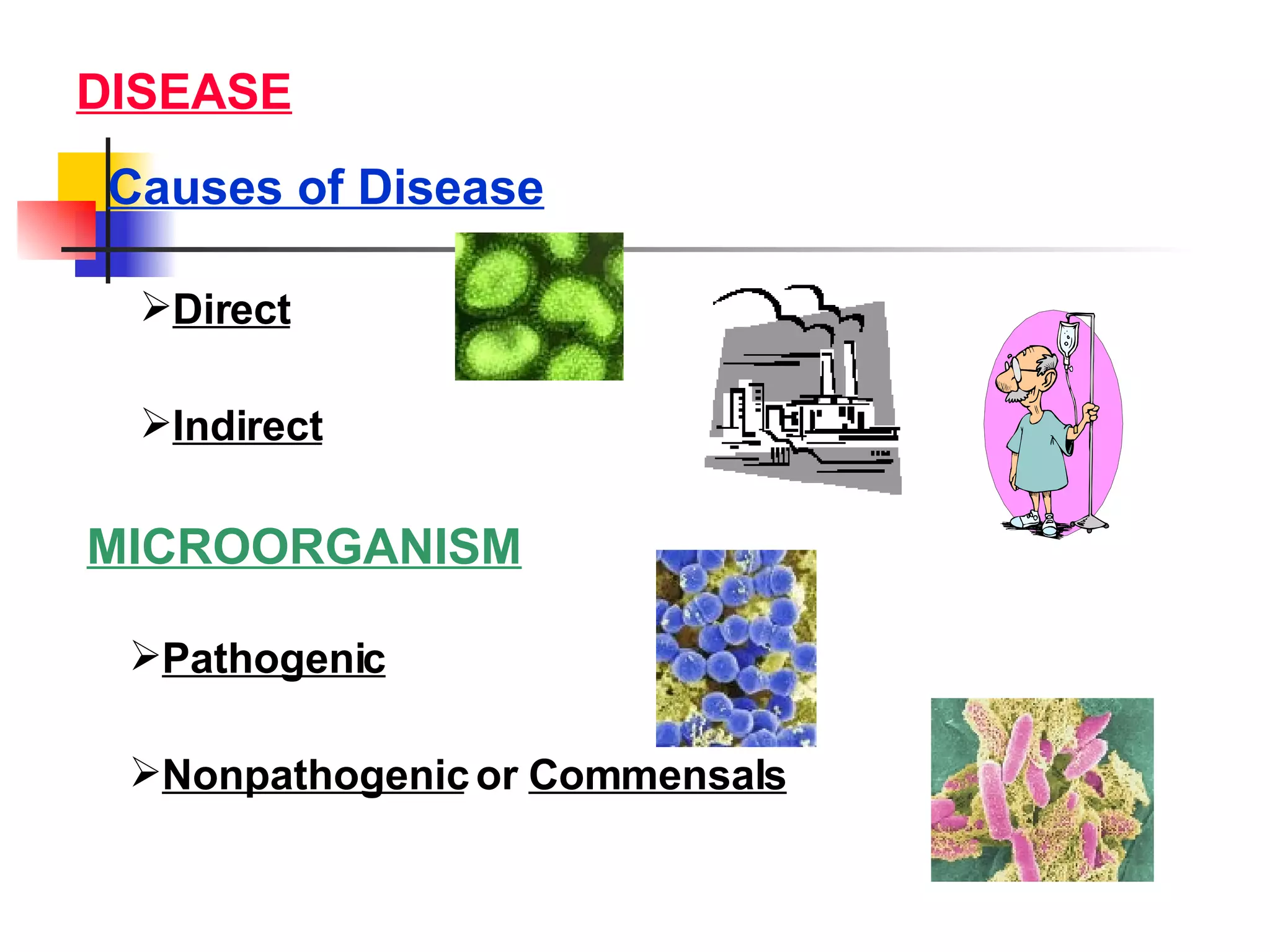
DISEASE Causes of Disease MICROORGANISM Indirect Pathogenic Nonpathogenic  or  Commensals Direct
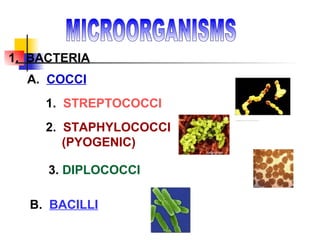
MICROORGANISMS 1.   BACTERIA A.  COCCI 1.  STREPTOCOCCI 2.  STAPHYLOCOCCI (PYOGENIC) 3.  DIPLOCOCCI B.  BACILLI
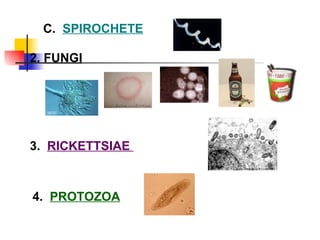
C.  SPIROCHETE 2.  FUNGI 3.  RICKETTSIAE  4.  PROTOZOA
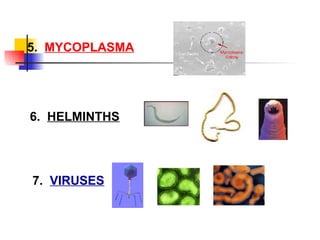
6.  HELMINTHS 7.  VIRUSES 5.  MYCOPLASMA
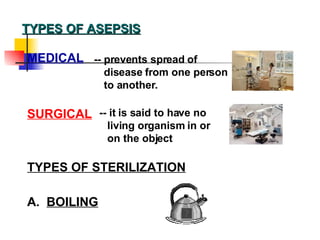
TYPES OF ASEPSIS MEDICAL SURGICAL TYPES OF STERILIZATION -- it is said to have no living organism in or on the object -- prevents spread of disease from one person to another. A.  BOILING
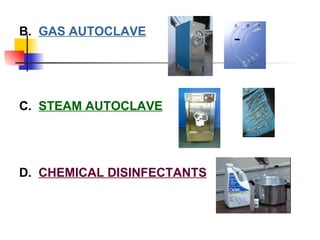
B.  GAS AUTOCLAVE C.  STEAM AUTOCLAVE D.  CHEMICAL DISINFECTANTS
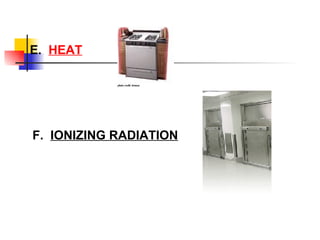
E.  HEAT F.  IONIZING RADIATION
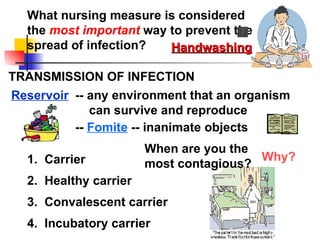
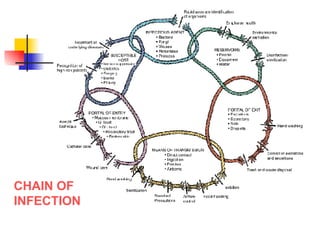
What nursing measure is considered the  most important  way to prevent the spread of infection? TRANSMISSION OF INFECTION Reservoir -- any environment that an organism can survive and reproduce --   Fomite When are you the most contagious? Why? Handwashing -- inanimate objects 1.  Carrier 2.  Healthy carrier 3.  Convalescent carrier 4.  Incubatory carrier
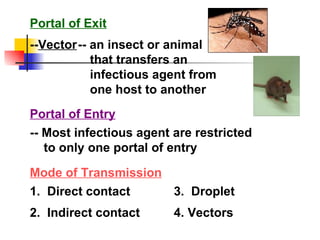
Portal of Exit -- Vector Portal of Entry -- Most infectious agent are restricted to only one portal of entry Mode of Transmission -- an insect or animal that transfers an infectious agent from one host to another 1.  Direct contact 2.  Indirect contact 3.  Droplet 4. Vectors
Susceptibility of the Host Resistance to infection VIRULENCE -- age -- nutrition -- presence of other diseases -- host’s immune system -- influenced by: -- age -- state of nutrition -- hormones -- adequate blood supply to infected area -- location of the infection -- effective immune system -- how powerful the organism is to produce disease
CHAIN OF INFECTION
Body’s Defense Mechanism 1.  Skin and Mucus Membranes Unbroken skin – first line of defense -- skin is acidic -- normal flora Mucus membranes -- normal flora -- cilia 2.  Lysozymes and Gastric Juices Lysozymes – present in tears, saliva, mucus, skin and some internal body fluids Gastric juices are strongly acidic
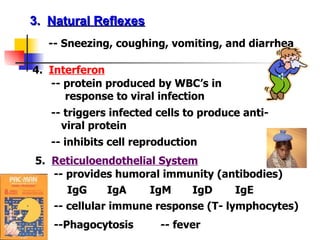
5.  Reticuloendothelial System -- cellular immune response (T- lymphocytes) 3.  Natural Reflexes -- Sneezing, coughing, vomiting, and diarrhea 4.  Interferon -- protein produced by WBC’s in response to viral infection -- triggers infected cells to produce anti-viral protein -- inhibits cell reproduction -- provides humoral immunity (antibodies) IgG IgA IgM IgD IgE --Phagocytosis -- fever
Inflammatory Response Nonspecific Immune Response Signs & Symptoms  –  heat ,  redness ,  swelling  & occasionally pain Function : 1.  Contain & localize infection 2.  Bring nutrients for tissue repair 3.  Destroy microorganisms 4.  Remove debris
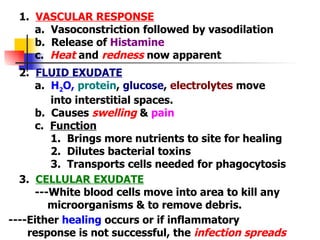
1.  VASCULAR RESPONSE a.  Vasoconstriction followed by vasodilation b.  Release of  Histamine c.  Heat   and  redness  now apparent 2.  FLUID EXUDATE a.  H 2 O,   protein ,  glucose ,  electrolytes  move into interstitial spaces. b.  Causes  swelling  &  pain c.  Function 1.  Brings more nutrients to site for healing 2.  Dilutes bacterial toxins 3.  Transports cells needed for phagocytosis 3.  CELLULAR EXUDATE ---White blood cells move into area to kill any microorganisms & to remove debris. ----Either  healing  occurs or if inflammatory  response is not successful, the  infection spreads
Complements  -- a group of proteins in the blood that influence the inflammatory process & serve as mediator in the antigen-antibody reaction Invasion by Pathogens Nonspecific defense First-line barriers Skin & mucous membranes Fluids Chemicals Nonspecific defense Second-line barriers Chemical action complement & interferon Phagocytosis Inflammation Specific defense Lymphocytes & macrophages Cell-mediated immunity Antibody-mediated  immunity
What is the difference between and infection and an inflammation? --  Infection  – invasion of the body by a microorganism --  Inflammation   – the body’s response to an invasion  or  trauma Three things happen when an organism enters the body: 1.  Body will eliminate the pathogen 2.  The pathogen will reside without disease 3.  The pathogen will cause an infectious disease
Identification of Organisms CBC, WBC, and Differential Count ESR  (erythrocyte sedimentation rate or Sed rate)  -- indicates inflammatory process Skin Test – Patch Test – Interdermal Test --Material injected  intradermally  & reaction is read in  48  to  72  hours --  Positive reaction  means organism  has entered the body , but does not mean you are actively infected. -- Done for Histoplasmosis, mumps, diphtheria, tuberculosis
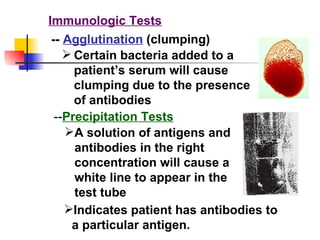
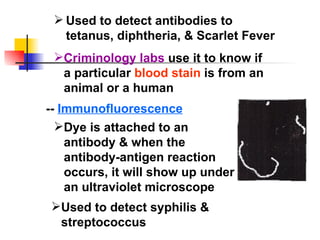
Immunologic Tests --  Agglutination  (clumping) Certain bacteria added to a patient’s serum will cause clumping due to the presence of antibodies -- Precipitation Tests A solution of antigens and antibodies in the right concentration will cause a white line to appear in the test tube Indicates patient has antibodies to a particular antigen.
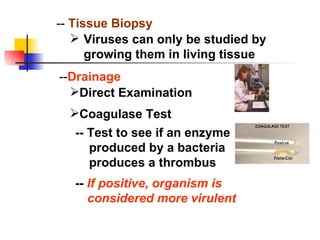
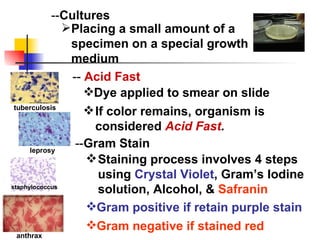
Used to detect antibodies to tetanus, diphtheria, & Scarlet   Fever Criminology labs  use it to know if a particular  blood stain  is from an animal or a human --  Immunofluorescence Dye is attached to an antibody & when the antibody-antigen reaction occurs, it will show up under an ultraviolet   microscope Used to detect syphilis & streptococcus
-- Drainage --  If positive, organism is considered more virulent --  Tissue Biopsy Viruses can only be studied by growing them in living tissue Direct Examination Coagulase Test -- Test to see if an enzyme produced by a bacteria produces a thrombus
-- Cultures Placing a small amount of a specimen on a special growth medium --  Acid Fast Dye applied to smear on slide If color remains, organism is considered  Acid Fast . leprosy tuberculosis -- Gram Stain Staining process involves 4 steps using  Crystal Violet , Gram’s Iodine solution, Alcohol, &  Safranin Gram negative if stained red anthrax Gram positive if retain purple stain staphylococcus
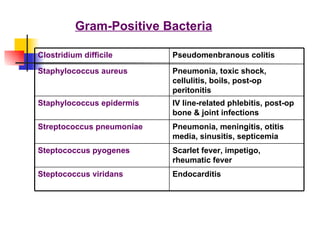
Gram-Positive Bacteria Endocarditis Steptococcus viridans Scarlet fever, impetigo, rheumatic fever Steptococcus pyogenes Pneumonia, meningitis, otitis media, sinusitis, septicemia Streptococcus pneumoniae IV line-related phlebitis, post-op bone & joint infections Staphylococcus epidermis Pneumonia, toxic shock, cellulitis, boils, post-op peritonitis Staphylococcus aureus Pseudomenbranous colitis Clostridium difficile
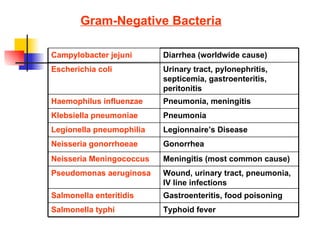
Gram-Negative Bacteria Typhoid fever Salmonella typhi Gastroenteritis, food poisoning Salmonella enteritidis Wound, urinary tract, pneumonia, IV line infections Pseudomonas aeruginosa Meningitis (most common cause) Neisseria Meningococcus Gonorrhea Neisseria gonorrhoeae Legionnaire’s Disease Legionella pneumophilia Pneumonia Klebsiella pneumoniae Pneumonia, meningitis Haemophilus influenzae Urinary tract, pylonephritis, septicemia, gastroenteritis, peritonitis Escherichia coli Diarrhea (worldwide cause) Campylobacter jejuni
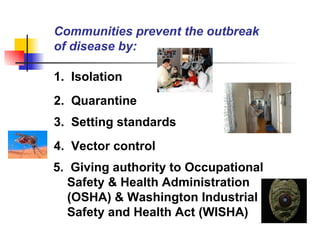
Communities prevent the outbreak of disease by: 1.  Isolation 2.  Quarantine 3.  Setting standards 4.  Vector control 5.  Giving authority to Occupational Safety & Health Administration (OSHA) & Washington Industrial Safety and Health Act (WISHA)
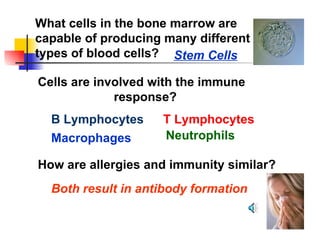
What cells in the bone marrow are capable of producing many different types of blood cells?  How are allergies and immunity similar? Stem Cells Both result in antibody formation Cells are involved with the immune response? B Lymphocytes T Lymphocytes Macrophages Neutrophils
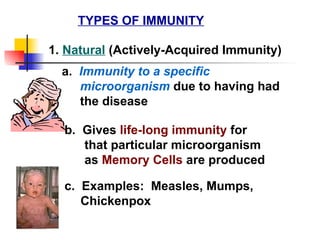
TYPES OF IMMUNITY 1.   Natural  (Actively-Acquired Immunity) b.  Gives  life-long immunity  for that particular microorganism as  Memory Cells  are produced a.  Immunity to a specific microorganism  due to having had the disease c.  Examples:  Measles, Mumps, Chickenpox
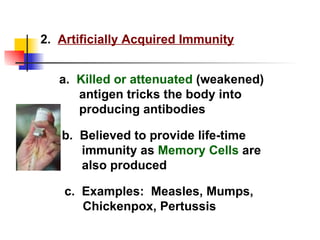
2.  Artificially Acquired Immunity a.  Killed or attenuated  (weakened) antigen tricks the body into producing antibodies b.  Believed to provide life-time immunity as  Memory Cells  are also produced c.  Examples:  Measles, Mumps, Chickenpox, Pertussis
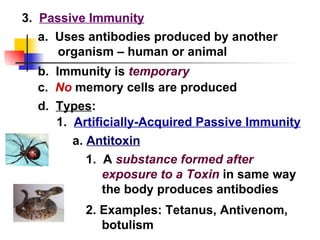
3.  Passive Immunity d.  Types : 1.  Artificially-Acquired Passive Immunity a.  Uses antibodies produced by another organism – human or animal b.  Immunity is  temporary c.  No  memory cells are produced a.  Antitoxin 1.  A  substance formed after exposure to a Toxin  in same way the body produces antibodies 2. Examples: Tetanus, Antivenom, botulism
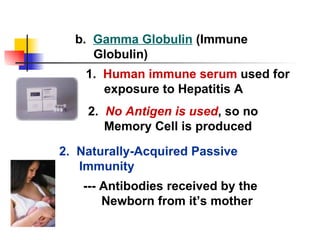
b.  Gamma Globulin  (Immune Globulin) 1.  Human immune serum  used for exposure to Hepatitis A 2.  No Antigen is used , so no Memory Cell is produced 2.  Naturally-Acquired Passive Immunity --- Antibodies received by the Newborn from it’s mother
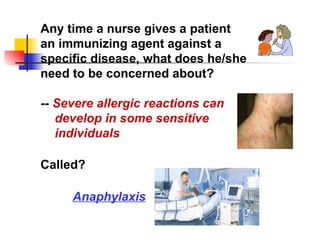
Any time a nurse gives a patient an immunizing agent against a specific disease, what does he/she need to be concerned about? Called?  --  Severe allergic reactions can develop in some sensitive individuals  Anaphylaxis
TERMINOLOGY Disinfection Disinfestation -- Attempt to kill pathogenic microorganism either through physical or chemical means applied directly --Destruction of insects, rodents, or other animal forms, which may transmit disease.
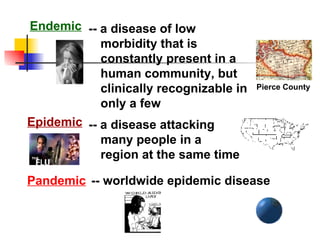
Endemic Epidemic Pandemic -- a disease of low morbidity that is constantly present in a human community, but clinically recognizable in only a few Pierce County -- a disease attacking many people in a region at the same time -- worldwide epidemic disease
 
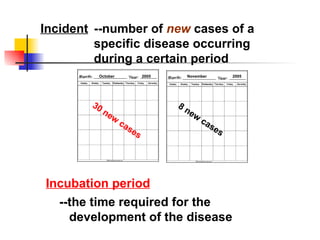
Incident --number of  new  cases of a specific disease occurring during a certain period  Incubation period --the time required for the development of the disease November 2005 October 2005 30 new cases 8 new cases
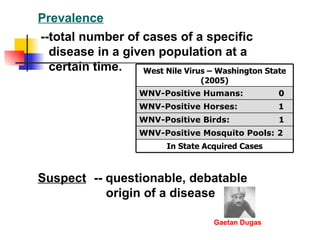
Prevalence --total number of cases of a specific disease in a given population at a certain time. Suspect -- questionable, debatable origin of a disease In State Acquired Cases WNV-Positive Mosquito Pools: 2   WNV-Positive Birds:  1 WNV-Positive Horses:  1 WNV-Positive Humans:  0 West Nile Virus – Washington State (2005) Gaetan Dugas
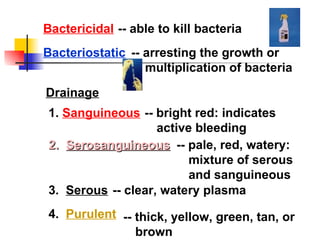
Bactericidal Bacteriostatic Drainage -- bright red: indicates active bleeding -- pale, red, watery: mixture of serous and sanguineous -- clear, watery plasma -- thick, yellow, green, tan, or brown -- able to kill bacteria -- arresting the growth or multiplication of bacteria 1.  Sanguineous 2.  Serosanguineous 3.  Serous 4.  Purulent
INFECTIONS Acute Chronic Primary Secondary Local Generalized Systemic Focal Latent Specific Mixed
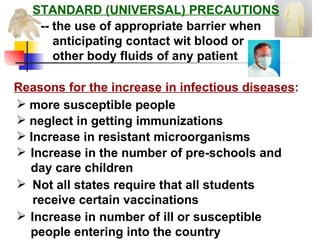
STANDARD (UNIVERSAL) PRECAUTIONS Reasons for the increase in infectious diseases : -- the use of appropriate barrier when anticipating contact wit blood or other body fluids of any patient more susceptible people neglect in getting immunizations Increase in resistant microorganisms Increase in the number of pre-schools and day care children Not all states require that all students receive certain vaccinations Increase in number of ill or susceptible  people entering into the country
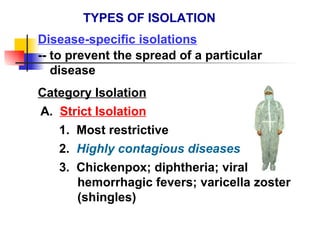
TYPES OF ISOLATION Disease-specific isolations -- to prevent the spread of a particular disease Category Isolation A.  Strict Isolation 1.  Most restrictive 2.  Highly contagious diseases 3.  Chickenpox; diphtheria; viral hemorrhagic fevers; varicella zoster (shingles)
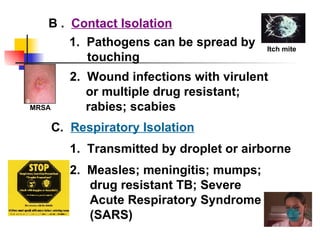
B .   Contact Isolation 1.  Pathogens can be spread by touching C.  Respiratory Isolation 2.  Wound infections with virulent or multiple drug resistant; rabies; scabies Itch mite MRSA 1.  Transmitted by droplet or airborne 2.  Measles; meningitis; mumps; drug resistant TB; Severe Acute Respiratory Syndrome (SARS)
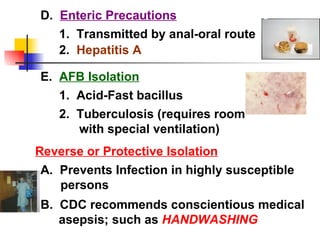
D.  Enteric Precautions E.  AFB Isolation Reverse or Protective Isolation 1.  Transmitted by anal-oral route 2.  Hepatitis A 1.  Acid-Fast bacillus 2.  Tuberculosis (requires room with special ventilation) A.  Prevents Infection in highly susceptible persons B.  CDC recommends conscientious medical asepsis; such as  HANDWASHING
Role of Infectious Control Nurse A.  Detection of Nosocomial infection C.  Reporting B.  Recording --  Most common nosocomial infections 1.  Staphylococcus aureus 2.  Pseudomonas aeruginosa 3.  Escherichia coli   -- Infection control committee -- Pierce County Health Department -- State Health Department in Olympia -- CDC – Atlanta Georgia -- Surgeon General’s Office -- WHO
http://www.cdc.gov/ncidod/dhqp/pdf/guidelines/Isolation2007.pdf Guideline for Isolation Precautions Preventing Transmission of Infectious Agents in Healthcare Settings 2007

Microbiology

  • 1.
    DISEASE Causes ofDisease MICROORGANISM Indirect Pathogenic Nonpathogenic or Commensals Direct
  • 2.
    MICROORGANISMS 1. BACTERIA A. COCCI 1. STREPTOCOCCI 2. STAPHYLOCOCCI (PYOGENIC) 3. DIPLOCOCCI B. BACILLI
  • 3.
    C. SPIROCHETE2. FUNGI 3. RICKETTSIAE 4. PROTOZOA
  • 4.
    6. HELMINTHS7. VIRUSES 5. MYCOPLASMA
  • 5.
    TYPES OF ASEPSISMEDICAL SURGICAL TYPES OF STERILIZATION -- it is said to have no living organism in or on the object -- prevents spread of disease from one person to another. A. BOILING
  • 6.
    B. GASAUTOCLAVE C. STEAM AUTOCLAVE D. CHEMICAL DISINFECTANTS
  • 7.
    E. HEATF. IONIZING RADIATION
  • 8.
    What nursing measureis considered the most important way to prevent the spread of infection? TRANSMISSION OF INFECTION Reservoir -- any environment that an organism can survive and reproduce -- Fomite When are you the most contagious? Why? Handwashing -- inanimate objects 1. Carrier 2. Healthy carrier 3. Convalescent carrier 4. Incubatory carrier
  • 9.
    Portal of Exit-- Vector Portal of Entry -- Most infectious agent are restricted to only one portal of entry Mode of Transmission -- an insect or animal that transfers an infectious agent from one host to another 1. Direct contact 2. Indirect contact 3. Droplet 4. Vectors
  • 10.
    Susceptibility of theHost Resistance to infection VIRULENCE -- age -- nutrition -- presence of other diseases -- host’s immune system -- influenced by: -- age -- state of nutrition -- hormones -- adequate blood supply to infected area -- location of the infection -- effective immune system -- how powerful the organism is to produce disease
  • 11.
  • 12.
    Body’s Defense Mechanism1. Skin and Mucus Membranes Unbroken skin – first line of defense -- skin is acidic -- normal flora Mucus membranes -- normal flora -- cilia 2. Lysozymes and Gastric Juices Lysozymes – present in tears, saliva, mucus, skin and some internal body fluids Gastric juices are strongly acidic
  • 13.
    5. ReticuloendothelialSystem -- cellular immune response (T- lymphocytes) 3. Natural Reflexes -- Sneezing, coughing, vomiting, and diarrhea 4. Interferon -- protein produced by WBC’s in response to viral infection -- triggers infected cells to produce anti-viral protein -- inhibits cell reproduction -- provides humoral immunity (antibodies) IgG IgA IgM IgD IgE --Phagocytosis -- fever
  • 14.
    Inflammatory Response NonspecificImmune Response Signs & Symptoms – heat , redness , swelling & occasionally pain Function : 1. Contain & localize infection 2. Bring nutrients for tissue repair 3. Destroy microorganisms 4. Remove debris
  • 15.
    1. VASCULARRESPONSE a. Vasoconstriction followed by vasodilation b. Release of Histamine c. Heat and redness now apparent 2. FLUID EXUDATE a. H 2 O, protein , glucose , electrolytes move into interstitial spaces. b. Causes swelling & pain c. Function 1. Brings more nutrients to site for healing 2. Dilutes bacterial toxins 3. Transports cells needed for phagocytosis 3. CELLULAR EXUDATE ---White blood cells move into area to kill any microorganisms & to remove debris. ----Either healing occurs or if inflammatory response is not successful, the infection spreads
  • 16.
    Complements --a group of proteins in the blood that influence the inflammatory process & serve as mediator in the antigen-antibody reaction Invasion by Pathogens Nonspecific defense First-line barriers Skin & mucous membranes Fluids Chemicals Nonspecific defense Second-line barriers Chemical action complement & interferon Phagocytosis Inflammation Specific defense Lymphocytes & macrophages Cell-mediated immunity Antibody-mediated immunity
  • 17.
    What is thedifference between and infection and an inflammation? -- Infection – invasion of the body by a microorganism -- Inflammation – the body’s response to an invasion or trauma Three things happen when an organism enters the body: 1. Body will eliminate the pathogen 2. The pathogen will reside without disease 3. The pathogen will cause an infectious disease
  • 18.
    Identification of OrganismsCBC, WBC, and Differential Count ESR (erythrocyte sedimentation rate or Sed rate) -- indicates inflammatory process Skin Test – Patch Test – Interdermal Test --Material injected intradermally & reaction is read in 48 to 72 hours -- Positive reaction means organism has entered the body , but does not mean you are actively infected. -- Done for Histoplasmosis, mumps, diphtheria, tuberculosis
  • 19.
    Immunologic Tests -- Agglutination (clumping) Certain bacteria added to a patient’s serum will cause clumping due to the presence of antibodies -- Precipitation Tests A solution of antigens and antibodies in the right concentration will cause a white line to appear in the test tube Indicates patient has antibodies to a particular antigen.
  • 20.
    Used to detectantibodies to tetanus, diphtheria, & Scarlet Fever Criminology labs use it to know if a particular blood stain is from an animal or a human -- Immunofluorescence Dye is attached to an antibody & when the antibody-antigen reaction occurs, it will show up under an ultraviolet microscope Used to detect syphilis & streptococcus
  • 21.
    -- Drainage -- If positive, organism is considered more virulent -- Tissue Biopsy Viruses can only be studied by growing them in living tissue Direct Examination Coagulase Test -- Test to see if an enzyme produced by a bacteria produces a thrombus
  • 22.
    -- Cultures Placinga small amount of a specimen on a special growth medium -- Acid Fast Dye applied to smear on slide If color remains, organism is considered Acid Fast . leprosy tuberculosis -- Gram Stain Staining process involves 4 steps using Crystal Violet , Gram’s Iodine solution, Alcohol, & Safranin Gram negative if stained red anthrax Gram positive if retain purple stain staphylococcus
  • 23.
    Gram-Positive Bacteria EndocarditisSteptococcus viridans Scarlet fever, impetigo, rheumatic fever Steptococcus pyogenes Pneumonia, meningitis, otitis media, sinusitis, septicemia Streptococcus pneumoniae IV line-related phlebitis, post-op bone & joint infections Staphylococcus epidermis Pneumonia, toxic shock, cellulitis, boils, post-op peritonitis Staphylococcus aureus Pseudomenbranous colitis Clostridium difficile
  • 24.
    Gram-Negative Bacteria Typhoidfever Salmonella typhi Gastroenteritis, food poisoning Salmonella enteritidis Wound, urinary tract, pneumonia, IV line infections Pseudomonas aeruginosa Meningitis (most common cause) Neisseria Meningococcus Gonorrhea Neisseria gonorrhoeae Legionnaire’s Disease Legionella pneumophilia Pneumonia Klebsiella pneumoniae Pneumonia, meningitis Haemophilus influenzae Urinary tract, pylonephritis, septicemia, gastroenteritis, peritonitis Escherichia coli Diarrhea (worldwide cause) Campylobacter jejuni
  • 25.
    Communities prevent theoutbreak of disease by: 1. Isolation 2. Quarantine 3. Setting standards 4. Vector control 5. Giving authority to Occupational Safety & Health Administration (OSHA) & Washington Industrial Safety and Health Act (WISHA)
  • 26.
    What cells inthe bone marrow are capable of producing many different types of blood cells? How are allergies and immunity similar? Stem Cells Both result in antibody formation Cells are involved with the immune response? B Lymphocytes T Lymphocytes Macrophages Neutrophils
  • 27.
    TYPES OF IMMUNITY1. Natural (Actively-Acquired Immunity) b. Gives life-long immunity for that particular microorganism as Memory Cells are produced a. Immunity to a specific microorganism due to having had the disease c. Examples: Measles, Mumps, Chickenpox
  • 28.
    2. ArtificiallyAcquired Immunity a. Killed or attenuated (weakened) antigen tricks the body into producing antibodies b. Believed to provide life-time immunity as Memory Cells are also produced c. Examples: Measles, Mumps, Chickenpox, Pertussis
  • 29.
    3. PassiveImmunity d. Types : 1. Artificially-Acquired Passive Immunity a. Uses antibodies produced by another organism – human or animal b. Immunity is temporary c. No memory cells are produced a. Antitoxin 1. A substance formed after exposure to a Toxin in same way the body produces antibodies 2. Examples: Tetanus, Antivenom, botulism
  • 30.
    b. GammaGlobulin (Immune Globulin) 1. Human immune serum used for exposure to Hepatitis A 2. No Antigen is used , so no Memory Cell is produced 2. Naturally-Acquired Passive Immunity --- Antibodies received by the Newborn from it’s mother
  • 31.
    Any time anurse gives a patient an immunizing agent against a specific disease, what does he/she need to be concerned about? Called? -- Severe allergic reactions can develop in some sensitive individuals Anaphylaxis
  • 32.
    TERMINOLOGY Disinfection Disinfestation-- Attempt to kill pathogenic microorganism either through physical or chemical means applied directly --Destruction of insects, rodents, or other animal forms, which may transmit disease.
  • 33.
    Endemic Epidemic Pandemic-- a disease of low morbidity that is constantly present in a human community, but clinically recognizable in only a few Pierce County -- a disease attacking many people in a region at the same time -- worldwide epidemic disease
  • 34.
  • 35.
    Incident --number of new cases of a specific disease occurring during a certain period Incubation period --the time required for the development of the disease November 2005 October 2005 30 new cases 8 new cases
  • 36.
    Prevalence --total numberof cases of a specific disease in a given population at a certain time. Suspect -- questionable, debatable origin of a disease In State Acquired Cases WNV-Positive Mosquito Pools: 2 WNV-Positive Birds: 1 WNV-Positive Horses: 1 WNV-Positive Humans: 0 West Nile Virus – Washington State (2005) Gaetan Dugas
  • 37.
    Bactericidal Bacteriostatic Drainage-- bright red: indicates active bleeding -- pale, red, watery: mixture of serous and sanguineous -- clear, watery plasma -- thick, yellow, green, tan, or brown -- able to kill bacteria -- arresting the growth or multiplication of bacteria 1. Sanguineous 2. Serosanguineous 3. Serous 4. Purulent
  • 38.
    INFECTIONS Acute ChronicPrimary Secondary Local Generalized Systemic Focal Latent Specific Mixed
  • 39.
    STANDARD (UNIVERSAL) PRECAUTIONSReasons for the increase in infectious diseases : -- the use of appropriate barrier when anticipating contact wit blood or other body fluids of any patient more susceptible people neglect in getting immunizations Increase in resistant microorganisms Increase in the number of pre-schools and day care children Not all states require that all students receive certain vaccinations Increase in number of ill or susceptible people entering into the country
  • 40.
    TYPES OF ISOLATIONDisease-specific isolations -- to prevent the spread of a particular disease Category Isolation A. Strict Isolation 1. Most restrictive 2. Highly contagious diseases 3. Chickenpox; diphtheria; viral hemorrhagic fevers; varicella zoster (shingles)
  • 41.
    B . Contact Isolation 1. Pathogens can be spread by touching C. Respiratory Isolation 2. Wound infections with virulent or multiple drug resistant; rabies; scabies Itch mite MRSA 1. Transmitted by droplet or airborne 2. Measles; meningitis; mumps; drug resistant TB; Severe Acute Respiratory Syndrome (SARS)
  • 42.
    D. EntericPrecautions E. AFB Isolation Reverse or Protective Isolation 1. Transmitted by anal-oral route 2. Hepatitis A 1. Acid-Fast bacillus 2. Tuberculosis (requires room with special ventilation) A. Prevents Infection in highly susceptible persons B. CDC recommends conscientious medical asepsis; such as HANDWASHING
  • 43.
    Role of InfectiousControl Nurse A. Detection of Nosocomial infection C. Reporting B. Recording -- Most common nosocomial infections 1. Staphylococcus aureus 2. Pseudomonas aeruginosa 3. Escherichia coli -- Infection control committee -- Pierce County Health Department -- State Health Department in Olympia -- CDC – Atlanta Georgia -- Surgeon General’s Office -- WHO
  • 44.
    http://www.cdc.gov/ncidod/dhqp/pdf/guidelines/Isolation2007.pdf Guideline forIsolation Precautions Preventing Transmission of Infectious Agents in Healthcare Settings 2007

Editor's Notes

  • #2 Disease – a pathological process having a characteristic set of signs and symptoms. Direct cause is something that actually causes disease. Indirect : Doesn’t cause disease, but contributes to it’s development.