INSTITUTE OF HEALTH TECHNOLOGY, DHAKA
Department of Laboratory Medicine
BSc in Health Technology (Laboratory)- 1st Year
MYCOLOGY
Lecture No. 03 (Superficial Mycoses)
By
Sk. MIZANUR RAHMAN
Lecturer, Mycology
MS in Biotechnology & Genetic Engineering (UODA)
MS in Microbiology (SUB)
Superficial mycoses
pityriasis versicolor – causative fungus,
lesion produce.
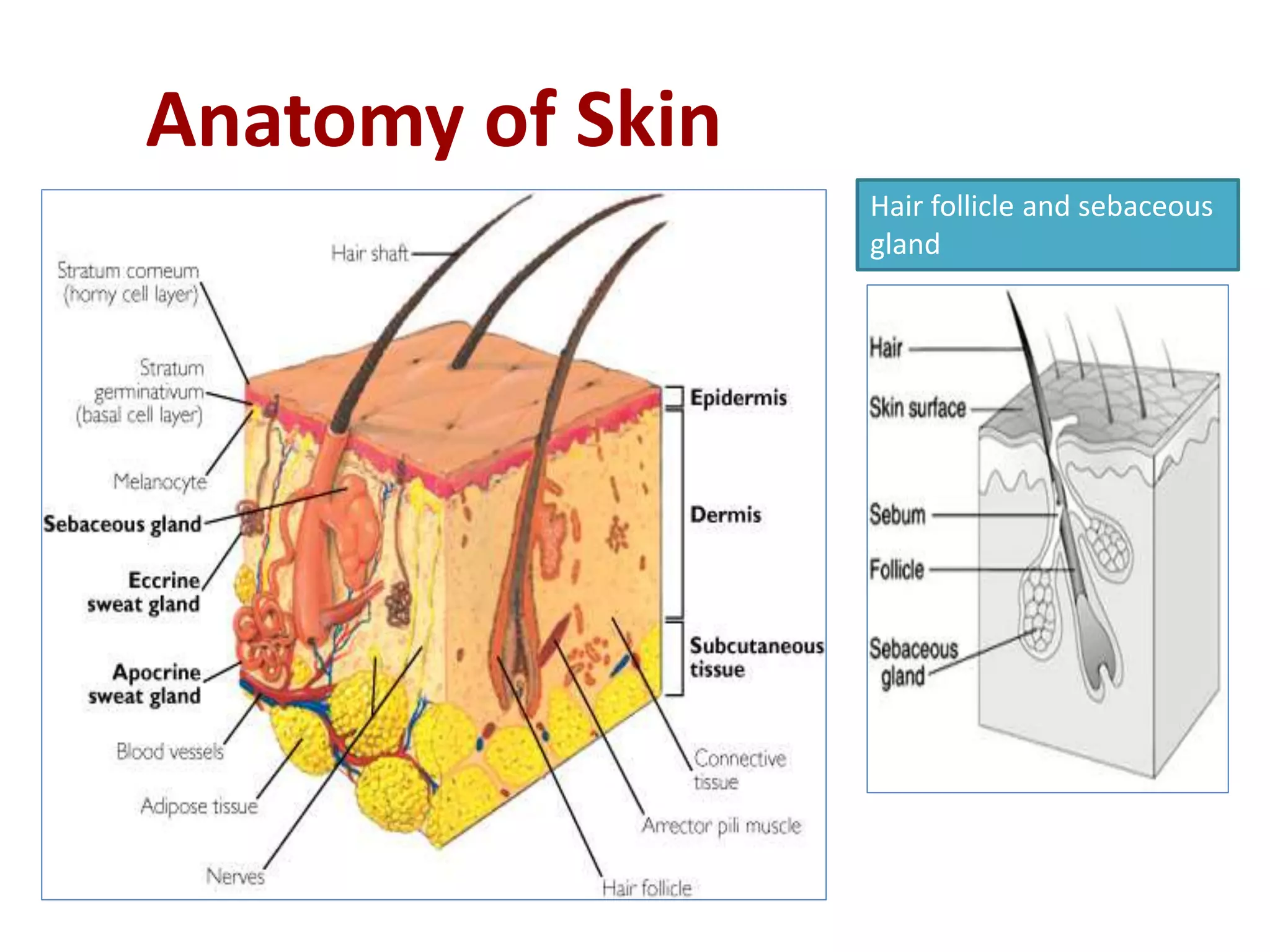
Anatomy of Skin
Hair follicle and sebaceous
gland
Fungal Infections/ Mycoses
• Superficial mycoses:
– 2 types: surface and cutaneous mycoses
– Skin, hair & nails.
– Mild but chronic disease
• Deep mycoses:
– 2 types: subcutaneous & systemic mycoses
– Caused by soil saprophytes
– Infection is accidental
– Range from a symptomatic infection to fatal
disease
Superficial: Surface mycoses
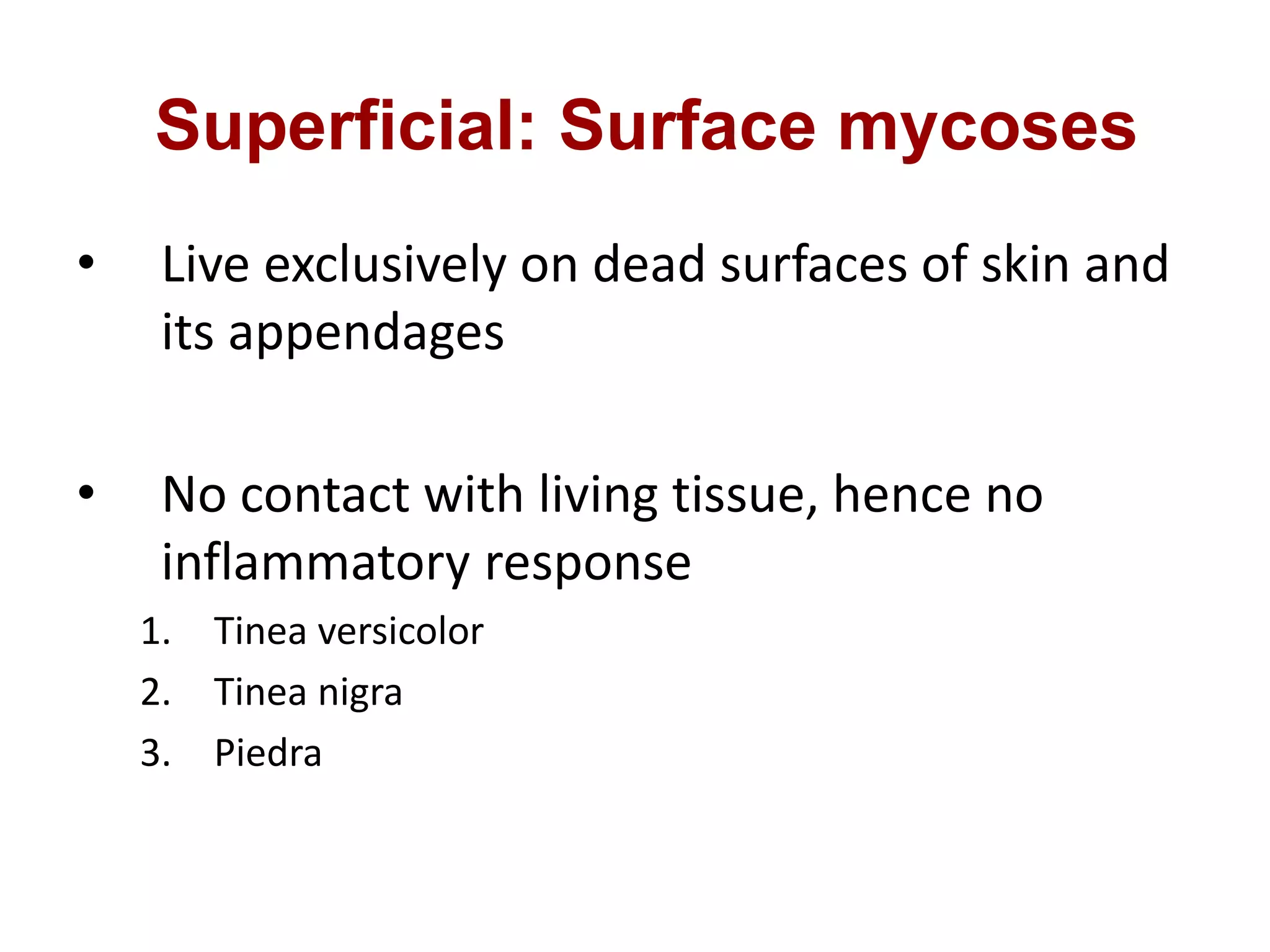
• Live exclusively on dead surfaces of skin and
its appendages
• No contact with living tissue, hence no
inflammatory response
1. Tinea versicolor
2. Tinea nigra
3. Piedra
Superficial: Surface mycoses
Pityriasis (Tinea)Versicolor
Fungal infection of the skin
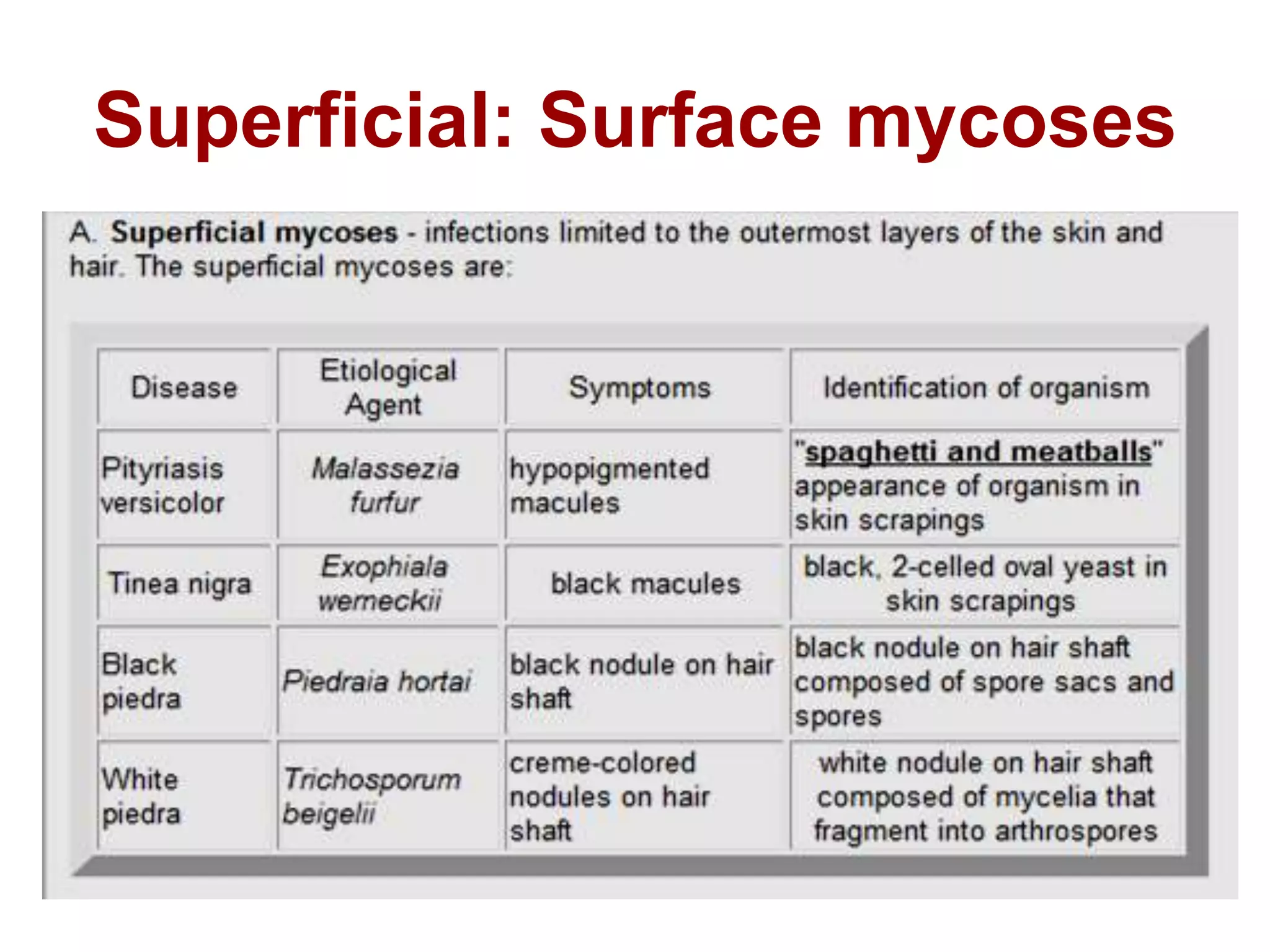
This is a very common superficial mycoses caused by a
lipophilic yeast Malassezia spp. It is seen in all countries
but is particularly common in the tropics with more than
60 % of the population infected.
The lesions are hypo or hyper pigmented. The etiologic
agent is normal flora of man so the disease re-occurs.
Multiple patchy lesions (oval shape c fine scales) either
light in color or brown
Typically occurs on the back, neck, chest, shoulders
Tinea Versicolor
Recent evidence suggest that seborrheic dermatitis is
also caused, or triggered by, Malassezia yeast.
There also is Malassezia folliculitis. This is seen in
patients who are usually severely ill or in patients
after sun exposure.
Tx: Topical antifungal
General Morphology
Tinea Versicolor
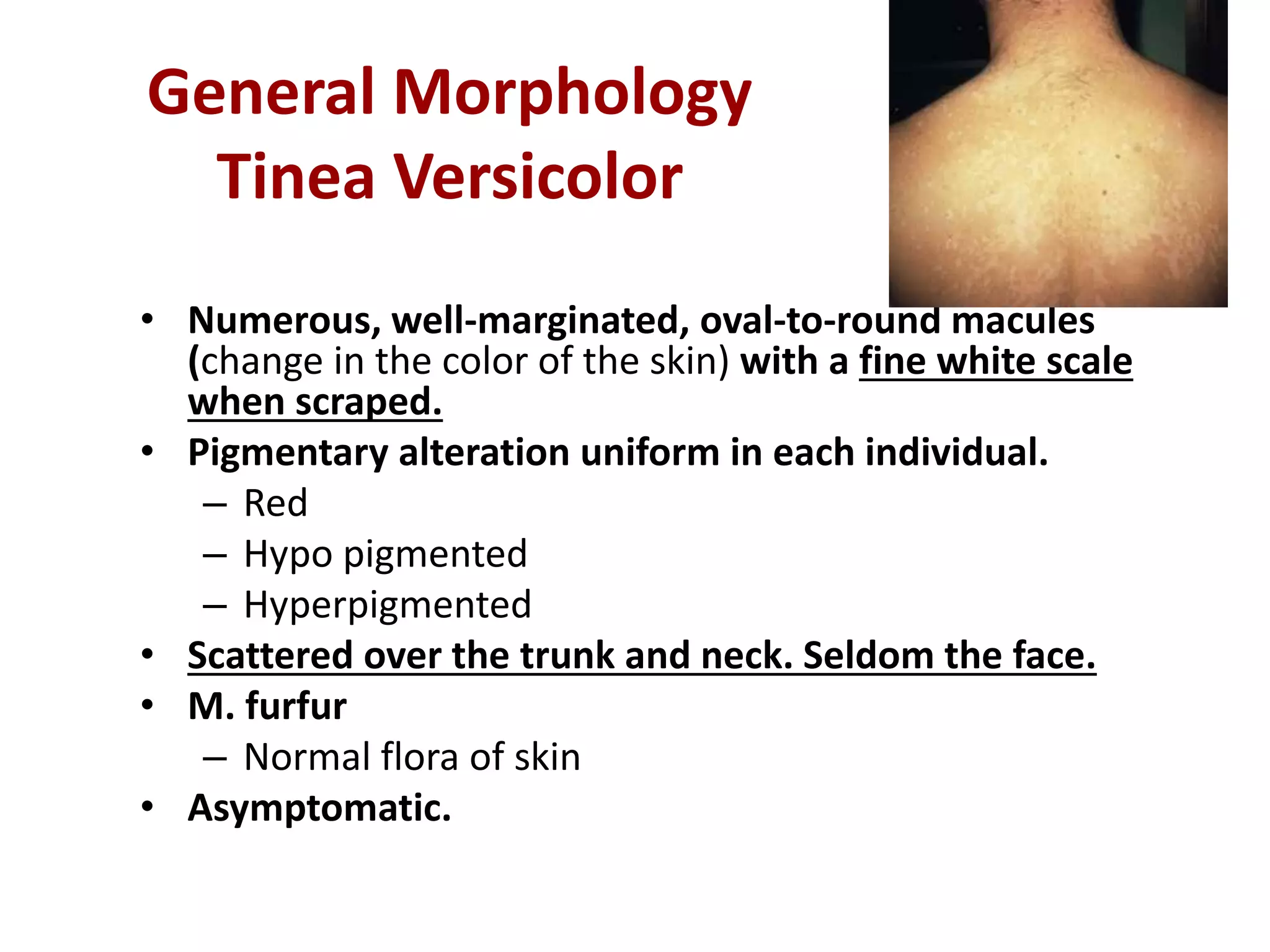
• Numerous, well-marginated, oval-to-round macules
(change in the color of the skin) with a fine white scale
when scraped.
• Pigmentary alteration uniform in each individual.
– Red
– Hypo pigmented
– Hyperpigmented
• Scattered over the trunk and neck. Seldom the face.
• M. furfur
– Normal flora of skin
• Asymptomatic.
Tinea Versicolor
Definition
•Asymptomatic colonization
Malassezia furfur
•Hypopigmentation
•Hyperpigmentation
•Seborrhoeic dermatitis
•Dandruff
•Fungaemia
Pityriasis versicolor
• Conditions:
– Health
– Sweat
– Greasy skin
– Chronic bacterial infections
– Steroids
Pityriasis versicolor
• Clinical manifestations:
– Maculae
– White, cream, pink, red, brown
– Scale/signs
– Painless
– Not itching
Superficial mycosis (Pityriasis versicolor)
Pityriasis versicolor
Laboratory diagnosis:
• Sampling
– Scalpel (sharp bladed
instrument)
– Wood ́s lamp (producing
ultraviolet radiation)
• Direct
• Culture
Tinea Versicolor
Diagnosis:
•Scrape lightly – fine white scale
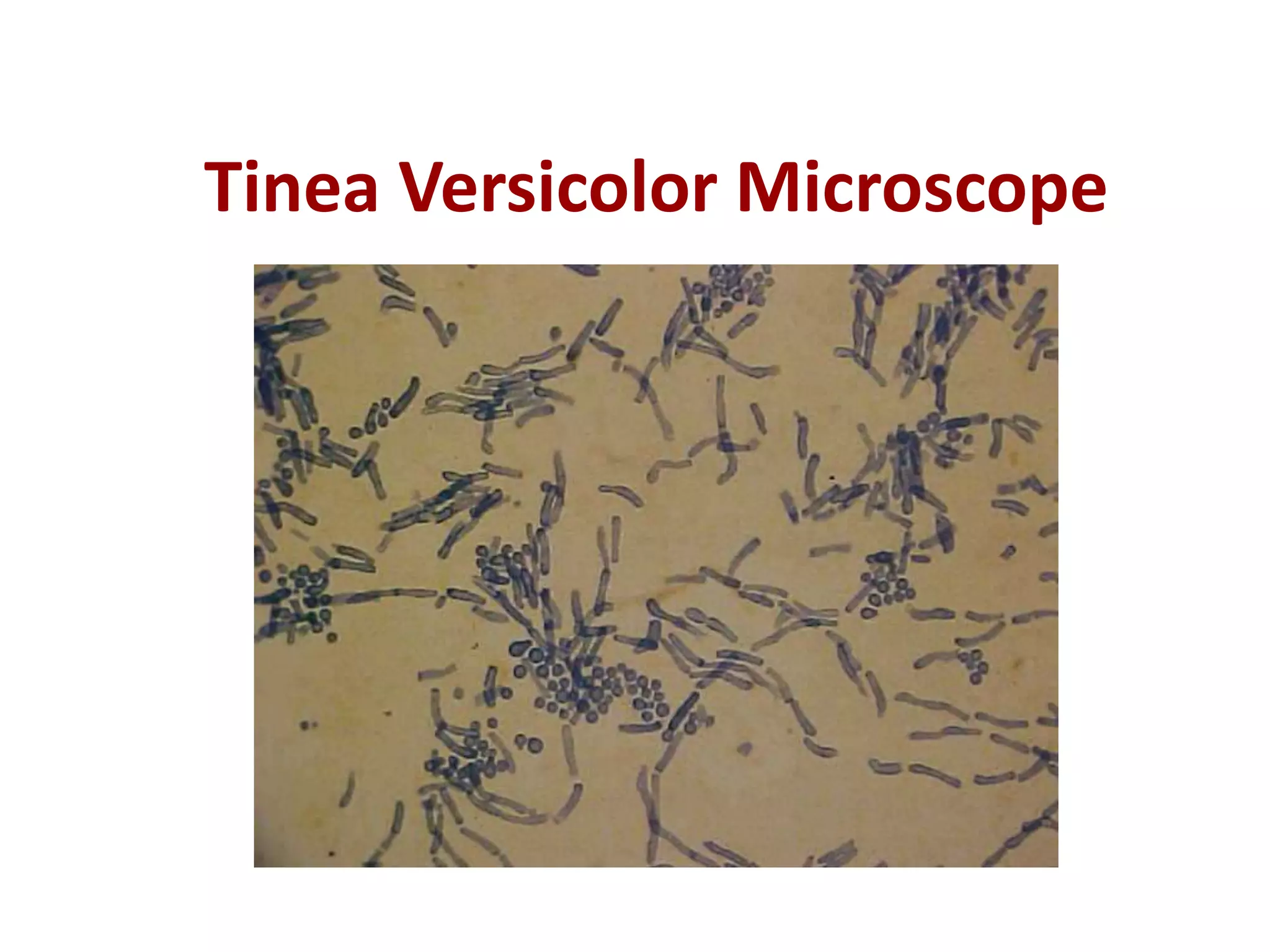
•KOH Positive for short hyphae and spores
(Spaghetti –hyphae and meatballs-yeasts)
•Woods Light – pale yellow white fluoresce.
•Culture rarely done.
Tinea Versicolor
Direct exam.
•Skin scraping
•10% KOH preparation
•Parker Ink
Culture
•Sabouraud Dextrose Agar
•Lipophilic yeast
•Flood with Olive oil
Tinea Versicolor
Tinea Vesicolor – Woods Light
Yellow White
•Short fragments
of hypha
•cluster of yeast
M.ovalae
M.paraovalae
M.furfur
Malassezia
Tinea Versicolor Microscope
Culture
 Malassezia furfur can be grown in a
laboratory but only when one covers the culture
with oil. This leads me to speculate that there is
a genetic susceptibility to this disease resulting
from qualitative or quantitative differences in
the oil content of susceptible persons.
Superficial mycoses

Superficial mycoses