Methods of Production By Greg Osprey and Daniel Gormley
Different methods of production There are 4 methods of production, they are: Just in time Production or JIT Job Production Batch Production Flow Production
Just in time production Just-in-time (JIT) production is sometimes called lean production. It is a Japanese philosophy; producing exactly the amount you require at exactly the time your customers require it. Stock arrives just as it is needed for an order meaning there is essentially no stock held.
Advantages of JIT The key benefit offered by JIT is the increase it can generate in production efficiency. This is because waste of time, raw materials and other resources are eliminated. Businesses also save great expense as traditional expansive buildings are not needed to hold stock.
Disadvantages of JIT Introducing this type of production to a business can be difficult and expensive to introduce as it requires a complete overhaul. JIT opens businesses to a number of risks, especially those associated with supply. Having no stock to fall back on  means only a minor disruption in supplies can cease all production at short notice.
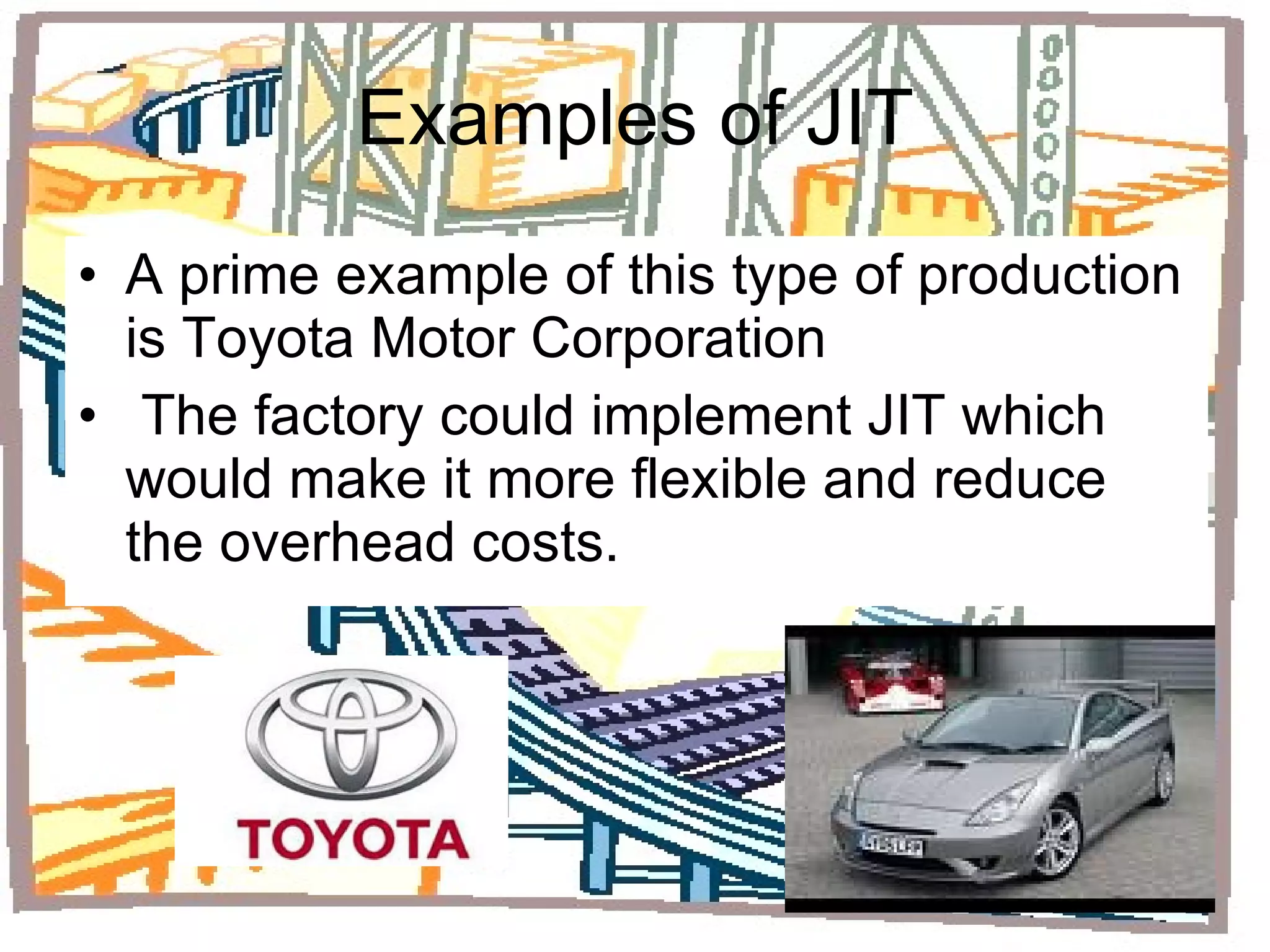
Examples of JIT A prime example of this type of production is Toyota Motor Corporation The factory could implement JIT which would make it more flexible and reduce the overhead costs.
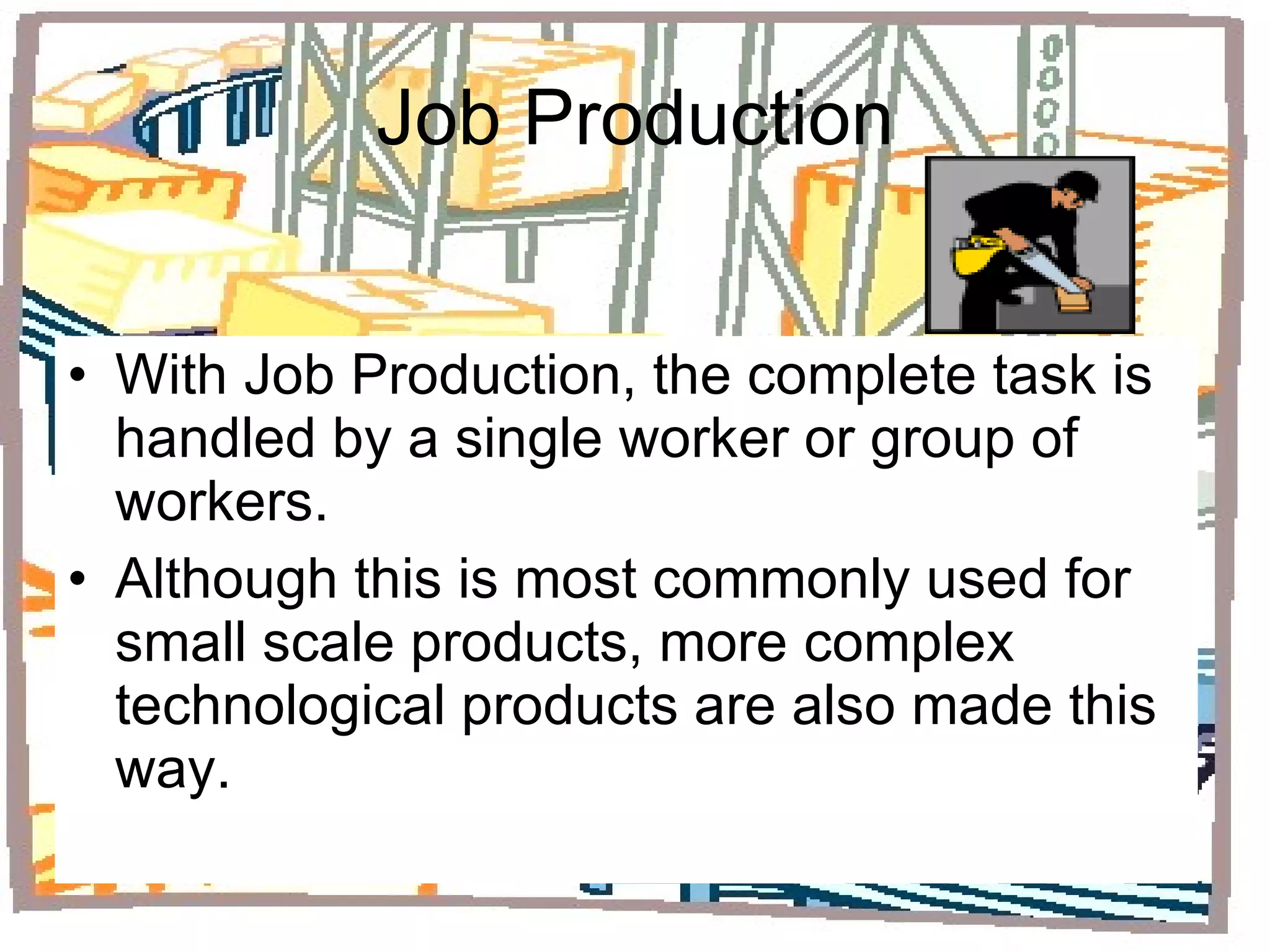
Job Production With Job Production, the complete task is handled by a single worker or group of workers. Although this is most commonly used for small scale products, more complex technological products are also made this way.
Advantages of Job production Work is usually of a high quality A high level of customisation is possible; meeting the exact requirements of customers. Workers can be easily motivated due to the skilled nature of the work they are doing.
Disadvantages of Job Production This method of production is of much higher cost to producers. Specialist labour is required (difficult to find and expensive). Slower method compared to mass and batch.
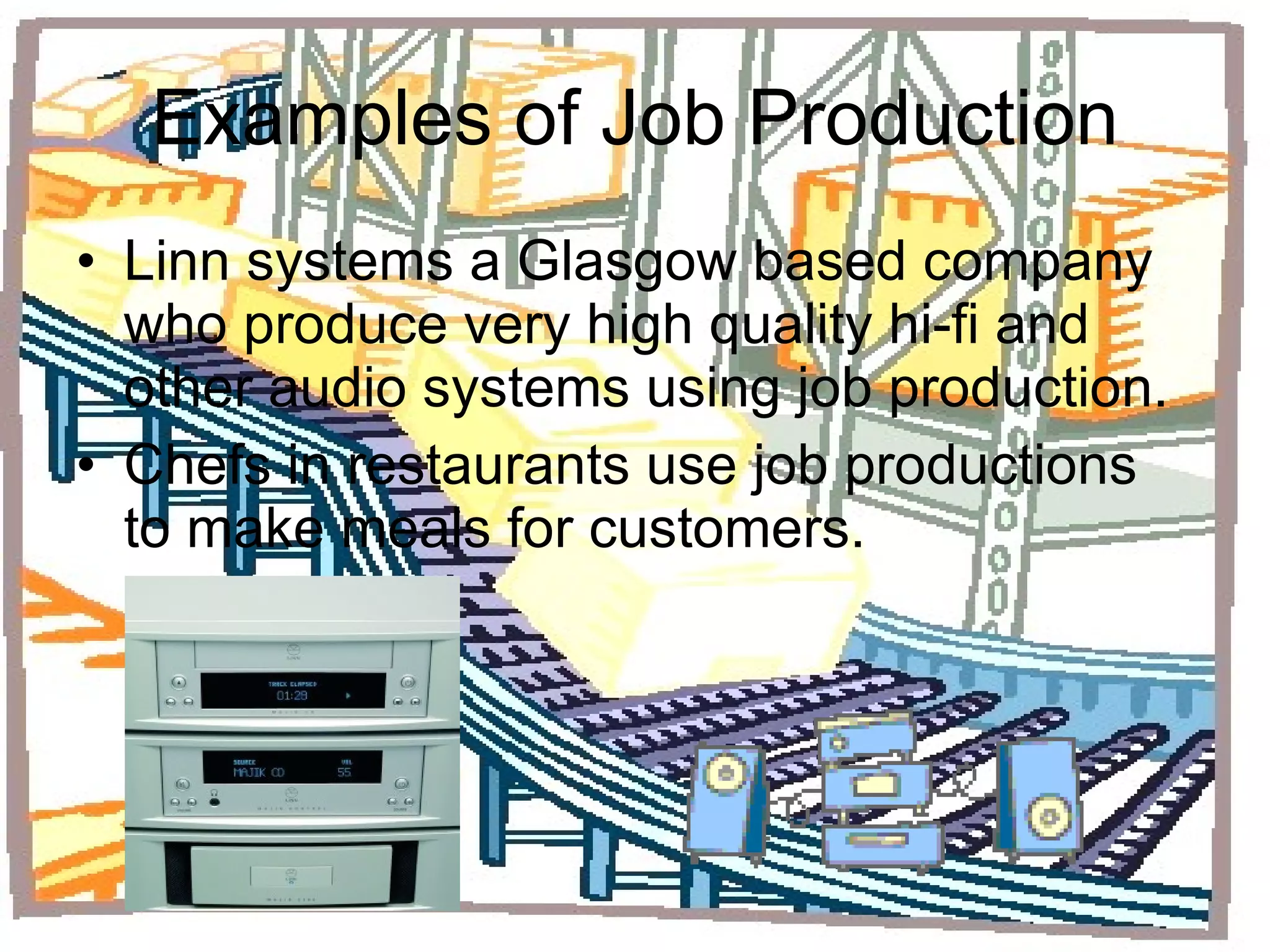
Examples of Job Production Linn systems a Glasgow based company who produce very high quality hi-fi and other audio systems using job production. Chefs in restaurants use job productions to make meals for customers.
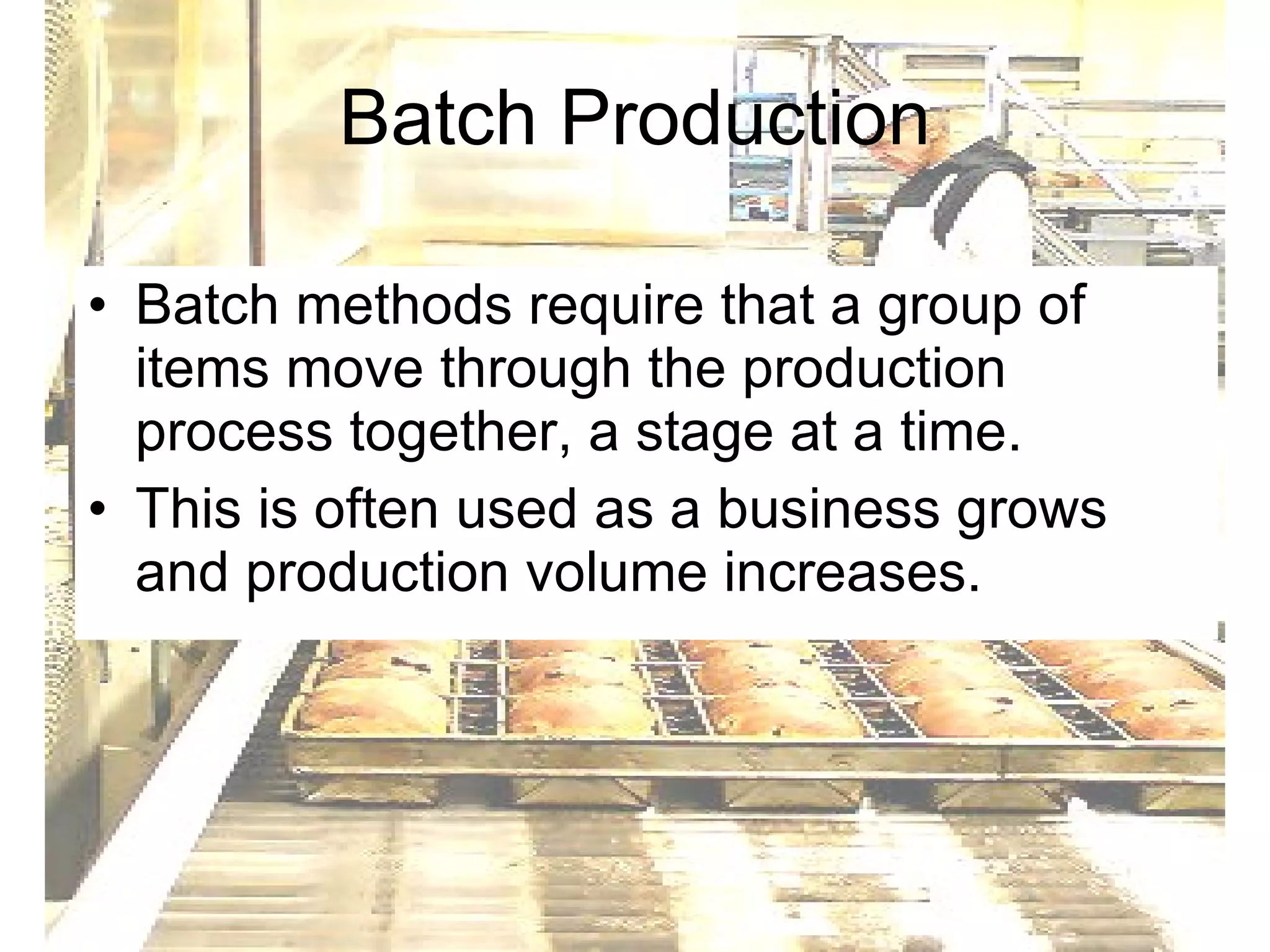
Batch Production Batch methods require that a group of items move through the production process together, a stage at a time. This is often used as a business grows and production volume increases.
Advantages of Batch Production It is cheaper to produce a number of each item in one go. Workers become more expert at their skills, in turn increasing productivity. It is much faster to produce a lot of goods with this method
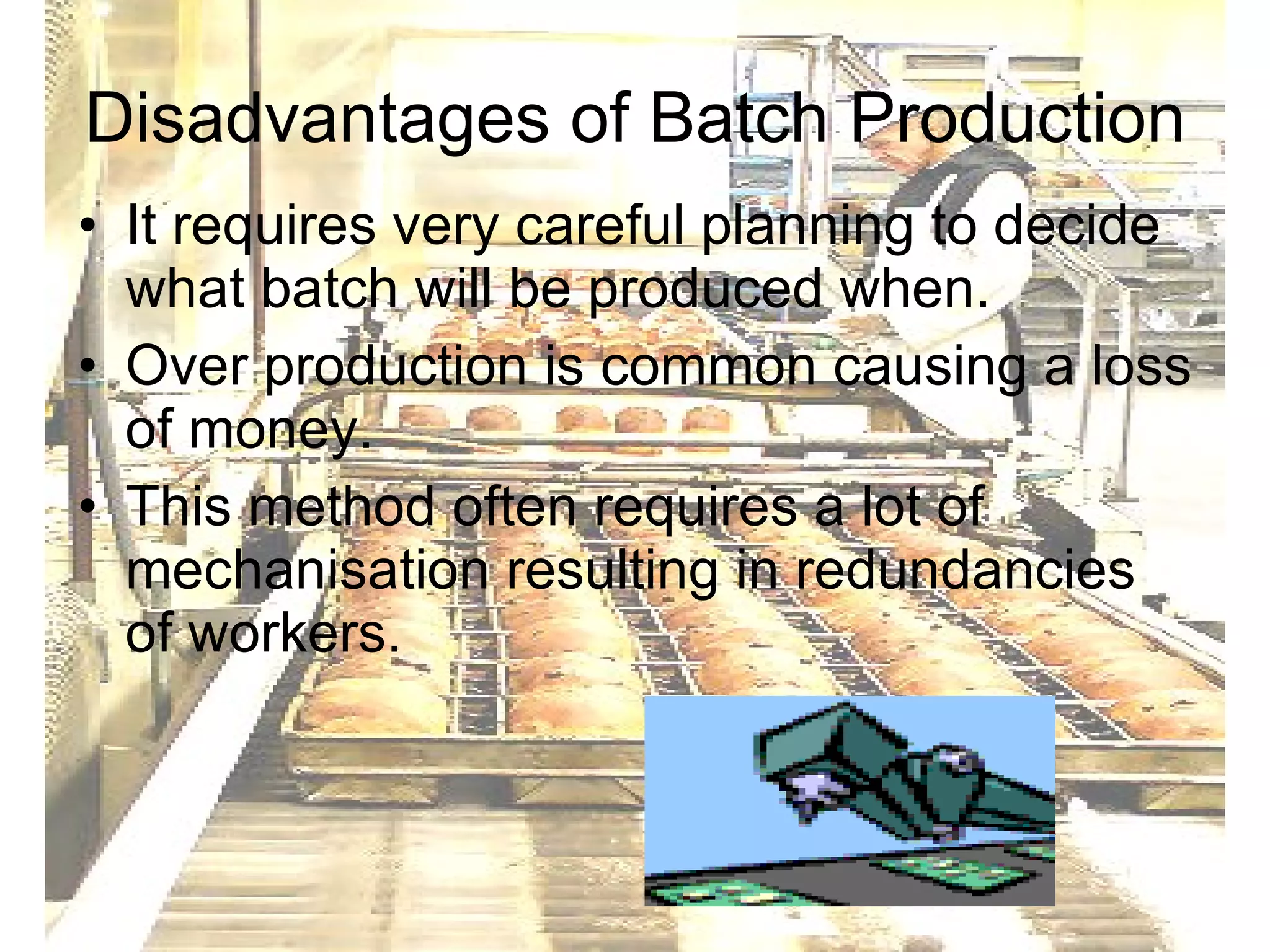
Disadvantages of Batch Production It requires very careful planning to decide what batch will be produced when. Over production is common causing a loss of money. This method often requires a lot of mechanisation resulting in redundancies of workers.
Examples of Batch Production The most common example of this method is in a bakery e.g. dough is prepared split into a batch on a baking tray and baked to make a batch of loaves. Chemical companies also produce pills in batches.
Flow Production This is where production takes place as a continuous process.  The product flows from one process to the next This is usually used when the product is standardised.
Advantages of Flow Production This method is capital intensive therefore a high number of products roll off the assembly line at a very low cost. Production can continue at night and over weekends  Firms can benefit from economies of scale, lowering the cost of per unit of production.
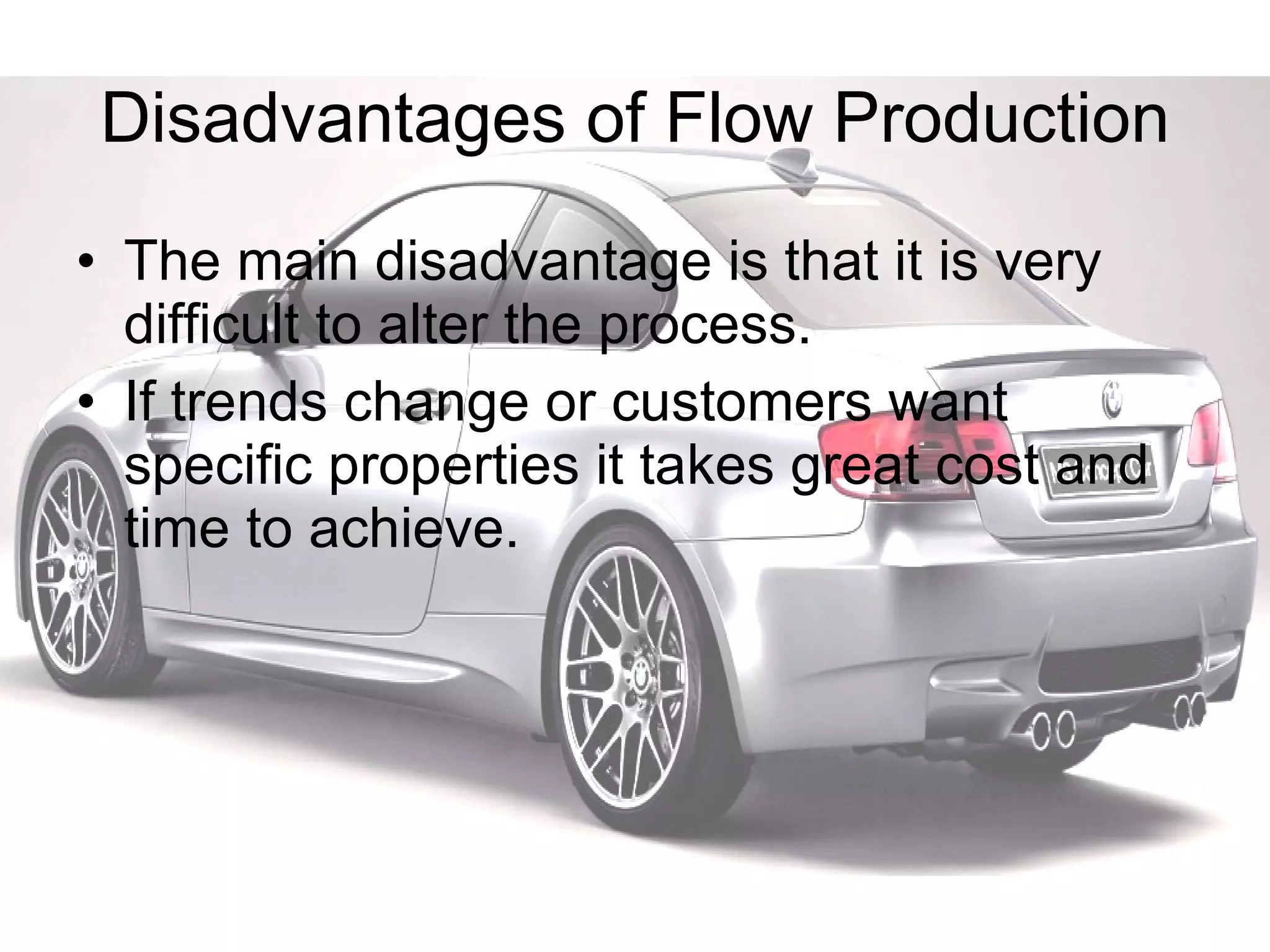
Disadvantages of Flow Production The main disadvantage is that it is very difficult to alter the process. If trends change or customers want specific properties it takes great cost and time to achieve.
Examples of Flow Production BP use flow production in its oil refinery plants. The production line of BMW uses a more flexible version of flow production.
If you liked this visit… www.mrmcgowan.blogspot.com

Methods Of Production

  • 1.
    Methods of ProductionBy Greg Osprey and Daniel Gormley
  • 2.
    Different methods ofproduction There are 4 methods of production, they are: Just in time Production or JIT Job Production Batch Production Flow Production
  • 3.
    Just in timeproduction Just-in-time (JIT) production is sometimes called lean production. It is a Japanese philosophy; producing exactly the amount you require at exactly the time your customers require it. Stock arrives just as it is needed for an order meaning there is essentially no stock held.
  • 4.
    Advantages of JITThe key benefit offered by JIT is the increase it can generate in production efficiency. This is because waste of time, raw materials and other resources are eliminated. Businesses also save great expense as traditional expansive buildings are not needed to hold stock.
  • 5.
    Disadvantages of JITIntroducing this type of production to a business can be difficult and expensive to introduce as it requires a complete overhaul. JIT opens businesses to a number of risks, especially those associated with supply. Having no stock to fall back on means only a minor disruption in supplies can cease all production at short notice.
  • 6.
    Examples of JITA prime example of this type of production is Toyota Motor Corporation The factory could implement JIT which would make it more flexible and reduce the overhead costs.
  • 7.
    Job Production WithJob Production, the complete task is handled by a single worker or group of workers. Although this is most commonly used for small scale products, more complex technological products are also made this way.
  • 8.
    Advantages of Jobproduction Work is usually of a high quality A high level of customisation is possible; meeting the exact requirements of customers. Workers can be easily motivated due to the skilled nature of the work they are doing.
  • 9.
    Disadvantages of JobProduction This method of production is of much higher cost to producers. Specialist labour is required (difficult to find and expensive). Slower method compared to mass and batch.
  • 10.
    Examples of JobProduction Linn systems a Glasgow based company who produce very high quality hi-fi and other audio systems using job production. Chefs in restaurants use job productions to make meals for customers.
  • 11.
    Batch Production Batchmethods require that a group of items move through the production process together, a stage at a time. This is often used as a business grows and production volume increases.
  • 12.
    Advantages of BatchProduction It is cheaper to produce a number of each item in one go. Workers become more expert at their skills, in turn increasing productivity. It is much faster to produce a lot of goods with this method
  • 13.
    Disadvantages of BatchProduction It requires very careful planning to decide what batch will be produced when. Over production is common causing a loss of money. This method often requires a lot of mechanisation resulting in redundancies of workers.
  • 14.
    Examples of BatchProduction The most common example of this method is in a bakery e.g. dough is prepared split into a batch on a baking tray and baked to make a batch of loaves. Chemical companies also produce pills in batches.
  • 15.
    Flow Production Thisis where production takes place as a continuous process. The product flows from one process to the next This is usually used when the product is standardised.
  • 16.
    Advantages of FlowProduction This method is capital intensive therefore a high number of products roll off the assembly line at a very low cost. Production can continue at night and over weekends Firms can benefit from economies of scale, lowering the cost of per unit of production.
  • 17.
    Disadvantages of FlowProduction The main disadvantage is that it is very difficult to alter the process. If trends change or customers want specific properties it takes great cost and time to achieve.
  • 18.
    Examples of FlowProduction BP use flow production in its oil refinery plants. The production line of BMW uses a more flexible version of flow production.
  • 19.
    If you likedthis visit… www.mrmcgowan.blogspot.com