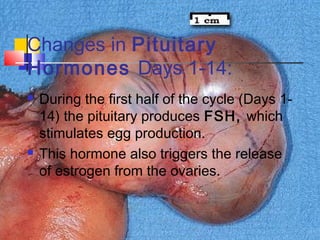
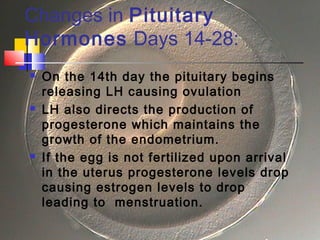
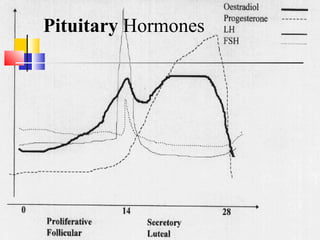
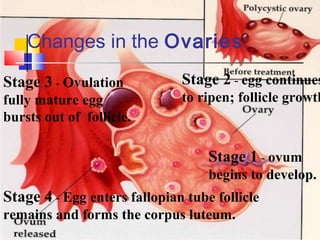
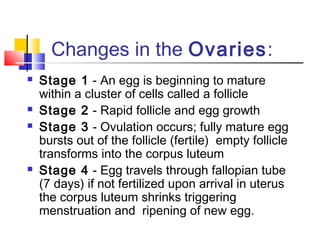
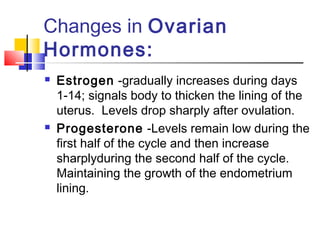
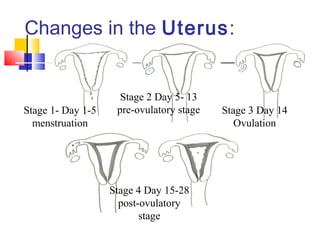
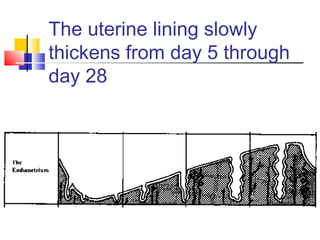
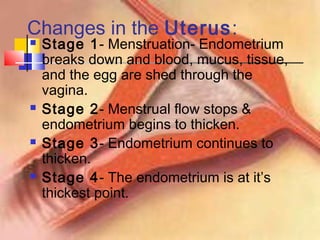
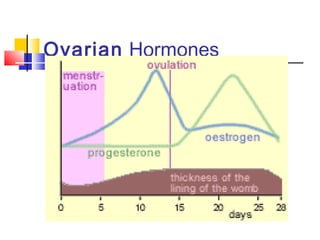
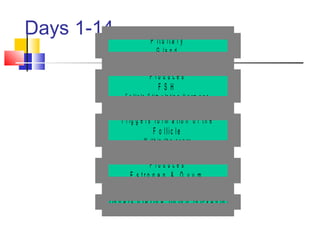
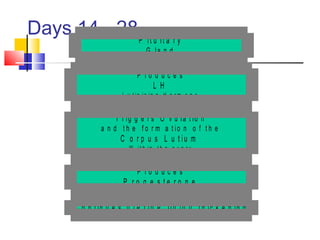
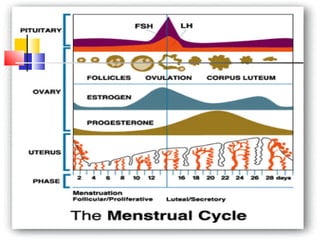
The menstrual cycle involves the monthly ripening and release of a mature egg. It typically repeats every 28 days, though the range is 21 to 40 days. During the first half, the pituitary gland produces FSH and estrogen, stimulating egg production and thickening of the uterine lining. Around day 14, the pituitary releases LH, causing ovulation and progesterone production to maintain the uterine lining. If no fertilization occurs, progesterone levels drop and menstruation begins. The cycle then repeats with development of a new egg.


![physiology_of_menstral_cycle[gauri].pptx](https://cdn.slidesharecdn.com/ss_thumbnails/physiologyofmenstralcyclegauri-251107081125-fc49af27-thumbnail.jpg?width=640&height=640&fit=bounds)


