Garima Thakur
B.Sc (med.)
 The menstrual cycle refers to the changes
and the preparation that a women body goes
through to prepare for pregnancy.
 About once a month, the uterus grows a new
lining (endometrium) to get ready for
fertilized egg.
 When there is no fertilized egg to start the
pregnancy, the uterus sheds its lining starting
off the monthly menstrual bleeding also
called menstrual period.
 the average cycle is 28 days, although it is
perfectly normal to have a cycle in that is as
short as 21 days or long as 35 days.
 A regular menstrual cycle is an important
element of successful concepton.
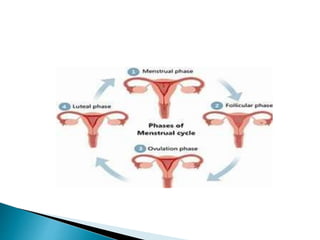
 The four main phases of menstrual cycle are :
1. menstruation
2. the follicular phase
3. ovulation
4. the luteal phase.
 The menstrual phase is the first stage of the
menstrual cycle.
 This phase start when an egg from the pervious
cycle isn’t fertilized. Because pregnancy hasn’t
takes place.
 Level of hormone progesterone and estrogen
drop.
 The thickened lining of uterus, which would
support pregnancy , is no longer needed, so it
sheds through the vagina. During the period, it
release a combination of blood, mucus, and
tissue from uterus.
 It start on the first day of the period.
 It starts when the hypothalamus sends a
signal to the pituitary gland to release follicle
stimulating hormone. This hormone
stimulates ovaries to produce around 5 to 20
small sacs called follicles. Each follicle
contains am immature egg.
 Only the healthiest egg will eventually
mature. The rest of the follicles will be
reabsorbed into the body.
 The maturing follicle sets off a surge in
estrogen that thickens the lining of the
uterus. This creates a nutrient rich
environment for an growing embryo to grow.
 The avg. follicular phase lasts for about 16
days.
 Ovulation, the rupture of the mature
(graafian) follicle and the release of the
secondary oocyte into the palvic cavity,
usually occurs on day 14.
 Secondary oocyte remains surrounded by its
zona pellucida and corona radiata.
 The high level of estrogens during the last
part of follicular phase exert a positive
feedback effect on the cells that secrete LH
and gonadotropin releasing hormone. And
cause ovulation , as follows-
1. A high concentration of estrogens stimulates
more frequent of GnRH from the
hypothalamus. It also directly stimulates
gonadotrophs in the anterior pituitary to
secrete LH.
2. GnRH promotes the release of FSH and
additional LH by the anterior pituitary.
3. LH cause rupture of mature follicle and
expulsion of a secondary oocyte about 9
hours after the peak of LH surge. The ovulated
oocyte and its corona radiate cells are usually
swept into the uterine tube.
 The luteal phase is also known as
postovulatory phase.
 It is the time between ovulation and onset of
the next menses. It is the most constant part
of reproductive cycle.
 It last from day 15 to day 28.
 Events in ovary: after ovulation, the mature
follicle collapses, and the basement
membrane between the granulosa cells and
theca cells interna breaks down.
 Theca interna cells mix with granulosa cells
as they all become transformed into corpus
luteum cells under the influence of LH.
 Stimulated by LH , the corpus luetum secretes
progesterone, estrogen, relaxin and inhibin.
 The luteal cells also absorb the blood clot .
 Events in the uterus: progesterone and
estrogen produced by corpus luteum
promote growth and coiling of the
endometrial glands, vascularization of the
superficial endometrium, and thickening of
the endometrium to 12-18 mm.
 These preparatory changes peak about one
week after ovulation, at the time a fertilized
ovum might arrive in the uterus.
 If fertilization does not occur, the level of
progesterone and estrogen decline due to
degeneration of corpus luteum.
 Withdrawal of progesterone and estrogen
cause menstruation.
 The menstrual cycle is complex and is
controlled by many different glands and the
hormones that these glands produce.
 A brain structure called the hypothalamus
causes the nearby pituitary gland to produce
certain chemicals, which promote the ovary to
produce the sex hormones estrogen and
progesterone.
 The menstrual cycle is a biofeedback system,
which means each structure and gland is
affected by the activity of the others.
Reproductive cycle in human

Reproductive cycle in human

  • 1.
  • 2.
     The menstrualcycle refers to the changes and the preparation that a women body goes through to prepare for pregnancy.  About once a month, the uterus grows a new lining (endometrium) to get ready for fertilized egg.  When there is no fertilized egg to start the pregnancy, the uterus sheds its lining starting off the monthly menstrual bleeding also called menstrual period.
  • 3.
     the averagecycle is 28 days, although it is perfectly normal to have a cycle in that is as short as 21 days or long as 35 days.  A regular menstrual cycle is an important element of successful concepton.
  • 4.
     The fourmain phases of menstrual cycle are : 1. menstruation 2. the follicular phase 3. ovulation 4. the luteal phase.
  • 7.
     The menstrualphase is the first stage of the menstrual cycle.  This phase start when an egg from the pervious cycle isn’t fertilized. Because pregnancy hasn’t takes place.  Level of hormone progesterone and estrogen drop.  The thickened lining of uterus, which would support pregnancy , is no longer needed, so it sheds through the vagina. During the period, it release a combination of blood, mucus, and tissue from uterus.
  • 8.
     It starton the first day of the period.  It starts when the hypothalamus sends a signal to the pituitary gland to release follicle stimulating hormone. This hormone stimulates ovaries to produce around 5 to 20 small sacs called follicles. Each follicle contains am immature egg.  Only the healthiest egg will eventually mature. The rest of the follicles will be reabsorbed into the body.
  • 9.
     The maturingfollicle sets off a surge in estrogen that thickens the lining of the uterus. This creates a nutrient rich environment for an growing embryo to grow.  The avg. follicular phase lasts for about 16 days.
  • 10.
     Ovulation, therupture of the mature (graafian) follicle and the release of the secondary oocyte into the palvic cavity, usually occurs on day 14.  Secondary oocyte remains surrounded by its zona pellucida and corona radiata.  The high level of estrogens during the last part of follicular phase exert a positive feedback effect on the cells that secrete LH and gonadotropin releasing hormone. And cause ovulation , as follows-
  • 11.
    1. A highconcentration of estrogens stimulates more frequent of GnRH from the hypothalamus. It also directly stimulates gonadotrophs in the anterior pituitary to secrete LH. 2. GnRH promotes the release of FSH and additional LH by the anterior pituitary. 3. LH cause rupture of mature follicle and expulsion of a secondary oocyte about 9 hours after the peak of LH surge. The ovulated oocyte and its corona radiate cells are usually swept into the uterine tube.
  • 12.
     The lutealphase is also known as postovulatory phase.  It is the time between ovulation and onset of the next menses. It is the most constant part of reproductive cycle.  It last from day 15 to day 28.
  • 13.
     Events inovary: after ovulation, the mature follicle collapses, and the basement membrane between the granulosa cells and theca cells interna breaks down.  Theca interna cells mix with granulosa cells as they all become transformed into corpus luteum cells under the influence of LH.
  • 14.
     Stimulated byLH , the corpus luetum secretes progesterone, estrogen, relaxin and inhibin.  The luteal cells also absorb the blood clot .
  • 15.
     Events inthe uterus: progesterone and estrogen produced by corpus luteum promote growth and coiling of the endometrial glands, vascularization of the superficial endometrium, and thickening of the endometrium to 12-18 mm.  These preparatory changes peak about one week after ovulation, at the time a fertilized ovum might arrive in the uterus.
  • 16.
     If fertilizationdoes not occur, the level of progesterone and estrogen decline due to degeneration of corpus luteum.  Withdrawal of progesterone and estrogen cause menstruation.
  • 18.
     The menstrualcycle is complex and is controlled by many different glands and the hormones that these glands produce.  A brain structure called the hypothalamus causes the nearby pituitary gland to produce certain chemicals, which promote the ovary to produce the sex hormones estrogen and progesterone.
  • 19.
     The menstrualcycle is a biofeedback system, which means each structure and gland is affected by the activity of the others.